Commentary
On this Transgender Day of Visibility, we can’t allow this administration to erase us
All people deserve to have our experiences included in the story of this country

By KELLAN BAKER | Since 2009, the world has observed Transgender Day of Visibility (TDOV) each March 31. The importance of ‘visibility’ feels especially significant this year, not only as a trans person but for me as a researcher whose career has been centered on equity and inclusion for transgender people. My work over the past 16 years, which has focused on advancing fairness, access, and transparency in health care for gender diverse populations, could not have prepared me for the speed and cruelty at which the Trump administration has worked to literally erase transgender people from public life.
From banning transgender people from serving openly in the military, blocking access to best practice medical care, and making it all but impossible for us to obtain accurate identification documents that match our gender, the impact of these attacks will be felt for years to come. As a scientist dedicated to fostering the health and wellbeing of diverse communities, I am particularly devastated by the intentional destruction of the federal research infrastructure and statistical systems that are intended to ensure the accurate and comprehensive collection of data on the full diversity of the U.S. population.
The importance of data cannot be understated. This makes the efforts by the federal government to remove survey questions, erase variables from key data sets, and stifle research even more alarming. By simultaneously removing access to existing datasets, removing gender (and other key measures, such as sexual orientation, race, and disability) from key surveys, terminating federal funding for research projects that include trans people, and censoring research projects at federal data centers, this administration’s goal is to erase the lived experiences of trans people – with the idea that if we don’t exist in data and in research, the federal government can claim that we don’t exist at all.
Just in the past two months, we’ve seen a rapid decimation of the inclusion of transgender people in federal research and their visibility in the federal statistical system.
Data sets that included gender measures have disappeared from federal websites. Critical data sets used by federal and state policymakers, public health staff, and researchers, such as the Youth Risk Behavior Surveillance System (YRBSS), were removed from the CDC website in response to a Trump executive order that made it the policy of the administration to recognize only two sexes, male and female. Although some datasets have been put back up, gender variables have been removed.
Surveys that had asked about gender identity no longer do. Claiming that the removal of gender identity measures from key national surveys such as the American Housing Survey, Household Pulse Survey, and National Health Interview Survey were “non-substantial,” the Trump administration has essentially skipped the extensive notice and public comment process that is required to make these types of changes—the same process that were used to add gender identity (and sexual orientation) measures.
In addition, attempts to exclude trans people and other communities facing disparities from surveys will result in a lack of large enough sample sizes to conduct quality data analysis, while reducing any chance of analyzing racial and ethnic differences among trans people.
Hundreds of grants supporting inclusive research have been terminated. The unprecedented move of the National Institutes of Health (NIH) to terminate research grants that include transgender people is just one example of this administration’s rush to eliminate funding from active scientific projects. In many cases, similar agencies are also now required to remove gender identity measures from federally supported surveys. Prominent trans health researchers have watched as their research portfolios are halted, work stopped, staff laid off, and participants left without care.
At the Institute for Health Research & Policy at Whitman-Walker, for example, we have already had seven studies terminated, with a financial impact that exceeds $3 million. One of these cancelled grants was a multi-year, longitudinal study in partnership with the George Washington University to explore the impact of structural racism and anti-LGBTQ bias on HIV risk among young queer and trans people of color nationwide. The notices of termination for this and other awards clearly spell out the administration’s disdain for groundbreaking research that seeks to understand and address health disparities related to LGBTQ populations, particularly trans people.
Censoring research. As seen with recent changes implemented by the CDC, the censorship of gender-related terms on federal websites and scientific publications is intended to further the erasure of evidence detailing the disparities faced by LGBTQ people.
On a day dedicated to honoring the lives and contributions of trans people, the impact that these egregious actions will ultimately have on the health and wellbeing of trans and nonbinary people is chilling. Without access to this knowledge, researchers will not be able to examine the repercussions of the harmful policies put forth by this administration and many states across the country, including bans and restrictions that negatively impact trans people’s physical and mental health, economic security, and educational outcomes.
Although there has been an effort by non-government entities to collect and store previously collected data prior to the Trump administration’s purges, state surveys, private research firms, and academics cannot fill the void left by the federal government’s decision to halt data inclusion. Ensuring that public entities and researchers can continue to use these datasets is only one piece of the puzzle being taken on by groups such as the Data Rescue Project and repositories like Data Lumos. Work also continues thanks to the efforts of the U.S. Trans Survey, the California Health Interview Survey (CHIS), and the important research and analysis of both Gallup and The Pew Research Center. Yet, gaps still exist due to threats of federal funding cuts to organizations committed to safeguarding inclusive data assets in the wake of the administration’s continued assault on trans rights.
This administration suggests that removing one of the only tools available for identifying an entire population of people is a “non-substantial” action. This not only questions the intelligence of the American people but is a direct insult to trans folks everywhere. All people deserve to be counted and to have our experiences included in the story of this country. Transgender people have always been a part of this country, and even if our nation’s surveys choose to exclude us, we continue to exist—authentically, unapologetically, and forever visible.
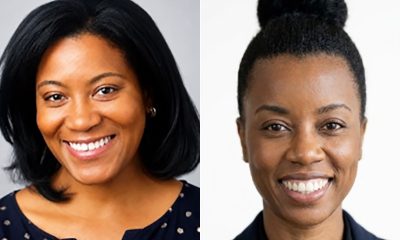
Kellan Baker, Ph.D., M.P.H, M.A., is executive director of the Institute for Health Research & Policy at Whitman-Walker.




Commentary
Center Arts Gallery celebrates 10 years with reception, auction
Oct. 17 fundraiser to feature jazz combo, artwork created on site

Ten years ago, I had a vision: to create a dedicated space within The DC LGBTQ+ Community Center for local LGBTQ+ artists to share their creativity in a community space conceived specifically for them. That vision became the Center Arts Gallery. Over the past decade, the Center Arts Gallery has grown into a true home for our LGBTQ+ siblings, a place illuminating our joy, resistance, and resilience through the power of art.
Art is so much more than decoration. It can be a powerful protest, a keeper of memories, a testament to survival, and a vivid reminder that our lived experiences deserve to be seen, heard, and deeply valued. When we created the Center Arts Gallery, our goal was to remove barriers so that queer artists could feel welcomed, supported, and completely free to express themselves. Now, as we mark the incredible 10th anniversary of Center Arts, love truly comes full circle as many of those same amazing artists and creatives are giving back by donating their artwork for a special benefit auction.
On Saturday, Oct. 17, 2026, The DC LGBTQ+ Community Center will host our annual Fall Reception and Art Auction, celebrating 10 years of Center Arts Gallery at 1827 Wiltberger St., N.W., with an ambitious fundraising target of $25,000.
Appropriately themed “The Art of Belonging,” this milestone celebration will bring our community together with intention, uniting multiple forms of local queer creativity under one roof. The evening promises to be an unforgettable experience.
We are thrilled to have the celebration hosted by award-winning spoken word artist, poet, and educator Charity Blackwell. Attendees will enjoy smooth jazz selections performed by 2nd Independence — a jazz combo from the DC Different Drummers — alongside delicious heavy hors d’oeuvres provided by Shaw Tavern and exquisite dessert offerings by celebrity chef Patrick Vanas.
Throughout the night artwork will be created live on site, joining the online pieces generously donated by local artists.
Most importantly, every dollar raised during the reception and auction goes directly toward sustaining The DC Center’s life-affirming programs and supportive services. From food assistance providing nourishing meals, the free food pantry, and behavioral health counseling, to trauma-informed case management, resource navigation, HIV/STI testing, and essential hygiene services like showers, laundry, and a clothing boutique, our doors remain open because
of community support. These funds also support our cyber lounge, mail and locker services, harm reduction supplies, and critical wellness programs.
To ensure that everyone in our community can fully participate, ASL interpretation will be provided during the event program. We offer flexible ways to join us: General Admission is free (currently at capacity), with custom signature cocktails, wine, and beer available for purchase.
For those looking for an elevated evening, our $75 VIP Experience includes early admission at 6 p.m., early online auction access, complimentary Champagne (6-7 p.m.), an intimate opportunity to mingle with participating artists, a special swag bag, plus an open beer and wine bar throughout the entire evening.
For 10 years, Center Arts Gallery has shown us that belonging is an art form we create together. As we look back on a decade of community and look forward to the future, I invite you to join us, support local queer artists, and invest in the essential programs that keep our community thriving. Let’s come together to ensure that The DC Center can continue to educate, empower, uplift, and connect us all for generations to come.
Kimberley Bush is executive director of The DC LGBTQ+ Community Center.
Commentary
Washington Blade responds to concerns over White House pool duties
Inaccurate media reports create confusion but we stand with our colleagues
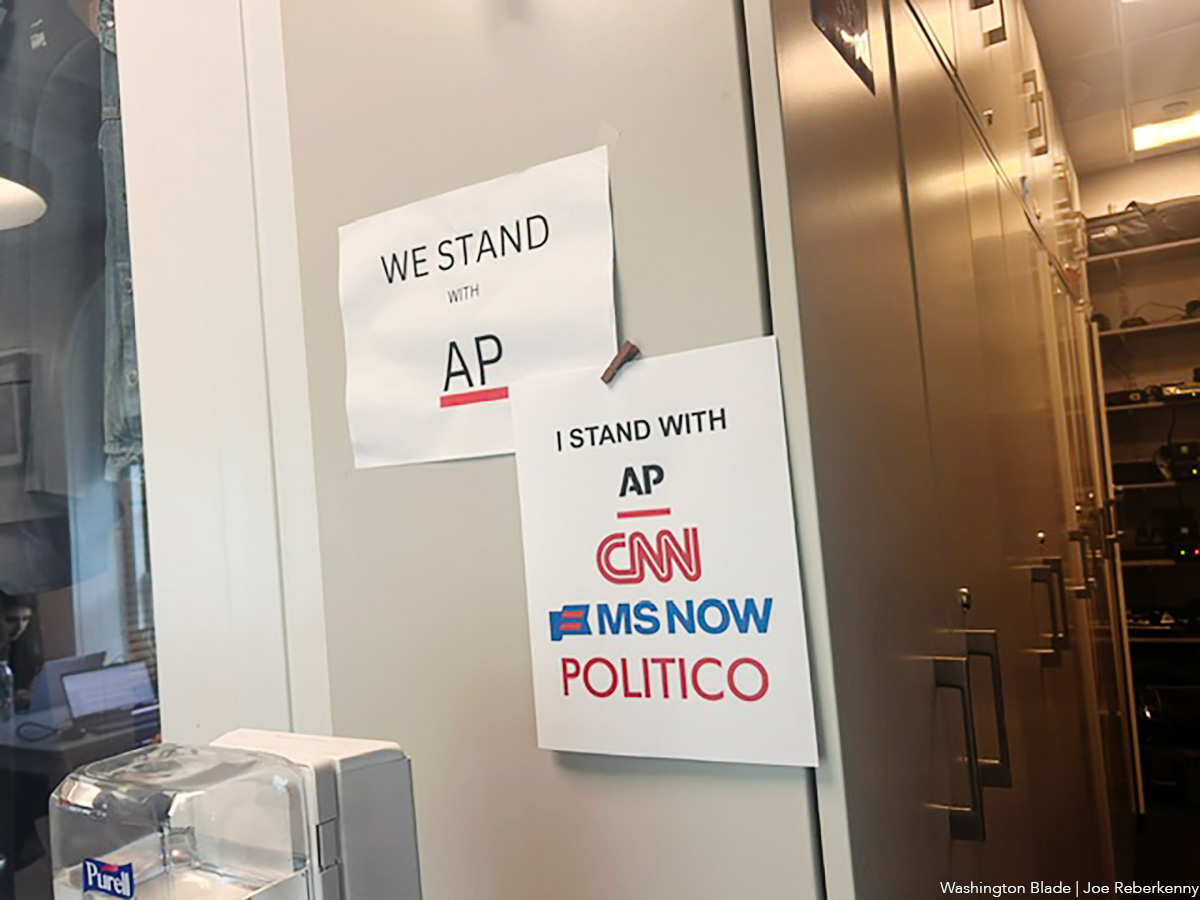
Last week, President Trump announced his unconstitutional ban of CNN, MSNow, and Politico from the White House. Coincidentally, on Monday, it was the Washington Blade’s turn to serve as the print pool reporter on duty covering the president’s actions that day. This important responsibility is shared and rotated among the print members with each serving roughly once per month. The Blade is the only LGBTQ outlet with a seat in the briefing room, a slot in the pool rotation, and membership in the White House Correspondents’ Association, something we fought for decades to secure after enduring years of discrimination, ridicule, and resistance to openly queer journalists working inside the White House. We take our responsibilities there seriously.
There are two pools that cover the president: broadcast and print. The other four members of the broadcast pool — ABC, CBS, NBC, and Fox News — agreed to boycott their pool duties. There has been no boycott among the print pool, which is a separate entity. I called the president of the White House Correspondents’ Association on Monday to confirm that no outlets in the print pool were boycotting.
A boycott by the Blade would set us back and lead to our expulsion from the pool and briefing room and our replacement by a right-wing outlet sympathetic to President Trump’s approach to attacking the media. The LGBTQ community is far better served with the Blade in the room than a far-right blogger taking our seat.
Let’s be clear: the Blade stands for diversity, equity, and inclusion and we stand for the First Amendment and freedom of the press. In solidarity with the broadcast pool, we made two important decisions on Monday — the first day anyone had to think about any of this. First, we refused to take or share any videos or still photos of the president, which would have undermined the broadcast boycott. Second, when Politico’s turn comes up for pool duty in mid-October, the Blade will not fill in and cover for them while they are banned. Politico must be readmitted and allowed to do their job.
After a rough day navigating and reporting on all of this, the Advocate published a reckless and inaccurate story suggesting that the Blade had crossed a picket line. Not true, as there is no print pool boycott. They claimed that I wouldn’t talk to their reporter. Also not true. I called their reporter within 90 minutes of receiving his message and he didn’t take the call or call me back. Their story named me and our White House reporter, immediately exposing us to public criticism and worse. The environment in D.C. is so toxic and even violent these days that subjecting our staff to unfair and false accusations like this invites harassment, doxxing, and worse. To do that without even talking to us is next level irresponsible and the antithesis of journalism.
On Tuesday, I talked to two reporters and an editor at the Advocate but they refused to retract anything in their inaccurate story. If the reporter had returned my call, I could have explained all of this but they are more concerned with clickbait and sensational headlines, a dangerous practice in these troubled times.
Back to the pool. The Blade was in the briefing room in the Reagan era, when Press Secretary Larry Speakes made jokes about AIDS and the reporters in the room laughed out loud. We endured all of that abuse and worse for decades, always standing in the back of the room and never being called on. The Blade’s journalists persevered. When President George W. Bush was re-elected in 2004, the Blade’s White House credentials were revoked amid an earlier press crackdown. Notably, no one boycotted or stood up for us. When Barack Obama won election in 2008, I received an email from his communications director informing me that effective midnight on Jan. 20, 2009, the Blade’s credentials would be restored.
So we have had quite a ride navigating administrations and their changing requirements for gaining access but always playing the long game. As Barney Frank used to say, “If you’re not at the table, then you’re probably on the menu.” The Blade is at the table and we do our best to ensure the LGBTQ community’s issues are addressed by both parties.
Thanks for reading and supporting the Blade’s work. If you have questions about our approach, you can reach me at [email protected].
Kevin Naff is editor of the Washington Blade. Reach him at [email protected].
Commentary
What LGBTQ veterans are building after ‘Don’t Ask, Don’t Tell’
DADT repeal took effect on Sept. 20, 2011. Trans servicemember ban reinstated
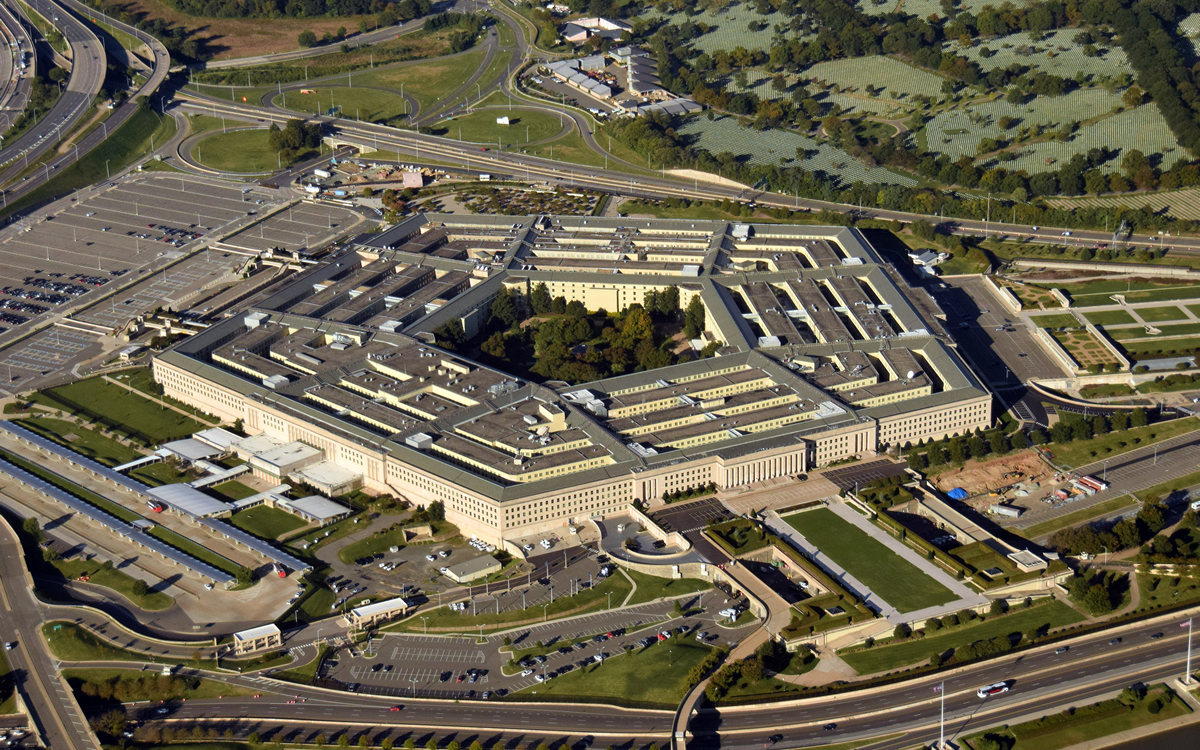
Fifteen years ago this month, the repeal of “Don’t Ask, Don’t Tell” took effect. At the time, the importance of the change was obvious: gay, lesbian, and bisexual Americans would no longer have to hide who they were to wear the uniform. What was harder to see was what would follow: a generation of LGBTQ veterans able to carry their service openly into American civic life.
Earlier this month, Alaska state Rep. Andrew Gray, an Army veteran, stood before the Anchorage Assembly and asked the city to recognize Sept. 20 as LGBTQ Veterans Day.
His former command sergeant major, Mike Grunst, followed him to the microphone. A 35-year veteran who had served in combat, Grunst called troops who had served while hiding who they were “the bravest I have ever served with.”
Then Denise Sudbeck stepped forward. A Vietnam-era Navy veteran, she thanked the country for the privilege of serving and asked that the next generation have the same chance.
The Assembly approved the recognition.
Nothing about the scene required a new vocabulary. A veteran made a request of his community. A commander vouched for those who served beside him. Another veteran asked that younger Americans inherit the opportunity she valued. They entered the civic record simply as veterans.
That identity can do more than win recognition.
When federal policy abruptly ended the careers of transgender servicemembers this year, veterans and servicemembers in California began asking a practical question: What happens when those Americans come home?
Republican Assemblyman Jeff Gonzalez, a Marine combat veteran, began one hearing with questions about transgender military service. He listened as veterans explained how the military handles medical care and deployment case by case.
Then the discussion turned to separation.
“I don’t wanna see any veteran homeless,” Gonzalez said. Before the hearing ended, he was asking: “How can I help? How can I understand? How can I be a good advocate?”
The legislation that followed would provide housing, employment and transition assistance to discharged servicemembers. Republican state Sen. Shannon Grove spoke for it. The Senate passed it 32 to 0.
Americans have plainly not settled their disagreements over transgender people. Nor should military service be a prerequisite for rights that belong to every citizen.
But military service creates relationships that are difficult to reduce to the abstractions of the culture war. Before a legislature, “the transgender issue” can become a veteran who deployed, an officer who led troops, or the person who once stood beside you.
The political question changes because the human relationship has already changed.
The pattern is beginning to appear across the country. Kansas is among the states recognizing LGBTQ Veterans Day for the first time this year. New York and Virginia are pursuing broader state-level programs for LGBTQ veterans.
Sept. 20 is deliberate. On that day in 2011, “Don’t Ask, Don’t Tell” ended.
We usually remember repeal for what LGBTQ Americans gained: the ability to serve openly. Fifteen years later, we can also see what the country gained.
A gay veteran can stand before his local government beside the commander who once led him. A transgender servicemember can sit before a legislator who begins with doubts and ends by asking how he can help. A veteran from an older generation can ask her neighbors to give those who follow her the same chance to serve.
This is citizenship in practice.
The enduring legacy of “Don’t Ask, Don’t Tell” repeal is not only that Americans were finally allowed to serve openly. It is also what they can now build after coming home.

Bet Mishpachah participates in D.C. Oct. 7 commemoration ceremony

Man charged in Mall of America shooting plot inspired by Pulse massacre: report

Bar Betsie, inviting and intimate, marks one-year anniversary

Trump, Netanyahu, and Putin are all war criminals

Center Arts Gallery celebrates 10 years with reception, auction

Eliot Glazer’s new book an engaging collection of essays

Equality Chamber hosts Pride in Business Expo and Profits & Pours

Learn more about Virginia’s queer history

The financial realities facing LGBTQ+ first-time buyers

Lula, Flávio Bolsonaro to face off in second round of Brazilian presidential election
-

 Books4 days ago
Eliot Glazer’s new book an engaging collection of essays
-
Out & About4 days ago
Equality Chamber hosts Pride in Business Expo and Profits & Pours
-
Out & About4 days ago
Learn more about Virginia’s queer history
-
Real Estate4 days ago
The financial realities facing LGBTQ+ first-time buyers