Chile
Chilean lawmakers back report that calls for suspension of program for trans children
Country’s first transgender congresswoman condemned May 15 vote
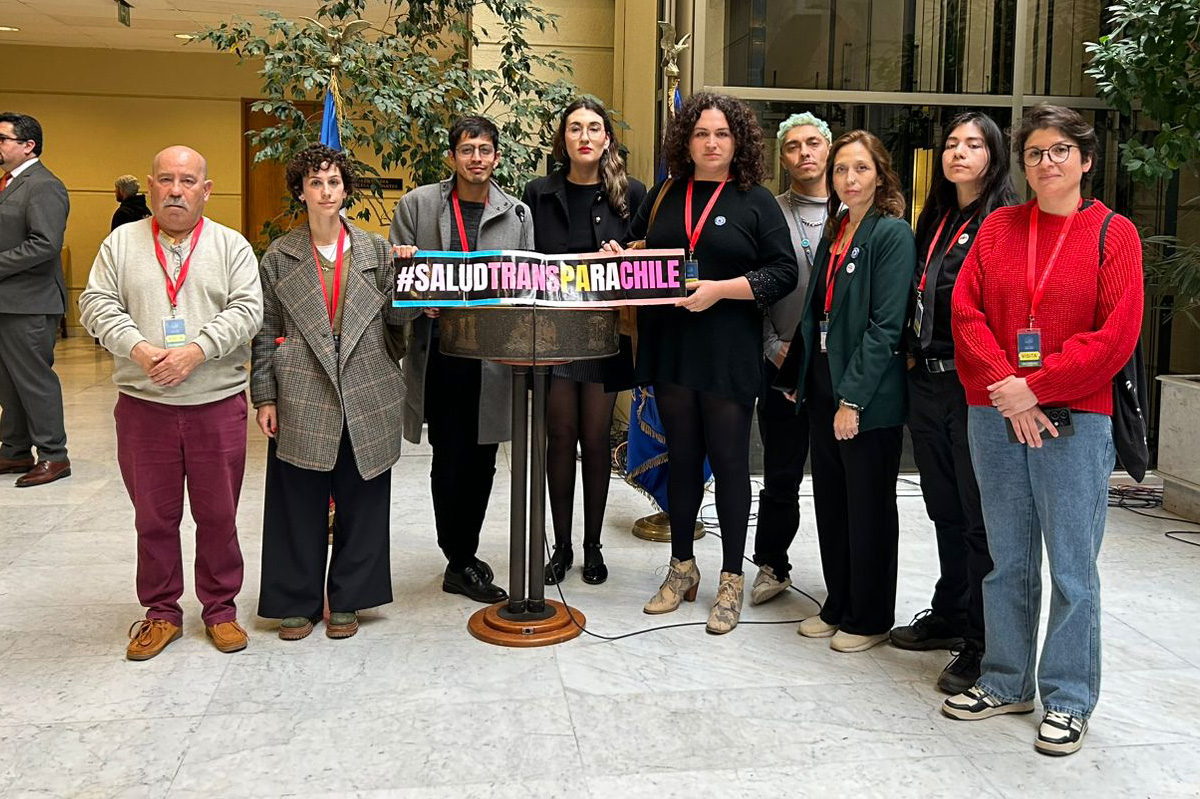
The Chilean Chamber of Deputies on May 15 approved a report that recommends the immediate suspension of a program that provides psychosocial support to transgender and gender non-conforming children and adolescents and their parents.
The 56-31 vote in favor of the Investigation Commission No. 57’s recommendations for the Gender Identity Support Program sparked outrage among activists in Chile and around the world. Six lawmakers abstained.
The report proposes the Health Ministry issue a resolution against puberty blockers, cross-hormonalization, and other hormonal treatments for minors, regardless of whether they have been diagnosed with gender dysphoria. The report also suggests Chilean educational institutions should not respect trans students’ chosen names.
The report, among other recommendations, calls for a review of the background of all minors who are currently receiving hormone treatments. The report also calls for the reformulation of hormone therapy guidelines and sending this background information to the comptroller general.
Report ‘sets an ominous precedent’
Frente Amplio Congresswoman Emilia Schneider, the first trans woman elected to the Chilean Congress and a member of the commission, sharply criticized her colleagues who voted for the report.
“Today in the Chamber of Deputies the report of hatred against trans people was approved; a report that seeks to roll back programs so relevant for children, for youth, such as the Gender Identity Support Program; a program that, in addition, comes from the government of (the late-President) Sebastián Piñera,” Schneider told the Washington Blade. ”This is unacceptable because the right-wing yields to the pressures of the ultra-right and leaves the trans community in a very complex position.”
Schneider noted “this report is not binding; that is, its recommendations do not necessarily have to be taken into account, but it sets an ominous precedent.”
“We are going backwards on such basic issues as the recognition of the social name of trans students in educational establishments,” she said.
Ignacia Oyarzún, president of Organizing Trans Diversities, a Chilean trans rights group, echoed Schneider’s criticisms. commented to the Blade.
“We regret today’s shameful action in the Chamber of Deputies, where the CEI-57 report issued by the Republican Party was approved in a context of lies, misinformation and misrepresentation of reality,” Oyarzún told the Blade. “This only promotes the regression of public policies and conquered rights that have managed to save the lives of thousands of children in the last time.”
Oyarzún added the “slogan ‘children first’ proves to be an empty phrase without content used by those who today promote measures that push to suicide a significant number of children for the fact of being trans.”
The Movement for Homosexual Integration and Liberation, a Chilean LGBTQ rights group known by the acronym Movilh also condemned the approval of the report, calling it “transphobic” and accusing the commission of omitting the opinions of organizations and families that support the current policies.
Movilh notes lawmakers approved both the Gender Identity Law and Circular 812, which promotes respect for trans students’ rights, within the framework of an agreement with the Inter-American Commission on Human Rights.
“The text of the approved report is scandalous, because it seeks to take away the access to health to trans minors, including denying them the psychosocial accompaniment that also includes their respective families,” said María José Cumplido, executive director of Fundación Iguales, another Chilean LGBTQ advocacy group. “Likewise, it attempts against school inclusion, since it intends to eliminate something as essential as the use of the social name in educational spaces. In short, it takes away rights and freedoms to trans people, especially to minors.”
Cumplido, like Schneider, pointed out that “although its content is not binding, we will be alert to the political and legislative consequences that it may produce and we will continue working to avoid setbacks with respect to the rights of trans people.”
The report’s approval reflects a global trend that has seen neighboring Argentina, the U.S., and other countries reserve policies for trans and nonbinary young people. The Peruvian Health Ministry recently classified gender identity as a mental illness, and lawmakers have passed a law that prevents trans people from using public restrooms based on their identity.

photo by Michael K. Lavers)
Experts and human rights activists warn the suspension of Chile’s Gender Identity Support Program and other programs could adversely impact the mental health of trans and nonbinary children who already face high levels of discrimination and are at heightened risk to die by suicide.
“We will defend the Gender Identity Support Program and the right to exist of trans children and youth across the country,” said Schneider. “I want to reassure the trans families of our country that we will not rest until our rights are respected and that we can continue advancing because there is still much to be conquered.”






Chile
Far-right José Antonio Kast elected Chile’s next president
Advocacy group declares ‘state of alert’ over president-elect’s opposition to LGBTQ rights

José Antonio Kast on Sunday won the second round of Chile’s presidential election.
Kast is the far-right leader of the Republican Party who was a member of the country’s House of Deputies from 2002-2018. He defeated Jeannette Jara, a member of the Communist Party of Chile who was former labor and social welfare minister in outgoing President Gabriel Boric’s government, by a 58.2-41.8 percent margin.
The election’s first round took place on Nov. 16.
Kast and Jara faced each other in the runoff after no candidate received at least 50 percent of the vote in the first round. Kast will take office on March 11.
“Under his leadership, we are confident Chile will advance shared priorities to include strengthening public security, ending illegal immigration, and revitalizing our commercial relationship,” said U.S. Secretary of State Marco Rubio on Sunday in a statement. “The United States looks forward to working closely with his administration to deepen our partnership and promote shared prosperity in our hemisphere.”
The Washington Blade has previously reported Kast has expressed his opposition to gender-specific policies, comprehensive sex education, and reforms to Chile’s anti-discrimination laws. The president-elect has also publicly opposed the country’s marriage equality law that took effect in 2022.
The Movement for Homosexual Integration and Liberation, a Chilean LGBTQ and intersex rights group known by the acronym Movilh, in a statement acknowledged the election result. Movilh also declared a “state of alert, given this leader’s (Kast’s) public and political trajectory, characterized for decades by systematic opposition to laws and policies aimed at equality and nondiscrimination of LGBTIQ+ individuals.”
“We urge the president-elect and far-right sectors that follow him to understand and internalize (the fact) that the rights of LGBTIQ+ people are inscribed in the universality of human rights, and they are not built upon an ideology or a political trend,” said Movilh in its statement. “This is not, and never has been, a left-wing or right-wing issue, although some on both sides have gone to great lengths to suggest otherwise, without any basis other than their own partisan or electoral aspirations.”
Organizado Trans Diversidades, a group that advocates on behalf of trans and nonbinary Chileans, on social media said it will “continue the fight for our community’s human rights.”
Chile
Chilean presidential election outcome to determine future of LGBTQ rights in country
Far-right candidate José Antonio Kast favored to win Dec. 14 runoff.

The results of Chile’s presidential election will likely determine the future of LGBTQ rights in the country.
While Congresswoman Emilia Schneider, the first transgender woman elected to Congress, managed to retain her seat on Sunday, the runoff to determine who will succeed outgoing President Gabriel Boric will take place on Dec. 14 and will pit two diametrically opposed candidates against each other: the far-right José Antonio Kast and Communist Jeannette Jara.
Schneider, an emblematic figure in the LGBTQ rights movement and one of the most visible voices on trans rights in Latin America, won reelection in a polarized environment. Human rights organizations see her continued presence in Congress as a necessary institutional counterweight to the risks that could arise if the far-right comes to power.

Kast v. Jara
The presidential race has become a source of concern for LGBTQ groups in Chile and international observers.
Kast, leader of the Republican Party, has openly expressed his rejection of gender policies, comprehensive sex education, and reforms to anti-discrimination laws.
Throughout his career, he has supported conservative positions aligned with sectors that question LGBTQ rights through rhetoric that activists describe as stigmatizing. Observers say his victory in the second-round of the presidential election that will take place on Dec. 14 could result in regulatory and cultural setbacks.
Jara, who is the presidential candidate for the progressive Unidad por Chile coalition, on the other hand has publicly upheld her commitment to equal rights. She has promised to strengthen mechanisms against discrimination, expand health policies for trans people, and ensure state protection against hate speech.
For Schneider, this new legislative period is shaping up to be a political and symbolic challenge.
Her work has focused on combating gender violence, promoting reform of the Zamudio Law, the country’s LGBTQ-inclusive nondiscrimination and hate crimes law named after Daniel Zamudio, a gay man murdered in Santiago, the Chilean capital, in 2012, and denouncing transphobic rhetoric in Congress and elsewhere.
Schneider’s continued presence in Congress is a sign of continuity in the defense of recently won rights, but also a reminder of the fragility of those advances in a country where ideological tensions have intensified.
LGBTQ organizations point out that Schneider will be key to forging legislative alliances in a potentially divided Congress, especially if Kast consolidates conservative support.
Chile
Gay pharmacist’s murder sparks outrage in Chile
Francisco Albornoz’s body found in remote ravine on June 4

The latest revelations about the tragic death of Francisco Albornoz, a 21-year-old gay pharmacist whose body was found on June 4 in a remote ravine in the O’Higgins region 12 days after he disappeared, has left Chile’s LGBTQ community shocked.
The crime, which was initially surrounded by uncertainty and contradictory theories, has taken a darker and more shocking turn after prosecutors charged Christian González, an Ecuadorian doctor, and José Miguel Baeza, a Chilean chef, in connection with Albornoz’s murder. González and Baeza are in custody while authorities continue to investigate the case.
The Chilean Public Prosecutor’s Office has pointed to a premeditated “criminal plan” to murder Albornoz.
Rossana Folli, the prosecutor who is in charge of the case, says Albornoz died as a a result of traumatic encephalopathy after receiving multiple blows to the head inside an apartment in Ñuñoa, which is just outside of Santiago, the Chilean capital, early on May 24. The Prosecutor’s Office has categorically ruled out that Albornoz died of a drug overdose, as initial reports suggested.
“The fact that motivates and leads to the unfortunate death of Francisco is part of a criminal plan of the two defendants, aimed at ensuring his death and guaranteeing total impunity,” Folli told the court. “The seriousness of the facts led the judge to decree preventive detention for both defendants on the grounds that their freedom represents a danger to public safety.”
Prosecutors during a June 7 hearing that lasted almost eight hours presented conservations from the suspects’ cell phones that they say showed they planned the murder in advance.
“Here we already have one (for Albornoz.) If you bring chloroform, drugs, marijuana, etc.,” read one of the messages.
Security cameras captured the three men entering the apartment where the murder took place together.
Hours later, one of the suspects left with a suitcase and a shopping cart to transport Albornoz’s body, which had been wrapped in a sleeping bag. The route they followed to dispose of the body included a stop to buy drinks, potato chips, gloves, and a rope with which they finally descended a ravine to hide it.
Advocacy groups demand authorities investigate murder as hate crime
Although the Public Prosecutor’s Office has not yet officially classified the murder as a hate crime, LGBTQ organizations are already demanding authorities investigate this angle. Human rights groups have raised concerns over patterns of violence that affect queer people in Chile.
The Zamudio Law and other anti-discrimination laws exist. Activists, however, maintain crimes motivated by a person’s sexual orientation or gender identity are not properly prosecuted.
“This is not just a homicide, it is the cruelest expression of a society that still allows the dehumanization of LGBTQ+ people,” said a statement from Fundación Iguales, one of Chile’s main LGBTQ organizations. “We demand truth, justice, and guarantees of non-repetition.”
The Movement for Homosexual Integration and Liberation (Movilh), meanwhile, indicated that “since the first day the family contacted us, we have been in conversations with the Prosecutor’s Office so that this fatal outcome is thoroughly investigated, including the possible existence of homophobic motivations or components.”
The investigation into Albornoz’s murder continues, and the court has imposed a 90-day deadline for authorities to complete it.

Intense doc offers transcendent treatment of queer fetish pioneer

In D.C. comedy, be sure to shop local

Comings & Goings

Liza Minnelli makes surprise appearance at GLAAD Media Awards

Fla. Senate passes ‘Anti-Diversity’ bill that could repeal local LGBTQ protections

Peter Thiel’s expanding power — and his overlap with Jeffrey Epstein

13 HIV/AIDS activists arrested on Capitol Hill

Va. lawmakers consider partial restoration of Ryan White funds

Md. Commission on LGBTQIA+ Affairs released updated student recommendations

35 years after ‘Truth or Dare,’ Slam is still dancing
-

 National5 days ago
Peter Thiel’s expanding power — and his overlap with Jeffrey Epstein
-
National4 days ago
13 HIV/AIDS activists arrested on Capitol Hill
-
Virginia5 days ago
Va. lawmakers consider partial restoration of Ryan White funds
-
Maryland5 days ago
Md. Commission on LGBTQIA+ Affairs released updated student recommendations