District of Columbia
Gay Ward 1 Council candidate expresses ‘passion’ for public service
Brian Footer says listening to residents’ concerns is focus of campaign
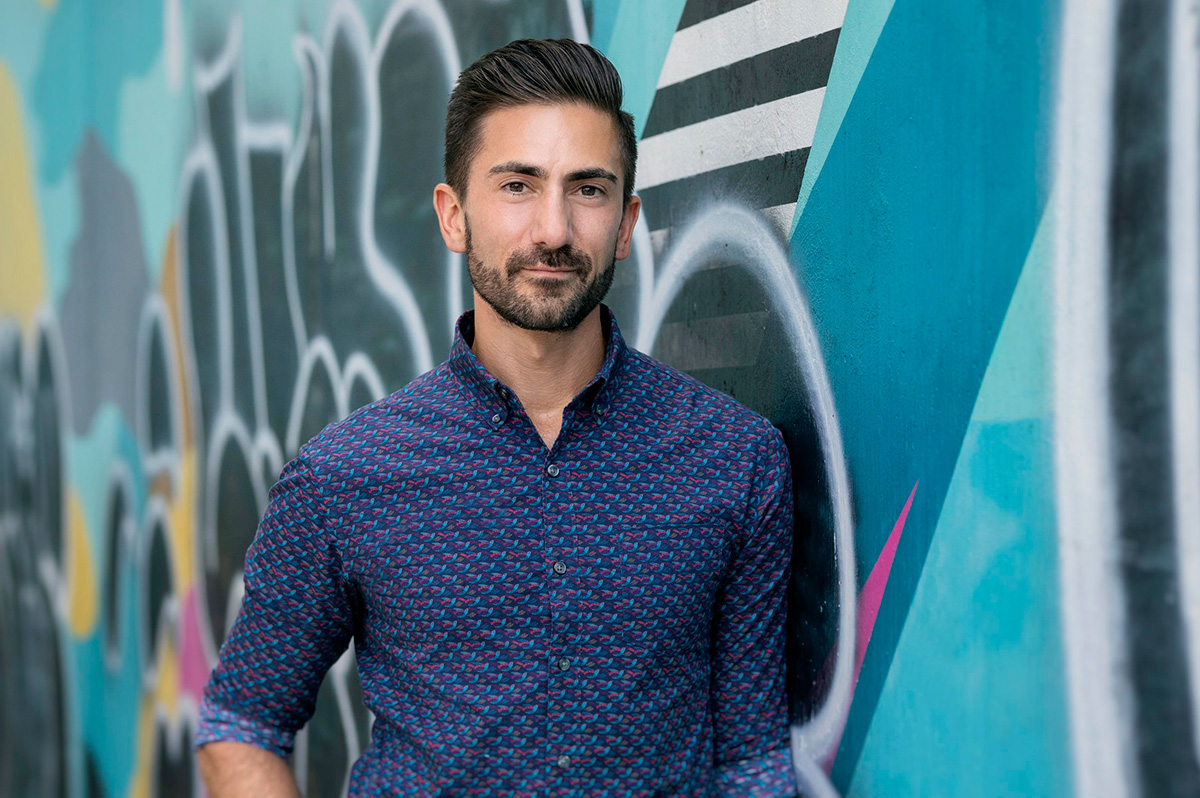
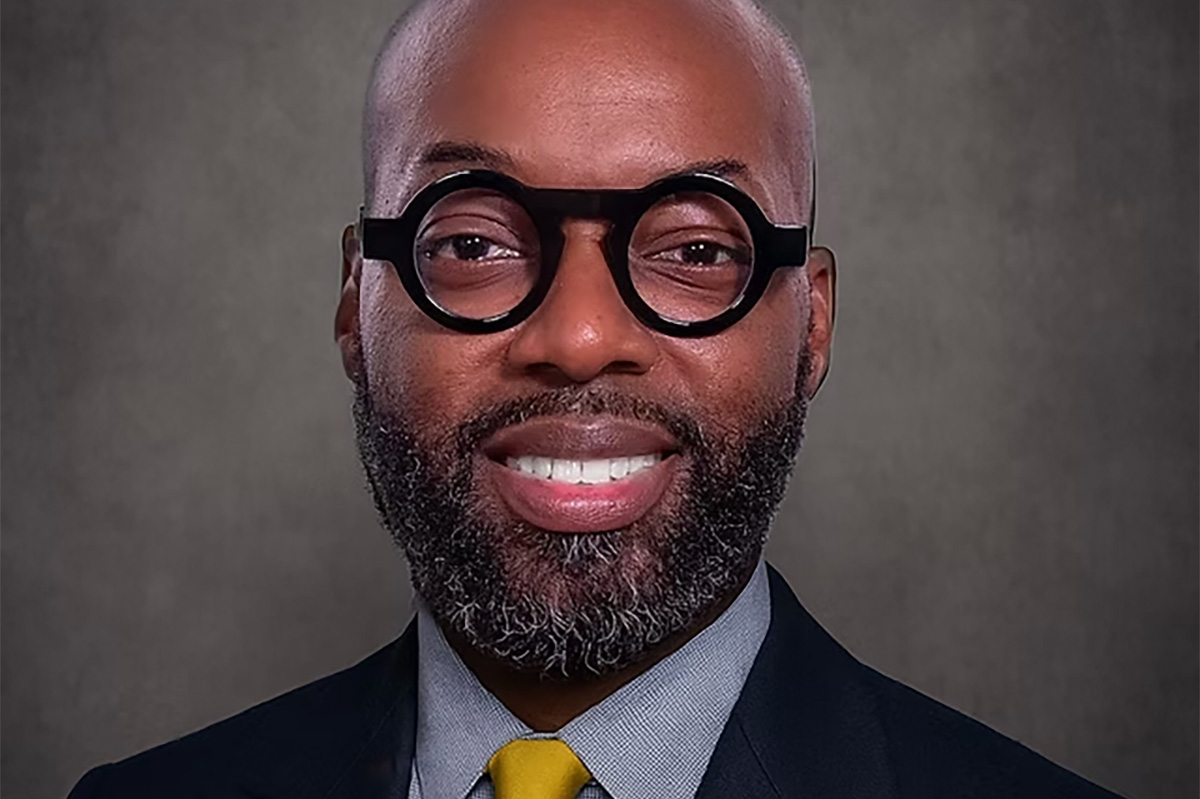
Gay Advisory Neighborhood Commissioner Brian Footer, who has announced his candidacy for the Ward 1 D.C. Council seat up for election in 2026, says his campaign includes a diverse coalition of supporters dedicated to addressing the concerns of Ward 1 residents.
In an interview with the Washington Blade, Footer outlined his plans for addressing a wide range of issues impacting Ward 1 and the city as a whole, which he said affect all city residents, including LGBTQ residents.
“On the City Council I’m going to be especially focused on making housing more affordable, improving public safety, and making it easier to do business in our community,” he said. The needs and concerns of the city’s senior citizens is also an issue of great interest for him, he told the Blade.
“Public service is something that has always been ingrained in me,” he added. “And local government is where I’ve chosen to channel that passion, because it directly impacts people’s lives.”
Footer, a Democrat, initially will be running for the Ward 1 Council seat in the city’s June 16, 2026, Democratic primary. If he were to win the primary and the November 2026 general election, he would become the Council’s second openly gay member.
Incumbent Ward 1 Council member Brianne Nadeau (D) told the Blade last week that she wasn’t ready to discuss her plans for the future and whether she would run for re-election. Longtime Ward 1 community activist Terry Lynch has announced his candidacy for the Ward 1 Council seat as a Democrat.
Blade: Can you tell a little about your background, where you were born and raised and where you are from if you are not a native of the D.C. area?
Footer: I’m proud to say I’m a third-generation native of the D.C. area. From my grandfather’s dental practice just north of Dupont. From my parents meeting while working at G.W. Hospital. Or three generations of Footers attending the Hebrew School of Washington Hebrew. D.C. is my home and part of my family’s history.
And for the past 20 plus years as an adult gay man, D.C. has been my chosen home, in large part due to the vibrant and proud LGBTQ+ community. Public service is something that has always been ingrained in me. And local government is where I’ve chosen to channel that passion, because it directly impacts people’s lives.
I started my public service journey as a U.S. House page working for Dick Gephardt. And cut my teeth in local policy working for the New York City Council’s Speaker, Christine Quinn, managing her aging and veterans affairs portfolio. That’s where I got to experience how local government can truly impact people’s daily lives. …
I chose to extend my public service by first running for ANC in 2014…. And I came back to the ANC in 2022 and served as chair of 1E since then.
Blade: Can you say a little about how you describe your occupation and your working career?
Footer: I would say that I am an expert in the Older Americans Act. And that is an amazing space to make sure that we’re supporting our senior community to a place of dignity and respect. And so, I worked for government for many years, like 10 or 11 years. I started at the federal level, went down to the state level and eventually found my passion at the local level.
And that’s where I started getting my expertise in the aging space. And currently I work at KPMG as a healthcare consultant. And my clients there are the Center for Medicaid and Medicare Services.
Blade: Have you been involved in local D.C. community affairs for
a good amount of time?
Footer: Yes, in 2014 I decided to run for ANC. And as I mentioned, I have a passion for really getting into local issues. And so, running for ANC was an opportunity to extend my experiences and I’ve had an amazing time doing that. And then I ran for the Ward 1 Dems position. I was chair of that. And that took me through the 2016 presidential election.
And then in 2022 I decided to run again for ANC just a couple of blocks away. And I represent the southern part of Howard University and the northern part of Shaw. And I’m on the southern boundary of ANC 1 E, which represents Howard University, Park View, and Pleasant Plakins, with Georgia Avenue running through all SMDs [Single Member Districts].
Blade: What neighborhood do you live in now?
Footer: I live in the northern Shaw neighborhood, kind of the east side of U Street. So, I live in a building called Atlantic Plumbing. It’s right next to the 9:30 Club.
Blade: You mention on your campaign website that you feel things are not going as well as they should in the city in a number of different areas. Can you tell a little about what those areas or issues are and what you would do to correct or fix them?
Footer: So, on the City Council I’m going to be especially focused on making housing more affordable, improving public safety, and making it easier to do business in our community. And these are urgent issues. And people need relief now, not a decade from now. And so, with respect to public safety, we have been given a false choice between law enforcement and compassionate long-term solutions that get people back on their feet.
We need both. And they have to be coordinated. We have a lot of public safety programs in place, but they’re not working because we’ve thrown everything at the wall and aren’t doing any one of them very well. We have the information and data about crime and safety in Ward 1 to focus on targeted policies that will actually work if only we’re committed to them and follow through. I mean better coordination between agencies, more consistent support for violence prevention programs, and urgent improvements for things like street lighting, trash, and behavioral health services. So, we need to feel safe and be safe. Right now, too many residents don’t feel either.
With respect for housing, the rent is too high. It is unaffordable for lots of families. And so, over the past 10 years, rent has increased more than 66 percent while the consumer price index for the area increased by approximately 25 percent; that means that rent prices have been increasing by a rate of more than double that of general inflation.
We’ve been given a false choice between supporting business or supporting renters. I’m in favor of working with the business communities to build as many new homes as possible. It doesn’t have to come at the expense of renters and owners’ rent. There are solutions that have been implemented elsewhere in the country we should emulate. We should use the power of local government to make it easier and cheaper to build while bringing renters and the business community to the table.
As for small businesses, there are plenty of good programs in D.C. to support small businesses. Right now, however, different parts of the D.C. government don’t talk to each other. And we’re putting the onus on business owners to navigate this bureaucratic maze. We should be making it a lot easier for entrepreneurs and small businesses to get the licenses they need, pay their people a living wage, and serve our community.
Blade: Can you say a little about the current Ward 1 Council member? Do you feel she is not doing what you feel should be done on these issues?
Footer: So, you know, what I’ll say about Council member Nadeau, she has served Ward 1 for many years. And I respect anyone who steps up for public service. Whether she decides to run again or not, my decision to enter this race comes from listening to neighbors who are ready for a new vision. One that’s focused on safety, stability, and a city government that truly works for everyone.
I’m not running against anyone. I’m running for the future of Ward 1. I bring a different leadership style. I listen first. I build coalitions. I act boldly and I follow through. This campaign is about what we can do differently and better to make people feel safe, supported, and seen. Ward 1 deserves that conversation no matter who is on the ballot.
Blade: The local D.C. government and its current laws, including the Human Rights Act, are recognized as being supportive of the rights of the LGBTQ community. As a gay candidate, is there anything else you think needs to be done to protect the rights and the wellbeing of the D.C. LGBTQ community?
Footer: I will say I’m proud to be a gay man and part of D.C.’s vibrant LGBTQ+ community. And my involvements in the community over the years have been both personal and political, from organizing alongside queer leaders, advocating for inclusive policies, to showing up for the community when it matters most.
In D.C., I have worked with and supported local LGBTQ+ groups in a variety of ways, from volunteering for the Victory Fund in my early career to organizing LGBTQ+ senior housing round tables for SAGE and other housing advocates. But beyond formal affiliations, my queer identity informs how I lead. It’s with empathy, resilience and a deep appreciation for chosen family and intersectionality.
That’s why I’m running – to make sure queer people in Ward 1 and across the city feel seen, heard, and supported. And just to answer your question a little more directly, I think that there are two things in particular that are going to be important that I want to work towards and bring a lot of attention to.
One of them is dealing with housing. LGBTQ+ seniors are twice as likely to live alone and four times less likely to have children compared to their non-LGBTQ+ peers. And so national surveys show that many LGBTQ+ seniors fear having to go back in the closet when entering assisted living or retirement communities or nursing homes. And so, stories of misgendering and lack of cultural competency among staff are common.
So, affirming and safe and affordable housing isn’t just about comfort. It’s about dignity and safety for our seniors. And the second topic we see a lot about is to support organizations like SMYAL, because up to 40 percent of youth experiencing homelessness in D.C. identify as LGBTQ+. So, we need to make sure that we have those services to support people.
Blade: The D.C. Council has been considering a proposal by Mayor Bower in her FY 2026 budget to repeal a law impacting restaurants and bars, including the city’s gay bars, known as Initiative 82 that was passed twice by voters in a ballot initiative, which calls for ending the so-called tipped wage and requiring the businesses to pay the full minimum wage to restaurant and bar workers. Businesses and many of the tipped workers say the law has had a devastating impact on the businesses and they support repealing it. Do you have a position on that?
Footer: I think this is a good example of what I’ve said before that we are consistently being given false choices, right? And so, I think that we need to do our due diligence in order to find what is the common ground. You won’t find a small business in D.C. that doesn’t want to pay their people a living wage. And so, the question becomes how do you support our small business community to be able to thrive and also make sure that they’re supporting their employees.
And so, the specifics of whether I would vote for repealing it – I would say I’m not in favor of repealing what the voters have now said twice. But I do think the economic situation of our city has changed since the last time the voters had the opportunity to address this issue. And so, I figure it’s the City Council and the mayor’s job and the city government’s job to find out how we can make sure we’re blending those two things. It shouldn’t have to be a binary choice.
Blade: So, at this point are you saying you would not support the full repeal of the law?
Footer: At this point I don’t know if I would support a full repeal.
Blade: One other issue we have learned is that another candidate, longtime community activist Terry Lynch, has entered the race for the Ward 1 Council seat. Have you had any interaction with him over the years?
Footer: I haven’t. I recently reached out to him, and we’re supposed to get together soon to catch up. But I’m not very familiar with Terry Lynch. I’m looking forward to meeting him
Blade: The local LGBTQ group GLAA DC, formerly known as the Gay & Lesbian Activists Alliance, issues ratings for candidates running for the D.C. Council and for mayor. They base their ratings on a candidate’s record on LGBTQ issues and their response to a questionnaire the group sends to all candidates. Two of the questions they always ask is do you support decriminalizing sex work between consenting adults and decriminalizing possession of recreational drugs such as cocaine. How would you answer those two questions?
Footer: We just started to do a lot more research into that. And I don’t have a position on that just yet. But you’re not the first person to bring up that topic. It’s definitely something we’re going to do research on and have a better understanding on how that directly impacts people in Ward 1. So, I’ll have a more formal answer and be able to talk through the specifics of that.


District of Columbia
Capital Stonewall Democrats 50th anniversary gala draws ‘sold out’ crowd
D.C. elected officials, mayoral candidates praise LGBTQ Democratic group

A sold-out crowd of 186 people, including D.C. elected officials and candidates running for D.C. mayor, turned out Friday, March 20, for the Capital Stonewall Democrats 50th anniversary celebration.
Among those attending the event, held at the Pepco Edison Place Gallery building next to the city’s Chinatown neighborhood, were seven D.C. Council members and four Democratic candidates running for mayor.
But at the request of Capital Stonewall Democrats leaders, the Council members, most of whom are running for re-election, and mayoral contenders did not give campaign speeches. Instead, they mingled with the crowd and focused on the accomplishments of the LGBTQ Democratic group over the past 50 years, with some presenting the group’s special “honor” awards to about a dozen prominent LGBTQ Democratic activists.
D.C. Mayor Muriel Bowser, who was initially expected to attend the event, did not attend.
The mayoral candidates attending included D.C. Council member Janeese Lewis George (D-Ward 4) and former At-Large Council member Kenyan McDuffie, an independent turned Democrat, who are considered the leading mayoral contenders in the city’s June 16 Democratic Primary. Both have strong, longtime records of support for LGBTQ rights issues.
The other two mayoral candidates attending the event were Gary Goodweather, a real estate manager, and Rini Sampath, a cybersecurity consultant. Sampath told the Washington Blade she self-identifies as queer. Both have expressed strong support on LGBTQ-related issues.
The D.C. Council members attending the event included Lewis George; Council Chair Phil Mendelson (D-At-Large); Anita Bonds (D-At-Large); Robert White (D-At-Large); Matt Frumin (D-Ward 3); Zachary Parker (D-Ward 5), the Council’s only gay member; and Charles Allen (D-Ward 6).
“Tonight we celebrate not just 50 years of history but 50 years of showing up,” Howard Garrett, Capital Stonewall Democrats immediate past president, told the gathering in opening remarks. “Showing up when it was easy, showing up when it wasn’t popular,” he said, adding, “This work only continues if we continue to show up.”
He noted that the deadline for joining the organization in time to be eligible to vote on its endorsement of candidates running in D.C.’s 2026 election was midnight that night. He urged attendees who were not members to go to two tables at the event to join.
The group’s current president, Stevie McCarty, thanked the group’s longtime members who he said played a key role in what he called its historic work in building political support for the D.C. LGBTQ community. Among those he thanked was Paul Kuntzler, 84, one of the group’s founding members in January 1976, when it was initially named the Gertrude Stein Democratic Club.
Members voted to rename the group the Capital Stonewall Democrats in 2021.
Among the LGBTQ advocates who were honored at the event was Rayceen Pendarvis, the longtime host of a D.C. LGBTQ online interview show that included interviews of candidates for public office. Pendarvis also served as emcee for the Capital Stonewall Democrats 50th anniversary event.
“Thank you everyone in this room who has done the work to make this world a better place,” Pendarvis said in opening remarks. “To all our prestigious activists in the room, all of our amazing politicians in the room who are doing the work, we love you and we honor you.”
Among the honorees in addition to Pendarvis was Malcolm Kenyatta, the Democratic National Committee’s vice chair who became the first openly LGBTQ person of color to win election to the Pennsylvania General Assembly in 2018.
Other honorees included Parker; Earl Fowlkes, founder of the International Federation of Black Prides; Vita Rangel, a transgender woman who serves as deputy director of the D.C. Mayor’s Office of Talent and Appointments; Heidi Ellis, director of the D.C. LGBTQ Budget Coalition; and Philip Pannell, longtime LGBTQ Democratic activist, Ward 8 civic leader, and longtime Capital Stonewall Democrats member.
The 50th anniversary event included an open bar and refreshments and entertainment by three drag performers.
District of Columbia
Gay candidate running for D.C. congressional delegate seat
Robert Matthews among 19 hoping to replace Eleanor Holmes Norton
Robert Matthews, a former director of the D.C. Child and Family Services Agency, is running in the city’s June 16 Democratic primary for the D.C. Congressional Delegate seat as an openly gay candidate, according to a statement released by his campaign to the Washington Blade.
Matthews is one of at least 19 candidates running to replace longtime D.C. Congressional Del. Eleanor Holmes Norton (D), who announced earlier this year that she is not running for re-election.
Information about the candidates’ campaign financing compiled by the Federal Elections Commission, which oversees elections for federal candidates, shows that Matthews is one of only six of the candidates who have raised any money for their campaigns as of March 17.
Among those six, who political observers say have a shot at winning compared to the remaining 13, are D.C. Council members Brooke Pinto (D-Ward 2) and Robert White (D-At-Large). Both have longstanding records of support for LGBTQ rights and the community.
The FEC campaign finance records show Matthews was in fourth place regarding the money raised for his campaign, which was $49,078 as of March 17. The FEC records show Pinto’s campaign in first place with $843,496 raised, and White in third place with $230,399 raised.
The Matthews campaign statement released to the Blade says Matthews’s “commitment to the LGBTQ community is not a campaign position. It is the foundation of his life and his life’s work.”
The statement adds, “As the former director of D.C.’s Child and Family Services Agency, Robert led the District’s child welfare system with an explicit commitment to LGBTQ-affirming care.” It goes on to say, “He ensured that LGBTQ, trans, and nonbinary youth in foster care — among the most vulnerable young people in our city — were served with dignity, cultural humility, and genuine support.”
Among his priorities if elected as Congressional delegate, the statement says, would be “fighting to end homelessness among queer and trans seniors and youth,” opposing “federal roadblocks” to LGBTQ related health services, and defending D.C.’s budget and civil rights laws “from federal interference that directly threatens LGBTQ residents.”
The other three candidates who the FEC records show have raised campaign funds and observers say have a shot at winning are:
• Kinney Zalesne, former deputy national finance chair at the Democratic National Committee and an official at the U.S. Justice Department during the Clinton administration, whose campaign is in second place in fundraising with $593,885 raised.
• Gordon Chaffin, a former congressional staffer whose campaign has raised $17,950.
• Kelly Mikel Williams, a podcast host and candidate for the Congressional Delegate seat in 2022 and 2024, whose 2026 campaign has raised $3,094 as of March 17.
The Blade reached out to the Zalesne, Chaffin, and Williams campaigns to determine their position on LGBTQ issues. As of late Wednesday, the Zalesne campaign was the only one that responded.
“Kinney believes LGBTQ rights are fundamental civil rights and central to what makes Washington, D.C. a strong and vibrant community,” a statement sent by her campaign says. “At a time when LGBTQ people (especially transgender and nonbinary neighbors) are facing escalating political attacks across the country, she believes the District must continue to lead in protecting dignity, safety, and freedom for all,” it says.
The statement adds, “Throughout her career in government, business, and nonprofit leadership, Kinney has worked alongside LGBTQ and queer advocates and leaders. She is committed to maintaining an active partnership with the community to make sure LGBTQ voices remain central to the District’s future.”
District of Columbia
Man charged with carjacking, kidnapping after having sex in D.C. park pleads guilty
Arrest followed year-long investigation into incident at Fort Dupont Park

A D.C. man initially charged with armed carjacking, armed kidnapping, and armed robbery of a male victim he met and with whom he engaged in sex at D.C.’s Fort Dupont Park in September 2024 pleaded guilty on March 12 to two lesser charges as part of a plea bargain deal offered by prosecutors.
Records filed in D.C. Superior Court show that Da’Andre Pardlow, 31, who has been held in jail since the time of his arrest in December 2025, pleaded guilty to unarmed carjacking and possession of a firearm during a crime of violence. Court records show the agreement includes a recommendation by prosecutors that Pardlow be sentenced to seven years in prison.
The agreement allows him to withdraw the guilty plea if the judge rejects the sentencing recommendation and calls for a harsher sentence. He is scheduled to be sentenced by Superior Court Judge Robert Salermo on May 29.
Details of the incident that led to Pardlow’s arrest and guilty plea are included in a 12-page arrest affidavit prepared by U.S. Park Police detective Christopher Edmund, the lead investigator in the case.
According to the affidavit, which is part of the public court records, Park Police received a call at approximately 6:30 a.m. on Sept. 13, 2024, regarding an armed robbery that occurred around 3 a.m. that day at D.C.’s Fort Dupont Park. The affidavit says Park Police officers drove the person who called, who is identified only as Victim 1 or V-1, from his residence to the Park Police Anacostia Operations facility where he was interviewed.
“V-1 reported that they were at their residence at approximately 2:30 a.m. on September 13, 2024, and decided to drive to Fort Dupont Park in hopes of meeting a man for a sexual encounter,” the affidavit states. “V-1 arrived at Fort Dupont Park at approximately 3:00 a.m. and parked their vehicle on the south side of Alabama Avenue, SE, in Washington, D.C. adjacent to the park entrance,” the affidavit continues.
It says the victim stated the park was empty and he decided to leave, but while walking back to his car he encountered a black male appearing in his 20s or 30s and gave a full description of the man’s appearance and clothing, saying he was wearing a ski mask.
“V-1 and the male conversed and agreed to engage in consensual sexual acts on a bench under the pavilion near the restroom,” the affidavit says. It says V-1 then told detectives that the man, who is initially identified only as Suspect 1 or S-1, “had ejaculated onto V-1’s face. V-1 then used a napkin that he found on the ground nearby to wipe S-1’s semen from V-1’s face. V-1 then discarded the napkin on the ground.”
The affidavit states that investigators later recovered the napkin and through DNA testing linked the semen to Pardlow. But prior to that, it says during their sexual encounter in the park V-1 agreed to suspect 1’s request that he take off all his clothes.
“When V-1 disrobed, S-1 got behind V-1 and held a hard, metal item that V-1 believed to be a handgun, to the back of V-1’s head,” according to the affidavit. It says V-1 added that S-1 “threatened to shoot him ‘over and over again’” if he did not comply with S-1’s demands to surrender his phone and wallet, provide the code to access the phone, and then to take possession of and drive V-1’s car to a nearby bank, with V-1 sitting in the passenger’s seat, to withdraw money from V-1’s bank account. The affidavit says he withdrew $500 from V-1’s account at a Bank of America ATM at 3821 Minnesotta Ave., NE.
“S-1 then drove V-1 back to the park and told them to get their clothes, which were still in the pavilion area,” the affidavit says. “When V-1 exited the vehicle, S-1 drove out of the park in V-1’s vehicle at a high rate of speed toward Massachusetts Avenue,” it says. “V-1 walked back to their residence and contacted the police.”
The affidavit says that over the course of the next several months investigators used tracking devices linked to V-1’s car, cell phone, and Apple Watch that Pardlow had taken to locate the car and a residence where Pardlow was possibly living.
The Park Police investigators also pulled up FBI DNA records to identify a suspect that matched the DNA sample taken from the napkin V1 used at the park to a man arrested in Prince George’s County, Md., on an unrelated charge of Use of a Firearm In A Violent Felony. That person turned out to be Da’Andre Pardlow, the affidavit states.
It says investigators obtained additional evidence linking Pardlow to the park incident involving V-1, including video images of his face from a Bank of America security camera at the time he withdraws money from V-1’s ATM account. A tracking of Pardlow’s own mobile phone also placed him at the site of the park at the time of his alleged interaction with V-1.
When Park Police detectives first interviewed Pardlow at the Eastern Correctional Institute prison in Westover, Md., where he was being held in connection with the unrelated firearm arrest, “he denied having ever been to Fort Dupont Park since he was in high school and said that he had no involvement in this incident,” the affidavit says.
Court records show a warrant was obtained for his arrest on Nov. 25, 2025, for the Fort Dupont incident and he was officially charged on Dec. 17, 2025, with Armed Carjacking, Robbery While Armed, and Kidnapping While Armed.
Pardlow’s attorney, Patrick Nowak, couldn’t immediately be reached for comment on Pardlow’s decision to plead guilty to the lesser charges of Unarmed Carjacking and Possession of a Firearm During A Crime of Violence, with the other charges being dropped by prosecutors with the Office of the U.S. Attorney for D.C.

Polish court rules country must recognize same-sex marriages from EU states

Capital Stonewall Democrats 50th anniversary gala draws ‘sold out’ crowd

PHOTOS: Capital Stonewall Democrats 50th anniversary

Small is beautiful: subcompact SUVs

‘Inherit the Wind’ isn’t about science vs. religion, but the right to think

SAVE Act could silence millions of trans voters

The frightening rise of antisemitism, Islamophobia

‘It’s Dorothy’ traces lasting influence of a cultural icon
Protesters say SAVE Act targets voters, transgender youth