District of Columbia
D.C. committee documenting Black LGBTQ history in nation’s capital
Effort created by ‘Black LGBTQIA+ History Preservation’ law passed in 2024

In a little-noticed development, the D.C. City Council voted unanimously in June 2024 to pass a law creating a six-member committee to work with the Mayor’s Office of LGBTQ Affairs “to produce a report on Black LGBTQIA+ history in the District.”
The Black LGBTQIA+ History Preservation Establishment Act of 2024 was signed by D.C. Mayor Muriel Bowser and cleared a required review by Congress while generating little public attention.
Council records show that Council member Zachary Parker (D-Ward 5), the Council’s only openly gay member, was the lead sponsor of the bill that has now become law and that 11 members of the 13-member Council joined Parker as primary sponsors. The records show that Council Chair Phil Mendelson (D-At-Large) signed on as a co-sponsor.
Parker couldn’t immediately be reached for comment.
The law includes a provision that provides funding for grants that have been issued to three LGBTQ organizations and a local public relations company to take the lead in preparing the report and promoting it in the community.
Among the grant recipients is the Center for Black Equity, a D.C.-based LGBTQ organization that, among other things, organizes Black Pride events in D.C. and other locations.
The other grant recipients working on the report include D.C.’s Rainbow History Project, which documents local LGBTQ events and developments considered historic; the D.C.-based Modern Military Association of America, which advocates on behalf of LGBTQ people serving in the U.S. military; and the local firm Octane Public Relations.
The law approved by the Council calls for the production of a Black LGBTQ+ History Report that it says should include five specific components:
• “The history of the Black Pride Movement in the District and the notable people, places, and events that contribute to the rich history of the national and global queer culture.”
• “An analysis of the unique history of Black Trans people in the District and the contributions they have made to culture, activism, education, and other important spheres of life.”
• “The historical context of the AIDS Crisis, its effects on the Black LGBTQIA+ community in the District, and how policy choices impact the community to 6the present day.”
• “Curriculum recommendations for teaching Black LGBTQIA+ history in public schools in line with the Social Studies Standards or District of Columbia students.’
• “Recommendations on how to promote the report to the public.”
The law also states that the Office of LGBTQ Affairs and the Black LGBTQIA+ History Committee “shall submit the final report to the Mayor, the Council, the District of Columbia Archives, and the D.C. Public Library’s People’s Archives by May 1, 2025.”
Kenya Hutton, President and CEO of the Center for Black Equity, told the Washington Blade that deadline was not met, for the most part, because most of those involved in the project had to devote much of their time to World Pride 2025, which took place ion D.C. from May through early June of this year. Hutton said organizers expect the report to be completed by September of this year.
“Once everything got approved and we started having meetings, the initial meetings, it was just coming up on Pride season,” Hutton said. “So, we kind of just put things on hold until we got through the Pride madness,” he said.
According to Hutton, the Center for Black Equity and the other organizations and individuals working on the project are committed to completing the report soon and fully appreciate its importance.
“Washington, D.C. has always been a heartbeat of Black LGBTQ+ culture, resilience and leadership, yet too often our stories have been overlooked, undocumented, or erased,” he told the Blade.
“The Black LGBTQ+ History Preservation Project is not just about history, it’s about justice,” he said. “It’s about ensuring that our legacy is honored, our impact is seen, and our communities are remembered with the dignity they deserve.”
He added, “As President and CEO of the Center for Black Equity, I am proud to be part of this transformative effort to preserve the fullness of who we are, not just for today, but for generations to come.”
Sloane Betz, Social Media Specialist for Octane Public Relations, said her firm is working on creating a website for the project, among other things, to enable the community to respond to surveys and provide information on what they would like the final report to include.
“It is a place that will serve as a resting place in a hub of all things in Black LGBTQ history,” she said. “So, we’re very excited about the work that we’re doing.”
Gaby Vincent, Public Information Officer for the Mayor’s Office of LGBTQ Affairs, said the Black LGBTQIA+ History Preservation Committee’s mission is to “preserve, honor, and uplift the contributions and experiences of Black LGBTQIA+ individuals throughout D.C.’s history.”
Vincent said the committee’s plans for carrying out that mission, among other things, will include “hosting panel discussions and storytelling events that uplift the voices of Black LGBTQ+ pioneers and community members, curating physical exhibits, collecting historical artifacts to be featured on a forthcoming public website, and ensuring community voices continue to shape the work thorough open forums, interviews, and collaborative planning with grantee partners.”
Members of the six-member LGBTQIA+ History Committee include:
• Ernest Hopkins, longtime LGBTQ rights advocate and lead organizer of D.C.’s first Black Pride celebration
• Rayceen Pendarvis, organizer of Team Rayceen D.C. entertainment and advocacy online broadcast.
• Valerie Papaya Mann, organizer of Sapphire Sapphos, one of D.C.’s first Black lesbian social political groups.
• A.J. King, director of Intercultural Affairs and the LGBTQ+ Resource Center at Howard University.
• Rev. Brandon Miles Brock, Diversity, Inclusion, and Multicultural Affairs Specialist at the University of the District of Columbia.
• Aaron Myers, executive director of the D.C. Commission On The Arts and Humanities.



District of Columbia
Trans Day of Visibility events planned
Rally on the National Mall scheduled for Saturday

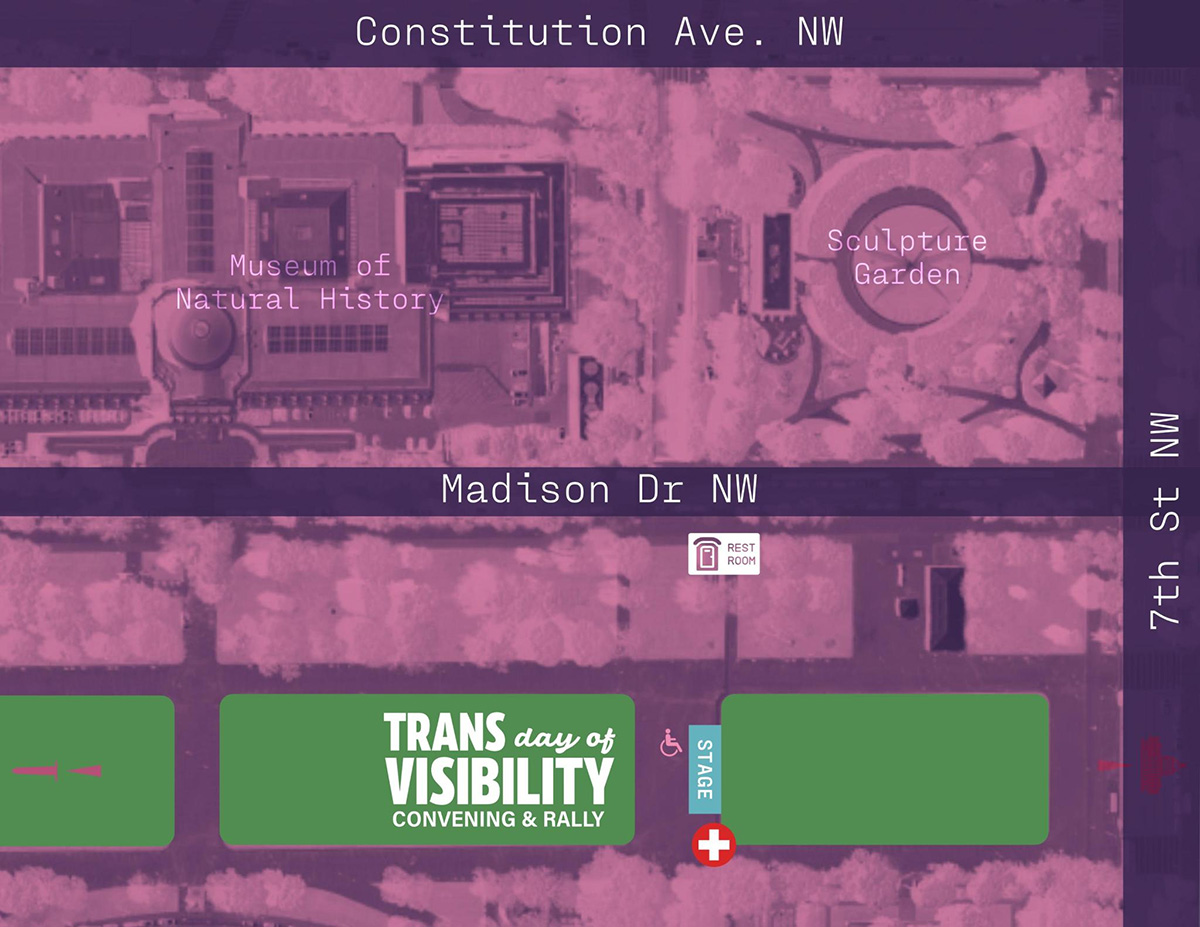
The Christopher Street Project has a number of events planned for the 2026 Trans Day of Visibility, including a rally on the Mall and an “Empowerment Ball” at the Eaton Hotel. Plenaries, panel discussions and meetings with members of Congress are scheduled in the three days of programming.
Announced speakers include N.H. state Rep. Alice Wade; Commissioner of the Metropolitan Water Reclamation District of Greater Chicago Precious Brady-Davis; activist and performer Miss Peppermint (“RuPaul’s Drag Race”); Lexington, Ky. Councilwoman Emma Curtis; Rabbi Abby Stein; D.C. activist and host Rayceen Pendarvis; Air Force Master Sgt. Logan Ireland; among other leaders, advocates and performers.
Conference programming on Thursday and Friday includes an educational forum and a Capitol Hill policy education day. Registration for the two-day conference has closed.
The “Trans Day of Visibility PAC Reception” is scheduled for Thursday, March 26 from 7:30-9 p.m. at As You Are (500 8th St., S.E.). Special guests include Rep. Dina Titus (D-Nevada) and Rep. Delia Ramirez (D-Ill.). Tickets are available at christopherstreetproject.org starting at $25.
The National Council of Jewish Women and the Christopher Street Project host a “Trans Day of Visibility Shabbat” on Friday, March 27 from 7-8 p.m. at Sixth & I (600 I St., N.W.). The service is to be led by Rabbi Jenna Shaw and Rabbi Abby Stein.
The “Now You See Me: Trans Empowerment Social & Ball” is scheduled for Friday, March 27 from 6-11 p.m. at the Eaton Hotel (1201 K. St., N.W.). The trans-themed drag ball is hosted by the Marsha P. Johnson Institute with support from the D.C. Mayor’s Office of LGBTQ+ Affairs, the Capital Ballroom Council, the Christopher Street Project, the Center for Black Equity, Generation for Common Good, and Parenting is Political. RSVP online at christopherstreetproject.org.
The National Transgender Day of Visibility Rally is scheduled for Saturday, March 28 on the National Mall at 11 a.m. The rally will include speakers and performances. Following the rally, attendees are encouraged to participate in the “No Kings” rally being held at Anacostia Park.
District of Columbia
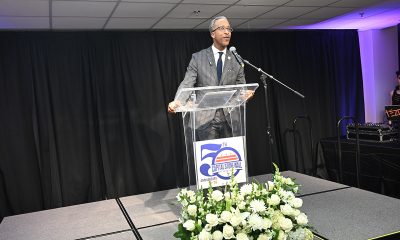
Capital Stonewall Democrats 50th anniversary gala draws sold out crowd
D.C. elected officials, mayoral candidates praise LGBTQ Democratic group

A sold-out crowd of 186 people, including D.C. elected officials and candidates running for D.C. mayor, turned out Friday, March 20, for the Capital Stonewall Democrats 50th anniversary celebration.
Among those attending the event, held at the Pepco Edison Place Gallery building next to the city’s Chinatown neighborhood, were seven D.C. Council members and four Democratic candidates running for mayor.
But at the request of Capital Stonewall Democrats leaders, the Council members, most of whom are running for re-election, and mayoral contenders did not give campaign speeches. Instead, they mingled with the crowd and focused on the accomplishments of the LGBTQ Democratic group over the past 50 years, with some presenting the group’s special “honor” awards to about a dozen prominent LGBTQ Democratic activists.
D.C. Mayor Muriel Bowser, who was initially expected to attend the event, did not attend.
The mayoral candidates attending included D.C. Council member Janeese Lewis George (D-Ward 4) and former At-Large Council member Kenyan McDuffie, an independent turned Democrat, who are considered the leading mayoral contenders in the city’s June 16 Democratic Primary. Both have strong, longtime records of support for LGBTQ rights issues.
The other two mayoral candidates attending the event were Gary Goodweather, a real estate manager, and Rini Sampath, a cybersecurity consultant. Sampath told the Washington Blade she self-identifies as queer. Both have expressed strong support on LGBTQ-related issues.
The D.C. Council members attending the event included Lewis George; Council Chair Phil Mendelson (D-At-Large); Anita Bonds (D-At-Large); Robert White (D-At-Large); Matt Frumin (D-Ward 3); Zachary Parker (D-Ward 5), the Council’s only gay member; and Charles Allen (D-Ward 6).
“Tonight we celebrate not just 50 years of history but 50 years of showing up,” Howard Garrett, Capital Stonewall Democrats immediate past president, told the gathering in opening remarks. “Showing up when it was easy, showing up when it wasn’t popular,” he said, adding, “This work only continues if we continue to show up.”
He noted that the deadline for joining the organization in time to be eligible to vote on its endorsement of candidates running in D.C.’s 2026 election was midnight that night. He urged attendees who were not members to go to two tables at the event to join.
The group’s current president, Stevie McCarty, thanked the group’s longtime members who he said played a key role in what he called its historic work in building political support for the D.C. LGBTQ community. Among those he thanked was Paul Kuntzler, 84, one of the group’s founding members in January 1976, when it was initially named the Gertrude Stein Democratic Club.
Members voted to rename the group the Capital Stonewall Democrats in 2021.
Among the LGBTQ advocates who were honored at the event was Rayceen Pendarvis, the longtime host of a D.C. LGBTQ online interview show that included interviews of candidates for public office. Pendarvis also served as emcee for the Capital Stonewall Democrats 50th anniversary event.
“Thank you everyone in this room who has done the work to make this world a better place,” Pendarvis said in opening remarks. “To all our prestigious activists in the room, all of our amazing politicians in the room who are doing the work, we love you and we honor you.”
Among the honorees in addition to Pendarvis was Malcolm Kenyatta, the Democratic National Committee’s vice chair who became the first openly LGBTQ person of color to win election to the Pennsylvania General Assembly in 2018.
Other honorees included Parker; Earl Fowlkes, founder of the International Federation of Black Prides; Vita Rangel, a transgender woman who serves as deputy director of the D.C. Mayor’s Office of Talent and Appointments; Heidi Ellis, director of the D.C. LGBTQ Budget Coalition; and Philip Pannell, longtime LGBTQ Democratic activist, Ward 8 civic leader, and longtime Capital Stonewall Democrats member.
The 50th anniversary event included an open bar and refreshments and entertainment by three drag performers.
District of Columbia
Gay candidate running for D.C. congressional delegate seat
Robert Matthews among 19 hoping to replace Eleanor Holmes Norton
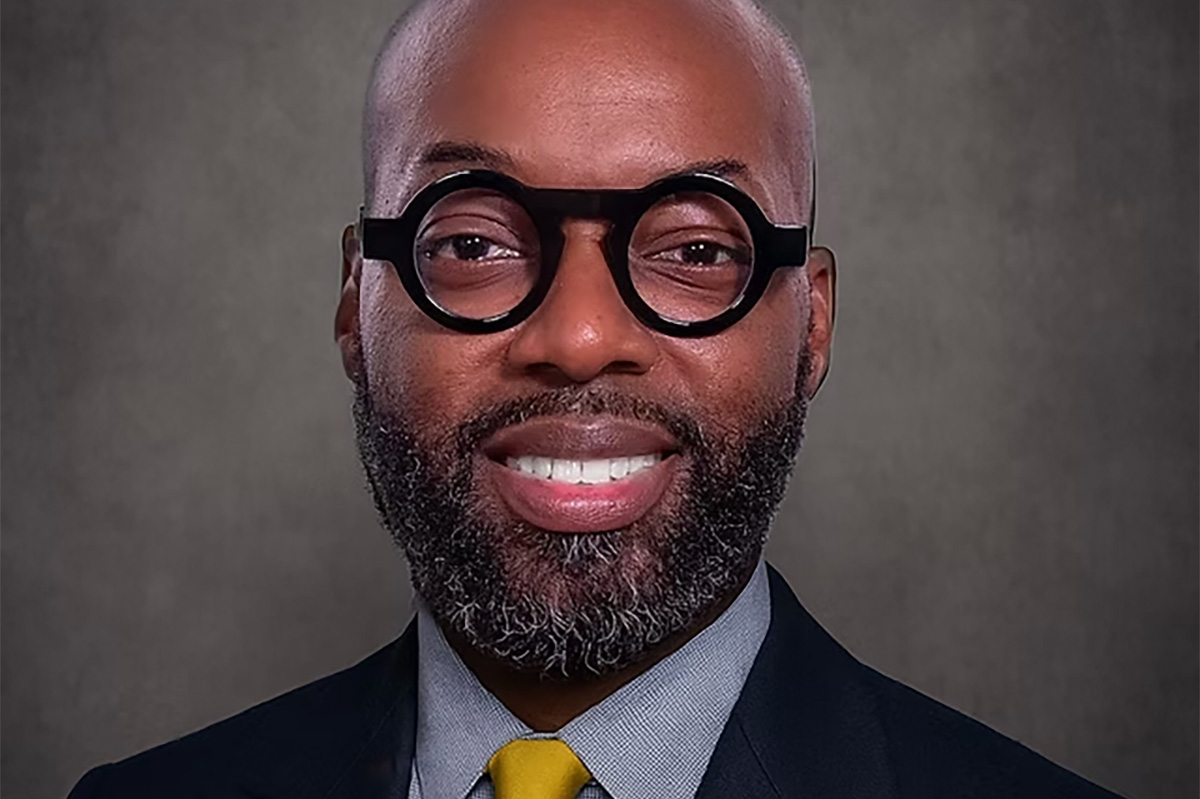
Robert Matthews, a former director of the D.C. Child and Family Services Agency, is running in the city’s June 16 Democratic primary for the D.C. Congressional Delegate seat as an openly gay candidate, according to a statement released by his campaign to the Washington Blade.
Matthews is one of at least 19 candidates running to replace longtime D.C. Congressional Del. Eleanor Holmes Norton (D), who announced earlier this year that she is not running for re-election.
Information about the candidates’ campaign financing compiled by the Federal Elections Commission, which oversees elections for federal candidates, shows that Matthews is one of only six of the candidates who have raised any money for their campaigns as of March 17.
Among those six, who political observers say have a shot at winning compared to the remaining 13, are D.C. Council members Brooke Pinto (D-Ward 2) and Robert White (D-At-Large). Both have longstanding records of support for LGBTQ rights and the community.
The FEC campaign finance records show Matthews was in fourth place regarding the money raised for his campaign, which was $49,078 as of March 17. The FEC records show Pinto’s campaign in first place with $843,496 raised, and White in third place with $230,399 raised.
The Matthews campaign statement released to the Blade says Matthews’s “commitment to the LGBTQ community is not a campaign position. It is the foundation of his life and his life’s work.”
The statement adds, “As the former director of D.C.’s Child and Family Services Agency, Robert led the District’s child welfare system with an explicit commitment to LGBTQ-affirming care.” It goes on to say, “He ensured that LGBTQ, trans, and nonbinary youth in foster care — among the most vulnerable young people in our city — were served with dignity, cultural humility, and genuine support.”
Among his priorities if elected as Congressional delegate, the statement says, would be “fighting to end homelessness among queer and trans seniors and youth,” opposing “federal roadblocks” to LGBTQ related health services, and defending D.C.’s budget and civil rights laws “from federal interference that directly threatens LGBTQ residents.”
The other three candidates who the FEC records show have raised campaign funds and observers say have a shot at winning are:
• Kinney Zalesne, former deputy national finance chair at the Democratic National Committee and an official at the U.S. Justice Department during the Clinton administration, whose campaign is in second place in fundraising with $593,885 raised.
• Gordon Chaffin, a former congressional staffer whose campaign has raised $17,950.
• Kelly Mikel Williams, a podcast host and candidate for the Congressional Delegate seat in 2022 and 2024, whose 2026 campaign has raised $3,094 as of March 17.
The Blade reached out to the Zalesne, Chaffin, and Williams campaigns to determine their position on LGBTQ issues. As of late Wednesday, the Zalesne campaign was the only one that responded.
“Kinney believes LGBTQ rights are fundamental civil rights and central to what makes Washington, D.C. a strong and vibrant community,” a statement sent by her campaign says. “At a time when LGBTQ people (especially transgender and nonbinary neighbors) are facing escalating political attacks across the country, she believes the District must continue to lead in protecting dignity, safety, and freedom for all,” it says.
The statement adds, “Throughout her career in government, business, and nonprofit leadership, Kinney has worked alongside LGBTQ and queer advocates and leaders. She is committed to maintaining an active partnership with the community to make sure LGBTQ voices remain central to the District’s future.”

Markwayne Mullin confirmed as next DHS secretary

Gay man murdered in Va.

Trans Day of Visibility events planned

Virginia General Assembly’s 2026 legislative session ends

Polish court rules country must recognize same-sex marriages from EU states

Queer American in Israel discusses Iran war’s impact

Calendar: March 21-26

‘How We Survived’ panel set for March 25

Small is beautiful: subcompact SUVs