National
CVS Health withholds coverage for new HIV prevention drug
AIDS activists criticize delay for acclaimed twice-yearly PrEP medication

CVS Health, one of the nation’s largest pharmacy benefit manager companies that play a lead role in deciding which drugs are covered by health insurance plans, has initially decided not to approve coverage for the new HIV prevention drug Yeztugo
Developed and manufactured by the pharmaceutical company Gilead Sciences, Yeztugo was approved for use in June of this year by the U.S. Food and Drug Administration as an HIV prevention or PrEP medication that needs to be taken just twice a year by injection.
HIV prevention advocates hailed the new drug as a major breakthrough in the years long effort to curtail and end the HIV/AIDS epidemic by enabling far more people at risk for HIV infection to adhere to a prevention drug regimen that needed to be taken once every six months rather than daily pills or through bi-monthly injections.
But the same advocates warned that the benefits of Yeztugo, which tests showed is greater than 99 percent effective in preventing HIV infection, could not be realized if the cost of the drug is not covered by health insurance plans or other coverage programs.
At the time the FDA approved its drug, Gilead Sciences announced that the yearly retail price for Yeztugo without insurance coverage would be $26,218.
According to reports by Reuters and Bloomberg news publications, a CVS Health spokesperson disclosed on Aug. 21 that the company “for now” would not add Yeztugo to its commercial coverage plans.
“As is typical with new-to-market products, we undergo a careful review of clinical, financial, and regulatory considerations,” Bloomberg News quoted CVS spokesperson David Whitrap as saying. Bloomberg reports that Whitman added that Yeztugo hasn’t been added to CVS Caremark’s commercial drug plans or U.S. Affordable Care Act plans.
“The entire world is excited by this drug and its potential contribution to preventing and eventually ending HIV,” said Carl Schmid, executive director of the D.C.-based HIV + Hepatitis Policy Institute. “However, a drug will only work if people can access it and right now CVS Health, which owns the largest pharmacy benefit manager in the country, is shamefully blocking people from taking it, unlike other payers,” Schmid said in a statement.
“We urge CVS, which has been committed to ending HIV in the past, to reconsider their decision immediately,” Schmid said. “Additionally, we call on federal and state regulators to ensure that plans are in compliance with the federal government’s PrEP coverage guidance and the many state laws that require coverage of all PrEP drugs.”
Gilead Sciences, meanwhile, has said it is “extremely pleased” with the progress it is making with other health insurance companies and “payers” to arrange for coverage of Yeztugo, according to Reuters. “[T]he company said it is on track to secure 75 percent of U.S. insurer coverage of Yeztugo by year-end, and 90 percent coverage by June 2026,” Reuters reports.




New York
Court orders Pride flag to return to Stonewall
Lambda Legal, Washington Litigation Group filed federal lawsuit
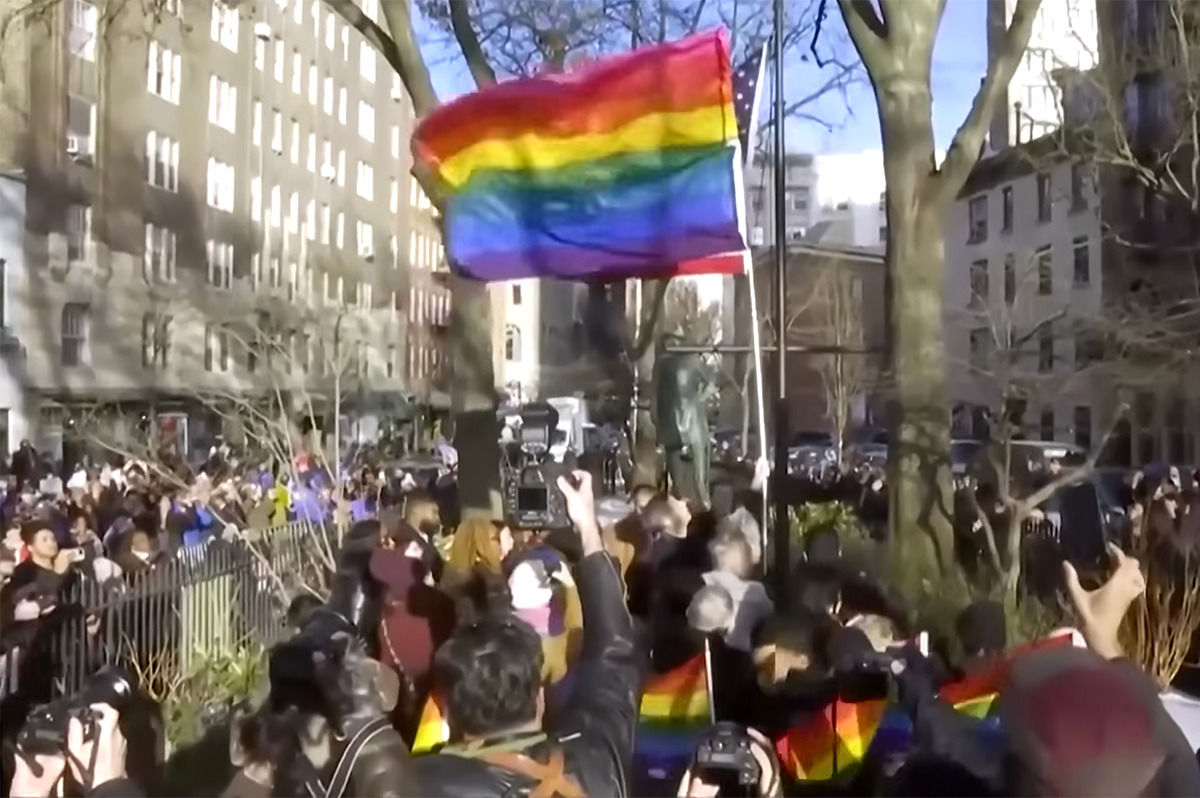
The Pride flag will once again fly over the Stonewall National Monument in New York following a court order requiring the National Park Service to raise it over the site.
The decision follows a lawsuit filed by Lambda Legal and the Washington Litigation Group in the U.S. District Court for the Southern District of New York, which challenged the removal as unconstitutional under the Administrative Procedure Act and argued that the government unlawfully targeted the LGBTQ community.
In February, the NPS removed the Pride flag from the Stonewall National Monument, the first national monument dedicated to LGBTQ rights and history in the U.S. The move followed a Jan. 21 memorandum issued by President Donald Trump-appointed NPS Director Jessica Bowron restricting which flags may be flown at national parks. The directive limited displays to official government flags, with narrow exceptions for those deemed to serve an “official purpose.”
Plaintiffs successfully argued that the Pride flag meets that standard, given Stonewall’s status as the birthplace of the modern LGBTQ rights movement. They also contended that the policy violated the APA by bypassing required public input and improperly applying agency rules.
The lawsuit named Interior Secretary Doug Burgum, Bowron, and Amy Sebring, superintendent of Manhattan sites for the NPS, as defendants. Plaintiffs included the Gilbert Baker Foundation, Village Preservation, Equality New York, and several individuals.
The court found that the memorandum — while allowing limited exceptions for historical context purposes — was applied unlawfully in this case. As part of the settlement, the NPS is required to rehang the Pride flag on the monument’s official flagpole within seven days, where it will remain permanently.
“The sudden, arbitrary, and capricious removal of the Pride flag from the Stonewall National Monument was yet another act by this administration to erase the LGBTQ+ community,” said Karen Loewy, co-counsel for plaintiffs and Lambda Legal’s Senior Counsel and Director of Constitutional Law Practice. “Today, the government has pledged to restore this important symbol back to where it belongs.”
“This is a complete victory for our clients and for the LGBTQ+ community,” said Alexander Kristofcak, lead counsel for plaintiffs and a lawyer with Washington Litigation Group. “The government has acknowledged what we argued from day one: the Pride flag belongs at Stonewall. The flag will be restored and it will fly officially and permanently. And we will remain vigilant to ensure that the government sticks to the deal.”
“Gilbert Baker created the Rainbow Pride flag as a symbol of hope and liberation,” said Charles Beal, president of the Gilbert Baker Foundation. “Today, that symbol is restored to the place where it belongs, standing watch over the birthplace of the modern LGBTQ+ rights movement.”
“The government tried to erase an important symbol of the LGBTQ+ community, and the community said no,” said Amanda Babine, executive director of Equality New York. “Today’s accomplishment proves that when we stand together and fight back, we win.”
“The removal of the Pride flag from Stonewall was an attempt to erase LGBTQ+ history and undermine the rule of law,” said Andrew Berman, executive director of Village Preservation. “This settlement restores both.”
With Loewy on the complaint are Douglas F. Curtis, Camilla B. Taylor, Omar Gonzalez-Pagan, Kenneth D. Upton Jr., Jennifer C. Pizer, and Nephetari Smith from Lambda Legal. With Kristofcak on the complaint are Mary L. Dohrmann, Sydney Foster, Kyle Freeny, James I. Pearce, and Nathaniel Zelinsky from Washington Litigation Group.
Federal Government
Trump budget targets ‘gender extremism’
Proposed spending package would target ‘leftist’ political ideologies
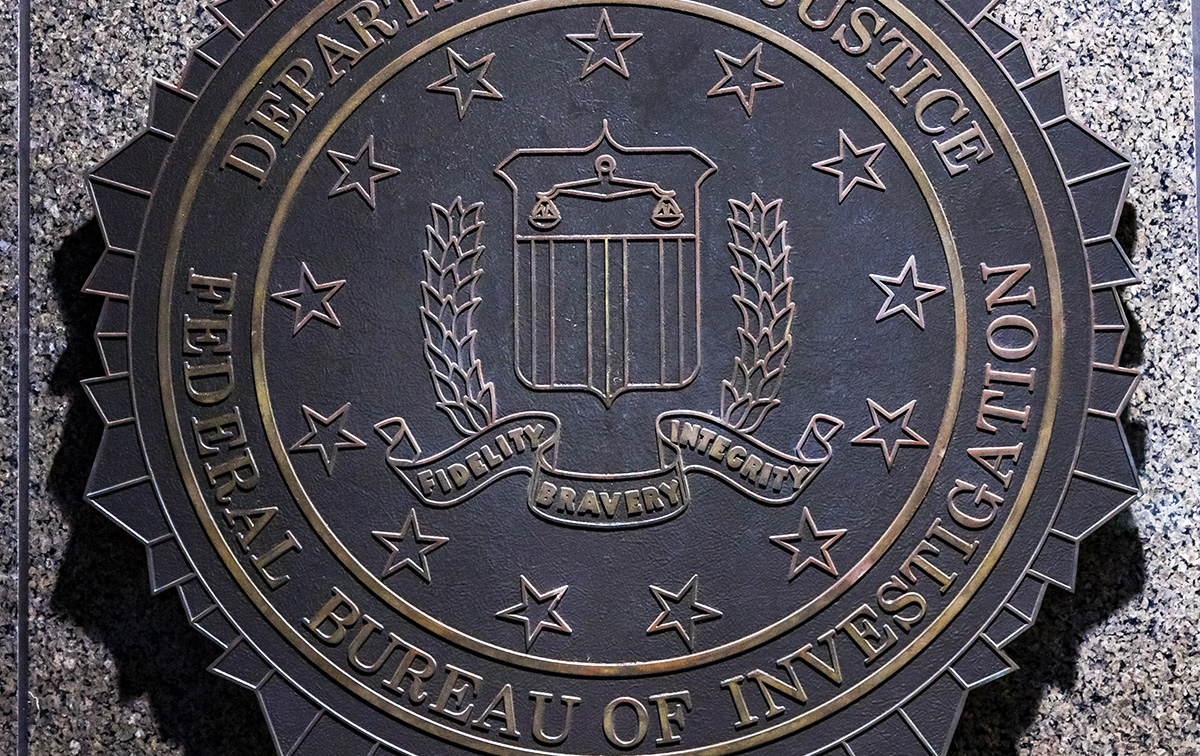
The White House submitted its 2027 budget request to Congress last month, outlining a push for the Federal Bureau of Investigation to “proactively” target what it describes as “extremism” related to gender — raising concerns about the potential for law enforcement to target LGBTQ people.
The Trump-Vance administration’s 2027 budget request, submitted to Congress on April 4, proposes a dramatic increase in national security and law enforcement spending, while reducing foreign aid and restructuring multiple domestic security programs. In total, the administration is requesting $2.16 trillion in discretionary budget authority (including mandatory resources), a 15.3 percent increase over the 2026 proposal.
Central to the proposal is the creation of a new “NSPM-7 Joint Mission Center,” a direct follow-up to the September 2025 National Security Presidential Memorandum 7 (NSPM-7). The directive instructs the Justice Department, the FBI, and other national security agencies to combat what the administration defines as “political violence in America,” effectively reshaping the Joint Terrorism Task Force network to focus on “leftist” political ideologies, according to reporting by independent journalist Ken Klippenstein.
The American Civil Liberties Union has characterized NSPM-7 as a way for President Donald Trump to intimidate his political enemies.
In a press release following the memorandum, Hina Shamsi, director of the ACLU’s National Security Project, said, “President Trump has launched yet another effort to investigate and intimidate his critics,” and had described the move as an “intimidation tactic against those standing up for human rights and civil liberties.”
The proposed mission center would include personnel from 10 federal agencies tasked with targeting “domestic terrorists” associated with a wide range of ideologies. Among them is what the administration labels “extremism” related to gender, alongside categories such as “anti-Americanism,” “anti-capitalism,” “anti-Christianity,” and “support for the overthrow of the U.S. government.” The document also cites “hostility toward those who hold traditional American views” on family, religion, and morality — language LGBTQ advocates have increasingly warned could be used to frame queer and transgender rights movements as ideological threats.
The mission center is one component of a proposed $166 million increase in the FBI’s counterterrorism budget.
In total, the FBI would receive $12.5 billion for salaries and expenses under the proposal, a $1.9 billion increase. Planned investments include unmanned aerial systems operations and counter-drone capabilities, counterterrorism efforts, and security preparations for the 2028 Summer Olympics in Los Angeles. The budget also cites 67,000 FBI arrests since Jan. 20, 2026, which it describes as a 197 percent increase from the prior year.
When Congress passed the USA PATRIOT Act in 2001, it also enacted 18 U.S.C. § 2331(5), which defines domestic terrorism as activities involving acts dangerous to human life that violate criminal laws and are intended to intimidate or coerce civilians or influence government policy through violence. That statutory definition has not changed.
However, federal agencies have historically categorized domestic terrorism threats into groups such as racially or ethnically motivated violent extremism, anti-government or anti-authority violent extremism, and other threats, including those tied to bias based on religion, gender, or sexual orientation.
The language in the budget suggests a shift in how those categories are interpreted and applied — particularly by explicitly linking “extremism” to gender and to perceived opposition to “traditional” views — without any corresponding change to federal law. Only Congress has the power to change the definition of domestic terrorism by passing legislation.
The budget document states:
“DT lone offenders will continue to pose significant detection and disruption challenges because of their capacity for independent radicalization to violence, ability to mobilize discretely, and access to firearms. Additionally, in recent years, heinous assassinations and other acts of political violence in the United States have dramatically increased. Commonly, this violent conduct relates to views associated with anti-Americanism, anti-capitalism, and anti-Christianity; support for the overthrow of the U.S. government; extremism on migration, race, and gender; and hostility toward those who hold traditional American views on family, religion, and morality.”
This language echoes earlier actions by the Trump-Vance administration targeting trans people.
On the first day of his second term, President Trump signed Executive Order 14168, titled “Defending Women from Gender Ideology Extremism and Restoring Biological Truth to the Federal Government.”
The order establishes a strict binary definition of sex and withdraws federal recognition of trans people.
“It is the policy of the United States to recognize two sexes, male and female,” the order states. “‘Sex’ shall refer to an individual’s immutable biological classification as either male or female. ‘Sex’ is not a synonym for and does not include the concept of ‘gender identity.’”
Appropriations committees in both chambers are expected to begin hearings in the coming weeks.
Puerto Rico
The ‘X’ returns to court
1st Circuit hears case over legal recognition of nonbinary Puerto Ricans

Eight months ago, I wrote about this issue at a time when it had not yet reached the judicial level it faces today. Back then, the conversation moved through administrative decisions, public debate, and political resistance. It was unresolved, but it had not yet reached this point.
That has now changed.
Lambda Legal appeared before the 1st U.S. Court of Appeals in Boston, urging the court to uphold a lower court ruling that requires the government of Puerto Rico to issue birth certificates that accurately reflect the identities of nonbinary individuals. The appeal follows a district court decision that found the denial of such recognition to be a violation of the U.S. Constitution.
This marks a turning point. The issue is no longer theoretical. A court has already determined that unequal treatment exists.
The argument presented by the plaintiffs is grounded in Puerto Rico’s own legal framework. Identity birth certificates are not static historical records. They are functional documents used in everyday life. They are required to access employment, education, and essential services. Their purpose is practical, not symbolic.
Within that framework, the exclusion of nonbinary individuals does not stem from a legal limitation. Puerto Rico already allows gender marker corrections on birth certificates for transgender individuals under the precedent established in Arroyo Gonzalez v. Rosselló Nevares. In addition, the current Civil Code recognizes the existence of identity documents that reflect a person’s lived identity beyond the original birth record.
The issue lies in how the law is applied.
Recognition is granted within specific categories, while those who do not identify within that binary structure remain excluded. That exclusion is now at the center of this case.
Lambda Legal’s position is straightforward. Requiring individuals to carry documents that do not reflect who they are forces them into misrepresentation in essential aspects of daily life. This creates practical barriers, exposes them to scrutiny, and places them in a constant state of vulnerability.
The plaintiffs, who were born in Puerto Rico, have made clear that access to accurate identification is not symbolic. It is a basic condition for moving through the world without contradiction imposed by the state.
The fact that this case is now being addressed in the federal court system adds another layer of significance. This is not a pending policy discussion or a legislative proposal. It is a constitutional question. The analysis is not about political preference, but about rights and equal protection under the law.
This case does not exist in isolation.
It unfolds within a broader context in which debates over identity and rights have increasingly been shaped by the growing influence of conservative perspectives in public policy, both in the United States and in Puerto Rico. At the local level, this influence has been reflected in legislative discussions where religious arguments have begun to intersect with decisions that should be grounded in constitutional principles. That intersection creates tension around the separation of church and state and has direct consequences for access to rights.
Recognizing this context is not an attack on faith or religious practice. It is an acknowledgment that when certain perspectives move into the realm of public authority, they can shape outcomes that affect specific communities.
From within Puerto Rico, this is not a distant debate. It is a lived reality. It is present in the difficulty of presenting identification that does not match one’s identity, and in the consequences that follow in workplaces, schools, and government spaces.
The progression of this case introduces the possibility of change within the applicable legal framework. Not because it resolves every tension surrounding the issue, but because it establishes a legal examination of a practice that has long operated under exclusion.
Eight months ago, the conversation centered on ongoing developments. Today, there is already a judicial finding that identifies a violation of rights. What remains is whether that finding will be upheld on appeal.
That process does not guarantee an immediate outcome, but it shifts the ground.
The debate is no longer theoretical.
It is now before the courts.

Court orders Pride flag to return to Stonewall

Sri Lankan government withdraws support for LGBTQ tourism initiative

In an act of artistic defiance, Baltimore Center Stage stays focused on DEI

Trump budget targets ‘gender extremism’

Susan Lucci on love, loss, and ‘All My Children’

Trump’s war threats trigger rare 25th Amendment discussion

New book celebrates 1970s dance music icons

ROSENSTEIN: Vote McDuffie for mayor of D.C.

A Sondheim masterpiece ‘Merrily’ rolls onto Netflix