Arts & Entertainment
Get swept away by ‘Sparks Camp,’ the Philippines’ first gay dating show
Landmark series creators discuss impact on LGBTQ representation in country
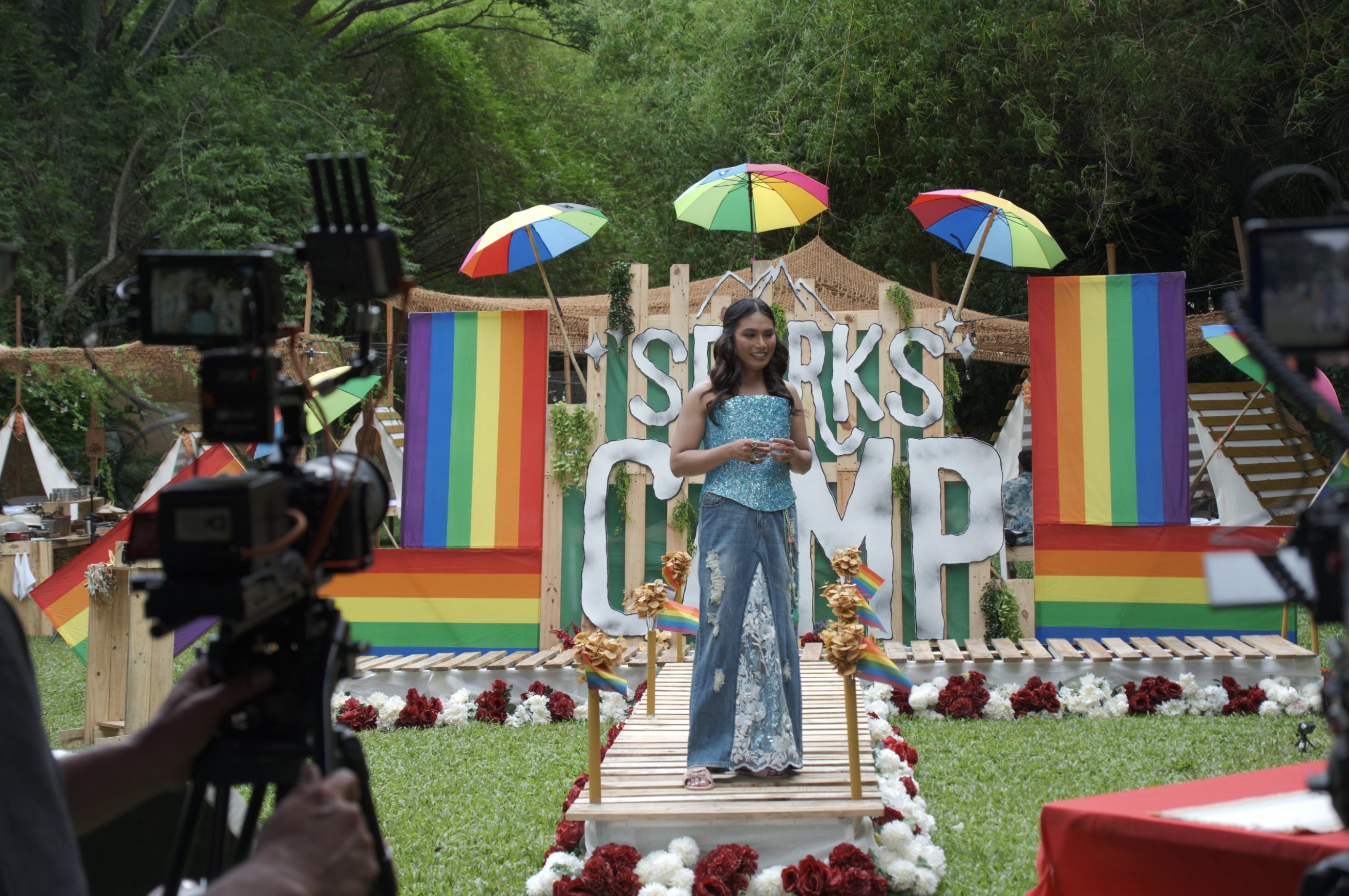
Whether it be iconic crashouts or jaw-dropping moments of drama, reality television has always had a tremendous impact on queer culture — but few shows have done as much in the fight for global liberation as “Sparks Camp.”
This series has awed since its premiere, with U.S. audiences discovering “Sparks Camp” when the first episode dropped for free on YouTube back in 2023. Focusing on a group of “Campers” who participate in romance-themed challenges while exchanging the titular “sparks of love,” the program made history as the Philippines’ first ever gay dating show. It was a landmark production for a country that still struggles with widespread prejudice against the LGBTQ community. Yet with each season comes increasing viewership and more people (both within the country and across the world) learning from the love on display and the many messages of queer self-acceptance featured in each episode. The Los Angeles Blade sat down with the cast and creatives behind this series as they wrap up their third season, with the “Sparks Camp” team breaking down what this groundbreaking show has done for LGBTQ representation in the Philippines — and how they plan to do even more going forward.
“The journey [to] “Sparks Camp” hasn’t been easy,” said Creative Head Hyro Aguinaldo, as he spoke to the Los Angeles Blade alongside Director Theodore Boborol. The pair detailed the many difficulties they faced in getting greenlit by ABS-CBN — one of the Phillipines’ biggest TV networks — and their fight against an entertainment industry that had never given LGBTQ stories the platform they deserve.
“Most queer individuals here in the Philippines are tolerated, but not accepted,” explained Boborol. “Queer people are usually only relegated to [comic relief], never [portrayed] in any serious way … and that includes, of course, reality shows.”
He describes how impossible it once seemed that they’d actually get to create the program and, now that they’re wrapping up its third season, how heartwarming it’s been to see LGBTQ audiences fall in love with the project. It’s not always a great experience, as the series has been the victim of countless discriminatory attacks online. But it’s undeniable that “Sparks Camp” has become one of the most educational, authentic portrayals of what it truly means to be LGBTQ in the Philippines today … but what is it like to actually be on the show?
While reality series can skyrocket contestants to internet fame, none elevate their cast to international icon status like “Sparks Camp” does for its ensemble. Season 3 stars Andrew, Kim, and Edward spoke about how thrilling it felt to have their attempts at romance get filmed on camera, with Kim saying, “Being there in the camp with nine other strangers, where I have to be as vulnerable as I can!? It was very challenging!” From half-naked mud wrestling tournaments to discussions about healing from trauma, the experience is intense enough on its own, yet it wasn’t until their installment began airing that the men realized just how influential these moments would be in the Philippines’ ongoing fight for queer rights. These were narratives that the heterosexual members of their audience (a demographic that has steadily increased since season one) weren’t used to, with Andrew detailing, “One of the reasons why a lot of people are unaware [about LGBTQ issues] is because we’ve been restricted from talking about these very normal topics.” They all explained how mainstream Filipino culture often discourages discussions about sexual safety and LGBTQ romance, meaning not only are people disallowed from learning about these identities, but young queer folk aren’t able to see themselves represented onscreen.
“Moving forward,” said Edward. “I want queer boys and girls to see their stories reflected in ours.”
Representing your community on such a large scale can be daunting, but these campers take pride in using every scene to show their audience what it means to be gay in the Philippines today. It’s a heavy responsibility for many, but luckily, this show is hosted by someone who truly knows what it means to fight for your found family: “Mother Sparker” herself, Mela Habijan.
When she isn’t advocating for transgender rights or winning international pageants, Habijan acts as the host of “Sparks Camp,” moderating the series and imbuing each episode with her unique brand of self-love. It’s a role she does not take lightly, emphasizing, “Whenever I spend time with [the campers], there’s an assurance that their stories are safe, that this isn’t just a mere reality show about finding love — it’s [a space] for them to find value in themselves.”
It’s an assurance that shows through the screen; whether it’s witty banter at challenges or reminding Campers to love themselves above all else, she brings a level of care to her role unusual for your typical reality host. She describes how this kind of openness is sadly missing in the Philippines, with the country’s deep roots in Catholicism meaning anti-LGBTQ discrimination is the norm in many areas and that there are few laws safeguarding queer rights. It’s because of this that she recognizes just what a huge impact “Sparks Camp” has on their local communities, saying, “I take pride in being ‘Mother Sparker’ because once a young trans person [watches the show], they can say: my future can be in front of the camera.” Habijan, who’d spent her entire career fighting to make easier pathways for other trans artists, emphasized how essential it is for people to see her and her campers being their truest selves onscreen. “The future is bright for [young people], because if they see more and more people who reflect [their] same experiences, then they’ll gain the courage [they need].”
“Sparks Camp” stands out not only for its historical impact, but because it does something that few reality shows are able to: it offers an amazing show, with an even better message. As each of the team expressed in their interviews with the Blade, this program and the few others like it are bringing LGBTQ stories to the Philippines like the country has never seen before. It’s helping to not only start vital conversations surrounding the respect and rights of queer communities, but fosters a kind of inclusive, love-filled influence that any viewer, no matter what country they’re watching from, can benefit from. In the last few moments of her interview, Mela Habijan perfectly encapsulated the core of what “Sparks Camp” is truly about.
“The value of their being queer … that’s what matters most. When you create and enrich the love that [the Campers] have within [them] — even if they don’t find the spark at the end of the series — they will end their journey at ‘Sparks Camp’ with so much pride in themself.”
It’s a pride that LGBTQ people worldwide can use now more than ever, and luckily for all, it’s a pride that anyone can watch three seasons of for free online right now.






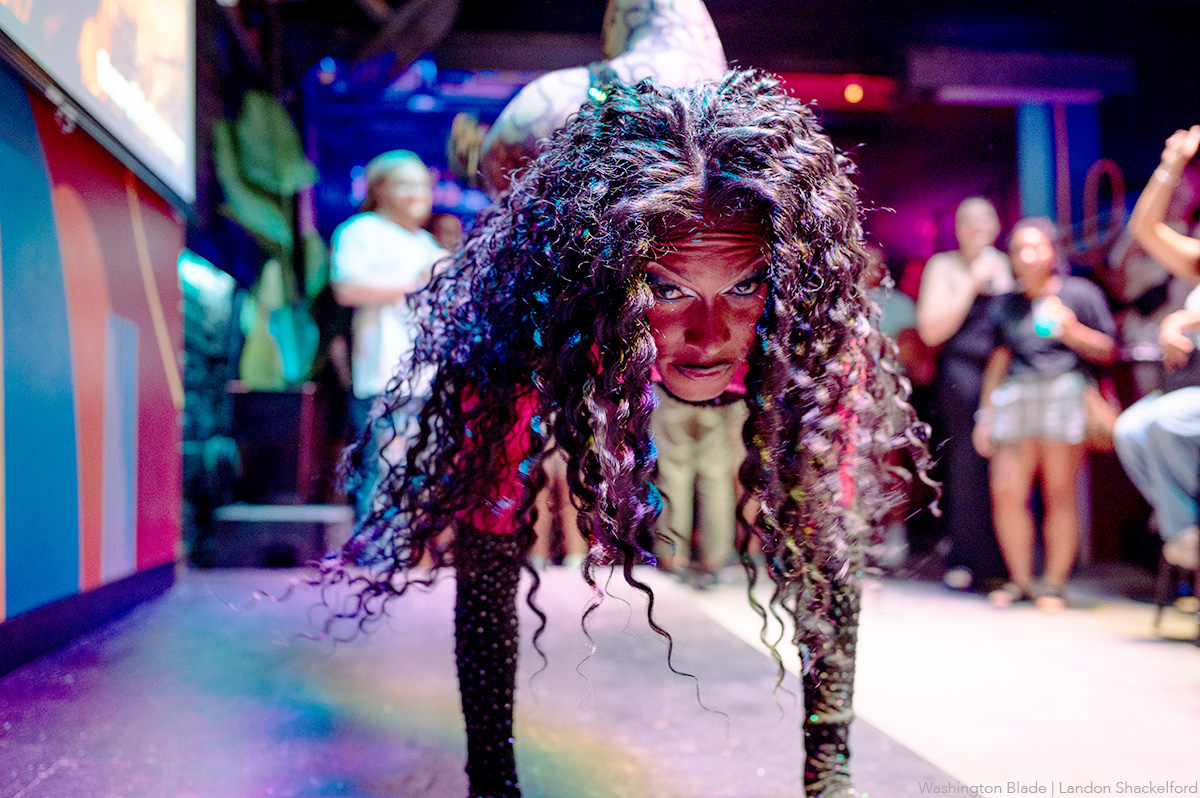
The Petal Release Party and Drag Show was held at Spark Social on Friday, July 31. Performers included Tiara-Missou, Labianna and Darcy de la Cuadra.
(Washington Blade photos by Landon Shackelford)




Celebrity News
Madonna headlines World Pride Music Festival in Amsterdam
Kylie Minogue made surprise appearance alongside gay icon

AMSTERDAM — Madonna on Sunday headlined the final night of the World Pride Music Festival in Amsterdam.
The gay icon took the stage shortly before 2:30 a.m. local time (8:30 p.m. ET on Saturday) during Club Confessions, a set that MISTR, a telehealth platform that offers free access to PrEP, Doxy PEP, STI testing, and long-term HIV care, organized.
“Mother is here and this is gay heaven,” said Madonna when she took the stage inside Amsterdam’s AFAS Live concert hall that can hold up to 6,000 people.
Stuart Price, who produced Madonna’s 2005 “Confessions on a Dance Floor” album and “Confessions II,” which debuted on July 2, DJed the set.
Kylie Minogue made a surprise appearance. She and Madonna performed a new remix of “Love Sensation” from “Confessions II.”
(Washington Blade video by Michael K. Lavers)
“Throughout my career, I’ve always supported efforts to fight HIV and AIDS, and that fight begins with education and access,” said Madonna in a MISTR press release. “With MISTR, (CEO) Tristan (Schukraft) is expanding access to HIV prevention and sexual healthcare for everyone. Through this work, he’s helping preserve and strengthen LGBTQ+ spaces while investing in the communities and culture that have long sustained us.”
Minogue in an Instagram post thanked Madonna, Price, Schukraft, and MISTR.
Madonna appeared at The Abbey in West Hollywood, Calif., in April. Madonna in June celebrated Pride month with a pop-up performance in New York’s Times Square.
Jake Resnicow and Insomniac produced the World Pride Music Festival that also featured Bebe Rexha and Paris Hilton, among others.
“Pride has always been about bringing our community together,” said Resnicow. “At a moment when too many people are being told to hide or make themselves smaller, gathering openly, joyfully, and without apology matters more than ever. I couldn’t be prouder of what this festival brought to life in Amsterdam — one dance floor, completely free.”
Theater
Reggie White relishing first season as artistic director of Woolly Mammoth
First five shows a reminder that ‘pressure is a privilege’
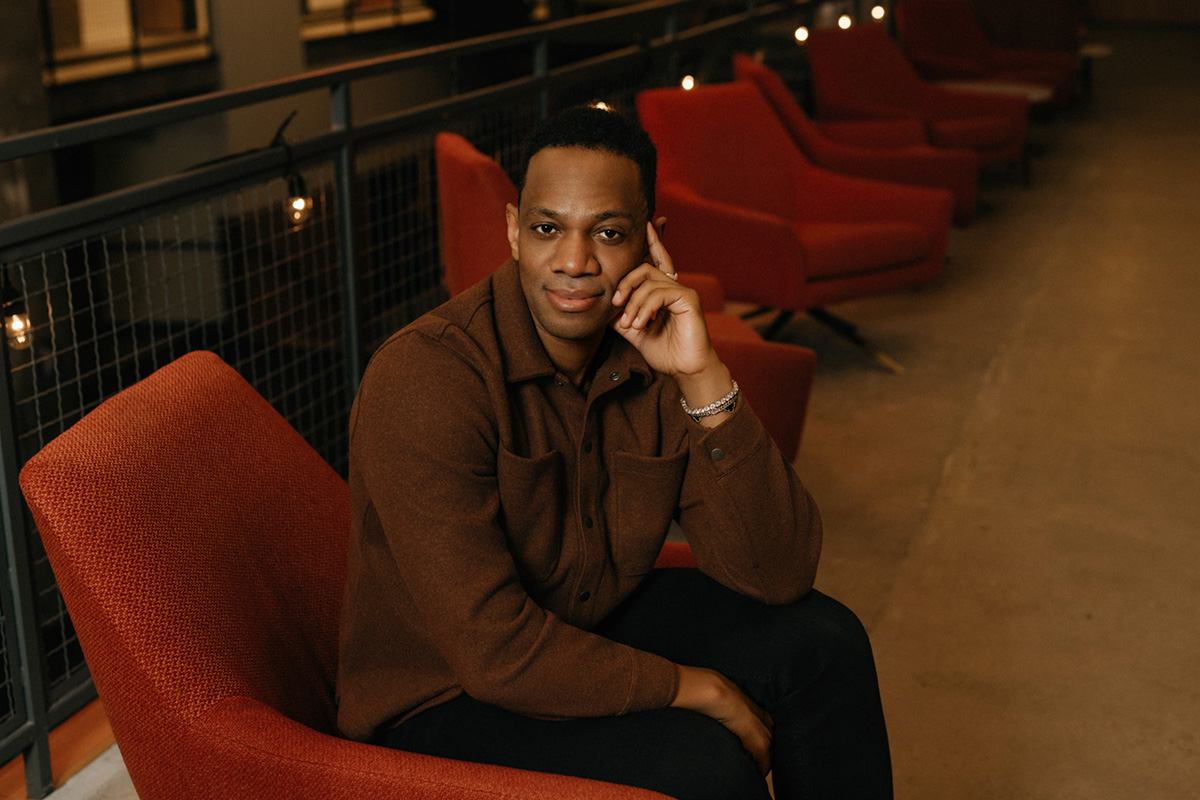
Madly talented and preternaturally energetic, Reggie D. White, 38, is about to launch his first season as artistic director of D.C.’s boundary-pushing Woolly Mammoth Theatre Company.
White brings a lot to the job. As actor, playwright, and director, his varied resume includes a 2019 Broadway acting debut in Matthew López’s Tony Award–winning play “The Inheritance,” his semi-autobiographic play “Fremont Ave.” that opened to acclaim last season at Arena Stage, and a number of exciting regional directing credits.
A longtime admirer of Woolly, the out theater-maker was selected from a pool of candidates before receiving the offer last November and starting work in January. His season of five world premieres kicks off with gay playwright Steve Yockey’s “Venus” (Sept. 9-Oct. 4), a darkly funny study of modern relationships told through two lesbians looking back on their first encounter.
White was introduced to Woolly Mammoth as a pre-law student at Cal State Hayward in the San Francisco Bay Area, long before he foresaw a life in the arts. “As part of a random theater history course, I was assigned to write a paper on a counterculture company called Woolly Mammoth,” he recalls “Strange name. I was like what the hell is that?”
Nineteen-year-old White was intrigued. Research acquainted him with Howard Shalwitz who co-founded Woolly in 1980, and the company’s commitment to living playwrights and new work. He also learned how theater could be used as a tool for difficult conversations and shape the way people thought about social issues by employing imagination and rigor.
“Never in a million years did young me envision that one day I’d be Woolly’s third artistic director in its 46-year history,” says White. “It’s kind of serendipitously insane.”
WASHINGTON BLADE: Was there a moment when the enormity of the job hit you?
REGGIE D. WHITE: After I’d signed my contract and finished all the paperwork, I got my keys and sat in the theater by myself in the dark and thought about what an incredible honor it is to be trusted with what happens in this beautiful space [in D.C.’s Penn Quarter]. I might have cried. Sometimes I have to pinch myself to remember it’s real.
BLADE: Are you curating the upcoming 2026–2027 season?
WHITE: Yes, I am. It’s very rare that an incoming artistic director gets to program their first season, but I was lucky in terms of time. After being hired late last year, I asked Woolly’s managing director Kimberly E. Douglas, if she thought it would be crazy if I programmed the season. She warned me it would be hard.
I invoked tennis legend Billie Jean King’s maxim “pressure is a privilege” and got to work.
These plays [dubbed White’s “first five”] represent both the kind of theater that Woolly can do really well and speak directly to my voice as curator and how I want to contribute to the larger theatrical conversation in the DMV.
Getting here has meant a lot of late nights. But I knew the juice would be worth the squeeze.
BLADE: As a queer artistic director, what makes you unique?
WHITE: When I was playing in “Inheritance” on Broadway, after a performance, U.S. Supreme Court Justice Sotomayer came backstage to meet the cast. She spoke about how her lens on the world as a Puerto Rican woman shapes her decisions. Similarly, because I’m a queer Black man I see through a lens that shapes my work.
I know I’m not the only queer artistic director in town. For me, it influences how I make editorial decisions. Out of this season’s five plays there are explicitly queer characters in four [“Venus,” “Chanukkah Spectacular,” “Ten Grand,” and “Love I Awethu Further”] and I’m directing two [“Venus,” “Ten Grand”].
BLADE: Will we see familiar faces?
WHITE: Every show this season will feature a Woolly Mammoth company member in its cast. Our company also includes designers and directors who we’ll include. I’m invested in continuing to provide a showcase for their work.
BLADE: How do you think queer audiences will receive the season?
WHITE: Very well, I think. For queer people who’ve had to navigate the world subversively and solve problems in unique ways, I think it will be especially interesting. I find theater a potent place for questions.
Like all artistic directors. I’ll show up for the job in my own way. I’m just excited that I’ve been invited to bring the fullness of myself to the role.

PHOTOS: Petal Release Party

Madonna headlines World Pride Music Festival in Amsterdam

Reggie White relishing first season as artistic director of Woolly Mammoth

PHOTOS: Amsterdam Pride Canal Parade

Amsterdam Pride Canal Parade draws hundreds of thousands

Madonna to perform at World Pride in Amsterdam

BLADE ENDORSEMENT: Susan Stewart for mayor of Rehoboth Beach

PHOTOS: Lambda Legal in the Pines

Calendar: July 31-August 6