Movies
The season’s must-see queer TV and films
Gay cruising, ‘Downton’ returns, J.Lo, Guadagnino’s latest, and more
Fall is rolling in fast, and that means shorter days, longer nights, and a fresh season of entertainment on our screens, both big and small, so there will be plenty of choices for you when it comes to deciding how to fill those extra hours of evening time. As always, the Blade is here to give you the rundown on the new movies and shows that are coming your way for the next few months. Our list, in order of release date, is below.
“Helluva Boss: Special”
Sept. 10, Prime Video
Queer animation fans can look forward to a new offering from Vivienne “VivziePop” Medrano, whose adult animated musical black comedy web series (yes, we know that’s a lot of descriptors) “Hazbin Hotel” and its spin-off, “Helluva Boss” garnered a legion of fans in the late teens/early twenties. Set in Hell, the latter show revolves around an assasination-by-hire business run by a ragtag crew of imps. Including multiple LGBTQ characters (gay, bi, pan, trans, and more), it’s set in the same fictional “Hell-iverse” as “Hazbin,” but is otherwise a standalone experience; to celebrate its September debut on the Prime Video platform (the existing first two seasons will be available, with the promise of more to come), Medrano has created a new remake of the series pilot (originally aired in 2019), which will premiere there alongside the previously released installments. Wicked fun!
“Dreams” [Drømmer]
Sept. 12, VOD
For fans of queer international cinema, this Norwegian drama from writer-director Dag Johan Haugerud will surely check off all the necessary boxes. The middle installment of a trilogy about nontraditional intimacy (the other two films are titled “Sex” and “Love”), it follows a young female student (Ella Øverbye) who falls in love with her French teacher (Selome Emnetu) and documents her feelings in writing, sparking tension within her family and forcing a confrontation of unfulfilled dreams and hidden longings. Winner of the Golden Bear at the 2025 Berlin International Film Festival, it offers a Scandinavian perspective on the generational shift of attitudes around relationships, sexuality, and social norms.
“Downton Abbey: The Grand Finale”
Sept. 12, Theaters
It’s hard to imagine a “Downton Abbey” without the late Maggie Smith, but the phenomenally popular highbrow soap opera about the interwoven lives of the wealthy Crawley family and their servants in early 20th-century England is returning for one last installment, regardless. This time, the clan faces disaster after Mary (Michelle Dockery) finds herself at the center of a public scandal that places the household at risk of financial disaster and social disgrace. The ever-plucky Crawleys and their loyal staff must carry on, embracing change as the next generation is faced with leading Downton into an uncertain future. We’ll be there for it, you can bet — though the publicity emphasis on the “next generation” and the “future” makes us wonder if it really is the “Grand Finale” after all. Hugh Bonneville, Elizabeth McGovern, and all the rest of the beloved cast return, alongside some new faces, for what will surely be a fan must-see cinematic event.
“The History of Sound”
Sept. 12, Theaters
One of the year’s most anticipated queer titles, this epic gay romance from South African filmmaker Oliver Hermanus (“Beauty,” “Moffie”) traces the passionate relationship between two young music scholars (Paul Mescal and Josh O’Connor) who embark on a mission to record folk songs in rural Maine at the end of World War I. Based on two short stories by Ben Shattuck (who also wrote the screenplay), it’s not just a love story set against the social constraints of the early 1900s – it’s also a profound exploration of music as an expression of humanity, which somehow makes the love story even better. With endearing and moving performances from its hot-ticket leading men (we know most of you will be seeing this one solely for Mescal, O’Connor, or both, and it’s completely understandable), and an idyllic pastoral beauty that evokes a rugged “Brokeback Mountain” mystique, it has all the makings of an instant queer classic – and we can’t wait for it, either.
“The Compatriots”
Sept. 16, VOD
This award-winning queer festival favorite is a coming-of-age buddy movie about a young undocumented immigrant (Rafael Silva) facing deportation, who unexpectedly reunites with his estranged best friend (Denis Shepherd), a “vivacious bachelor” (as the official synopsis puts it) who seeks a deeper connections. Together, they embark “on a heartfelt journey to prevent Javi’s expulsion from the only country he has ever called home.” Timely in its subject matter and appealing in its focus on friendship, it’s definitely on our watchlist.
“Gen V, Season 2”
Sept. 17, Prime Video
The popular and thrilling spinoff series from “The Boys” returns for a second season, continuing the saga of America’s first and only college for superheroes and putting its gifted students (and their moral boundaries) to the test as they compete for the school’s top honors and the chance to join an elite team of international world-savers – but as the school’s dark secrets come to light, they must decide what kind of heroes they want to become.
“Plainclothes”
Sept. 19, Theaters (Limited Release)
This hotly anticipated Sundance Audience Award-winner comes from writer-director Carmen Emmi, and stars Tom Blyth as a young undercover cop in mid-90s New York, who is tasked with entrapping and arresting gay men who cruise the local mall for anonymous sex. It’s an assignment that makes him increasingly uncomfortable, since he’s closeted himself – something that becomes even more problematic when he falls for a potential “offender” (Russell Tovey, in full and glorious “daddy” mode) in the line of duty. Yes, it’s a story of life in an era of still-prevalent homophobia, and yes, we wish we didn’t have to see another one – but given the current societal climate in America 2025, it’s probably important to be reminded, once again, of what that’s like. Don’t worry, though – it’s not ALL bleak, and there is some seriously sexy chemistry between its leading men.
“Brilliant Minds,” Season 2
Sept. 22, NBC
The medical procedural drama, which stars Zachary Quinto as a “psychological sleuth” (inspired by world-famous author and neurologist Oliver Sacks) who, alongside his team at Bronx General Hospital, delves into “mysteries of the mind,” returns for a second season, as Dr. Wolf and his team at Bronx General continue to confront puzzling cases, coming face-to-face with the question: Who deserves care?
“English Teacher,” Season 2
Sept. 25, FX
Also returning for a second round is this popular and well-received comedy from creator and star Brian Jordan Alvarez, who as the title character continues to rock the boat in his high school workplace whenever controversy arises. This season, he finds himself battling a range of divisive issues like climate change, COVID, military recruitment, and student phone usage, while also struggling to keep his relationship with a fellow teacher (Jordan Firstman) separate from his work life. A refreshingly unfiltered queer-eye comedy of sociopolitical errors, the first season was an unexpected joy; here’s hoping Alvarez and crew can keep the magic going.
“Boots”
Oct. 9, Netflix
Based on Greg Cope White’s memoir (“The Pink Marine”), this new dramedy series stars Miles Heizer as a closeted teen who joins the military during the “Don’t Ask, Don’t Tell” era of the 1990s. Another timely reminder of what life was like in the bad old days (for non-heterosexual people, anyway), this one is likely buoyed by a sense of humor. Also starring Liam Oh, Vera Farmiga, and Max Parker, with Cedrick Cooper, Ana Ayora, Angus O’Brien, Dominic Goodman, Kieron Moore, Nicholas Logan, Rico Pairs, and more in support.
“Kiss of the Spider Woman”
Oct. 10, Theaters
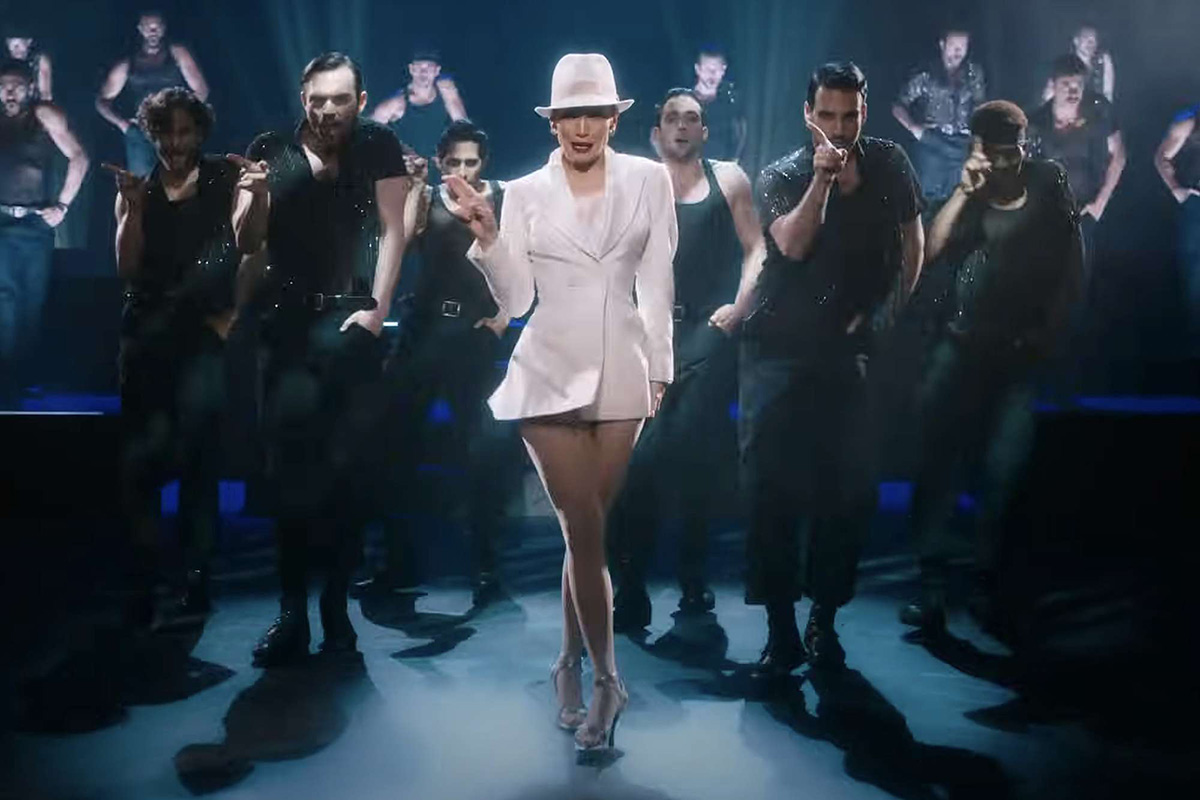
This one is big. The long-awaited screen adaptation of Kander and Ebb’s Tony-winning musical – itself adapted from the novel by Manuel Puig, which was also adapted into the 1985 non-musical film starring William Hurt and Raul Julia – arrives at last, directed by Bill Condon (“Chicago,” “Dreamgirls”) and featuring Diego Luna and Tonatiuh alongside diva Jennifer Lopez in the title role. The story of two mismatched cellmates in an Argentine prison – a Marxist revolutionary and a flamboyantly queer window dresser imprisoned for “public indecency” – who form an unlikely bond as the latter recounts the plot of a favorite movie musical that has given him inspiration and hope. Advance glimpses through the film’s trailer promise a visually dazzling cinematic experience, while the talent of its stars gives us high hopes for a film that lives up to the pedigree of its source material – but let’s face it, it’s a musical (and a VERY queer musical, at that) so we’re going to be in the audience on opening night no matter what.
“After the Hunt”
Oct. 10, Theaters
The latest opus from filmmaker Luca Guadagnino (“Call Me By Your Name,” “Challengers,” “Queer”) is also his third movie in two years, a thriller starring Julia Roberts as an Ivy league professor caught up in abuse allegations involving a student and a colleague. It’s unclear whether there are any directly queer plot details here, especially since Guadagnino has stated it doesn’t address “sexuality and love” as his other recent work has done, but given the Italian-born director’s track record, it’s sure to be simmering with unspoken attractions either way. Also starring Ayo Edebiri (“The Bear”) and Andrew Garfield (“Tick, Tick… Boom!”), along with Lío Mehiel (“Mutt”), Michael Stuhlbarg, and Chloe Sevigny, with a score by Trent Reznor and Atticus Ross.
“Blue Moon”
Oct. 17, Theaters
Oscar-winning filmmaker Richard Linklater reunites with favorite muse and collaborator Ethan Hawke for this intriguingly queer biopic, which focuses on closeted gay songwriter Lorenz Hart (Hawke) – who partnered with Richard Rodgers to create songs that have become staples of the “Great American Songbook” – during a pivotal episode during his life: the opening night of “Oklahoma!,” the groundbreaking musical written by Rodgers with new collaborator Oscar Hammerstein III, which launched their long career as Broadway legends while Hart accelerated his tragic slide into alcoholism and death. Co-starring Andrew Scott (as Rodgers) and Margaret Qualley as a semi-fictionalized would-be paramour of the doomed musical genius. Guaranteed to deliver a powerful look at one of America’s most tragic musical giants, with award-bait performances from an “A-list” cast of heavy hitters, we are confident that this one is not to be missed.
“Queens of the Dead”
Oct. 24, Theaters
Director Tina Romero is behind this wild-ride horror comedy, about a zombie apocalypse that breaks out in Brooklyn on the night of a giant warehouse party, forcing an eclectic group of drag queens, club kids, and other “frenemies” to ditch the drama, put aside their differences and take up arms against the brain-craving undead horde in the way that only a true “creature of the night” can accomplish. Starring Katy O’Brian, Jaquel Spivey, Tomas Matos, Nina West, Quincy Dunn-Baker, Jack Haven, Cheyenne Jackson, Dominique Jackson, and Margaret Cho
“Hedda”
Oct. 29, Theaters
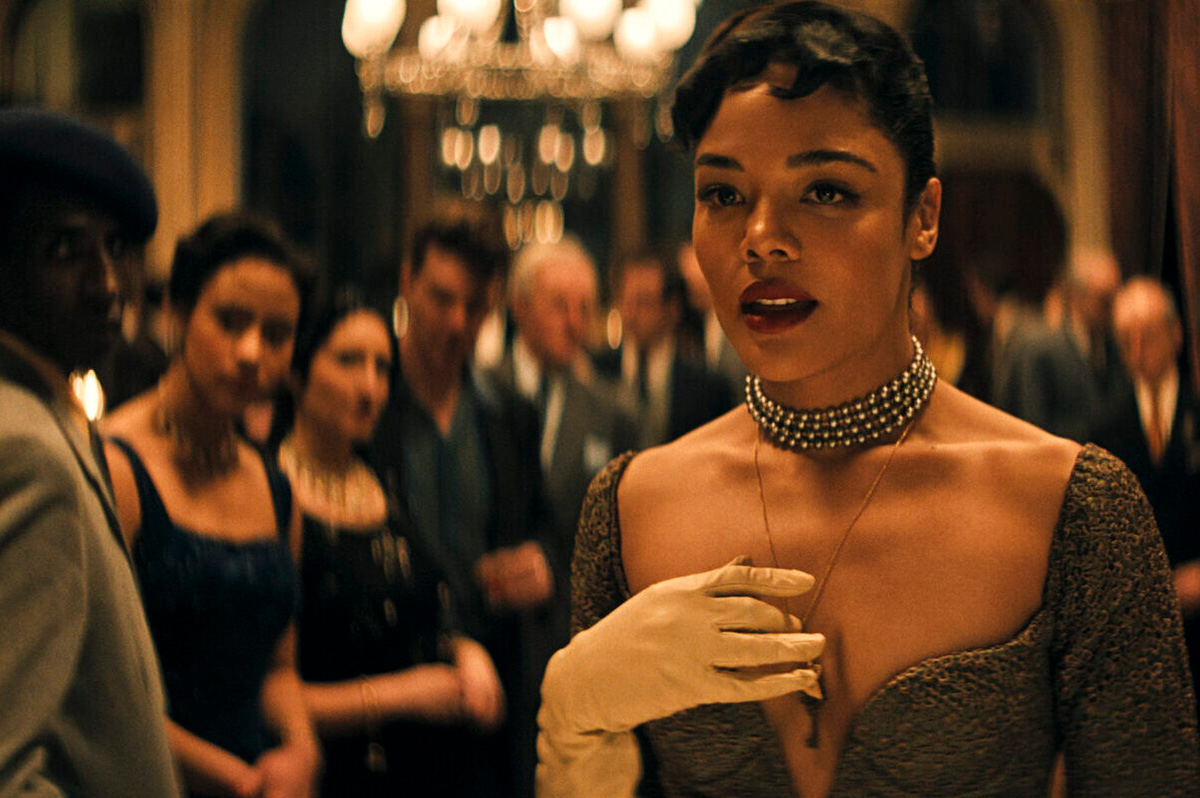
Norwegian playwright Henrik Ibsen’s classic “Hedda Gabler” gets a queer-skewed adaptation in Nia DaCosta’s new interpretation of the 19th-century drama about a society woman trapped in a loveless marriage who schemes to free herself by persuading her husband to commit suicide. Tessa Thompson takes on the title role, while Nina Hoss plays her significant other – here transmuted into a woman, Eileen, instead of the play’s original Ejlert – in a match-up that looks epic just from the brief glimpses afforded by its trailer. We’re always a big fan of queering the classics, and with talented (and openly queer) Thompson starring as one of the most iconic female characters in history, there’s no doubt this will be a movie for the ages.



Movies
‘It’s Dorothy’ traces lasting influence of a cultural icon
Thoughtful and scholarly with a celebratory tribute to the character
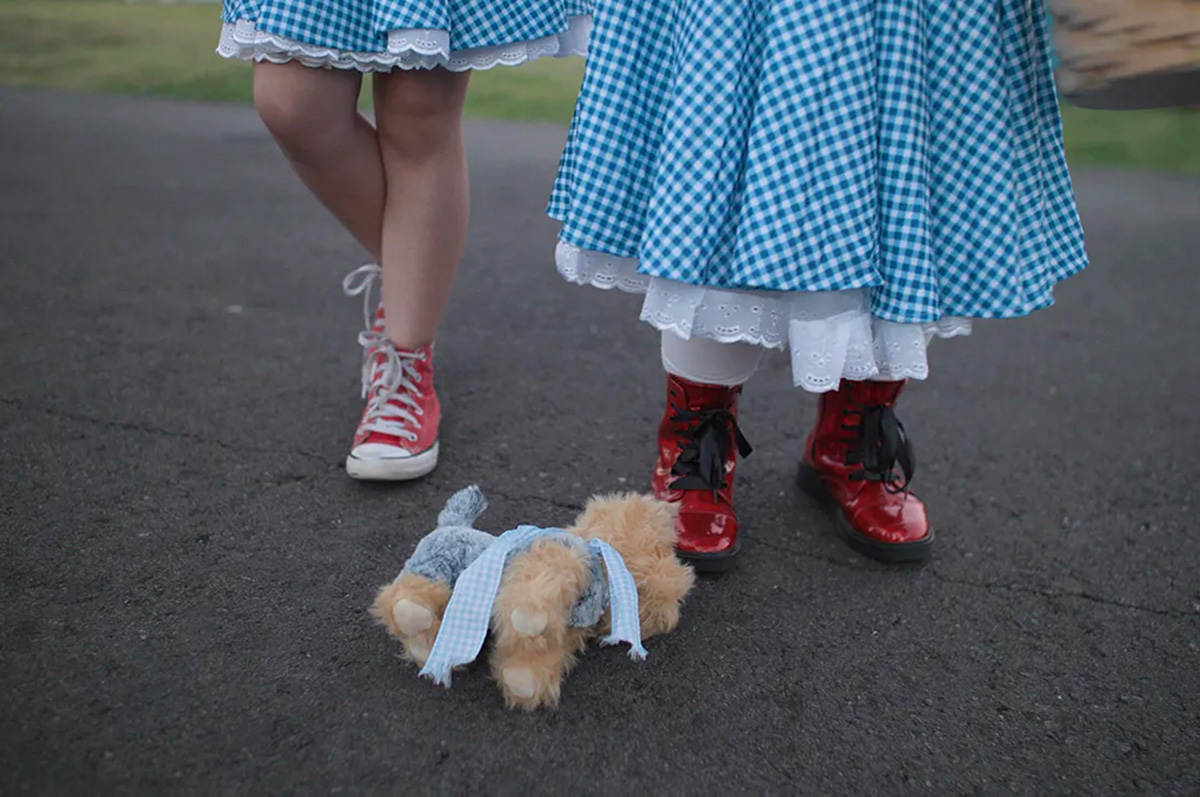
There was a time, according to queer lore, when gay men referred to themselves as a “Friend of Dorothy” as a coded way of communicating their sexual orientation to each other without fear of “the straights” catching on. The reference, of course, is a winking nod to the love and affinity felt by the community toward the main character of L. Frank Baum’s 1900 novel “The Wonderful Wizard of Oz” – especially as personified by Judy Garland in the classic 1939 big screen musical version from MGM.
It may be that the origins of this phrase have been mythologized, exaggerated and/or retro-fitted to convey the underground nature of the queer community – as, indeed, is suggested in “It’s Dorothy!” (the new documentary from filmmaker Jeffrey McHale, now streaming on Peacock), which concerns itself with the enduring cultural legacy of this quintessentially American fictional heroine. But regardless of whether it truly served as a sort of “secret password,” it has come to be embraced as a part of the LGBTQ lexicon. As “campy” as the reference may be, being a “Friend of Dorothy” is now a proudly held communal watchword not just for gay men, but for an entire rainbow community – and McHale’s fizzy-yet-reverential exploration taps into all the reasons how and why this fictional Kansas farm girl has come to be a touchstone for so many by tracking her journey across popular culture over the 125 years since she first sprung to life in the pages of Baum’s timeless literary fantasy.
Calling on the commentary of cultural figures – writers, performers, and other artists whose paths have been, by fate or by personal design, have become associated with Dorothy’s legacy across pop culture, as well as the observations of scholars and historians that provide insight on the appeal that has made her into a sort of avatar for anyone who feels marginalized in a wild and self-contradictory world – and enriched by a plentiful trove of clips from the myriad incarnations through which she has become embedded into the American pop culture imagination, it’s a documentary that leans heavily into the notion that Baum’s timeless heroine remains relevant through her relatability. Given a minimum of descriptors by the author who created her and portrayed in the public imagination through a widely divergent array of social viewpoints, she represents a kind of “blank page” on which we can imprint ourselves; but at the same time, there is something about her – her nebulous status as presumed orphan, raised by an aunt and uncle who don’t quite understand her and thrust without warning into a world of contradictory rules and unfair expectations – that speaks directly to those who feel like outsiders, or who dream of freedom, acceptance, and personal agency beyond the proverbial rainbow.
Naturally, McHale imprints on Dorothy’s most iconic incarnation off the pages of Baum’s books; the cultural legacy of Dorothy cannot be separated from that of her most iconic representative – Garland, of course – and his documentary easily makes the case that, through her association with the character, this beloved actress who was constantly judged and frequently stigmatized throughout a career that took her through the heights of public success to the depths of personal heartbreak, all while living under the constant scrutiny of Hollywood’s publicity-and-propaganda machine. As a result, she somehow merged identities with her most famous role: Judy was Dorothy, but Dorothy was Judy, too. “It’s Dorothy” takes advantage of this almost mystical transfiguration to reflect on the qualities that make this pairing of actress and character so deeply complementary, while also using it to illuminate why the empathy which binds her with the queer community is so tightly connected to the qualities she shared with the non-descript but unforgettable character that would make her into an undisputed icon.
As famous as Garland’s Dorothy is, however, it’s not the end-and-be-all of Baum’s beloved heroine, and much of McHale’s movie turns its attention to the numerous other performers who have taken on the role throughout the decades, in various incarnations of the “Wizard of Oz” mythos – particularly through “The Wiz,” the 1974 Broadway musical that reframes and remolds the story (and Dorothy) through the lens of Black culture and experience, and other iterations that have emerged throughout pop culture as a testament to her enduring appeal. Indeed, the movie brings illumination to the way that Dorothy – and the “Oz” mythos in general – has become a touchstone within Black community culture as well, and how artists (like musician Rufus Wainwright, gay counterculture icon John Waters, comedian/actor Margaret Cho, comedian/writer/director Lena Waithe, and “Wicked” author Gregory Maguire, all of whom participate in the film’s conversation) have found inspiration in the character and her story, which has helped to shape their own creative lives.
Thoughtful and scholarly while also delivering a celebratory tribute to the character (and the outsider qualities which make her beloved by so many who can relate to her sense of longing and the call she feels to journey “Somewhere Over the Rainbow”), “It’s Dorothy” provides a respectful yet candid examination of the lasting impact of Baum’s iconic character and the world he created around her in our popular imagination, not just as queer people but as a larger American community. It’s an entertaining journey into cultural history, which connects the dots to give us insight on why Dorothy and her adventures continue to speak to us with such profound resonance. It’s also entertaining in a way that feels like a “guilty pleasure” but is validated by the reverence it exudes for its subject, and loaded with memorably evocative clips from movies, shows, and performances from across the decades; and while it may begin to feel a bit repetitive, at points, as it examines the various actresses who have played Dorothy over the years (and the meaning they have found in her that connects her to their own lives), it nevertheless maintains a sincerity of feeling that keeps us invested.
And just in case you might feel like the times are too somber for a nostalgic stroll down the “yellow brick road” of cultural memories, be aware that McHale also explores the ominous presence of the Wizard himself in these tales, a phony who pretends at power while hiding behind a benevolent mask to maintain it.
As if the “Wicked” movies didn’t make the point clearly enough, we’re in a world that’s a lot more Oz-like than we would like to imagine, and it’s hard not to wish we had the ability to go “home” simply by tapping our heels together in fabulous footwear. “It’s Dorothy!” conveys that longing in a way that feels light-hearted and joyful, and reminds us why being a “friend of Dorothy” has been and continues to be a resonant way of identifying ourselves in a world full of wizards, witches, and “twisters” that can carry us far away from home.
And if you want to follow it up with an impromptu rewatch of the 1939 classic, we wouldn’t blame you. It’s a movie that feels, to so many of us, like home – and there’s no place like it.
Movies
Intense doc offers transcendent treatment of queer fetish pioneer
‘A Body to Live In’ a fascinating trip into a transgressive culture

Once upon a time in the 1940s, a teenager named Roland Loomis, who lived with his devout Lutheran parents in Aberdeen, S.D., received a hand-me-down camera from his uncle. It was a gift that would change his life.
Small and effeminate, he didn’t exactly fit with the “in” crowd of his small rural town; but he had an inner life more thrilling than anything they had to offer, anyway, and that camera became the key with which it could finally be unlocked. Waiting patiently for those precious hours when he was alone in the house, he used it to capture images of himself that expressed an identity he had only begun to explore, through furtive experiments in body manipulation that incorporated exotic costuming, erotic nudity, gender ambiguity, and what many of us might call (though he would not) self-mutilation, including the piercing of his skin and other extreme forms of physical modification.
Young Roland would go on to become famous (or perhaps, notorious) in the decades to come, but it would be under a different name: Fakir Musafar, the focal figure of filmmaker Angelo Madsen’s documentary “A Body to Live In,” which opened in Los Angeles on Feb. 27 and expands to New York this weekend.
Like Musafar himself, who died of lung cancer at 87 in 2018, it’s a documentary that doesn’t quite follow the expected rules. Eschewing “talking head” commentators and traditional narration, Madsen spins his movie from his subject’s extensive archives and allows the information to come through the voices of those who were close to him: collaborator and life partner Cléo Dubois, performance artists Ron Athey and Annie Sprinkle, and underground publisher V. Vale are among the many who contribute their memories and impressions of him, while evocative photos and film footage create a hazy “slide show” effect to provide a guided tour of his life, his art, and his legacy. Less a biography than a chronicle of profoundly unorthodox self-discovery, it details his development from those early days of clandestine self-photography through a continual evolution that would see him become a performance artist, a central figure in the burgeoning BDSM culture, a seeker who espoused eroticism as a spiritual practice, the founder of a “Radical Faeries” offshoot for the kink/fetish community, and ultimately an elder and mentor for a new generation for whom his once-taboo ideas and explorations had essentially become mainstream – thanks in no small part to his own pioneering efforts.
It’s a fascinating, hypnotic trip into a culture which might feel disturbingly transgressive to those who have never been a part of it – yet will almost certainly feel like being “seen” to those who have. It opens a window into a lifestyle where leather, kink, BDSM, gender play, and non-monogamous “situationships” are not just accepted but viewed as natural variations on the spectrum of human sexuality; and in the middle of it all is Musafar, on a deeply personal quest to connect with the deepest part of his essence through the intense and ritualistic pursuit of an inner drive that keeps pushing him further. As one reminiscing cohort remarks during the film, it’s as if he is “trying to find an answer to a question that” he “cannot form.”
Indeed, it might be said that Madsen’s movie is an exercise in forming that question; bringing his own “transness” into the mix as he examines the various aspects of Musafar’s ever-evolving relationship with self, identity, and presentation, he evokes a timely resonance in which the imperative to make physical form match psychic self-perception becomes an irresistible force, and draws a direct line between his subject’s fluid ambiguity and the plight faced by modern trans people over the bigotry of those who think gender is strictly about genitalia. Perhaps the question has to do with whether we are defined by our identities or by our physical form – or if both are malleable, adaptable, and in a constant state of flux.
In any case, with regard to Musafar, “A Body to Live In” is unquestionably a film about transformation, not just of physical manifestation but of consciousness itself. In his journey from being little Roland, the outcast schoolboy with a secret fetish, to Fakir, the spiritual psychonaut for whom sex and gender are only walls that separate us from a true and eternal essence, he is embodied by Madsen’s reverent documentary as a being in the process of breaking free from the restrictions of physical existence, of transcending all such distinctions by letting go of life itself – something underscored not only by the section of the movie dealing with the impact of the AIDS epidemic on Musafar’s deeply-bonded community, but by his own words, spoken in a deathbed interview that serves as a connecting thread throughout the film. We are kept unavoidably aware of the mortality which – for Musafar at least – seems little more than a prison that keeps us from the unfettered joy of our true nature.
But while Madsen honors his subject as a pillar – and an under-sung hero – of contemporary queer culture, he also addresses the aspects that made him a “problematic” figure; in his life, he drew criticism over perceived cultural appropriation from the indigenous American tribes whose sacred rituals inspired the kink-flavored practices which facilitated his own spiritual odyssey, and which he popularized among his own acolytes to give rise to the still-controversial “Modern Primitive” movement that has been criticized by some for turning meaningful cultural traditions into an excuse for trendy fashion accessories. Even Musafar’s survivors, whose love for him exudes palpably from the stories and memories they share of him throughout the film, make observations that point to his flaws; yet at the same time, Madsen’s documentary makes clear that Musafar himself never saw himself as perfect, either – just as someone willing to endure the kind of suffering that most of us might find unbearable in order to get closer to perfection.
Of course, it probably helped that he enjoyed that so-called “suffering,” but that’s perhaps too glib an observation in the face of a film that so clearly makes a case for the deep and sincere commitment he held for his quest for transcendence; but it’s also a helpful reminder that his practices – which might seem macabre and twisted to the uninitiated – were also an experience of joy, an exercise in rising above pain and making it a vehicle toward enlightenment, and in achieving a deeper understanding of one’s own place in this confusing place we call the universe.
Full disclosure: “A Body to Live In” is an intense experience, replete with candid sexual conversation, frequent nudity, and graphic scenes of extreme fetish practices – like suspension by metal hooks through the skin – which might be hard to handle for those who are unprepared to be confronted by them. Even so, as dark and menacing as it might be for the squeamish outsider, the world revealed in Madsen’s eloquent portrait is full of treasures and steeped in dark beauty, and it’s hard to imagine a more fitting way than that to portray a queer pioneer like the former Roland Loomis.
Movies
Moving doc ‘Come See Me’ is more than Oscar worthy
Poet Laureate Andrea Gibson, wife negotiate highs and lows of terminal illness
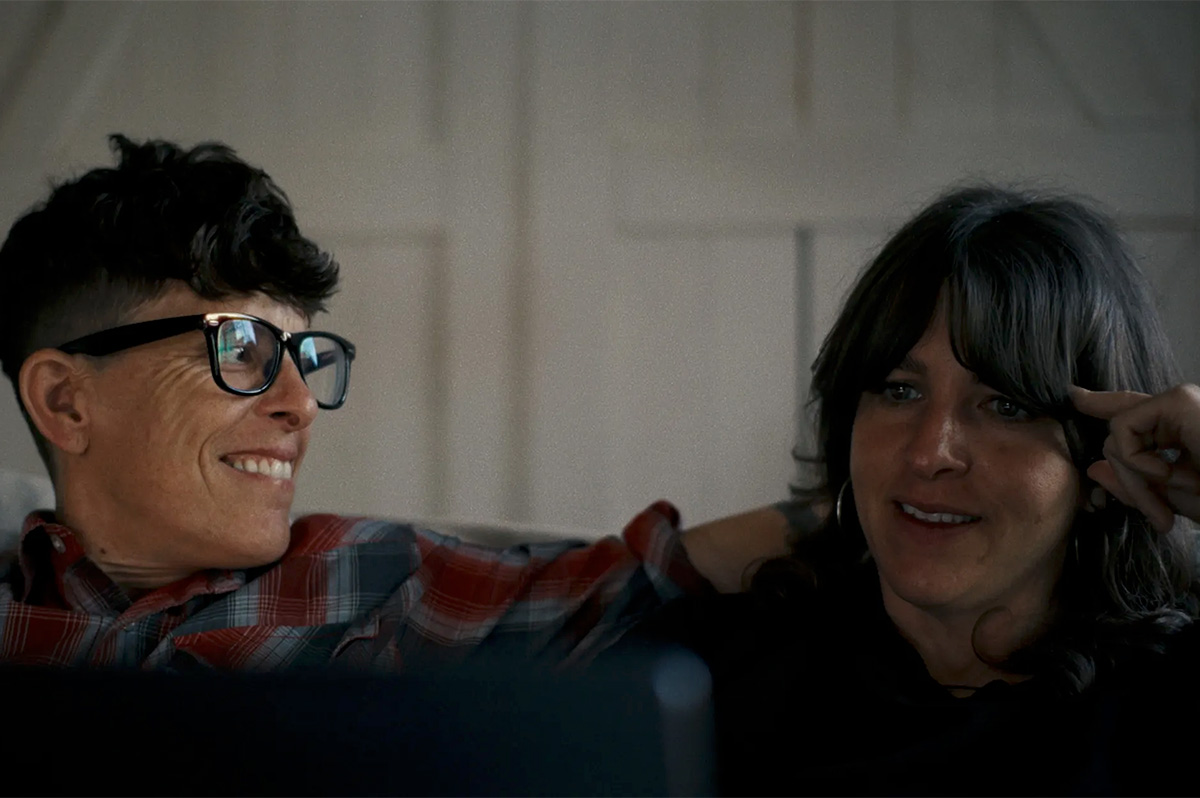
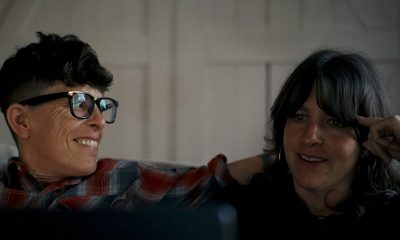
When Colorado Poet Laureate Andrea Gibson died from ovarian cancer in the summer of 2025, the news of their passing may have prompted an outpouring of grief from their thousands of followers on social media, but it was hardly a surprise.
That’s because Gibson – who had risen to both fame and acclaim in the early 2000s with intense live performances of their work that made them a “superstar” at Poetry Slam events – had been documenting their health journey on Instagram ever since receiving the diagnosis in 2021. During the process, they gained even more followers, who were drawn in by the reflections and explorations they shared in their daily posts. It was really a continuation, a natural evolution of their work, through which their personal life had always been laid bare, from the struggles with queer sexuality and gender they experienced in their youth to the messy relationships and painful breakups of their adult life; now, with precarious health prohibiting a return to the stage, they had found a new platform from which to express their inner experience, and their fans – not only the queer ones for whom their poetry and activism had become a touchstone, but the thousands more who came to know them through the deep shared humanity that exuded through their online presence – were there for it, every step of the way.
At the same time, and in that same spirit of sharing, there was another work in progress around Gibson: “Come See Me in the Good Light,” a film conceived by their friends Tig Notaro and Stef Willen and directed by seasoned documentarian Ryan White (“Ask Dr. Ruth”, “Good Night, Oppy”, “Pamela, a Love Story”), it was filmed throughout 2024, mostly at the Colorado home shared by Gibson and their wife, fellow poet Megan Falley, and debuted at the 2025 Sundance Film Festival before a release on Apple TV in November. Now, it’s nominated for an Academy Award.
Part life story, part career retrospective, and part chronicle of Gibson and Falley’s relationship as they negotiate the euphoric highs and heartbreaking lows of Gibson’s terminal illness together, it’s not a film to be approached without emotional courage; there’s a lot of pain to be vicariously endured, both emotional and physical, a lot of hopeful uplifts and a lot of crushing downfalls, a lot of spontaneous joy and a lot of sudden fear. There’s also a lot of love, which radiates not only from Gibson and Falley’s devotion and commitment to being there for each other, no matter what, but through the support and positivity they encounter from the extended community that surrounds them. From their circle of close friends, to the health care professionals that help them navigate the treatment and the difficult choices that go along with it, to the extended family represented by the community of fellow queer artists and poets who show up for Gibson when they make a triumphant return to the stage for a performance that everyone knows may well be their last, nobody treats this situation as a downer. Rather, it’s a cause to celebrate a remarkable life, to relish friendship and feelings, to simply be present and embrace the here and now together, as both witness and participant.
At the same time, White makes sure to use his film as a channel for Gibson’s artistry, expertly weaving a showcase for their poetic voice into the narrative of their survival. It becomes a vibrant testament to the raw power of their work, framing the poet as a seminal figure in a radical, feminist, genderqueer movement which gave voice to a generation seeking to break free from the constraints of a limited past and imagine a future beyond its boundaries. Even in a world where queer existence has become – yet again – increasingly perilous in the face of systemically-stoked bigotry and bullying, it’s a blend that stresses resilience and self-empowerment over tragedy and victimhood, and it’s more than enough to help us find the aforementioned emotional courage necessary to turn what is ultimately a meditation on dying into a validation of life.
That in itself is enough to make “Come See Me in the Good Light” worthy of Oscar gold, and more than enough to call it a significant piece of queer filmmaking – but there’s another level that distinguishes it even further.
In capturing Gibson and Falley as they face what most of us like to think of as an unimaginable future, White’s quietly profound movie puts its audience face-to-face with a situation that transcends all differences not only of sexuality or gender, but of race, age, or economic status as well. It confronts us with the inevitability few of us are willing to consider until we have to, the unhappy ending that is rendered certain by the joyful beginning, the inescapable conclusion that has the power to make the words “happily ever after” feel like a hollow promise. At the center of this loving portrait of a great American artist is a universal story of saying goodbye.
Yes, there is hope, and yes, good fortune often prevails – sometimes triumphantly – in the ongoing war against the cancer that has come to threaten the palpably genuine love this deeply-bonded couple has found together; but they (and we) know that, even in the best-case scenario, the end will surely come. All love stories, no matter how happy, are destined to end with loss and sorrow; it doesn’t matter that they are queer, or that their gender identities are not the same as ours – what this loving couple is going through, together, is a version of the same thing every loving couple lucky enough to hold each other for a lifetime must eventually face.
That they meet it head on, with such grace and mutual care, is the true gift of the movie.
Gibson lived long enough to see the film’s debut at Sundance, which adds a softening layer of comfort to the knowledge we have when watching it that they eventually lost the battle against their cancer; but even if they had not, what “Come See Me in the Good Light” shows us, and the unflinching candor with which it does so, delivers all the comfort we need.
Whether that’s enough to earn it an Oscar hardly matters, though considering the notable scarcity of queer and queer-themed movies in this year’s competition it might be our best shot at recognition.
Either way, it’s a moving and celebratory film statement with the power to connect us to our true humanity, and that speaks to a deeper experience of life than most movies will ever dare to do.

Protesters say SAVE Act targets voters, transgender youth

‘It’s Dorothy’ traces lasting influence of a cultural icon
SAVE Act could silence millions of trans voters

The frightening rise of antisemitism, Islamophobia

Thomas A. Decker of Arlington dies at 73

BMA celebrates enduring influence of Henri Matisse

Ensuring safer drinking water

A season of renewal for D.C. theater

PHOTOS: Awesome Con