Europe
Council of Europe approves ‘comprehensive’ intersex rights framework
Advocacy groups praised recommendation’s unanimous adoption

The Council of Europe on Tuesday approved a “comprehensive framework” designed to protect the rights of intersex people.
ILGA-Europe in a press release notes the Council of Europe’s Committee of Ministers unanimously adopted the Recommendation on Equal Rights for Intersex Persons.
The European LGBTQ and intersex rights group, along with Organization Intersex International Europe, note the recommendation “covers a comprehensive range of topics for the advancement and protection of intersex rights, from the prohibition of non-consensual interventions and treatments, access to justice, redress and monitoring mechanisms, tackling hate crime and hate speech, prohibiting discrimination in the areas of education, employment and sport.” The organizations also point out the recommendation “covers access to health and social care, right to family and private life, the right to seek asylum, and data collection.”
“The recommendation provides thorough guidance to Member States on closing persisting legal gaps, particularly as related to prohibiting intersex genital mutilation (IGM), as well as recognizing sex characteristics as a necessary protected ground for discrimination,” notes ILGA-Europe and Organization Intersex International Europe. “The recommendation paves the way for the establishment of clear, standardized human rights protections for persons with variations of sex characteristics across the Council of Europe region.”
The Council of Europe is a European human rights body with 46 member states that operates independently of the European Union.
The Council of Europe’s recommendations are not legally binding. ILGA-Europe and Organization Intersex International Europe nevertheless applauded Tuesday’s unanimous vote.
“As the first comprehensive international human rights instrument dedicated to the protection of persons with variations of sex characteristics, the Recommendation marks a historic and much-needed milestone,” said Organization Intersex International Europe Executive Director Dan Christian Ghattas. “It powerfully highlights the significant gaps in rights protections that intersex individuals continue to face and provides clear guidance to States on how to address them.”
“We urge States to act without delay to fully implement the recommendation and uphold the human rights of all intersex persons,” added Ghattas.




Hungary
Viktor Orbán ousted in Hungarian elections
Anti-LGBTQ prime minister conceded defeat after polls closed

Hungarian Prime Minister Viktor Orbán on Sunday conceded defeat in the country’s elections.
The Associated Press notes Péter Magyar’s center-right Tisza party defeated Orbán’s Fidesz-KDNP coalition in 94 of Hungary’s 106 voting districts. It remains unclear whether Tisza will have a two-thirds majority in Parliament.
“Tonight, truth prevailed over lies,” Magyar told supporters on Sunday who had gathered along the Danube River in Budapest, the Hungarian capital. “Today, we won because Hungarians didn’t ask what their homeland could do for them — they asked what they could do for their homeland. You found the answer. And you followed through.”
Orbán had been in office since 2010. He and his government have faced widespread criticism over its anti-LGBTQ crackdown.
A Hungarian activist with whom the Washington Blade previously spoke said it is “impossible to change your gender legally in Hungary” because of a 2020 law that “banned legal gender recognition of transgender and intersex people.” Hungarian MPs the same year effectively prohibited same-sex couples from adopting children and defined marriage in the country’s constitution as between a man and a woman.
The European Commission in 2022 sued Hungary, which is a member of the EU, over the country’s anti-LGBTQ propaganda law. The EU since Orbán took office has withheld upwards of €35 billion ($40.94) in funds to Hungary in response to concerns over corruption, rule of law, and other issues.
Hungarian lawmakers in March 2025 passed a bill that banned Pride events and allowed authorities to use facial recognition technology to identify those who participate in them. MPs later amended the Hungarian constitution to ban public LGBTQ events.
Upwards of 100,000 people last June defied the ban and marched in Budapest’s annual Pride parade.
A spokesperson for the Háttér Society told the Blade last week that neither Magyar, nor his party have reached out to the organization. The Hungarian advocacy group encouraged LGBTQ people to vote, but did not endorse a specific political party.
‘Today, Europe is Hungarian’
Sunday’s elections took place less than a week after Vice President JD Vance traveled to Budapest and urged Hungarians to support Orbán. Russian President Vladimir Putin and groups that include the Heritage Foundation, which led the Project 2025 initiative that has influenced the Trump-Vance administration’s policies against LGBTQ rights and other issues, also backed Orbán.
Orbán last month blocked a €90 billion ($105.30 billion) EU loan to Ukraine.

“[Hungarian history] is not written in Moscow. It is not written in Brussels. It is not written in Washington,” Magyar told reporters on Monday during a press conference in Budapest. “It is written in Hungary’s streets.”
Magyar also said he will work with Brussels to unfreeze EU funds.
“Today, Europe is Hungarian,” said European Commission President Ursula von der Leyen on Monday. “The people of Hungary have spoken. It is a victory for fundamental freedoms.”
Former U.S. Ambassador to Hungary David Pressman, a gay man who frequently clashed with Orbán during his ambassadorship, also praised the election results.
“Brave Hungarians show what it takes to stand up to authoritarianism and stand for dignity and democracy,” said Pressman on X. “Congratulations to Hungary and its extraordinary people.”
Brave Hungarians show what it takes to stand up to authoritarianism and stand for dignity and democracy. Congratulations to Hungary and its extraordinary people. pic.twitter.com/PhppUwiVvb
— David Pressman (@AmbPressman) April 12, 2026
Hungary
Vance speaks at Orbán rally in Hungary
Anti-LGBTQ prime minister trailing ahead of April 12 vote
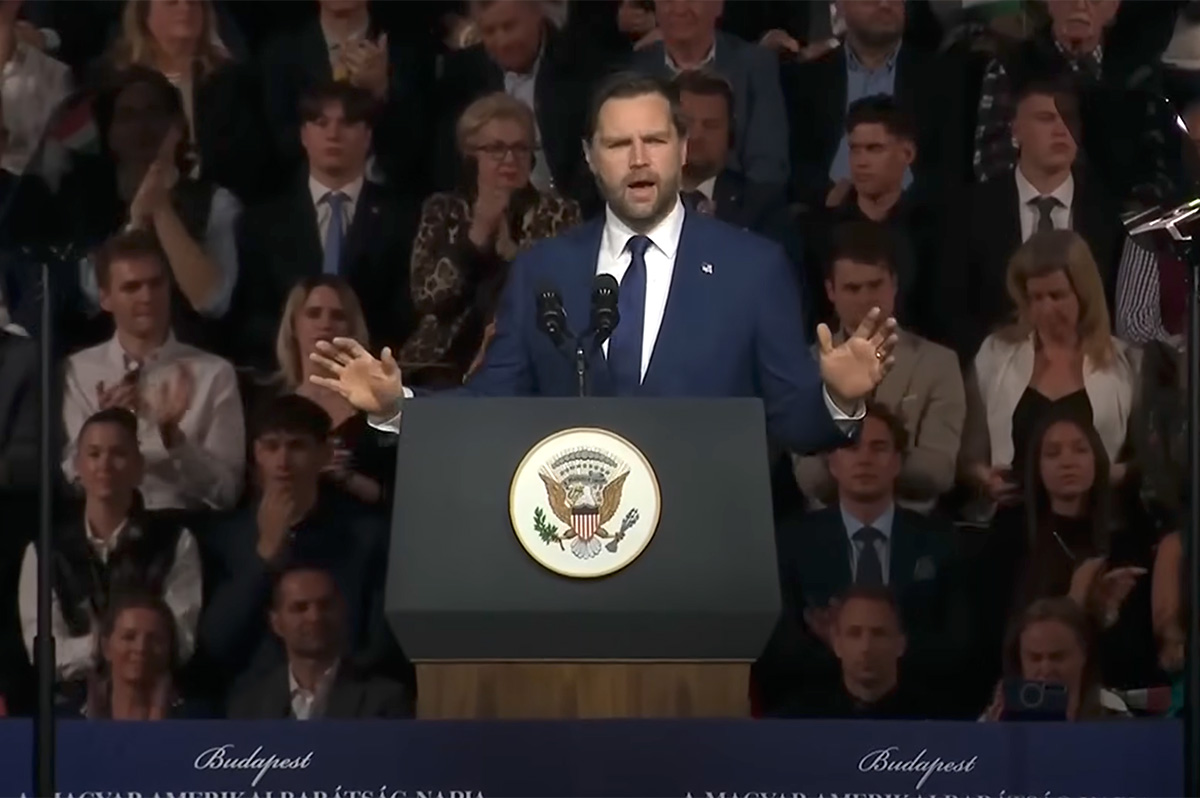
Vice President JD Vance on Tuesday urged Hungarians to support Prime Minister Viktor Orbán in the country’s April 12 elections.
“We have got to get Viktor Orbán re-elected as prime minister of Hungary,” Vance told Orbán supporters who gathered at Budapest’s MTK Sportpark.
Vance and Orbán on Tuesday met before they held a press conference in Budapest. Orbán also spoke at the rally.

The U.S. vice president after he took to the stage called President Donald Trump, who told the crowd he is “a big fan of Viktor” and is “with him all the way.” Vance, as he did during Tuesday’s press conference with Orbán, criticized the European Union.
“We want you to make a decision about your future with no outside forces pressuring you or telling you what to do. I’m not telling you exactly who to vote for, but what I am telling you is that the bureaucrats in Brussels, those people should not be listened to,” said Vance. “Listen to your hearts, listen to your souls, and listen to the sovereignty of the Hungarian people.”
Vance in his speech noted “across the West, we’ve got a small band of radicals” who, among other things, “condemn children to mutilization and sterilization in the name of gender care.” Vance also criticized a “far-left ideology given quarter in university circles, in the media, and in our entertainment industry, and increasingly among bureaucrats on both sides of the Atlantic.”
Vice President JD Vance speaks at MTK Sportpark in Budapest, Hungary, on April 7, 2026
Orbán has been in office since 2010. He and his Fidesz-KDNP coalition government have faced widespread criticism over its anti-LGBTQ crackdown.
A Hungarian activist with whom the Washington Blade previously spoke said it is “impossible to change your gender legally in Hungary” because of a 2020 law that “banned legal gender recognition of transgender and intersex people.” Hungarian MPs the same year effectively prohibited same-sex couples from adopting children and defined marriage in the country’s constitution as between a man and a woman.
The European Commission in 2022 sued Hungary, which is a member of the EU, over the country’s anti-LGBTQ propaganda law.
Hungarian lawmakers in March 2025 passed a bill that banned Pride events and allowed authorities to use facial recognition technology to identify those who participate in them. MPs later amended the Hungarian constitution to ban public LGBTQ events.
Upwards of 100,000 people last June defied the ban and marched in Budapest’s annual Pride parade.
Polls indicate Orbán is trailing Péter Magyar and his center-right Tisza party ahead of the April 12 election. Vance at Tuesday’s rally told Orbán supporters that he and Trump “want you to make a decision about your future with no outside forces pressuring you or telling you what to do.”
“I’m not telling you exactly who to vote for, but what I am telling you is that the bureaucrats in Brussels, those people should not be listened to,” said Vance. “Listen to your hearts, listen to your souls, and listen to the sovereignty of the Hungarian people.”
“Unlike some of the leadership of Brussels, I’m not threatening you or telling you that we’re going to withhold funds to which you’re legally entitled,” he added. “You will make the decision about Hungary’s future.”
Magyar on Tuesday appeared to dismiss Vance’s comments.
“No foreign country may interfere in Hungarian elections. This is our country. Hungarian history is not written in Washington, Moscow, or Brussels — it is written in Hungary’s streets and squares,” said Magyar on his X account.
A spokesperson for the Háttér Society, a Hungarian LGBTQ rights group, told the Blade that neither Magyar, nor his party have reached out to the organization.
The spokesperson said the group does not “campaign directly for them or for any other political party.” The Háttér Society, however, is encouraging LGBTQ Hungarians to vote.
“Ahead of election day, we will encourage everyone on our social media channels to go out and vote, as this is the only way we can act against a system that has been working against the LGBTQI community for many years,” said the spokesperson.
Belarus
Belarusian lawmakers approve bill to crackdown on LGBTQ rights
Country’s president known as ‘Europe’s last dictator’
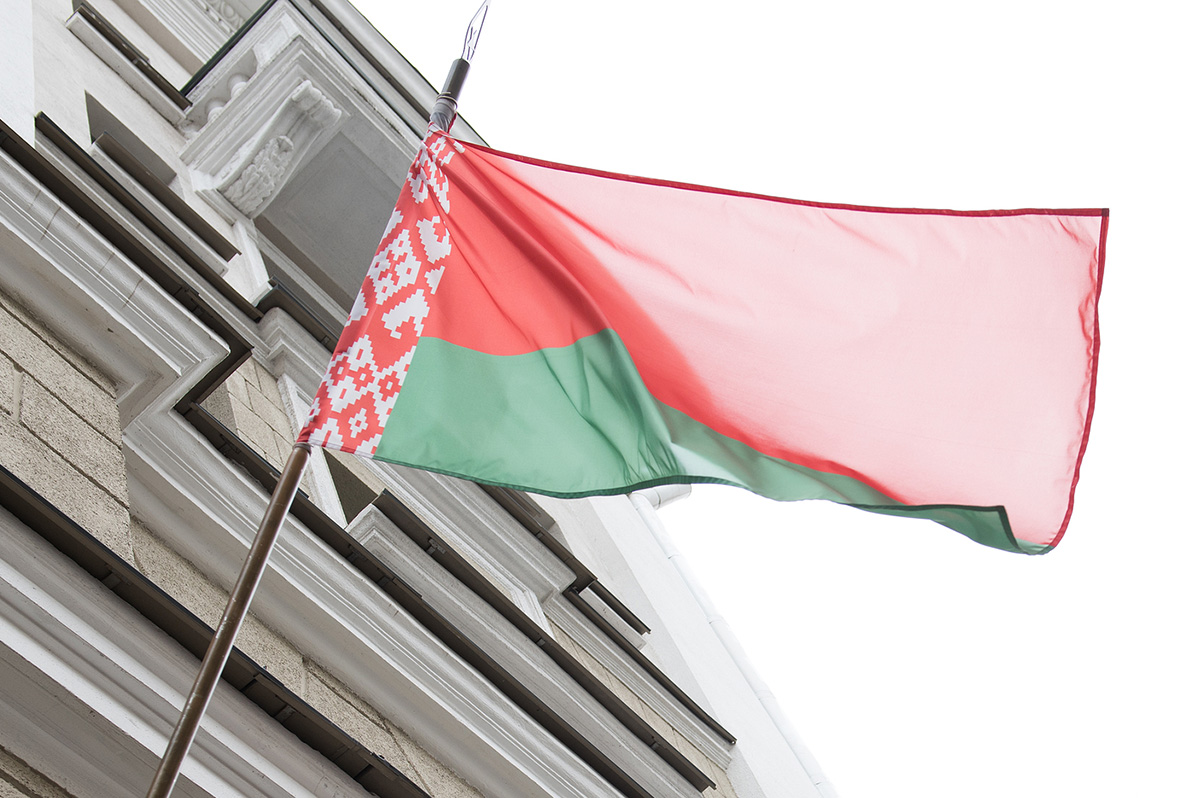
Lawmakers in Belarus on Thursday approved a bill that would allow the government to crack down on LGBTQ advocacy.
The Associated Press notes the bill would punish anyone found guilty of “propaganda of homosexual relations, gender change, refusal to have children, and pedophilia” with fines, community labor, and 15 days in jail.
The House of Representatives, the lower house of the Belarusian National Assembly, last month approved the bill. The Council of the Republic, which is the parliament’s upper chamber, passed it on Thursday.
President Alexander Lukashenko is expected to sign it.
Belarus borders Poland, Ukraine, Russia, Latvia, and Lithuania. Lukashenko — known as “Europe’s last dictator” is a close ally of Russian President Vladimir Putin.
Kazakhstan is among the countries that have enacted Russian-style anti-LGBTQ propaganda laws in recent years.
Vika Biran, a Belarusian LGBTQ activist, is among those arrested during anti-Lukashenko protests that took place in 2020 after he declared victory in the country’s presidential election.

Gay D.C. police lieutenant arrested on child porn charges

Demonstrators disrupt OMB director hearing over PEPFAR

HIV/AIDS group NMAC is ‘destabilized’ and in financial crisis: sources

Madonna announces release date for new album

Senegalese court issues first conviction under new anti-LGBTQ law

An effort to increase the number of psychiatrists of color

Trump budget targets ‘gender extremism’

Comings & Goings

Minimal version of ‘Streetcar Named Desire’ heading to Dupont Underground