Real Estate
How a gov’t shutdown impacts D.C. real estate market
Prices normally drop, then rebound after reopening

As we enter week three of the latest government shutdown, Washington feels quiet, both in the halls of Congress and in the open houses around our city. Agents and sellers will tell you with a defeated lilt in their voice that, despite lower rates and a relatively strong economy, listings are sometimes just not selling — no matter the price drops.
And yet, despite this depressed sentiment held by so many in the industry, the numbers are telling an almost entirely different story. The latest statistics available through the main regional multiple listing service (MLS), BrightMLS, show that not only is sales volume up since September 2024, but so is the median sale price. In fact, overall listing inventory is not skyrocketing as so many on social media would have you believe — it’s actually on par with this time last year too. So how can the vibe be so mismatched with the data?
First, to go deeper into the numbers, the new listings in August of 2024 were just over 850, and in 2025 there were 816 in the same month. September of 2025 saw only 100 more new listings than September 2024. Meanwhile the number of units sold in both months this year were higher, and September of this year was actually higher by about 10%.
The median values data also tell a happy story: the median sale price in September of this year is $677,500, which is up a whopping 12.7% over the median sales price of $601,250 in September of 2024. On a year to date basis, the numbers are more modest, but still show an overall 2% increase in values.
Justin Levitch, the data whisperer and president of RLAH Real Estate, went a step further to explore the impact of previous shutdowns on the market to predict the effects of this one on our market. He found that in the weeks leading up to previous shutdowns, and the time of the shutdowns themselves, and the weeks after them, there was a noticeable drop in market activity, between 10% in 2013 and over 20% in 2018. But in both cases, the market basically rebounded just after the shutdown occurred: in 2013, the number of contracts signed vs. a ‘normal’ time period was down just a hair at around 3% under normal, but in 2018, contracts signed shot up to 20% above normal in the weeks following that event. Thirteen days into our current shutdown, new contracts are already down about 20% from their average over the last three years, so here’s hoping for a 2018-style rebound when this shutdown ends– assuming it does.
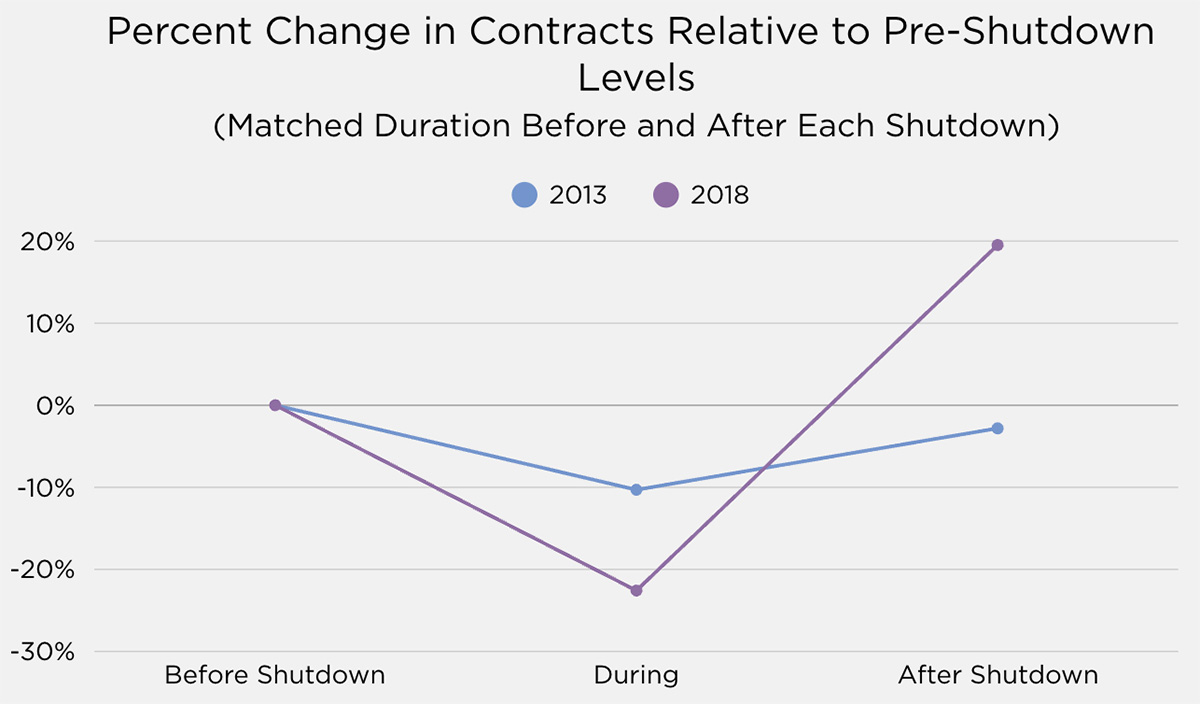
Levitch continues his analysis with a question about how the shutdown may also intersect with another market question about this fourth quarter versus last year’s: Q4 in 2024 saw the largest increase in closed sales over any previous year’s quarter since before 2022, at over 16%. This is undoubtedly a result of two back-to-back rate drops that occurred around election time last year. With a rate drop recently in the books, we could be poised for another similar bump this quarter, especially if it happens again. But with the shutdown firmly in place, will that still happen? That is certainly the big question on all our minds.
Markets like this are tough for buyers and sellers to understand and navigate, because even with the data to chew on, a clear path toward meeting their goals is not always apparent. That’s why choosing a capable and thoughtful Realtor as a guide is so critical. Experience dealing with tough markets, perseverance to see a strategy through to successful closing, and systems to ensure the plan is going according to plan are all essential elements to look for in your partner.
If you find that combination, whether with a team like Bediz Group or another agent, you might become one of these happy stats, and not watching others win from the sidelines.
David Bediz is the owner of Bediz Group, LLC at RLAH Real Estate, and also owns Home Starts Here, a loan brokerage. Both are licensed in D.C., Maryland, Virginia and Delaware and exist to serve the needs of buyers and sellers in every price range. Bediz Group has been awarded the Best of Gay DC award at least five times, including this year. More at www.bediz.com or 202-642-1616.





As the days grow longer and buyers re-emerge from winter hibernation, the spring market consistently proves to be one of the strongest times of year to sell a home. Increased inventory, motivated buyers, and picture-perfect curb appeal make it a prime window for homeowners ready to list.
The good news? Preparing your home for spring doesn’t require a full renovation or a contractor on speed dial. A few thoughtful, cost-effective updates can dramatically elevate your home’s appeal and market value.
Here are smart, inexpensive ways to get your property market-ready:
Fresh Paint: The Highest Return on a Small Investment
Few improvements transform a home as quickly and affordably as paint. Neutral tones remain the gold standard, but today’s buyers are gravitating toward warmer tan hues that create an inviting, elevated feel without overwhelming a space. Soft sandy beiges and warm greige-leaning tans provide a clean backdrop that photographs beautifully and allows buyers to envision their own furnishings in the home.
Freshly painted walls signal care and maintenance — two qualities buyers subconsciously look for when touring properties.
Removable Wallpaper: Style Without Commitment
For homeowners wanting to introduce personality without permanence, removable wallpaper offers a stylish solution. A subtle textured pattern in a powder room, a soft botanical print in a bedroom, or a modern geometric accent wall can add depth and character. Because it’s easily removed, it appeals to both sellers and buyers — creating visual interest without long-term risk.
Upgrade Light Fixtures for Instant Modernization
Outdated lighting can age a home instantly. Swapping builder-grade fixtures for modern, streamlined options is one of the simplest ways to refresh a space. Consider warm metallic finishes or matte black accents to create a cohesive, updated look. Proper lighting not only enhances aesthetics but also ensures your home feels bright and welcoming during showings.
Elevate Curb Appeal: First Impressions Matter Most
Spring buyers often decide how they feel about a home before they ever step inside. Refreshing curb appeal doesn’t require major landscaping. Simple updates such as fresh mulch, trimmed shrubs, seasonal flowers, a newly painted front door, and updated house numbers can dramatically improve first impressions. Power washing the driveway and walkways also delivers a clean, well-maintained appearance for minimal cost. Even if you don’t have a curb to appeal- think potted plants on your patio, balcony and change out your door mat.
Deep Clean & Declutter (Seriously, It Matters)
A deep, top-to-bottom cleaning is basically free and one of the most impactful things you can do. Scrub floors, windows, grout, baseboards, appliances, bathrooms, and everything in between. Don’t forget to clean windows inside and out — natural light is a huge selling point. Declutter by packing up excess stuff, clearing off countertops, and minimizing personal items so buyers can see the space, not your life.
Let the Light Shine
Make your home feel bright and inviting by cleaning windows, opening blinds, and replacing dark or dated light fixtures with contemporary, budget-friendly options. Swapping in LED bulbs offers brighter light and lower utility costs — a small change that buyers appreciate. Pro tip: I always recommend removing widow screens to allow as much light in as possible
Neutralize Scents
Make sure the home smells fresh. Neutralizing odors — whether from pets, cooking, or moisture — creates a clean, welcoming atmosphere. Light natural scents like citrus or subtle florals can be inviting during showings. Think of how your favorite hotel smells and go for that.
Spring market rewards preparation. By focusing on high-impact, low-cost improvements, sellers can position their homes to stand out in a competitive environment. With thoughtful updates and strategic presentation, homeowners can maximize both buyer interest and potential sale price — all without overextending their renovation budget.
As activity increases and inventory begins to rise, now is the time to prepare. A little polish today can translate into significant results tomorrow.
Justin Noble is a Real Estate professional with Sotheby’s International Realty Servicing Washington D.C., Maryland, and the beaches of Delaware.
Real Estate
2026: prices, pace, and winter weather
Lingering snow cover, sub-freezing temperatures have impacted area housing market

The D.C. metropolitan area’s housing market remains both pricey and complex. Buyers and sellers are navigating not only high costs and shifting buyer preferences, but also seasonal weather conditions that influence construction, inventory, showings, and marketing time.
Seasonality has long affected the housing market across the U.S. Activity typically peaks in spring and summer and dips in winter; however, January and February 2026 brought unusually cold spells to our area, with extended freezing conditions.
Persistent snow and ice-covered roads and sidewalks have gone for days, and in some cases weeks, before melting. While snow accumulation normally averages only a few inches this time of year, this winter saw below-normal temperatures and lingering snow cover that has significantly disrupted normal activity.
Rather than relying on neighborhood teenagers to shovel snow to make some extra money, the “snowcrete” has required ice picks, Bobcats, and snow removal professionals to clear streets and alleys, free our cars from their parking spaces, and restore availability of mass transit.
These winter conditions have had an adverse impact on the regional housing market in several ways.
- Construction slowdown: New builds and exterior improvements often pause during extended cold, resulting in delayed housing starts when we need affordable housing in the worst way.
- Listing preparation: Cleaning crews, sign installers, photographers, and stagers with trucks full of furniture may be unable to navigate roads and need to postpone service.
- Showings and open houses: Simply put, buyers are less inclined to schedule visits in hazardous conditions. Sellers must ensure walkways and parking areas are clear and de-iced and be able to vacate the property while viewings are taking place.
- Inspection and appraisal delays: Like buyers and sellers, ancillary professionals may be delayed by unfavorable weather, slowing timelines from contract to close.
- Maintenance and repairs: Properties with winter damage (e.g., ice dams or frozen pipes) may experience repair delays due to contractor availability and supply chain schedules. Snow and cold can also affect properties with older and more delicate systems adversely, leading some sellers to delay listing until better conditions arrive.
- Availability of labor: Increasingly, construction, landscaping, and domestic workers are reluctant to come into the District, not because of ice, but because of ICE.
Overall, the District has shown a notable increase in days on the market compared with past years. Homes that once sold in a week or less are now often listed for 30+ days before obtaining an offer, especially in the condominium and mid-range house segments. While part of this shift can be attributed to weather and climate, interest rates, uncertain employment, temporary furloughs, and general economic conditions play key roles.
Nonetheless, we continue to host some of the region’s most expensive residences. Historic estates, including a Georgetown mansion that sold for around $28 million, anchor the luxury segment and reflect ongoing demand for premium urban property.
But even in this high-end housing sector, marketing strategies are evolving based on seasonal realities. Price reductions on unique or niche properties, such as undersized or unconventional homes, reflect a broader market adjustment where competitive pricing can shorten selling time.
For example, a beautifully renovated, 4-story brick home with garage parking and multiple decks that overlook the Georgetown waterfront sold in early February for 90 percent of the list price after 50 days on the market.
At the other end of the spectrum, a 2-bedroom investor-special rowhouse in Anacostia only took eight days to sell for under $200,000, down 14 percent from its original list price. In addition, four D.C. homes took more than 250 days to sell, including an 8-bedroom rooming house that was on the market for 688 days and closed after a 23 percent downward price adjustment.
Some frustrated sellers are simply taking their homes off the market rather than dropping prices below their mortgage balances, although we are beginning to see the resurgence of short sales for those who must sell.
Condominiums and cooperatives offer many opportunities for buyers and investors, with 1,100 of them currently on the market in D.C. alone. List prices run the gamut from $55,000 for a studio along the Southwest Waterfront to nearly $5 million for five bedrooms, four full baths, and 4,400 square feet at the Watergate.
So, while Washington metro area prices remain high, the pace of sales now reflects both seasonal and economic realities. Homes taking longer to sell, in part caused by elements of winter, signal a shifting market where buyers can take more time to decide which home to choose and have a better negotiating posture than in recent years.
Accordingly, sellers must continue to price strategically, primp and polish their homes, and prepare for additional adverse circumstances by reviewing fluctuating market conditions with their REALTOR® of choice.
Valerie M. Blake is a licensed Associate Broker in DC, MD & VA with RLAH @properties. Call or text her at (202) 246-8602, email her at [email protected] or follow her on Facebook at TheRealst8ofAffairs.

Valentine’s Day is often portrayed as a celebration of romantic love — flowers, chocolates, and candlelit dinners. But for many LGBTQ+ individuals and couples, Valentine’s Day can also be a moment to reflect on something deeper: the love that creates a safe, welcoming home.
For LGBTQ+ home buyers and sellers, homeownership is more than a financial milestone—it is an act of belonging, resilience, and pride. Owning a home can mean finally having a place where you can hold hands with your partner on the front porch, decorate with your authentic style, and build a life free from judgment. In this way, buying or selling a home is one of the most meaningful love stories many LGBTQ+ people will ever write.
This Valentine’s Day, whether you’re a first-time gay home buyer, a same-sex couple upgrading your space, or an LGBTQ+ seller moving on to your next chapter, it’s worth thinking about how love, identity, and real estate intersect—and how to navigate that journey with confidence, protection, and the right support.
Love, Identity, and the Meaning of ‘Home’
For generations, LGBTQ+ people were denied equal access to housing, homeownership, and legal protections. Even today, many LGBTQ+ home buyers still face subtle bias, uncomfortable interactions, or outright discrimination in the real estate process.
That’s why finding LGBTQ+ friendly real estate and an affirming gay friendly realtor or lesbian realtor matters so much. A home isn’t just a building—it’s a personal sanctuary. Working with LGBTQ+ real estate agents who understand your lived experience can make all the difference between a stressful transaction and a joyful one.
For over 30 years, GayRealEstate.com has been the leading gay real estate network, connecting LGBTQ+ home buyers and sellers with gay real estate agents, lesbian real estate agents, and LGBTQ+ friendly realtors who truly “get it.” Their mission has always been simple yet powerful: to ensure that every LGBTQ+ person has access to safe, respectful, and inclusive real estate services.
Finding Your Match: Choosing the Right LGBTQ+ Friendly Realtor
Much like dating, finding the right real estate agent is about compatibility, trust, and communication. Here are some key tips for choosing the best LGBTQ+ real estate representation:
- Look for experience with LGBTQ+ clients. Search for a gay realtor near me or lesbian realtor near me through GayRealEstate.com, where agents are vetted for cultural competency and community commitment.
- Ask about their experience with same-sex couple home buying. A strong agent should understand issues like joint ownership, legal protections, and financing considerations.
- Choose someone who listens. You should feel safe sharing your priorities—whether that includes proximity to LGBTQ+ nightlife, affirming schools, or lesbian-friendly neighborhoods.
- Prioritize respect and transparency. Your agent should advocate for you, not just push a quick sale.
The right gay friendly real estate agent isn’t just helping you buy a house—they’re helping you find a place to build your life.
Best Cities for LGBTQ+ Home Buyers
If love is your compass, location is your map. Some of the best cities for LGBTQ+ home buyers consistently offer strong community presence, legal protections, and welcoming neighborhoods:
- Wilton Manors, Florida – A hub for LGBTQ+ culture with thriving LGBTQ+ real estate opportunities
- Palm Springs, California – A long-standing LGBTQ+ retirement and second-home destination
- Provincetown, Massachusetts – Historic LGBTQ+ community with progressive housing protections
- Asheville, North Carolina – Growing market with inclusive real estate services
- Fort Lauderdale, Florida – Diverse, welcoming, and highly sought-after for LGBTQ+ home ownership
Working with GayRealEstate.com allows you to connect with local LGBTQ+ real estate experts who know these markets inside and out.
Navigating Legal Protections in LGBTQ+ Real Estate
Love is universal—but legal protections are not always consistent. Understanding your rights is essential when buying or selling a home as an LGBTQ+ person.
Key protections include:
- Fair Housing Act (FHA): Prohibits discrimination based on sex, which courts have increasingly interpreted to include sexual orientation and gender identity.
- State and local protections: Many cities and states offer additional safeguards against LGBTQ+ housing discrimination.
- Same-sex couple legal considerations: If you are married, joint ownership is typically straightforward. If not, consult an attorney about co-ownership agreements.
A knowledgeable LGBTQ+ friendly realtor from GayRealEstate.com can help guide you through these complexities and connect you with trusted legal professionals when needed.
Buying a Home as an LGBTQ+ Person: Practical Tips
If you’re embarking on your home-buying journey this Valentine’s season, here are smart, practical steps to take:
- Clarify your priorities. Do you want a vibrant LGBTQ+ neighborhood, quiet suburbs, or access to queer community spaces?
- Get pre-approved for a mortgage. This strengthens your position in competitive markets.
- Work with an LGBTQ+ real estate agent. Searching “finding a gay real estate agent” or “finding a lesbian real estate agent” through GayRealEstate.com is a great first step.
- Research inclusive communities. Some neighborhoods are more welcoming than others.
- Know your rights. If you experience bias, document it and seek legal guidance.
Buying a home is an act of self-love—and community love.
Selling a Home as an LGBTQ+ Person
Selling can be just as emotional as buying, especially if your home represents years of memories with your partner, friends, or chosen family.
When selling a home as an LGBTQ+ person, consider:
- Working with a gay friendly realtor who will market your home inclusively
- Highlighting LGBTQ+ community appeal in listings
- Being prepared for potential buyer bias (and knowing how to respond)
- Leaning on GayRealEstate.com’s LGBTQ+ real estate services for trusted guidance
Your story—and your home—deserve respect.
Real Estate for LGBTQ+ Families
More LGBTQ+ couples are raising children, fostering, or building blended families. This makes homeownership even more meaningful.
When searching for real estate for LGBTQ+ families, consider:
- LGBTQ+ affirming school districts
- Family-friendly queer communities
- Safe neighborhoods with inclusive values
- Access to LGBTQ+ resources and social networks
GayRealEstate.com specializes in helping LGBTQ+ families find homes that truly fit their lives.
Love, Pride, and Homeownership
At its core, Valentine’s Day is about connection. For LGBTQ+ people, homeownership can be one of the most profound expressions of love—love for yourself, your partner, your family, and your future.
Whether you are a first-time gay home buyer, a same-sex couple relocating, or an LGBTQ+ seller moving forward, you deserve an experience rooted in dignity, fairness, and celebration.
For over three decades, GayRealEstate.com has stood as the leading source for LGBTQ+ real estate, gay real estate, lesbian real estate, and LGBTQ+ home buying and selling representation. Their nationwide network of gay real estate agents, lesbian-friendly real estate agents, and LGBTQ+ friendly realtors ensures that your real estate journey is guided by professionals who understand your heart—and your home.
This Valentine’s Day, let your next chapter be written in a place where you can truly belong. Because when love leads the way, home is never far behind.
Scott Helms is president and owner of Gayrealestate.com.

Liza Minnelli makes surprise appearance at GLAAD Media Awards

Fla. Senate passes ‘Anti-Diversity’ bill that could repeal local LGBTQ protections

Capital Pride must be transparent about sexual misconduct investigation

Ugandan activist named Charles F. Kettering Foundation fellow

13 HIV/AIDS activists arrested on Capitol Hill

Arlington LGBTQ bar Freddie’s celebrates 25th anniversary

Supreme Court deals blow to trans student privacy protections

D.C. Black Pride theme, performers announced at ‘Speakeasy’

Why innovation matters for Black health

Peter Thiel’s expanding power — and his overlap with Jeffrey Epstein
-

 Virginia5 days ago
Arlington LGBTQ bar Freddie’s celebrates 25th anniversary
-
National4 days ago
Supreme Court deals blow to trans student privacy protections
-
District of Columbia4 days ago
D.C. Black Pride theme, performers announced at ‘Speakeasy’
-
Opinions4 days ago
Why innovation matters for Black health