Commentary
Miss Major Griffin-Gracy paved the way for today’s transgender rights revolution
The annual Transgender Day of Remembrance is Nov. 20

I’ll never forget the moment Miss Major Griffin-Gracy looked me in the eye and said, “Baby, you can’t wait for permission to exist. You take up space because you deserve to be here.” It was 2016, and I had just finished interviewing her at Northeastern University. What began as a professional encounter became something far deeper. She welcomed me into her chosen family with the fierce love that defined her life’s work.
That advice didn’t just change my perspective; it changed my life. Miss Major had an extraordinary ability to see potential in people before they saw it themselves. She offered guidance that gave permission to dream bigger, fight harder, and live unapologetically in a world that often told transgender people we didn’t belong.
Today, as we reflect on her legacy, we must remember that Miss Major didn’t simply join the transgender rights movement. She helped create it. Her activism laid the foundation for every victory we celebrate today and continues to shape how we fight for justice, dignity, and equality.
To understand her impact, we return to June 28, 1969, when a 27-year-old Black transgender woman stood her ground at the Stonewall Inn. While history often overlooks the transgender women of color at the heart of that uprising, Miss Major was there, refusing to back down when police raided the bar that night.
After Stonewall, she dedicated her life to building what became the infrastructure of liberation. When she fought that night, she wasn’t only resisting police brutality, she was declaring that transgender people, especially Black trans women, would no longer be invisible. Her message was simple: We exist. We matter. We’re not going anywhere.
Miss Major coupled courage with care. She knew that real change required systems of support. While many focused on changing laws, she focused on changing lives. Her work with incarcerated transgender women stands as one of her most powerful legacies. She visited prisons, wrote letters, sent commissary money, and made sure these women knew they weren’t forgotten. It wasn’t glamorous work, but it was transformative.
She built a model of organizing rooted in love and mutual aid communities supporting each other while demanding structural change. That approach became the blueprint for today’s transgender rights organizations, especially those centering Black trans women.
In a time when invisibility was often the safest choice, Miss Major chose visibility. She shared her story again and again, using her own life as proof of transgender resilience and humanity. Her openness created connection and understanding. People who heard her speak couldn’t ignore the truth of our existence or the strength it takes to live authentically.
Miss Major also believed leadership meant creating space for others. After our first meeting, she connected me with other activists, shared resources, and reminded me that my voice mattered. Talk to any transgender activist who came up in the last two decades, and you’ll hear a similar story. She saw something in others and nurtured it until it bloomed.
Her fingerprints are everywhere in today’s movement: in grassroots organizing, in the centering of the most marginalized voices, and in the insistence that liberation must be rooted in love and community. The victories we see (from healthcare access to broader public recognition) are built on the foundation she laid.
In one of our last conversations, Miss Major told me, “This movement isn’t about me. It’s about all of us. And it’s about the ones who come after us.” Her life reminds us that movements are sustained by love as much as protest, by the daily act of showing up for one another as much as by the marches and rallies.
As anti-trans violence rises and our rights face relentless attacks, we need Miss Major’s example more than ever. We need her fierce love, her unwavering defiance, and her belief that we deserve to take up space. Her legacy reminds us that the fight for our lives is also the fight for our joy.
This Transgender Day of Remembrance, we honor those we’ve lost and celebrate those who dared to live fully, people like Miss Major, who taught us that remembrance must come with responsibility. Her life calls us to protect one another, to build systems of care, and to keep fighting for a world where every trans person can live safely and proudly.
The mother of our movement may be gone, but the family she built lives on. The best way to honor her is to continue her work: to build, to protect, to love without limits, and to remind every trans person that they belong, they matter, and they are loved.
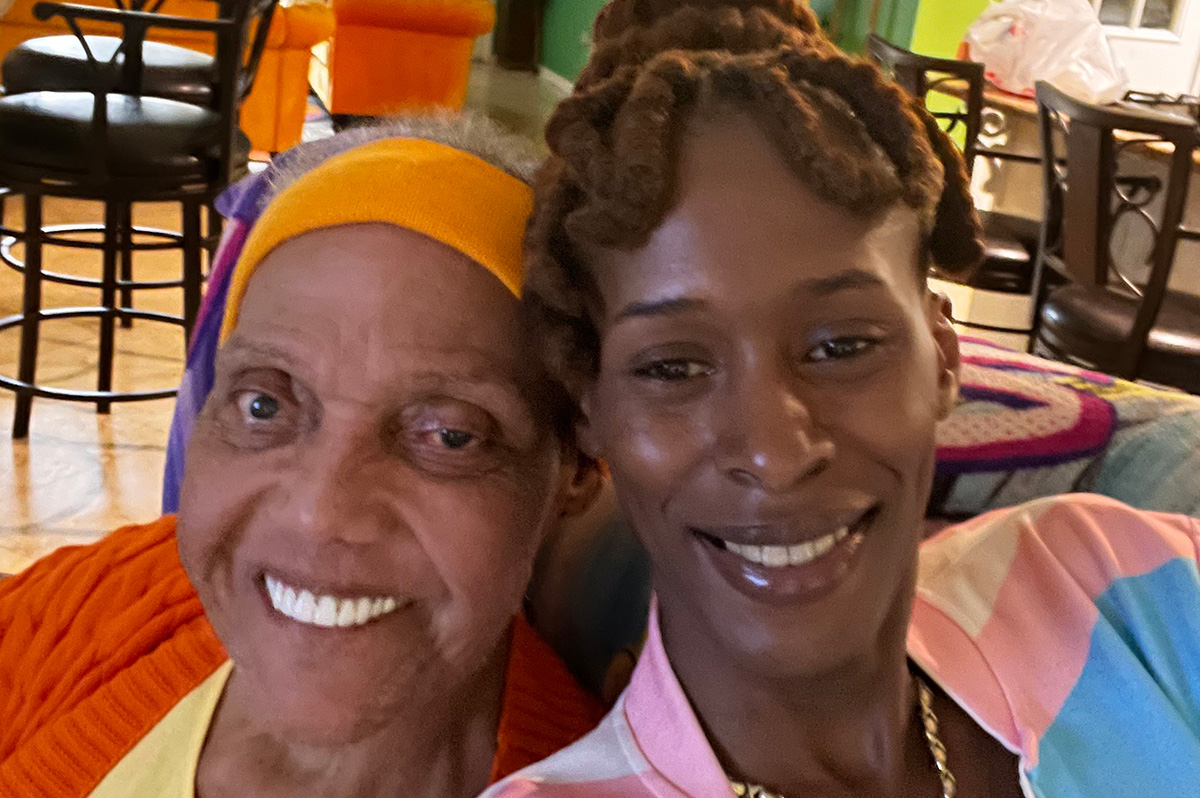
Chastity Bowick is an award-winning activist, civil rights leader, and transgender health advocate who has dedicated her career to empowering transgender and gender-nonconforming communities. She led the Transgender Emergency Fund of Massachusetts for seven years, opening New England’s first trans transitional home, and now heads Chastity’s Consulting & Talent Group, LLC. In 2025, she became Interim Executive Director of the Marsha P. Johnson Institute, continuing her mission to advance equity, safety, and opportunity for trans people. Her leadership has earned her numerous honors recognizing her impact on social justice and community care.


Commentary
LGBTQ+ History Month reminds us: the future we imagine can become reality
Movement leaders, Lambda Legal call for new LGBTQ+ Bill of Rights
Recently, I was chatting with an 11-year-old girl about a movie character who carried a secret about herself that was so terrifying she worried that the people who loved her most would reject her for it if they learned her truth.
As we talked, I mentioned that some people see the character’s story as a metaphor for being LGBTQ. The girl asked, “why wouldn’t people want the people who love them to know that they’re LGBTQ?”
What struck me was how bewildered she was. I shared that coming out has historically been frightening for many LGBTQ+ people who feared rejection. While keeping one’s own status as part-demon from one’s demon-hunting best friends was easy for her to wrap her mind around, the idea that a queer person might feel the same way was truly news to her. The idea simply didn’t fit her view of the world.
That 11 year-old is my daughter. She has grown up with two mothers who have been legally married since before she was born, and she has lots of LGBTQ+ youth and adults in her life. Being LGBTQ+ is not something she sees as different. She has never known a time when our family lacked legal recognition or the acceptance of our neighbors or schoolmates. To her, equality is not an aspiration, but an everyday expectation. And at the same time that too many youth do not have that safety, I know there are thousands of young people across the United States growing up with that same expectation of dignity, equality, inclusion, and respect.
As we honor LGBTQ+ History Month this October, that conversation reminded me how profoundly the world can change in a single generation, and how much is possible when we dream of and work toward that future.
In 1968, LGBTQ+ advocates adopted what they called then the “Homosexual Bill of Rights,” demanding an end to criminalization, immigrants’ rights, government and military service, and employment equity. While many Americans viewed those goals as unthinkably distant or difficult, many were achieved over the decades. Sodomy laws were struck down thanks to Lambda Legal’s Lawrence v. Texas case. “Don’t Ask Don’t Tell” was passed and then repealed. Employment protections for LGBTQ+ expanded. Marriage equality became the law of the land. What once sounded impossible became reality.
That’s a testament to what our movement has achieved in more than half a century. But marriage was never the finish line. It was a milestone. Today, millions of LGBTQ+ people still face barriers to health care, discrimination in schools and workplaces, threats to their families, and efforts to exclude them from public life. In particular, transgender and nonbinary people continue to face coordinated attacks from every level of government. And people living with HIV still confront stigma and inequities that should never have existed — and should not continue to exist today.
Our work to achieve full equality remains unfinished.
That is why it’s time for a New LGBTQ+ Bill of Rights as part of our long-term vision of equality and belonging for our community. Inspired by the visionaries of 1968, this New Bill of Rights asks a simple but powerful question: What kind of society do we want LGBTQ+ people to live in 25, 50, or even 100 years from now?
We are centering five priorities: health, education, opportunity, family, and democracy. We envision quality health care for all LGBTQ+ people and everyone living with HIV; school communities that allow every student to thrive; genuine economic opportunity; a culture of belonging for LGBTQ+ families; and a vibrant democracy that fully represents all of us.
Some might think that those aspirations are too ambitious. They might be — but no more so than was the Homosexual Bill of Rights in 1968. History has shown us that today’s impossible can become tomorrow’s new normal. Culture changes hearts and minds, and people change laws. Over time, with empathy and humanity, what once seemed radical becomes the law of the land.
My daughter’s reaction is proof of that change. The fact is that many young people today find anti-LGBTQ+ discrimination unacceptable because generations of advocates challenged injustice and expanded what was possible.
When we create a society where everyone has the freedom to live openly, safely and authentically, we all rise. The original 1968 Bill of Rights challenged America to imagine something better. Fifty years later, it’s our turn to chart a new vision for our country. One that doesn’t just fight today’s attacks but proactively reimagines the future.
One day, I hope that when future generations hear stories about discrimination against LGBTQ+ people they respond exactly the way my daughter did: with incredulity. I hope they look back on unequal access to health care, housing, and education as a regrettable chapter of the past. I hope they see the relentless attacks on transgender youth of this era as a transparently desperate attempt to hold on to a culture war that was already lost. Our movement won’t stop working until that day comes.
That will be how we know we have won. It’s going to be golden.
Cathryn Oakley is deputy legal director for policy at Lambda Legal.
Commentary
On International Pronouns Day, remember the Publick Universal Friend
Coming out has, and always will be, sacred
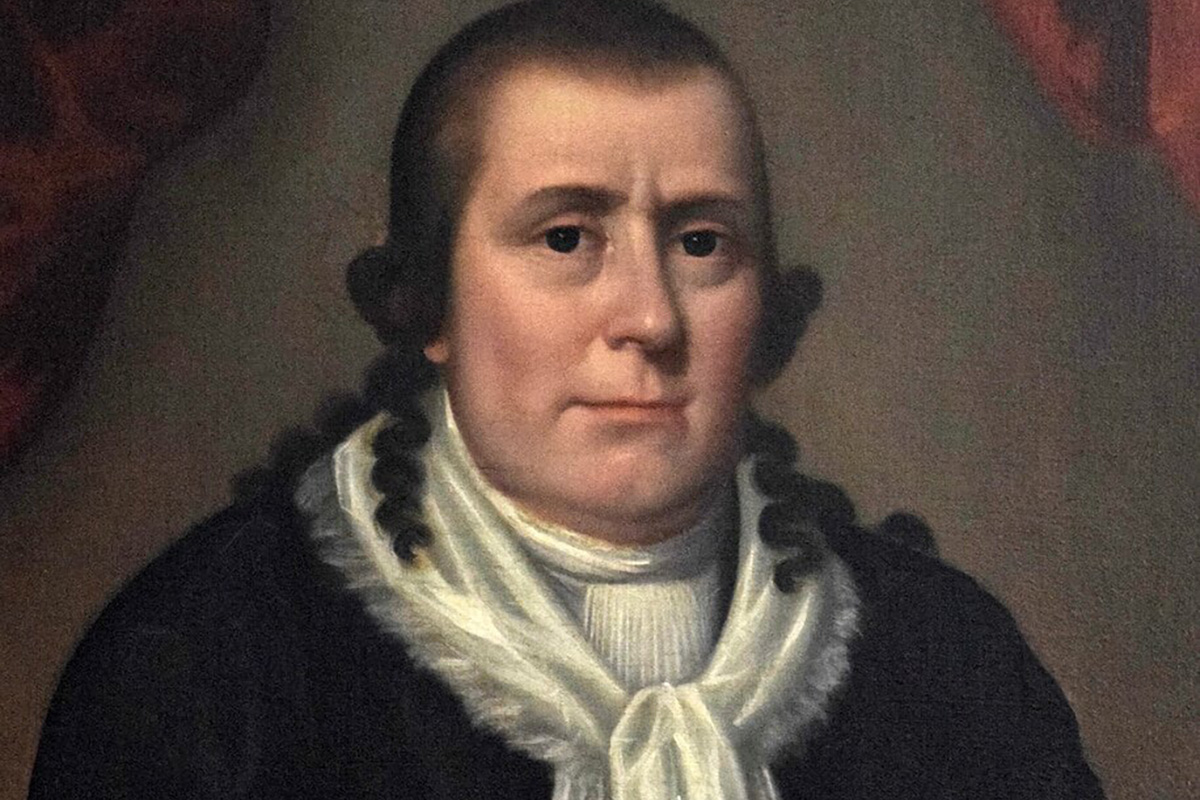
Two hundred and fifty years ago in Cumberland, R.I., the Publick Universal Friend proclaimed that the person who had formerly occupied their body (a young woman named Jemima Wilkinson) had died after a short battle with Typhus. After their death, their body was resurrected, reanimated, they explained, by God as the Publick Universal Friend. The Friend had no gender and did not use gendered pronouns, and went on to preach along the Northeast coast and found their own religious community and settlement for the 43 years that they were alive.
As we celebrate LGBTQ+ History Month and International Pronoun Day, the Friend’s story is about recognizing and celebrating our queer ancestors and respecting their and by extension our chosen names and pronouns. It’s also a story about how coming out — sharing our names, our pronouns, and identities — has and always will be sacred.
On the night Oct. 10, 1776, the Friend explains in their writings that Wilkinson suffered from Typhus that arrived on the Continental navy ship Columbus in Providence. Between nine and ten on the following morning, Jemima took her final breath “and according to the declaration of the Angels — the Spirit took full possession of the Body it now animates,” the Friend wrote in their manuscript, “A Memorandum of the Introduction of that Fatal Fever, in the year 1776.”
In the coming years, the Friend dressed in clothing that defied strict gender binaries, wearing a cravat and robe like a traditional minister or clergyman, and preached in the northern colonies. In November 1784, they distributed a pamphlet entitled “The Universal Friend’s Advice to Those of the Same Religious Society,” wherein they urged followers to forsake worldly pleasures in exchange for spiritual growth, and advocate for human free will, pacifism, humility, and the abolition of slavery. Many of these tenets pulled from the Quaker faith and also incorporated New Light evangelicalism (they were previously cast out of their Quaker community for attending New Light meetings) and Christian mysticism.
While the Friend had amassed a large following, called the Society of the Universal Friends, they were still persecuted for defying a strict gender binary and for preaching without theological training. Eventually, the Friend and their followers settled in Western New York in a new town they called Jerusalem. There, the Friend continued to preach until their death on July 1, 1819, after which they were buried in an unmarked grave (as per their wishes). Although the Friend became a well-known fixture in Philadelphia by the late 18th century, the Society’s popularity waned, and the Society fully disbanded by the late 1860s.
Despite the fact that the Friend wrote in their Will, dated May 22, 1820, that “I once the person called Jemima Wilkinson but in & ever since the year 1777 known as & called the Publick Universal Friend hereunto set my name,” historians continue to describe the Friend as either a woman who combined male and female attributes or someone who existed in between these categories rather than someone born distinctly outside of them. Some historians even refer to the Friend as Jemima, disputing or casting doubt on the name and identity that the Friend claimed during their life, continuing to misgender and deadname the Friend despite their explicit writings.
This is not new — as many queer and trans people know, homophobia and transphobia exists in historical academic spaces. How many of us have laughed (albeit sadly) at how historians have frequently called two women living in a “Boston marriage” best friends when in reality they were likely women who had a deeply intimate and potential sexual relationship? What about the cases of “confirmed bachelors” that queer historians are beginning to revisit?
In these cases, historians argue that because there is an absence of information verifying that these women shared a deep emotional bond, a lack of evidence that they had sex, that they cannot be in love with one another. While the terms “lesbian,” “sapphic,” or “queer” may not have been used at the time in the ways we do today and would likely not have been claimed by these women, it doesn’t mean that their relationship does not reflect those of sapphic couples today. It is erasure through absence, erasure through homophobic historical scholarship.
Think about it: How many heterosexual relationships were deemed romantic despite evidence of the erotic details?
But in the case of the Universal Publick Friend, the Friend made detailed notes about their resurrection, about their life and their beliefs, yet for years was dead, misgendered, or defined by gender(s) that they did not possess or claim.
Queer historian Hanna Kawamoto rejects traditional academics’ reliance on gendered identities to define nonbinary or agender people, bodies, and identities. Instead, Kawamoto “argues for taking the Friend seriously as themselves and the perceptions they have put forward of themselves as the start point towards understanding their history. The analysis of the documentation by them and their believers reveals a spiritual understanding that validated the Friend’s sense of self on a metaphysical plane and a physical one.”
This is why Kawamoto identifies the Friend as “spiritually unsexed,” affirming that their rebirth without gendered names, pronouns, and conditions hinged on and was a central part of the Friend’s religious conviction. As Kawamoto writes, “the Friend’s theological knowledge created a space where each could experiment with gender and religion outside standard norms, focus less on the bodily form, and emphasize malleability.” To question and ignore their gender identity was not only to deny their human dignity (a deeply violent act in of itself) but also the sacredness at the heart of the Friend’s proclamation. In a place and time where the most profound measure of spiritual meaning was resurrection, the Friend used this language, used this experience, as the definition of their own genderless birth.
As someone who has researched and written about the modern rituals of anointing, sharing, and affirming names and pronouns, and who is striving to document rituals and traditions that exist and are being created by celebrate the process of coming out, the Friend’s story is a reminder that the process of coming out and sharing our pronouns and identities has always been and will continue to be a sacred one. Whether or not a person identifies as spiritual or religious, the ritual of coming out is about affirming our divinity, our wholeness as people (especially in the face of abusive religious homophobia). As a result, the histories of our community, the histories of the Friend, are sacred.
As we celebrate LGBTQ+ History Month, let the Friend’s story and the ways in which it has been told and mistold over the centuries, be a lesson in why we need queer and trans historians at the helm who recognize themselves in the pages of the Friends’ and others’ writings. Let this be a lesson in why we need historians to actively engage with and challenge their implicit homophobia as part of their historical training. The Friend’s story is one about belief–not only belief in themselves but also belief by their community and recognition by modern historians who are putting the pieces of their life back together as they transcribe their papers.
The Friend’s story is also a lesson in why sometimes respecting pronouns means abandoning them all together. Gender is a construct with incredible meaning for many people, but in a community that defies heterosexual and cisgender norms, respect means hearing, believing, and respecting the names people call themselves and the pronouns they use (especially if they choose not to use any pronouns at all).
The good news is that new stories are constantly being uncovered and explored. Queer studies historians are still deciphering and identifying early colonists who defied gendered expectations in the burgeoning United States, including an intersex person named Thomas(ine) who was born originally born in England around 1600 but moved to the colony of Virginia as an indentured servant seeking new opportunities.
This individual had genitalia traditionally associated with men and women, and had lived as both a man and a woman throughout their life. But after significant hardship caused by bigoted community members (including forced stripping and bodily inspection, including while they were sleeping), Thomas(ine) was forced to appear before the Quarter Court of Virginia in 1629 which ruled that Thomas(ine) was both a man and a woman and would thus be required to wear clothing traditionally ascribed to men and women to denote their identity. Thomas(ine) existed in the English colonies a century before the Friend.
This is not about “creating” new histories, it’s about recognizing the lives and loves of people that existed but were often overlooked. Preserving and sharing the histories of Thomas(ine) and the Friend discredit the myth that LGBTQ+ people are new. But let’s also recognize that neither were not the first genderqueer or agender person residing in North America. Two-spirit and genderqueer individuals have been valued members of tribal nations for centuries, often seen as spiritual leaders in their own right. The Friend fostered a genderless existence on land that was not their own, on land that already sacralized gender expansiveness.
As we celebrate LGBTQ+ History Month, and as we near International Pronouns Day on Oct. 26, let us remember the Publick Universal Friend as they were, as they told their followers and historians in their writings, and in doing so, let their memory be a blessing and rallying cry to dig deeper into queer and trans histories and to respect the sacredness that it all takes for us to come out and share who we are with others.
Emma Cieslik is a D.C.-based museum worker and historian.
Commentary
Center Arts Gallery celebrates 10 years with reception, auction
Oct. 17 fundraiser to feature jazz combo, artwork created on site
Ten years ago, I had a vision: to create a dedicated space within The DC LGBTQ+ Community Center for local LGBTQ+ artists to share their creativity in a community space conceived specifically for them. That vision became the Center Arts Gallery. Over the past decade, the Center Arts Gallery has grown into a true home for our LGBTQ+ siblings, a place illuminating our joy, resistance, and resilience through the power of art.
Art is so much more than decoration. It can be a powerful protest, a keeper of memories, a testament to survival, and a vivid reminder that our lived experiences deserve to be seen, heard, and deeply valued. When we created the Center Arts Gallery, our goal was to remove barriers so that queer artists could feel welcomed, supported, and completely free to express themselves. Now, as we mark the incredible 10th anniversary of Center Arts, love truly comes full circle as many of those same amazing artists and creatives are giving back by donating their artwork for a special benefit auction.
On Saturday, Oct. 17, 2026, The DC LGBTQ+ Community Center will host our annual Fall Reception and Art Auction, celebrating 10 years of Center Arts Gallery at 1827 Wiltberger St., N.W., with an ambitious fundraising target of $25,000.
Appropriately themed “The Art of Belonging,” this milestone celebration will bring our community together with intention, uniting multiple forms of local queer creativity under one roof. The evening promises to be an unforgettable experience.
We are thrilled to have the celebration hosted by award-winning spoken word artist, poet, and educator Charity Blackwell. Attendees will enjoy smooth jazz selections performed by 2nd Independence — a jazz combo from the DC Different Drummers — alongside delicious heavy hors d’oeuvres provided by Shaw Tavern and exquisite dessert offerings by celebrity chef Patrick Vanas.
Throughout the night artwork will be created live on site, joining the online pieces generously donated by local artists.
Most importantly, every dollar raised during the reception and auction goes directly toward sustaining The DC Center’s life-affirming programs and supportive services. From food assistance providing nourishing meals, the free food pantry, and behavioral health counseling, to trauma-informed case management, resource navigation, HIV/STI testing, and essential hygiene services like showers, laundry, and a clothing boutique, our doors remain open because
of community support. These funds also support our cyber lounge, mail and locker services, harm reduction supplies, and critical wellness programs.
To ensure that everyone in our community can fully participate, ASL interpretation will be provided during the event program. We offer flexible ways to join us: General Admission is free (currently at capacity), with custom signature cocktails, wine, and beer available for purchase.
For those looking for an elevated evening, our $75 VIP Experience includes early admission at 6 p.m., early online auction access, complimentary Champagne (6-7 p.m.), an intimate opportunity to mingle with participating artists, a special swag bag, plus an open beer and wine bar throughout the entire evening.
For 10 years, Center Arts Gallery has shown us that belonging is an art form we create together. As we look back on a decade of community and look forward to the future, I invite you to join us, support local queer artists, and invest in the essential programs that keep our community thriving. Let’s come together to ensure that The DC Center can continue to educate, empower, uplift, and connect us all for generations to come.
Kimberley Bush is executive director of The DC LGBTQ+ Community Center.

Out actor on his 25-year love affair with ‘Mamma Mia’

Comings & Goings

Stephen Miller, key architect of anti-LGBTQ policies, named White House chief of staff

Escritora trans venezolana reivindica una fe sin exclusiones ante la visita del papa a Sudamérica

Baltimore lawmaker’s ex-treasurer charged with theft of $87K in campaign cash

Meet the talented makeup artist behind Broadway’s ‘Rocky Horror’

Sarah McBride returns to Congress after historic first term

Chris Pappas elected to U.S. Senate

Election watch parties to take place throughout DMV

Marriage equality codified in Va. constitution
-

 a&e features5 days ago
Meet the talented makeup artist behind Broadway’s ‘Rocky Horror’
-
2026 Midterm Elections4 days ago
Sarah McBride returns to Congress after historic first term
-
2026 Midterm Elections5 days ago
Chris Pappas elected to U.S. Senate
-
Local5 days ago
Election watch parties to take place throughout DMV