National
Trans women in state prisons on being targeted by Trump
Uncloseted Media spoke with five incarcerated trans women in state prisons
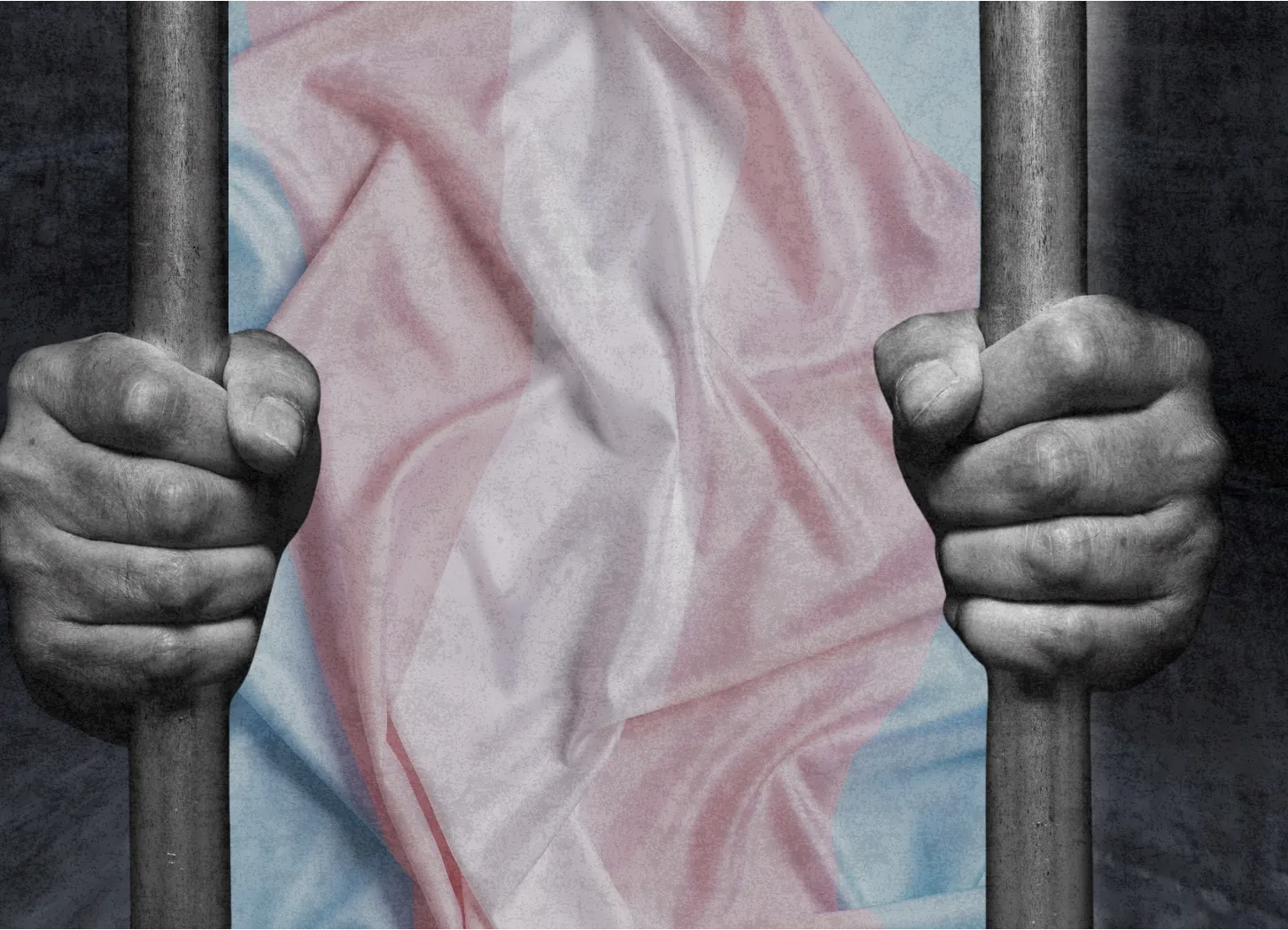
Uncloseted Media published this article on Dec. 3.
Editor’s Note: This article includes references to topics such as rape, sexual assault, and violence. Reader discretion is advised.
By HOPE PISONI | Being a transgender woman in prison has always been hard for Lexie Handlang. At 38 years old, she’s a writer for the Prison Journalism Project and is currently working on a kids’ fantasy book starring a young trans girl and her friend who encounter a mysterious magical being.
Handlang has been incarcerated in men’s prisons in Missouri for 11 years, where she says she’s experienced a great deal of violence and discrimination.
She says her fears today are at an all-time high. After Trump passed an executive order on his first day in office that rolled back a suite of the scant and hard-won rights of trans women in federal prisons, Handlang remembers prison staff gleefully gloating.
“Transgenders don’t exist no more.”
“It’s not a thing.”
“I’m not gonna call you by your preferred pronouns.”
“I’m gonna call you ‘sir.’”
The executive order, titled “Defending Women from Gender Ideology Extremism and Restoring Biological Truth to the Federal Government,” includes a mandate requiring trans women to be housed in men’s prisons and a ban on the use of federal funds for gender-affirming care.
The following month, the Bureau of Prisons issued a memo banning gender-affirming items like chest binders and undergarments and requiring staff to refer to incarcerated people by their “legal name or pronouns corresponding to their biological sex.”
While the order does not apply to state prison systems, Uncloseted Media spoke with five trans women incarcerated in three different states who say Trump’s crackdown has created a trickle-down effect. They say it has produced a climate where staff are ramping up their mistreatment of trans women, federal grants for prisons are at risk as the Trump administration feuds with states, and anti-trans propaganda is turning fellow prisoners against them.
“There’s a lot of wardens who’ve been waiting for this — the discrimination has increased and it’s not anything new,” says Kenna Barnes, advocacy manager at Black and Pink, a nonprofit focused on prison abolition and the rights of incarcerated trans people. “It’s happening in every faction of the carceral system, and they are getting very emboldened, and this is a cue for them.”
Escalating attacks
Even though the Trump administration can’t force anti-trans policies on state prisons, they have still been pushing for them. In April, the Department of Justice pulled $1.4 million in funds from Maine’s Department of Corrections, the bulk of which had been allocated to support a substance use treatment program for all incarcerated people. The funding was pulled in retaliation for continuing to allow a trans woman, Andrea Balcer, to be housed in the women’s section of the Maine Correctional Center.
“You asked my feelings on being in the center of this feud between Trump and Maine — I am not in the center, I am underneath the feet of these two giants colliding, a mecha and a kaiju if you will,” Balcer, 24, told Uncloseted Media in a phone interview from the prison. “So I am not so much the center as I am collateral damage.”
Balcer was transferred to the women’s section of the prison in November 2023 due to concerns about her safety in men’s prisons, which are notoriously dangerous for trans women.
She spends much of her time playing Pathfinder, a role-playing game based on Dungeons & Dragons, and has been trying to start a group to host discussions on paganism and monthly full-moon rituals.
Balcer says she tries to keep a low profile and was getting along fairly well with her fellow prisoners after a period of adjustment.
But that changed when Attorney General Pam Bondi bullied her on Fox and Friends by calling her a “giant, 6-foot-1, 245-pound guy” and claimed that funding cuts “will protect women in prisons.” Balcer says some women at the facility turned on her and started to parrot Bondi’s rhetoric about a “man in a woman’s prison.”
“The cultural backlash has been astounding,” she says. “And it’s not that I don’t understand these women — I 100 percent understand their position. Things that have helped them and things that have done so many good things for them are being taken away, and they’re angry, as they have every right to be. But they can’t take out their anger on the people who quite frankly deserve it, [so] they take out their anger on the people that are the indirect cause of this.”
While Balcer says things have slightly improved since Maine successfully appealed the funding cuts, life is still much harder under Trump 2.0.
And she’s not the only trans woman who has a target on her back. Michelle Kailani Calvin was housed at the Central California Women’s Facility since the state’s Transgender Respect, Agency and Dignity Act — which she advocated for — passed in 2021. The act allowed trans women to be housed in women’s facilities.
Calvin, 54, was one of several trans women whose photos were included in a consequential advertisement for Trump’s 2024 campaign, which criticized Kamala Harris for supporting gender-affirming surgery in California prisons and included the infamous slogan “Kamala’s for they/them, not you.”
Difficulty accessing gender-affirming care
While gender-affirming surgeries in prison are still legally accessible in California, Calvin told Uncloseted Media via a phone call from CCWF that she has found it “very difficult … to get any kind of care” since Trump’s reelection.
She says she was scheduled for facial feminization surgery and a revision to her bottom surgery earlier this year to address complications including pain, bladder leakage and intense bleeding. Staff kept delaying them, however, claiming that she hadn’t passed a psychiatric evaluation and that she had a “dirty” toxicology report. According to Calvin, the substance that had been flagged was prescription gabapentin.
Calvin believes this foot-dragging is due to the Trump administration’s threats to cut funding, as they did with Maine.
“This is the game that the institution plays. Instead of just saying, ‘We’re not giving you a surgery because Trump ain’t giving us our money,’” she says.
Emboldened staff
Beyond having limited access to health care, Calvin says trans women face emboldened staff in Trump’s new America. In her case, this has involved increased scrutiny: After three years of no rule violations, she says she was hit with five in the span of four months.
She says several of those cases were provoked by abuse from guards. In one instance, which was documented in a report reviewed by Uncloseted Media, a guard forcefully removed her from her wheelchair and slammed her on the ground after he squeezed her shoulder without consent. She was later written up for resisting an officer.
And in March, the prison began investigating Calvin on allegations that she had assaulted her partner, who is also incarcerated. This led the prison to file a case with the California Department of Corrections and Rehabilitation’s Departmental Review Board to have her moved to a men’s prison.
Calvin says that numerous advocacy groups then sent letters to CDCR calling on them to reject the push. One lawyer, Jen Orthwein, wrote that “claims made against Ms. Calvin were submitted long after the alleged event by unnamed confidential informants, with no supporting documentation or medical evidence” and that the alleged victim “has indicated that the accusations are entirely false.” Uncloseted Media also spoke with the alleged victim from the prison where she is housed, and she affirmed that “Michelle never hurt me or any other female.”
“[The prison] feels like the Trump administration’s gonna have their back on whatever that they do, so they’re taking more bolder chances to isolate us or send us back to a men’s facility,” says Calvin.
While Calvin is still at a women’s facility, not everyone has been so lucky. CDCR recently proposed new guidelines that explicitly create a process for trans women to be transferred back to men’s prisons if they have “two or more serious Rules Violation Reports within a 12-month period.” Kelli Blackwell, 58, told Uncloseted Media on a phone call from CCWF that at least three trans women have been transferred to men’s prisons since 2024, which we confirmed on the California Incarcerated Records and Information Search website.
Blackwell is hopeful she’ll get released soon. With that in mind, she got her dentistry license and is set to earn a degree in sociology next spring. She also has a partner living with her in the women’s facility. But with increased scrutiny from CDCR and pressure from the Trump administration, she fears that a transfer to a men’s prison could disrupt all of that.
“You have trans women here that’s actually had the surgery, had the vaginoplasty — they’re still finding ways to send them back to a men’s prison,” she says.
In an email, CDCR said that they are “committed to providing a safe, humane, respectful and rehabilitative environment for all incarcerated people.” They also noted that the department “has a detailed process for patients seeking gender-affirming care, including hormonal treatment.”
Support systems have become ‘useless’
Trans women in prison are also losing the little support they had. Patricia Trimble, a 66-year-old trans woman, writer and advocate, has been incarcerated in men’s facilities in Missouri since 1979. While in prison, she’s pursued paralegal studies at Platt Junior College, theology at St. Louis University and business at Central Methodist University.
She’s used her education to advocate for herself, often through the Transgender Committee, a group of staff members required by law at each Missouri prison. The committee is meant to help the prison “make informed recommendations regarding the health and safety of transgender and intersex offenders.”
However, Trimble says that since the start of the year, the committee has become “absolutely useless.”
“At one point in time, I could sit down with the Transgender Committee … and we would discuss things that make the prison safer, and they were receptive,” Trimble told Uncloseted Media on a phone call from the Southeast Correctional Center.
“Since Trump, there are no conversations like that. When I go to the Transgender Committee, the deputy warden just kinda looks at me with that smile on her face like ‘you ain’t gettin’ nothing here, and I already know what you’re gonna ask, so let’s just go through the motions and then you can go away.’”
Trimble says this makes every issue harder to fight. In a recent incident, she tried to get transferred after being housed with a transphobic cellmate who would “bully” and “constantly pick on” her.
Trimble says that even though there were empty cells in her wing, she was sent back and forth between the Transgender Committee, case workers and her unit manager before getting approved to move into one of them. While she had the know-how to stand up for herself, most people don’t.
Even with her experience in advocacy, she says staff have been harder than usual on her. Earlier this year, after advocating for gender-affirming surgery, she says the prison put her on a call with a doctor who said she “will not be filing a report recommending any further treatment.”
“She had the audacity to tell me that she finds that I no longer suffer from gender dysphoria,” Trimble says. “And I just kinda laughed and said, ‘Okay, I guess we’re done here,’ and I got up and left.”
In an email, the Missouri Department of Corrections wrote that they do not “tolerate unprofessional conduct by staff,” and that “no changes [have been] made to policies pertaining to transgender residents of Missouri state prisons after the 2024 election.”
The danger of men’s prisons
While life in the women’s facilities is far from perfect, the people we spoke with say it’s worth fighting to stay.
According to a 2016 analysis by the Williams Institute at UCLA, 37 percent of incarcerated trans people — the overwhelming majority of whom are housed in prisons that do not match their gender identity — had experienced sexual assault within a one-year period, compared to just over 3 percent of cis people.
Blackwell says physical violence at the men’s prison, often spurred by gang activity, is “structured” and “can get you killed.” Calvin says she was raped multiple times at the men’s prison, and Trimble recounted numerous instances when guards strip-searched her in the presence of men.
Handlang says she’s experienced extreme abuse by guards at the men’s prison: “They went in my cell and they were ripping up pictures of family, trying to get me to react, ripping up my clothes, ripping up my bras, ripping up panties, destroying my makeup.” When she tried to fight back, she says “they went off camera and they broke my ankle and my foot and stomped on me and punched on me.”
As threats continue to escalate, and Trump’s policies continue to trickle down, Trimble fears she could lose the few rights she has left.
“I know that all it would take is a phone call from Trump or one of Trump’s surrogates to the governor, and the governor simply signs an executive order and everything we’ve got is taken away and we would end up having to go to court again,” she says. “If the governor wanted to, he could make our lives a lot worse with just a stroke of the pen.”
Fighting back
In the face of all these horrors, these women are advocating for themselves and caring for their trans sisters.
Handlang says that this often involves the most basic gestures: listening to their troubles, teaching them how to do their makeup and helping them buy hygiene products.
Calvin and Blackwell are still working to defend and uphold the trans-inclusive bills they helped pass, and Trimble has used her years of experience to work with legal advocacy groups to get support for things like name changes and to pressure the state to address mistreatment.
“If you’re going to be an advocate or an activist … it can never be about you,” Trimble says. “It’s about our boys and girls that are suffering in this oppressive system.”



The White House
Kennedy Center leadership changes as Trump ally Grenell departs
Numerous productions cancelled shows during gay Trump loyalist’s tenure

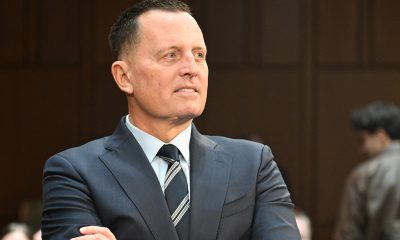
Longtime Trump ally and openly gay “Special Presidential Envoy for Special Missions of the United States” Richard Grenell is stepping down from his leadership role at the John F. Kennedy Center for the Performing Arts.
The story was first reported by Axios on March 13 before President Donald Trump made any official statements about the leadership change at the Kennedy Center, which has undergone a sweeping overhaul of rule changes and pro-Trump appointees to its board since Trump took office in 2025.
In addition to packing the Kennedy Center boardroom with loyalists and appointing himself chair of the board in February 2025, the Trump-Vance administration has placed the president’s name on the facade in an attempt to rename the center — despite the move being illegal without an act of Congress to officially change its name. The administration has also painted the building’s columns white and removed diverse programming.
Since these changes, multiple shows have pulled out of performing at the historic venue — including productions associated with the Washington National Opera.
Matt Floca, the former vice president of facilities operations at the national cultural center under Grenell, has been named the new head of the Kennedy Center, according to Trump.
The change is expected to be announced at a Kennedy Center board of directors meeting at the White House on Monday, which Trump is expected to attend.
“I am pleased to announce that Matt Floca, subject to the approval of the Board of Directors, will be named the Chief Operating Officer and Executive Director of THE TRUMP KENNEDY CENTER where, as Vice President of Operations, Matt has helped us achieve tremendous progress in bringing the Center to the highest level of Excellence!” Trump wrote in a post on Truth Social. “A Complete Reconstruction of THE TRUMP KENNEDY CENTER will begin after the July 4th Celebration, with a scheduled Grand Re-Opening in approximately two years.”
“Ric Grenell has done an excellent job in helping to coordinate various elements of the Center during the transition period, and I want to thank him for the outstanding work he has done,” the post added. “THE TRUMP KENNEDY CENTER will be, at its completion, the finest facility of its kind anywhere in the World! — President DONALD J. TRUMP.”
Grenell previously served as U.S. ambassador to Germany and later as acting director of national intelligence during Trump’s first term. He led the Kennedy Center during a period in which its programming was reshaped and new board members aligned with Trump were appointed. Trump also named himself chair of the board.
Congress approved $257 million in reconstruction funding for the Kennedy Center in last year’s spending package, a project estimated to take roughly two years to complete. Kennedy Center officials have also said they implemented increased cost-cutting measures — including large-scale layoffs — and that staff salaries are no longer being paid using debt reserves.
Actor Harvey Fierstein, a longtime critic of Trump’s takeover of the cultural institution and an award-winning openly gay performer, posted on Instagram celebrating Grenell’s departure.
“Good old anti-LGBTQ+ self-loathing dick licker, #RichardGrenell, is moving on to ruin something new under the auspices of our demented war-mongering MAGA fool Prez,” Fierstein wrote. “Maybe #RicGrennell can open a little boutique selling red baseball hats. But first, after destroying the Kennedy Center for the Arts, he’s earned a vacation. Maybe he and Kristi Noem can go puppy hunting together. They can tell each other tales of when they were once called ‘the best people’ and other fairy tales.”
Federal Government
Gay Venezuelan man ‘forcibly disappeared’ to El Salvador files claim against White House
Andry Hernández Romero had asked for asylum in US
A gay Venezuelan asylum seeker who the U.S. “forcibly disappeared” to El Salvador has filed a claim against the federal government.
Immigrant Defenders Law Center, who represents Andry Hernández Romero, on Friday announced their client and five other Venezuelans who the Trump-Vance administration “forcibly removed” to El Salvador under the Alien Enemies Act of 1798, filed “administrative claims” under the Federal Tort Claims Act.
The White House on Feb. 20, 2025, designated Tren de Aragua, a Venezuelan gang, as an “international terrorist organization.”
President Donald Trump less than a month later invoked the Alien Enemies Act of 1798, which the Associated Press notes allows the U.S. to deport “noncitizens without any legal recourse.” The White House then “forcibly removed” Hernández, who had been pursuing his asylum case in the U.S., and more than 250 other Venezuelans to El Salvador.
Immigrant Defenders Law Center disputed claims that Hernández is a Tren de Aragua member.
Hernández was held at El Salvador’s Terrorism Confinement Center, a maximum-security prison known by the Spanish acronym CECOT, until his release on July 18, 2025. Hernández, who is back in Venezuela, claims he suffered physical and sexual abuse while at CECOT.
“As a Venezuelan citizen with no criminal record anywhere in the world, I would like to tell not only the government of the United States but governments everywhere that no human being is illegal,” said Hernández in the Immigrant Defenders Law Center press release. “The practice of judging whole communities for the wrongdoing of a single individual must end. Governments should use their power to help every person in the nation become more aware and informed, to strengthen our cultures and build a stronger generation with principles and values — one that multiplies the positive instead of destroying unfulfilled dreams and opportunities.”
Immigrant Defenders Law Center filed claims on behalf of Hernández and the five other Venezuelans less than three months after American forces seized then-Venezuelan President Nicolás Maduro and his wife, Cilia Flores, at their home in Caracas, the Venezuelan capital.
Maduro and Flores have pleaded not guilty to federal drug charges. Delcy Rodríguez, who was Maduro’s vice president, is Venezuela’s acting president.
‘Due process and accountability cannot be optional’
Immigrant Defenders Law Center on Friday also made the following demands:
- The Trump administration must officially release the names of all people the United States sent to CECOT to ensure that everyone has been or will be released.
- The federal government must clear the names of the 252 men wrongfully labeled as criminal gang members of Tren de Aragua.
- DHS (Department of Homeland Security) must end the practice of outsourcing torture through third‑country removals, restore humanitarian parole, and rebuild a functioning, humane asylum system.
- DHS must reinstate Temporary Protected Status for all individuals who cannot safely return to their home countries, halt mass deportations and unlawful raids and arrests, and guarantee due process for everyone navigating the immigration system.
- Congress must pass the Neighbors Not Enemies Act, which would repeal the Alien Enemies Act.
“In all my years as an immigration attorney, I have never seen a client simply vanish in the middle of their case with no explanation,” said Immigration Defenders Legal Fund Legal Services Director Melissa Shepard. “In court, the government couldn’t even explain where he was — he had been disappeared.”
“When the government detains and transfers people in secrecy, without transparency or access to the courts, it tears at the basic protections a democracy is supposed to guarantee,” added Shepard. “What this experience makes painfully clear is that due process and accountability cannot be optional. They are the only safeguards standing between people and the kind of lawlessness our clients suffered. We must end third country transfers, restore the asylum system, and humanitarian parole, and reinstate temporary protective status so this nightmare never happens again.”
The White House
Trump proclamation targets trans rights as State Dept. shifts visa policy
Recent policy actions from the White House limit transgender rights in sports, immigration visas, and overarching federal policy.

In a proclamation issued by the Trump White House Thursday night, the president said he would, among other things, “restore public safety” and continue “upholding the rule of law,” while promoting policies that restrict the rights of transgender people.
“We are keeping men out of women’s sports, enforcing Title IX as it was originally written, and ensuring colleges preserve — and, where possible, expand — scholarships and roster opportunities for female athletes,” the proclamation reads. “At the same time, we are restoring public safety and upholding the rule of law in every city so women, children, and families can feel safe and secure.”
The statement comes amid a broader series of actions by the Trump administration targeting transgender people across multiple federal policy areas, including education, health care, and immigration. A nearly complete list of policies the current administration has put forward can be found on KFF.org.
One day before the proclamation was issued, the U.S. State Department announced changes to visa regulations that could impact transgender and gender-nonconforming people seeking entry into the United States.
The policy, published March 11 and scheduled to take effect April 10, introduces changes to the Diversity Immigrant Visa Program, commonly known as the “DV Program.” The rule is framed by the department as an effort to strengthen oversight and prevent fraud within the visa lottery system, which allocates a limited number of immigrant visas annually to applicants from countries with historically low rates of immigration to the United States.
However, the updated language also standardizes the use of the term “sex” in federal regulations in place of “gender,” a change that LGBTQ advocates say could create additional barriers for transgender and gender-diverse applicants.
The policy states: “The Department of State (‘Department’) is amending regulations governing the Diversity Immigrant Visa Program (‘DV Program’) to improve the integrity of, and combat fraud in, the program. These amendments require a petitioner to the DV Program to provide valid, unexpired passport information and to upload a scan of the biographic and signature page in the electronic entry form or otherwise indicate that he or she is exempt from this requirement. Additionally, the Department is standardizing and amending its regulations to add the word ‘shall’ to simplify guidance for consular officers; ensure the use of the term ‘sex’ in lieu of ‘gender’; and replace the term ‘age’ in the DV Program regulations with the phrase ‘date of birth’ to accurately reflect the information collected and maintained by the Department during the immigrant visa process.”
Advocates say the shift toward using “sex” rather than “gender” in federal immigration rules reflects a broader push by the administration to roll back recognition of transgender identities in federal policy.
According to the National Center for Transgender Equality, an estimated 15,000 to 50,000 undocumented transgender immigrants currently live in the United States, with many entering the country to seek refuge from persecution and hostile governments in their home countries.

The very few queer highlights of the Oscars

Protecting D.C.’s promise: why Kenyan McDuffie deserves our support

Kennedy Center leadership changes as Trump ally Grenell departs

Russian neocolonial politics promote anti-LGBTQ imperialistic values

PHOTOS: Awesome Con

Trump proclamation targets trans rights as State Dept. shifts visa policy

A dream: Democrats focus on candidates who can win

‘Queer Eye’ star Dorriene Diggs on life before and after appearing on hit show

Malaysia blocks access to Grindr, other gay dating websites

Top EU court issues landmark transgender rights ruling
-

 The White House3 days ago
Trump proclamation targets trans rights as State Dept. shifts visa policy
-
Opinions4 days ago
A dream: Democrats focus on candidates who can win
-
a&e features4 days ago
‘Queer Eye’ star Dorriene Diggs on life before and after appearing on hit show
-
Malaysia4 days ago
Malaysia blocks access to Grindr, other gay dating websites