Iran
LGBTQ Iranians join anti-government protests
Nationwide demonstrations over economy began Dec. 28
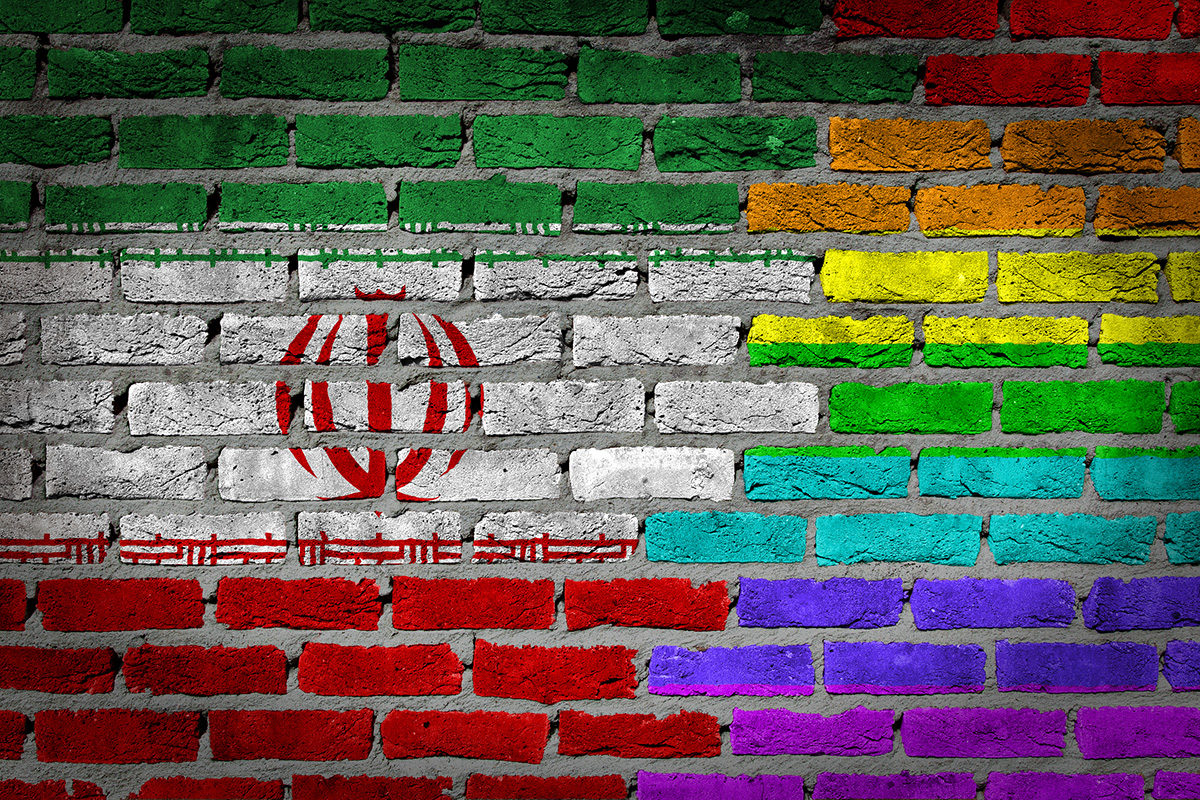
Protests erupted across Iran on Dec. 28 as public anger over the country’s collapsing country spilled into the streets. Members of the LGBTQ community are among those who have participated in them.
What began as demonstrations over rising living costs soon expanded into broader political dissent, with protesters chanting anti-government slogans and, in some cases, directly criticizing Supreme Leader Ayatollah Ali Khamenei. Authorities later imposed internet restrictions and launched a nationwide crackdown, according to human rights groups.
According to Reuters, an Iranian official said authorities have verified at least 5,000 deaths linked to the unrest, including about 500 members of the security forces. The official blamed what the government described as “terrorists and armed rioters” for the killings, a characterization that could not be independently verified due to severe restrictions on media access and internet connectivity.
The same official told Reuters that the final death toll was not expected to rise significantly. The official also alleged that Israel and armed groups outside Iran had supported and supplied those involved in the protests, claims that could not be independently verified.
Multiple sources told the Washington Blade that LGBTQ Iranians have taken part in the protests against the government, despite the heightened risks they face under the country’s strict laws that criminalize consensual same-sex sexual relations.
Arsham Parsi, founder and executive director of International Railroad for Queer Refugees, is from Shiraz, a city in southern Iran. He fled the country in 2005.
Parsi told the Blade a widespread demand for dignity and freedom is driving the uprising.
“It is important to say clearly: LGBTQ people are part of Iranian society, and they are part of this protest,” said Parsi. “Many are participating directly, despite facing risks that are often even greater than others — because in Iran they are already criminalized and targeted simply for who they are.”
“For LGBTQ Iranians, showing up — whether publicly or in underground ways — can carry life-and-death consequences,” he added.
Parsi told the Blade that members of the LGBTQ community with whom he has been in contact described a mix of fear, exhaustion, grief, and determination. He added that many of them feel this moment differs from previous waves of protest in Iran.
“The scope, the persistence, and the public rejection of fear feel qualitatively different — and for that reason, many Iranians inside and outside the country are hopeful that this will lead to real transformation, including regime change, and that Iranians will finally regain their freedom,” said Parsi. “Freedom is not free, and Iranians are paying its cost with their blood.”
Parsi said the government’s response to the protests has been severe; citing widespread blackouts, internet shutdowns, telephone disruptions, and heavy security presence on the streets. He said the communication restrictions have made it increasingly difficult to document abuses, locate missing people, coordinate medical assistance or verify information, warning that such conditions can allow violence to occur beyond public view.
Parsi said his organization, along with other trusted groups, has been sharing harm-reduction guidance whenever possible, particularly on digital safety, avoiding identification and minimizing risk. He added, however, there is no fully safe way to protest under a system that criminalizes identity and treats dissent as an enemy, noting LGBTQ people, women, students, labor activists, and ethnic and religious minorities are among those facing the greatest danger.
“I also want to be very clear about what kind of international involvement we are calling for. We are against foreign military intervention. Iranians must determine Iran’s future. But we do need international aid and serious diplomatic engagement that is grounded in human rights — not convenience,” said Parsi. “In the past, too often, when Iranians rose up, parts of the international community were distracted by negotiations, ‘promises’ from the Islamic Republic, or short-term deals, and the momentum for human rights was abandoned.”
“We hope this time no one is fooled,” he added. “The regime is desperately trying to manipulate the narrative through state media and misinformation — to change the course of events and confuse the international community. The world must be smart, vigilant, and principled: do not reward repression with legitimacy, and do not trade away Iranian rights for empty assurances.”
Parsi said the unrest should also be viewed within a broader regional context, noting Iran’s actions beyond its borders have long drawn criticism from governments and analysts who accuse the country of supporting armed groups and contributing to conflicts that have harmed civilians across the Middle East. He said a future Iran that respects human rights domestically and pursues less confrontational policies abroad could have implications not only for Iranians, but for regional and global stability as well, adding many within the country continue to protest despite the personal risks involved.
Soudeh Rad, co-founder and executive director of Spectrum, a France-based NGO that works with Farsi-speaking communities on gender equality and LGBTQ issues, noted to the Blade the latest wave of large-scale protests began in Tehran’s Grand Bazaar. They said LGBTQ people, like other marginalized and underrepresented communities, often suffer disproportionate burden under systems of entrenched discrimination.
“Images and testimonials prove the fact that protestors are from all classes, ages, communities, ethnicities, genders, and even with different abilities. This is not a higher-class protest. Obviously, our LGBTQIA+ siblings, of all political tendencies and belongings,” said Rad. “As we can imagine, if their SOGIESC (sexual orientation, gender identity, gender expression, and sex characteristics) identity is revealed at the detention centers and prisons, they will be subject to a higher and more intense torture. Police and militia have not hesitated a moment to shoot protestors to kill them. Snipers have been spotted targeting people. Reported numbers of killed and injured people go as high as thousands.”
Rad said recent protest movements have produced gradual social changes in Iran even without formal legal reforms. They cited the “Women, Life, Freedom” movement, noting observers report growing noncompliance with compulsory hijab rules and increased solidarity among ethnic and long-marginalized communities that include Baluchis, Kurds, and Azeris. Rad described the current unrest as part of an ongoing process of social transformation.
Shadi Amin, a director at the LGBTQ rights group 6Rang, said the full impact of the crackdown on LGBTQ activists remains unknown, citing internet shutdowns and limited access to detention centers that have hindered documentation. She said LGBTQ people often face additional barriers to recognition as victims of human rights abuses, because discussions of sexual orientation and gender identity are frequently sidelined during periods of unrest. This omission leaves many cases unacknowledged or erased from public narratives.
Amin also pointed to Iran’s legal framework, under which consensual same-sex sexual relations remain punishable by death, as a key factor contributing to the long-standing invisibility of LGBTQ people.
She said the absence of official data makes it impossible to determine how many LGBTQ individuals may have been killed, detained or subjected to abuse during the protests, adding that this lack of recognition has persisted for decades. Amin told the Blade the internet shutdown has also severed regular communication between advocacy groups and LGBTQ people inside Iran, cutting off counseling services and daily contact that had previously provided limited insight into conditions on the ground. She said the loss of communication has made it increasingly difficult to assess the safety of individuals or confirm who remains in detention or has gone missing.
“I have spent almost my entire life fighting for freedom and democracy. Even if we have not yet achieved our ultimate goal, we have made life harder for our oppressors and safer for our community—and that in itself matters,” Amin noted to the Blade. “We seek change and have called for international intervention to uphold the responsibility to stop crimes against humanity, including through Responsibility to Protect (a U.N. principle adopted in 2005); however, top-down regime change or foreign military intervention would silence the movement.”
“In times of war, weapons — not people — have the final word, and social movements are pushed aside. This is one of our core concerns,” she added. “Another is the risk that even if the current regime is overthrown, it could be replaced by another form of dictatorship — such as a monarchic project represented by the son of the former shah, who has lived in the United States for nearly five decades and lacks democratic legitimacy.”
Amin said LGBTQ activists fear being overlooked amid the broader unrest, emphasizing concerns that ongoing repression and communication blackouts risk pushing LGBTQ experiences further out of public view. She said maintaining international attention remains critical for communities that are often forced into invisibility during periods of crisis.
Matt Forouzandy, president of the 30-Morg Queer Liberation Committee, an NGO focused on LGBTQ issues affecting Iranians inside the country and in the diaspora, confirmed LGBTQ Iranians have participated in the protests since they began.
He said some queer Iranians publicly expressed support for Crown Prince Reza Pahlavi on social media, sharing posts alongside Iran’s lion and sun flag, while acknowledging the risks they faced before joining demonstrations.
Pahlavi is the son of Iran’s last monarch, Mohammad Reza Shah Pahlavi, who was overthrown during the 1979 Islamic Revolution. Living in exile, he has in recent years emerged as a symbolic opposition figure for some Iranians abroad, though his role and influence inside the country remain contested.
Forouzandy said LGBTQ people inside Iran have, in some cases, participated more openly in the protests than many observers might expect, citing years of compounded repression under the regime. He said many queer activists use their real names and photographs on X and other social media platforms, rather than operating anonymously. Forouzandy added LGBTQ participants across different regions of the country have publicly expressed opposition to the current system.
Forouzandy said the future legal and civil status of LGBTQ people in Iran would depend on the political direction taken if the current system were to change, including whether outcomes reflect domestic demands or outside influence. He said some protesters have expressed support for a return to monarchical rule, arguing that such a shift could affect prospects for civil rights, though the outcome remains uncertain.
“Iranians in the diaspora — including LGBTQ+ individuals — are doing everything within their capacity to support those inside the country,” said Forouzandy. “However, the most decisive force remains the people inside Iran themselves. Their courage, determination, and collective will are what ultimately shape the outcome.”
“This is especially true for LGBTQ+ Iranians, who are fighting simultaneously for the liberation of their homeland and for full and equal civil rights within a future free Iran,” he added.



Iran
Man stuck in Lebanon as Iran war escalates
Mario was traveling to India when conflict began on Feb. 28
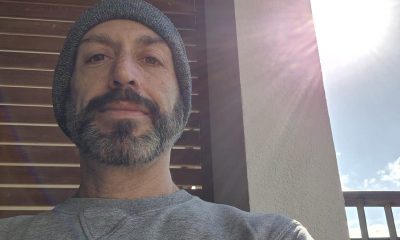
The Washington Blade on March 6 spoke with a man who remains stuck in Lebanon because of the escalating Iran war.
Mario, who asked the Blade not to publish his last name, lives in the U.S., but was born in Lebanon. He decided to stop in the country to see his doctor before traveling to India for work.
Mario was about to board a flight at Rafic Hariri International Airport in Beirut, the Lebanese capital, on Feb. 28 when airline personnel announced “we cannot fly anymore” because authorities had closed the country’s airspace.
The U.S. and Israel earlier that day launched airstrikes against Iran.
One of them killed Supreme Leader Ayatollah Ali Khamenei. Iran in response launched missiles and drones against Israel and Kuwait, Bahrain, Qatar, the United Arab Emirates, Jordan, Azerbaijan, Cyprus, and other countries.
An Iranian drone that hit a command center in Kuwait on March 1 killed six U.S. soldiers: Sgt. Declan Coady, Sgt. 1st Class Nicole Amor, Capt. Cody Khork, Sgt. 1st Class Noah Tietjens, Chief Warrant Officer 3 Robert Marzan, and Maj. Jeffrey O’Brien. Another American servicemember, Sgt. Benjamin Pennington, died on Sunday, a week after Iranian drones and missiles targeted the Prince Sultan Air Base in Saudi Arabia.
Iranian drones and missiles have also damaged civilian infrastructure, including hotels and airports in Dubai in the United Arab Emirates and Kuwait. An Iranian missile on March 1 killed nine people and injured 27 others in Beit Shemesh, Israel.
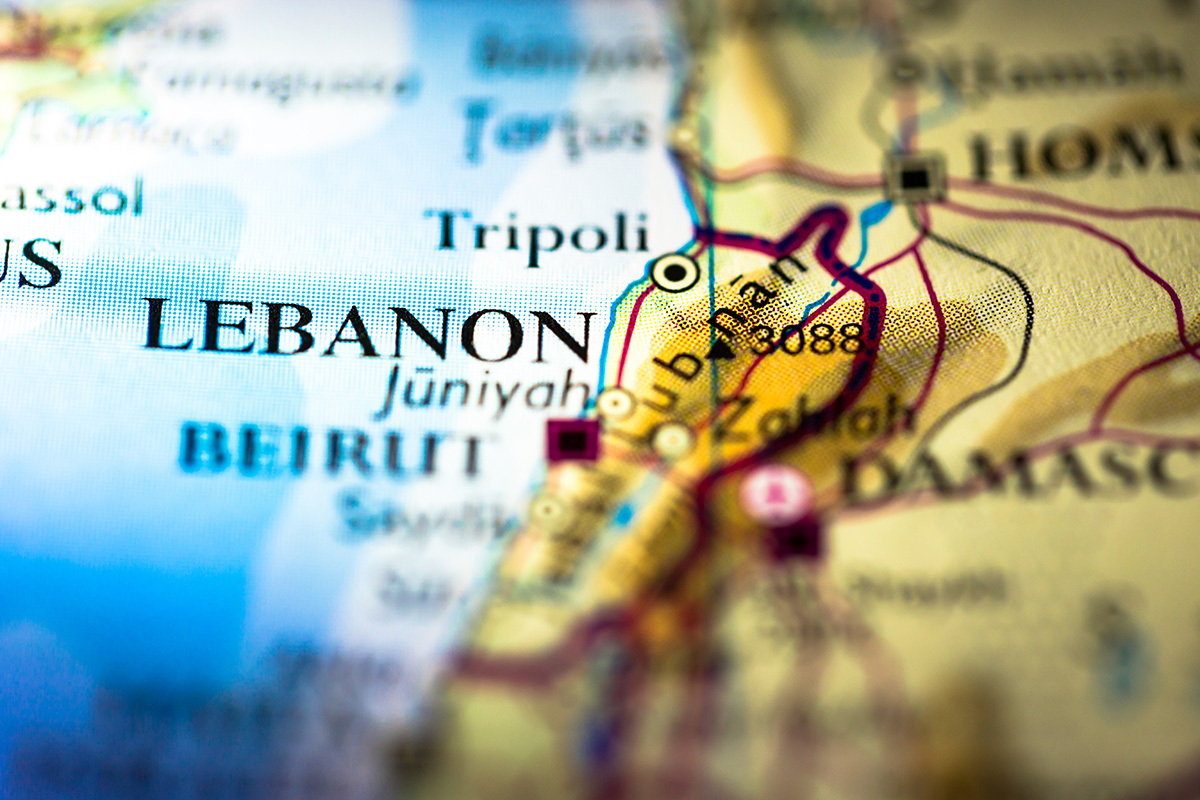
The war has left Mario and hundreds of thousands of others stranded in the Middle East.
“I had to come back home,” Mario told the Blade.
“Luckily, I’m with family,” he added.
‘War is between Israel and Hezbollah’
Hezbollah, an Iran-backed Shia militant group the U.S. and Israel have designated a terrorist organization, after Khamenei’s death launched rockets at Israel. The Jewish State in response has carried out airstrikes against Hezbollah targets across Lebanon.
Hamas militants on Oct. 7, 2023, killed upwards of 1,200 people when they launched a surprise attack against Israel from the Gaza Strip. Hezbollah the following day began to launch rockets into Israel.
An Israeli airstrike in Beirut on Sept. 27, 2024, killed Hassan Nasrallah, Hezbollah’s long-time leader. Iran four days later launched upwards of 200 ballistic missiles at Israel.
The U.S. helped broker a ceasefire between Israel and Lebanon that took effect on Nov. 27, 2024. Israel nevertheless continued to carry out airstrikes in Lebanon.
Israel on June 13, 2025, launched airstrikes against Iran that targeted the country’s nuclear and military facilities. The subsequent war, which lasted 12 days, prompted the cancellation of the annual Tel Aviv Pride parade.
Mario noted the Israeli airstrikes have targeted Hezbollah infrastructure in Dahiyah, a Beirut suburb that is predominantly Shia, and in southern Lebanon.
His family’s home is about five miles from downtown Beirut. Mario said there is a mountain “that separates me from the area that is being bombed, so I don’t even hear the sounds.”
“Lebanon is such an interesting juxtaposition, because depending on which area you are in, your quality of life can be different during these times,” he said. “Right now, the war is not between Israel and Lebanon as a government. The war is between Israel and Hezbollah.”
“If you are in the areas where Hezbollah is concentrated, then you are severely impacted,” added Mario. “If you are in other areas, even if they are Shia or … Muslims that usually align themselves with Hezbollah, you’re still relatively in a safe place, in a safe location.”
Israeli evacuation orders have prompted hundreds of thousands of people to flee their homes in Dahiyah and in southern Lebanon.
Mario said many of the evacuees are sleeping in their cars, or on the street. He also noted a video that showed a shepherd with his sheep and goats on a highway in downtown Beirut.
“He took his animals with him because he had to vacate where he was living,” said Mario. “That’s the first time you see in downtown Beirut maybe 100 goats walking the streets with two people sitting on jackasses and herding them.”
“It is very absurd,” he added.
The Lebanese government has opened schools and public shelters for people who have been displaced, but Mario said many of them do not have enough food. He also said gas prices have increased, and people are afraid to drive.
“It really saddens me seeing the kids affected by it,” said Mario. “Hezbollah made this decision, and it was a unilateral decision.”
“I doubt that the Shia people support them,” he added, referring to Hezbollah. “They cannot say it out loud that they do not support them, but I doubt people are happy within less than two years, for the second time in a row, to have to leave their homes and try to find a place to stay.”
Lebanese government urged to develop LGBTQ-inclusive plan for displaced people
Article 534 of Lebanon’s Penal Code states “any sexual intercourse contrary to the order of nature is punishable” by up to a year in prison. Several judges in recent years have opted not to use the statute to prosecute LGBTQ people who have been charged under it.
Helem, a Lebanese LGBTQ and intersex rights group, on March 4 called upon the Lebanese government and international NGOs to develop a response to the Israeli airstrikes that is “comprehensive, fair, and inclusive of all groups, without exception or discrimination.
“The experience of the previous war demonstrated that state response plans were not sufficiently inclusive of displaced LGBTQ+ individuals,” said Helem. “Many faced compounded challenges, including the inability to access state collective shelters, exposure to harassment or violence, difficulty accessing health and psychosocial services, and fear of disclosing their gender identity or sexual orientation due to stigma and discrimination.”
“Any emergency plan that fails to take the most vulnerable groups into account exposes their lives and dignity to additional risks,” added the group.
Helem also made the following requests:
• Integrating a rights-based and nondiscrimination approach in all stages of planning and implementation, ensuring safe and equal access to assistance and services.
• Training staff working in shelters and emergency response on principles of protection from gender-based violence and discrimination, including issues related to gender identity and sexual orientation.
• Reassessment of the currently adopted shelter model, which relies exclusively on the concept of the “traditional family” aligned with a specific social structure. In practice, this leads to the systematic exclusion of non-traditional families and individuals who do not belong to conventional family units, including LGBTQ+ individuals, survivors of domestic violence, migrant workers, and people without supportive family networks.
• Involving civil society organizations specialized in gender issues and LGBTQ+ rights in the design, implementation, and monitoring of the emergency response plan.
• Establishing clear monitoring and accountability standards to ensure that violations or discriminatory practices do not occur during the implementation of the emergency plan.
“Disasters and conflicts do not justify the suspension of rights or the neglect of marginalized groups. On the contrary, the need for a humanitarian approach grounded in dignity and equality becomes even more urgent in times of crisis.”
“Helem places its expertise and experience at the disposal of relevant authorities and affirms its readiness to cooperate to ensure that the emergency plan is more just, effective, and inclusive,” said Helem. “Dignity is indivisible, and protection must include everyone without exception.”
Advocacy groups are demanding the Trump-Vance administration not to deport two gay men to Iran.
MS Now on Jan. 23 reported the two men are among the 40 Iranian nationals who the White House plans to deport.
Iran is among the countries in which consensual same-sex sexual relations remain punishable by death.
The Washington Blade earlier this month reported LGBTQ Iranians have joined anti-government protests that broke out across the country on Dec. 28. Human rights groups say the Iranian government has killed thousands of people since the demonstrations began.
Rebekah Wolf of the American Immigration Council, which represents the two men, told MS Now her clients were scheduled to be on a deportation flight on Jan. 25. A Human Rights Campaign spokesperson on Tuesday told the Blade that one of the men “was able to obtain a temporary stay of removal from the” 10th U.S. Circuit Court of Appeals, and the other “is facing delayed deportation as the result of a measles outbreak at the facility where they’re being held.”
“My (organization, the American Immigration Council) represents those two gay men,” said American Immigration Council Senior Fellow Aaron Reichlin-Melnick in a Jan. 23 post on his Bluesky account. “They had been arrested on charges of sodomy by Iranian moral police, and fled the country seeking asylum. They face the death penalty if returned, yet the Trump (administration) denied their asylum claims in a kangaroo court process.”
“They are terrified,” added Reichlin-Melnick.
My org @immcouncil.org represents those two gay men. They had been arrested on charges of sodomy by Iranian moral police, and fled the country seeking asylum. They face the death penalty if returned, yet the Trump admin denied their asylum claims in a kangaroo court process.
They are terrified.
— Aaron Reichlin-Melnick (@reichlinmelnick.bsky.social) January 23, 2026 at 8:26 AM
Reichlin-Melnick in a second Bluesky post said “deporting people to Iran right now, as body bags line the street, is an immoral, inhumane, and unjust act.”
“That ICE is still considering carrying out the flight this weekend is a sign of an agency and an administration totally divorced from basic human rights,” he added.
Deporting people to Iran right now, as body bags line the street, is an immoral, inhumane, and unjust act. That ICE is still considering carrying out the flight this weekend is a sign of an agency and an administration totally divorced from basic human rights. www.ms.now/news/trump-d…
— Aaron Reichlin-Melnick (@reichlinmelnick.bsky.social) January 23, 2026 at 8:27 AM
HRC Vice President of Government Affairs David Stacy in a statement to the Blade noted Iran “is one of 12 nations that still execute queer people, and we continue to fear for their safety.” Stacy also referenced Renee Good, a 37-year-old lesbian woman who a U.S. Immigration and Customs Enforcement agent shot and killed in Minneapolis on Jan. 7, and Andry Hernández Romero, a gay Venezuelan asylum seeker who the Trump-Vance administration “forcibly disappeared” to El Salvador last year.
“This out-of-control administration continues to target immigrants and terrorize our communities,” said Stacy. “That same cruelty murdered Renee Nicole Good and imprisoned Andry Hernández Romero. We stand with the American Immigration Council and demand that these men receive the due process they deserve. Congress must refuse to fund this outrage and stand against the administration’s shameless dismissal of our constitutional rights.”
Iran
Grenell: ‘Real hope’ for gay rights in Iran as result of nationwide protests
Former ambassador to Germany claimed he has sneaked ‘gays and lesbians out of’ country

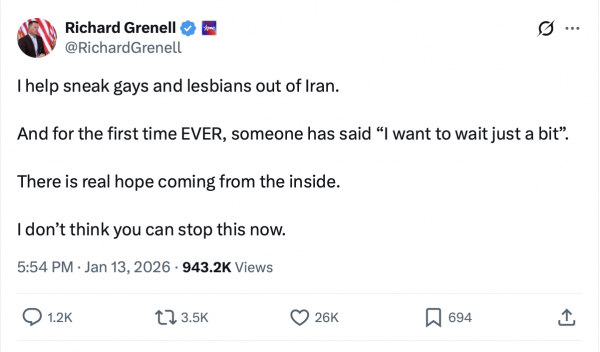
Richard Grenell, the presidential envoy for special missions of the United States, said on X on Tuesday that he has helped “sneak gays and lesbians out of Iran” and is seeing a change in attitudes in the country.
The post, which now has more than 25,000 likes since its uploading, claims that attitudes toward gays and lesbians are shifting amid massive economic protests across the country.
“For the first time EVER, someone has said ‘I want to wait just a bit,” the former U.S. ambassador to Germany wrote. “There is real hope coming from the inside. I don’t think you can stop this now.”
Grenell has been a longtime supporter of the president.
“Richard Grenell is a fabulous person, A STAR,” Trump posted on Truth Social days before his official appointment to the ambassador role. “He will be someplace, high up! DJT”
Iran, which is experiencing demonstrations across all 31 provinces of the country — including in Tehran, the capital — started as a result of a financial crisis causing the collapse of its national currency. Time magazine credits this uprising after the U.N. re-imposed sanctions in September over the country’s pursuit of nuclear weapons.
As basic necessities like bread, rice, meat, and medical supplies become increasingly unaffordable to the majority of the more than 90 million people living there, citizens took to the streets to push back against Iran’s theocratic regime.
Grenell, who was made president and executive director of the John F. Kennedy Center for the Performing Arts last year by Trump, believes that people in the majority Shiite Muslim country are also beginning to protest human rights abuses.
Iran is among only a handful of countries in which consensual same-sex sexual relations remain punishable by death, according to the Death Penalty Information Center.

Kristi Noem ‘devastated’ as husband’s alleged fetish spending surfaces

Colo. activists condemn SCOTUS conversion therapy ruling

Is Ghana’s selective justice a human rights contradiction?

Supreme Court ruling against conversion therapy bans could affect Md. law

Glisten report details hostile climate for LGBTQ students

‘Out for McDuffie’ event held at D.C. gay bar

The Oscar-losing performance that’s too good to miss

‘Jonah’ an undeniably compelling but unusual memory play

Ghanaian president welcomed to Philadelphia amid backlash over anti-LGBTQ bill

PHOTOS: ‘No Kings’ rally and march
-

 District of Columbia2 days ago
‘Out for McDuffie’ event held at D.C. gay bar
-
Movies3 days ago
The Oscar-losing performance that’s too good to miss
-
Theater3 days ago
‘Jonah’ an undeniably compelling but unusual memory play
-
Ghana2 days ago
Ghanaian president welcomed to Philadelphia amid backlash over anti-LGBTQ bill