Opinions
Gay man details secret struggle with bulimia
February is Eating Disorder Awareness Month
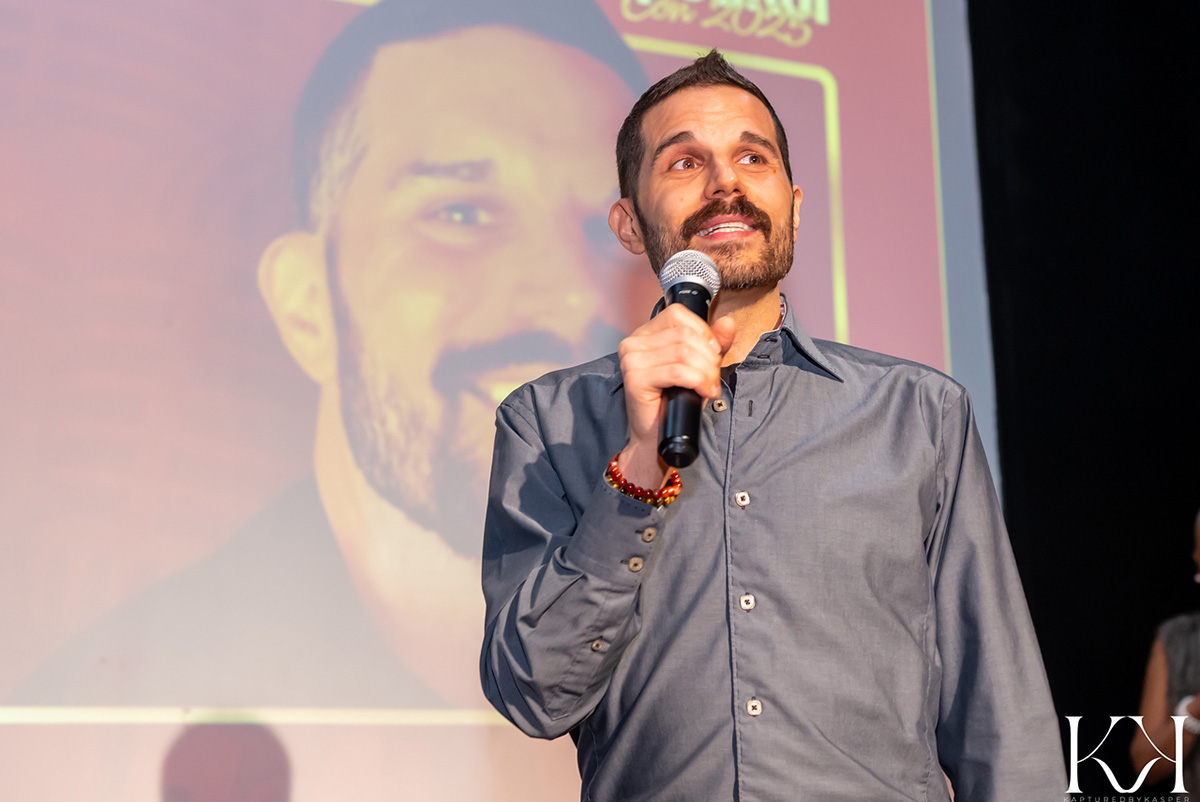
I was a “chubby” kid. A “husky” kid. Horrible terms that still make me cringe. Food issues stem through the family tree. I remember hearing a family member vomit when I was in elementary school; the residual scraps left floating in the toilet. I tried sticking my finger down my throat as a teen — an easy purge after a buffet binge. “Easy” being a sick way of looking at such a violent act to oneself, but the swiftness of an occasional act turning to addiction is frighteningly simple.
I was in my early 20s when I went on another diet in a series of crash diets, but this one hit different. I barely ate and worked out intensely each day. I decided to reward myself at the end of the week with a large pizza and breadsticks. Devouring a whole pizza (and more) was not new to me. I could down an alarming amount of food and hit the pillow in a haze. I didn’t know about nutrition, calories, or balance for many years to come. The meal went down the toilet, and I resumed my starvation diet. The calorie deficit pushed me closer to addiction’s ledge, and the hunger sent me over.
The sporadic binge turned to several a week — running to the local country store for a smattering of chips, candy, soda, honey buns, cookies, anything to fill me up. Soon, it was a regular appointment, arranging a home buffet to mindlessly stuff my body for hours ‘til I knelt over the ceramic bowl.
The binge-n-purge cycle turned twice daily. If I couldn’t binge at home in private, I would gorge at buffets or in my car — throwing up in restaurants, grocery stores, lobby restrooms. I lived in a house with a septic tank at the start of my illness. I clogged the tank, causing vomit to rise to the surface of the soil. Fearing further damage, I started throwing up in trash bags, collecting them in large bins, and driving them to public toilets to dispose of them. This went on for seven years, all through college, internships, and my first corporate job.
The older man I was with was losing himself at the same time, falling deeper into the abyss of severe depression he’d battled lifelong. We saw the best in each other at the start, and the worst by the demise. His bouts of darkness were beyond my repair, no matter how hard I tried to tackle the impossible fix. How is a 21-year-old supposed to convince a 46-year-old to seek treatment, talk him down from suicidal tendencies, get him to understand people love him? I couldn’t navigate it, and food seemed to be the one thing in my control.
It also became my reward and my excuse to treat myself in the face of any stress or accomplishment. He wants to kill himself: binge. I aced a test: binge. Work was rough: binge. Food was all I lived for. Friends, family, love all took a backseat. I was ruled by a hidden hunger I kept secret from nearly everyone, though my emaciated frame didn’t go unnoticed.
I was productive through the battle, working full time, graduating college summa cum laude, landing a solid job and moving up the ladder. All common addict attributes. Bulimia consumed me ‘til I was nearly 30 — four years after splitting from my first love, two years after he killed himself, and three years into a relationship with the man who would become my husband, and later my ex-husband.
They say the difference between privacy and secrecy is that privacy is about respect, whereas secrecy has shame attached. So, let’s drop the shame and the secrets held far too long. It’s been 12 years since I spent my days, nights, and thousands of dollars gorging and purging for hours. Twelve years since I was face down in a toilet at my own will.
I was a TV producer for a decade, booking more than 15,000 segments through the years. I often received pitches for February’s Eating Disorder Awareness Month and made a point to share these stories every year. Still, every pitch and every spokesperson I booked was with a woman. The stigma surrounding body dysmorphia in men continues despite men representing up to 25 percent of people with eating disorders, with members of the LGBTQ+ community at a higher risk, according to the National Association of Anorexia Nervosa and Associated Disorders. Men are also more likely to not recognize a problem, and their cases tend to be more severe by the time they see a doctor.
Living in secret and hiding is not living. It’s shame-based and the ultimate red flag that something needs to change. It will haunt you ‘til you are unrecognizable to yourself and everyone around you. You don’t need to share your story with the world, but opening up to someone is a crucial step in recovery and healing. Living in lies and maintaining deception is the heaviest of burdens
Addiction is blinding. You are unable to see the joys, the freedoms, and opportunities awaiting when you’re solely focused on soothing your addiction’s rage. Living for the fix pushes every other interest out of focus. When you start to release the devil on your back, you make room for wings to spread and space to fly into passions suffocated far too long.
It’s taken a lot of work, therapy, reflection and learning. Not to say I’m recovered, not to say I’m healed. I’ll forever have this devil on my back. It’s about learning to quiet his rage, soothe his anxiety, and ensure his safety and love. It’s a lifelong path of healing more with each day, each year.
And there is always hope. Even in the deepest depths of despair and isolation and ‘I’ll-never-get-better-ness.’ Whatever your circumstances, those tinges of hope are worth clinging to. They’ll carry you through.
I don’t know where I’ll be next year, let alone a future once so clear. And I’m okay. You’re okay. The other side isn’t perfect. Nothing is. But what a gift to make it there and experience life unshackled from your ghost.
There’s so much to see.
Kyle Ridley is an Emmy Award winning journalist with more than two decades in print and television.
Opinions
An undeclared war of distraction by the felon
Will Trump claim a national emergency to undermine midterms?
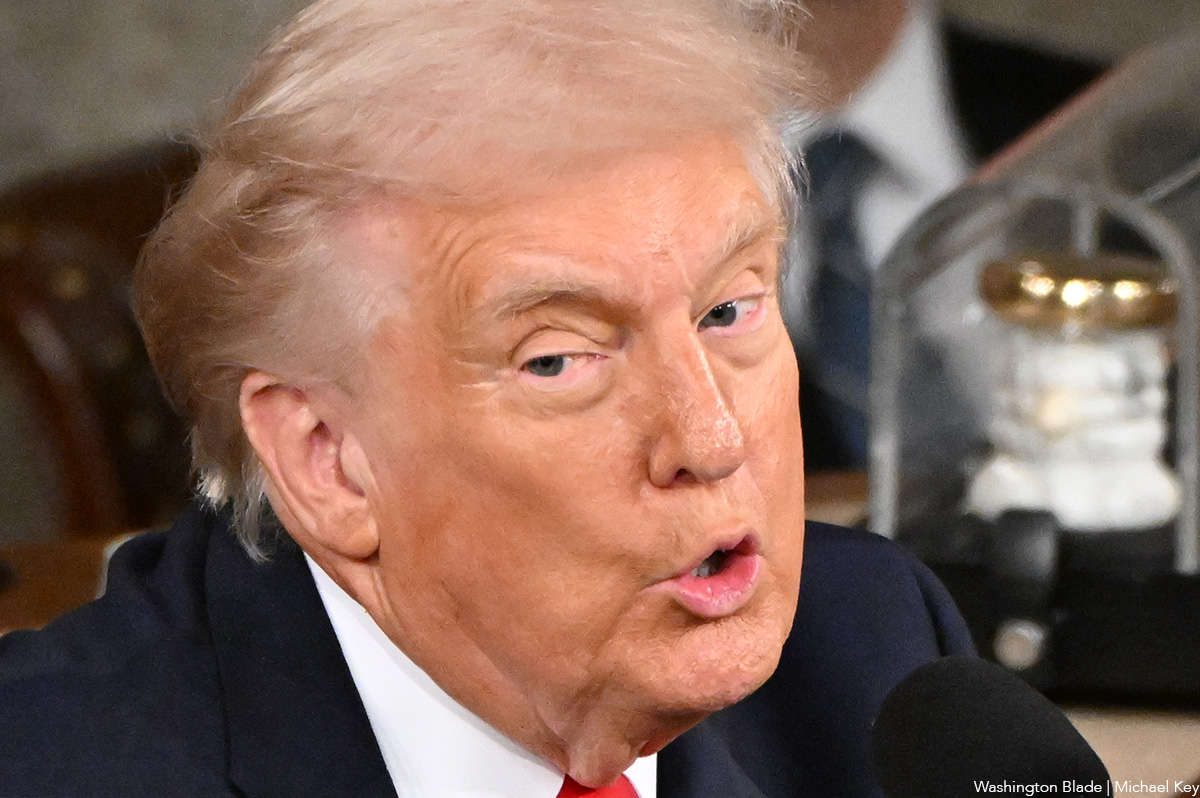
The president of the United States in his rambling speech about our attack on Iran, recorded during a campaign trip, said, “The Iranian regime seeks to kill. The lives of courageous American heroes may be lost and we may have casualties — that often happens in war — but we’re doing this not for now. We’re doing this for the future, and it is a noble mission.”
Well, the United States has not declared war on Iran, only Congress can do that, not the president. As I write this, the felon has yet to make a live speech to the American people about what he is doing, and Americans have already lost their lives. He is weekending as he usually does at Mar-a-Lago. I wonder if he has the balls to head out to the golf course while American lives continue to be at stake.
This operation is clearly the felon’s way of distracting the people of the United States from his failed domestic policies. From rising food prices, rents, and health insurance. From the loss of manufacturing jobs, as reported in November ”manufacturing shed another 6,000 jobs in September, for a total loss of 58,000 since April.” Had he not acted on Iran now every news outlet in the nation would have reported on the Epstein scandal with the release of the depositions, video and transcripts, of former Secretary of State Hillary Clinton and former President Bill Clinton, in front of the Congressional Oversight Committee.
Even more frightening is this may be his way of preparing to claim a national emergency to undermine the midterm elections, which he is clearly on target to lose, now that his Save America Act has been defeated in Congress.
Americans must ask themselves how long they will put up with this warmonger, racist, sexist, lying, homophobic, SOB, who cares not a whit for them, but only for himself, and his rich colleagues, taking as much grift as they all can, while he is president.
None of this is to say we shouldn’t put constraints on Iran, work to see they never have a nuclear bomb, and limit their production of missiles. We were working toward the goal of stopping them from having a nuclear bomb when the felon, in his first term, pulled us out of the agreement to move forward on that. Today, he has sidelined the State Department, and his Secretary of State, Marco Rubio, in negotiations, and has relied on his son-in-law, Jared Kushner, and Steve Witkoff. The attack was commenced while negotiations were underway. At the end of last week it was reported, Oman’s Foreign Minister Badr Al-Busaidi, who mediated the talks in Geneva, said there had been “significant progress in the negotiation.” Al-Busaidi added, “Technical-level talks would continue next week in Vienna, the home of the International Atomic Energy Agency.” The United Nations’ atomic watchdog likely would be critical in any deal.
So clearly this is all about what the two negotiators, who have sidelined the State Department, Kushner and Witkoff, secretly reported to the felon. My guess is some progress was being made, clearly it was not what the president wanted. So, what ruled was his immediate need for a distraction after the failure of his State of the Union address to make any impact on his sagging poll numbers.
I have written often of the alternate universe Trump has us living in. I am just waiting for his MAGA cult to react to this. Will they still blindly follow everything he says, or will the Laura Loomers of the world finally say, “screw this, take care of us at home, do what you promised to make our lives better”. The first MAGA to say this was Marjorie Taylor Greene. Then Tucker Carlson added his slam against the felon. His PR flack, Karoline Leavitt, is getting confused by all the lies, recently saying “things are better than they were last year.” Clearly forgetting last year was 2025, and the felon was president for all except for 20 days of it, so is responsible for last year.
I am an optimist and believe our democracy will survive him, and his fascist cohorts’ blatant attacks. We won a revolution against one king, and survived a civil war, becoming even stronger as a united nation. We helped Europe defeat Hitler. I believe Sen. Mark Kelly (D-Ariz.) when he says the military will reject illegal orders. Orders that ask them to act against their fellow countrymen and women. I believe the American people will come to their senses before it’s too late. They will finally reject the POS in the White House, and the sycophants, and fascists, surrounding him in time to reclaim our nation for all the people.
Peter Rosenstein is a longtime LGBTQ rights and Democratic Party activist.

I recently lost my dog, Argo.
He was a pit bull, big, sweet, endlessly cuddly, and for 15 years he was my constant. The kind of presence you stop consciously noticing until they’re gone and the quiet hits you all at once. Pit bulls have a reputation. Argo never got the memo. He just loved people, completely and without condition, from the moment he met them until his last day.
I wasn’t prepared for what happened next.
My phone filled up. Instagram lit up. Texts came in from people I hadn’t heard from in months, in some cases years. Hugs from neighbors. Messages from colleagues. Condolences from people I’d lost touch with, some through nothing more than the slow drift of busy lives in a busy city, and some honestly through small tiffs and misunderstandings that neither of us ever bothered to resolve.
And sitting with all of that love pouring in, I found myself asking a question I wasn’t expecting: Why has it taken this long?
We do this in D.C. We get caught in our heads, our calendars, our ambitions. We let weeks turn into months. We let a small misunderstanding calcify into distance because nobody wants to be the first one to reach out, nobody wants to seem like they need something. We perform resilience so well that sometimes the people who care about us most don’t know we need them.
And then something breaks open, a loss, a moment of real vulnerability, and suddenly people show up. And you realize the connection was always there. It just needed permission.
Argo gave people permission. Even in dying, he did what he always did when he was alive. He brought people together.
I’ll be honest with you about where I’ve been lately. As I’ve climbed the entrepreneurial ladder, something quietly shifted. People stopped seeing Gerard. They started seeing a title, a resource, someone who could give them something or who owed them something. A character. Not a person. And when most of your day is spent inside other people’s problems and crises, you can start to feel it, a slow creep of cynicism that you don’t even notice until one day you realize you’ve gone numb.
And I’m not alone in that. Look around. We just watched innocent people die while those in power looked us in the face and called it something else. We watched people erupt over a 10-minute halftime performance like it was the greatest threat to our country. Everywhere you look there is something designed to make you angry, or exhausted, or both. Anger and numbness have become survival strategies. I understand it. I’ve lived it.
But here is what Argo reminded me.
The world is not what the loudest voices say it is. The world is what shows up when something real happens. And what showed up for me, after losing my sweet boy, was people. Caring, loving, present people who put down whatever they were doing to reach out to a friend. Some of them I hadn’t spoken to in too long. Some of them I’d had friction with. All of them showed up anyway.
That is the world. That is what it actually is underneath all the noise.
I think we’ve forgotten that. Or maybe we haven’t forgotten it, maybe we’re just so tired and overstimulated and battle-worn that we’ve stopped letting ourselves feel it. Because feeling it requires vulnerability, and vulnerability feels dangerous right now. It’s easier to scroll. It’s easier to stay mad. It’s easier to keep a wall up and call it wisdom.
Argo spent 15 years showing me a different way. He never met a stranger. He never held a grudge. He never saved his love for people who deserved it on paper. He just gave it, freely, every single time. Not a reward. Not a transaction. Just the most natural thing in the world.
Grief burns off everything that isn’t essential and leaves only what matters. What’s left for me is this: the world is full of good people. You may be surrounded by more of them than you know. And if you’ve gone numb, or angry, or so busy surviving that you’ve stopped connecting, I want you to know that the feeling can come back. It came back for me.
Reach out to someone today. Close a distance you’ve let grow. Tell someone they matter. Not because everything is perfect, but because connection is how we survive when it isn’t. Living disconnected, mad and closed off isn’t living at all. It’s a slower kind of dying.
Death came to teach me how to live. I hope this saves you some time.
Gerard Burley, also known as Coach G, is founder and CEO of Sweat DC.
Opinions
Why innovation matters for Black health
Making healthcare more affordable is vitally important

Black Americans are more likely than Americans of other races to live with chronic conditions like HIV. They also disproportionately struggle to afford the often expensive treatments needed to manage those conditions.
So it’s hardly surprising that Black voters care about politicians’ proposals to bring down healthcare costs more than any other group.
Most of those proposals — from leaders in both parties — are well-intentioned. But they are not all equally beneficial. Recent efforts to impose price controls on prescription drugs threaten to harm the very patients they are meant to help.
Consider former President Biden’s signature Inflation Reduction Act, which gave Medicare the power to set prices on brand-name medicines for chronic conditions like diabetes, autoimmune disease, or cancer — all diseases that Black patients disproportionately struggle with.
These price controls promise short-term cost savings. But they threaten to erase the much larger savings that patients with chronic illness would otherwise see over their lifetimes. That’s because price controls disincentivize companies from developing new medicines to compete against existing popular treatments for serious conditions.
Consider HIV. According to the CDC, more than 1.2 million people in the United States are living with HIV, and roughly 31,000 new infections still occur each year. In the 1980s, these diagnoses would have been a death sentence. Today, they represent a manageable chronic illness — a direct result of decades of sustained research and investment in antiretroviral development, long-acting injectables, and prevention tools like PrEP.
HIV treatments are cheaper and more accessible now than ever. That’s not because of government intervention, but because of the price wars that resulted as companies introduced competing therapies and battled for market share.
In fact, had the government prematurely intervened, those competing treatments might never have reached patients, who would still be stuck paying vastly higher prices.
That is precisely the risk our leaders are now taking. Many companies are already scaling back research because of the IRA’s price controls. Since the law’s passage in 2022, biotech firms have canceled at least 55 research programs.
That is especially dangerous for the Black community. Black patients have historically been overlooked by the research establishment, from the underrepresentation of Black participants in clinical trials to underinvestment in conditions like sickle cell disease that disproportionately affect Black patients. If companies are forced to scale back research, it is likely that treatments for smaller and more marginalized patient populations will face the greatest risks of being cut.
The Trump administration, meanwhile, continues to push for its so-called “Most Favored Nation” policy that would tie U.S. drug prices to the lower prices arbitrarily set by foreign governments.
The consequences could be severe. “Most Favored Nation” pricing would dramatically reduce companies’ revenues on both new and existing medicines, decimating resources for future research and development. Researchers project that, if imposed on Medicare and Medicaid alone, such policies could cut research spending nearly in half, leading to more than 200 fewer new medicines over the coming decade.
Developing treatments for HIV has historically required long timelines, complex trials, and sustained capital. Any policy that compresses revenues for breakthrough medicines must be evaluated not only for short-term savings, but also on its potential long-term effects on the pipeline that brings new survival and prevention advances to patients.
And there are also access risks. In countries that rely heavily on price controls, patients often face delayed and restricted access to drugs. Black communities in the United States already face barriers to consistent care and adherence to treatment. Importing foreign countries’ price controls would inevitably have ripple effects across our healthcare system, worsening these disparities.
Making healthcare more affordable is vitally important. Black families feel the pressure of rising costs every single day. But price controls carry severe tradeoffs. Breakthroughs in HIV treatment, long-acting prevention, cancer treatment, and chronic disease management rely on steady research — and if policymakers weaken the economic engine that drives that research, Black patients will feel the consequences first.
Health equity is not just about lowering today’s price tag. It is also about protecting tomorrow’s cures. Black communities deserve reforms that do both, not price controls that promise cost relief while sacrificing future breakthroughs.
Guy Anthony is president and CEO of Black, Gifted & Whole.

An undeclared war of distraction by the felon

Talarico beats Crockett in Texas primary

35 years after ‘Truth or Dare,’ Slam is still dancing

Md. Commission on LGBTQIA+ Affairs released updated student recommendations