Puerto Rico
The ‘X’ returns to court
1st Circuit hears case over legal recognition of nonbinary Puerto Ricans

Eight months ago, I wrote about this issue at a time when it had not yet reached the judicial level it faces today. Back then, the conversation moved through administrative decisions, public debate, and political resistance. It was unresolved, but it had not yet reached this point.
That has now changed.
Lambda Legal appeared before the 1st U.S. Court of Appeals in Boston, urging the court to uphold a lower court ruling that requires the government of Puerto Rico to issue birth certificates that accurately reflect the identities of nonbinary individuals. The appeal follows a district court decision that found the denial of such recognition to be a violation of the U.S. Constitution.
This marks a turning point. The issue is no longer theoretical. A court has already determined that unequal treatment exists.
The argument presented by the plaintiffs is grounded in Puerto Rico’s own legal framework. Identity birth certificates are not static historical records. They are functional documents used in everyday life. They are required to access employment, education, and essential services. Their purpose is practical, not symbolic.
Within that framework, the exclusion of nonbinary individuals does not stem from a legal limitation. Puerto Rico already allows gender marker corrections on birth certificates for transgender individuals under the precedent established in Arroyo Gonzalez v. Rosselló Nevares. In addition, the current Civil Code recognizes the existence of identity documents that reflect a person’s lived identity beyond the original birth record.
The issue lies in how the law is applied.
Recognition is granted within specific categories, while those who do not identify within that binary structure remain excluded. That exclusion is now at the center of this case.
Lambda Legal’s position is straightforward. Requiring individuals to carry documents that do not reflect who they are forces them into misrepresentation in essential aspects of daily life. This creates practical barriers, exposes them to scrutiny, and places them in a constant state of vulnerability.
The plaintiffs, who were born in Puerto Rico, have made clear that access to accurate identification is not symbolic. It is a basic condition for moving through the world without contradiction imposed by the state.
The fact that this case is now being addressed in the federal court system adds another layer of significance. This is not a pending policy discussion or a legislative proposal. It is a constitutional question. The analysis is not about political preference, but about rights and equal protection under the law.
This case does not exist in isolation.
It unfolds within a broader context in which debates over identity and rights have increasingly been shaped by the growing influence of conservative perspectives in public policy, both in the United States and in Puerto Rico. At the local level, this influence has been reflected in legislative discussions where religious arguments have begun to intersect with decisions that should be grounded in constitutional principles. That intersection creates tension around the separation of church and state and has direct consequences for access to rights.
Recognizing this context is not an attack on faith or religious practice. It is an acknowledgment that when certain perspectives move into the realm of public authority, they can shape outcomes that affect specific communities.
From within Puerto Rico, this is not a distant debate. It is a lived reality. It is present in the difficulty of presenting identification that does not match one’s identity, and in the consequences that follow in workplaces, schools, and government spaces.
The progression of this case introduces the possibility of change within the applicable legal framework. Not because it resolves every tension surrounding the issue, but because it establishes a legal examination of a practice that has long operated under exclusion.
Eight months ago, the conversation centered on ongoing developments. Today, there is already a judicial finding that identifies a violation of rights. What remains is whether that finding will be upheld on appeal.
That process does not guarantee an immediate outcome, but it shifts the ground.
The debate is no longer theoretical.
It is now before the courts.





Puerto Rico
Bad Bunny shares Super Bowl stage with Ricky Martin, Lady Gaga
Puerto Rican activist celebrates half time show

Bad Bunny on Sunday shared the stage with Ricky Martin and Lady Gaga at the Super Bowl halftime show in Santa Clara, Calif.
Martin came out as gay in 2010. Gaga, who headlined the 2017 Super Bowl halftime show, is bisexual. Bad Bunny has championed LGBTQ rights in his native Puerto Rico and elsewhere.
“Not only was a sophisticated political statement, but it was a celebration of who we are as Puerto Ricans,” Pedro Julio Serrano, president of the LGBTQ+ Federation of Puerto Rico, told the Washington Blade on Monday. “That includes us as LGBTQ+ people by including a ground-breaking superstar and legend, Ricky Martin singing an anti-colonial anthem and showcasing Young Miko, an up-and-coming star at La Casita. And, of course, having queer icon Lady Gaga sing salsa was the cherry on the top.”
La Casita is a house that Bad Bunny included in his residency in San Juan, the Puerto Rican capital, last year. He recreated it during the halftime show.
“His performance brought us together as Puerto Ricans, as Latin Americans, as Americans (from the Americas) and as human beings,” said Serrano. “He embraced his own words by showcasing, through his performance, that the ‘only thing more powerful than hate is love.’”
Puerto Rico
Puerto Rico’s largest LGBTQ organization struggling amid federal funding cuts
Waves Ahead lost two grants from Justice Department, HUD
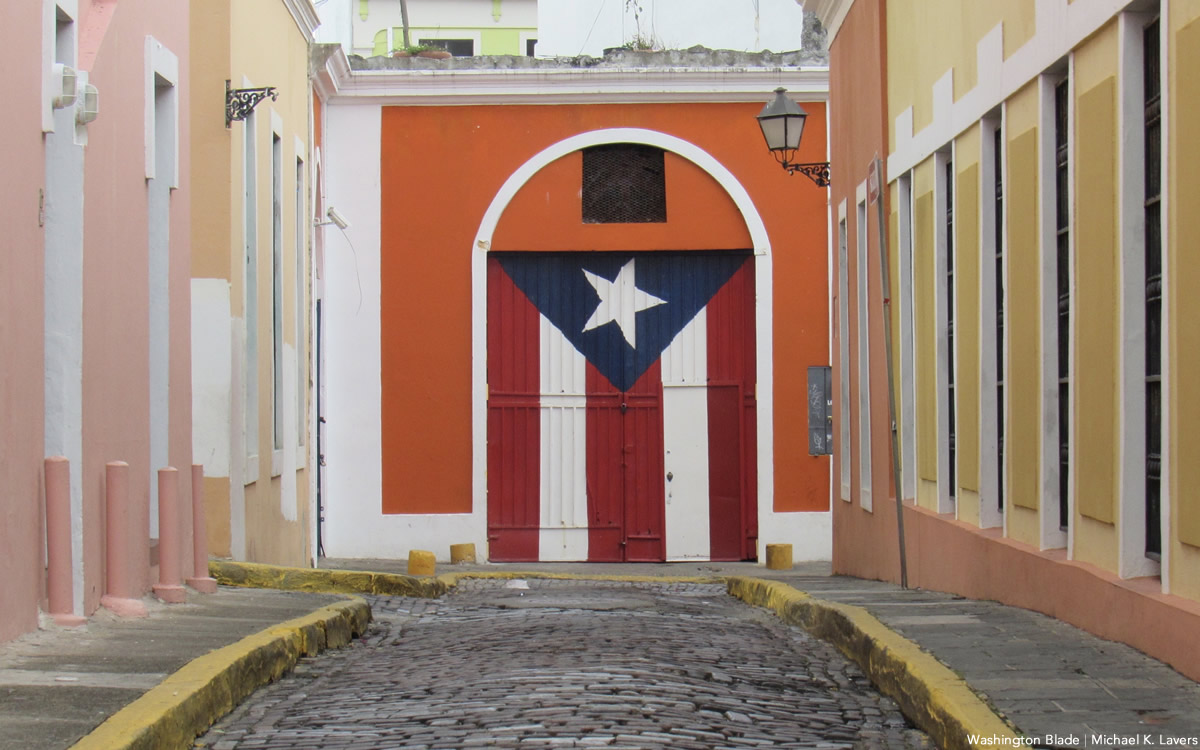
A loss of federal funds has forced Puerto Rico’s largest LGBTQ organization to scale back its work on the island.
Waves Ahead earlier this year lost upwards of $200,000 for a restorative justice program that the Justice Department funded through a three-year grant.
The U.S. Department of Housing and Urban Development has also rescinded a $170,000 annual grant that Waves Ahead used to sustain Soraya’s House, a transitional housing program for LGBTQ people in Cabo Rojo, a municipality in Puerto Rico’s southwest coast. Puerto Rico’s Women’s Advocate Office, known by the acronym OPM, earlier this year also denied Waves Ahead’s application to receive more funding for its work to combat anti-LGBTQ violence.
OPM distributes STOP (Services, Training, Officers, and Prosecutors) Violence Against Women Formula Program funds it receives from the Justice Department to grant recipients in Puerto Rico.
Waves Ahead Executive Director Wilfred Labiosa during an interview with El Nuevo Día, a Puerto Rican newspaper, last month said his organization between October 2023 and January 2025 received more than $110,000 from OPM. (The Trump-Vance administration took office on Jan. 20. Puerto Rico Gov. Jenniffer González Colón, a Republican who supports President Donald Trump, took office on Jan. 2.)
Labiosa during an interview with the Washington Blade said Waves Ahead has lost 60 percent of its total budget.
The cuts have forced Waves Ahead to close its community center in Loíza, a municipality that is roughly 20 miles east of San Juan, the Puerto Rican capital. Waves Ahead has also had to curtail its restorative justice program that it operates with the Puerto Rico Cultural Center in Chicago.
Community centers continue to operate in San Juan, Cabo Rojo, Maunabo, and Isabela.
“People were really gaining a lot of skills. People were really involved,” Labiosa told the Blade.
“That was just pulled like a big band-aid right off the skin,” he said, referring to when he learned the Justice Department had rescinded the grant.
Waves Ahead Executive Director Wilfred Labiosa and volunteers bring food, water and other relief supplies to Iluminada, an 86-year-old resident of Vieques, Puerto Rico, on Jan. 31, 2018. Hurricane Maria a few months earlier devastated the U.S. commonwealth. (Washington Blade video by Michael K. Lavers)
Labiosa told the Blade the White House’s anti-LGBTQ policies and stance against diversity, equity, and inclusion programs likely contributed to the loss of federal funds.
He noted Waves Ahead lost its HUD funding, even though it was “on the list.”
“People here in Puerto Rico started to receive all the award letters, and all of a sudden we didn’t receive ours,” said Labiosa.
He told the Blade that Waves Ahead is one of two HUD grant recipients in Puerto Rico with LGBTQ-specific language in their profile, but “it is the only organization that has its mission and programming focused on LGBT homeless and people who needed transitional housing.”
“When we approached HUD and approached the local agent of HUD here … they all said, oh, we’re not sure what happened,” said Labiosa. “We tried to meet with everybody involved, but HUD never gave us a phone call. They just sent us an email saying you didn’t answer this question. The question was answered. It was something pitiful.”
Neither HUD nor the Justice Department have responded to the Blade’s request for comment.
Waves Ahead, meanwhile, has turned to the Puerto Rican diaspora in the mainland U.S. and private foundations for support. Labiosa noted local organizations and businesses have also given Waves Ahead money.
Waves Ahead on Giving Tuesday raised $2,778.
“We continue hands on and moving forward,” said Labiosa.
Opinions
The X that exposes everything
Puerto Rico government suspends issuance of birth certificates with ‘X’ gender marker
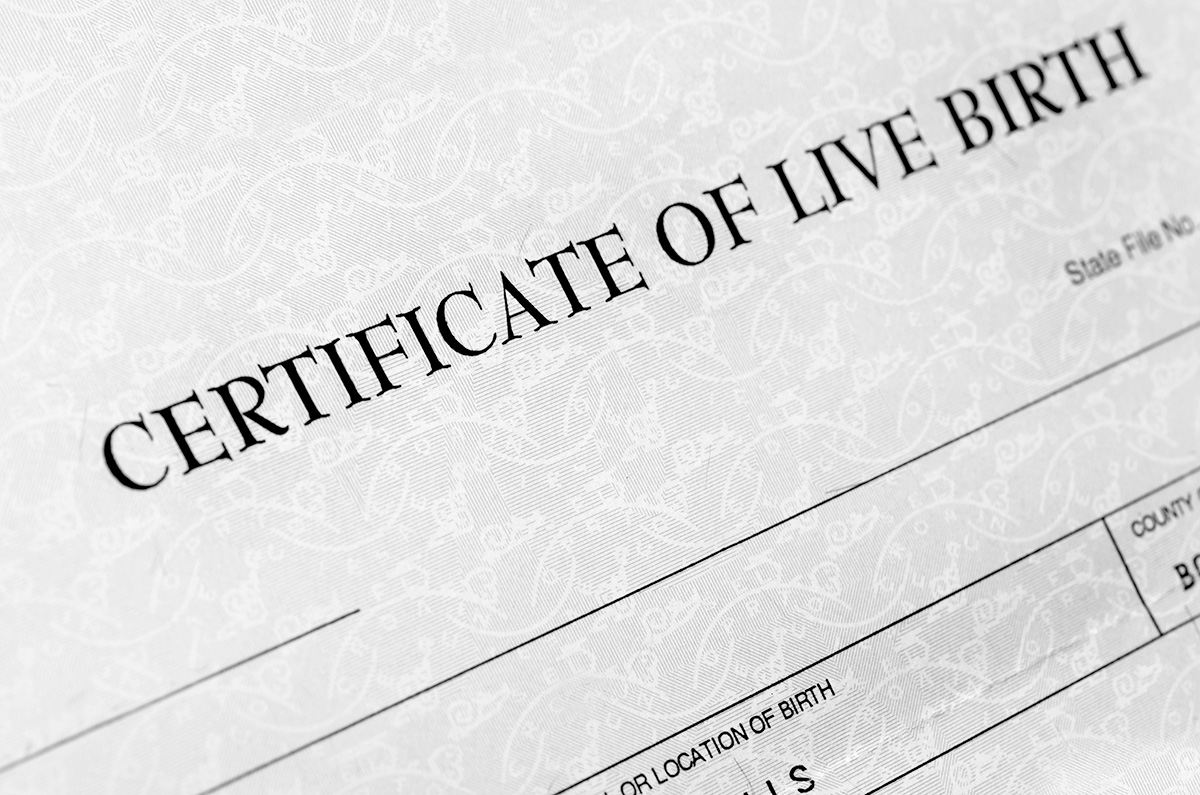
The government of Puerto Rico has made a clear decision: to turn its back on part of its own people. There are no technical excuses or legal arguments that can disguise what is really happening.
The temporary suspension of the “X” gender marker on birth certificates is a deliberate act of erasure. It is a modern form of exclusion, masked as a defense of the “rule of law.” But let’s be clear: what is being defended here is not justice — it’s the power of a few to impose their fear on the freedom of many.
The federal court order issued by Judge María Antongiorgi Jordán didn’t force anyone into anything. It didn’t erase existing categories or require anyone to identify as nonbinary. It simply allowed those who have never had a truthful box to check on a government form to finally exist legally. But the moment that option challenged the comfort of binary thinking, the entire state apparatus was mobilized against it.
Pride Society Magazine, Puerto Rico’s only LGBTQ media outlet, covered this development in an article titled “Gobierno de Puerto Rico paraliza la X” or “Puerto Rico’s government paralyzes the X.” More importantly, it echoed the voices of those most affected. The LGBTQ+ Federation of Puerto Rico didn’t mince words: the government is spending public money and resources to block a right that has already been validated by the courts. This is not about process or caution — it’s about obstruction. Federation leaders called it exactly what it is: a political move rooted in prejudice, fear, and a desire to appease the most conservative sectors of society.
This isn’t a technical delay. This is a statement of values. It says if your identity doesn’t fit our categories, you don’t exist. If your truth challenges the status quo, you will be denied.
The “X” on a birth certificate doesn’t impose anything. It doesn’t threaten anyone. What it does is allow people to live with dignity, without being forced to lie every time they’re asked to show their ID. That minimal recognition is now being denied, not by accident, but by design.
And it fits perfectly within a broader, dangerous trend — at both the federal and local level. Across the U.S. and Puerto Rico, we are witnessing a calculated rollback of LGBTQ rights, particularly those affecting trans and nonbinary people. What was once progress is now treated as threat. What was once affirmed is now litigated into oblivion. And while legal teams argue and politicians posture, people are being erased in real time.
This has nothing to do with parties, religions, or ideology. It’s about human dignity. It’s about the right to be seen and named for who you truly are. Those who celebrate this suspension are not protecting society — they are upholding a system of exclusion that punishes anyone who dares to be different.
The Pride Society Magazine article is more than just a news story. It is a record of resistance. It documents the courage of those who speak up when institutions stay silent. It reminds us that dignity cannot be postponed, and existence cannot be debated.
The truth is simple: the “X” is not the problem. The real problem is a system that cannot stand to admit that people come in more than two categories. A system that would rather halt a form than recognize a life.
And if we allow that system to keep winning, soon there won’t be any boxes left to check, because we will have allowed ourselves to be erased completely.

Calendar: April 10-16

BLUF leather social set for April 10 in Rehoboth

Celebrations of life planned for Sean Bartel

The ‘X’ returns to court

LGBTQ community explores arming up during heated political times

Risking it all for love during World War II

D.C. is the place for the Democratic Socialists of America

PHOTOS: The Bonnet Ball

Key lifestyle changes can help patients cope with diabetes