Arts & Entertainment
Tony Awards: De Niro slams Trump, Parkland students perform
‘The Band’s Visit,’ ‘Harry Potter and the Cursed Child’ win big
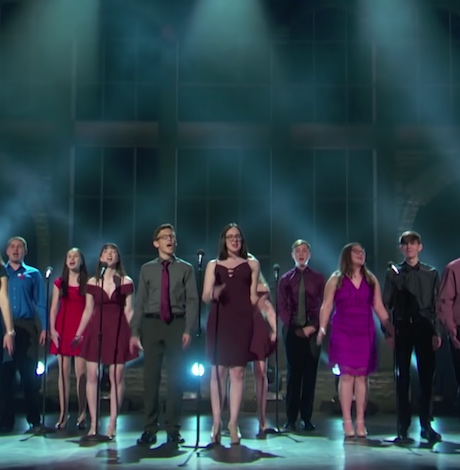
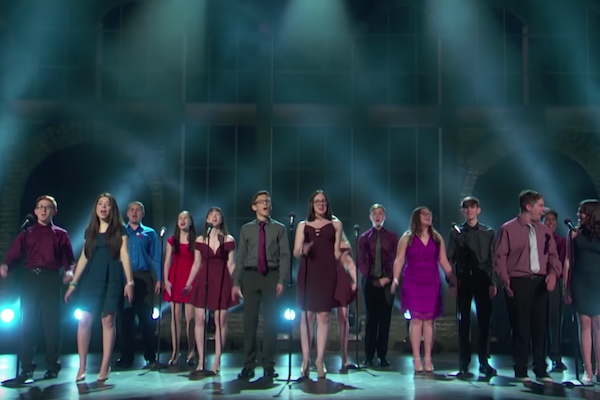
Students from Marjory Stoneman Douglas High School in Parkland, Florida, performing Rent’s ‘Seasons Of Love’ at the 2018 Tony Awards (Screenshot via Twitter)
The 72nd annual Tony Awards, hosted by Rachel Bloom, featured a clean sweep from “The Band’s Visit” and “Harry Potter and the Cursed Child, Parts One and Two” as well as plenty of onstage antics.
“The Band’s Visit” won 10 awards including Best Musical, Best Actor in a Leading Role in a Musical and Best Actress in a Leading Role in a Musical. “Harry Potter and the Cursed Child, Parts One and Two” won six awards including Best Play and Best Director. Another notable win was “Angels in America” for Best Revival of a Play. Andrew Garfield also won for Best Performance by an Actor in a Leading Role in a Play for “Angels in America.”
The ceremony included many memorable moments but Robert De Niro’s not so subtle dig at President Donald Trump appeared to be a crowd favorite.
“First, I wanna say, ‘f**k Trump,'” De Niro said before introducing Bruce Springsteen. “It’s no longer ‘Down with Trump,’ it’s ‘f**k Trump.”
His bleeped out statement was met with wild applause.
Robert De Niro’s popularity is suddenly rising in Canada. pic.twitter.com/30LPxiWg7f #TonyAwards
— David Beard (@dabeard) June 11, 2018
Parkland’s Marjory Stoneman Douglas High School Drama Club performed the classic song “Seasons of Love” from the musical “Rent.” Their rendition earned them a standing ovation from the crowd.
Nearly five months after tragedy struck their school, drama students from Parkland, Florida, took to the Tony’s stage with an emotional rendition of “Seasons of Love.” https://t.co/sAwQVVlwZL pic.twitter.com/wJEEWaIACn
— CBS News (@CBSNews) June 11, 2018
Also that night, their drama teacher Melody Herzfeld was honored with a Tony Award for excellence in theater education.
Herzfeld hid 65 of her students in her office for two hours during the Marjory Stoneman Douglas High School mass shooting.
“I’m overwhelmed. But I hope that this award will remind everyone of how vital and important arts education is to our kids. Drama, music, art, creative writing that’s how you make good citizens,” Herzfeld said in her acceptance speech.
Offstage, Neil Patrick Harris and Bloom got into an awkward Twitter interaction when Harris didn’t recognize the “My Crazy Ex-Girlfriend” star.
“Who is the woman in the top hat backstage at @TheTonyAwards? Gideon remarked that she says ‘like’ and ‘oh my god’ a lot. I’m confused,” Harris tweeted during the ceremony.
Who is the woman in the top hat backstage at @TheTonyAwards? Gideon remarked that she says ‘like’ and ‘oh my god’ a lot. I’m confused…
— Neil Patrick Harris (@ActuallyNPH) June 11, 2018
Bloom responded that she did, in fact, know Harris.
“I’m a big fan of yours,” Bloom replied. “We’ve met numerous times and my husband, Dan Gregor, wrote for ‘How I Met Your Mother’ for 5 years. Notably, he wrote the episode where your character finally meets his father.”
I’m a big fan of yours. We’ve met numerous times and my husband, Dan Gregor, wrote for “How I Met Your Mother” for 5 years. Notably, he wrote the episode where your character finally meets his father.
— Rachel Bloom (@Racheldoesstuff) June 11, 2018
Harris didn’t apologize for the slip but tweeted, “Indeed! Well said. Thanks for the reminder. How was backstage?”
Indeed! Well said. Thanks for the reminder. How was backstage?
— Neil Patrick Harris (@ActuallyNPH) June 11, 2018
See the complete list of winners below.
Best Book of a Musical
“The Band’s Visit”
“Frozen”
“Mean Girls”
“SpongeBob SquarePants: The Musical”
Best Original Score (Music and/or Lyrics) Written for the Theatre
“Angels in America”
“The Band’s Visit”
“Frozen”
“Mean Girls”
“SpongeBob SquarePants: The Musical”
Best Performance by an Actor in a Leading Role in a Play
Andrew Garfield, “Angels in America”
Tom Hollander, “Travesties”
Jamie Parker, “Harry Potter and the Cursed Child, Parts One and Two”
Mark Rylance, “Farinelli and The King”
Denzel Washington, “Eugene O’Neill’s The Iceman Cometh”
Best Performance by an Actress in a Leading Role in a Play
Glenda Jackson, “Edward Albee’s Three Tall Women”
Condola Rashad, “Saint Joan”
Lauren Ridloff, “Children of a Lesser God”
Amy Schumer, “Meteor Shower”
Best Performance by an Actor in a Leading Role in a Musical
Harry Hadden-Paton, “My Fair Lady”
Joshua Henry, “Rodgers & Hammerstein’s Carousel”
Tony Shalhoub, “The Band’s Visit”
Ethan Slater, “SpongeBob SquarePants: The Musical”
Best Performance by an Actress in a Leading Role in a Musical
Lauren Ambrose, “My Fair Lady”
Hailey Kilgore, “Once On This Island”
LaChanze, Summer: “The Donna Summer Musical”
Katrina Lenk, “The Band’s Visit”
Taylor Louderman, “Mean Girls”
Jessie Mueller, “Rodgers & Hammerstein’s Carousel”
Best Performance by an Actor in a Featured Role in a Play
Anthony Boyle, “Harry Potter and the Cursed Child, Parts One and Two”
Michael Cera, “Lobby Hero”
Brian Tyree Henry, “Lobby Hero”
Nathan Lane, “Angels in America”
David Morse, Eugene O’Neill’s “The Iceman Cometh”
Best Performance by an Actress in a Featured Role in a Play
Susan Brown, “Angels in America”
Noma Dumezweni, “Harry Potter and the Cursed Child, Parts One and Two”
Deborah Findlay, “The Children”
Denise Gough, “Angels in America”
Laurie Metcalf, Edward Albee’s “Three Tall Women”
Best Performance by an Actor in a Featured Role in a Musical
Norbert Leo Butz, “My Fair Lady”
Alexander Gemignani, “Rodgers & Hammerstein’s Carousel”
Grey Henson, “Mean Girls”
Gavin Lee, “SpongeBob SquarePants: The Musical”
Ari’el Stachel, “The Band’s Visit”
Best Performance by an Actress in a Featured Role in a Musical
Ariana DeBose, “Summer: The Donna Summer Musical”
Renée Fleming, “Rodgers & Hammerstein’s Carousel”
Lindsay Mendez, “Rodgers & Hammerstein’s Carousel”
Ashley Park, “Mean Girls Diana Rigg, My Fair Lady”
Best Direction of a Play
Angels in America
Edward Albee’s Three Tall Women
Travesties
Harry Potter and the Cursed Child, Parts One and Two
Eugene O’Neill’s The Iceman Cometh
Best Direction of a Musical
Once On This Island
The Band’s Visit
SpongeBob SquarePants: The Musical
Mean Girls
My Fair Lady
Best Play
“The Children”
“Farinelli and The King”
“Harry Potter and the Cursed Child, Parts One and Two”
“Junk”
“Latin History for Morons”
Best Revival of a Play
“Angels in America”
Edward Albee’s, “Three Tall Women”
Eugene O’Neill’s “The Iceman Cometh”
“Lobby Hero”
“Travesties”
Best Musical
“The Band’s Visit”
“Frozen”
“Mean Girls”
“SpongeBob SquarePants: The Musical”



Arts & Entertainment
In an act of artistic defiance, Baltimore Center Stage stays focused on DEI
‘Maybe it’s a triple-down’
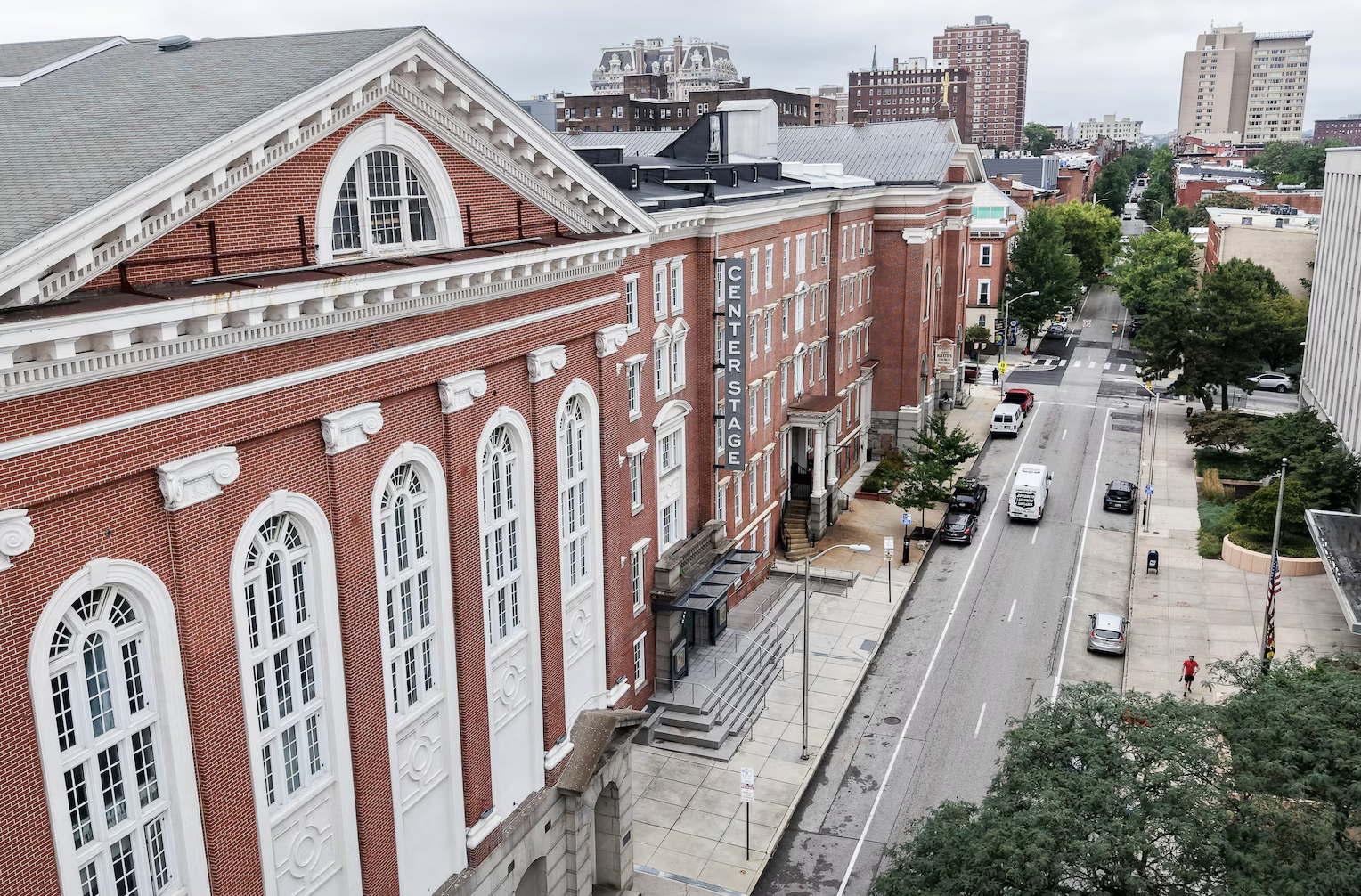
By LESLIE GRAY STREETER | I’m always tickled when people complain about artists “going political.” The inherent nature of art, of creation and free expression, is political. This becomes obvious when entire governments try to threaten it out of existence, like in 2025, when the brand-new presidential administration demanded organizations halt so-called diversity, equity and inclusion (DEI) programming or risk federal funding.
Baltimore Center Stage’s response? A resounding and hearty “Nah.” A year later, they’re still doubling down on diversity.
“Maybe it’s a triple-down,” said Ken-Matt Martin, the theater’s producing director, chuckling.
The rest of this article can be found on the Baltimore Banner’s website.

‘La Lucci’
By Susan Lucci with Laura Morton
c.2026, Blackstone Publishing
$29.99/196 pages
They’re among the world’s greatest love stories.
You know them well: Marc Antony and Cleopatra. Abelard and Heloise. Phoebe and Langley. Cliff and Nina. Jesse and Angie, Opal and Palmer, Palmer and Daisy, Tad and Dixie. Now read “La Lucci” by Susan Lucci, with Laura Morton, and you might also think of Susan and Helmut.

When she was a very small girl, Susan Lucci loved to perform. Also when she was young, she learned that words have power. She vowed to use them for good for the rest of her life.
Her parents, she says, were supportive and her family, loving. Because of her Italian heritage, she was “ethnic looking” but Lucci’s mother was careful to point out dark-haired beauties on TV and elsewhere, giving Lucci a foundation of confidence.
That’s just one of the things for which Lucci says she’s grateful. In fact, she says, “Prayers of gratitude are how I begin and end each day.”
She is particularly grateful for becoming a mother to her two adult children, and to the doctors who saved her son’s life when he was a newborn.
Lucci writes about gratitude for her long career. She was a keystone character on TV’s “All My Children,” and she learned a lot from older actors on the show, and from Agnes Nixon, the creator of it. She says she still keeps in touch with many of her former costars.
She is thankful for her mother’s caretakers, who stepped in when dementia struck. Grateful for more doctors, who did heart-saving work when Lucci had a clogged artery. Grateful for friends, opportunities, life, grandchildren, and a career that continues.
And she’s grateful for the love she shared with her husband, Helmut Huber, who died nearly four years ago. Grateful for the chance to grieve, to heal, and to continue.
And yet, she says of her husband: “He was never timid, but I know he was afraid at the end, and that kills me down to my soul.”
“It’s been 15 years since Erica Kane and I parted ways,” says author Susan Lucci (with Laura Morton), and she says that people still approach her to confirm or deny rumors of the show’s resurrection. There’s still no answer to that here (sorry, fans), but what you’ll find inside “La Lucci” is still exceptionally generous.
If this book were just filled with stories, you’d like it just fine. If it was only about Lucci’s faith and her gratitude – words that happen to appear very frequently here – you’d still like reading it. But Lucci tells her stories of family, children and “All My Children,” while also offering help to couples who’ve endured miscarriage, women who’ve had heart problems, and widow(ers) who are spinning and need the kindness of someone who’s lived loss, too.
These are the other things you’ll find in “La Lucci,” in a voice you’ll hear in your head, if you spent your lunch hours glued to the TV back in the day. It’s a comfortable, fun read for fans. It’s a story you’ll love.
The Blade may receive commissions from qualifying purchases made via this post.
Theater
Minimal version of ‘Streetcar Named Desire’ heading to Dupont Underground
Director Nick Westrate on this traveling take on Williams’s masterwork

‘A Streetcar Named Desire’
Produced by The Streetcar Project
April 20-May 4
Dupont Underground
19 Dupont Circle, N.W.
Tickets start at $85.
Dupontunderground.org
An aggressively minimal version of Tennessee Williams’s “A Streetcar Named Desire” is poised to run at Dupont Underground (April 20-May 4), the nonprofit cultural space located in a repurposed, abandoned 1949 streetcar station beneath Dupont Circle.
The Streetcar Project’s production performs in site-specific spaces. It’s almost entirely without design elements. There is no steamy, cramped Vieux Carré apartment. You won’t see Blanche’s battered trunk exploding with cheap finery, faded love letters, and demands for back property taxes, or the familiar costumes.
Co-created by Lucy Owen (who stars as Blanche DuBois) and out director Nick Westrate in 2023, this traveling spare take on Williams’s masterwork about a fragile woman on the margins in conflict with her brutish brother-in-law seems a reaction to necessity. It’s also an exploration of whether, like Shakespeare’s “Henry V,” it can subsist on language alone.
With little distractions (even Blanche’s cultivated southern belle accent has been daringly stripped away), the spotlight shines almost solely on text. “This play holds that,” says Westrate, 42. “I remind the actors that the while there is plenty of movement, language is really the only game in town.”
New York-based Westrate, who’s best known as an esteemed actor with New York and regional credits including Prior Walter in János Szász’s production of “Angels in America” at Arena Stage, describes “Streetcar” as “the most perfect play on earth” but not one he thinks of acting in (“I’m not right for Stanley Kowalski or Mitch”) though he agreed to direct.
“These days if you’re not a not a movie star or an established director, you’re not likely to do “Streetcar.” So, for us, we have to be able to do it with almost nothing, on the New York subway if necessary. And that’s kind of how we built it.”
Westrate first experienced Dupont Underground while attending a staged reading. He was so obsessed with the space as a prospective place to take the production, he found it hard to concentrate. He says, “With its long, curved track and tunnel, Dupont Underground is a terrifying, beautiful room that carries so much metaphorical weight, so much possibility for our production.”
WASHINGTON BLADE: Is finding the right space for this “Streetcar” part of the thrill?
NICK WESTRATE: Whenever I enter a weird room or pass by an abandoned CVS, I try to figure out how we might do the show there, especially places that are dilapidated, architecturally odd, or possibly haunted. And each space we use, lends something to the production. The Rachel Comey store in Soho was a very Blanche coded space. And an artist’s workshop on Venice Beach in California with its huge saws and metal hooks lent raw imagery. The scenes between Blanche and Stanley near the end were absolutely terrifying.
BLADE: More recently that same bare bones production has played in more traditional spaces like the Wheeler Opera House in Aspen and San Francisco’s A.C.T. Is it hard to now go to Dupont Underground?
WESTRATE: Each time we do this we have to crack open the play again because the staging is entirely new, but we’re used to performing in unusual spaces and Dupont Underground rather takes us back to form. As a former streetcar station, it’s the most appropriate space we’ve had yet.
The cast will literally act on streetcar tracks and go without dressing rooms but they’re game, and because they have history and authorship over the work, the sacrifice is more meaningful than if they were just some hired guns.
BLADE: Audiences have an expectation, especially with a work they’re likely to know. How do they react seeing such an unadorned take on Williams’s American classic?
WESTRATE: For the first 10 or 15 minutes, they’re unsure. Then, you can pretty much see the audience members’ brains click in and their imaginations turn on. It’s like they’re scratching an itch that they didn’t even know they had.
BLADE: Did you and Lucy foresee gaining this kind of momentum behind your vision?
WESTRATE: Absolutely not. Lucy had a philosophy that we’ll just walk through open doors. Early on, we were given spaces and artists filled the seats, and increasingly we’ve begun to rent some spaces and attract more regular theatergoers.
We basically sell tickets in order to pay a living wage to artists involved. There isn’t some big institution or commercial producer who’s getting a lot of money from this. Audiences of all types seem to respond to this mode of making theater.
BLADE: In presenting “Streetcar” intermittently, usually with the same cast over three years in wildly varying venues, have you learned more about a piece that you already loved?
WESTRATE: Mostly I’ve come to realize that Blanche is the smartest character I’ve ever read in a play. She’s like Hamlet – tormented by dreams and terrified of death. She’s skilled at wordplay and always ahead of everyone else in the room. Also like Hamlet, people think she’s insane and she uses that to her advantage.
Blanche is certainly the Everest of roles for actresses and watching Lucy sort of break it apart in a different way than you’ve ever seen, and knowing that I’ve helped to facilitate this performance has been one of the great joys of my career.

Court orders Pride flag to return to Stonewall

Sri Lankan government withdraws support for LGBTQ tourism initiative

In an act of artistic defiance, Baltimore Center Stage stays focused on DEI

Trump budget targets ‘gender extremism’

Susan Lucci on love, loss, and ‘All My Children’

Trump’s war threats trigger rare 25th Amendment discussion

New book celebrates 1970s dance music icons

ROSENSTEIN: Vote McDuffie for mayor of D.C.

A Sondheim masterpiece ‘Merrily’ rolls onto Netflix