Local
Doc on 1950s-era ‘war on gays’ premieres
Looking back at Hoover-era discrimination
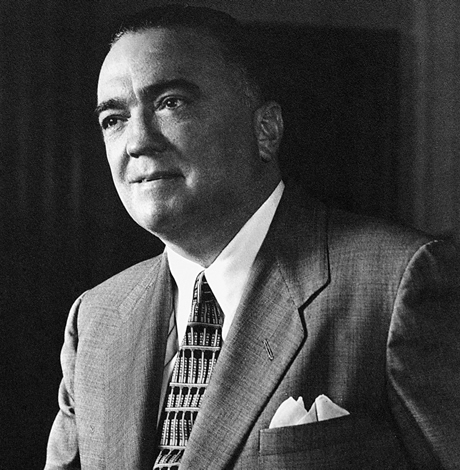
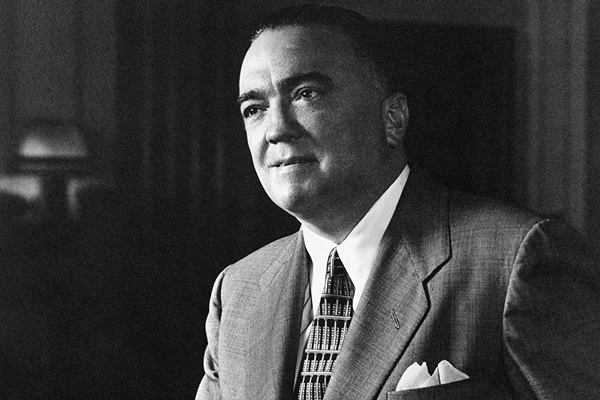
Former FBI Director J. Edgar Hoover depicted homosexuals as ‘sex perverts’ and a dire threat to national security. (Photo public domain)
More than 150 people turned out at D.C.’s E Street Cinema Monday night for the premiere showing of the documentary film “Uniquely Nasty: The U.S. Government’s War on Gays.”
The 30-minute film produced by Yahoo News and its chief investigative correspondent Michael Isikoff depicts a little-known 1950s-era campaign by the FBI and other federal government agencies to purge gays from the federal workforce.
Isikoff, a former investigative reporter for ABC News, takes viewers on a dramatic ‘tour’ of some of the thousands of documents unearthed by the recently resurrected gay rights group Mattachine Society of Washington and its leader Charles Francis. The documents, including several written by former FBI Director J. Edgar Hoover, depict homosexuals as “sex perverts” and a dire threat to national security.
“Each Supervisor will be held personally responsible to underline in green pencil the names of individuals mentioned in any report, letter, memorandum, newspaper article or other communication who are alleged to be sex deviates,” Hoover wrote in one of the FBI documents shown in the film.
In an interview in the film, Francis notes that gays were referred to repeatedly as “sex deviates” in many of the documents, which his group obtained through multiple Freedom of Information Act requests from government agencies. The group obtained other documents by persuading the presidential libraries of Presidents Dwight D. Eisenhower and Lyndon Johnson, among others, and the National Archives, to release them.
Actor George Takei of “Star Trek” fame, who’s gay, speaks in the film as Hoover’s voice, reciting in a somber and angry tone Hoover’s writings warning of the threat gays posed for the government.
Francis has credited the law firm McDermott, Will & Emery with providing pro bono legal help for the Mattachine Society in its effort to secure the release of many of the documents through its Freedom of Information Act requests.
In a panel discussion moderated by Washington Post editorial board member Jonathan Capehart, which took place after the film viewing, Isikoff said he was taken aback by the degree of animus directed at gays in the documents Francis showed him.
One document – a 1964 memo written by then-U.S. Civil Service Commission official John W. Steele – is representative of the views of gays shared by many government officials, Isikoff told the gathering.
“Some feel that ‘once a homo, always a homo,’” Steele wrote in the memo. “Our tendency to ‘lean over backwards’ to rule against a homosexual is simply a manifestation of the revulsion which homosexuality inspires in the normal person,” Steele wrote.
The film reports that thousands of gay men and lesbians were fired from or refused jobs with federal government agencies during the height of the anti-gay purges that took place from the 1940s through the 1960s.
Others speaking on the panel were Francis; Douglas Charles, author of the recently released book “Hoover’s War on Gays: Exposing the FBI’s ‘Sex Deviates’ Program”; and JoDee Winterhof, the Human Rights Campaign’s vice president for policy and political affairs.
Yahoo News says it will release the film for nationwide viewing on June 22 on Yahoo.com.


District of Columbia
Blade welcomes fall intern
Alexis McLean is student at University of North Florida
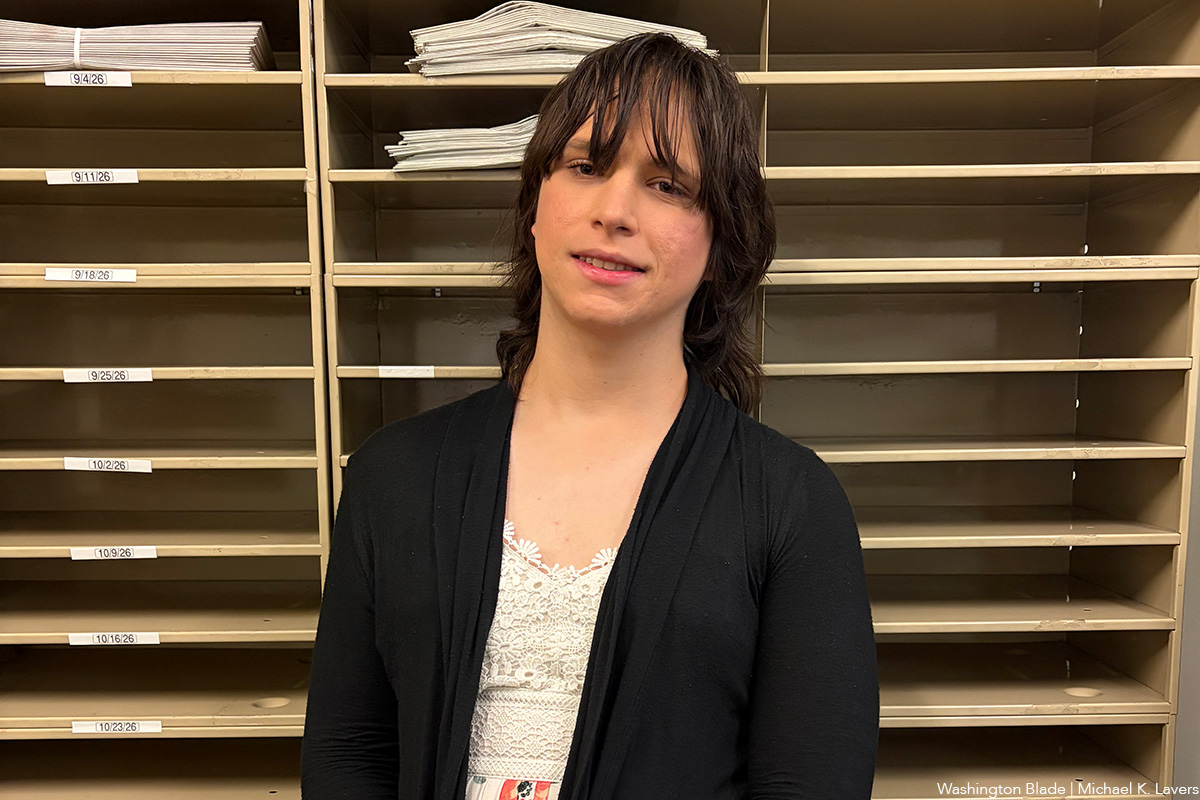
The Washington Blade this week welcomed Alexis McLean as its fall intern.
Alexis is studying political science at the University of North Florida in Jacksonville, Fla. She is interning with the Blade as part of a continued partnership with the Washington Center.
“I am looking forward to spending my time in the fall with the Washington Blade, as this is a new experience for me,” said Alexis. “I have not experienced any journalist jobs in the past so this would be my first time, and I am excited to better my writing and communications skills with this internship.”
Alexis’s internship with the Blade ends in early December.
Rehoboth Beach
SUNFESTIVAL takes center stage as Rehoboth Beach closes out summer
Labor Day Weekend bustling with events, including David Archuleta performance

Labor Day Weekend marks the unofficial end of summer in Rehoboth Beach, but there will be no shortage of LGBTQ events, with CAMP Rehoboth’s annual SUNFESTIVAL taking over town this weekend.
Thursday (9/3)
Get your Labor Day Weekend started early Thursday night with happy hour from 5-7 p.m. at Diego’s Bar & Nightclub, followed by Naughtee Bingo hosted by Magnolia Applebottom at 8:30 p.m.
After bingo, the party continues with Dancing at Diego’s from 9 p.m. to 1:30 a.m.
Aqua Bar & Grill will also kick off its Labor Day Weekend festivities Thursday with a DJ spinning from 9 p.m.-1 a.m.
Friday (9/4)
The weekend ramps up Friday night at Aqua, where DJ Matt Bailer will keep the dance floor moving from 9 p.m.-1 a.m.
Over at Diego’s, DJ Steve Sidewalk will then take over Diego’s for Freedom Friday from 9 p.m.-1:30 a.m.
Saturday (9/5)
The main event of the weekend arrives Saturday with the opening night of CAMP Rehoboth’s SUNFESTIVAL.
Billed as the ultimate party to close out the summer, SUNFESTIVAL has become one of Rehoboth’s signature Labor Day Weekend events. The annual celebration sells out each year, with proceeds benefiting CAMP Rehoboth.
Doors open at 6:30 p.m. with refreshments available at the cash bar while attendees are invited to socialize and find their seats.
Saturday night will feature local singer Ashley Williams as the opening performer, followed by headliner David Archuleta. The event will also feature a live auction.
Back across town Saturday, Aqua will continue its Labor Day Weekend DJ lineup from 9 p.m. to 1 a.m.
Diego’s will also have plenty happening, with ‘Splash Party’ hosted by Magnolia Applebottom at 5 p.m., followed by a Saturday Dance Party with Brett Oosterhaus from 9 p.m.- 1:30 a.m.
The Blue Moon hosts its popular Legends Show at 9 p.m. It’s an all-live singing show by the Blue Moon cast of celebrity impersonators.
Etienne Pilon has taken Rehoboth by storm this summer. Check out the talented singer/pianist at The Pines from 7-10 p.m.
Sunday (9/6)
Sunday’s SUNFESTIVAL event will shift the focus to the dance floor, with globally renowned DJs Robbie Leslie and James Anthony scheduled to perform. Doors open at 7 p.m., with dancing continuing until 1 a.m.
On Sunday, Aqua will throw its annual White Party, with DJs spinning from 9 p.m.-1 a.m. Guests are encouraged to dress in white for the holiday weekend celebration.
Diego’s will host its Sunday High T-Dance with Pamala Stanley at 5 p.m. Later that evening, DJ Tannr will be spinning at 9 p.m.
John Flynn is on the piano from 6-8 p.m. at the Blue Moon.
Monday (9/7)
The final day of Labor Day Weekend brings one last chance to hit the dance floor before summer officially winds down.
Aqua will close out its five-day Labor Day Weekend celebration with DJ Biff from 3-7 p.m.
Maryland
Anne Arundel schools now need parent permission to call trans students by preferred names
Conservative groups challenged system’s policy
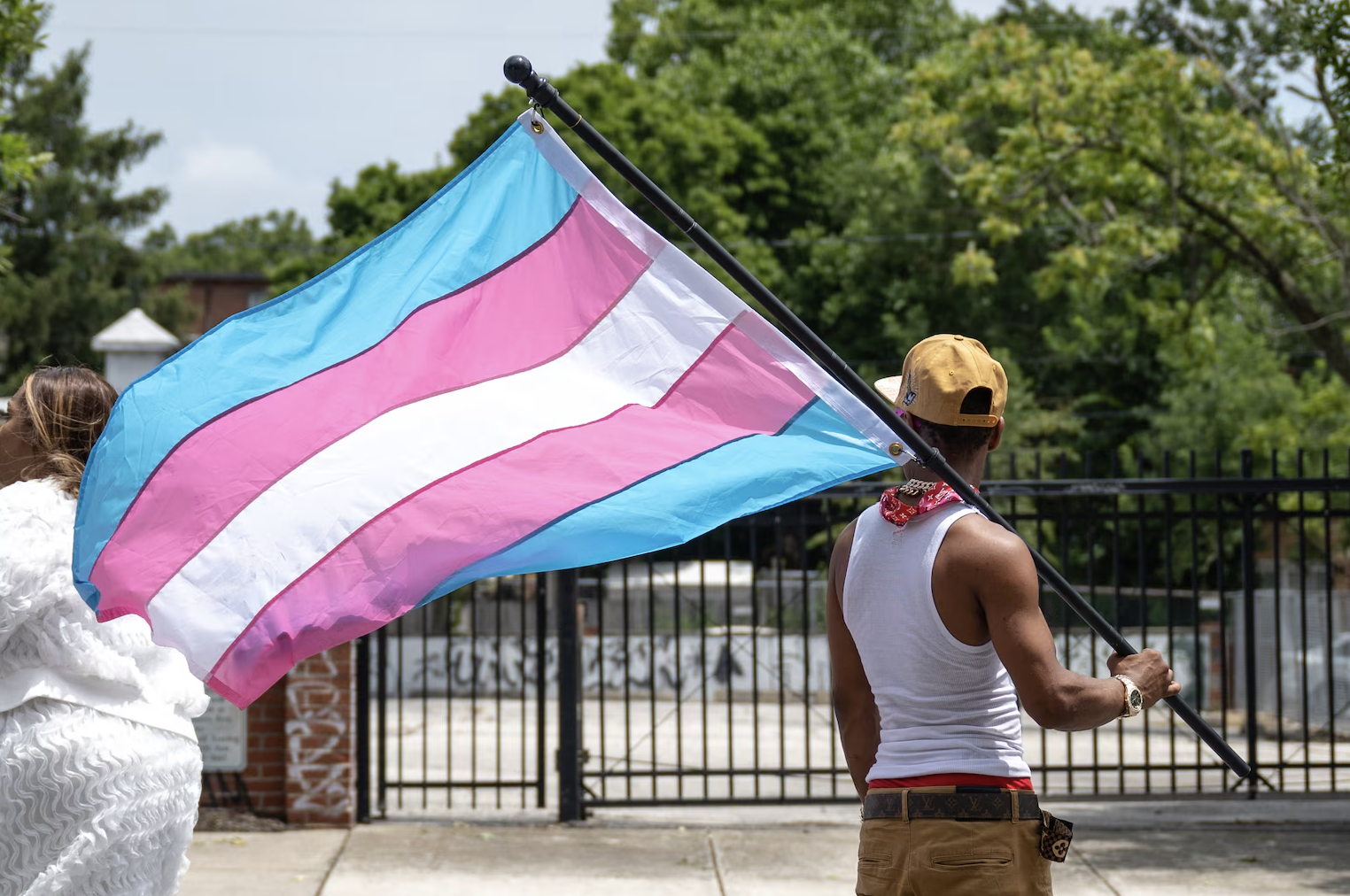
By JESSICA CALEFATI | Anne Arundel County Public Schools staff cannot use transgender students’ preferred names if their parents oppose it, according to an internal document reviewed by the Banner, a change that comes after conservative groups challenged the school system’s approach to gender identity.
Teachers union president Kristina Korona told members in an Aug. 20 email that the new guidance undermines district policy on acceptance and inclusivity and “will begin harming affected students immediately.”
Previously, the district didn’t require parental permission to use a high school student’s chosen name and pronouns corresponding to their gender identity, the internal document says. Now it does. The change comes as parents challenge the suburban school system’s gender identity policy and regulation in court and the Trump-Vance administration threatens the district’s funding.
The rest of this article can be found on the Baltimore Banner’s website.

Markey’s primary win deemed success for LGBTQ activists

Top Bulgarian court rules government must legally recognize trans people

Lou Chibbaro Jr. documentary wins award from NLGJA

Beloved D.C. ‘Old Catholic’ Bishop Charles Braun dies at 86

Blade welcomes fall intern

San Francisco, long a queer safe haven, remains competitive for homebuyers

E-INFOSOL leaders encourage youth to pursue tech careers

Milo Yiannopoulos deported to UK

New book examines Trump cuts to LGBTQ healthcare