Local
Baltimore could get its first openly gay Council member
Kelly Cross enters race from 12th District
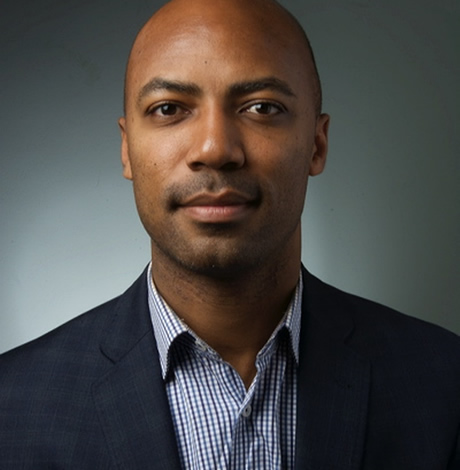
Kelly Cross is hoping to become Baltimore’s first openly gay Council member. (Photo courtesy of Cross)
In 2007, Fred Mason III announced his candidacy for Baltimore’s 11th Council District. Had he succeeded in the Democratic primary and won the general election, he would have been the first openly gay person to be elected to the Council. Jason Curtis, another gay man, made a similar bid in 2011 for the 12th District but also came up short.
On Jan. 29, a day before his 37th birthday, Kelly Cross, who is also gay, filed to enter the Democratic primary in the 12th. In a district that for years has been represented by Carl Stokes, Cross will have plenty of company as no fewer than six other Democrats are currently vying for the seat in the primary as well as one Republican and one Green Party candidate. Stokes is leaving his Council seat to run for mayor.
Cross was raised in a working-class family in West Virginia. He earned admission to Princeton University and followed his undergraduate education with a law degree from the University of Virginia. After living in Washington, D.C., and Europe, Cross and his husband, Mateusz Rozanski, decided in 2010 to make Baltimore their home.
Baltimore’s 12th Council District is a jagged swath of territory that runs north and south through the city. It touches such diverse neighborhoods as Waverly, Cold Spring-Homestead-Montebello, Old Goucher, Station North, Broadway East, Barclay, Oliver, Charles Village, South Clifton Park and Jonestown.
In announcing his bid, Cross notes that “the 12th District is home to some of the most important cultural, institutional and infrastructure assets in the United States.” Included in this district are Johns Hopkins Hospital and Medical School, Maryland Institute College of Art, the historic neighborhoods of Oldtown and Mount Vernon, and “the CSX and Amtrak lines that provide the transportation backbone of the Northeast.”
“I’m running for this seat because I love Baltimore,” Cross told the Blade. “It pains me to see that with all the amazing assets we have — some of the most beautiful architecture in America, world-class institutions and museums, prime location and a diverse economy — the city still struggles.”
Cross and Rozanski reside in the Old Goucher neighborhood. He has been active in local politics as a board member of the Charles Village Civic Association and currently as president of the Old Goucher Community Association.
“As a community association president for the last several years, I’ve seen that our city government is not forward-looking and proactive,” said Cross. “City government has been incredibly reactive, seeking short-term fixes without advancing Baltimore as a whole. I’m running because I want to be one of several new voices on City Council who will alter that dynamic.”
During the campaign, Cross will present how transit and education can be improved, how to create jobs, and restore the dignity of Baltimore, which he refers to as “one of America’s first, and greatest, cities.” He intends to discuss how these goals can be achieved without making bad decisions between higher taxes and fewer services.
However, he distinguishes himself from the other candidates not so much by issues but more in experience and vision.
“From my work in the private sector — both domestically and abroad — to my work as a community activist, I understand that Baltimore must do a better job of opening itself back up; of inviting resources and residents back to the city,” Cross said. “I recognize that we have to deal with issues like grinding poverty, poor education systems, violence in our streets. But we need to do so in a holistic way, in a way that makes Baltimore a magnet for talent and investment again.”
Cross also believes that City Hall needs to work diligently to make Baltimore a more open and accepting place for its LGBT residents. “We need to recruit and encourage more small LGBT businesses, and reestablish centers of LGBT life throughout the city,” he said.
“My neighborhood, Old Goucher, has one of the highest concentrations of transgender women of color in the country, and I’ve seen firsthand many of the struggles these women endure. The city can do more to be inclusive and supportive of the incredible LGBT diversity Baltimore has.
“Finally, we definitely need City Hall to take Baltimore’s HIV crisis seriously. While Leana Wen and the Health Department have made great strides, I have not seen the City Council openly acknowledge the havoc HIV is wreaking on the city.”
But can Cross make history and succeed in this election as an openly gay man where others before him have not?
“I believe times and attitudes have shifted from previous election cycles,” he said. “It’s worth noting that gay candidates who have run for City Council in the past have done fairly well in their districts. But I think that in the age of marriage equality and more general acceptance of gay lives, a broader constituency of people is ready to accept an openly gay candidate.”
We’ll find out on primary day, April 26.

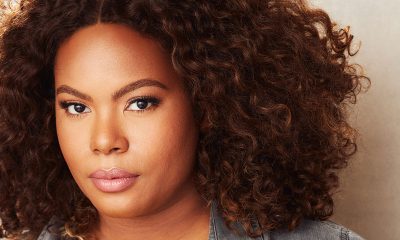


The Comings & Goings column is about sharing the professional successes of our community. We want to recognize those landing new jobs, new clients for their business, joining boards of organizations and other achievements. Please share your successes with us at [email protected].
The Comings & Goings column also invites LGBTQ+ college students to share their successes with us. If you have been elected to a student government position, landed an exciting internship, or are graduating and beginning your career with a new job, let us know so we can share your success.
Congratulations to Jaime Christopher Pierce on their appointment to serve as a member of the Virginia Governor’s LGBTQ+ Advisory Board. Pierce was sworn in on Sept. 3 by Greg Parks, clerk of the Alexandria Circuit Court.
Pierce currently serves as vice chair of the Alexandria City LGBTQIA+ Task Force and as a member of the Alexandria Pride planning committee. They previously served on the board of directors of Equality Virginia.
Upon being sworn in, Pierce said, “Public service has been a central part of my life for more than 30 years, and this appointment gives me an opportunity to serve the Commonwealth in a different and very personal way. My career has allowed me to work with people and communities throughout Virginia, and I hope to bring that experience, along with my own lived experience and my involvement in the LGBTQ+ community, to the work of the Board.” They added, “Having Greg administer the oath makes the occasion even more meaningful because of his own historic role as Virginia’s first openly gay elected circuit court clerk.”
Pierce also serves as Circuit Court Services Manager for the Department of Judicial Services, at the Office of the Executive Secretary of the Supreme Court of Virginia. They began their career in Virginia’s judiciary in 1994 as a deputy clerk with the Virginia Beach Circuit Court and have since held several professional and leadership positions within the court system. Pierce is a member of the National Association for Court Management (NACM) and the Mid-Atlantic Association for Court Management. At the national level, Pierce participated in the workgroup that developed the National Association for Court Management’s Diversity, Equity, and Inclusion Guide, a resource designed to help court professionals advance inclusive practices and strengthen access, fairness and belonging within the justice system.
Pierce earned a degree in Criminal Justice from Liberty University, and a certificate in Paralegal Studies from Norfolk State University.
Maryland
Md. groups receive state grants to fight hate crimes
Pride Center of Maryland among recipients
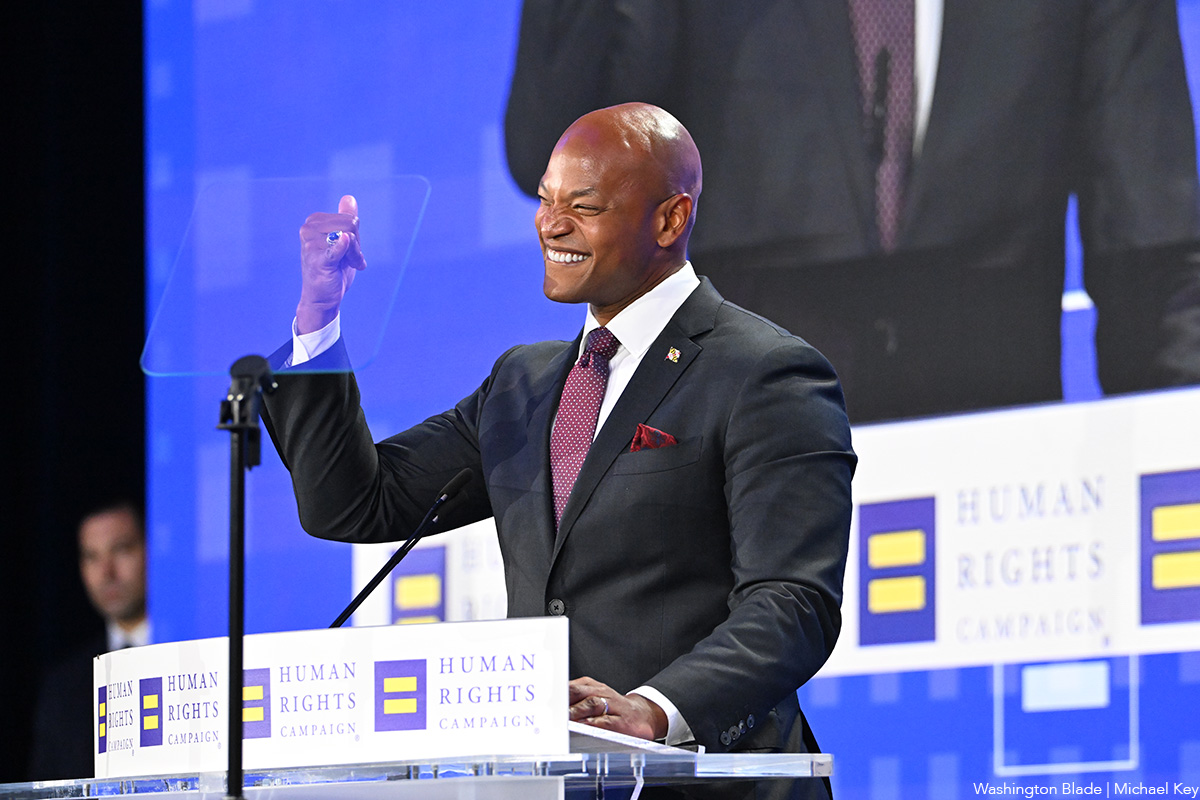
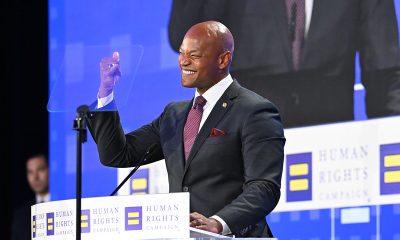
Maryland Gov. Wes Moore and the Governor’s Office of Crime Prevention and Policy are awarding a total of $10 million in grants in the 2027 fiscal year to nonprofit organizations that work to prevent hate crimes in the state.
The funds will be used to support those who feel targeted or discriminated against because of their race, religion, sexual orientation, gender identity, or disability status.
The Pride Center of Maryland is among the recipients. Churches, synagogues, mosques, and LGBTQ organizations are all eligible to receive grants
“The safety and security of all Marylanders is my top priority, so we are drawing a hard line because we have no tolerance for hate,” said Moore, according to media reports. “We are committed to protecting and ensuring safe and sacred spaces stay that way by investing in non-profit organizations, houses of worship, and community centers to protect and honor every community that makes our state so diverse and special.”
“Protection Against Hate Crime funding has strengthened the Pride Center of Maryland’s ability to protect, educate, and support the communities we serve … at a time of heightened concern associated with the Trump administration’s anti-LGBTQ/SGL (same-gender-loving) policies and pressures,” Pride Center of Maryland CEO Cleo Manago said. “PAHC funding helps us do more than improve physical security — it strengthens our community’s knowledge, preparedness, connection to resources, and ability to respond to hate with greater awareness and support.”
Maryland’s hate crimes law includes both sexual orientation and gender identity. The state’s nondiscrimination statute is also LGBTQ-inclusive.
District of Columbia
Blade welcomes fall intern
Alexis McLean is student at University of North Florida
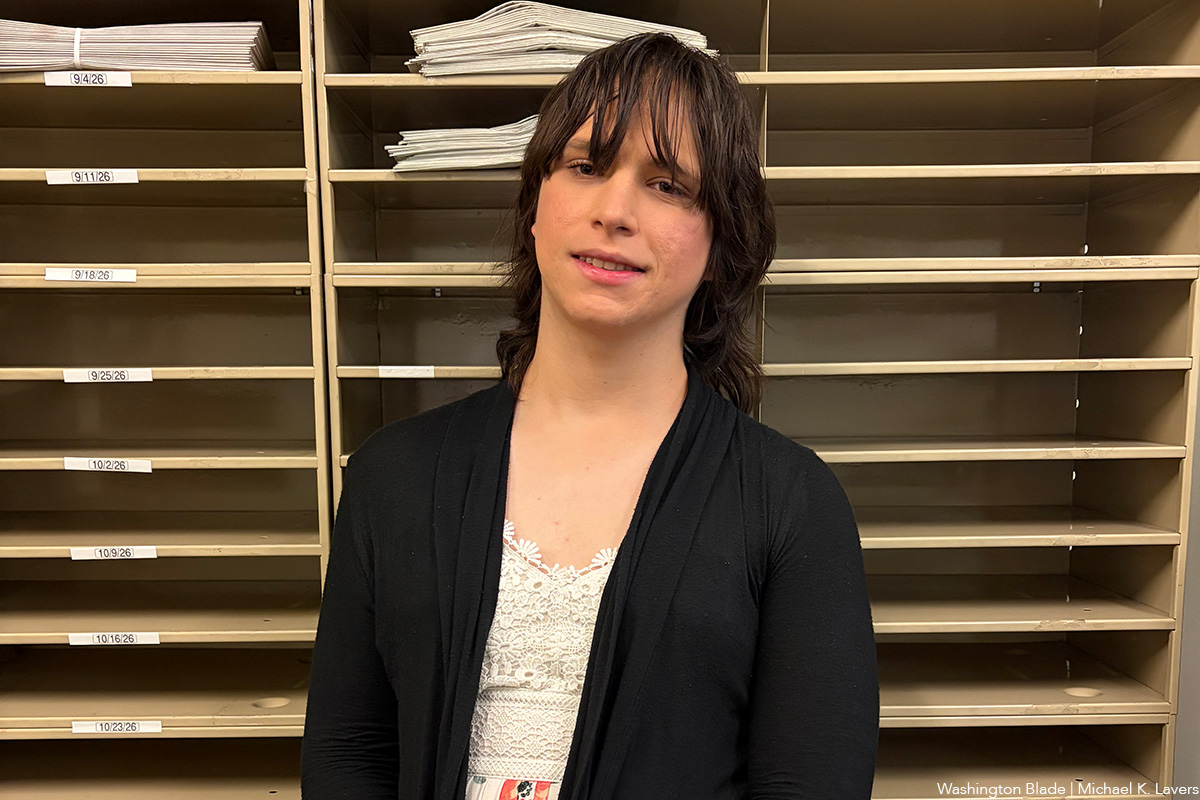
The Washington Blade this week welcomed Alexis McLean as its fall intern.
Alexis is studying political science at the University of North Florida in Jacksonville, Fla. She is interning with the Blade as part of a continued partnership with the Washington Center.
“I am looking forward to spending my time in the fall with the Washington Blade, as this is a new experience for me,” said Alexis. “I have not experienced any journalist jobs in the past so this would be my first time, and I am excited to better my writing and communications skills with this internship.”
Alexis’s internship with the Blade ends in early December.

‘Thelma and Louise’ remains landmark of unspoken queer rebellion

Comings & Goings

LGBTQ Military Happy Hour set for Sept. 15

Calendar: September 11-17

Multi-billion-dollar 9/11 Victim Compensation Fund to continue until 2090

Iceland implements gender-neutral blood donor rules

Anti-science, anti-LGBTQ movements go hand in hand

Everton Blair makes history as first openly gay congressman from Ga.

Chris Pappas wins NH Democratic Senate primary

Mujer trans salvadoreña es encontrada sin vida
-

 Iceland4 days ago
Iceland implements gender-neutral blood donor rules
-
Commentary4 days ago
Anti-science, anti-LGBTQ movements go hand in hand
-
Georgia4 days ago
Everton Blair makes history as first openly gay congressman from Ga.
-
2026 Midterm Elections4 days ago
Chris Pappas wins NH Democratic Senate primary