a&e features
Cheyenne Jackson opens up
Out actor/singer on family life, ‘Horror Story,’ ‘Drag Race’ and more
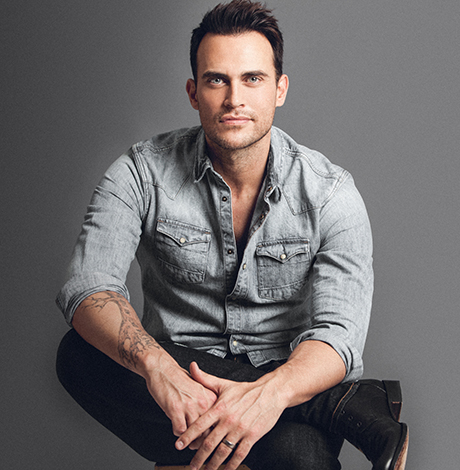
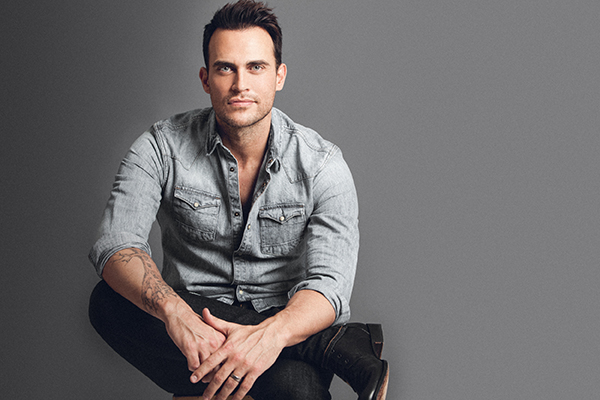
Cheyenne Jackson says being on ‘American Horror Story’ and ‘RuPaul’s Drag Race’ have been career highlights. (Photo courtesy Management 360)
Cheyenne Jackson
Sunday, Oct. 15
8 p.m.
The Barns at Wolf Trap
1635 Trap Rd.
Vienna, Va.
$45-55
Cheyenne Jackson likes to portray himself as a normal guy. He’s sitting in his car outside his dry cleaner in Los Angeles on Monday when we talk.
It’s just mid-morning but one of his 1-year-old twins had him up at 3:30 a.m. “He’s teething and needed a little TLC,” Jackson says.
After feeding the babies, a jaunt to Barry’s Bootcamp and a trip to the cleaners, the 42-year-old Broadway vet and actor/singer has time to chat in advance of his weekend show at the Barns at Wolf Trap. His comments have been slightly edited for length.
WASHINGTON BLADE: How is family life? How are (husband) Jason (Landau) and the twins?
CHEYENNE JACKSON: They’re amazing. Family life is awesome. It’s busy, it’s loud, the days are long but the weeks and months are short. Just two days ago they turned 1. I can’t even believe it’s been a year already but it’s great.
BLADE: Do they usually sleep through the night?
JACKSON: We’ve been really adamant and committed to a sleep schedule and we knew going into this we were going to be the ones doing the care. We don’t have help at night or on weekends. I don’t want a nanny sleeping in my house at night. I think it’s just weird. So we knew we needed a schedule. … I would say about 98 percent of the time they sleep about 11 hours. It’s awesome.
BLADE: Tell us a little about your Wolf Trap engagement.
JACKSON: I’m very excited because I haven’t done a show in quite a while. It’s been a crazy year. Being a dad and just things in my life. Some personal things. I lost my father a few months back. So doing shows and doing concerts hasn’t really been in the forefront of my mind but when this gig came to me, I thought this would be a good opportunity to get back into it and find some of my favorite songs from different shows I’ve done. I’m gonna do a couple new tunes, things I’ve always wanted to do, so it’s really a mix. I’ll take some songs, a couple songs from each of the albums I’ve done, mix it in with some covers and things I’ve been working on, then a couple of originals. It’s going to be a totally special new night.
BLADE: So this isn’t really a show you do here and there, it’s more its own thing?
JACKSON: It’s its own thing for sure. Some of the songs I’ve done here and there in one way or another but … it’s gonna be very intimate, very personal and fun.
BLADE: What kind of instrumental backing will you have?
JACKSON: Just me and my musical director, just me and piano. He’s such a savant. He plays piano like five people are playing the piano. But yeah, it’s just us.
BLADE: What’s the set feel like on “American Horror Story”? Does the creepiness of the show affect the set or is it just like other sets?
JACKSON: It’s definitely its own thing. I’ve never been on a set like “American Horror Story.” I think it’s because of the nature of the show and what the show’s about, it lends itself to be a special kind of unique experience. First and foremost, it’s shrouded in secrecy and everybody really respects that. Not everybody knows exactly what’s happening from episode to episode and some people are just on a need-to-know basis. So it’s exciting and fun as an actor to not know who knows what and just stay in the moment trying to bring everything to life. … Because it’s such heavy subject matter and such dark fantasy, we find ways to keep it light when it needs to be. We don’t just sit in the heaviness of it unless you have a super, super crazy, emotional thing you need to go sit in the corner to prep for, we try to keep it light.
BLADE: How long did it take to film that sex scene with Lady Gaga and how was it for you?
JACKSON: (laughs) Well scenes take way longer than you’d think. That whole sequence, I would say, I don’t know — maybe six hours? It’s a lot. Every different angle and every possible setup. And you know, it’s awkward and it’s funny and it’s silly. I always try to look at things like that instead of trying to take it super seriously like, “Oh my God, I can’t believe I’m sitting here naked with Lady Gaga.” I just kind of flip it on its ear. … She’s so great and a friend and she made it very comfortable. But sometimes you do kind of snap and think, “What’s happening here,” and you look around and there are, you know, 30 people standing around with microphones and booms and filters and lights and it’s nuts. It’s a crazy thing but it’s what we do.
BLADE: “Hotel” had a lot more sex than other season. Do you think it ever got gratuitous?
JACKSON: No. I feel like every season is its own animal and there’s a reason for everything. I never really question what (creator/producer) Ryan (Murphy) wants or envisions. I trust him implicitly. He’s hired me four times so it’s one of those things where … sometimes you wonder if you can do what he’s asking but then you think, “Well, if he thinks I can do it, that means I can probably do it.” Is the show really violent sometimes? Yeah. Is it really super, hyper sexual? Yeah. Is it dark and creepy and confrontational? Yeah, but that’s why it’s called “American Horror Story” and, you know, that’s why my mom has to watch it through her fingers.
BLADE: You also had a pretty intense sex scene with Audra McDonald in “Hello Again.” Who was better screen sex — Audra or Gaga?
JACKSON: (chuckles) Oh, I would never compare. But it’s the same kind of thing. Audra and I have been friends for a long time and we just really had to laugh through that because it was also very graphic and it was kind of the first time either of us had done anything like that to that extent. But the first thing is to get really comfortable with each other first so then you buy it as an audience member. You can’t get too in your head about it, you just have to go for it and trust each other. She was actually pregnant at the time and we had just gotten pregnant so we look at it now and laugh about what we were both going through at the time.
BLADE: Is being on “RuPaul’s Drag Race” as much fun as it looks? It seemed like you were having fun when you were a guest judge last season.
JACKSON: I have zero shame in saying it’s my very favorite show. I’ve seen every episode of every season. It’s so much more than a reality show. I think it’s a very important show right now in this world and I love that it shows young gay men and what they go through. … I think it’s amazing. I love Ru Paul and he’s been so wonderful to me over the years and he’s a friend so yeah, I always tell them anytime they need me, I’m there. I tried to make it work the last couple seasons but just filming-wise, it’s difficult to work out with “Horror Story” or whatever I’m doing but yeah, it’s so much fun.
BLADE: What seems the most different actually being there versus how it seems on TV?
JACKSON: Lots of things. For one thing, I think people don’t always realize all the judges see is what’s on the main stage. They don’t see all the work room stuff the audience sees, all the bickering and fighting and backstory. The judges, all they have to go by is what they see on the main stage and with the challenges. So if it seems like Michelle Visage and Carson and everybody, if they seem especially harsh and honest, it’s because that’s their only time to see it and make it fair. So that’s what I found interesting.
BLADE: Are the acoustics at Carnegie Hall as legendary as everybody says they are or is it pretty much like other good halls?
JACKSON: I don’t really remember if I noticed such a vast difference because I think I was just having such an out-of-body experience and trying to wrap my brain around the fact that I was performing at Carnegie hall. I just remember that it feels really warm, really good, you don’t have to push. You feel supported. It’s a combination of the acoustics and also the sound system. Everything is perfectly integrated. It’s really special. It definitely spoils you because then you’ll sing in some other shitty little performance arts center in the middle of somewhere and you’re like, “Ugh.” It definitely makes a huge difference.
BLADE: Does “A Case of You” have any subtext for you being a former drinker or is it just a good Joni Mitchell song? Is it on the set list for this weekend?
JACKSON: I will be singing that song and it’s funny, I don’t think of it in terms of wine or alcohol at all. It’s about relationships and connection. I have my own personal things I pull from it, but booze isn’t one of them for sure.
BLADE: “American Horror Story: Cult” is all about phobias. Do you have any?
JACKSON: Not really. I don’t like flying but I wouldn’t say it’s a phobia.
BLADE: You’ve talked before about what a pivotal wake-up call 9-11 was for you. Do you think it’s more than coincidence that you did the “United 93” movie years later?
JACKSON: I have thought of that before and I definitely think it was meant to be my first feature film. It was definitely kismet because the subject matter had been the impetus for me to really move to New York and … start to make things happen at age 27.
BLADE: I don’t mean to sound obsequious but you must get hit on constantly, even if people don’t know who you are. That has to get old, right?
JACKSON: Uhhh, I don’t know that it happens all the time. I’m not trying to be fake modest. … I mean, I definitely know when someone is hitting on me and it feels great. Who doesn’t like to be thought of as attractive or appealing? … More now, I’m out with the kiddos and people want to see them, but does it get old? No. I hope it happens for a long time.
BLADE: Are you allowed to say if you’ll be on more “Horror Story” or do you know yet? Or are you focusing on (2018 series) “American Woman” now?
JACKSON: I’m just kind of focusing on what is right now. I’ve had three great seasons on the show. “American Woman” will be in January I think.
BLADE: What can you tell us about it? Are you filming it now?
JACKSON: No, it’s all done. I was doing it while I was doing “Horror Story” so that was tricky going back and forth, but it was great. It’s set in 1975 and it’s basically a show about feminists with Alicia Silverstone, Mena Suvari and Jennifer Bartels. … I just saw the first four episodes and I’m happy to say it’s very good and very sweet. … I play Mena Suvari’s boyfriend and I got some great cool stuff to work with. I got some secrets in my life and, you know, it’s a fun departure for me. It was fun to look like my dad in the ‘70s.
BLADE: What was it like filming “Cult” since it’s been based so closely on recent events?
JACKSON: I think it was fascinating how Ryan harnessed that into the show. I think it’s really savvy and cool.
BLADE: Which season has been your favorite to film? “Hotel,” “Roanoke” or “Cult”?
JACKSON: “Cult’s” my favorite. I really loved my character last year but I only had a couple really great scenes to do and “Hotel” has such a soft place in my heart because it was my first one and, you know, I loved who I worked with. But this season is my favorite as far as the work I’ve been able to do.
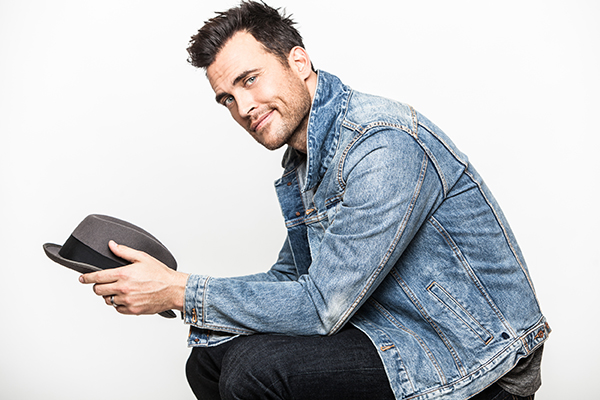
Cheyenne Jackson says it felt right that ‘United 93’ was his first feature film role. (Photo courtesy Management 360)





a&e features
The mastery of love
The world knows Eric Anderson as Billy Porter’s partner, but in Rehoboth Beach, he has a story entirely his own
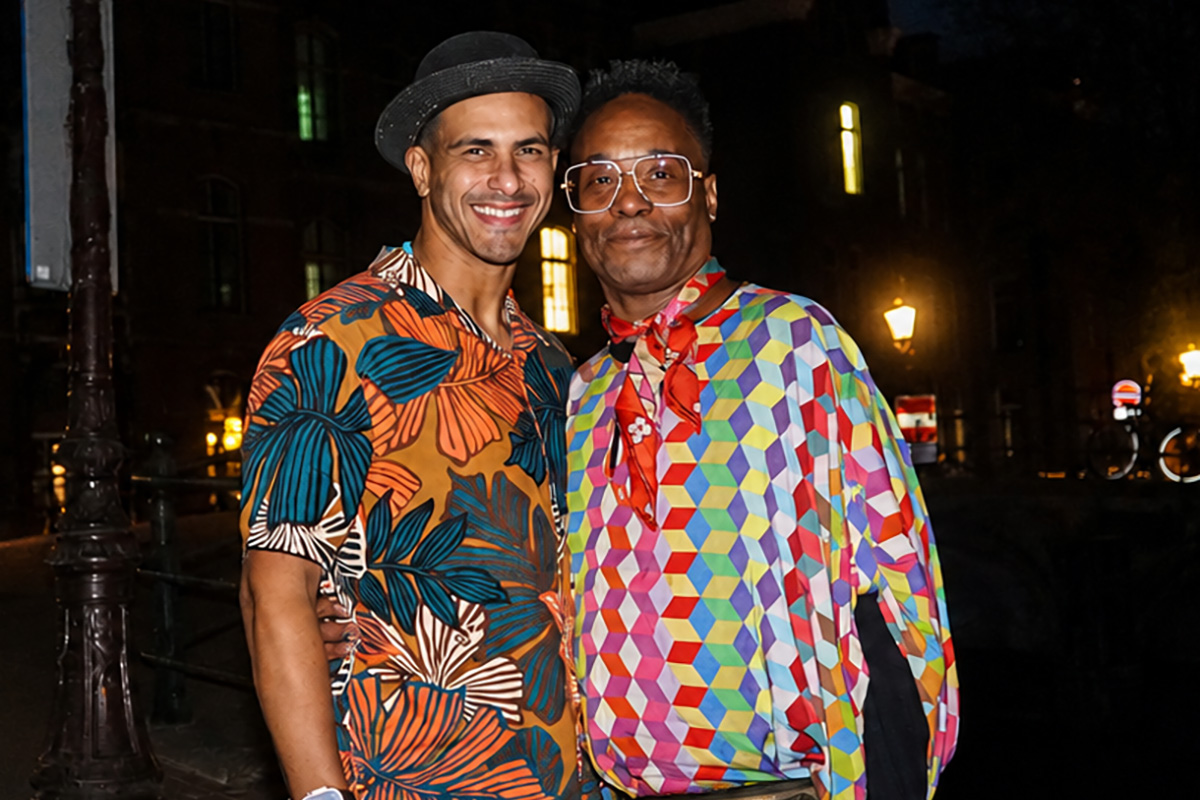
The world knows Eric Anderson as Billy Porter’s partner. In Rehoboth Beach, Del., he has a life — and a story — entirely his own.
My first time with Eric Anderson was hot — very hot. Before he arrived, I sat waiting, overthinking everything. When he finally appeared in a loose-fitting T-shirt and purple shorts, I understood why he attracts attention. Eric is the kind of man who changes the energy of a room simply by entering it.
After a quick hello, we got right to it. Techno pulsed through the room as Eric told me how to move, where to place my hands, when to breathe. My heart pounded. My muscles ached. I bent, twisted, and stretched while sweat ran down my back and burned my eyes. I didn’t bother wiping it away.
To be clear, Eric and I were not alone. Five other people were with us — and the yoga studio at SoulFire Collective in Rehoboth Beach was heated to 87 degrees.
“If you are always racing toward the next moment, what happens to the one you’re in?” Eric asked, opening his power yoga class and inviting us to leave whatever had followed us through the door and surrender to the present. Surrender did not come easily. At 58, I’ve done enough yoga to know the difference between discomfort and imminent death. Halfway through Eric’s relentless flow, the distinction began to blur.
A playlist of techno and remixed pop — including “Live Like You Were Dying” — carried us from one demanding pose to the next. Eric moved among the mats with the energy of a nightclub DJ and the calm of someone who trusted our bodies to go further than our minds believed possible. Nearly an hour later, when the music softened and I collapsed onto my back in savasana, he laid a cool cloth across my forehead. I exhaled — relieved, and maybe a little disappointed, that my first time with Eric was over.
At the end of my mat, a handwritten note congratulated me on my first class and invited me back — a small benediction after the storm. Then Eric closed the class by repeating the question with which he’d opened. For a man whose relationship with actor and singer Billy Porter has drawn him unexpectedly into the public eye, it sounded less like a yoga mantra than a personal creed.
The next time I meet Eric, there is air conditioning and caffeine. We are at Starbucks, where I deliberately order the largest drinks available, as though volume alone might buy me more time. He chooses a matcha, and I order herbal tea. My heart is pounding again, faster than the soft rock drifting from the speakers above us. Although I’ve already spent more than an hour with Eric, I know almost nothing about the man I’m about to interview.
Neither, it seems, does anyone else.
Celebrity outlets offer a handful of biographical details: a Rehoboth Beach teacher and yoga instructor with a master’s degree from Columbia University. Gay publications have been less restrained. One introduced him as Billy Porter’s “total hot stud,” called him “a snacc,” and praised his ability to “rock a Speedo.” Queerty distilled Eric’s identity to five words: “Porter is dating a teacher.”
All of it tells me how the world sees him. None of it tells me who he is.
I know from our text exchanges that Eric is slammed for time. He is scheduled to travel to New York later that day and fly to WorldPride Amsterdam the following afternoon. Billy is among the headliners for the opening-night Unity Concert and is also slated to perform at the Wedding Party XXL alongside KI/KI, Bimini, and the Vengaboys. Eric still has to pack. This, I’m beginning to understand, is part of loving someone famous: there is almost always an itinerary, another city, and a specific time and place Billy needs to be. Even here, with two untouched drinks between us, the clock is ticking.
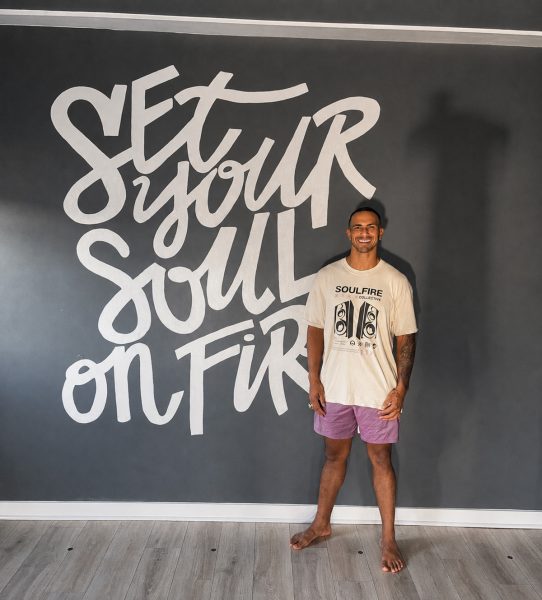
As soon as we sit down, I open my laptop, ready to get to work. My mind is focused on the list of questions I’ve prepared, and I’ve already anticipated the shape of most of his responses. Then I look up and see Eric sitting perfectly still, smiling, and taking in the moment. He hasn’t even taken a sip of his matcha yet.
I quietly close my laptop and breathe.
Within minutes, the interview softens into a conversation.
Eric earned a bachelor’s degree in history from the University of Delaware and a master’s in public school leadership from Teachers College, Columbia University. He began his career teaching mathematics before moving into school administration, eventually serving as vice president of the Charter School of Wilmington and head of school at Sussex Academy. Today, he teaches mathematics and social studies in the Cape Henlopen School District. He also coaches soccer and leads yoga classes at SoulFire Collective in Rehoboth Beach.
His return to the classroom was deliberate. Eric knows some people assumed there must be a story behind his leaving administration—that he had done something wrong or that teaching represented a demotion.
“I want to make it clear that I went back to teaching by choice,” he says.
As a child, Eric played school. Teaching has always felt natural to him, less like an occupation than an expression of who he is. Administration was different.
“It felt like work,” he says. “It wasn’t where my passion was, and it didn’t bring me joy. Going back into the classroom was simply me choosing joy.”
The more Eric talks, the clearer it becomes that teaching is not merely a job but a vocation. His mother is white and his father is Black, and growing up biracial was not always easy. “I saw the best and the worst of both,” he tells me. Those experiences helped shape his desire to become a teacher — to be the kind of person who could make a meaningful difference in a young person’s life.
Just then, Eric glances over his shoulder and locks eyes with someone across the room. He waves and flashes what is quickly becoming his signature smile. My first thought is that someone has recognized him as Billy Porter’s partner.
I’m wrong. It’s one of his former students.
Inevitably, our conversation turns to love — and to Billy. I’ve made it clear that I’m here to write about Eric, not Billy Porter. But separating the two entirely would be as artificial as defining Eric only by their relationship. Billy is now an essential part of his story.
Eric met Billy at a Christmas party hosted by mutual friends who had been trying to introduce them all night. It wasn’t easy — the party was crowded, and the two men never quite crossed paths. Eric stayed for the afterparty, where a friend nudged him and nodded toward the room: Billy was looking his way. Romance never crossed his mind.
Eventually, they started talking. Eric has never had much patience for small talk, and he wasn’t interested in cataloging which celebrities Billy knew. He skipped it entirely and went straight for the deeper questions — what Billy believed, how he saw the world, what mattered to him. They ended up at the kitchen table, trading life philosophies until 5 a.m.
What struck Eric most wasn’t the conversation’s length. It was its depth. Billy wasn’t who he expected. Neither was the conversation. By the time the sun was coming up, Eric was less surprised that they’d talked all night than by how much, it turned out, they had in common.
They had dinner the following evening, and Billy invited Eric to spend the weekend with him in New York. There, Billy took him to see Nicole Scherzinger in “Sunset Boulevard.” Right before the show started, he casually introduced Eric to a friend named Katy. Back in their seats, Eric asked how Billy knew her.
“BITCH,” Billy replied, “that is Miss K-A-T-Y P-E-R-R-Y!”
For all the glamour surrounding their courtship, Eric describes the foundation of their relationship in decidedly spiritual terms. His favorite book is don Miguel Ruiz’s The Mastery of Love, which explores how fear, expectation, and the need for approval can distort relationships. Its philosophy closely resembles Eric’s own.
On the surface, Eric and Billy inhabit different worlds. Eric is a deeply spiritual teacher rooted in a small coastal Delaware town. Billy is a celebrated actor and performer whose larger-than-life persona commands stages around the world. But when I ask Eric how the relationship works, he doesn’t hesitate.
“I know that I can be my authentic self with him, and he can be his with me,” he says. “We love each other unconditionally.”
The words could sound rehearsed. Coming from Eric, they don’t.
The red carpets, famous faces, and international travel are not what matter most.
“It’s all about the people,” he explains. “I love Billy’s family and friends, and he loves mine.”
Authenticity surfaces repeatedly in our conversation — not as an abstract ideal, but as Eric’s determination to trust what feels right for him, even when other people may not understand it. I tell him about growing up in Pittsburgh and spending much of my life trying to fit the person I was into the person the world expected me to be. Eric listens intently, then pauses before responding.
“Fuck the system.”
It is blunt, funny, and entirely consistent with the man sitting across from me. Dating Billy may have dramatically increased the number of strangers who have opinions about Eric, but it hasn’t increased the number whose opinions matter to him. He is remarkably unconcerned with what people he doesn’t know think — or say — about him. The attention is new. His response to it is not.
For Eric, authenticity isn’t about asking the world for permission to be yourself. It’s about deciding that permission was never the world’s to give.
That instinct—to look inward rather than outward for permission — predates Billy.
Eric initially turned to yoga for a practical reason: he wanted to improve his physical performance on the soccer field. It didn’t take long for him to realize that something else was happening. Yoga was strengthening his body, but it was also grounding him.
Over time, the physical practice became inseparable from the mental one. The poses, the heat, even the strength required to hold his body in place became less important than learning how to quiet the noise around him, stay present, and listen to himself. The man who had pushed me through an hour of sweat and discomfort wasn’t simply teaching people how to move their bodies. He was asking them to practice something he had learned to do himself.
That sense of being grounded has become particularly important in a relationship that often requires two people to live very different lives. Eric is quick to point out that he and Billy have separate careers, separate ambitions, and goals entirely their own. Neither expects the other to abandon an individual life simply because they have chosen to build a relationship together.
When Billy left for London to star in “Cabaret,” distance became part of their routine. They FaceTimed every day, a practice they continue whenever they are apart.
“I tell Billy everything,” Eric says.
Being authentic with Billy doesn’t require the two men to become more alike. If anything, the opposite seems true. They are comfortable following their own career paths, living separate lives when circumstances require it, and giving each other the freedom to pursue what matters individually. Then they come back together — not because either has put his own life on hold, but because they have chosen to share those lives with each other.
When we finally look at the time, nearly 90 minutes have passed. Eric still needs to pack. New York is waiting, Amsterdam after that, and somewhere there is undoubtedly an itinerary telling Billy exactly where he needs to be and when.
But for a while, neither of us was racing toward the next moment.
We were fully inside the one we were in.
a&e features
What ‘Queer Eye for the Straight Guy’ can still teach us
Producer David Collins on lasting impact of hit series
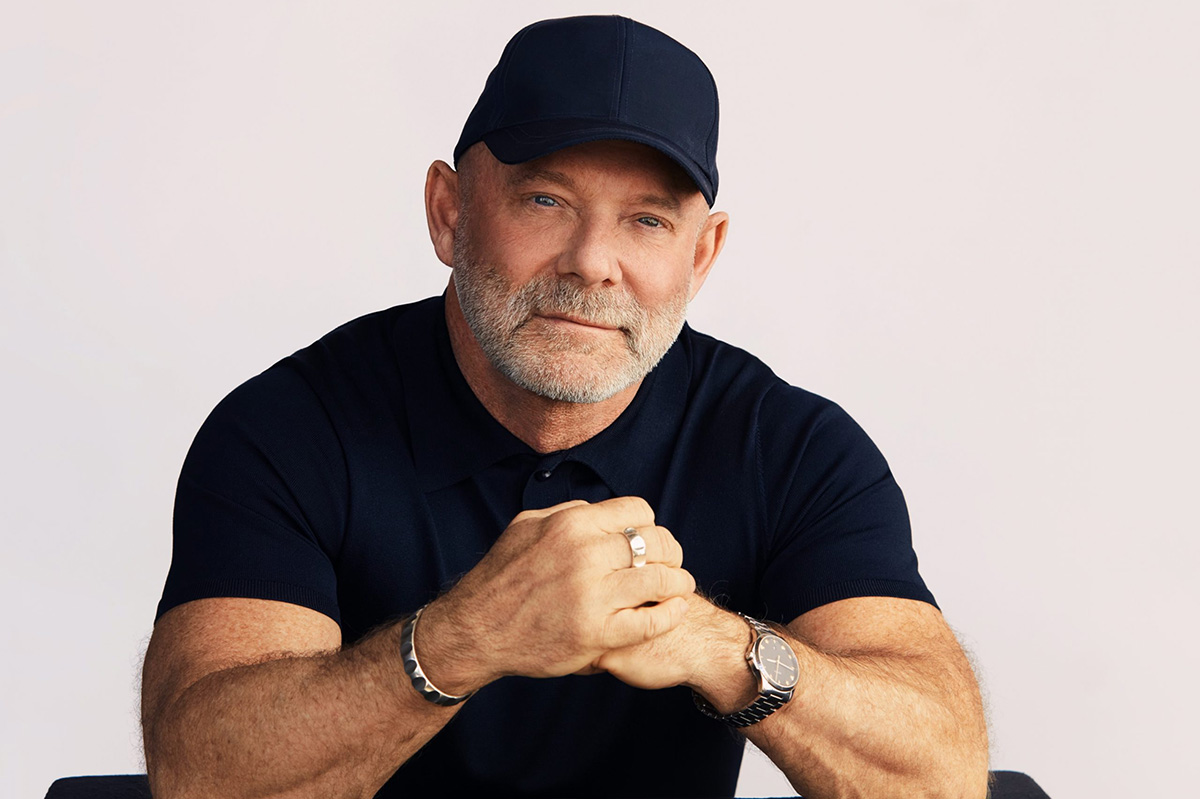
It’s hard to imagine where LGBTQ+ television would be without “Queer Eye for the Straight Guy,” the trailblazing reality series that premiered in 2003.
Each episode of this Emmy-winning show saw a group of gays converge on a struggling man — the titular straight guy — and offer nonstop wit while organizing his endlessly messy life. This program about a group of homosexual helpers took the world by storm, furthering the love of gay television begun by shows like “Will and Grace” but bringing it into the growing medium of reality TV. Of course, it wasn’t perfect; “Queer Eye for the Straight Guy” often cast its experts less as multi-faceted queer folks and more as sources of early 2000s gay jokes. But despite these pitfalls, it’s undeniable that the original program explored the realities of being gay in a way audiences had never seen before. It was a monumental piece of LGBTQ+ representation, and its success is largely owed to the man who fought to get this show made: producer David Collins.
Collins spoke with the Blade from his Los Angeles home, where he’s spent the past few years living with his husband and his two daughters. David spoke fondly of his many years in the industry, detailing how it feels to be such a huge part of LGBTQ+ history. He explained, however, that he didn’t initially set out to alter how queer people were seen on television. “I never went out to make gay television,” said the producer. “I went out to tell great stories.”
“I’m a hillbilly from Ohio, and I thought I was going to be an editor,” David laughed, looking back on his career. “I interned at the Cincinnati Film Office, and I showed up to work my very first day, and the film commissioner was like, ‘Get to the airport right now and pick [someone] up. Don’t talk to them.’ Well, I ended up picking up Jodie Foster.” Collins raved about this car ride that changed his life, with the pair becoming friends and Foster pushing him to become a producer who puts their own media out into the world. Eventually, he did just that, and after learning about the wild new genre that was reality TV, he pitched a series to Bravo: “Queer Eye for the Straight Guy.”
“I was obsessed with Esquire magazine, and they had five categories: fashion, grooming, interior design, culture, food, and wine. So I gave them each a gay, and the Fab Five were born!” Collins said, describing how viewers quickly fell in love with the concept and earned the program four seasons and an Emmy for Outstanding Reality Program. He spoke about how proud he felt creating a show that centered real gay people, not characters in a story, remembering, “To stand in the middle of Times Square and look up and see this massive billboard with the original Queer Eye guys…it wasn’t even a dream come true, because it wasn’t a dream I had even fathomed.”
With his series, people were watching actual gay men and learning the realities of a queer culture that had always been portrayed as a danger to society. Collins tearfully recounted hearing about queer people using the show as a way to connect with their family, saying, “What I’m most proud of that’s come out of Queer Eye [are] the conversations that that series has allowed to have people around their kitchen tables with little boys in Ohio like me who were scared to death that they were going to burn in hell because their pastor was telling them that they were a sinner.”
Now, for all of its trailblazing, the program wasn’t wholly positive; the show’s focus on the central ‘straight guy’ meant it rarely delved into the lives of its Fab Five. Collins regretted that lack of depth but understood that earlier audiences weren’t accustomed to such a nuanced look into queerness — that would have to wait for the reboot.
When “Queer Eye” came out in 2018, audiences were introduced to not only a new Fab Five, but a whole new format (that didn’t rely on a straight person). Now, the series would assist queer folks and allies alike, spotlighting these individuals as well as the queer experts helping them improve their lives. The show has been applauded for its amazing makeovers, but where it truly stands out is its representation, offering a look into individuals across the country and the struggles — along with the immense joys — of being queer in America today.
Fans were disappointed to hear that “Queer Eye” would be ending after its 10th season, but David stressed that they wouldn’t have to be sad for long. “What I will say to you is this: hang tight,” he teased. “There’s yet another version of ‘Queer Eye’ to come, and we’re working on that now.” In the meantime, Collins is continuing his work with new shows like the “House of Stassi,” a series centered on “Vanderpump Rules’”prolific waitress. He’s excited about these new projects, but emphasized that his heart will always belong to “Queer Eye for the Straight Guy” and all that it continues to do for viewers 19 years after its finale.
“It’s not about your new outfit or your new couch or your new whatever. It’s about your humanity,” said Collins, speaking about the core lesson he hopes people take away from the Queer Eye franchise. “It’s about seeing yourself. It’s about dignity. It’s about how confidence breeds success.”
A valuable message that queer folks can benefit from even more now than they did in 2003. And, while it’s unclear just what lies ahead for this franchise, one thing is for sure: “Queer Eye for the Straight Guy” helped people everywhere understand the power that exists within our queerness. It’s a truth that has impacted countless pieces of LGBTQ+ television today, and it’s one that Collins promises to keep alive through whatever hit show he creates next.
a&e features
Jason DePuy on coping with homophobia in ‘Big Brother’ house
First drag queen contestant on CBS show fought to stay positive
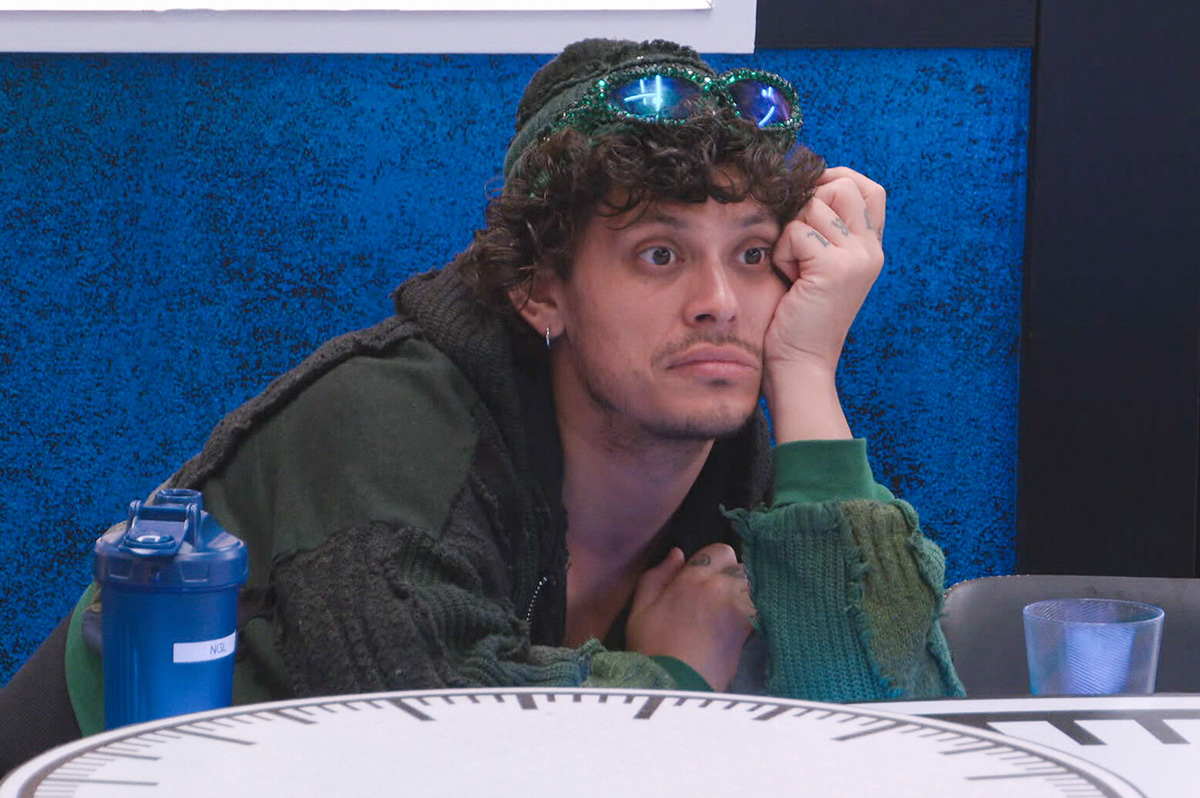
One week after Jason DePuy (known as Salina EsTitties on “RuPaul’s Drag Race”) was bullied and eventually evicted from CBS’s “Big Brother” house, the queer drag performer is still emotionally processing his feelings.
During his 24 days in the reality TV competition, DePuy often had a rough time, with fellow cast member Kamuela “Kamu” Kirk making homophobic comments and feeling isolated.
In a conversation with Head of Household Rick Devens, Kirk left viewers upset when he said, “Bro, miss me with the drag stuff. Miss me. I’m still an MMA guy, and I have an image to uphold.”
Former “Big Brother” contestant Frankie Grande called his words ‘homophobic’ and ‘gross.’ Another comment, where Kirk said he wanted to end DePuy’s career, also received strong backlash online.
Now that he is out of the house, DePuy has been shocked and deeply touched by the love from “Big Brother” fans and former contestants. We chatted with DePuy for this Blade exclusive.
“To know that my community was rallying for me outside the house was the most wonderful thing. Seeing how much people were just wanting to shower me with love was incredible. Even my friends, I went to say hi and give them a hug, and they’re like, ‘Uh, uh, come here.’ They had to hold me and let me know America was feeling for me in a way that I had no idea.”
He added: “To see that reality was just overwhelming, and I couldn’t ask for more.”
Known as a messy player in the house, DePuy often had to fight to stay positive and stand up for himself.
“No one was coming to my rescue. In real life, it’s easy to block people, but in the house, I didn’t have that luxury, so I had to find it within myself to learn how to speak up for myself in a way that wasn’t nasty or biting. I didn’t attack anyone personally, which is what I was the most proud of.”
DePuy acknowledged he has had a history of putting his foot in his mouth when it came to certain “Drag Race”moments, being in the public eye, and making a fool of himself. “I’ve learned my lessons; to see how I handled myself in the ‘Big Brother’ house was amazing.”
While DePuy has been sober for 14 and a half years and has a strong spiritual foundation, in the Big Brother house, he often felt like he couldn’t communicate what he was feeling.
“As a queer person, a person of color, a drag queen, I have to be very careful about how I move. I don’t have the luxury or privilege to just act a certain way or say a certain thing. I have to be very careful; I’m representing me. But who I am is a Latino, a person of recovery, a drag queen, a queer person in the community. I know that there’s a lot of pressure that comes with that. I felt it was safer for me to sit there and just breathe than try to do anything crazy.”
He continued: “I couldn’t speak to the personal attack that was happening in the house, because in my mind I was like, ‘no, this is a game, and I have to play it, put that aside.’”
Not only can viewers watch the episodes, but they can also watch the live feeds of what’s happening. Seeing the fans’ social media posts from people who had watched the episodes and the live feeds also contributed to DePuy realizing that his feelings of discomfort were valid.
“To know that I wasn’t delusional in those moments, that others could see what was happening, has been a lot to take in. Fans and friends let me know the comments made went beyond the game…I’m like, ‘Oh, so my instincts were correct.”
One of the most poignant moments on the live feeds occurred when DePuy was crying, alone in his room, and said how he missed his gay community.
“I really missed my friends. I missed my queer community. We’re so colorful. We’re so loud. We’re so vibrant. We speak off the cuff, and we’re very truthful and honest with how we speak, and it’s fun. We have fun lingo.”
DePuy had to censor his expressions in the house. “Because I can say one thing, but it can mean something different to straight people than it does with my queer brothers and sisters. So, there was a sense of code-switching that I had to do. I had to even put aside some of my queerness in a way sometimes to fit in.”
DePuy was thrilled to be the very first drag queen to ever be cast on the show.
“I’m honored to have been chosen. There’s a million drag queens out there, and to know that I was a contender to come in the house and not even be in drag was like a wow for me. I’m over here in Hollywood, running around these streets with a wig and heels just to make a dollar to survive, and I have to rely on drag to do that. And then to be offered this opportunity and be given the privilege to say, ‘hey, you don’t have to put on the wig for you to be valuable here,’ is just insane to me.”
Prior to his shows, DePuy has been hustling for 15 years, flipping burgers and doing drag at night.
“That has been my life these past since I was 17. So it’s been a long journey; the opportunity to do this out of drag is a very big blessing. I’m honored and grateful to be the representation of my community.”
If you missed Jason on “Big Brother: Unlocked,” the episode can be seen on CBS.com. He will be back on the show for the finale.

Pentagon expands testosterone screening as trans troops face hormone therapy restrictions

Calendar: September 4-10

Swiss government backs nationwide conversion therapy ban

Gloria Steinem dies at 92

The mastery of love

HRC president campaigns for Chris Pappas in NH

Prominent French activist attacked outside Paris bar

Whitman-Walker’s 40th Walk & 5k Run to End HIV set for Sept. 19

Shooting outside gay bar in Ariz. leaves three dead

Gay men linked to 2006 Wone murder failing to make lawsuit settlement payment
-

 Congress5 days ago
HRC president campaigns for Chris Pappas in NH
-
France4 days ago
Prominent French activist attacked outside Paris bar
-
District of Columbia4 days ago
Whitman-Walker’s 40th Walk & 5k Run to End HIV set for Sept. 19
-

 Arizona4 days ago
Shooting outside gay bar in Ariz. leaves three dead