Arts & Entertainment
Camilla’s ‘World’
Gay duo to premier parody musical at the Fringe
‘Where in the World? The Untold Story of Camilla Sanfrancisco’
July 12-29
The Studio Theatre
1501 14th Street, NW
capfringe.org
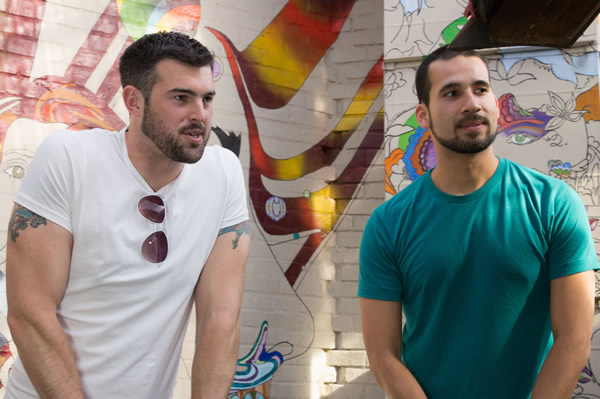
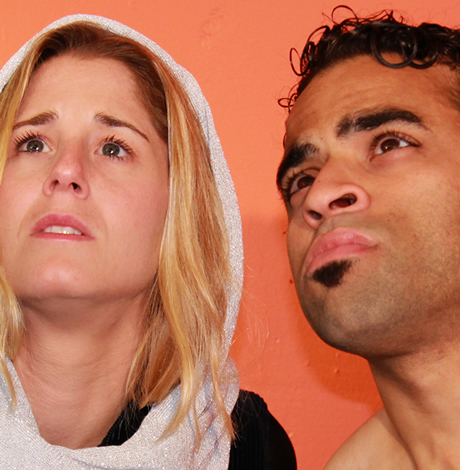
Jeff Vonch (right) and Patrick English found inspiration in a video game villainess for their new work ‘Where in the World.’ (Photo courtesy Donis Zepeda)
By day, Patrick English and Jeff Vonch are patent examiners at the U.S. Patent office in Alexandria, but by night and on weekends they’re busy producing, writing and (in Vonch’s case) choreographing musical theater. When their new musical “Where in the World? The Untold Story of Camilla Sanfrancisco” premiers Thursday as part of the Capital Fringe Festival, everyone can see the result of the gay duo’s arduous efforts.
For English and Vonch, making fun of cultural touchstones from their youth is a favorite pastime. One of their preferred targets is Carmen Sandiego, the animated villainess of educational video games and TV programs popular in the ‘80s and ‘90s. Last year following one of their nostalgic confabs, Vonch received an uncharacteristically serious email from English suggesting that they collaborate on a musical about the red fedora-wearing Sandiego and her mysterious transformation from good to bad. What’s more, he wanted them to produce the show themselves.
“At first I thought he was crazy,” says Vonch, 26. “Neither of us had ever done anything like that before. How were we going to write a musical and produce? Then I got scared. I have aspirations to direct and do standup, but I also have big fears about putting my work out there before the public. Still, something told me to go for it.”
Soon after, collaboration began in earnest. As lyricists, the nervy twosome teamed up with established local composer Adrian Verkouteren to write an eight-song score. Prior to penning the musical’s libretto, English and Vonch researched Carmen’s backstory. She was a child genius who grew up to be an ace detective at ACME Detective Agency. Later she defected to a nasty villain league (V.I.L.E.) simply because she was bored. The novice librettists weren’t sold on Carmen’s motivation, so they decided to go a different way.
“We named our character Camilla Sanfrancisco. It’s a parody; it’s our story,” says English, 30. “Our Camilla [played by Vanessa Kinzey] is the victim of a frame-up orchestrated by a far-flung coterie of evildoers. Camilla travels the world working her way through henchman [and women] until she confronts the evil boss. It’s like a video game. Her stopping in India and Buenos Aires helps to make the show musically interesting. We’ve inserted both Bollywood and Tango numbers.”
With more than 130 shows performed in venues throughout town, the Capital Fringe Festival is D.C.’s foremost annual performing arts event. Offerings run the gamut from dance, drama and music to spoken word and puppetry. The work is often touted as edgy, offbeat and refreshing. Sometimes that’s the case, but not always.
Though both are patrons of the D.C. theater scene, Vonch and English haven’t been so involved in a theatrical production since high play days in Minooka, Ill., and Northern California, respectively.
“One of the great benefits of Fringe is that the relatively inexperienced can wear many hats. On this show, we’re co-producers, co-lyricists, co-librettists and Jeff is choreographer,” English says. “We’ve learned a lot. As co-producers we’ve put out a lot of fires and signed a lot of checks, but ultimately to see our work brought to life by such talented people is a really moving experience. It’s hard to put into the words.”
While a lot of Fringe productions cover adult terrain. English describes “Camilla” as PG-13. He says that it doesn’t focus directly on the LGBT experience, but does deal with gender and features a genderqueer character. Mostly, he adds, it’s a fun musical with good music and even better performances sung by a seven-person cast.
“Based on how we interact, people think Patrick and I have known each other forever, but it’s only been one year. Coming into this, I didn’t want our friendship to crumble or become all business and it hasn’t,” Vonch says. “Back in January, I told Patrick that however it turns out we’re going to give this show to the world. Luckily it’s going to be amazing.”
For more information about this and other shows, visit capfringe.org.
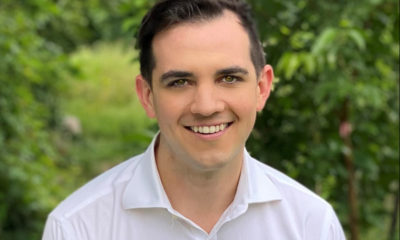

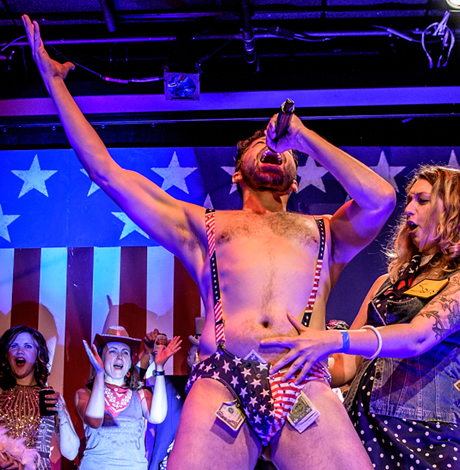
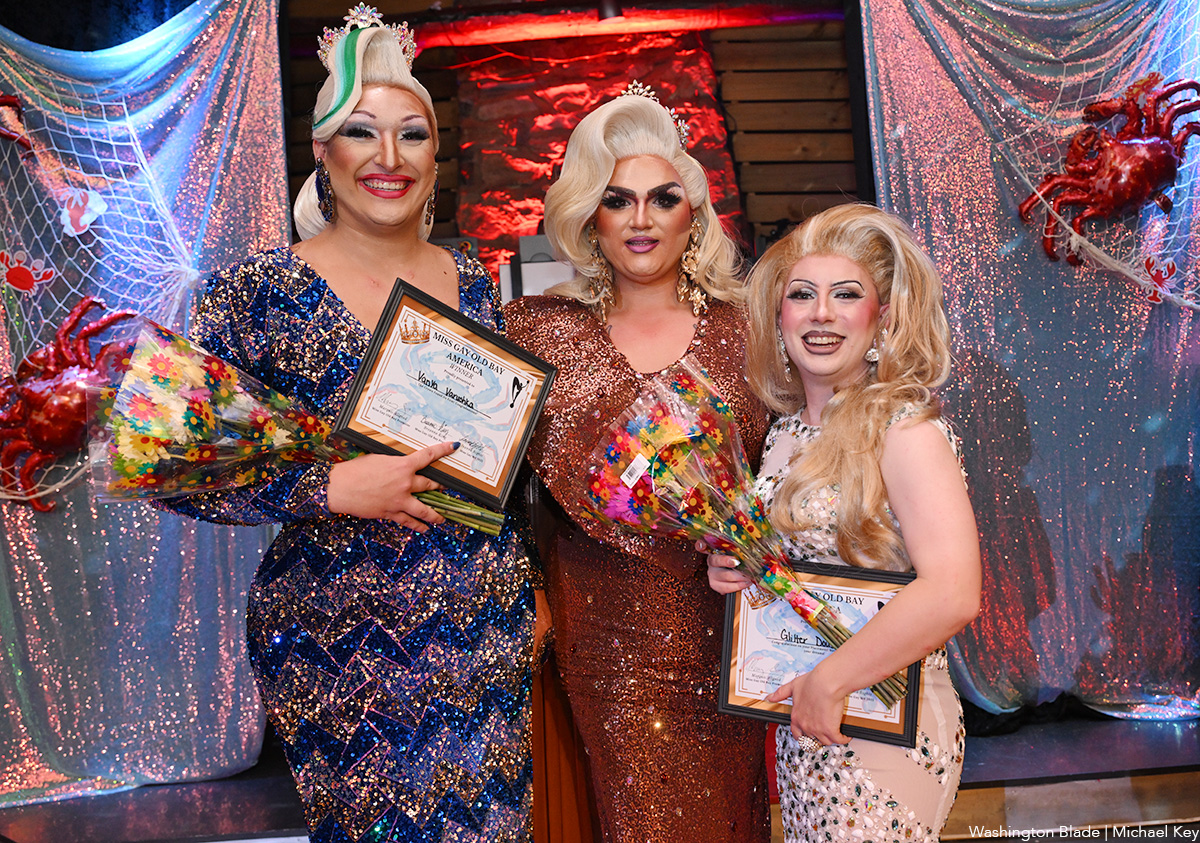
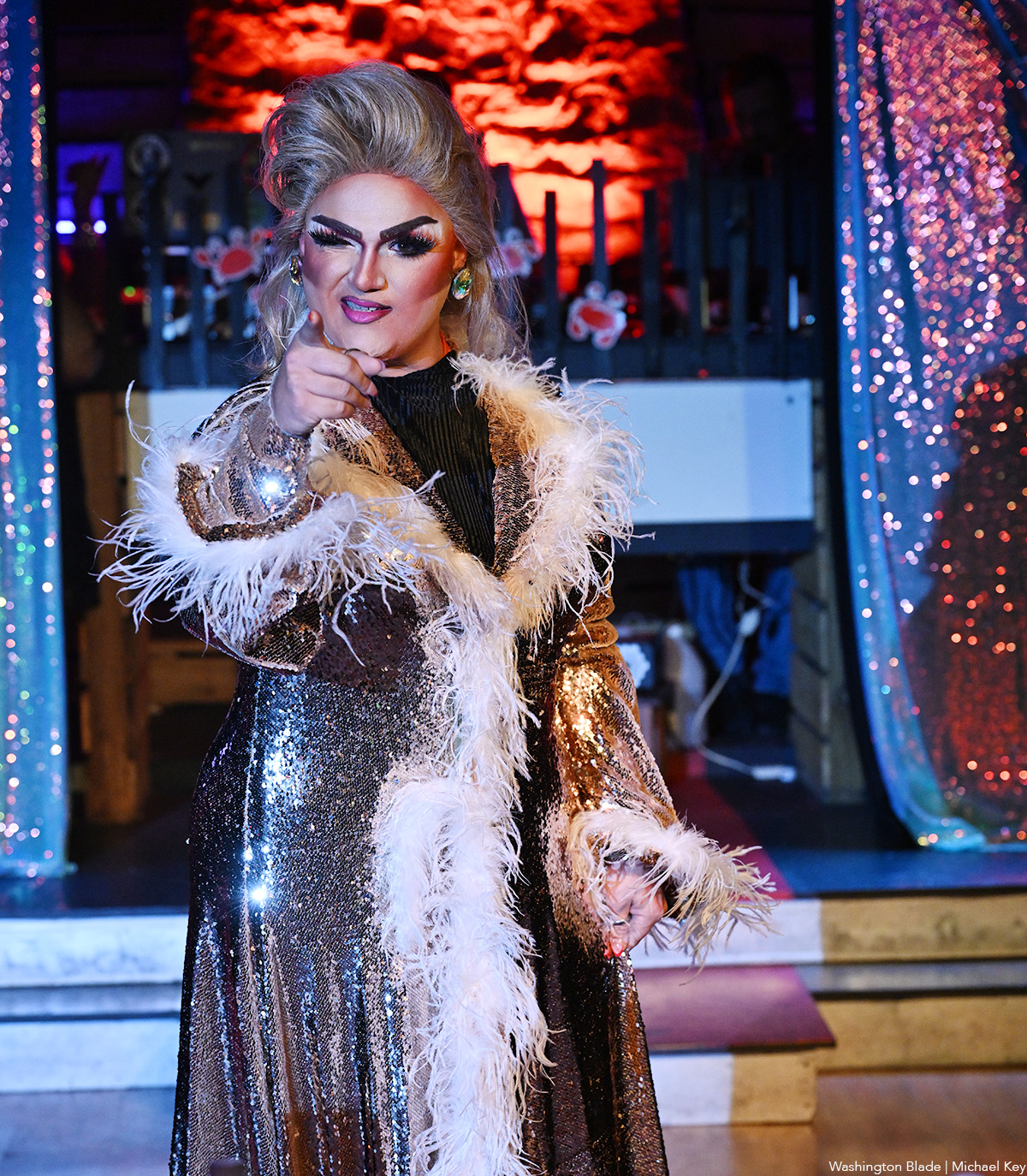
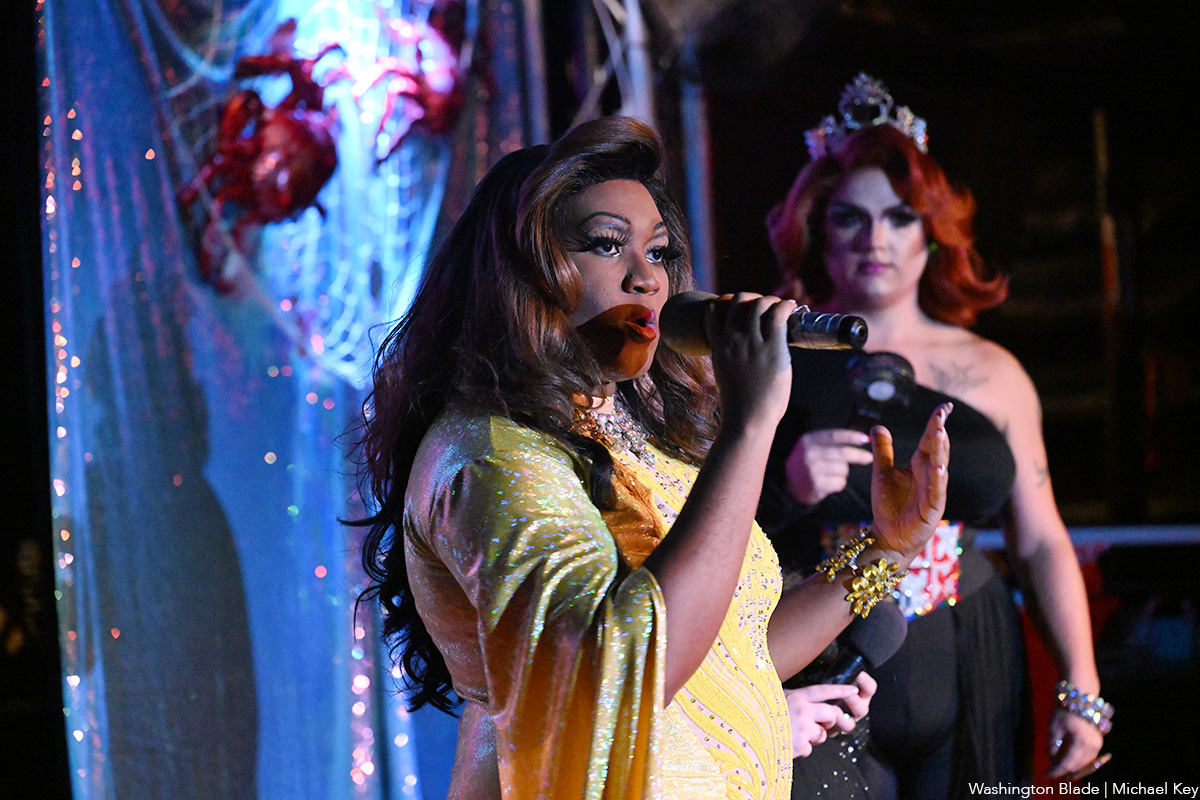
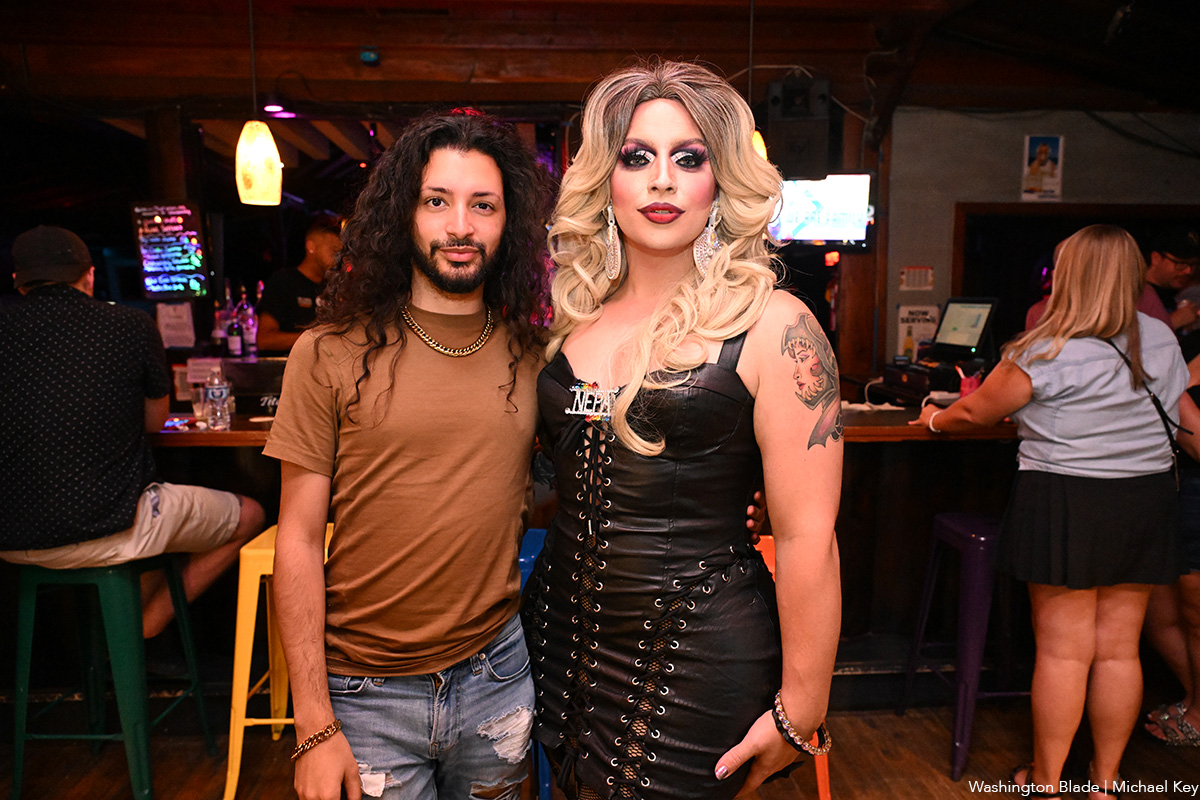
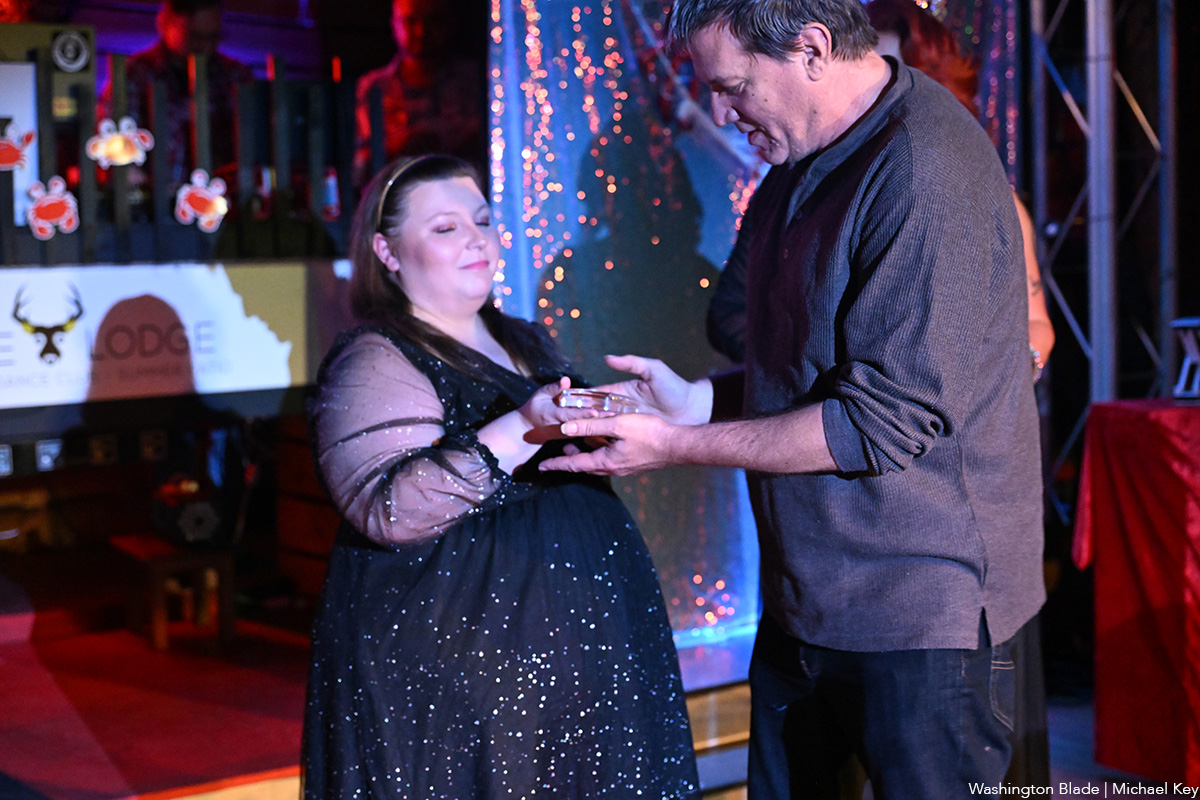
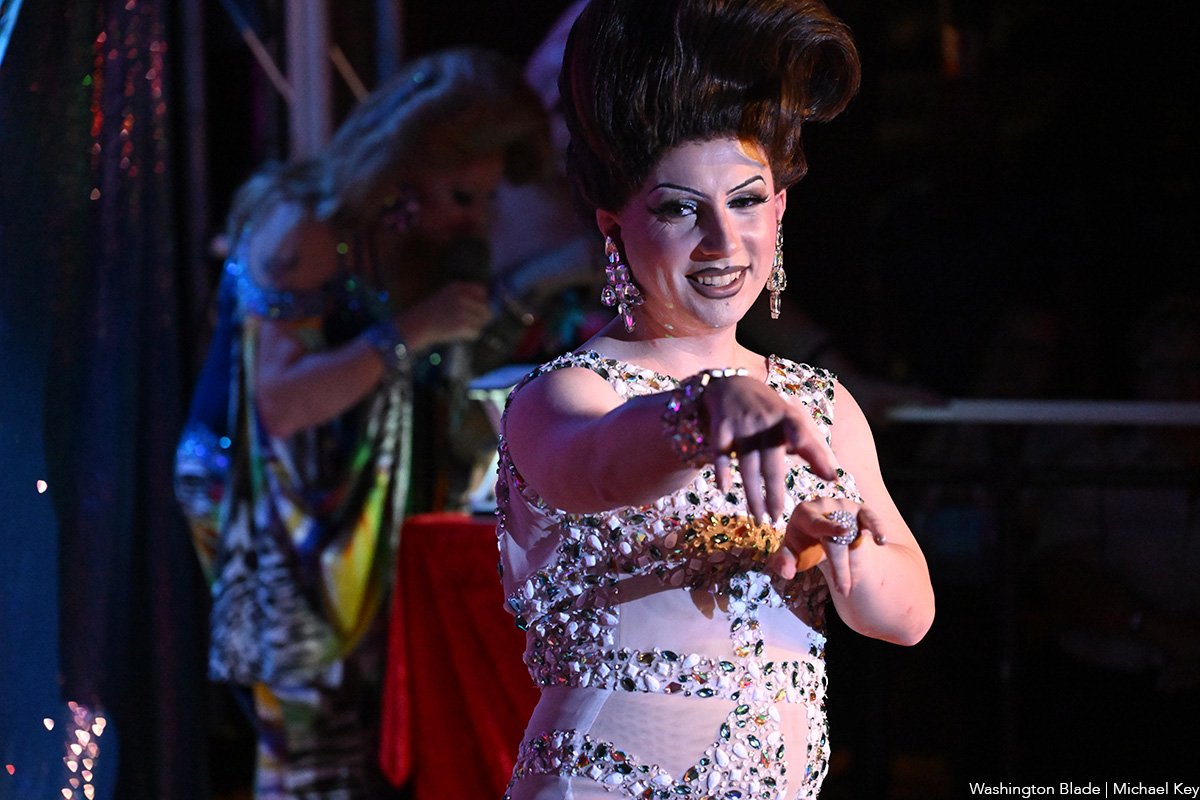
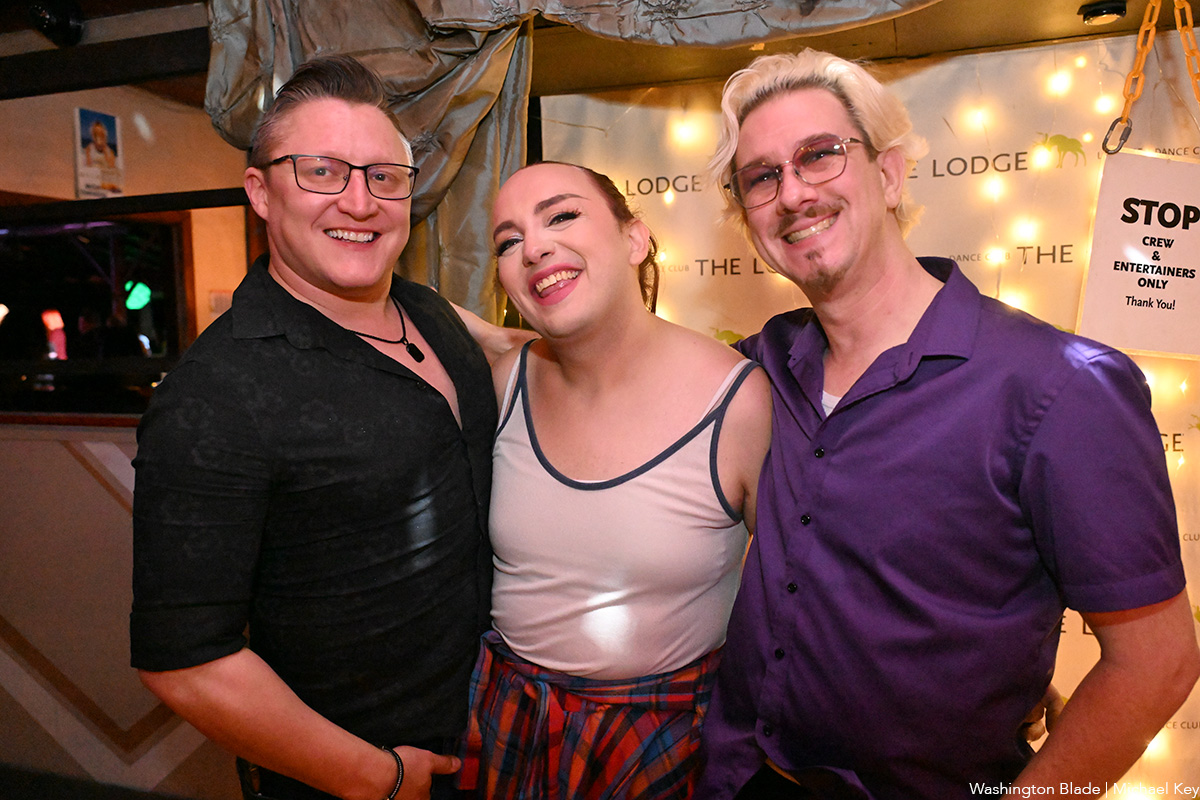
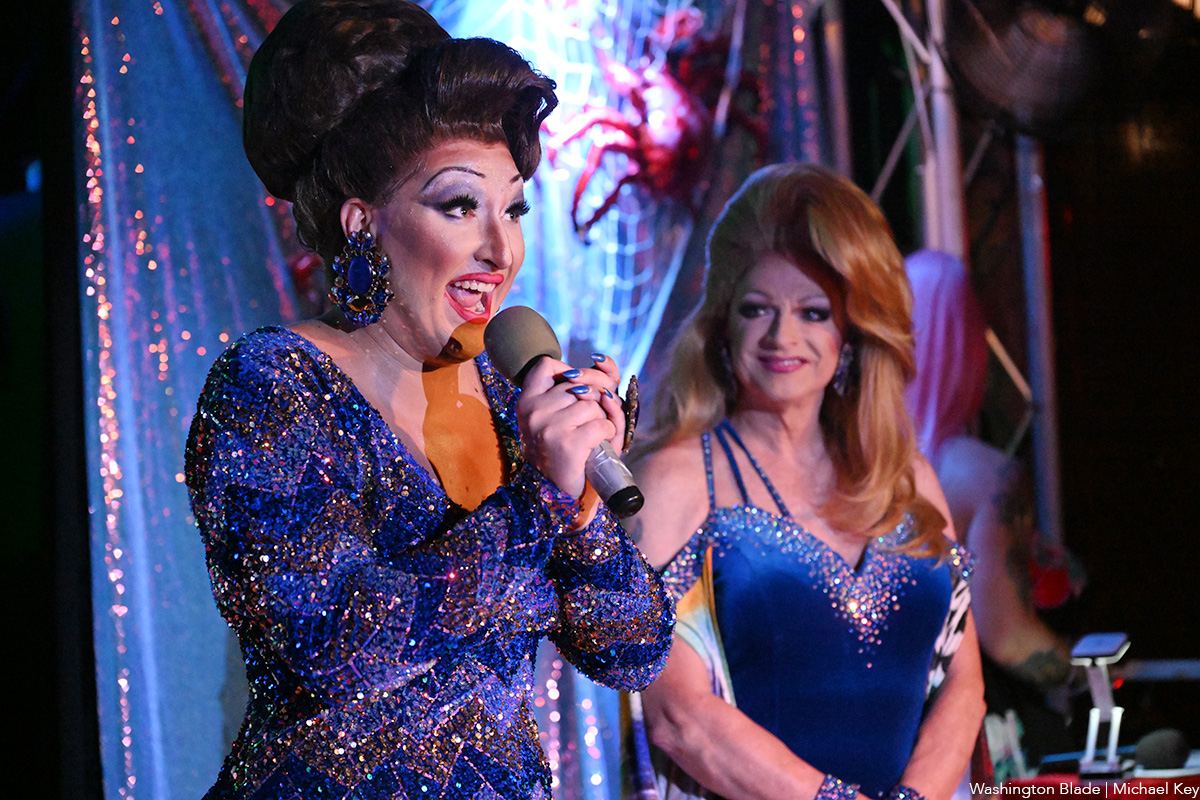
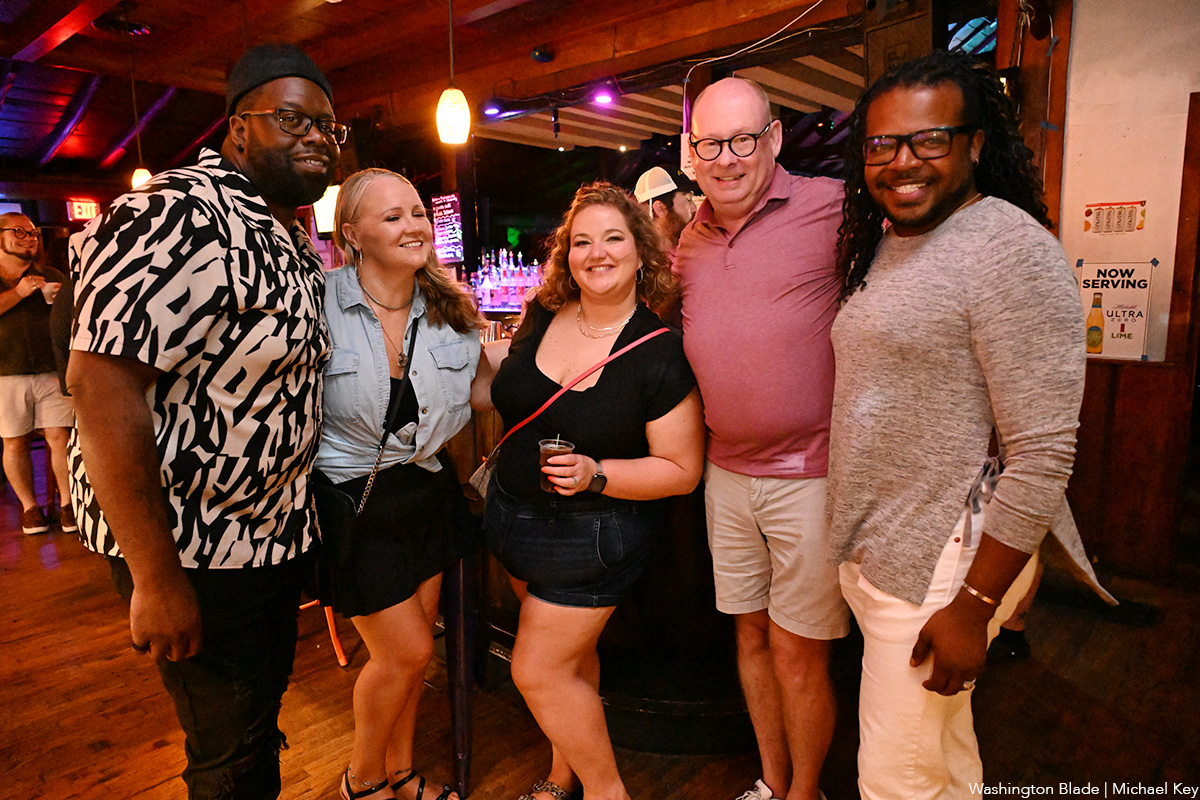
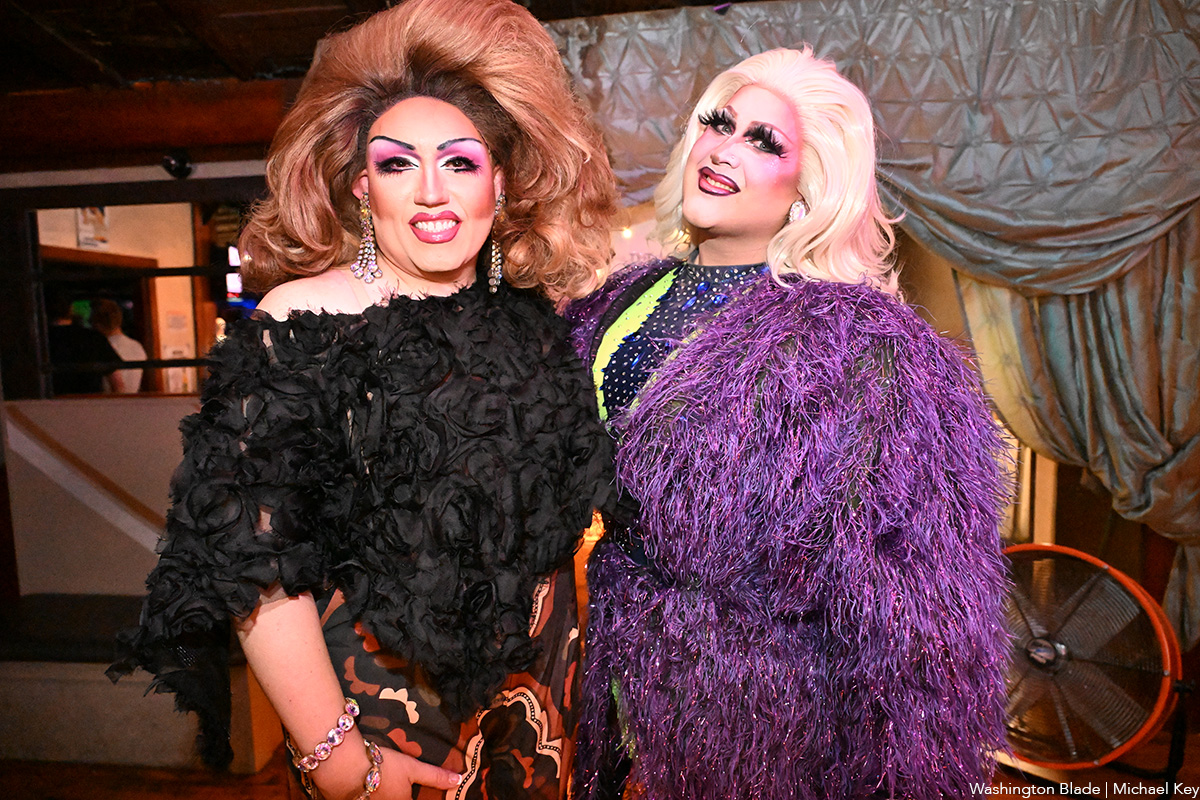
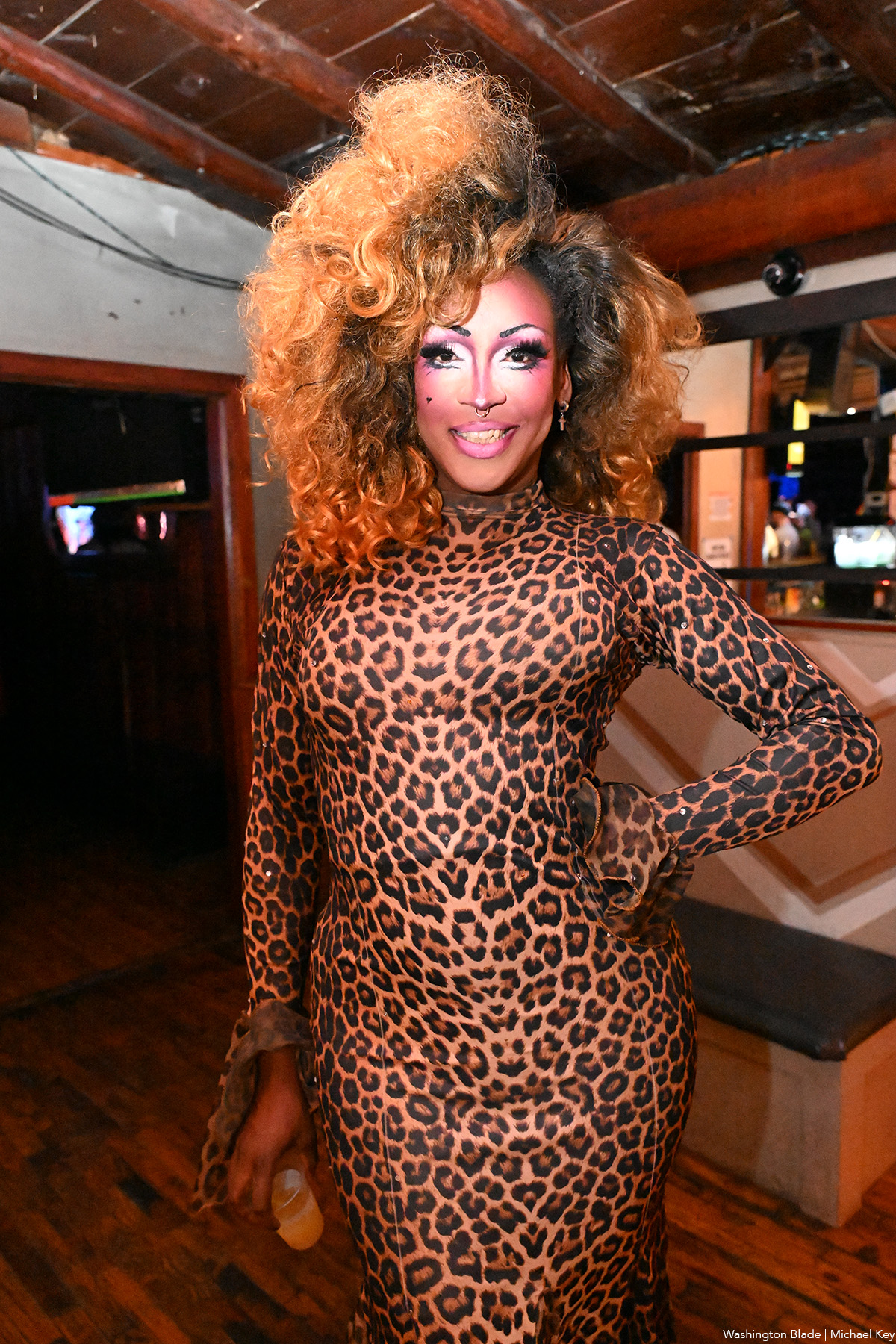
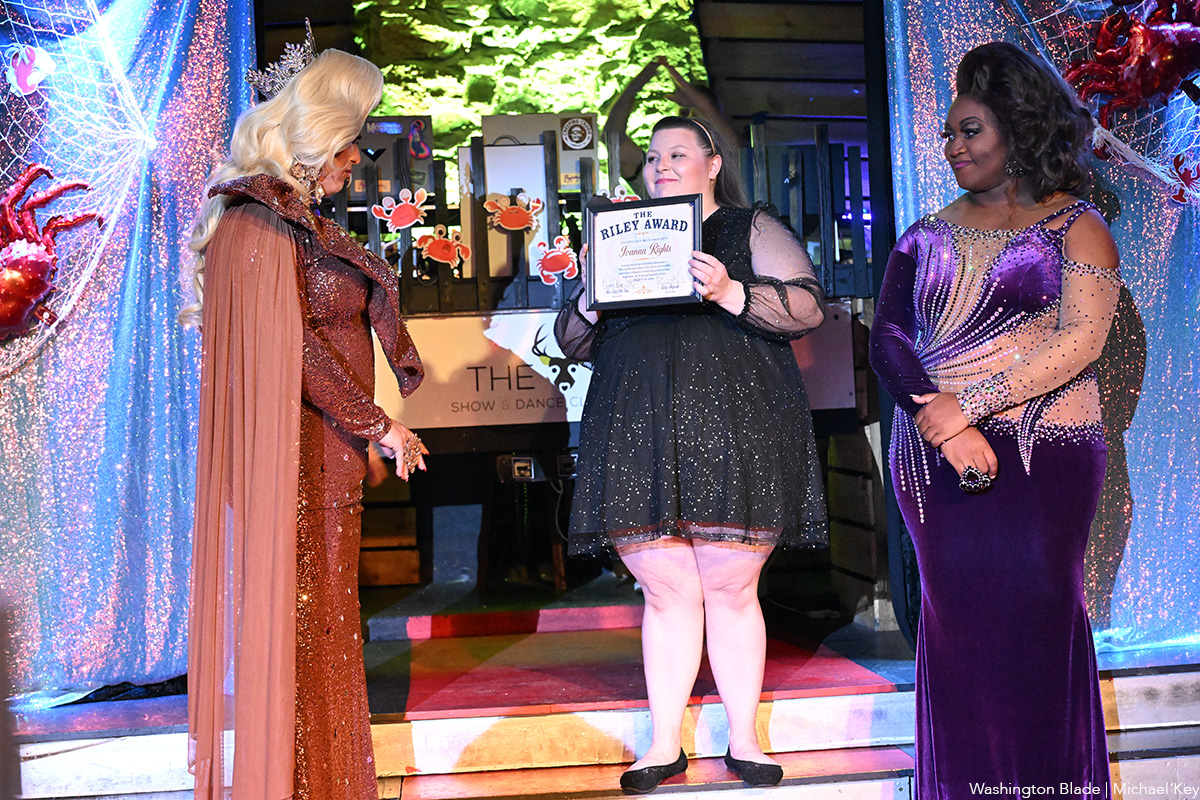
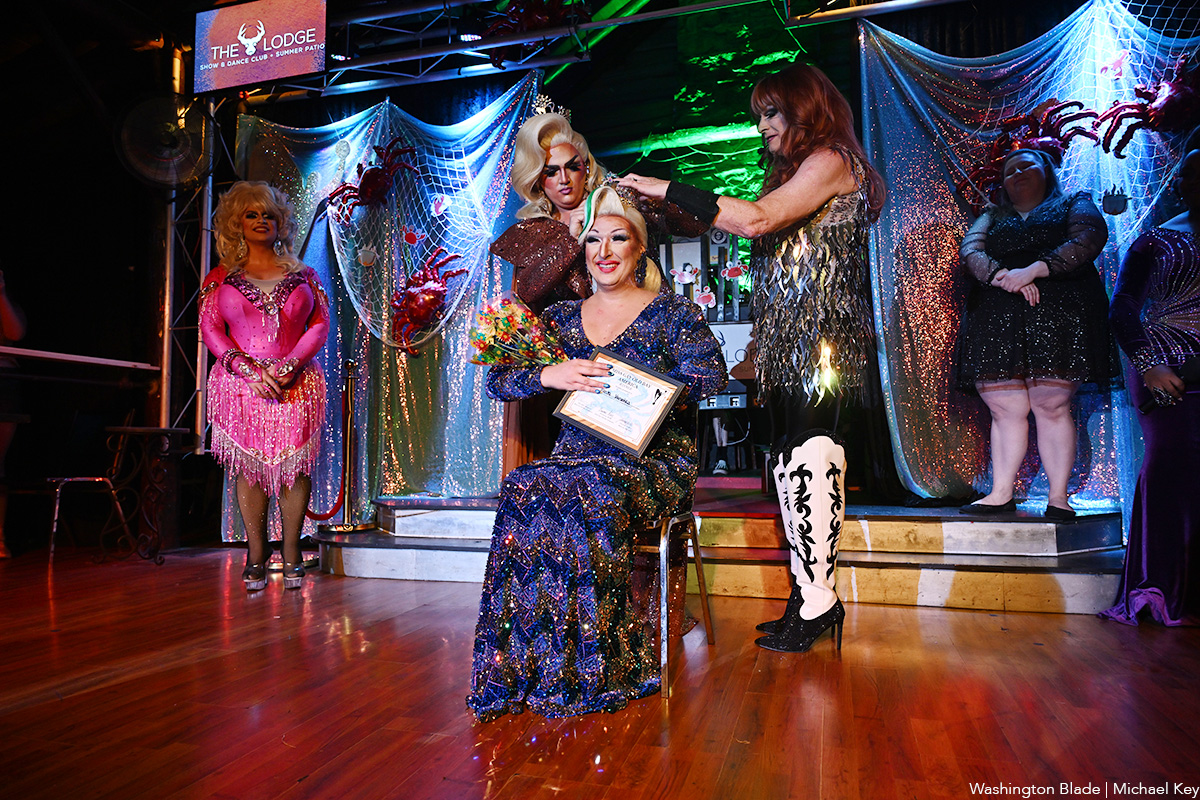
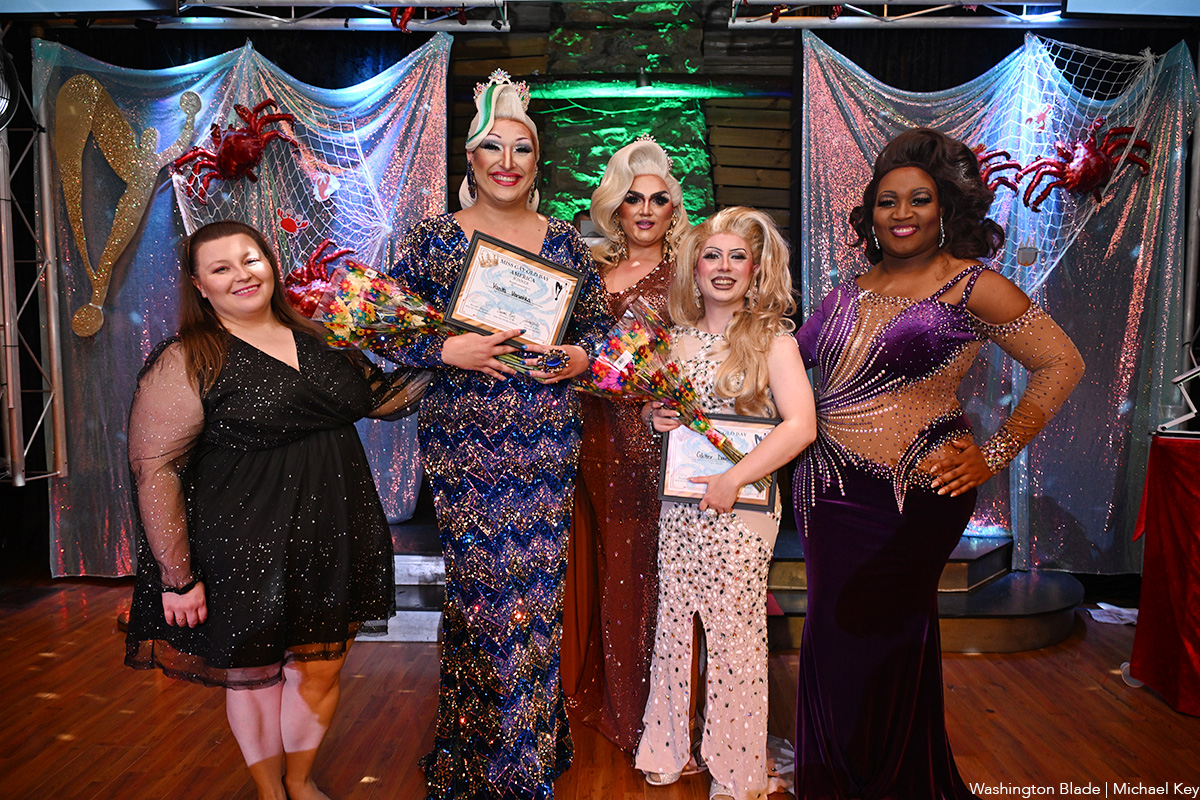
The Miss Gay Old Bay pageant was held at The Lodge in Boonsboro, Md. on Friday, Aug. 29. Vanya Varushka was crowned the winner. Glitter Douglas was named first runner-up. Both Varushka and Douglas qualify to compete in the Miss Gay Maryland pageant in October.
(Washington Blade photos by Michael Key)







Theater
Immersive ‘Nation-State’ imagines a society free of authoritarianism
Queer duo brings unique theater experience to Dupont Underground
‘Nation-State: A Live Experiment’
Sept. 2-13
La Pluma Theatre
Dupont Underground
19 Dupont Circle, N.W.
$25-40
Dupontunderground.org
Industry Night: September 7. Free for all theater makers
A relevant piece replete with borders and passports, La Pluma Theatre’s “Nation-State: A Live Experiment”is immersive, site-specific, and testimonial.
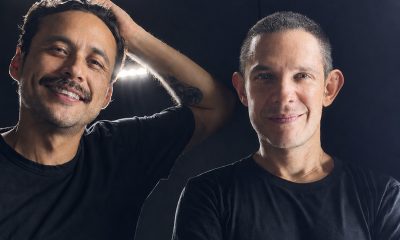
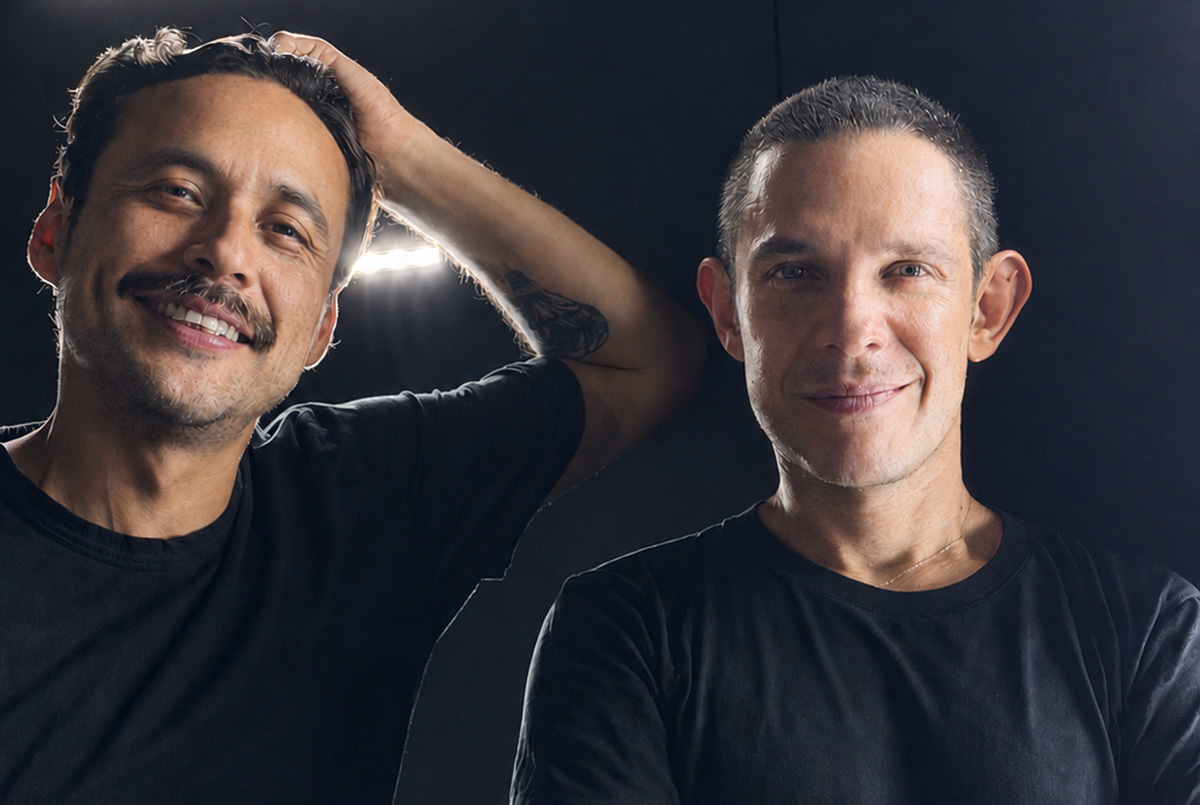
With the production, the company’s queer co-founders Victor Salinas and Gabriel de la Cruz pose unique situations and experiences. In lieu of tickets, audience members get passports. What follows are questions and tests, and whether they gain entrance into a nation built to protect its citizens from authoritarianism, resource theft, and colonization remains to be seen.
Originally from Mexico and Peru, respectively, Salinas and de la Cruz met at a birthday party in D.C. and instantly clicked as theater makers, sharing outlook and ambition. Reluctant to go it alone, both had been searching for artistic and producing collaboration. That all changed.
And while their enterprise is primarily Latino and queer, these professional partners refused to be confined to a box, choosing rather to amplify the voices of all of D.C.’s diverse communities. In line with their plans, “Nation-State” is open to serving many points of view.
As director of “Nation-State,” de la Cruz mostly guides the questioning. He’s the right man for the job. Since arriving in the U.S. six years ago, he has been consistently curious about certain things. Who belongs here? How do you make this your home? And who is creating the rules?
“But the writing process is shared,” de la Cruz corrects. “I come up with questions. I provide Victor the topic and he goes from there. We’re both writing what happens next.”
He adds, “the most exciting moment for people is when they share something unique. As a questioner, you need to find the confidence and the right moment to ask the question. If you provide the space for that, the actor or audience member will give you something singular.”
Since before La Pluma opened in November 2025, its creators have agreed that “the most beautiful thing is when you use theater to fashion something innovative. Theater is the place where you can create new frameworks and rehearse new ways to live.”
At just an hour, “Nation-State” is performed in English at Dupont Underground – the company’s historic residence, a once subterranean street car barn located beneath Dupont Circle. For the production, the tunnels serve as boundaries, and its different curved spaces make up a micro nation and welcome different guest actors who will come to share their stories.
At certain times, Salinas plays Officer Salinas, Director of N.I.C.E. (Non-Discriminatory, Inclusive Customs Enforcement), a humorous social critic of the system and border patrol. Other times, it’s Salinas as himself telling his real-life stories. He says, “it’s a level of vulnerability that I’ve never experienced. The script is my personal life with zero censorship. But I think, if not now in a play that we are pouring our souls into, then when?
“As a kid I dreamed of being TV show host and now I am. I will sing and tell my stories. I feel comfortable and ready to do it.”
In Spanish, “pluma” means both pen and feather. For the company, it’s the latter, and comes with lively associations. Salinas explains. In mysticism, feathers serve as a portal between the real and spiritual worlds, like that between fact and fiction. And in Spanish and Latin American slang “showing feathers” (in other words, showing queerness). La Pluma encourages a good display of authenticity.
And specifically for Salinas, there’s a personal story involving his beloved grandmother with whom he was extremely close. After she died, he has regularly found feathers as if she’s making contact. “A bit romantic, I know. But I think if you’re open you can see these things,” he says.
“Nation-State” is challenging but fun. It’s unmistakably La Pluma. In the end, the company wants to build a world where everyone feels safe to tell their own stories, as individuals and performers.
Books
New book examines Trump cuts to LGBTQ healthcare
‘Aftershocks’ details impact of policy shifts on HIV response, broader public health
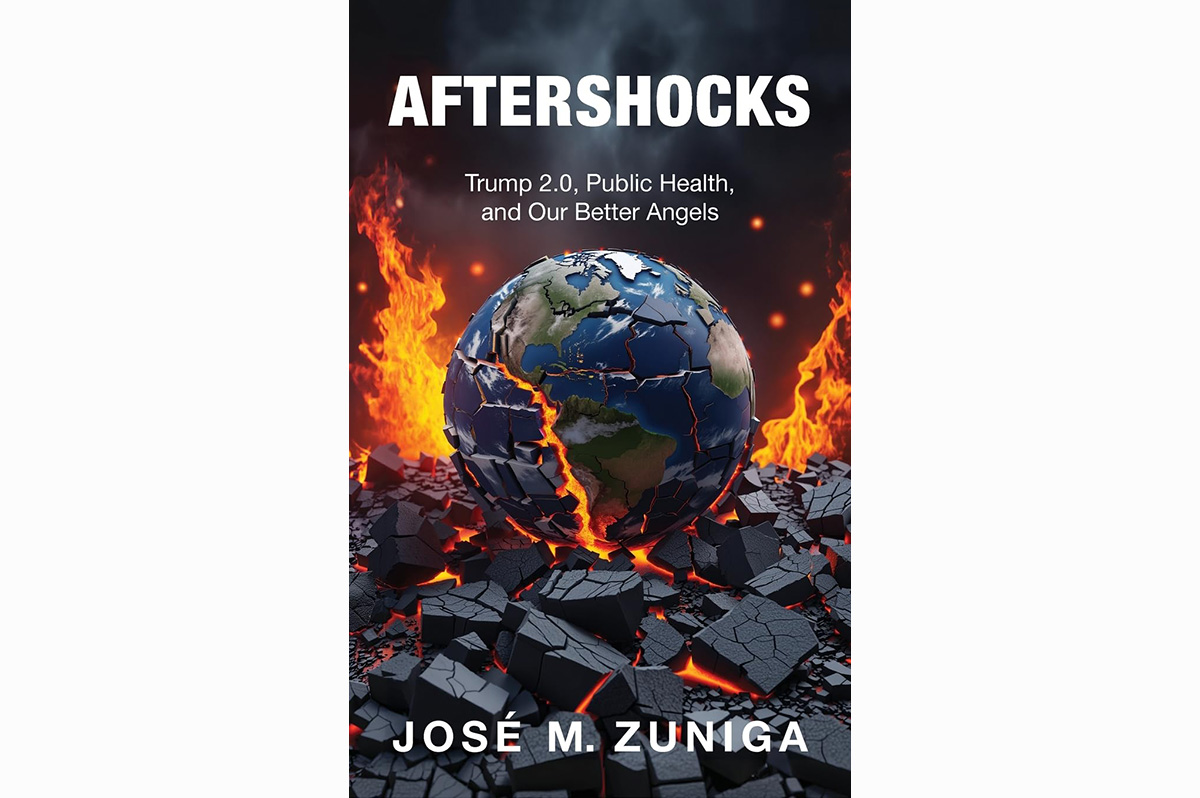
As LGBTQ and HIV advocates continue to grapple with the Trump administration’s attacks on healthcare, a new book offers a timely look at what happens when public health systems — and the democratic institutions that sustain them — are pushed to their limits.
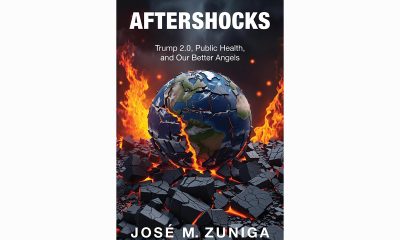
The book, “Aftershocks: Trump 2.0, Public Health, and Our Better Angels,” was written by Dr. José M. Zuniga, president/CEO of Fast-Track Health. Zuniga is a globally recognized public health leader with more than three decades of experience advancing responses to HIV, communicable and non-communicable diseases, and the health impacts of climate change. He is also editor-in-chief of the Journal of Fast-Track Health.

The book covers the first year of the second Trump administration. It chronicles the impact of federal policy shifts and budget cuts on the HIV response and public health more broadly, including for LGBTQ communities. Drawing from policy analysis, frontline insight, and lived experience, the author reveal how decades of hard-won progress became vulnerable through Project 2025 and DOGE, but also a paralysis in the HIV and public health communities following the outcome of the 2024 elections.
“In other words, we were caught flat-footed when our opposition had a detailed plan to create chaos and disruption,” Zuniga says. “Thus, the book also offers Horizons 2028 as an antidote to Project 2025 as a starting point for a wide-ranging conversation about how we will build back better given the baseline pre-Trump 2.0 was already imperfect.”
Below is an excerpt from the book.
What Could Not Be Left Unsaid
Let me begin with a simple truth: I did not set out to write this book. Like many in the public health community, I set out daily to do the work of scaling prevention, expanding access to care, strengthening health systems, and ensuring that dignity, equity, and justice are operational realities. Writing, for me, has always been in service of action: policy briefs to shape decisions, editorials to provoke accountability, reports to document progress or failure, and books to synthesize experience into insight that can guide public health action. But Aftershocks is something different; it is not merely an analysis. Instead, it is a record of rupture, of response, and of what it means to continue when the ground beneath your work begins to shift.
This book was written because something changed, and that change came into sharp relief during the beginning days of the second Trump administration, including the erosion of norms, the weaponization of rhetoric, and the recalibration of governance itself. The change was not limited to policy reversals or budget cuts, though there were many. Moreover, it was not confined to rhetoric, though language played a central role. The change was structural and moral: a redefinition of how power understood its obligations to people, to evidence, and to truth itself. And for those of us working in public health, the effects were immediate and personal. We experienced a purposeful disruption of the public health ecosystem and a direct repudiation of the “health for all” principle that guides our work….
Writing this book was, unexpectedly, an act of catharsis. Not because it resolved anything, but because it created space to process what would otherwise have been overwhelming… Amid what many in the public health community experienced as both individual and collective trauma, documenting itself was stabilizing, allowing reflection without detachment and critique without disengagement. But catharsis alone is insufficient. This book is not an exercise in lament; it is also a response. If the period it chronicles is defined by disruption, then its purpose is to offer direction. Where Project 2025 represented a blueprint for ideological capture of institutions, language, and governance, this book offers a counterpoint: Horizons 2028…
Horizons 2028 is grounded in a simple premise: that the future of public health – and of democratic governance more broadly – depends on rebuilding systems that are resilient to political volatility. That means strengthening not only federal capacity, but subnational leadership. It means embedding community-led accountability into data systems. It means aligning health outcomes with social determinants and recognizing that equity is not an endpoint but a continuous process of adjustment and correction. It means treating global engagement not as optional, but as essential to national well-being. In other words, it is a roadmap not for returning to what was, but for building what is required…
I write as an Independent. Not in the sense of detachment, but in the sense of accountability to evidence, to outcomes, and to the people whose lives depend on both… Independence does not mean neutrality in the face of harm; it means refusing to filter reality through partisan allegiance. Importantly, it also means being guided by a consistent commitment to equity, dignity, and justice. These are not abstract values… They are tested in moments of crisis, when the gap between principle and practice becomes most apparent. They demand accountability not only for what is said, but for what is done – and for what is allowed to persist unchallenged. And they require the courage to name harm clearly, even when doing so is inconvenient or politically unwelcome.
That commitment shapes the analysis that follows, but it is also what makes the writing difficult. Because to document harm is to confront it. To trace its origins is to name decisions and their consequences. And to do so honestly is to risk being read as partisan in a landscape where truth itself has become politicized. But the alternative – silence, or false equivalence – is not acceptable. Not when the stakes are as high as they are. There is, however, a thread that runs through this book that resists cynicism, is not optimism, at least not in the conventional sense, but is something quieter and more durable: a belief that even in moments of rupture, there remains a capacity – within institutions, within communities, within individuals – to reorient toward something better.
The Blade may receive commissions from qualifying purchases made via this post.

Markey’s primary win deemed success for LGBTQ activists

Top Bulgarian court rules government must legally recognize trans people

Lou Chibbaro Jr. documentary wins award from NLGJA

Beloved D.C. ‘Old Catholic’ Bishop Charles Braun dies at 86

Blade welcomes fall intern

E-INFOSOL leaders encourage youth to pursue tech careers

New book examines Trump cuts to LGBTQ healthcare

Immersive ‘Nation-State’ imagines a society free of authoritarianism

Poland begins to legally recognize same-sex marriages from other countries

HRC president campaigns for Chris Pappas in NH
-

 Technology5 days ago
E-INFOSOL leaders encourage youth to pursue tech careers
-
Books4 days ago
New book examines Trump cuts to LGBTQ healthcare
-
Theater3 days ago
Immersive ‘Nation-State’ imagines a society free of authoritarianism
-
Poland3 days ago
Poland begins to legally recognize same-sex marriages from other countries