News
Gay man elected governor of Sicily
Former mayor well known as anti-Mafia crusader

Rosario Crocetta, former mayor of Gela who became known as an outspoken crusader against the Sicilian Mafia, came in first place in a ten candidate race. (Photo by DEEEP Project via Wikimedia)
In a development considered unthinkable just a few years ago, an openly gay man won election as governor of Sicily in an Italian regional election on Sunday.
Rosario Crocetta, 61, a former mayor of the Sicilian city of Gela who became known as an outspoken crusader against the Sicilian Mafia, came in first place with 30.4 percent of the vote in a ten candidate race.
The Italian news service ANSA reports that although Crocetta’s vote total isn’t large enough for a governing majority for the center-left Democratic Party, under whose banner he ran, he is expected to form a coalition government in the Sicilian Parliament with one or more of the other parties.
“Today is more than an election result, it is a date with history,” the AFP news service quoted Crocetta as telling journalists.
“It’s the first time that a candidate for the left is elected as regional governor, it’s the first time that an anti-Mafia candidate wins,” AFP quoted him as saying in referring to Sicily.
Political commentators in Italy and Europe viewed Crocetta’s election as significant because he beat the center-right candidate aligned with former Italian Premier Silvio Berlusconi, Nello Musumeci, who received 25.7 percent of the vote.
Berlusconi’s center-right People of Freedom Party and other right-leaning parties have won nearly all elections in Sicily since the end of World War II.
While campaigning in August, Crocetta startled some political observers when he said in a press interview that he would abstain from sex if elected governor, or president, as the head of the Sicilian government is sometimes called.
“If I were to become Sicily’s president, I would say farewell to sex,” he told the Klaus Condicio news website. “I will consider myself married to my region and its inhabitants.”
Crocetta won election as mayor of Gela, located on Sicily’s southern coast, in 2003 as a member of the Italian Communist Party, becoming Sicily’s and Italy’s first openly gay mayor. He joined the Democratic Party in 2008, one year before he left office as mayor.
His long record as a champion of government reform and his role as a leader of Sicily’s anti-Mafia movement attracted strong support among voters in Gela who, according to some observers, took the extraordinary step of supporting a gay candidate in a conservative leaning region.
His anti-Mafia work also resulted in numerous death threats requiring that he receive 24-hour police protection during his years as mayor.
He is fluent in Arabic, French, and English and served as Sicily’s cultural liaison to Middle Eastern countries, including Tunisia, Yemen, and Lebanon before becoming mayor. After completing two terms as mayor he served as one of Italy’s representatives in the European Parliament.





The White House
Trump-Vance administration’s LGBTQ brain drain: what you need to know
Several high profile figures have left government since January 2025
Uncloseted Media published this article on Aug. 21.
By SPENCER MACNAUGHTON and HOPE PISONI | Since President Donald Trump regained office in January 2025, he and his administration have waged an all-out war against the LGBTQ community.
This has led queer Americans to move to other countries at unprecedented rates — Rainbow Railroad, a Canadian nonprofit that supports LGBTQ asylum seekers, reported receiving a huge increase in inquiries from the U.S. last year.
The same pattern is playing out within the government. And it’s leading to a brain drain of competent queer employees and allies who are either resigning or being fired, often because of their LGBTQ identity or their belief that queer people deserve basic human rights.
Here are six examples of federal workers who had a messy exit from Trump 2.0:
Demetre Daskalakis
- WHAT HE DID: Dr. Daskalakis is one of the foremost LGBTQ health professionals in the U.S. Under Trump’s first term, he was appointed director of the Division of HIV/AIDS Prevention at the Centers for Disease Control and Prevention. Under Biden, he also served as the deputy response coordinator for mpox at the White House.
- WHAT HAPPENED: While he continued a lot of this work under Trump 2.0, he didn’t last long. In August 2025, he resigned from the CDC, writing in his resignation letter that he was “unable to serve in an environment that treats CDC as a tool to generate policies and materials that do not reflect scientific reality and are designed to hurt rather than to improve the public’s health.”
- BOTTOM LINE: I recently interviewed Daskalakis, where he told me that leadership from RFK Jr.’s Health and Human Services Department justified HIV cuts by saying the virus is “just too woke.”
Julia Curlee
- WHAT SHE DID: Julia Curlee worked in intelligence for nearly two decades between the CIA and the National Security Council. Earlier this week, she wrote an article in The Atlantic explaining how she had served as Mike Pence’s daily briefer and the NSC’s director for intelligence programs. During Trump 1.0, she briefed the President on Air Force One.
- WHAT HAPPENED: Curlee told CNN this week that in Trump’s second term, her treatment by the federal government transformed. She was no longer allowed to use the women’s bathroom on federal property and had to leave her workplace to relieve herself. Her passport was also reissued to read “male,” which led to complications when traveling abroad. In March 2025, less than 70 days into Trump’s second term, Curlee says she received a call while at a rib joint in Virginia with her family informing her that her White House tour was over and that they couldn’t tell her why. She continued to work for the CIA for some months, but she later resigned.
- BOTTOM LINE: Curlee wrote that moments after she learned she was fired from the White House, she saw a post from right-wing political activist Laura Loomer that read “A transgender, Biden holdover who hates President Trump is still working in the NSC intel office. I’m told there are several NSC staffers who have complained that this trans Biden holdover hasn’t been fired yet, but nothing is being done about it.”
Marc Seawright
- WHAT HE DID: Marc Seawright worked for more than eight years at the U.S. Equal Employment Opportunity Commission. Most recently, he served as the EEOC’s director of information governance and strategy, where he oversaw tech policy to help combat workplace harassment and discrimination.
- WHAT HAPPENED: During Trump 2.0, Seawright was ordered to develop technology that would erase any mention of LGBTQ identities from EEOC outreach materials. “[My expertise] was being leveraged to perpetuate discrimination against people like me,” he told the Associated Press. In that article, Seawright and other transgender and gender nonconforming federal employees described their “fear, grief, frustration, and distress working for the federal government at a time when it rejects them — often with no clear path for recourse or support.”
- BOTTOM LINE: Seawright quit in June, citing a hostile work environment. “It became overwhelming. It felt insurmountable,” he told the AP. He has now hired lawyers at Katz Banks Kumin and has filed a discrimination complaint.
David Maltinsky
- WHAT HE DID: Until 2025, Maltinsky worked for more than 16 years at the FBI as an intelligence specialist. In 2025, he was training to become a special agent, but three weeks ahead of graduation, he was fired.
- WHAT HAPPENED: On Oct. 1, he was delivered a letter from FBI Director Kash Patel informing him that he was being fired for an “inappropriate display of political signage.” The signage in question, according to Maltinsky, was a Pride flag displayed in his work station at a previous post in Los Angeles. The flag had been given to him by the FBI’s LA Field Office, and Maltinsky says he had been told by multiple supervisors that displaying it would not be a violation.
- BOTTOM LINE: Maltinsky is currently suing the FBI and the Department of Justice, arguing that his firing constituted unlawful discrimination.
Mary Brinkmeyer
- WHAT SHE DID: Brinkmeyer had been working as a psychologist for the Department of Veterans Affairs since 2008. She held multiple leadership roles, including the LGBTQ veteran care coordinator at the Hampton VA Medical Center. She established the first military support group for trans servicemembers and was awarded Navy Psychology Civilian Psychologist of the Year in 2016.
- WHAT HAPPENED: Following an early Trump executive order directing the federal government to purge any practices promoting “gender ideology,” Brinkmeyer says staff at her workplace were told to remove all LGBTQ-affirming materials from both public and private areas, as well as to identify “anything in medical records, training materials, or patient resources that could be considered ‘gender ideology.’” When she refused to comply and confronted her supervisor, she says her concerns were dismissed.
- BOTTOM LINE: Brinkmeyer resigned in February 2025, stating that she “didn’t want to be complicit in something that I knew was wrong.”
Amy Paris
- WHAT SHE DID: Paris was the second-highest ranking trans woman in the federal government, serving as a deputy digital services lead in the HHS Department, where she oversaw the safety of organ donations. Prior to that, she worked in a number of tech-related roles across the federal government since the Bush administration. She helped create cross-agency spending trackers, streamlined unemployment insurance during the pandemic and implemented trans-inclusive policies like gender-neutral passports.
- WHAT HAPPENED: Paris was fired as part of a string of mass layoffs across the federal government in February 2025. While the HHS did not publicly comment on why she was fired, Paris says she was told it was because of her performance, despite the fact that she got a 4.75 out of five on her last performance review and was praised for her work by multiple Biden administration officials.
- BOTTOM LINE: Paris told the 19th she suspected her firing was politically motivated, saying the Trump administration is “trying to sow discord and disrupt confidence in the workings of the federal government.”
New York
NYC lawmakers seek to repeal bathhouse ban
Current policy enacted in 1980s in response to AIDS crisis
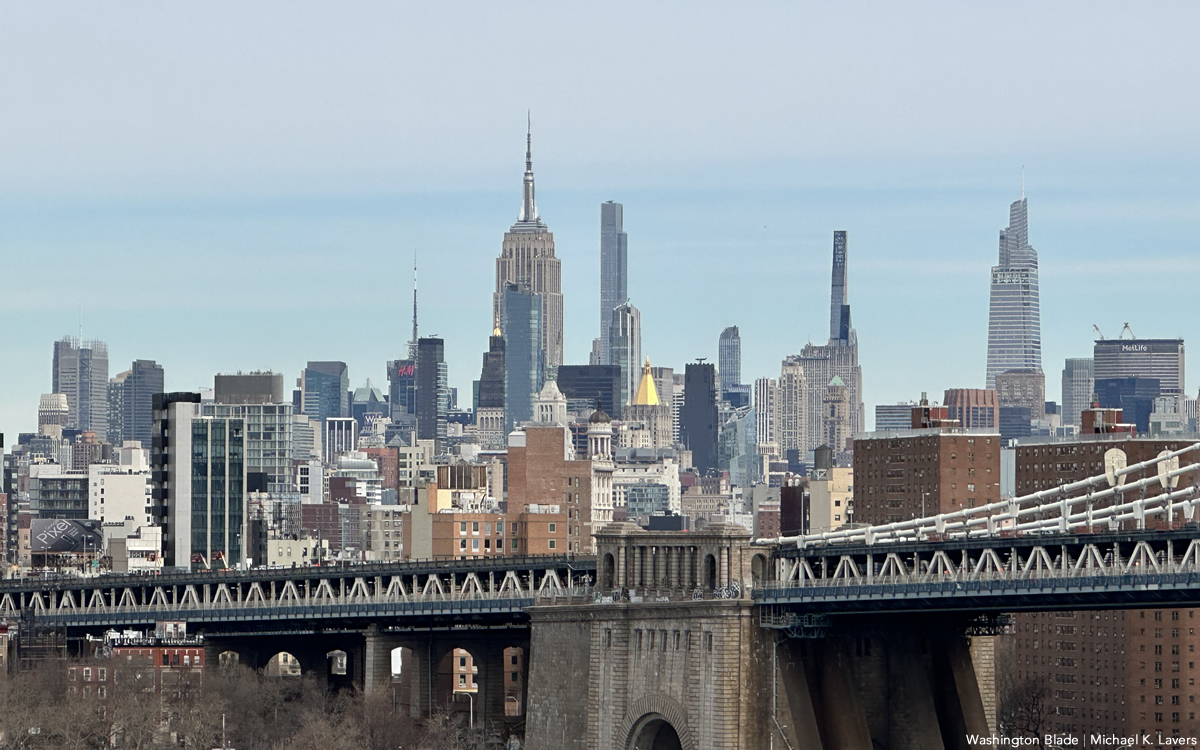
New York City lawmakers are pushing to repeal a decades-old prohibition on adult bathhouses, arguing the regulation was created during the height of the AIDS crisis and no longer reflects modern science or public health practices.
Erik Bottcher, the openly gay New York state senator who represents the 47th District that includes the Upper West Side, Chelsea, Hell’s Kitchen and portions of the West Village in Manhattan, is leading the charge to remove the decades-old ban. (Openly gay state Assemblymember Tony Simone has sponsored the repeal bill in the New York State Assembly.) Bottcher sat down with the Washington Blade to discuss why he is advocating for more bathhouses in New York City.
“This is simply about ensuring that our public health policy is in line with today’s science,” he told the Blade. “The prohibition on adult bathhouses was put into place in 1985 at the height of the the AIDS epidemic, when there was very little information, very little treatment options, few treatment options, and great deal of fear. Science has changed. Treatment has changed, and the laws need to change too.”
The proposed legislation would direct the New York State Department of Health to repeal the 1985 regulation and establish a new framework for regulating bathhouses.
“Municipalities around the country and all around the world allow for adult bathhouses. There’s no reason why New York City alone needs to maintain this outdated prohibition. Our bill orders the New York State Department of Health to strike the 1985 regulation and replace it with a regulated public health framework that’s grounded in science.”
Under the proposal, bathhouses would operate as licensed and regulated facilities subject to health and safety standards. Backers of the proposal say that framework could also give public health officials greater access to people who may otherwise be difficult to reach through traditional health care settings.
“What the Department of Health would do is work with public health experts and advocates to develop a regulatory framework that allows licensed regulated facilities to operate under clear health and safety standards — and under this — it would allow public health agencies to have greater opportunities to provide STI and HIV prevention resources, connect people to testing and treatment, conduct instructions, and address legitimate health concerns.”
Supporters of the repeal also argue banning bathhouses does not eliminate the sexual activity that takes place in them or elsewhere. Instead, they say, it pushes those activities into the shadows, where public health officials have fewer opportunities to provide life-saving services that include STI and HIV testing.
“This is also about a safer alternative than pushing activity into unregulated settings where there’s little opportunity for public health engagement because these activities are happening, but they’re happening in the shadows,” Bottcher continued. “We know that the best public health policy is to establish clear public safe public health guidelines that allow for public health intervention.”
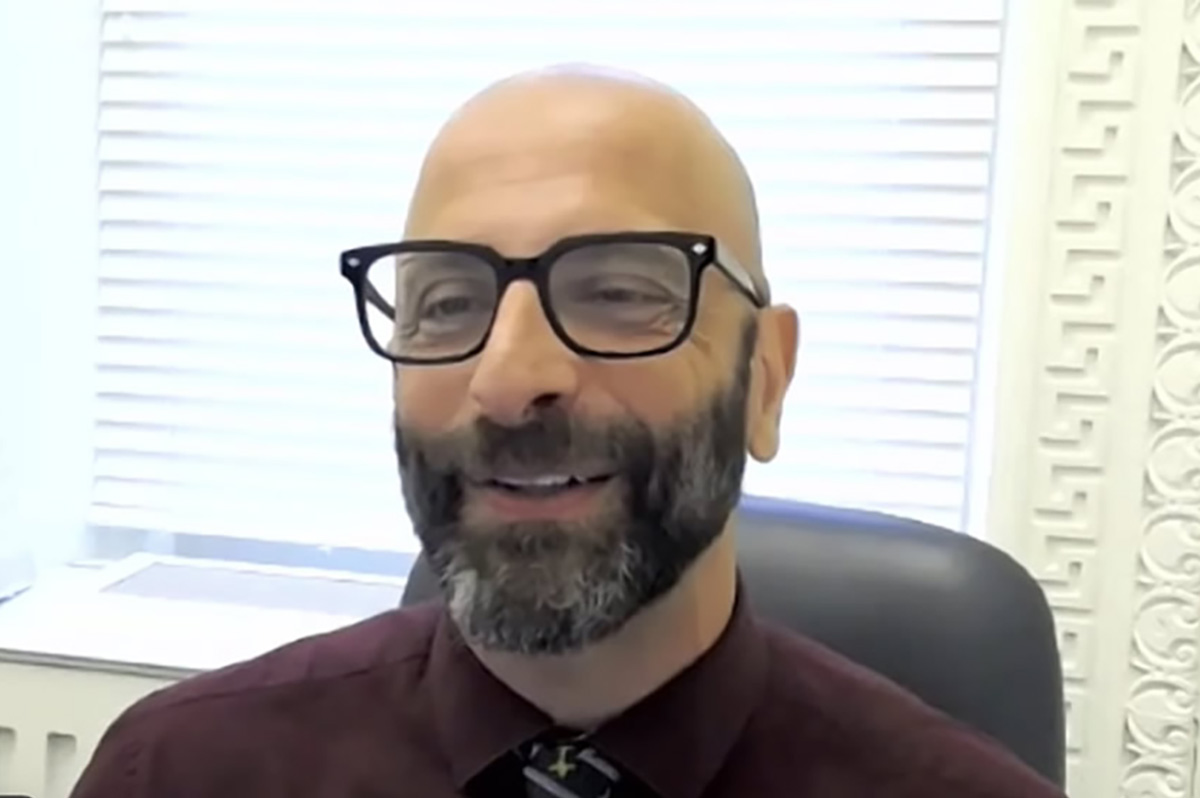
Demetre Daskalakis, a physician and longtime HIV prevention advocate who has worked to create sexual healthcare opportunities in bathhouses, also worked with Bottcher on the proposal.
Daskalakis was a high level Centers for Disease Control and Prevention employee until 2025, when he left federal health landscape after the Trump-Vance administration ousted then-CDC Director Susan Monarez. There he worked as director of the National Center for Immunization and Respiratory Diseases and was director of the Division of HIV Prevention at the National Center for HIV/AIDS, Viral Hepatitis, STD, and TB Prevention.
Daskalakis explained his experience has shown him the potential for these spaces to become points of contact for people who do not regularly access traditional health care.
“I’ve seen what happens when you push sex into the underground,” he said. “From my perspective, this is a great opportunity to be able to reach people who really will not come to normal clinical care and won’t go to normal routine places for testing or screening.”
“As a public health person, I look at it as a great opportunity,” added Daskalakis. “If there’s like regulation of those venues, and if there’s like a prevention plan that sort of sprouts in those places with really solid public health and clinical partners, I think it’s a great opportunity for public health good.”
Daskalakis said a regulated bathhouse could offer more than HIV and STI testing, potentially creating spaces where people could access prevention medications and other health services.
“The bottom line is if there is a good relationship between the government and the venues, we can develop spaces in the venues to actually deliver services,” he said. “It’s not just infectious disease services — I mean yes, you can do HIV testing, STI testing. You can provide doxypep and pre-exposure prophylaxis for people who are HIV negative and at risk for HIV.
“As an example, at Callen-Lorde Community Health Center (in New York City), where I’m the chief medical officer, we developed a prevention pack in a very low threshold way. We gave people enough doxypep and prep to get through Pride. You can also have Narcan and other things to reduce the risk of overdose.”
Daskalakis said that approach reflects what public health should be striving for: meeting the community where they are.
“If you have this sort of relationship with the government that’s not antagonistic, and the government, as New York is one to do, provides some regulatory oversight to these venues, I think what you’re going to have is a place that supports LGBTQ culture — which also which does include sexuality, and also creates a platform to be able to do like very solid prevention work.”
The public health landscape surrounding HIV has changed dramatically since the bathhouse regulation was adopted, Daskalakis said, pointing to advances in treatment and prevention.
“The bottom line is that HIV treatment and prevention have really converged. If you are someone living with HIV and you’re on HIV medicines and your viral load is undetectable, you don’t transmit HIV. That’s called undetectable is equal to untransmittable, or U = U. People who are on prep also have very low risk of acquiring HIV, and so you know the world is very different,” he said.
“Back in the 80s, when there was no way to impact transmission of HIV because we didn’t have effective ways to prevent it — or didn’t know very much about it at that point. It’s a very different world where we know a lot about HIV and have a lot of tools to be able to prevent transmission. Same with STIs,” added Daskalakis. “If you create a holistic strategy for prevention that is sex positive and aligned to these venues, you’re going to prevent HIV and STIs. Period.”
For supporters of the legislation, that public health argument is central to the effort to repeal the ban. Bottcher also sees the proposal as a way to restore LGBTQ community spaces at a time when many queer venues have disappeared and social interaction increasingly takes place online.
“In this era of social isolation created by social media and streaming services, people are desperate for third spaces,” Bottcher said. “Places for people to come together in person, to be together in person. That’s what this would help provide.”
Daskalakis echoed Bottcher’s point that bathhouses could transform from underground, tabooed spaces into venues that combine sexual health services with broader LGBTQ culture.
“When you make them illegal, they become seedy and dark. When you make them something that is allowed, they actually then become sites that may have sex on premises but also support other sorts of cultural things, and in a universe where people are trying to make LGBT folks seem invisible, creating a safe space for them is exactly what we need right now.”
That community-space argument is also tied to health disparities, Bottcher said, arguing that greater access to health education and prevention services could help people who are less likely to seek care through traditional medical settings.
“Creating opportunities for in-person public health education, prevention, treatment that will help improve health outcomes when you push people into less safe settings without any opportunities for education, prevention tools, or treatment. That’s when we see these disparities, these health disparities grow. So it’s very important that we be laser focused on opportunities to address these disparities and reduce them.”
He continued, explaining the proposed change is ultimately about updating public health policy as medical science evolves, just as other practices are updated when new information comes out.
“This is a matter of an outdated public health regulation and the government has a responsibility to continually revisit its public health regulation and ensure that they’re in line with modern day science,” Bottcher said. “Science and healthcare are continually evolving, and the HIV/AIDS prevention and treatment landscape has changed tremendously in the last few years. Our public health regulations need to keep pace with science.”
For LGBTQ New Yorkers who lived through the AIDS crisis, however, changing the policy could carry a different meaning.
Bottcher says the experiences of those who lived through the epidemic — one that killed nearly 300,000 gay men since the 1980s — should inform how any new system is implemented, rather than being dismissed.
“These are in order to help prevent the spread of HIV and AIDS and other STIs,” Bottcher said. “We have to bring people engaging in these activities out of the shadows and into safe settings that provide the opportunity for public health entities to engage with education, treatment, prevention — that’s what this would do.”
Daskalakis said those concerns should be approached through what he described as trauma-informed care.
“My response is that of trauma-informed care,” Daskalakis said. “We have totally been through it, but we need to sort of move past the trauma and realize that the science has changed. I’s not it’s not the ’80s anymore, but we definitely need to look at those folks who have gone through the experience (of the HIV/AIDS crisis) to make sure that what we’re building, from a public health perspective, are effective programs.”
“There’s a great opportunity to learn from folks with experience rather than to alienate them,” he added.
Bottcher also pointed out this policy revision and effort to bring regulations in line with modern science is not only happening in New York. Multiple other cities across the U.S. have moved away from bathhouse prohibitions.
“Minneapolis just passed their ordinance in June,” he said. “San Francisco, despite the fact that they repealed their prohibition some years ago, they are still working to change the policy … However, around the country, even in red states, they have bathhouses … and they haven’t presented a detriment to public health in any way.”
The proposed change could also revive a part of New York’s LGBTQ cultural history, Bottcher said.
“Bathhouses were a big part of gay culture for decades. We all know the legendary stories of Bette Midler and Barry Manilow performing at the Continental Baths. I envision a resurgence of bathhouse culture that includes things like live music, arts, and entertainment. So it’s exciting to think about.”
And if that resurgence happens, Bottcher already has a dream performer in mind to be the first to take the stage.
“Oh, that’s such a good question … Cher.”
Daskalakis picked a similarly essential female singer of gay culture that he’d like to see in the bathhouses of today.
“I feel like my list could be so long, but I think that would be a great place for Madonna.”
The debate over New York’s bathhouse regulation ultimately reflects a broader question about how public health policy should respond as science, medicine, and LGBTQ communities change.
For Bottcher, regulation, rather than prohibition, would give health officials more opportunities to provide prevention and treatment while allowing LGBTQ people to gather openly.
For Daskalakis, the central lesson from his extensive healthcare work in bathhouses is that pushing sexual activity underground will make public health outreach more difficult — the opposite of what the government and healthcare providers should be doing.
“The opportunity to create safe spaces means that we’ll have more opportunities to reach people, not just for public health, but for so many other things … The strategy of banning things that are natural really doesn’t tend to help you very much. It ends up creating misalignment between the community and policymakers.”
U.S. Military/Pentagon
Hegseth uses transphobic slur while campaigning for Iowa congressman
Defense Secretary was speaking in support of Republican Zach Nunn

Defense Secretary Pete Hegseth on Monday used an anti-transgender slur while campaigning for U.S. Rep. Zach Nunn (R-Iowa), drawing attention to the Trump-Vance administration’s ongoing efforts to restrict trans people from serving in the military.
“At the Department of War, we do training, not t***nies,” Hegseth said, according to the Iowa Capital Dispatch, which first reported the remarks.
Hegseth made the comment at JR’s SouthPork Ranch at the Iowa State Fair, where he joined Nunn for a rally. The remark came as Hegseth discussed his priorities for the military and argued that the department’s focus should be on military readiness rather than issues of race or gender.
In the same speech, Hegseth claimed that the military operates without regard to race or gender.
“Training, lethality, accountability, discipline, readiness — the bedrock of what it means to be an American warrior — is the only focus of our department,” Hegseth said. “Colorblind, gender-neutral, merit-based. That’s it.”
Hegseth’s remarks come as the Trump-Vance administration continues its efforts to restrict trans people from serving in the military.
Since President Donald Trump returned to the White House, his administration has moved to remove trans service members from the military while also taking steps to prevent trans people from joining.
Trump signed “Prioritizing Military Excellence and Readiness” in January 2025, which attempts to bars trans individuals from serving or enlisting in the U.S. military, citing “military readiness” as the reason, despite there being no factual basis for the ban. The policy has been challenged by LGBTQ advocates and military service members, who argue there is no evidence that trans service members undermine military readiness.
Earlier this year, Hegseth made headlines again over the administration’s contradictory approach to hormone therapy, as the military moved to restrict gender-affirming hormone treatment for trans service members while encouraging cisgender military members to receive hormone therapy for “low T,” or testosterone.
The administration’s policy has faced a series of legal challenges from trans service members and advocacy groups.
In June, a federal appeals court panel ruled the administration could not discharge the trans service members who brought one of the lawsuits challenging the ban while their case continues, providing a moment of relief amid the administration’s ongoing efforts to restrict trans military service. The Trump-Vance administration has asked the U.S. Supreme Court to review that ruling and, in the meantime, keep it from taking effect.
The Washington Blade reached out to the Pentagon for comment on Hegseth’s use of the slur, but the department did not push back on his choice of words.
“We have nothing further to add beyond the secretary’s remarks,” the statement read.

Trump-Vance administration’s LGBTQ brain drain: what you need to know

NYC lawmakers seek to repeal bathhouse ban

Black Educated Lesbians: A movement rooted in community

Hegseth uses transphobic slur while campaigning for Iowa congressman

What ‘Queer Eye for the Straight Guy’ can still teach us

‘Maddie’s Secret’ defies campy expectations

PHOTOS: Nellie’s Drag Brunch

Remembering Barbara ‘Boo’ Price, a pioneering force in women’s music

Winsome Earle-Sears ‘Life and Marriage Tour’ to include Northern Va. stops