Arts & Entertainment
Blond ambition
National ‘Evita’ touring production sturdy, serviceable
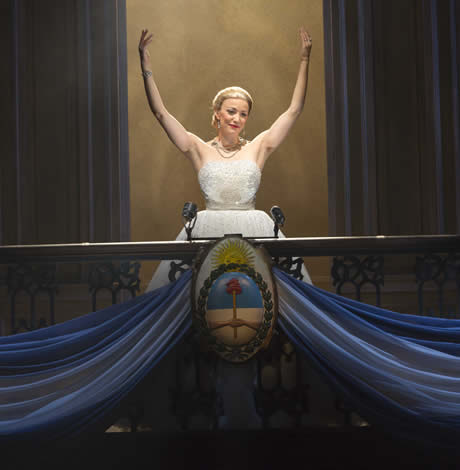
Caroline Bowman in ‘Evita.’ (Photo by Richard Termine; courtesy Kennedy Center)
‘Evita’
Through Oct. 19
The John F. Kennedy Center for the Performing Arts
2700 F St. NW
$39-125
Kennedy-center.org
Since its London world premiere in 1978 and subsequent global success, Andrew Lloyd Weber’s “Evita” has been produced ad infinitum.
And whether it’s Broadway’s Patti LuPone or Madonna on the big screen, the woman in the title role ultimately determines each version’s success. Playing Argentina’s controversial first lady who slept her way to power and position and died young isn’t easy — the part is vocally challenging and requires more than a modicum of charisma.
In the national tour of the 2012 Broadway revival now at the Kennedy Center Opera House, Caroline Bowman takes on the part. As the young Eva Duarte, Bowman misses the grit and energy of the provincial teenage dancehall girl — she might as well be playing the naïve ingénue in a comedy of manners. But it’s her turn as the slightly older and blonder Eva in which Bowman excels, skillfully conveying the outsized ambition and complexities churning behind Eva’s calculated façade.
In fact, neither Bowman’s performance nor the entire production staged by Michael Grandage really take off until Eva bleaches her hair.
Told in flashbacks, the sung-through pop opera begins and ends with Eva’s funeral. Young Eva and the musical fable’s narrator Che (Max Quinlan) emerge from a shadowy gathering of mourners and the story unfolds. In fast moving scenes, Eva climbs from poor, illegitimately born provincial girl to radio actress to girlfriend and later wife of military officer and politico Juan Perón (Sean MacLaughlin). Yes, in pursuit of fame and fortune she changes men like underwear but all that stops with Perón. In him, Eva finds her ticket to the big time.
Despised by the bourgeoisie and the military for her low birth and undue influence her husband, Eva finds an adoring power base in the working classes. “I am you,” she sings to them. As first lady, she gains popularity by funding numerous charities.
Her ascent is tracked musically with “Buenos Aires,” “High Flying, Adored” and, most memorably “Don’t Cry for Me Argentina,” which she sings to the crowds from the presidential residence’s balcony. Diamond like in a shimmering strapless ball gown, Eva’s beatification is complete. Not one to miss an opportunity, Perón puts his wife’s charisma to use and sends her on a European goodwill tour. Her Rainbow tour is cut short by the cancer that will soon kill her at 33 in 1952.
Set and costume designer Christopher Oram envisions a gloomy Buenos Aires of soaring colonnades, tall arched windows and heavy doors. His costumes are painstakingly period (‘30s and ‘40s). Most striking are Eva’s balcony scene gown and Dior-inspired traveling suits.
Throughout the show, choreographer Rob Ashford cleverly employs tango in scenes involving mourners, lovers and friends. He even partners soldiers in a more combative variation of the dance.
Lloyd Weber’s score is gorgeously sung by the three principals and Christopher Johnstone as Magaldi, the schmaltzy tango singer who reluctantly brings teenage Eva to Buenos Aires.
Without his trademark beret, Quinlan’s Che is less politicized. He possesses the irony but lacks the fire of a revolutionary. As quietly ambitious Perón, McLaughlin (whom local audiences will remember from Signature Theatre) is terrific. He’s a seductive presence and makes a believable love match for Bowman’s Eva.
Unfortunately an otherwise strong and energetic effort is marred by some audio problems. On press night, Tim Rice’s lyrics were difficult to decipher. Those familiar with the songbook fared best.
Still, this “Evita” is a production well worth seeing.


Celebrity News
Madonna nominated for 11 MTV VMAs
Musical icon has been nominated in every decade of her career
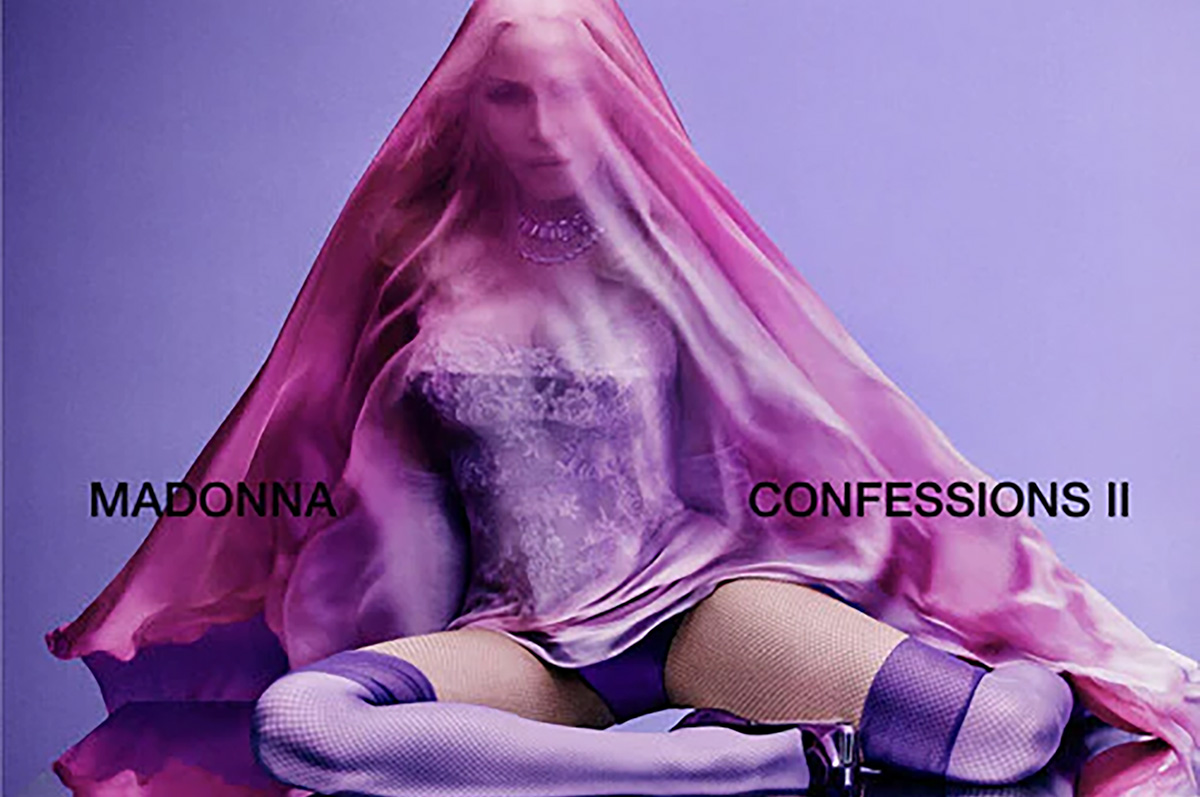
While Michael Jackson is the uncontested King of Pop, Madonna can easily be considered its queen. She has managed to maintain relevancy throughout the decades and borrowed from different genres and even cultures. There was Puerto Rican freestyle-inspired early Madonna, the “Evita” moment, Madonna as a guru with “Ray of Light,” and more.
Regardless of how you feel about her acting, she has consistently performed hits for films, garnering her multiple awards.
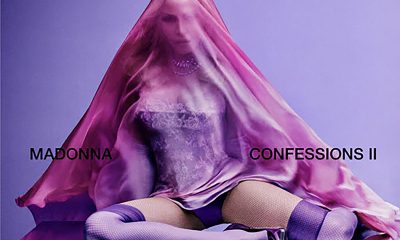
Her follow-up to the wildly popular “Confessions on a Dance Floor,” “Confessions II” has managed to snag her 11 VMA nominations, more than any artist this year. This brings her total up to 80 nominations, and whatever she takes home will add to her 20 wins.
Madonna’s relationship with the VMAs has consistently included history-defining moments. In 1984, she performed at the first VMA ceremony dressed like a bride, emerging from a cake singing “Like a Virgin.” It was provocative and, of course, got conservatives into a tizzy.
One of her most memorable performances was her 1990 performance of “Vogue” in full Marie Antoinette regalia, which is forever etched in history. She also sang “Hollywood” in 2003 and famously kissed both Britney Spears and Christina Aguilera. She even eulogized Michael Jackson at the 2009 ceremony.
Fans have long awaited a follow-up to this monumental album. Despite her long career, “Confessions” marked her second Grammy for music achievement. Her follow-up album has delighted the gays and gone viral on social media with LGBTQ folks reigniting their love of Madonna with “I Feel So Free.” She is giving us what we need, much like Lady Gaga dropping “Chromatica” post-pandemic.
Since the album has been released, Madonna united with pop royalty, Kylie Minogue, on a remix of her song “Love Sensation.” The two appeared together on the stage for her set at World Pride in Amsterdam.
(Washington Blade video by Michael K. Lavers)
Rather than releasing a plain old music video, she released a film which strings together multiple celebrity appearances including collaborator Sabrina Carpenter, Benedict Cumberbatch, her longtime friend Debi Mazar, Honey Dijon, Kate Moss, Game of Thrones star Gwendoline Christie, and even her daughter Lourdes Leon. While the state of her biopic is in limbo, Julia Garner appeared in Madonna drag for the video. This video is the lion’s share of her nominations and could lead to an epic performance at the ceremony.
Time will tell how she will top these history-defining moments, but one thing is for sure … it will be a show. This year’s nominations include:
- Artist of the Year
- Video of the Year (CONFESSIONS II – THE FILM)
- Song of the Year (Bring Your Love with Sabrina Carpenter)
- Best Collaboration (Madonna & Sabrina Carpenter)
- Best Dance (CONFESSIONS II – THE FILM)
- Best Choreography (CONFESSIONS II – THE FILM)
- Best Editing (CONFESSIONS II – THE FILM)
- Best Visual Effects (CONFESSIONS II – THE FILM)
- Best Direction (CONFESSIONS II – THE FILM)
- Best Art Direction (CONFESSIONS II – THE FILM)
- Best Cinematography (CONFESSIONS II – THE FILM)
You can vote for Madonna on MTV’s website and find out how many awards she takes home and see her soon-to-be-legendary performance at the 2026 VMAs on Sunday, Sept. 27, on CBS, MTV, and Paramount+.

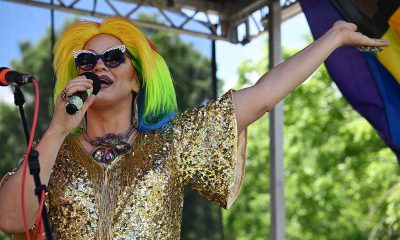
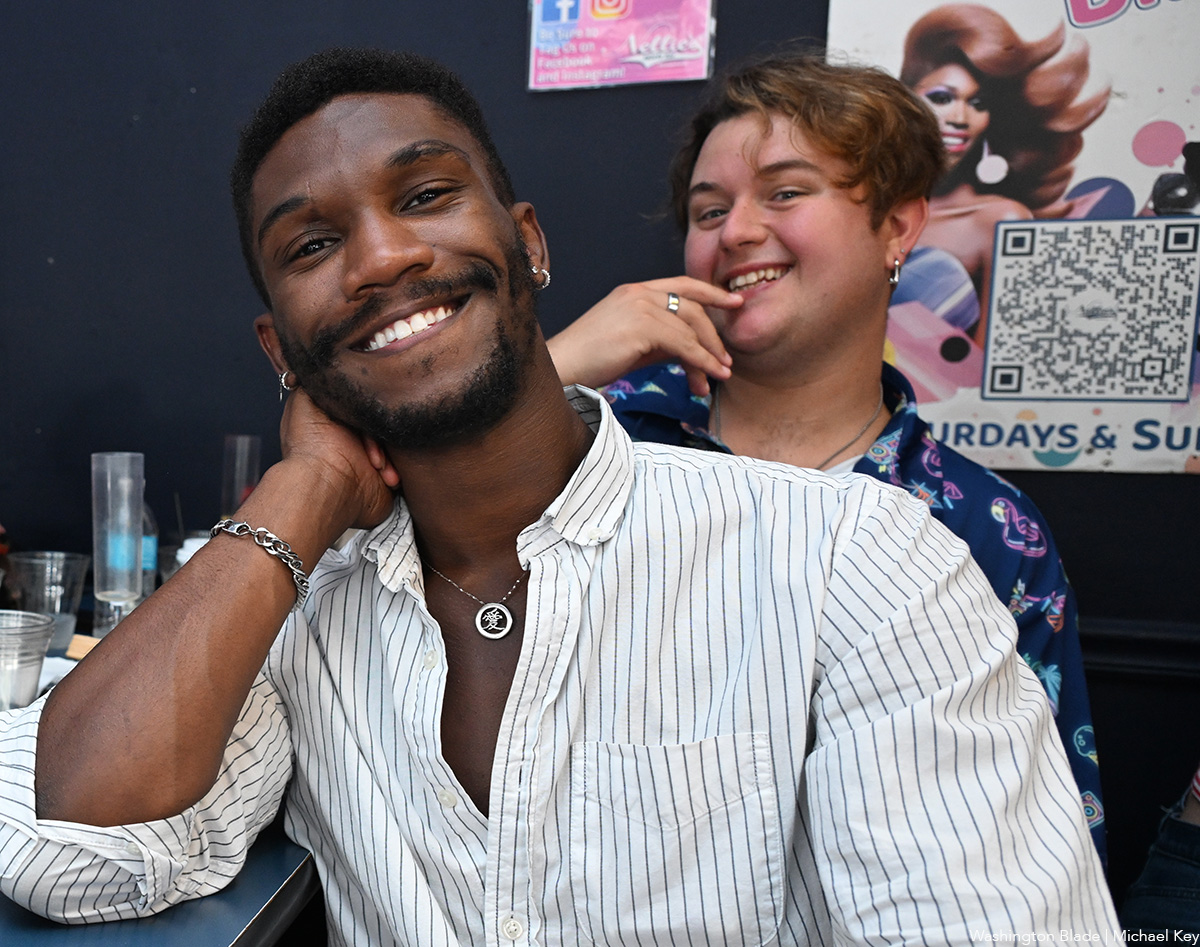
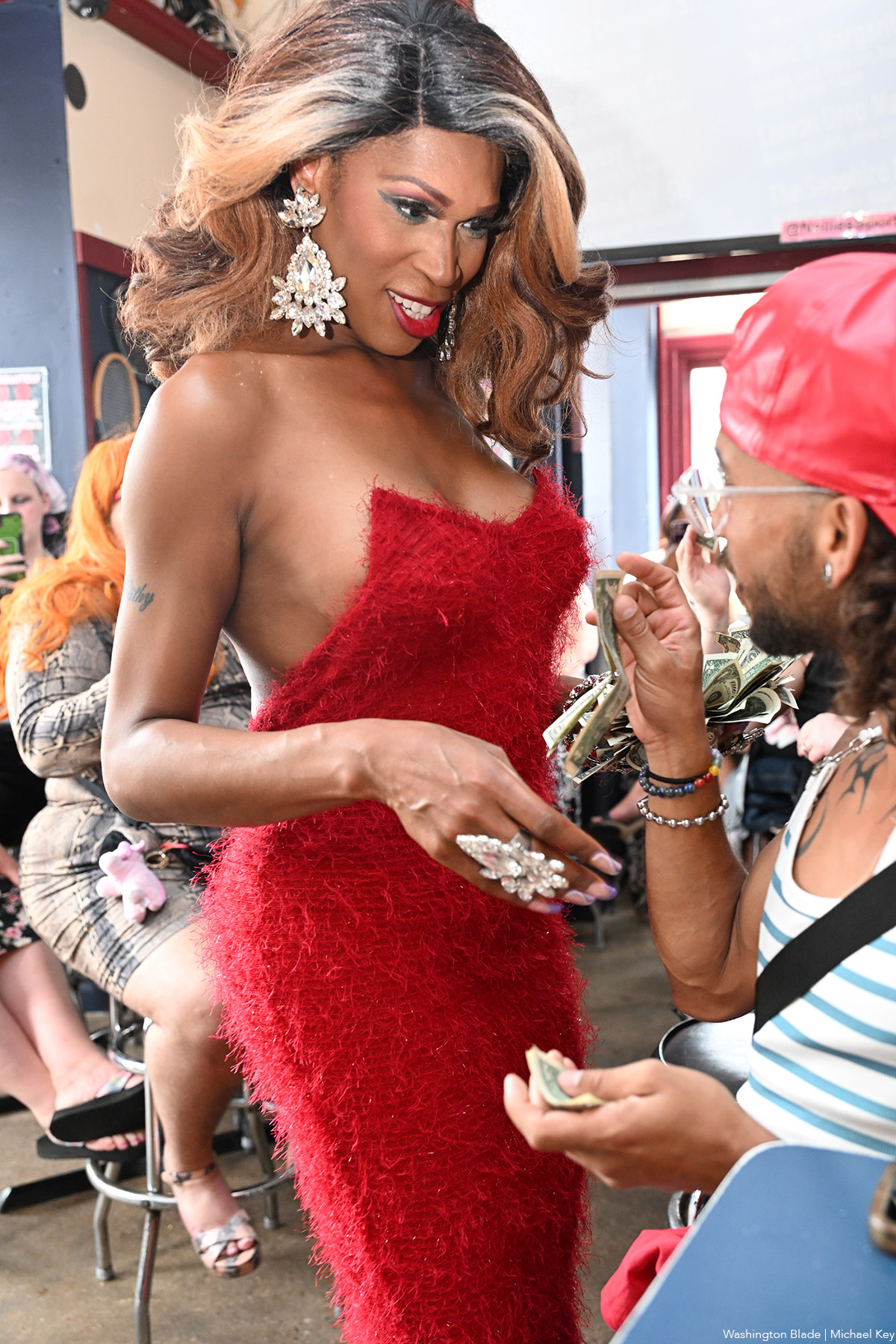
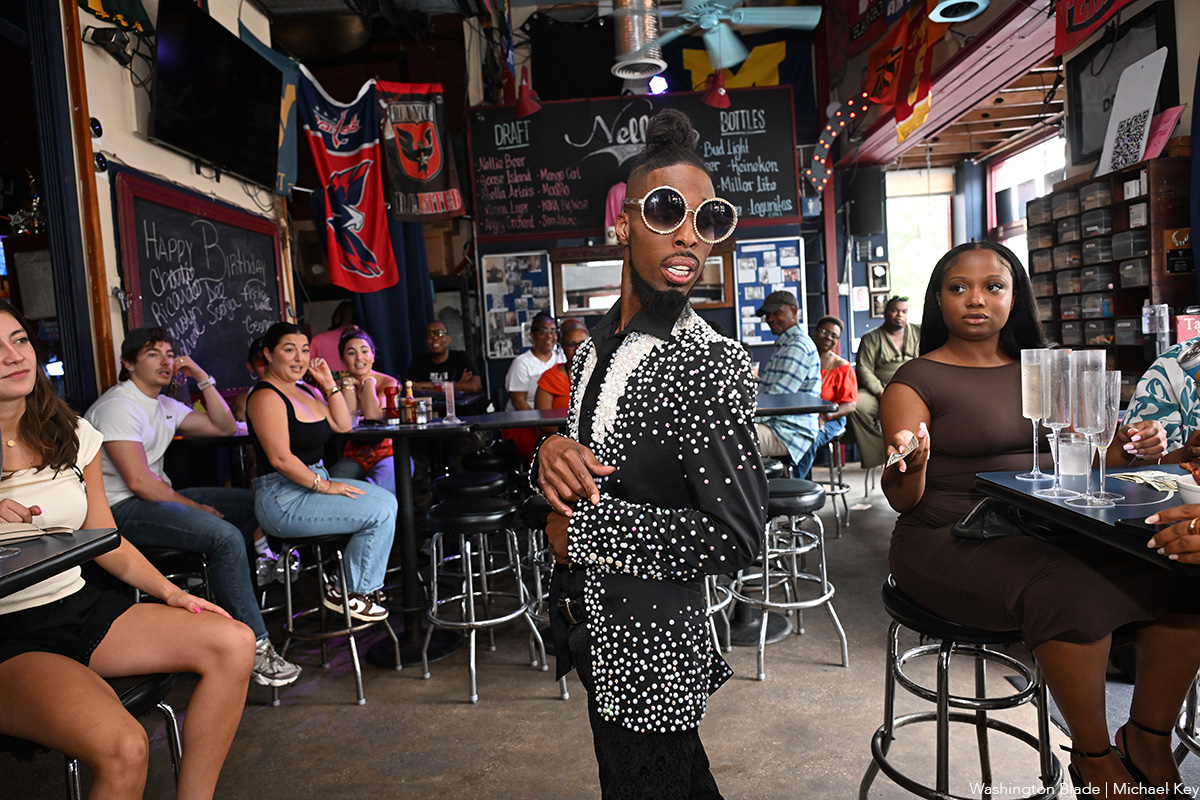
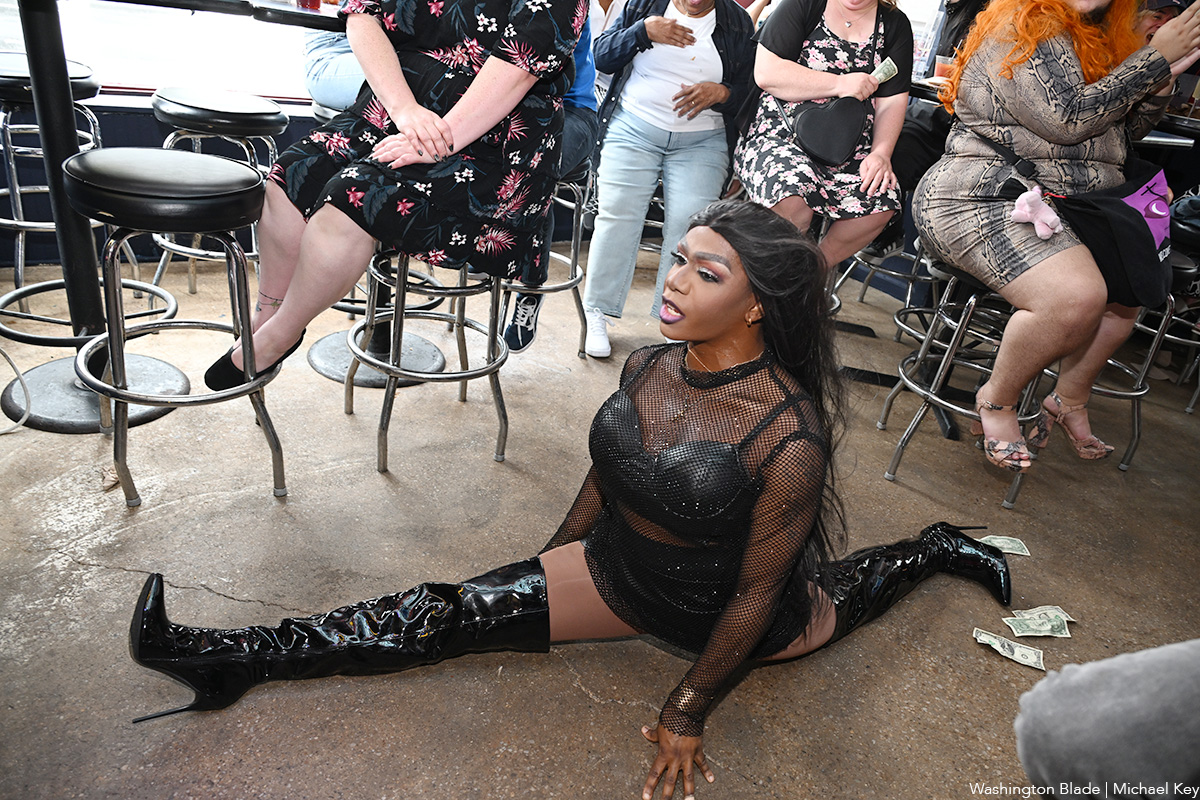
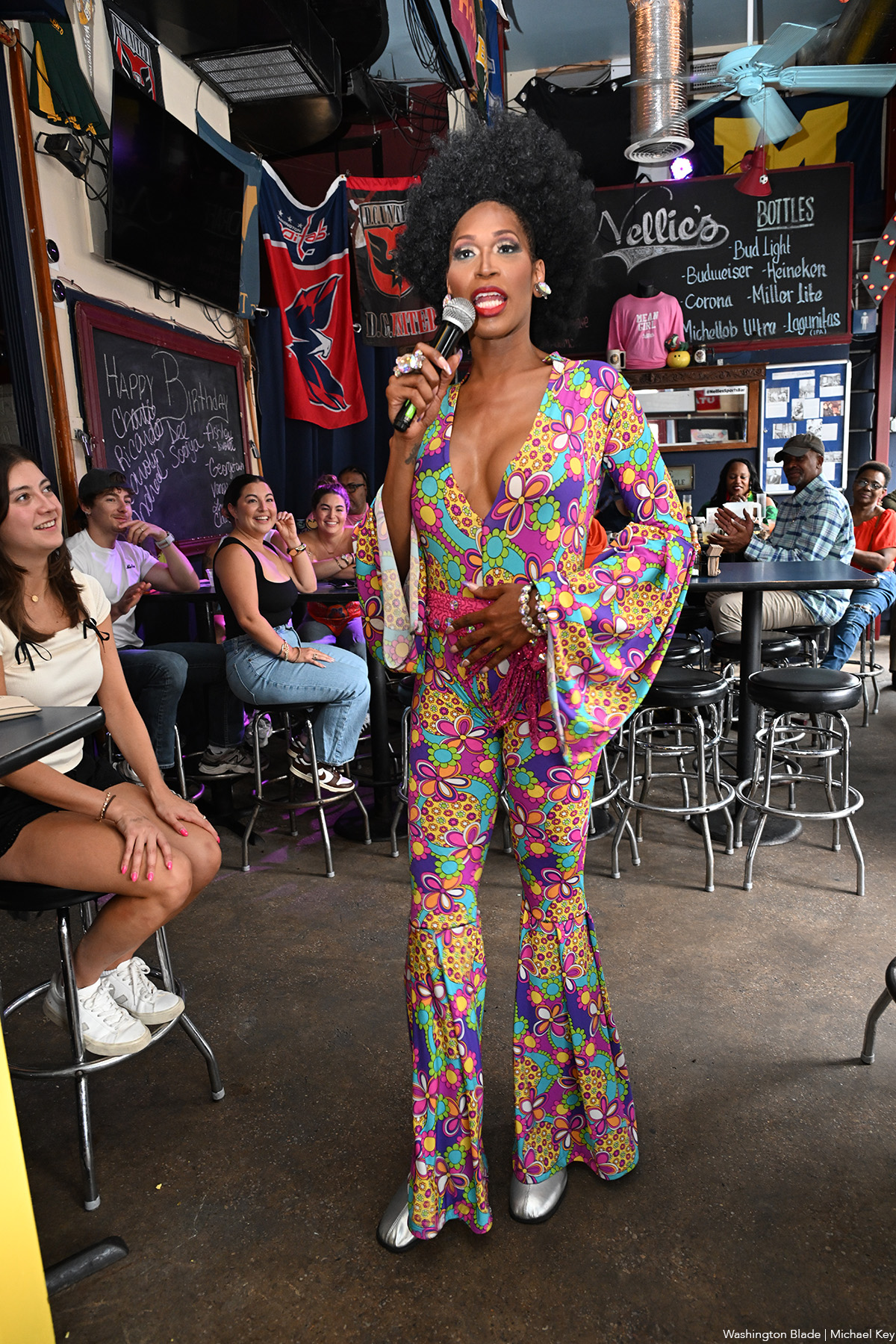
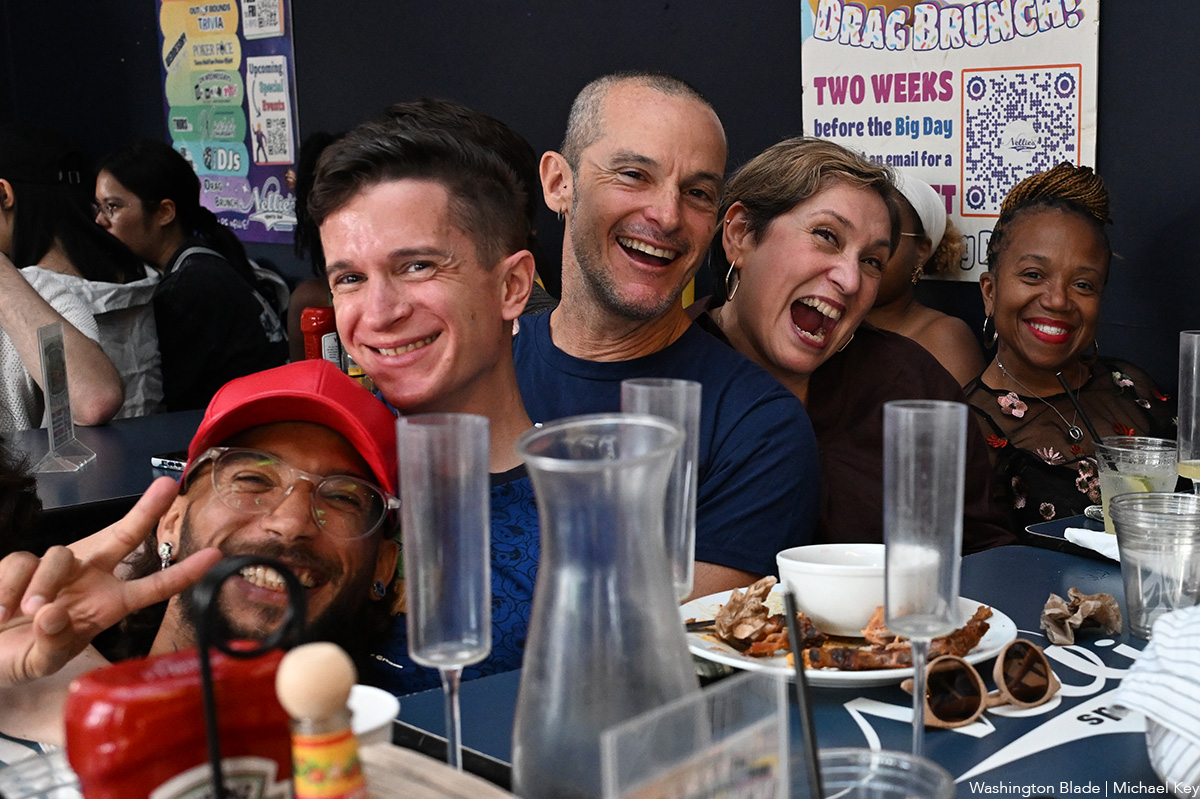
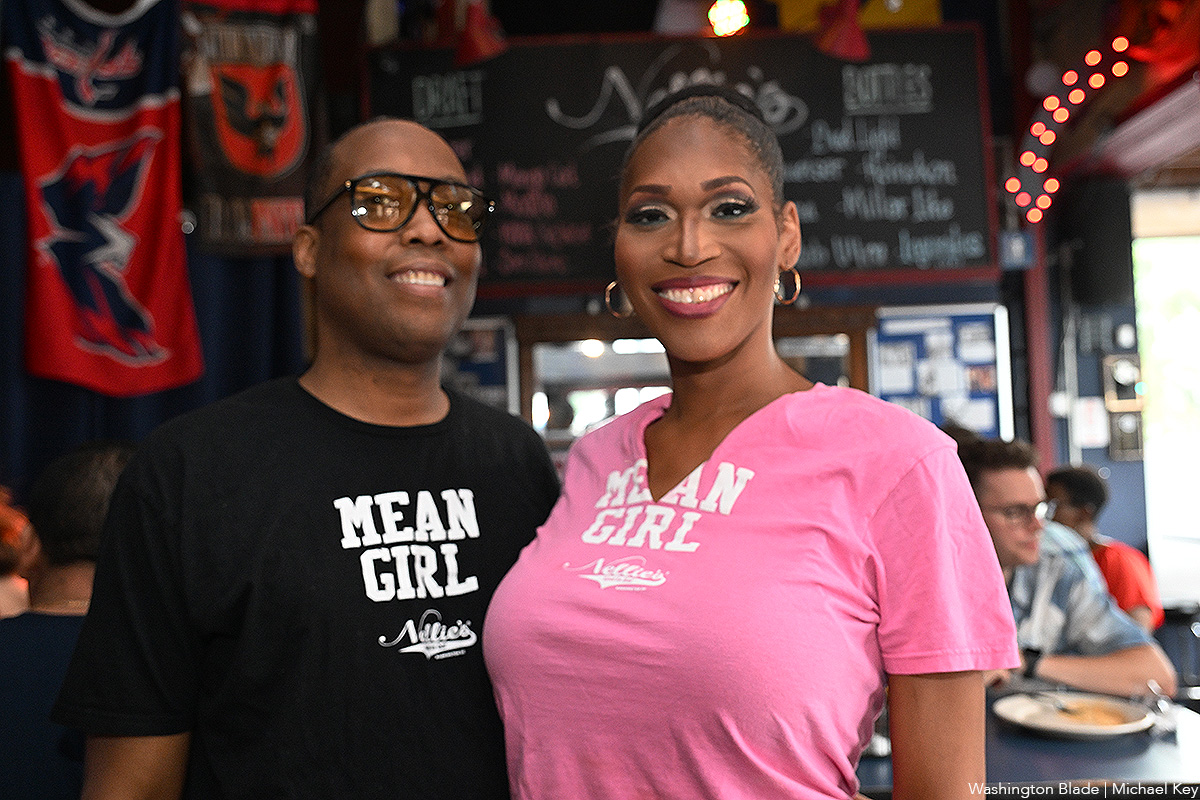
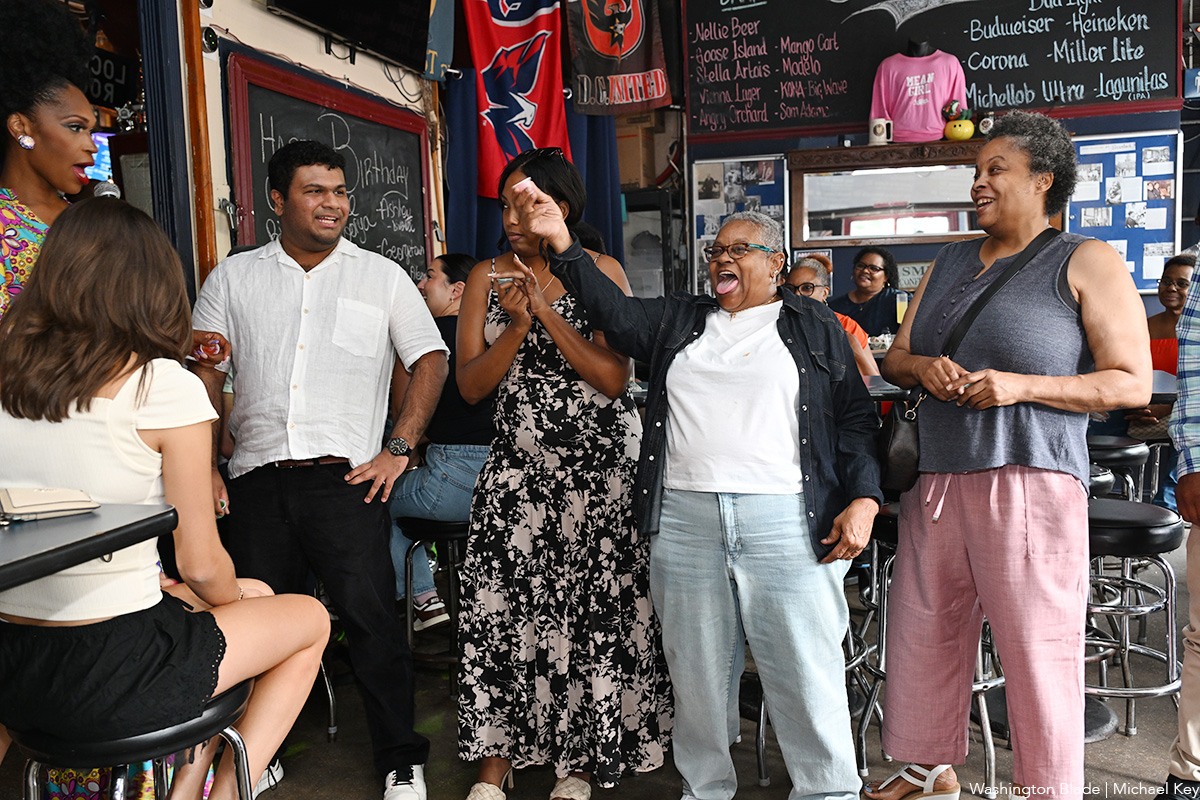
Deja Diamond hosted Nellie’s Drag Brunch on Sunday at Nellie’s Sports Bar.
(Washington Blade photos by Michael Key)






Movies
‘Maddie’s Secret’ defies campy expectations
An over-the-top, old-school melodrama combined with modern satire
Sometimes, when you think you know what to expect from a movie, it doesn’t match those expectations. What do you do then?
I’m not talking about the unmet expectations of fans, like those who complain that Kubrick’s “The Shining” made sweeping changes from Stephen King’s novel, or start a social media campaign trashing the latest “Star Wars” or “Marvel” film because of a plot twist they don’t like. Those are complaints about content, about a story not going the way it is “supposed” to go.
I’m referring to the expectations we have when we walk into a movie thinking that it’s going to have a particular tone, a specific style, a familiar formula – essentially that it is going to easily fit into a comfortable box, and stay there. What happens when it doesn’t?
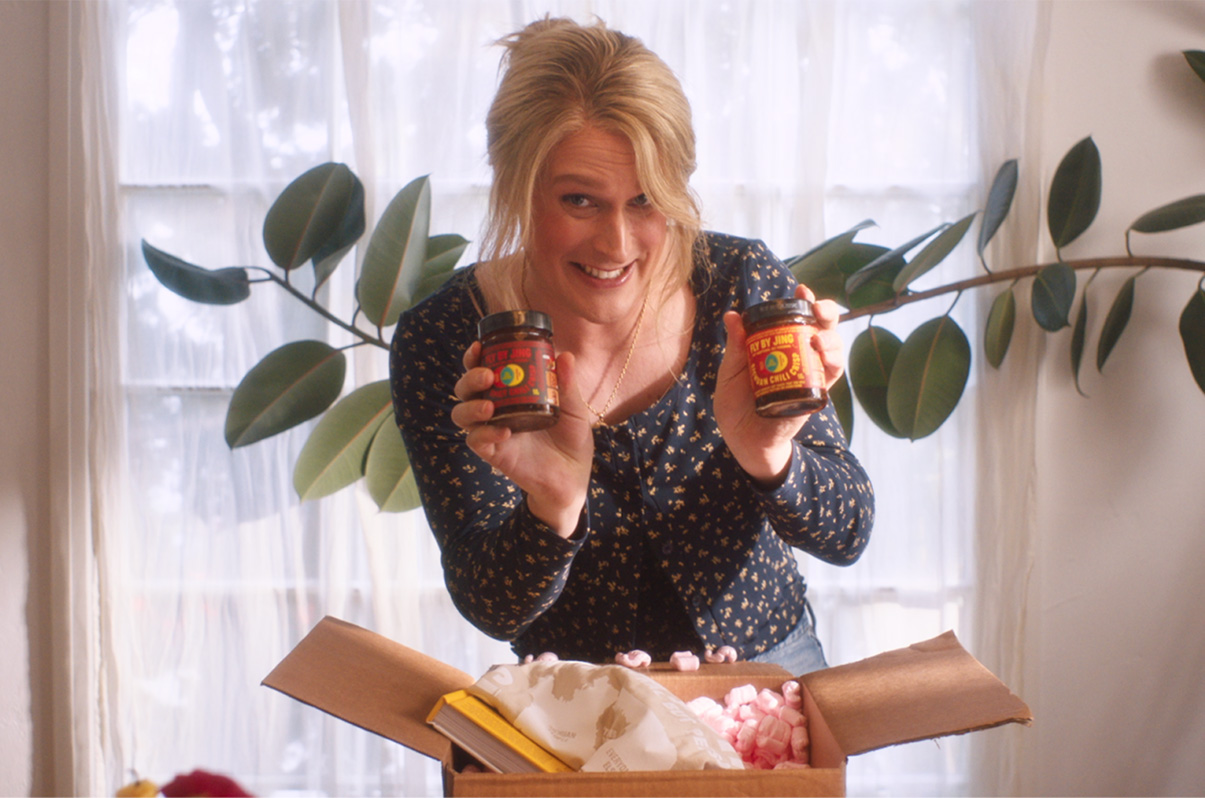
That’s the question I found myself asking as I watched “Maddie’s Secret,” the directorial debut from gay actor/comedian John Early, which is now screening in a limited theatrical release. It’s the story of a humble housewife whose doting husband persuades her to turn her love of cooking into a career as a virally popular “food influencer,” only to find that her sudden success triggers traumatic feelings from her childhood; clearly a contemporized hybrid of the melodramatic “woman’s pictures” of Old Hollywood and the “Afterschool Special” style cautionary dramas of ‘70s/’80s TV, it has all the earmarks of being an exercise in “camp” – especially since Early himself stars as Maddie.
To put it plainly, it’s an over-the-top old-school melodrama combined with modern-day satire of online social media fame, with a gay man in a dress playing the lead. What could be campier than that?
And it is campy, make no mistake. Yet at the same time, somehow, it isn’t. From its opening scene (which shows us Maddie as she jogs to her dishwashing job at the headquarters of an LA test kitchen/content studio named “Gourmaybe”), we expect things to get wacky. The ingredients are definitely present for it, like her aggressively butch co-worker/BFF Deena (Kate Berlant), who is clearly nursing a serious “girl crush”; bitchy TikTok star Emily (Claudia O’Doherty), who demeans her and ridicules her ambitions of being a chef; and boss Zach (Connor O’Malley), a womanizing corporate “bro” who enthusiastically embraces all the toxic traits we associate with that description.
As the story opens up beyond her workplace, there are more elements that feel ripe for the kind of histrionic humor we might expect from a film by John Waters, or the stylish old-school parody of Charles Busch, or even the radicalized sexual transgression of Bruce La Bruce: Maddie’s adorably bearish husband Jake (Eric Rahill) could be made into a goofy caricature with a food fetish, and her estranged, abusive mother Beverlee (Kristen Johnston in a deliciously grotesque performance) is easily monstrous enough to be at the campy center of any “hag horror” from the ‘60s.
And when we finally discover her “secret” (spoiler alert: it’s an eating disorder that returns when the pressures of being a popular social media chef bring up old feelings about her relationship with food), it’s easy to imagine a different filmmaker taking the whole thing in a thoroughly savage direction; the potential for tasteless, excessive, and deliberately juvenile comedy might be limitless, in the hands of a director unafraid of being branded “offensive.”
It’s hard not to see all these possibilities on hand as we watch Early’s film – which he also wrote – and (for myself, anyway) hard not to hope they all play out to maximum outrageous effect.
They don’t. Instead, “Maggie’s Secret” does something so unexpected that it feels, at first, like a mistake: it decides to play things straight.
It’s still a comedy, make no mistake, but it’s not the kind of comedy we think it’s going to be. It doesn’t go for over-the-top anarchy; it doesn’t go for the bitch-slapping catfight between rival divas, or for the running parade of filthy double-entendres, or for the absurd “gross-out” humor that might have emerged from its scenes of binge-and-purge overeating. Well, okay, maybe it does go for that last one, a little bit.
What all this comes down to, perhaps, is that the film gets its laughs – and there are quite a lot of them – without making fun of itself or, more importantly, its characters. The comedy here is built into the story; it comes from its send-up of social media influencers, corporate content creation, media tie-ins, and all the other interlocked microcosms of our “new, now, next” digital culture; it comes from the foibles and fumbles of its characters as they pursue their objectives in the story, from the qualities and quirks of their personalities, from their simply being funny because they feel like being funny; and yes, it sometimes comes from the obvious cliches of form that we recognize, the plot formulas and sudden revelations and shocking twists that have emerged time and time again in these kinds of domestic melodramas, but it does so good-naturedly, in a way that feels like laughing “with” the movie than laughing “at” it.
It also never diminishes or ridicules the seriousness of Maddie’s eating disorder, nor the experiences that come for her when she (spoiler alert, again) ends up going into an inpatient facility to be treated for it; though these later scenes come populated with their own set of stereotypical characters, ready to be exploited, the movie may poke gentle fun, but it humanizes them, too, helping build the film toward an emotional climax that leaves us with the kind of satisfying uncertainty we don’t quite expect from a movie like this one.
Most significantly, perhaps, it never gets its laughs out of the fact that Maddie is being played by a man – and it’s this that makes Early’s film feel more profound than we expect it to be. It’s not a “drag” movie, or a cross-dressing comedy, or anything to do with Maddie’s gender at all. She is a woman, presented without exaggeration or irony, and she just happens to be portrayed by a male actor instead of a female one. There’s no joke involved, just an excellent performance.
This is an apt approach, considering that Early cites Waters’ 1974 “Female Trouble” as his inspiration for “Maddie’s Secret.” Though he sets aside the extremes of that classic in favor of nuance and kindness, he takes his cue from its star – the incomparable Divine, who never called himself a drag queen but considered himself an actor playing a part. Early does the same, and it makes his film into a kind of full-circle moment in queer “underground” cinema (if a premiere at the 2025 Toronto International Film Festival, where “Maddie’s Secret” screened to enthusiastic response, can be called “underground”) which pays homage to the legacy of a past icon while picking up the mantle and carrying it in a new – and unexpected – direction.
That’s the thing about expectations: sometimes they are left unfulfilled – and in answer to my own question, as I watched this uniquely winning queer indie gem, what happens just might be something wonderful.

Madonna nominated for 11 MTV VMAs

White House targets gender-affirming care funding, states fight back

Winsome Earle-Sears ‘Life and Marriage Tour’ to include Northern Va. stops

Russian LGBTQ rights group to shut down