National
Another Black man found dead in Ed Buck’s WeHo apartment
Raises questions and begs for clarity
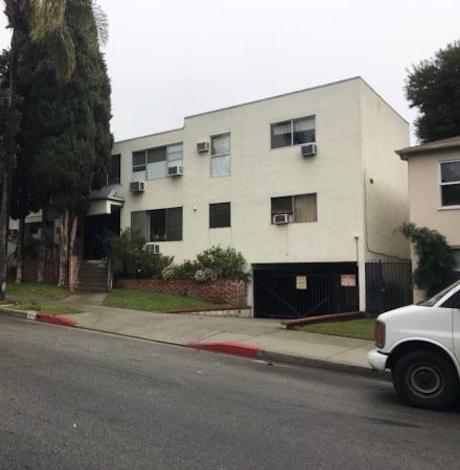
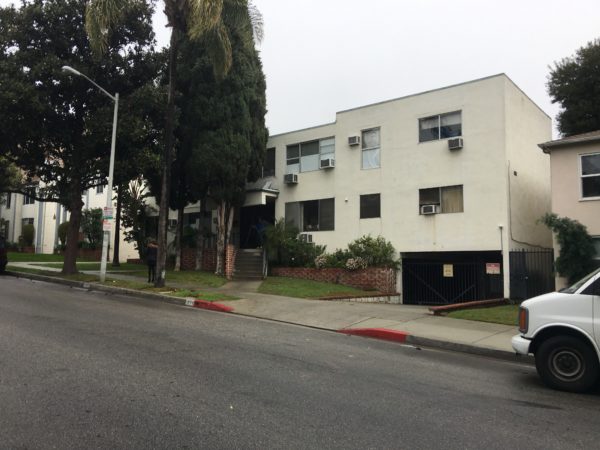
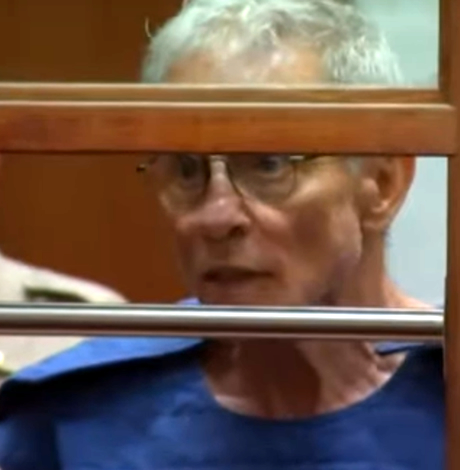
When the news first hit early Monday morning, it sounded tragically familiar and frightening: a source alerted a Los Angeles Blade freelancer that Los Angeles County Sheriff’s Homicide investigators, along with Medical Examiner personnel from the County Coroner’s office, were on the scene at 1234 N. Laurel Ave. in West Hollywood investigating the death of a young black male.
That was Ed Buck’s apartment, site of the apparent overdose death on July 27, 2017 of Gemmel Moore, a 26-year old Black male escort who had been a frequent visitor to Buck’s apartment and, through his discovered journal, posthumously claimed Buck hooked him on crystal meth as part of a sexual predilection.
“It is suspicious that this has happened twice now,” L.A. County Sheriff’s Lt. Derrick Alfred told KTLA Monday afternoon, Jan. 7. But, KTLA added, “Buck is currently not considered a suspect and not in custody, officials said.”
“Currently” perhaps being the word that might catch the eye of those who still angrily believe that Moore’s case was treated differently than if the dead person in Buck’s apartment had been white and Buck had been African American.
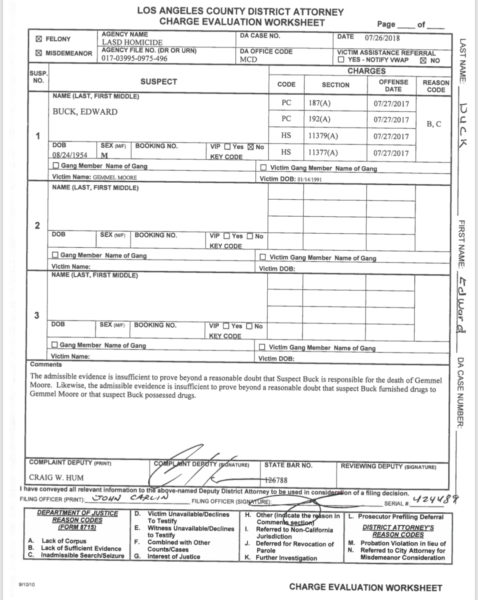
Moore’s mother and community activists believed Buck had injected Gemmel with the drugs that killed him, making his death a homicide. But the gruesome Coroner’s report ruled the death an accidental overdose and the case was eventually dismissed by the LA County District Attorney for lack of evidence “beyond a reasonable doubt.”
Though the initial investigators questioned Buck’s neighbors and confirmed his penchant for young Black men, the Coroner ruled Moore’s death accidental and there was nothing to directly tie Buck to Moore’s overdose. That prompted calls of racism.
“If that incident had occurred in my home, the police would have kicked down my door, guns drawn and had me in handcuffs. There’s no doubt about it. That’s how it goes,” Jeffrey King, executive director of In The Meantime Men told the Los Angeles Blade after Moore’s death.
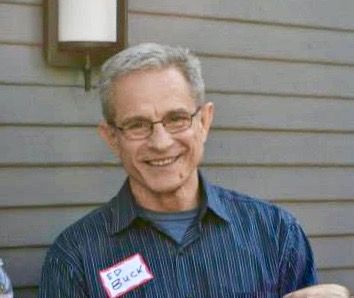
“That’s part of the bigger issue here. That guy [Buck] was treated like a respectable citizen. But a drug-related accident occurred in a man’s house. He should have been taken down to the station and questioned, at minimum. This is a matter of race on a minimum level. The value of this kid’s life is not the same as a prominent person’s child—he would have been handled different. The police would have been relentless; the DA would have been relentless; the whole system would have been relentless,” King said.
That’s why the chaos that resulted from the second death in Ed Buck’s apartment is so shocking: from very early Monday morning to very late Monday night, despite urgent calls and pleas for accurate information, several levels of the LA Sheriff’s Department stonewalled and stymied press inquiries as well as community members—thus allowing misinformation to dominate the fevered discussions. Surely someone in the Sheriff’s Department remembered the outcry over Moore’s death. Surely someone realized the indignity silence conferred on the second Black man to die in Ed Buck’s apartment in 18 months. Surely someone would react publicly as if this was a hate crime in West Hollywood. But, no.
One easy to convey piece of information that was withheld from the public: the victim was a black man in his mid-50s. In the information vacuum, the community passed along the inaccurate news provided by that first tipster and some of Buck’s neighbors that this death was essentially another Gemmel Moore.
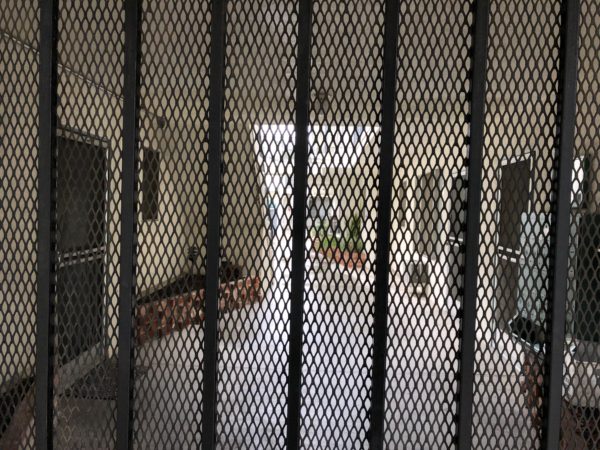
One unidentified neighbor interviewed by KTLA said she was out walking her dog around 12:15am when she saw a young black man go into Buck’s apartment. She then saw an older Black man, a “huge gentleman,” go into Buck’s apartment but she didn’t see either of them come out. She called the man’s death a “tragedy.”
Most reports from neighbors indicated that Sheriff’s deputies were on the scene around 3:15am. But Alfred told the Los Angeles Blade that a sheriff’s deputy and paramedics arrived at Buck’s apartment shortly before 1:00am after a 911 call of a person not breathing. The caller was the other person in the apartment—Ed Buck—who performed CPR on the man and called 911 when he was unsuccessful. The Fire Department pronounced the man dead at the scene.
Alfred said they do not yet have a positive identification from the Coroner’s office. However, the man is believed to be “a male Black adult, who is approximately 55 years old, if it’s the person we think it is, the person is definitely in his mid-50s.”

Was there any evidence to indicate this death was in any way drug-related? In the Gemmel Moore case the coroner’s report noted “24 syringes with brown residue, five glass pipes with white residue and burn marks, a plastic straw with possible white residue, clear plastic bags with white powdery residue and a clear plastic bag with a ‘piece of crystal-like substance,’” according to the LA Times.
“We’re not going to comment on the conditions we found at the time until it’s fully investigated,” Alfred said. However, “there were no obvious indicators of what may have caused the death. So at this time we don’t know. We won’t know until we hear from the Coroner’s office after they conduct a post-mortem exam, which would include any toxicology testing that would give us an indication of whether it was drug-related.”
So what happened in the roughly hour and a half between the first and second responses? What happened to the third person in the room, the young Black man the neighbor saw enter Buck’s apartment?
“I personally have no knowledge of that,” Alfred said. “I know the investigators canvassed the apartment complex—they’ll probably go back to try to talk to the neighbors to try to get those statements. We’ll review the information and probably reach out to that person who provided that but to our knowledge there was only the two people in the apartment at the time.”
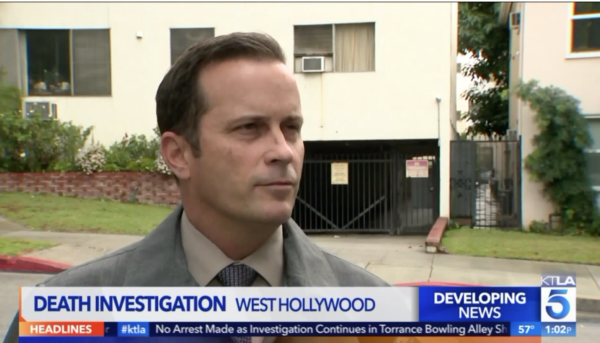
Alfred said he would not comment on any statements that were made by Buck to investigators.
Buck’s attorney, Seymour Amster, showed up outside Buck’s apartment to talk to reporters. He told KTLA that the man at Buck’s home “had already been partying … and already taken some substances” when he arrived. Amster asserted that Buck had been in the shower for some of the time between the man’s arrival and death and that Buck had not taken any substances with him.
“The individual was exhibiting bizarre behavior,” Amster said of the dead man.
“From what I know, it was an old friend who died of an accidental overdose, and unfortunately, we believe that the substance was ingested at some place other than the apartment,” Amster told the Los Angeles Times. “The person came over intoxicated.”
When Alfred returned the Los Angeles Blade’s calls in the late afternoon, he said he was not aware that the community was responding with anger and heartbreak throughout the day, thinking a second young man had died like Gemmel Moore.
But it was a day gripped by anger, stirred by silence, disrespect and lack of or misinformation.
After the Los Angeles Blade’s freelancer reached out to Det. Rodriguez in the morning, the Blade’s news editor drove to Buck’s apartment, left a message, then drove to the West Hollywood Sheriff’s station seeking answers. The Blade asked West Hollywood Watch Commander Sgt. S. Hewitt to please confirm or clarify the timeline since that station no doubt responded to the 911 call. Though explicitly informed that West Hollywood residents were concerned about two similar deaths at this apartment, Hewitt would only say that Homicide was handling the incident, catching herself mid-eye roll when the Blade persisted with questions and the answer was always the same.
In The Meantime Men’s Jeffrey King was among those angered by being stonewalled and disrespect at several levels of the Sheriff’s Department.
“I got several calls, text messages, and messages through Facebook asking what does “In the Meantime intend to do?” King told the Los Angeles Blade late Monday. “ I thought it was important to first find out the facts before I do something. I wanted to know what I was talking about.”
King says he was met with “disrespect, impatience, and lack of willingness to address the concerns I addressed that were community concerns.” When he finally spoke with two people at Homicide, he and the lead detective had a “fairly decent conversation going,” but he still couldn’t confirm or give out information.
“One more time here is a black person—forget his age—being found dead in this man’s apartment. And his death is not being addressed properly. Our community is not being respected. No one is saying anything to the family. There is no dignity to the lives of these individuals and it’s because they’re Black.”
The Homicide official who first responded to several calls from the Los Angeles Blade said there was no homicide investigation and that Homicide detectives routinely roll out for death investigations. He said LASD press relations would issue a statement and forwarded several Blade calls to Alfred, which went to voicemail. The Sheriff’s press person, while trying to be nice and polite, at first had no knowledge of the incident. She finally said a press release was being cleared by “the administration” and would be sent out when completed. But the Sheriff’s News Room site was impossible to search for press releases.
Meanwhile, the Los Angeles Blade contacted the City and members of the West Hollywood City Council for comment—hoping the Sheriff’s Department was at least telling them the facts of what happened.
The City of West Hollywood has requested “a full investigation” by the Sheriff’s Department, a press release stated.
WeHo Mayor John Duran said he would not comment and is leaving the matter in the hands of the sheriffs and District Attorney
Councilmember Lauren Meister’s response illustrates the misinformation that was circulating throughout the day. “This is tragic,” Meister told Los Angeles Blade. “My heartfelt sympathies go out to the family and friends of this young man.” However, she says she has “discussed with our City Manager and Public Safety Director this morning — the Los Angeles Sheriff’s Department and the District Attorney must provide a thorough investigation into the circumstances of this incident and any similarities to prior incidents at the same location.”
Councilmember John D’Amico said he was not going to comment, but added some information. “I asked the city manager to contact Sheriff Villanueva’s office first thing this morning and I’m going to let the DA and LASD do their jobs,” he wrote. “Mr. Buck made donations in 2011 and 2014, $1,000 total, those dollars were spent on those campaigns and the campaign accounts were closed years ago. Keith and I have made donations many times that amount every year to social service agencies that help with sobriety, HIV AIDS, mental health and homelessness. I thought that a better use of the money than returning it to Mr. Buck.”
KTLA got Alfred on camera in the afternoon, by chance, it turns out. When the Blade and other news outlets were staking out the apartment to no avail, KTLA stayed on and suddenly noted activity in the afternoon. Alfred later told the Los Angeles Blade that a call had come in saying someone was throwing something out the window that could be evidence in the second death so a patrol deputy and fire fighter dashed to the scene and recovered the object. He would not say what was found.
By late afternoon, news outlets were reporting the story—presumably because they still think Buck is a “wealthy prominent Democratic donor,” though he has been political kryptonite since Gemmel Moore’s death. The LA LGBT Center issued a statement around 4:30pm calling on the Sheriff to keep the public fully informed—which had not happened by then, and presuming that like Moore, the second death was also linked to drug abuse:
“The Los Angeles LGBT Center calls upon Los Angeles County Sheriff Alex Villanueva and his department to fully investigate this tragedy and aggressively seek justice wherever the investigation might lead. “Although the investigation is in its early stages, we urge Sheriff Villanueva to keep the public fully informed as LGBT people have a considerable and urgent interest in a case that is so clearly linked to the health and safety of our community. The reports we have heard provide more questions than answers. The fact is two black men have died at Mr. Buck’s home in less than two years. “While much is still to be learned, it appears this tragedy is linked to substance use. LGBT people and other marginalized groups are at elevated risk for impacts that result from the current epidemic uses of opioids, methamphetamine, and other dangerous drugs. The Center provides free or low-cost, comprehensive, and judgment-free addiction recovery services and has a service to provide free fentanyl testing strips to those who request them. For help or more information, contact the Center’s Addiction Recovery Services at [email protected] or 323-993-7448.”
At the end of the 11-minute interview, Alfred asked for the public’s help and indicated that he is willing to reopen the Gemmel Moore case and file criminal charges with the DA, if new evidence emerges.
“We always appreciate any help we can get from the community. They may have more knowledge about this or any similar instances that occurred—or any type of activity that occurs in the area or that particular apartment. We’re always interested in finding out what’s going on,” he said, asking anyone with information to come forward.
“Our first concern for the Homicide Bureau, specifically, is to be to fully investigate the circumstances surrounding the death of this individual. Also we’re going to look into the prior incident where Gemmel Moore had died at the scene to see if there’s any similarities,” Alfred said.
“We’re just going to look at everything we have and we’re going to see where the information and evidence takes us. And if it takes us to criminal filing or if we uncover new information—although Gemmel’s case was determined to be an accidental overdose—if we learn something new and that has to be looked at a second time, then of course, we’ll take that new information and we will investigate fully.”
From there, they’ll work with the District Attorney’s office “to determine what, if any criminal activity may have occurred and if so, present it for potential filing. But we won’t know until we’re able to do a thorough exam and all the facts come in.”
Anyone with information can call the Homicide Bureau directly at 323-890-5500 and ask for Det. Q. Rodriguez or Sgt. P. Cardella. To make an anonymous tip, go through Crime Stoppers.
Finally, if the community considers Ed Buck and the alleged use of illicit drugs in his apartment to be a public menace or nuisance, Alfred suggested that the community work with the West Hollywood Sheriff’s station to find a solution akin to the “broken windows” policy of community policing.
“As it pertains to any type of public nuisance – we’ll work with West Hollywood Sheriff’s station—who could probably get the community involved—concerning these ongoing public nuisance situations,” Alfred said. He defined public nuisance as “anything that would cause quality of life for people who live in a particular area to be lessened by these ongoing criminal acts,” major or minor. “Either way, they affect those around them. Life quality is something that can be looked at in a community policing type of thing where the station can look at the assets available and pour resources into the community to try to effect change.”

U.S. Supreme Court
Trump asks Supreme Court to allow restrictions on gender-affirming care in prisons
SCOTUS could further restrict rights of trans inmates
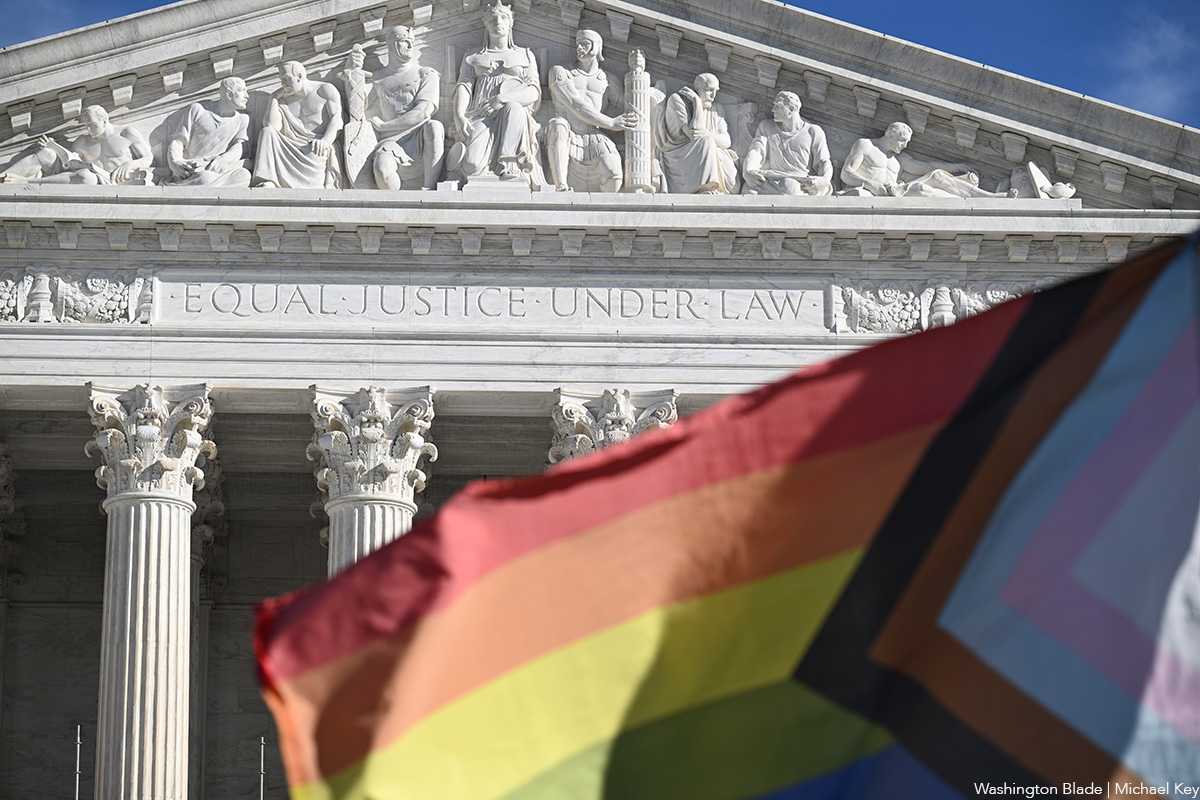
The Trump administration has asked the Supreme Court to allow its policy limiting gender-affirming treatment for federal inmates to take effect while a legal challenge plays out in court.
U.S. District Judge Royce Lamberth ordered the government to continue providing gender-affirming care, such as hormone therapy, which had become policy nearly a decade ago for inmates who were transitioning.
The Trump administration argues in its application that its policy restricting transgender rights was properly adopted and that the judge overstepped, posing nationwide “security and prison-administrative concerns.”
If allowed, the policy would halt surgeries, hormones and social accommodations such as wigs while allowing mental health therapy to continue as the legality of the policy reversal is litigated.
The government also argues in the application that the Bureau of Prisons had “determined that sex-trait-modification surgeries, hormone interventions in general, and social accommodations could no longer be justified as treatment for gender dysphoria.”
American Civil Liberties Union attorneys for the inmates said the policy is “a direct threat to the well-being of transgender people in federal custody and an open violation of their fundamental rights,” and said withholding necessary gender-affirming healthcare constitutes cruel and unusual punishment.
The Blade has covered the ongoing developments surrounding changes to Federal Bureau of Prisons transgender inmate policy that went into effect earlier in Trump’s term. The changes primarily focus on rolling back Biden-era protections for trans inmates.
Earlier this year, the Blade published a joint letter from multiple senators in response to the rollback of the policy. Multiple senators — including Edward Markey (D-Mass.), Jeffrey A. Merkley (D-Ore.) and Mazie K. Hirono (D-Hawaii) — sent a letter to Attorney General Todd Blanche and Federal Bureau of Prisons Director William Marshall III calling for them to reverse the policy change, saying it endangers inmates’ health and safety.
The senators described how the policy shift, along with President Trump’s Executive Order 14168, titled “Defending Women from Gender Ideology Extremism and Restoring Biological Truth to the Federal Government,” is forcing policy changes they argued are rooted more in political rhetoric than in medical research or evidence-based correctional practices.
Federal Bureau of Prisons responded to the Blade’s request for comment in May, declining to reconsider its transgender inmate policy.
The Blade reached out to the Federal Bureau of Prisons once again over the application to the Supreme Court, but did not hear back before publication.
Federal Government
Education Department rolls back protections for LGBTQ students under Title IX
The DoE policy rescinds Biden-era protections

The Department of Education rolled back a Biden-era Title IX interpretation on Monday that secured sex-based discrimination protections for students on the basis of sexual orientation and gender identity.
Title IX was established in 1972 as landmark civil rights law. It prohibits sex-based discrimination in any school or any other education program that receives funding from the federal government.
Education Secretary Linda McMahon spoke about the revision of the policy, claiming the decision would explicitly help “women and girls.”
“Thanks to today’s action, the published Title IX regulations faithfully reflect court orders and congressional intent — reducing confusion for parents, students, and educational institutions. We will continue to relentlessly champion equal opportunity for all Americans and hold accountable any school or college that violates the rights, privacy, or athletic opportunities of our women and girls,” McMahon said via press release.
Prior to her work under the Trump-Vance administration, McMahon was a World Wrestling Federation/World Wrestling Entertainment executive before resigning to pursue a career in politics. She was appointed to the Connecticut State Board of Education by then-Gov. Jodi Rell in January 2009, but resigned from her role shortly afterward to run what ultimately became two failed campaigns for Connecticut’s U.S. Senate seat in 2010 and 2012.
A “fact sheet” provided by the Department of Education also called the inclusive sexual assault and gender identity protections expanded under the Biden-Harris unlawful, saying, “This change is necessary to provide clarity in the Code of Federal Regulations so that institutions, administrations, students, and families can see the rules that are actually in force and to help eliminate public confusion about the Biden administration’s unlawful attempt to stretch Title IX’s legal protections to cover ‘sexual orientation’ and ‘gender identity.’”
This is not the first time this policy has faced judicial hurdles. While Biden was still in office, the plan was struck down in multiple courts in Republican states.
Opponents of the move say it will harm transgender athletes and weaken protections for sexual assault victims.
“Sexual harassment and assault continue to be pervasive in schools and, to the fullest extent possible, we should be working to enforce the laws that protect student survivors of sexual violence. Yet, Education Secretary Linda McMahon and the Trump administration have decided to ignore what survivors need, instead weaponizing Title IX to attack trans students,” said Shiwali Patel, senior director of education justice at the National Women’s Law Center.
This is a return to a first Trump term policy after Biden issued an executive order to attempt to curb discrimination for all — especially those with different sexual orientations and gender identities — that had been given a pass during Trump’s first term. Much of Title IX’s policy has a narrow vision of what sex protections look like that often and enthusiastically leave gender-diverse and non-heterosexual people out.
In March 2021, President Joe Biden signed Executive Order 14021, “Guaranteeing an Educational Environment Free From Discrimination on the Basis of Sex, Including Sexual Orientation or Gender Identity,” to attempt to undo some of the flagrantly anti-LGBTQ policy the Trump-Pence administration had set forth relating to Title IX protections for LGBTQ students and sexual assault survivors.
The secretary focused this “win” for the administration as one more step toward restricting transgender students from competing in women’s sports, but the 2020 rule, completed under former Education Secretary Betsy DeVos, didn’t explicitly ban trans students from participating on sports teams consistent with their gender identity. It did limit the types of sexual harassment and assault complaints that schools had to investigate and required live hearings so male students could respond to accusations.
McMahon didn’t discuss those aspects in her statement or in requests for comment. The 2020 rule drew praise from conservatives and intense opposition from advocates who said it downplayed sexual abuse and left victims unprotected.
In a statement, U.S. Rep. Tim Walberg (R-Mich.), who chairs the House Education Committee, said, “Returning to the 2020 regulations restores longstanding protections for women and girls that the Biden-Harris administration attempted to dismantle and realigns Title IX policy with court precedents.”
LGBTQ activists have called this decision a direct attack on LGBTQ safety — particularly for trans students who continue to face a barrage of legislative, executive, and judicial attacks in recent years from the Trump-Vance administration.
Kelley Robinson, president of the Human Rights Campaign, the largest LGBTQ advocacy group in the world, released a statement following the DoE’s announcement.
“Title IX is, quite simply, about protecting students and ensuring that they are safe from abuse, harassment, and discrimination while they pursue their education. But Donald Trump and his cronies aren’t interested in any of that,” Robinson said. “Donald Trump’s Department of Education has completely lost sight of that mission. Instead of enforcing protections for students, they’re rescinding them. They don’t care if sexual harassment and assault go unaddressed. And they’re happy to strip funding away from school districts and states that are actually trying to keep students safe.
“We know who will be hurt: women, girls, and others who are vulnerable to sexual harassment, assault and abuse — including LGBTQ+ students. The fact that they’re dropping this rule into place abruptly, without a comment period, denying families, educators, loved ones, and the students themselves a say in how they should be treated, shows how little they care about the safety of our students.
“This is a monstrous injustice, and it drives home how essential it is that we take action at the polls this November to start bringing some accountability to an administration that has turned its back on the very students Title IX was written to protect,” she added.
The Washington Blade reached out to the DoE for comment and questions on whether Title IX protections still included LGBTQ students, and received this email response from Education Spokesman Sabin Sidney:
“Your questions indicate you are clearly missing the entire point of this Final Rule. The Biden Administration illegally rewrote Title IX to include ‘sexual orientation’ and ‘gender identification’ in the definition of sex-based discrimination. The Trump Administration is rescinding this rule—only after every federal court that heard legal challenges rejected it as unlawful.
“Since January 2025, the Department has been enforcing Title IX consistent with the President’s Executive Order grounded in biological truth that there are only two sexes. The Trump Administration is restoring the original promise of Title IX and providing clarity to students, parents, and educational institutions. We will vigorously defend equal opportunity consistent with the law’s intended purpose.”
National
Dr. Fauci ‘honored to be part of’ LGBTQ history
Equality Forum presents pioneering AIDS researcher with Int’l Role Model Award
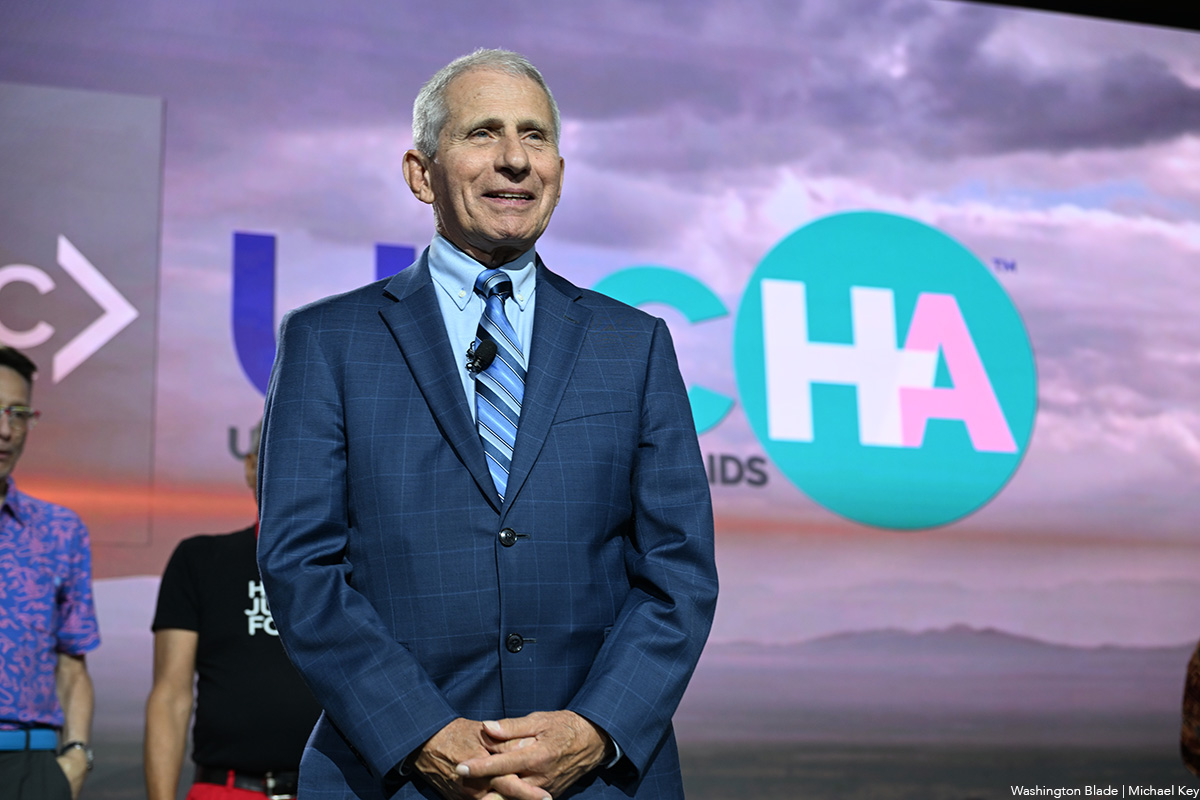
PHILADELPHIA — Dr. Anthony Fauci accepted an award from the Equality Forum on Sunday in which he told the audience that he is honored to be part of the LGBTQ community’s history.
“Over these many decades I have not simply admired the community — I have genuinely enjoyed being part of the conversation with it,” Fauci said. “I’ve enjoyed the arguments, debates, disagreements, the humor, the friendship and above all the extraordinary commitment to alleviate suffering and prevent premature death for persons living with HIV.”
Fauci continued, “I am grateful to the Equality Forum for this award. I am grateful to the LGBTQ community for allowing me throughout these many years to become part of your struggle and I am deeply honored to be part of your history.”
Fauci traveled to Philadelphia to accept the Equality Forum’s International Role Model Award. Longtime HIV/AIDS activist Peter Staley presented Fauci with the award, recalling the early days in the fight against the disease and that activists in the 1980s frequently clashed with Fauci, director of the National Institute of Allergy and Infectious Diseases at the time. In his remarks, Staley recalled the message on one sign from an ‘80s protest, “Fuck Fauci.” But activists warmed up to Fauci and he ultimately befriended his former gay critics, including Larry Kramer.
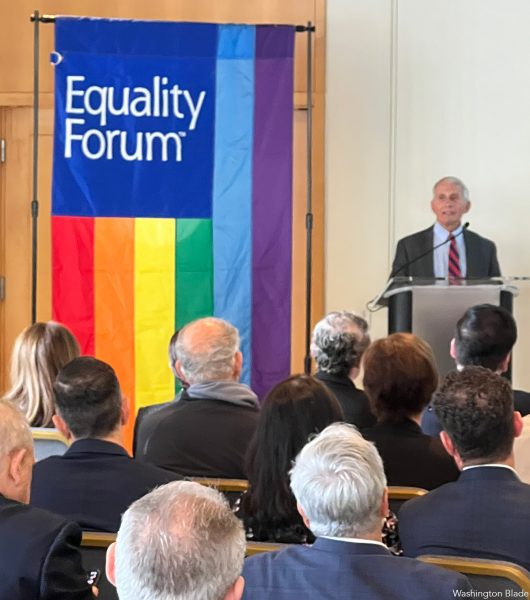
Also at Sunday’s event, the Equality Forum honored Erica Deuso, the first out transgender mayor in Pennsylvania; she was elected mayor of Downington, Pa., and sworn in last January. Ben Garcia, executive director of the American LGBTQ+ Museum in New York presented Deuso with the Frank Kameny Award.
The event also served as the kickoff of LGBT History Month, which Equality Forum honors by naming 31 LGBT Icons, one per day in October. Visit equalityforum.org for a full list of its more than 600 queer Icons. This year’s honorees include designer Calvin Klein, Rep. Chris Pappas, and President Abe Lincoln.

Trump asks Supreme Court to allow restrictions on gender-affirming care in prisons

Education Department rolls back protections for LGBTQ students under Title IX

Debbie Allen shares on loss, love, and the power of speaking out

Baltimore’s oldest gay bar to reopen this week

Dr. Fauci ‘honored to be part of’ LGBTQ history

Colombia withdraws from Equal Rights Coalition

Trump-appointed judge restores White House TV pool access

Writing a play about Lincoln leads down a rabbit hole to a closet

Philadelphia event to launch 2026 LGBT History Month

Being a female firefighter comes with unique risks, and rewards
-

 Colombia5 days ago
Colombia withdraws from Equal Rights Coalition
-
White House5 days ago
Trump-appointed judge restores White House TV pool access
-
a&e features4 days ago
Writing a play about Lincoln leads down a rabbit hole to a closet
-
National5 days ago
Philadelphia event to launch 2026 LGBT History Month