National
Cato legal analyst: DOMA is dead
Former GOP head, same-sex marriage advocate assess high court arguments in ‘Windsor’ case

The Cato Institute (Photo by Matt Bisanz via Wikimedia)
A senior fellow with the Cato Institute, a libertarian think tank that supports LGBT equality, said comments by U.S. Supreme Court justices on Wednesday lead him to believe the high court will strike down the anti-gay Defense of Marriage Act known as DOMA.
Cato Institute senior fellow Ilya Shapiro, who attended Wednesday’s oral arguments at the high court, said the court’s four liberal justices would likely invoke the Constitution’s “equal protection” clause as grounds for overturning DOMA’s Section 3, which prohibits the federal government from recognizing same-sex marriages.
Shapiro said comments made by Justice Anthony Kennedy, who is considered the court’s swing vote on DOMA, indicate Kennedy would vote to strike down DOMA based on grounds that it violates “federalism” or states’ rights protections under the constitution.
Assuming Kennedy joins liberal leaning Justices Stephen Breyer, Ruth Bader Ginsburg, Sonia Sotomayor, and Elena Kagan in voting to declare Section 3 of DOMA as unconstitutional, the five would become a majority on the nine-member court needed to strike down that provision of DOMA, according to Shapiro.
“Assuming they get past the jurisdictional arguments it seems like DOMA Section 3 is not long for this world,” he said.
Shapiro gave his assessment on the justices’ views on DOMA at a Cato Institute forum Wednesday afternoon called Law, Politics, and Same-Sex Marriage.
Others panelists speaking at the forum included Walter Olson, a Cato Institute fellow, who served as moderator; Evan Wolfson, executive director of the same-sex marriage advocacy group Freedom to Marry; and Ken Mehlman, a York City businessman and former chair of the Republican National Committee.
Wolfson attended Wednesday’s Supreme Court oral arguments on DOMA as well as the arguments before the court one day earlier on California’s Proposition 8 case, which legal experts say could potentially lead to the legalization of same-sex marriage in all fifty states.
He told the forum that making predictions about how the court will rule on a case based on the justices’ statements and questions during oral arguments is highly speculative.
“I think you really need to take every prediction you hear and read and see tweeted and re-tweeted very, very skeptically,” Wolfson said. “The justices are going to go back and delve through a mountain of briefs in both cases, a huge amount of evidence and argument.”
While the outcome of both the Prop 8 and DOMA cases is uncertain, there are things marriage equality advocates know “very, very clearly,” Wolfson said.
“One thing we know is that while the justices are doing their homework in going through the process, the best single way we can maximize winning the freedom to marry and even getting the justices encouraged to do the right thing as they deliberate now in the court is to do what we’ve been doing, which is to continue winning in more states and to continue winning over more hearts and minds,” he said.
“There are as many as four states that are going to be considering or have begun considering freedom to marry legislation and could pass those bills into law before the court hands down its decision likely at the end of June,” Wolfson said. “So the single biggest thing we can do to maximize the chances of winning are to pass those marriage bills and to continue growing the extraordinary ‘who’s who’ of Americans that have stepped up the last many weeks and months in supporting the freedom to marry.”
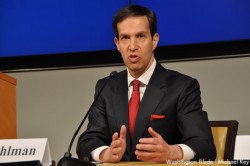
Ken Mehlman (Washington Blade photo by Michael Key)
Mehlman, who’s gay and who has emerged as an outspoken same-sex marriage advocate in recent years, said that aside from using sound legal arguments, marriage equality advocates have made important advances by putting a human face on the same-sex couples who want the right to marry.
“In my judgment, what has so galvanized the public is our stories,” he said. “These are real stories about real people and they make a gigantic difference.”
He said the numerous “friend-of-the-court” or amicus briefs filed in support of the marriage equality side by a wide range of organizations also shows how the breadth of support for same-sex marriage has greatly expanded.
The Cato Institute is among the groups that have filed an amicus brief in support of striking down DOMA.
“It’s not just that it is a large number,” he said of the groups and individuals filing amicus briefs. “It’s the cross section of society. It’s military leaders. It’s religious leaders. It’s business leaders. It’s Republicans and conservatives. It’s leaders of excellent think tanks — all making the case from their perspective and why it makes sense,” Mehlman said.




National
Man charged in Mall of America shooting plot inspired by Pulse massacre: report
Suspect exchanged hundreds of messages, pledged loyalty to ISIS
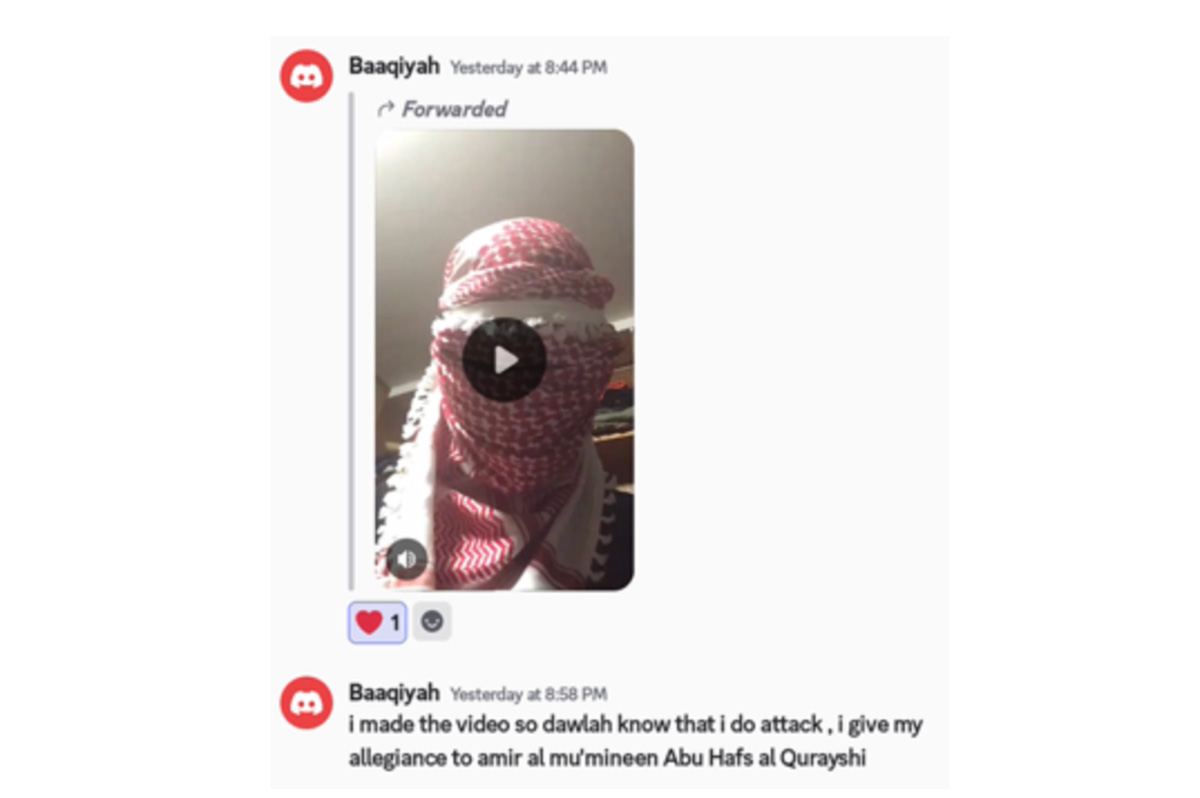
The U.S. Department of Justice charged Sheikhdoon Abdullahi Mohamud, 18, of Richfield, Minn., on Oct. 7 with one count of knowingly receiving a firearm and ammunition in order to commit a federal crime of terrorism. Mohamud allegedly planned to carry out a mass-casualty attack in support of ISIS, inspired in part by the Pulse nightclub massacre that took place on June 12, 2016 when then-29-year-old Omar Mateen murdered 49 people and wounded 58 – one of the deadliest mass shootings in U.S. history, and the deadliest targeting the LGBTQ+ community.
According to a DOJ statement release, Mohamud was arrested on Oct. 6 by the FBI, which had arranged to sell him an AK-47 assault rifle, magazines, and ammunition through an undercover FBI employee. Mohamud was arrested shortly after paying $600 in cash and taking possession of those items; he reaffirmed his intention to shoot people at the Mall of America during the transaction.
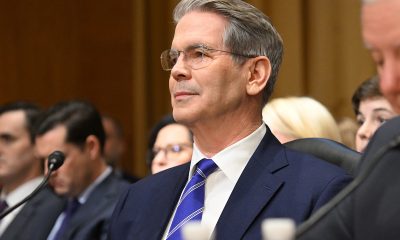
“Mohamud allegedly sought to carry out a mass-casualty shooting at the Mall of America, expressing a desire to emulate some of the most horrific ISIS-inspired attacks in the United States, including the atrocities at Pulse Nightclub and 2025 New Year’s Day attack in New Orleans,” said Assistant Attorney General for National Security John A. Eisenberg in the statement by the DOJ. “The National Security Division will continue to work closely with the FBI and Joint Terrorism Task Force to track down and prosecute ISIS-inspired terrorists in the United States.”
According to the complaint, beginning on or about December 2024, Mohamud had exchanged hundreds of messages through multiple social media and messaging apps with a confidential source, and expressed a desire to travel to Somalia to join a designated foreign terrorist organization to fight on their behalf.
The defendant stated many times that if he was unable to travel overseas because of a lack of funds, he planned to carry out a mass-casualty event in Minnesota in support of ISIS.
According to the DOJ, “In July 2026, Mohamud sent messages discussing his intent to carry out a mass-casualty shooting attack at the Mall of America because he claimed it was owned by Jews. He wrote that [he] wanted to kill 30 to 60 people so no one would go there.”
“During the course of his communications, Mohamud stated that he wanted to commit an attack similar to those of the Pulse Nightclub mass-shooting in Orlando, the Bondi Beach mass-shooting in Australia, and the New Year’s Day vehicle-ramming attack in New Orleans.”
This case is being prosecuted by Trial Attorney Ryan White of the National Security Division’s Counterterrorism Section and Assistant U.S. Attorney Benjamin Bejar for the District of Minnesota.
California
Calif. GOP gubernatorial candidate ad ‘disgusting attempt to exploit lesbian intimacy’
Activists, anti-LGBTQ religious leaders criticized Steve Hilton spot

Two women sit on a bed, a Pride flag hanging behind them. One is nervous; the other tells her to be calm and that she’ll do “all the work.” The music swells. The two hold hands and — fill out a ballot voting for Steve Hilton?
This is the new advertisement from the Hilton gubernatorial campaign that is drawing rebuke from both sides of the aisle, but for very different reasons.
Jorge Reyes Salinas, the communications director at Equality California, said the ad was an insult to the queer community.
“This ad is a disgusting attempt to exploit lesbian intimacy for political attention,” he said. The advertisement plays on media tropes that Salinas says “reduce lesbian and bisexual women … to sexual entertainment,” rather than showing them as well-rounded characters. “Any group of the LGBTQ+ community deserves the same dignity and respect as everyone else,” he said.
The ad is truly hyper-sexualized. It ends with one woman telling the other, “Now lick it.” The two pause and stare before she reveals an envelope to send the ballot, and large text pops up saying, “Just try it!”
Salinas characterized the ad as a desperate attempt to get attention from a candidate who is trailing far behind in the polls in heavily Democratic California. The Democratic candidate Xavier Becerra, who is endorsed by Equality California, holds a 25-point lead over Hilton according to recent polling by the UC Berkeley Institute of Governmental Studies.
Conservatives have also criticized the ad.
Influential evangelical Pastor Jack Hibbs thought the ad was distasteful and said, “lesbianism among college girls and some high school girls that right now is an actual pandemic of social ill.” Republican attorney general candidate Michael Gates said it undermines “the sanctity of the relationship between parents and their children.” This criticism is rather confusing because although the ad features two relatively young women, they both appear to be adults, not minors.
“The comments from Pastor Jack Hibbs should be criticized because there is nothing wrong with two women being attracted to each other,” Salinas said. “We’re calling out the ad’s stereotypes, while also rejecting the homophobia in the response to it … by other Republicans.”
The backlash from Hilton’s own party and supporters shows that an advertisement full of queer innuendo was ill-considered, considering the national GOP’s attacks on LGBTQ people in recent years. Hilton himself has been campaigning against transgender girls and women competing in school sports and using locker rooms that correspond with their gender identity. This context might be why Hilton’s political base responded to the ad just as poorly as the liberal voters he was attempting to court.
Hilton says the ad is part of a new series rolling out before Election Day, showing stereotypical California liberal archetypes voting for Hilton. He claims these ads are authentically filmed with real actors, as opposed to being A.I. generated, like many of his previous ads. One other advertisement has been released so far by the campaign showing a man at a spiritual retreat also being swayed to vote for Hilton, although it is notably absent of sexual innuendo.
Caleb Kaufman is a California Local News Fellow placed with the Los Angeles Blade. The California Local News Fellowship is a state-funded initiative to support and strengthen local news reporting. Learn more about it at fellowships.journalism.berkeley.edu/cafellows.
2026 Midterm Elections
Trump uses anti-trans slur against Democratic Senate candidate
President mocked Annie Andrews

President Donald Trump used an anti-trans slur against Democratic South Carolina Senate candidate Annie Andrews on Monday as he sought to rally support for Republicans in the state’s Senate race.
In a post on Truth Social, Trump attacked Andrews three times, referring to her as “trannie” while promoting U.S. Sen. Darline Graham (R-S.C.)’s campaign.
Andrews is running against Graham for a Senate seat in the solidly Republican state.
Earlier this year, Graham was specially appointed to the seat following the death of her brother, Lindsey Graham, who represented South Carolina in the Senate from 2003 to 2026.
Andrews, the Democratic nominee from the state, is a pediatrician that lives in Charleston with her three children. She told NBC News that she will “work with anyone to put South Carolina first.”
“As a mom and a pediatrician, I’m in this race to fight for my patients, my three kids, and South Carolina,” Andrews said, adding that “lowering costs and making life better for families across our state is going to take all of us working together.”
Andrews used the attention from the president’s attack to emphasize what she described as a focus on policy issues rather than the culture wars that have dominated much of the political debate.
“If you care more about your bills than the politics in Washington, this campaign is for you,” she added.
Trump’s remarks have drawn criticism from leaders on both sides of the aisle.
Senate Minority Leader Chuck Schumer (D-N.Y.) condemned Trump’s words Monday night on social media, calling his attacks on Andrews “despicable.”
“Annie Andrews is a mom and pediatrician who’s always put her community first — and she’s exactly who South Carolina needs representing them in the Senate,” Schumer said on X.
Former South Carolina Gov. David Beasley, a Republican, also criticized the president’s attack on Andrews, urging voters to “reject politics based on division and hate.”
“This is abhorrent. Elections don’t have to be about cruelty and lies. South Carolina deserves better,” Beasley wrote Monday night on X.
South Carolina has not elected a Democratic senator in nearly three decades.
Andrews’s campaign website does not mention her positions on LGBTQ issues.
The Washington Blade reached out to Andrews’s campaign for comment on Trump’s attack and her positions on transgender rights but did not hear back by time of publication.

Center Arts Gallery celebration, auction to take place on Oct. 17

Comings & Goings

‘Hidden in Plain Sight:’ The story of Odessa Madre

‘Governments that attack LGBTQ+ rights learn from each other’

Horror genre has evolved into space to explore queer identity

ICC unseals arrest warrants for Taliban officials accused of persecuting LGBTQ people, women

Physician: addiction doesn’t always look the way you think it does

Calendar: October 9-15

Solidarity beyond the parade: the actual cost of Pride

Essential queer horror classics for Halloween
-

 Afghanistan4 days ago
ICC unseals arrest warrants for Taliban officials accused of persecuting LGBTQ people, women
-
District of Columbia4 days ago
Physician: addiction doesn’t always look the way you think it does
-
Calendar4 days ago
Calendar: October 9-15
-
Opinions3 days ago
Solidarity beyond the parade: the actual cost of Pride