Opinions
‘Promoter bill’ wrong approach with negative results
Proposal would arbitrarily curtail nightlife marketing, stifle event diversity
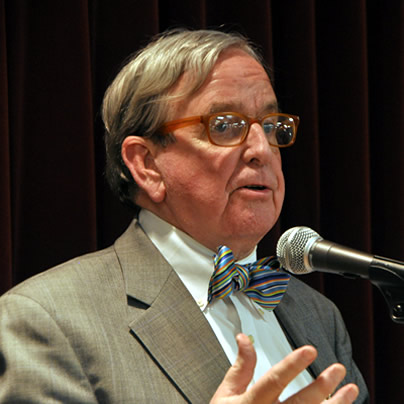
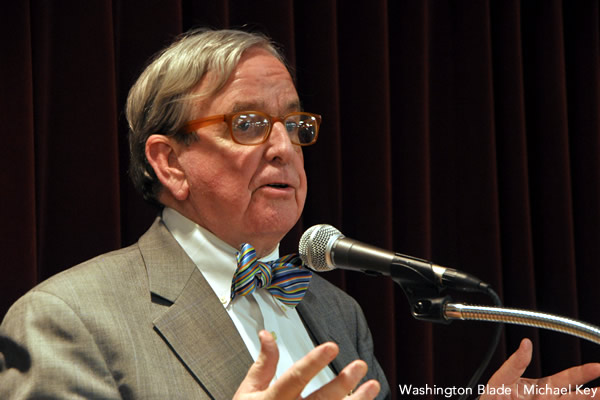
Council member Jim Graham (D-Ward 1) (Washington Blade photo by Michael Key)
D.C. Council member Jim Graham introduced legislation last week to license, regulate and impose special requirements and restrictions on nightlife event promoters and promotion groups. His proposal would arbitrarily impose limits on common marketplace activity, inhibit community-centric gatherings and stifle cultural event innovation.
I should know – I was a nightlife special event producer and promoter for two decades.
Graham’s bill would institute mandatory licensing, permit fees, training classes, acquisition of a minimum $3 million in personal liability insurance and other requirements. Creation of a new licensing category will inevitably lead to additional protocols, restrictions and costs and result in bureaucratic expansion of hurdles and hoop jumping.
The world of event concept and promotional marketing would suddenly become complicated and less diversity in entertainment options would result. All without real benefit.
Graham indicated his proposal was in response to three incidents resulting in violence at or near local nightlife venues over a period of more than two years. Graham notes that these random occurrences were associated with promoter-organized events.
Given the longstanding and pervasive engagement of promotion groups representing both large “corporate” entities and small informal shared-interest collaborations at hundreds of venues throughout the city, this is tantamount to observing that a single plane crashed while all other flights safely landed. More violence occurs in or near Metrorail stations than nightlife venues.
Every night of the week, scores of independently marketed events occur without incident. Claiming that they are the exclusive or even preponderant source of problems is misleading.
Many establishments rely on promoters to host events and invite guests. Owners, operators and managers at many of the city’s largest and most prominent venues started in the business promoting events.
What is notably odd about establishing an implied shared responsibility for venue operational management is it is entirely counterintuitive. Current law is clear – venues are responsible for regulatory compliance and are liable for incidents. Simultaneously diluting venue responsibility while extending it to encompass event promoters is wholly inappropriate. Licensed businesses are, and should remain, legally liable for operational performance.
Some of the few instances of violence have occurred at venues with weak management or inadequate security who have mistakenly and illegally “handed over” at least partial venue control to non-employees. The solution is not diversion of responsibility, unrelated licensing requirements or paper shuffling. Regulatory administration should be focused on improving management training and providing technical assistance, in collaboration with industry groups, as is better provided in other jurisdictions.
Event marketers not employed on an in-house basis – which would exempt them from the law – should not be held legally liable for management responsibilities beyond their control.
Conversely, the law is easily circumvented by hiring of promoters as employees – as many already are – eliminating special requirements. Even a charitable component could waive them for independently promoted events under the loosely defined standards.
The most compelling argument against this proposal is one unconsidered. Many specialty events are organized and promoted by small informal groups of demographic, cultural or ethnic affinity, usually hosted at smaller bars and restaurants. Whether a gay retro-era dance party, a homeland-nostalgic international music event or similar gatherings promoted through social media networks and with a cover charge to finance DJs or talent or marketing expenses – host groups with the singular ability to promote these events would be subject to the proposed requirements.
This promotional model – including some of the most innovative and culturally contributing events – would no longer be functionally possible. The city would lose part of its soul and unique venues would lose needed revenue.
The simple fact is, inevitably and unfortunately and rarely, patrons will get out of hand and bad things will happen. This will occur at businesses not given due credit for responsible management and it will occur at less experienced locales. Bottom line, though, the issue is not how an event is promoted, but how the establishment is operated.
That is where the focus should be.
Mark Lee is a long-time entrepreneur and community business advocate. Follow on Twitter: @MarkLeeDC. Reach him at [email protected].



Opinions
Not all trans people are the same
Media, activists need to do more to challenge stereotypes

It’s interesting how the mainstream media, especially the conservative part of it, likes to write about transgender subculture when they should speak up about trans people.
How often do you see mentions of blue or purple hair, Marxism, specific clothing styles and ecology when you see a mention of a trans person?
It happens more often than it should. It looks like the mainstream media, even the ones that don’t demonise us, sincerely believe that being trans means sharing a whole bunch of characteristics that have nothing to do with having a gender identity different from the one that was assigned at birth.
Here are four reasons why it may create problems, and what to do about them.
1. A subculture idea
The assumption that being trans is part of a subculture creates a very specific kind of discrimination, because the mainstream audience who read those stories sincerely believes that being trans is a personal choice or a trend in the same way as being a K-pop fan, a goth, or a metalhead. It basically means that being trans is nothing more than a trend, and trends, as we all know, can change. People who believe in this idea are more likely to speak about “gender ideology” and “propaganda trends” and less likely to listen to scientists and studies around trans issues, or to different experiences of what it means to be trans.
Even if trans people made a choice to be trans, they shouldn’t be discriminated against. In a democratic, free country, no one should be punished for choosing what to do with their body. And hate for subcultures is a real thing that leads to violence. But the problem is that, despite there being a trans subculture, most trans people are statistically not part of it. But where are they in activism?
2. Misleading about goals
Let’s be honest. We are partly to blame for this stereotype. And before you stop reading, let’s just think about the topics most people discuss before the average protest or radical Pride event. Or let’s imagine trans-friendly events. They are mostly leftist, and people at these events share the exact same interests, hobbies, and political positions.
At my last protest about the new draconian Equality and Human Rights Commission guidelines in the U.K. that say trans people can only use public places according to the sex assigned to them at birth, we were speaking about anything else. For example, some speeches were about abolishing “bourgeois democracy,” speaking up for socialist revolution, and saying some other things I definitely couldn’t support.
I’m not against socialism, but I’m against the idea that all trans people are socialists. That is inherently misleading, at best, and harmful, at worst. I support universal basic income and free healthcare, but not revolution or Marxist reform. If I were a cis person who generally supported trans rights but knew too well about the Russian Revolution of 1917 and how it ended for indigenous people and queer people, if I were a bystander, I wouldn’t stop at a protest like that. I probably wouldn’t even believe that the situation is as bad as they are saying.
There is nothing bad about inviting a socialist speaker. The problem begins when all trans events become socialist events. Those protests don’t look like protests for trans rights – they look like protests for socialist revolution or just like a rebel teens gathering.
3. Self-fulfilling prophecy
At the protest I mentioned and at other similar protests, including the ones from the U.S. I saw online, there weren’t a lot of “traditionally” trans people — the ones you may have been able to see in old TV programs about trans experiences, where trans people were presented to be more gender-conforming.
Most activists are young, white, poor but not extremely poor, citizens of the country where they are living, gender-non-conforming, leftist, and non-religious. They like trans horror, drag queen shows, drawing and reading MfM romantasy. And despite the fact that I just finished writing my own trans horror novel, I wonder — where are the other trans people? With different hobbies and lifestyles?
Where are all those “traditional” trans women from old TV shows who like make-up and want to give birth to kids if only it was possible, and trans men who like to spend their time drinking beer in pubs and going to the gym with their bros? I think we need them more than we think. They may give new ideas and perspectives. And they need us.
Why don’t we see them? Why do we see so few trans refugees who came from Middle Eastern, Asian, and African countries? May they be triggered by the world then because the U.S. had the worst dictatorship on the planet, or that the U.K. is a fascist country when they saw something worse than the British government or even MAGA? For some trans person who survived Bashar al-Assad in the Syrian government or fled Eastern Turkestan, such slogans would feel like gaslighting — and I knew because I met many refugees.
Why, finally, do so many trans activists have similar clothing styles, similar interests, and similar experiences?
Because it’s a self-fulfilling prophecy. When trans activists create this kind of culture, they accidentally gatekeep all other trans people who may feel less comfortable within a subculture that has its own rules, style, and ideology, even if none of those things have anything to do with being trans.
4. Media misrepresentation
When the media — conservative and not very conservative — sees the same thing, it doesn’t matter if we are speaking about a trans man who is traditionally masculine and wants a traditional family, or if we are speaking about soft, nice gay boys who happen to promote socialist revolution like many modern stereotypical trans activists. It is equally misleading.
I hate the idea that we need to pretend to be more convenient and normal in order to be accepted by society, because society has never worked that way. But pretending to be accepted by the community is no better.
Trans people are different — and sometimes problematic — and despite the core of activist trans culture, we can have some distinctions when we speak with the media. We should never try to tell people that all trans people are similar.
Now, when trans rights are under attack, it is more important than ever to show that all trans people are just people. We are different, like everyone else. We have our rights, even if we are wrong. Even if we are ugly. Or struggle with inner transphobia. Or some of us internalise traditional roles, or; the opposite, too weird for any culture and subculture. We can make mistakes. But we are not a political party or a monolithic group. Being trans is not a lifestyle, because we have different lifestyles.
Trans kids need to see that they can be whoever they are and still be true, real trans people. And the media should always be questioned when they try to push all trans people into the frame of a subculture.
But to do so, we need to look at our activism and at the representation we are creating.
Opinions
Black Educated Lesbians: A movement rooted in community
Organization’s annual conference is part of a much larger mission
When people hear the word “conference,” they often imagine a weekend event that begins on Friday and ends on Sunday. For Black Educated Lesbians (BEL), our annual conference is only one part of a much larger mission.
BEL was founded because Black lesbians deserve spaces intentionally created with us in mind. Too often, we are overlooked in conversations about health, leadership, philanthropy, education, and community. We exist at the intersection of multiple identities, yet organizations and institutions frequently assume our needs are being met by broader groups. Our lived experiences tell a different story.
BEL is a national nonprofit organization dedicated to creating opportunities for Black lesbians and Black queer women through leadership development, wellness programming, research, education, and community building. While our conference has become one of the few events in the country centered specifically on Black lesbians, our work continues year-round.
Throughout the year, BEL hosts virtual wellness sessions, leadership development opportunities, financial education workshops, community discussions, and mentorship programs designed to help our members thrive personally and professionally. We are also investing in the next generation through our EmpowerHER initiative, connecting Black queer youth with mentors, resources, and leadership opportunities.
Research is another critical part of our work. We are committed to ensuring Black lesbian voices are included in conversations about healthcare, mental health, economic opportunity, and overall well-being. Data drives policy, funding, and services. If our experiences are absent from the research, our needs often remain invisible.
Our annual conference, taking place Sept. 18–20 in Hapeville, Ga., brings this mission to life. Attendees will participate in conversations about physical and mental health, healthy relationships, financial literacy, entrepreneurship, leadership, aging, women’s health, and sexual wellness. The conference also creates opportunities to build meaningful relationships, support Black-owned businesses, and connect with professionals and organizations that understand our community.
Creating spaces like this is not easy. As a small nonprofit, every workshop, meal, scholarship, and resource requires fundraising, partnerships, and countless volunteer hours. Yet we continue because our community deserves spaces where they can simply exist, learn, heal, and grow without explanation.
What makes BEL unique is not simply that we serve Black lesbians. It is that Black lesbians lead every aspect of our organization. We understand the importance of creating programs that reflect our lived experiences rather than asking our community to fit into spaces never designed for them.
Community is not built during moments of crisis. It is built through consistent investment, authentic relationships, and showing up year after year. That is the work BEL is committed to doing.
Whether someone joins us as an attendee, sponsor, volunteer, donor, or community partner, they become part of something much larger than a conference. They become part of a movement dedicated to ensuring Black lesbians are seen, heard, valued, and supported.
As we prepare to welcome attendees from across the country this September, we invite readers to learn more about BEL, support our mission, and help us continue building spaces where Black lesbians don’t just survive, they thrive.
LaJoya Johnson is founder and executive director of Black Educated Lesbians, a national nonprofit dedicated to advancing leadership, wellness, and education for Black lesbians and Black queer women.
Opinions
I respect AOC, even though I often disagree with her
She should work toward House leadership role and skip presidential run
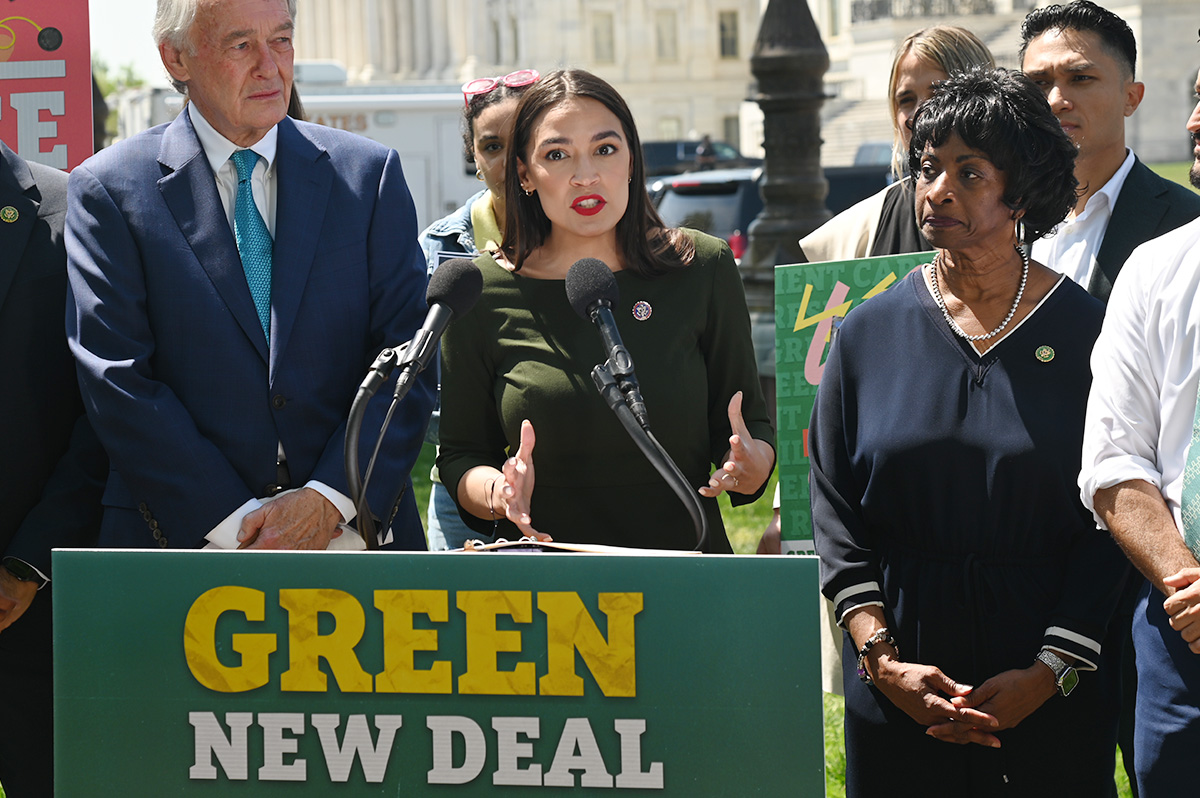
There is a column in the New York Times asking, “Is Ocasio-Cortez ready for the glass cliff?” The author thinks it’s a great idea for her to run for president. I believe it’s a bad idea for her personally, and a disastrous idea for the Democratic Party. However, that is not the only column written recently about Ocasio-Cortez, discussing her options and private life. I think it is cringeworthy what social media, and even some mainstream media, are focusing on these days.
Politicians have become fodder for what were once just stories about Hollywood, and loud showmen like the felon in the White House. Now, like the showman, those like AOC, can’t claim they aren’t asking for it by striving for the biggest online following possible. They obviously see that as a way to validate themselves; politicians use it as a way to raise money, become influencers, and get their message out.
But they also open themselves up to even more intrusion into their private lives. Those who do that also open the door for all politicians to have their private lives made public. Running for president, which the column suggests AOC should do, and which she herself has said she isn’t ruling out, is a great way to grab a headline, and leads to reporters digging to find every little fact about her. AOC is trying to get ahead of the curve by talking about a breakup, and then about harvesting her eggs — topics once considered private that should stay that way. There was once just the National Enquirer, but today every news outlet incorporates what the Enquirer did, as it makes for great clickbait.
I feel for her, thinking all this has to be public, when a single woman wants to run for higher office. We have seen married women, including Geraldine Ferraro, Sarah Palin, Hillary Clinton, and Kamala Harris, run and be subjected to dealing with questions about their husbands, their former boyfriends, and in some cases, more reporting about those things than what they stood for. Maybe for AOC, that would be a good thing, as the country is far from ready for a candidate who up until now, proudly represents the Democratic Socialists of America (DSA). Yes, she is trying to step away from them a little, but I don’t think that is possible, which is why I feel it is a disaster for her to run, both for herself, and the Democratic Party. She could decide to run for the Senate if Chuck Schumer (D-N.Y.) understands it is time for him to retire. Even that could be a difficult race. She might win a primary, which another progressive representative, Bella S. Abzug (D-N.Y.), tried and lost in 1976, if she gets a big enough New York City vote. Should she try, we would see how much change there has actually been.
Back when JFK had women in and out of the White House, Ronald Reagan got Nancy pregnant before they married, and George H.W. Bush allegedly had a mistress traveling with him, those were not the headlines. I think we were all better off. Gary Hart asked for it when he told the press to follow him, and they caught him with a woman not his wife. Again, he asked for that. Then we got to the Clinton era and the right wing, actually David Brock, got the information on Paula Jones, and it all exploded, eventually cascading down to harm Hillary. They tried to find anything they could on Jimmy Carter, George W. Bush, and Barack Obama, but couldn’t find the salacious bits they were looking for. But I bet they will find some things that sound salacious on AOC, even if they have to make them up. She appears to be a normal, highly intelligent, motivated, single woman.
Recent primaries in Michigan and Wisconsin, and general election results, will clearly impact what she decides to do. DSA candidates are not an easy sell to most Democrats, let alone the general electorate. We will find out how Dr. El-Sayed does in the general election. While I didn’t support him in the primary, I do in the general election. Those results, and looking back at other women who have run, may give AOC second thoughts about giving up working toward seniority in the House. I predict she could be much more impactful than one of her idols, Bernie Sanders, has been. He has been there for 40 years and accomplished nothing. I think AOC could accomplish a lot.
Peter Rosenstein is a longtime LGBTQ rights and Democratic Party activist.

Log Cabin Republicans remove transgender rights from mission

Not all trans people are the same

Queer team brings girl power to fully baked ‘The Wrong Girls’

Democrat Maureen ‘Mo’ Madden takes on longtime GOP stronghold in Delaware’s 38th

Comings & Goings

Russian LGBTQ rights group to shut down

Winsome Earle-Sears ‘Life and Marriage Tour’ to include Northern Va. stops

White House targets gender-affirming care funding, states fight back

Madonna nominated for 11 MTV VMAs

Man charged with anti-gay assault in D.C. accepts plea offer
-

 Russia4 days ago
Russian LGBTQ rights group to shut down
-
Virginia4 days ago
Winsome Earle-Sears ‘Life and Marriage Tour’ to include Northern Va. stops
-
White House4 days ago
White House targets gender-affirming care funding, states fight back
-
Celebrity News4 days ago
Madonna nominated for 11 MTV VMAs