Books
Anatomy of a murder
New book explores gruesome ’64 crime
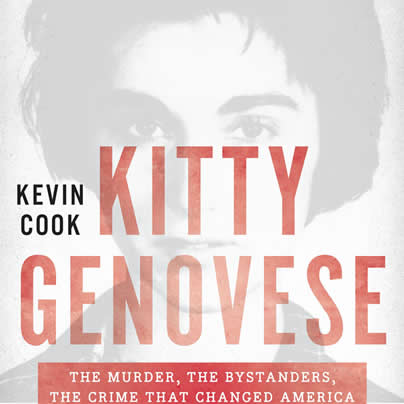
(Image courtesy W.W. Norton)
You always hold doors open.
That’s because your mama taught you to help others. You hold doors for stragglers, lend your ear, dispense advice, volunteer, donate and keep an eye on your neighbor’s house. Really, it’s no big deal.
You’re a good helper, but how involved do you get in other people’s matters? Read “Kitty Genovese” by Kevin Cook, for example, and ask yourself what you’d do if you heard a murder.
By all accounts, Catherine “Kitty” Genovese was a nice girl with a great smile and a generous spirit. As the manager of a local bar near her Queens, New York neighborhood, Kitty was trustworthy, good with customers and was known to loan money to regulars in need. She made friends easily and was an “adventurous, troubled but optimistic, hard-working, fast-driving, living, breathing person …”
Until the morning of March 13, 1964.
It was just after 3 a.m. that morning and Kitty was on her way home to the apartment she shared with her girlfriend, Mary Ann Zielonko. Most people thought they were just roommates and, though it wasn’t quite the truth, the women let others believe it because it was safer. In 1964 and homosexuality was still illegal.
She was in her beloved red Fiat and was driving fast, as she usually did. Perhaps because of the hour, Kitty didn’t notice that she was being followed.
Quiet, soft-spoken Winston Moseley had done something noteworthy for a black man in 1964: he’d purchased a house in an up-and-coming, mostly white neighborhood where he and his wife, Betty, were raising their boys. Between his good job and Betty’s salary, they were relatively well off but Betty sometimes worried about Winston. He was an insomniac and liked “just thinking.” What she didn’t know was that he was “thinking” about killing.
In early March 1964, Moseley committed the “particularly gruesome” murder of a black woman, then calmly went to work. He wondered if killing a white woman would be any different. Two weeks later, while driving around, looking for a victim, he spotted a little red Fiat and had a “compulsion” to find out.
You might be asking yourself what’s so unusual about a 50-year-old crime. Author Kevin Cook will tell you as he takes you on a journey through the early 1960s and a death that literally impacts everyone in North America today.
But that’s not all you’ll read in “Kitty Genovese.”
Cook reminds us in many ways that Genovese was more than just a victim, that she was a real person who loved life. On the flipside, we meet the neighbors who supposedly ignored her cries and we’re shown the slow making of a “monster” who seems chillingly without conscience. Cook uses these parallel stories to illustrate what happened as he busts myths that still linger to this day.
There are outrageous surprises in this book, some heartbreak, and passages that are grisly enough to make anyone squirm. But if you’re a true-crime fan or you love good storytelling, “Kitty Genovese” is a book you can’t help but devour.
And if Cook’s book piques your interest and you absolutely need to know more about this crime and the aftermath, then look for “Kitty Genovese: A True Account of a Public Murder and Its Private Consequences” by Catherine Pelonero.
Here, Pelonero takes a deeper look at Moseley and the murders he committed prior to the attacks on Genovese. You’ll also get a few more details on the trial that followed Moseley’s arrest. It’s a nice companion to the Cook book for anyone who’s still curious.




Books
New book examines fashionista Audrey Smaltz’s fabulous life
‘Every Inch a Lady’ reveals finding true love with another woman
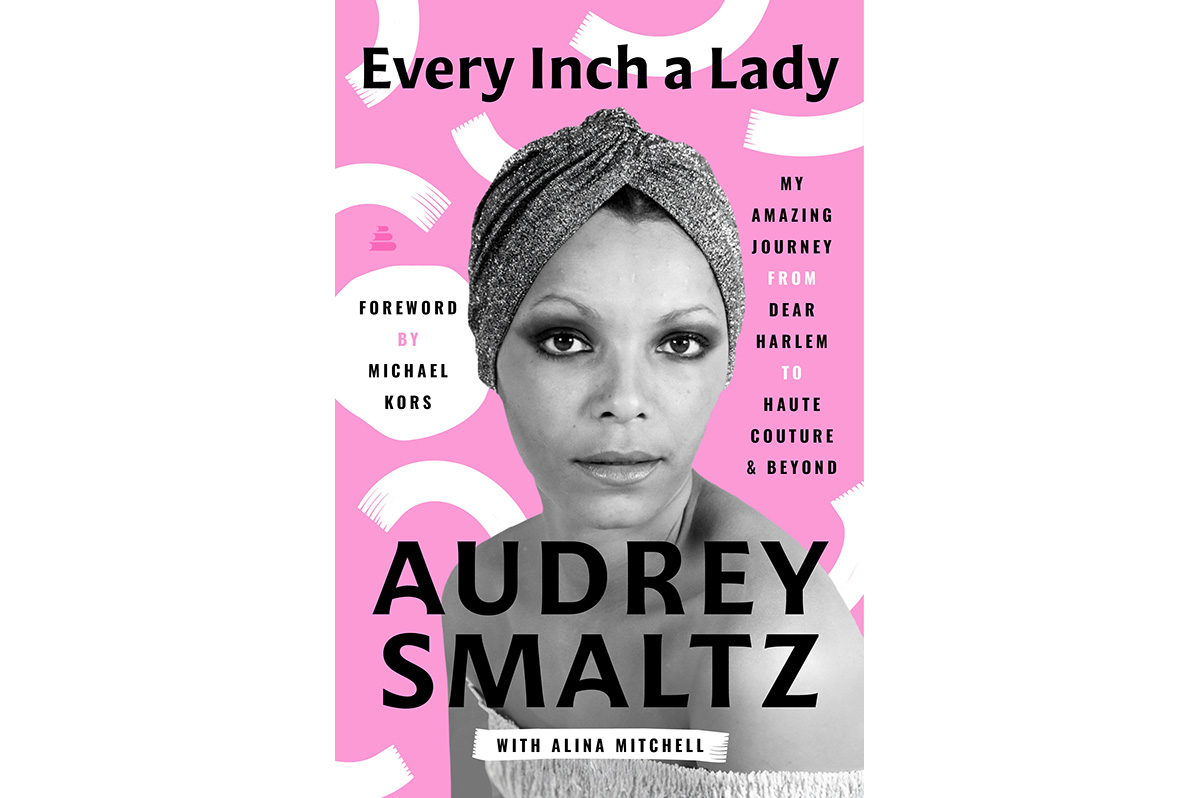
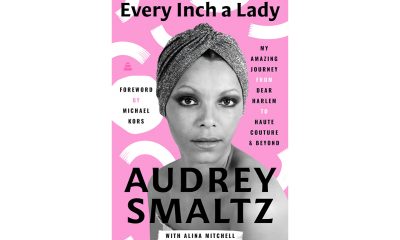
‘Every Inch a Lady’
By Audrey Smaltz with Alina Mitchell
c.2026, Amistad
$27.99/256 pages
Snaps, zippers, buttons, ties.
Toss that garment on, pull it up, wrap it around, you know what you like and how to wear it. The color is perfect for your skin tone, the fabric enhances your form. Yep, you always look your best and, as in the new book “Every Inch a Lady” by Audrey Smaltz (with Alina Mitchell), that best is fabulous.

”Born, bred, toasted, buttered, jellied, and honeyed in Harlem” in 1937, Audrey Smaltz was a force to be reckoned with almost from the time she could walk. Her parents imbued confidence in her, they nurtured her creativity and sent her to charm school, but they never allowed her to create a stir.
“That,” says Smaltz, “is not what ladies did.”
By the time she was a teenager, Smaltz was modeling for New York City designers. Shortly thereafter, she started working for a married man with whom she had an affair, and whom she loved very much. She broke up with him, attended college, worked a series of jobs that taught her about fashion and jobs that didn’t seem to fit her. An ill-fated marriage took her to Chicago where she ultimately landed a position that sent her to work in Ebony magazine’s New York office.
Working at Ebony was a career-changer, in a way. Smaltz was able to travel the world and learn more about fashion, but she didn’t exactly get along with her boss.
Finally, seizing an opportunity, Smaltz decided to launch her own company, Audrey Smaltz, Inc., a “fashion production business,” but she couldn’t get any designers to take a chance on her. Undaunted, she reorganized, re-branded, hit the streets, and knocked on doors until she finally found one client, which led to many others.
Through it all, her personal life was a whirlwind. She dated “more men than you can shake a book at,” settling down occasionally, briefly. Fashion had always been her first love, but she accidentally found real love, “the love of a woman,” at a leadership course.
There’s an old saying that writers need to add lots of “color” into their stories. Read a little of “Every Inch a Lady,” and you’ll notice immediately that author Audrey Smaltz (with Alina Mitchell) quite literally takes that to heart by mentioning nearly every color of the spectrum here. Hmm.
That oddity aside, Smaltz is a wonderfully lively storyteller, speaking with the energy of a woman much younger to the heart of anyone who loves fashion. That glee extends to collectors of vintage clothing, who will be delighted to read about the industry long ago and the way things worked then. Smaltz says she experienced racism, which is not unusual for pre-Civil Rights America, but doors were surprisingly closed for other reasons that will astound anyone who’s savvy about the fashion industry, even today.
There’s quite a bit of name-dropping in this book but most of it belongs in the anecdotes, so you likely won’t mind. If you’re a fashionista, too, find “Every Inch a Lady,” and snap it up.
The Blade may receive commissions from qualifying purchases made via this post.
Books
New book examines Trump cuts to LGBTQ healthcare
‘Aftershocks’ details impact of policy shifts on HIV response, broader public health

As LGBTQ and HIV advocates continue to grapple with the Trump administration’s attacks on healthcare, a new book offers a timely look at what happens when public health systems — and the democratic institutions that sustain them — are pushed to their limits.
The book, “Aftershocks: Trump 2.0, Public Health, and Our Better Angels,” was written by Dr. José M. Zuniga, president/CEO of Fast-Track Health. Zuniga is a globally recognized public health leader with more than three decades of experience advancing responses to HIV, communicable and non-communicable diseases, and the health impacts of climate change. He is also editor-in-chief of the Journal of Fast-Track Health.
The book covers the first year of the second Trump administration. It chronicles the impact of federal policy shifts and budget cuts on the HIV response and public health more broadly, including for LGBTQ communities. Drawing from policy analysis, frontline insight, and lived experience, the author reveal how decades of hard-won progress became vulnerable through Project 2025 and DOGE, but also a paralysis in the HIV and public health communities following the outcome of the 2024 elections.
“In other words, we were caught flat-footed when our opposition had a detailed plan to create chaos and disruption,” Zuniga says. “Thus, the book also offers Horizons 2028 as an antidote to Project 2025 as a starting point for a wide-ranging conversation about how we will build back better given the baseline pre-Trump 2.0 was already imperfect.”
Below is an excerpt from the book.
What Could Not Be Left Unsaid
Let me begin with a simple truth: I did not set out to write this book. Like many in the public health community, I set out daily to do the work of scaling prevention, expanding access to care, strengthening health systems, and ensuring that dignity, equity, and justice are operational realities. Writing, for me, has always been in service of action: policy briefs to shape decisions, editorials to provoke accountability, reports to document progress or failure, and books to synthesize experience into insight that can guide public health action. But Aftershocks is something different; it is not merely an analysis. Instead, it is a record of rupture, of response, and of what it means to continue when the ground beneath your work begins to shift.
This book was written because something changed, and that change came into sharp relief during the beginning days of the second Trump administration, including the erosion of norms, the weaponization of rhetoric, and the recalibration of governance itself. The change was not limited to policy reversals or budget cuts, though there were many. Moreover, it was not confined to rhetoric, though language played a central role. The change was structural and moral: a redefinition of how power understood its obligations to people, to evidence, and to truth itself. And for those of us working in public health, the effects were immediate and personal. We experienced a purposeful disruption of the public health ecosystem and a direct repudiation of the “health for all” principle that guides our work….
Writing this book was, unexpectedly, an act of catharsis. Not because it resolved anything, but because it created space to process what would otherwise have been overwhelming… Amid what many in the public health community experienced as both individual and collective trauma, documenting itself was stabilizing, allowing reflection without detachment and critique without disengagement. But catharsis alone is insufficient. This book is not an exercise in lament; it is also a response. If the period it chronicles is defined by disruption, then its purpose is to offer direction. Where Project 2025 represented a blueprint for ideological capture of institutions, language, and governance, this book offers a counterpoint: Horizons 2028…
Horizons 2028 is grounded in a simple premise: that the future of public health – and of democratic governance more broadly – depends on rebuilding systems that are resilient to political volatility. That means strengthening not only federal capacity, but subnational leadership. It means embedding community-led accountability into data systems. It means aligning health outcomes with social determinants and recognizing that equity is not an endpoint but a continuous process of adjustment and correction. It means treating global engagement not as optional, but as essential to national well-being. In other words, it is a roadmap not for returning to what was, but for building what is required…
I write as an Independent. Not in the sense of detachment, but in the sense of accountability to evidence, to outcomes, and to the people whose lives depend on both… Independence does not mean neutrality in the face of harm; it means refusing to filter reality through partisan allegiance. Importantly, it also means being guided by a consistent commitment to equity, dignity, and justice. These are not abstract values… They are tested in moments of crisis, when the gap between principle and practice becomes most apparent. They demand accountability not only for what is said, but for what is done – and for what is allowed to persist unchallenged. And they require the courage to name harm clearly, even when doing so is inconvenient or politically unwelcome.
That commitment shapes the analysis that follows, but it is also what makes the writing difficult. Because to document harm is to confront it. To trace its origins is to name decisions and their consequences. And to do so honestly is to risk being read as partisan in a landscape where truth itself has become politicized. But the alternative – silence, or false equivalence – is not acceptable. Not when the stakes are as high as they are. There is, however, a thread that runs through this book that resists cynicism, is not optimism, at least not in the conventional sense, but is something quieter and more durable: a belief that even in moments of rupture, there remains a capacity – within institutions, within communities, within individuals – to reorient toward something better.
The Blade may receive commissions from qualifying purchases made via this post.
Books
Exploring Renée Richards’s life through lens of a trans author
Surprises await in new book about pioneering tennis star
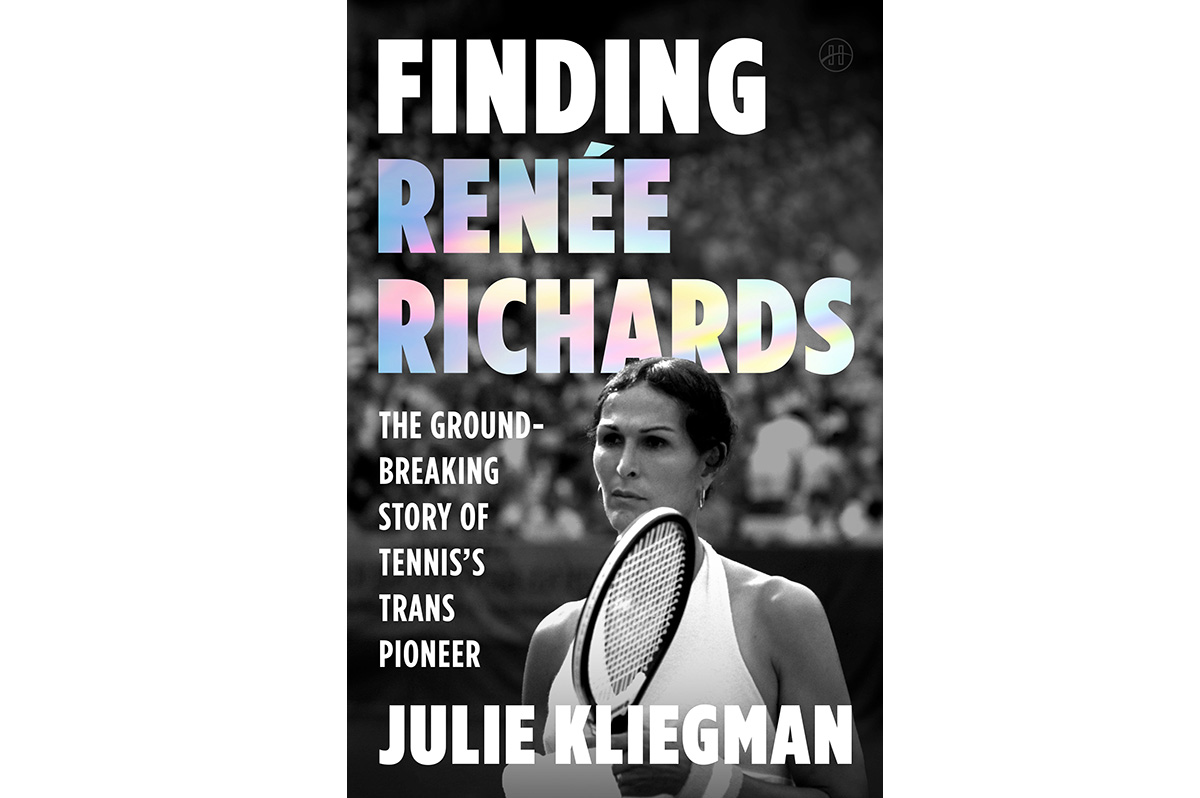
‘Finding Renée Richards’
By Julie Kliegman
c.2026, HarperOne
$28.99/272 pages
Come on in, the water’s fine.
Wade into it up to your ankles, your calves, your waist, you’ll be OK. You’ll adjust to the waves that swirl around you so come on, dive in, it’s all good. As in the new book “Finding Renée Richards” by Julie Kliegman, that goes for swimming, and for controversy.
Assigned to do a story on books written by trans tennis great Renée Richards, Julie Kleigman read the books and became “transfixed by a woman who had fought so hard to simply live as who she had long known she was….”. Their editor had figured that, as a nonbinary and trans individual, Kleigman would have “something incisive to say…” in an article. Instead, once they met and began interviewing Richards, Kliegman was left frustrated.
Born in the late summer of 1934, Richard Henry Raskind seemed to have arrived with a tennis racket in his hand. His mother was a psychiatrist; his father was an orthopedic surgeon who hoped “Dick” would follow his footsteps but Raskind was drawn instead to ophthalmology and tennis. He was also irresistibly drawn to wearing women’s clothing.
His sister knew of this pull and Raskind eventually came out to both parents, but few others on the tennis circuit were aware. When Raskind visited his hometown of New York City, however, he enjoyed furtively going out in women’s clothing but he also tried to squash the desire; in the meantime, he fell in love, married, fathered a son, and eventually learned that it was possible to become the woman he knew he really was.
To continue playing tennis professionally was a bonus.
And right there were the disagreements Kleigman had with Richards.
Richards, “To this day… [makes] a point of describing herself as a woman, period,” says Kleigman, but she firmly acknowledged Richard, almost as a separate individual, insisting that Kleigman use “him/his” pronouns when describing her earlier life.
And as for tennis and trans women’s participation in the sport, Richards had something even more frustrating to say.
Take that as a fair warning: you might be equally surprised at what author Julie Kliegman uncovered in “Finding Renée Richards,” and you may be truly gobsmacked by reading opinions from other women about the topic of trans women in sports.
That’s the main, huge point of interest in this fascinating book; the other is Richards’s life as seen through the lens of a trans individual. Kleigman’s wrestling with the 90-year-old Richards’ firmly dug-in heels is, in itself, worth your time as a study of highly varying viewpoints. That Kleigman and Richards have both lived at least a part of trans history is somewhat of a key to understanding how this book unfolds, as Kleigman offers up Richards’s tale. Readers who are able to read between the lines will be riveted.
If you’re a sports fan and you have opinions, you must read this book – and that goes double if it’s tennis you love. Also check out “Finding Renée Richards” if you just want a raucously good and very fine read.
The Blade may receive commissions from qualifying purchases made via this post.

Gloria Steinem’s life of substance and consequence

Nominate your favorites for the Blade’s 25th annual Best Of LGBTQ DC Awards

Grindr settles UK lawsuit over claims it shared users’ personal information

Md. groups receive state grants to fight hate crimes

Chris Pappas wins NH Democratic Senate primary

‘Here the Whole Time’ delivers queer coming-of-age comedy

Blade Foundation to host fundraiser in Rehoboth on Sept. 12

Actress takes on bisexual ‘Ma’ Rainey in new Round House production

New book examines fashionista Audrey Smaltz’s fabulous life

Everton Blair makes history as first openly gay congressman from Ga.
-

 Movies3 days ago
‘Here the Whole Time’ delivers queer coming-of-age comedy
-
Out & About2 days ago
Blade Foundation to host fundraiser in Rehoboth on Sept. 12
-
Theater2 days ago
Actress takes on bisexual ‘Ma’ Rainey in new Round House production
-
Books2 days ago
New book examines fashionista Audrey Smaltz’s fabulous life