South America
Gay man plays leading role in drafting Chile’s new constitution
Gaspar Domínguez is vice president of Constitutional Convention
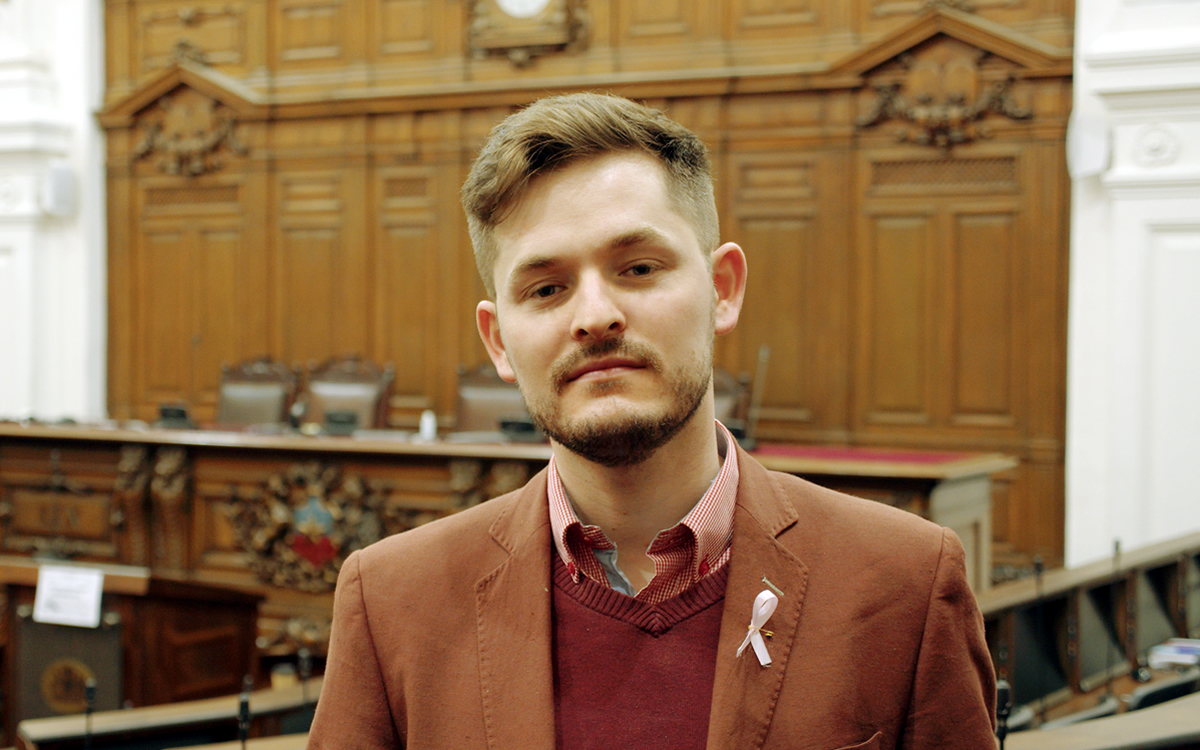
SANTIAGO, Chile — Gaspar Domínguez, the vice president of Chile’s Constitutional Convention that will rewrite the country’s constitution, is a 33-year-old openly gay man. Domínguez last week spoke with the Washington Blade about the historic process through which Chile is going and what it will mean for LGBTQ rights in the country and around the world.
Chileans last May elected 155 people to the Constitutional Convention. Domínguez was one of eight openly LGBTQ people chosen, and he became the constituent body’s vice president in January.
“In this process of deep political transformation that Chile is going through, I think that many doors that were there, that we knew existed, were opened and one of those was to recognize that people of sexual diversity are citizens, that we need to participate and represent ourselves in politics and that was how in the convention we came to at least eight people openly belonging to sexual diversity,” Domínguez told the Blade from his office in the former National Congress building in Santiago, the Chilean capital. “I have had to lead this process, give it an administrative management in terms of deadlines, to organize the processes and also political management because the things we say, the way we say things also help to build certain realities and certain opinion in terms of the consequences that will have for Chile.”
Dominguez noted “Chile is one of the most conservative countries in Latin America.” He acknowledged, however, the country over the last decade has seen many LGBTQ rights advances.
A law that allows same-sex couples to marry and adopt took effect in March.
Domínguez said a draft of the new constitution on which Chileans will vote on Sept. 4 has four “fundamental aspects for the LGBTQ+ population.”
“The most relevant one is that it establishes non-discrimination,” he said. “The constitution will prohibit discrimination based on sexual orientation and gender identity.”
“Second, it establishes the State’s recognition of the existence of diverse types of families in plural, and that, by the way, will have a consequence in terms of public policies in the future,” added Domínguez.
He pointed out to Blade the State would have to guarantee the LGBTQ community is politically represented. The fourth provision would ensure each person has the right to decide their gender identity.
Domínguez highlighted the work of LGBTQ organizations that have been fighting for years for their rights.
“There are organizations and movements of the LGBTQ+ community that think one way and others that think another way and that I think is very good,” he said. “(The first goal was) to make visible that the LGBTQ+ community is not a homogeneous community. That is good, especially today that we are in this constituent process, opening the possibility that these differences have agreements.”
Finally, Domínguez said that “it is a tremendous opportunity for the LGBTQ+ community in Chile and certainly in the world, because today, when we talk about a constitutional reform of political representation in other laws of other countries, they will be able to put that the example of Chile constitutionally ensures the political representation of women in parity terms and the political representation of the different sexual and gender dissidences. So I think there is a tremendous opportunity.”
“I believe that the right to identity, the recognition of equal marriage, the recognition of the different types of families puts us at the forefront in this matter and, by the way, it should become an example for the discussions that other countries will have on similar issues,” he said.




Brazil
US official protested at 2026 International AIDS Conference
White House funding cuts have adversely impacted global HIV/AIDS fight
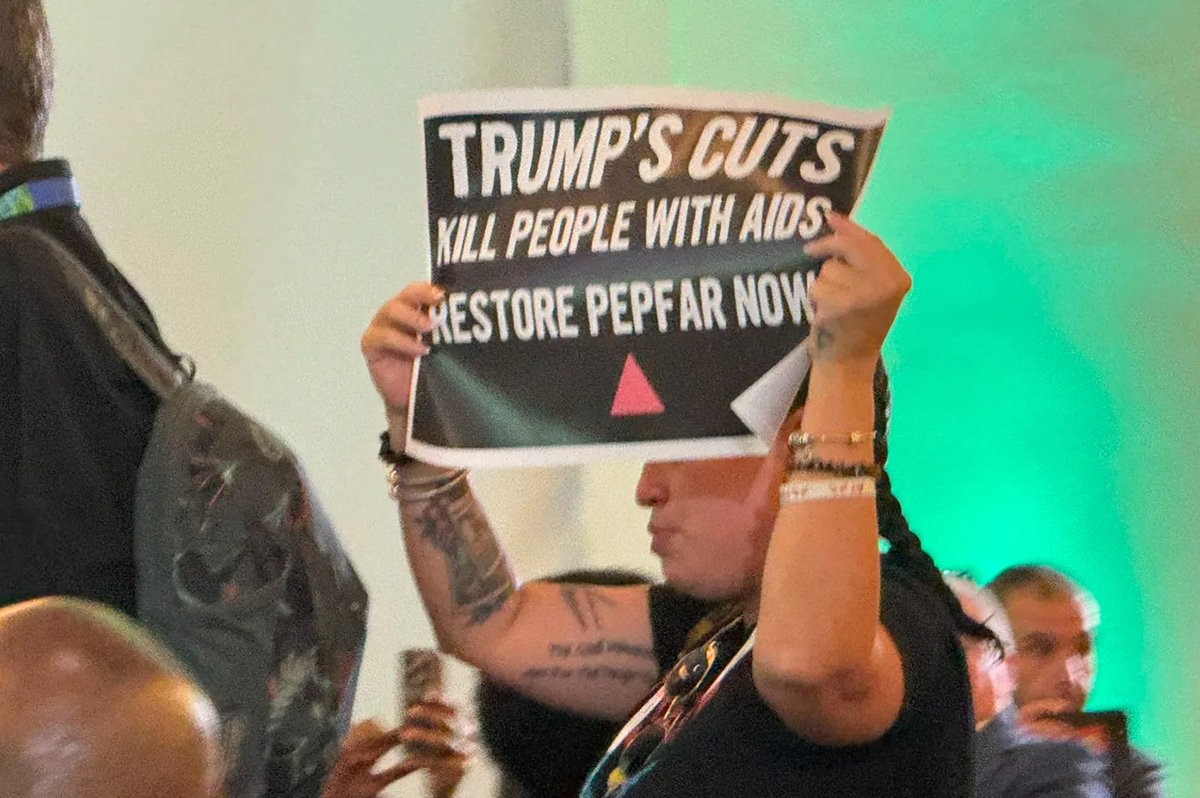
HIV/AIDS activists on Sunday protested a Trump-Vance administration official at the 2026 International AIDS Conference in Rio de Janeiro.
Health GAP Executive Director Asia Russell and others disrupted U.S. Global AIDS Coordinator Jeff Graham, who is leading the Trump-Vance administration’s AIDS 2026 delegation, as he spoke. They were protesting the Trump-Vance administration’s cuts to U.S. foreign aid that they maintain have had a devasting impact on the global HIV/AIDS fight.
“The U.S. government has stolen HIV treatment from 77,163 HIV positive children, slashed PrEP enrollment by 42 percent, closed 1,700 PEPFAR HIV treatment sites, decimated programs led by and for key populations, implementers report slashing condom programming by 93 percent, and so much more,” said Russell in a Bluesky post that contained pictures of her and other activists on stage at AIDS 2026.
The US government has stolen HIV treatment from 77,163 HIV positive children, slashed PrEP enrolment by 42%, closed 1700 PEPFAR HIV treatment sites, decimated programs led by and for key populations, implementers report slashing condom programming by 93% and so much more
— Asia Russell (@asia-ilse.bsky.social) July 26, 2026 at 2:26 PM
Secretary of State Marco Rubio shortly after the Trump-Vance administration took office issued a waiver that allowed PEPFAR and other “life-saving humanitarian assistance” programs to continue to operate during a freeze on nearly all U.S. foreign aid spending. HIV/AIDS service providers around the world with whom the Washington Blade has spoken say PEPFAR cuts and the loss of funding from the U.S. Agency for International Development, which officially closed on July 1, 2025, has severely impacted their work.
The International AIDS Society in a press release it issued last week noted PEPFAR “has saved more than 26 million lives” since President George W. Bush implemented it in 2003, “and changed the trajectory of the HIV pandemic.” The group also said PEPFAR “was a a success under the first Trump administration, with major progress toward the 95-95-95 goals.”
The UNAIDS’s 95-95-95 goals are 95 percent of people with HIV knowing their status, 95 percent of people with HIV having access to antiretroviral therapy, and 95 percent of those receiving ART having suppressed viral loads by 2030.
“Since the start of the second Trump administration, however, it has undergone major disruptions,” added the International AIDS Society.
“No one has to accept being lied to by this administration, particularly not the scientists and communities and activists who know the best what is at stake and what is actually happening,” said Russell on Bluesky.
many many people stood up and applauded during our protest, and thanked us afterward.
No one has to accept being lied to by this administration, particularly not the scientists and communities and activists who know the best what is at stake and what is actually happening
— Asia Russell (@asia-ilse.bsky.social) July 26, 2026 at 2:45 PM
AIDS 2026 will end on Friday.
Brazil
2026 International AIDS Conference to take place in Rio
US funding cuts have significantly impacted global HIV/AIDS fight
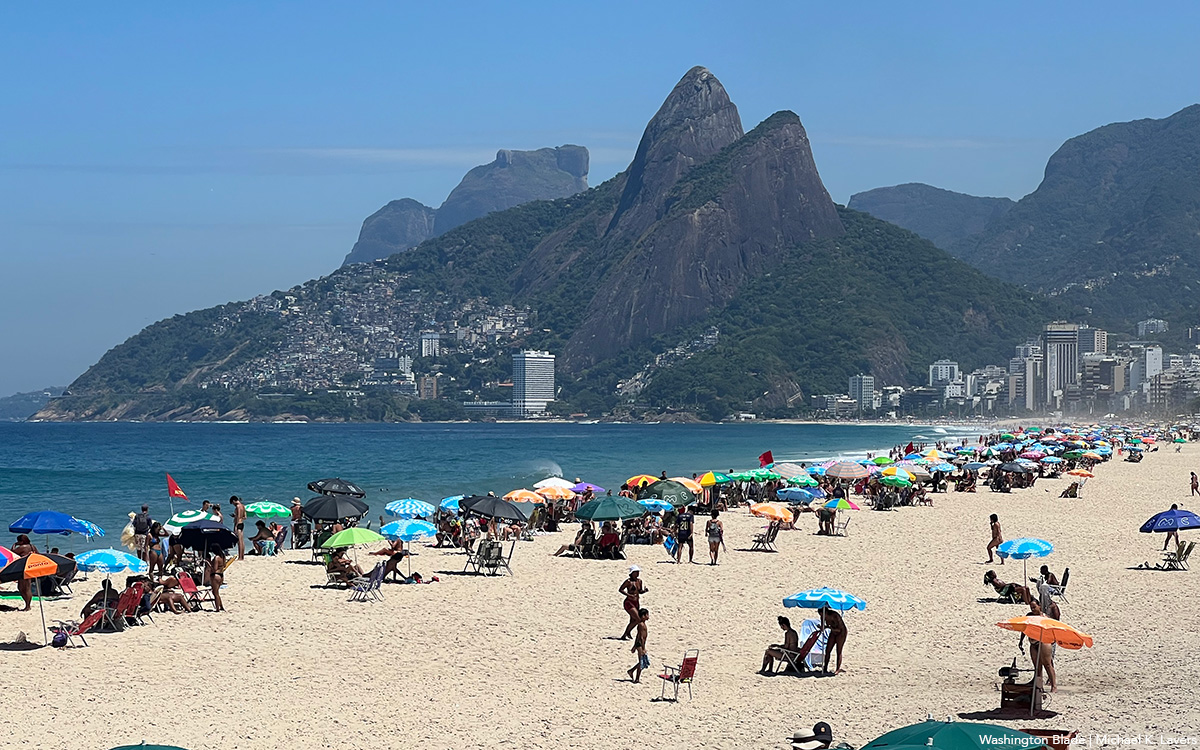
The 2026 International AIDS Conference will take place next week in Rio de Janeiro.
Francisco Ruiz, the former director of the White House Office of National AIDS Policy, and UNAIDS Executive Director Winnie Byanyima are among those scheduled to speak at the conference that will take place in the Brazilian city from July 26-31. Other scheduled speakers include Spanish Health Secretary Javier Padilla, World Health Organization Director-General Tedros Adhanom Ghebreyesus, South African Deputy Health Minister Mathume Joseph “Joe” Phaahla, and Alexus D’Marco of the United Caribbean Trans Network.
The International AIDS Society-organized AIDS 2026’s theme is “Rethink. Rebuild. Rise.”
AIDS 2026 will take place against the backdrop of U.S. funding cuts that have significantly impacted the global HIV/AIDS fight.
Secretary of State Marco Rubio shortly after the Trump-Vance administration took office issued a waiver that allowed PEPFAR and other “life-saving humanitarian assistance” programs to continue to operate during a freeze on nearly all U.S. foreign aid spending. HIV/AIDS service providers around the world with whom the Washington Blade has spoken say PEPFAR cuts and the loss of funding from the U.S. Agency for International Development, which officially closed on July 1, 2025, has severely impacted their work.
The International AIDS Society in a press release it issued on Tuesday noted PEPFAR “has saved more than 26 million lives” since President George W. Bush implemented it in 2003, “and changed the trajectory of the HIV pandemic.”
“PEPFAR was a success under the first Trump administration, with major progress toward the 95-95-95 goals,” it said.
The UNAIDS’s 95-95-95 goals are 95 percent of people with HIV knowing their status, 95 percent of people with HIV having access to antiretroviral therapy, and 95 percent of those receiving ART having suppressed viral loads by 2030.
“Since the start of the second Trump administration, however, it has undergone major disruptions,” added the International AIDS Society.
Eswatini is among the African countries that have received doses of lenacapavir, a groundbreaking HIV prevention drug that users inject twice a year, through PEPFAR since the Trump-Vance administration took office.
The White House last month announced it will end PEPFAR funding for South Africa.
President Ronald Reagan in 1985 implemented the global gag rule, also known as the “Mexico City” policy, that banned U.S. foreign aid for groups that support abortion and/or offer abortion-related services. The Trump-Vance administration earlier this year expanded the prohibition to include groups that promote “gender ideology” and support gender-affirming care and diversity, equity, and inclusion programs.
The International AIDS Society in its press release notes 52 percent of “all implementing partners had at least once terminated award,” while 77 percent of them “had been asked to restrict their work to comply with an additional U.S. policy.” The International AIDS Society notes 1,010 public health facilities, 325 “access points” and 126 “drop-in centers” around the world have closed because of U.S. funding cuts.
“Science is moving fast, giving us more powerful HIV prevention and treatment tools. But these advances cannot save lives if they never reach the people who need them,” said International AIDS Society President Beatriz Grinsztejn, who co-chairs AIDS 2026 and is the director of Rio de Janeiro’s Evandro Chagas National Institute of Infection Diseases’ HIV/AIDS Clinical Research Unit. “That requires robust, stable financing and steadfast political commitment.”
Venezuela
Advocacy groups join Venezuela earthquake relief efforts
Back-to-back quakes on June 24 killed more than 4,500 people
Advocacy groups have joined the relief efforts in Venezuela after two back-to-back earthquakes devastated large swaths of the country on June 24.
The magnitude 7.2 and 7.5 earthquakes caused widespread damage in Caracas, the Venezuelan capital, and elsewhere in the country.
Officials in the South American country say the earthquakes killed more than 4,500 people and left more than 16,000 others injured. La Guaira state on Venezuela’s Caribbean coast in which the country’s main international airport is located is one of the hardest hit areas.
Yonatan Matheus, a Venezuelan LGBTQ rights activist who currently lives in the U.S., was born and raised in La Guaira.
He wrote on his website that relatives and close friends who still live in the state have lost their homes. Matheus in his post that the Washington Blade published on Monday also said the earthquakes killed two gay men he knew.
“Their names reminded me that behind every statistic lie stories, personal bonds, and life plans,” he wrote. “They also made me think of all those people whose lives and deaths are unlikely to make headlines — especially those who lived on the margins for years, with little visibility and without full recognition of their dignity.”
“They reminded me that emergencies never affect everyone equally,” added Matheus. “Those already facing greater vulnerability often bear an even heavier burden during the recovery process.”
The earthquakes struck less than six months after American forces seized then-Venezuelan President Nicolás Maduro and his wife, Cilia Flores, at their home in Caracas during an overnight operation.
Maduro and Flores on Jan. 5 pleaded not guilty to federal drug charges in New York. The Venezuelan National Assembly the day before swore in Delcy Rodríguez, who was Maduro’s vice president, as the country’s acting president.
Hugo Chávez died in 2013, and Maduro succeeded him as Venezuela’s president. Subsequent economic and political crises prompted millions of Venezuelans to leave the country.
Rodríguez has faced criticism over the Venezuelan government’s response to the earthquakes.
AIDS Healthcare Foundation Latin America Bureau Chief Patricia Campos in a message she sent to Michael Weinstein, the group’s president, on June 29 described the government’s response as “uncoordinated, poor, and delayed, influenced by political interests.”
“The number of fatalities continues to rise, and many shelters have been set up in public spaces to help those in need,” said Campos. “Hospitals and morgues are working tirelessly beyond their capacity, demonstrating the community’s resilience. Fortunately, international rescue teams have arrived, offering much-needed assistance to recover those still trapped in the debris.”
AHF has clinics in Cúcuta, a Colombian city that is a few miles from the country’s border with Venezuela, and elsewhere in Colombia.
Campos told Weinstein that AHF Colombia “has been communicating with” more than half of the 1,080 “of our patients in care who live in Venezuela.” Campos also noted AHF relief supplies arrived in Venezuela with the 11/13 Foundation, another NGO, and they had been distributed.

New York-based AID FOR AIDS International, an HIV/AIDS service organization that works in Venezuela, has launched an earthquake relief fund.
The Venezuela Earthquake Emergency Relief Fund has thus far raised $55,893.39. It hopes to raise $250,000.
“All donations will go directly to our network of local partners on the ground in Venezuela, who are working to assess the most urgent needs and provide emergency support to affected communities — including but not limited to medicines, food, water, and shelter,” says AID FOR AIDS International.
The group adds “the scale of destruction is the greatest challenge.”
“La Guaira has been catastrophically damaged, and Caracas continues to deteriorate — with looting, businesses closing due to insecurity, widespread power outages, and hospitals overwhelmed with injured patients but critically lacking supplies,” it says. “Reaching affected communities quickly and safely is not easy under these conditions.”
“Our challenge is immediacy,” added AID FOR AIDS International, which is working with its colleagues in Venezuela and students at the country’s Universidad Central de Venezuela who are part of the relief efforts. “Through the strategic partnerships we have already established with trusted organizations on the ground in Venezuela, we are positioned to mobilize resources directly and efficiently, ensuring that every dollar reaches the families in the affected areas.”
Other groups, such as Venezolanos en Barranquilla, which is based in the Colombian city of Barranquilla, have also joined the relief effort.
Barranquilla Vice President Juan Carlos Viloria in an interview with the Washington Post accused the Venezuelan government of “systematic negligence” by restricting “access to the most affected zones.” Venezolanos en Barranquilla nevertheless continues to work with the Catholic Church and other NGOs to mobilize rescue workers and to facilitate the distribution of food, water, generators, and other items in La Guaira and Caracas.
“Despite this situation, we are continuing to do everything for our people,” Viloria told the Blade last week.

‘Thelma and Louise’ remains landmark of unspoken queer rebellion

Comings & Goings

LGBTQ Military Happy Hour set for Sept. 15

Calendar: September 11-17

Multi-billion-dollar 9/11 Victim Compensation Fund to continue until 2090

Iceland implements gender-neutral blood donor rules

Anti-science, anti-LGBTQ movements go hand in hand

Everton Blair makes history as first openly gay congressman from Ga.

Chris Pappas wins NH Democratic Senate primary

Mujer trans salvadoreña es encontrada sin vida
-

 Iceland5 days ago
Iceland implements gender-neutral blood donor rules
-
Commentary4 days ago
Anti-science, anti-LGBTQ movements go hand in hand
-
Georgia5 days ago
Everton Blair makes history as first openly gay congressman from Ga.
-
2026 Midterm Elections4 days ago
Chris Pappas wins NH Democratic Senate primary