National
U.S. health officials expand approach to monkeypox vaccines as cases crest
At the end of a summer when the number of cases in the monkeypox outbreak rose sharply, the increase in reported infections now appears to be cresting amid increased public messaging and access to vaccines, prompting U.S. health officials to expand their strategy with a new equity-based effort to combat the disease.
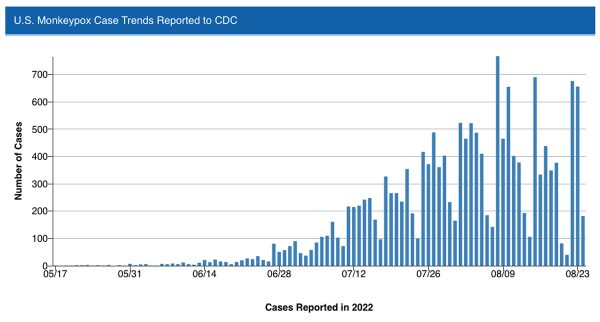
Although the reported number of cases, according to most data from the Centers for Disease Control & Prevention, has reached 18,417 in the United States, the number of additional cases decreased from the high at the start of the month, suggesting a downward trajectory in the spread of the disease as vaccines become more readily available.
The numbers are also consistent with a new study finding a significant number of gay and bisexual men, as well as other men who have sex with men, have been limiting contact with casual sex partners, which has been the driving force in the spread of monkeypox. The report from the CDC last week found limiting one-time sexual encounters can significantly reduce the transmission of monkeypox virus, while about half of men who have sex with men are cutting down on sexual activity amid the outbreak, including one-night stands and app hookups.
With the trajectory of monkeypox on the decline, the Biden administration announced a new initiative with the goal of ensuring vaccine distribution is consistent with the value of equity, including on the basis of geographic, racial, and ethnic lines. A total of 10,000 doses of vaccines in the federal government’s supply will be earmarked for localities that have used 50 percent of their allocated supply to support equity interventions, such as outreach to Black and Latino communities, which have been disproportionately affected by the disease or a specific event and celebration for LGBTQ people, health officials announced Tuesday.
Demetre Daskalakis, the Biden administration’s face of LGBTQ outreach for monkeypox and deputy coordinator for the White House monkeypox task force, laid out the details for the new equity-based supplementary initiative in a conference call Tuesday with reporters.
“So what we mean by an equity intervention is what works in your state, county, or city to reach people who we may not be reaching, especially people of color and members of the LGBTQI+ population,” Daskalakis said. “What it means is: It can be working with a specific group or venue that reaches the right people for monkeypox prevention. Once these innovative strategies have been reviewed by CDC, vaccines will be supplied to jumpstart these ideas and accelerate reach deeper into communities.”
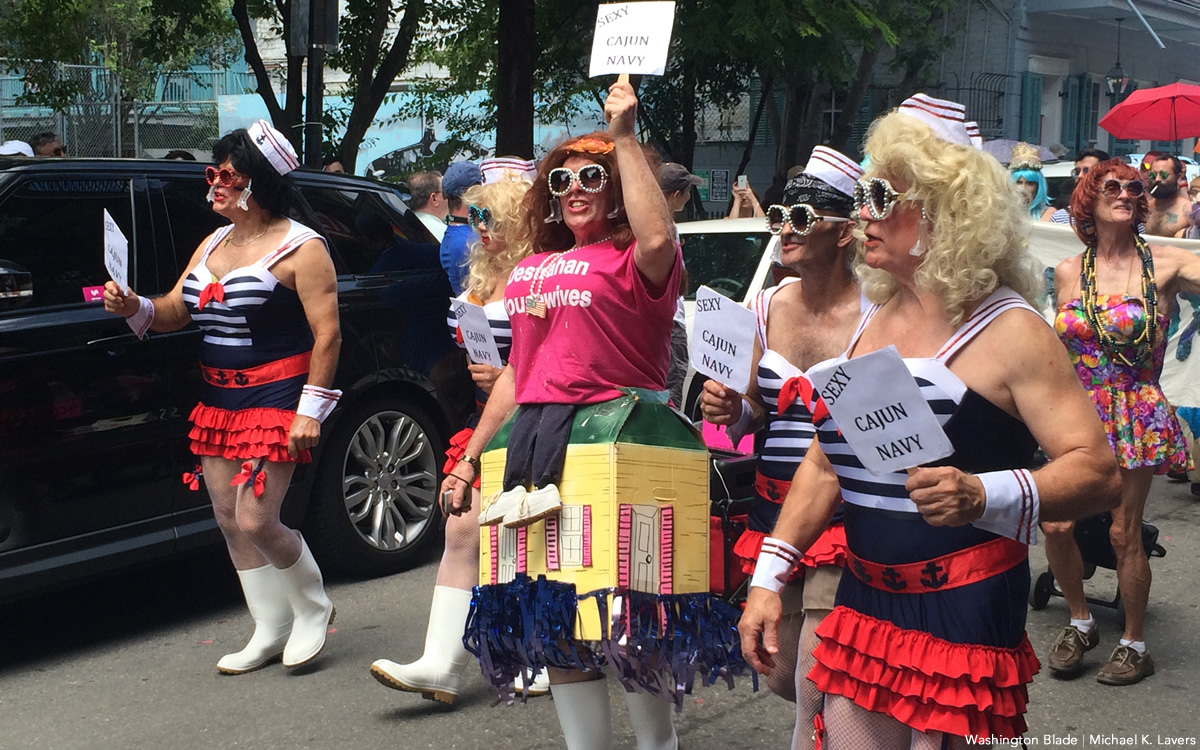
The additional equity-based approach to monkeypox vaccine distribution is consistent with the Biden administration’s efforts in recent weeks to distribute additional shots to localities hosting large-scale events for LGTBQ people at the end of the summer, such as Black Pride in Atlanta and Southern Decadence in New Orleans.
Louisiana Gov. John Bel Edwards joined the conference call with reporters on Tuesday and had high praise for the Biden administration for making the additional 6,000 doses of monkeypox vaccine available in time for Southern Decadence, which takes place in the final week of August through Labor Day weekend.
“This is an example — I think a really solid example — of what a federal-state-local partnership and — and then the community providers as well,” Bel Edwards said. “Because the public health folks in New Orleans have been tremendous, but also the community providers.”
Bel Edwards said health officials in the Biden administration have, in addition to providing more vaccines, sent down multidisciplinary teams to New Orleans to help the state organize and prepare as well as set up testing and vaccination sites “that are going to be convenient for the at-risk population.”
A reporter from the New Orleans Advocate on the conference call, however, asked a pointed question on the recent distribution of vaccines to New Orleans in advance of Southern Decadence: The current approach to vaccine administration requires a series of shots, and even with new distribution most people won’t have even had their second shot by that time, so how can Southern Decadence think they will be protected, especially when vaccines take time to become fully effective?
Daskalakis, while promoting the equity-based approach to vaccine distribution, said the Biden administration has been “very clear” that first shot of the monkeypox vaccine “doesn’t mean that you’re protected for the event.”
“We’re going to talk to them about lots of other strategies that they can reduce risk of acquiring monkeypox, but also make it clear that that shot is not for today; it’s for four weeks from now, plus two weeks after that second dose when you get maximum protection,” Daskalakis said.
First death of monkeypox patient reported
Although the number of cases is cresting, concern about monkeypox continues as well as the potential danger of the disease. Case in point: The death of a hospital patient in Texas who had monkeypox, but may have to succumbed to other factors, has drawn attention amid a conventional understanding the skin disease isn’t fatal. The case represents the first time in the United States that a patient with monkeypox died while having the condition.
The patient, as confirmed by the Texas Department of State Health Services on Tuesday, was an adult resident of Harris County who was “severely immunocompromised” and state health officials reviewing the case said it is under investigation to determine what role monkeypox played in the death.
Jenny McQuiston, a CDC official who specializes in research on zoological diseases that spread from animals to people, said in response to a question on the casualty that health officials are also evaluating the death and the role monkeypox played.
“I think it’s important to emphasize that deaths due to monkeypox, while possible, remain very rare,” McQuiston said. “In most cases, people are experiencing infection that resolves over time. And there have been very few deaths even recorded globally. Out of over 40,000 cases around the world, only a handful of fatalities have been reported.”
Despite the cresting in the number of cases, many health experts aren’t sold on the new approach to vaccines announced earlier this month by the Biden administration, which sought to expand existing doses of vaccines fivefold as supply hasn’t met demand. The new vaccine approach calls for injecting the JYNNEOS vaccine from the subcutaneous route (delivery of the vaccine under the fat layer underneath the skin) to the intradermal route (delivery of the vaccine into the layer of skin just underneath the top layer).
Bob Fenton, a regional administrator for FEMA and the response coordinator for the White House task force, said about 75 percent of jurisdictions have already adopted the new approach to vaccine injection, while an additional 20 percent are working toward a “fully operational intradermal method.”
“We continue to be laser-focused on doing everything within our power to help jurisdictions and clinicians get shots in arms,” Fenton said. “We’re seeing more and more jurisdictions adopt the intradermal administration.”
Data of this new intradermal approach, critics have said, is insufficient to support the idea it will be as effective as subcutaneous injections, although the Biden administration continues to give assurances the new route for injections is tested and safe. According to a report earlier this month in the Washington Post, the manufacturer of the JYNNEOS vaccine in Denmark, Bavaria Nordic, privately threatened to cut off supply of the shots based on a conversation with health officials on objections the vaccine hasn’t been approved for intradermal use.
McQuiston, in response to a question on whether or not U.S. health officials are collecting newly available real-world information on the results of the new vaccine approach, said U.S. health officials continue to receive data on monkeypox and soon onboard information from additional states.
“CDC operates a system called VAERS — or the Vaccine Adverse Event Reporting System — and we’re actively looking at…different types of events that might be reported post-vaccination,” McQuiston said. ” And we are actively gathering information from the different jurisdictions and states and cities about which vaccines they’re administering — whether it’s subcutaneous or intradermal — and we are gathering those data now, as we speak.”
National
Human Rights Watch sharply criticizes US in annual report
Trump-Vance administration ‘working to undermine … very idea of human rights’
Human Rights Watch Executive Director Philippe Bolopion on Wednesday sharply criticized the Trump-Vance administration over its foreign policy that includes opposition to LGBTQ rights.
“The U.S. used to actually be a government that was advancing the rights of LGBT people around the world and making sure that it was finding its way into resolutions, into U.N. documents,” he said in response to a question the Washington Blade asked during a press conference at Human Rights Watch’s D.C. offices. “Now we see the opposite movement.”
Human Rights Watch on Wednesday released its annual human rights report that is highly critical of the U.S., among other countries.
“Under relentless pressure from U.S. President Donald Trump, and persistently undermined by China and Russia, the rules-based international order is being crushed, threatening to take with it the architecture human rights defenders have come to rely on to advance norms and protect freedoms,” said Bolopion in its introductory paragraph. “To defy this trend, governments that still value human rights, alongside social movements, civil society, and international institutions, need to form a strategic alliance to push back.”
The report, among other things, specifically notes the U.S. Supreme Court’s Skrmetti decision that uphold a Tennessee law banning gender-affirming medical interventions for minors.
The Trump-Vance administration has withdrawn the U.S. from the U.N. LGBTI Core Group, a group of U.N. member states that have pledged to support LGBTQ and intersex rights, and the U.N. Human Rights Council. Bolopion in response to the Blade’s question during Wednesday’s press conference noted the U.S. has also voted against LGBTQ-inclusive U.N. resolutions.
Maria Sjödin, executive director of Outright International, a global LGBTQ and intersex advocacy group, in an op-ed the Blade published on Jan. 28 wrote the movement around the world since the Trump-Vance administration took office has lost more than $125 million in funding.
The U.S. Agency for International Development, which funded myriad LGBTQ and intersex organizations around the world, officially shut down on July 1, 2025. The Trump-Vance administration last month announced it will expand the global gag rule, which bans U.S. foreign aid for groups that support abortion and/or offer abortion-related services, to include organizations that promote “gender ideology.”
“LGBTQ rights are not just a casualty of the Trump foreign policy,” said Human Rights Watch Washington Director Sarah Yager during the press conference. “It is the intent of the Trump foreign policy.”
The report specifically notes Ugandan authorities since the enactment of the country’s Anti-Homosexuality Act in 2023, which punishes “‘carnal knowledge’ between people of the same gender” with up to life in prison, “have perpetrated widespread discrimination and violence against lesbian, gay, bisexual, and transgender (LGBT) people, their families, and their supporters.” It also highlights Russian authorities “continued to widely use the ‘gay propaganda’ ban” and prosecuted at least two people in 2025 for their alleged role in “‘involving’ people in the ‘international LGBT movement’” that the country’s Supreme Court has deemed an extremist organization.
The report indicates the Hungarian government “continued its attacks on and scapegoating of lesbian, gay, bisexual, and transgender (LGBT) people” in 2025, specifically noting its efforts to ban Budapest Pride that more than 100,000 people defied. The report also notes new provisions of Indonesia’s penal code that took effect on Jan. 2 “violate the rights of women, religious minorities, and lesbian, gay, bisexual, and transgender (LGBT) people, and undermine the rights to freedom of speech and association.”
“This includes the criminalization of all sex outside of marriage, effectively rendering adult consensual same-sex conduct a crime in Indonesia for the first time in the country’s history,” it states.
Bolopion at Wednesday’s press conference said women, people with disabilities, religious minorities, and other marginalized groups lose rights “when democracy is retreating.”
“It’s actually a really good example of how the global retreat from the U.S. as an actor that used to be very imperfectly — you know, with a lot of double standards — but used to be part of this global effort to advance rights and norms for everyone,” he said. “Now, not only has it retreated, which many people expected, but in fact, is now working against it, is working to undermine the system, is working to undermine, at times, the very idea of human rights.”
“That’s definitely something we are acutely aware of, and that we are pushing back,” he added.
Maryland
4th Circuit dismisses lawsuit against Montgomery County schools’ pronoun policy
Substitute teacher Kimberly Polk challenged regulation in 2024
A federal appeals court has ruled Montgomery County Public Schools did not violate a substitute teacher’s constitutional rights when it required her to use students’ preferred pronouns in the classroom.
The 4th U.S. Circuit Court of Appeals in a 2-1 decision it released on Jan. 28 ruled against Kimberly Polk.
The policy states that “all students have the right to be referred to by their identified name and/or pronoun.”
“School staff members should address students by the name and pronoun corresponding to the gender identity that is consistently asserted at school,” it reads. “Students are not required to change their permanent student records as described in the next section (e.g., obtain a court-ordered name and/or new birth certificate) as a prerequisite to being addressed by the name and pronoun that corresponds to their identified name. To the extent possible, and consistent with these guidelines, school personnel will make efforts to maintain the confidentiality of the student’s transgender status.”
The Washington Post reported Polk, who became a substitute teacher in Montgomery County in 2021, in November 2022 requested a “religious accommodation, claiming that the policy went against her ‘sincerely held religious beliefs,’ which are ‘based on her understanding of her Christian religion and the Holy Bible.’”
U.S. District Judge Deborah Boardman in January 2025 dismissed Polk’s lawsuit that she filed in federal court in Beltsville. Polk appealed the decision to the 4th Circuit.
Minnesota
LGBTQ Minnesotans speak out amid ICE crackdowns
‘Our nervous systems are not set up to live under constant threat’
Uncloseted Media published this article on Jan. 31.
By HOPE PISONI, SAM DONNDELINGER, SPENCER MACNAUGHTON, and TAYA STRAUSS | Since the start of December, Minneapolis and St. Paul, Minn., have been under the thumb of an extremely heavy presence of the U.S. Immigration and Customs Enforcement.
During the crackdown, which the agency refers to as “Operation Metro Surge,” at least 3,000 people — mostly undocumented immigrants — have been arrested so far. Tensions came to a boil in January when federal immigration enforcement agents shot and killed poet Renee Good and ICU nurse Alex Pretti on separate occasions. In response, Minneapolis-area residents have started to push back. On Jan. 23, Minnesotans organized the first citywide general strike in the U.S. in nearly 80 years, with tens of thousands protesting and over 700 businesses closing in solidarity. And additional protests are taking place nationwide in at least 36 states over Jan. 30 and 31.
Many queer people have been on the frontline of these protests. We spoke with six people on the ground in the Twin Cities to learn more.
Watch the full interview above or read the transcript here:
SPENCER MACNAUGHTON: Hi everyone, I’m Spencer Macnaughton, and today I am here with six queer folks from the Minneapolis area. Everyone, thank you so much for speaking with me and Uncloseted Media today.
ALL: Thanks for having us.
SM: Yeah, great to be with you. And obviously we reached out to you all based on the headlines. And a lot of what’s playing out at the national level is happening right there in Minneapolis where you guys live. And I just wanted to start to really get a pulse check. How are you guys feeling right now? I have not been in Minneapolis. For folks who only see what’s unfolding on social media or on TV, take us inside what life has been like for you all the past few weeks.
RACHEL DOMINGUEZ: It’s incredibly stressful. Our nervous systems are not set up to live under constant threat. That’s the biggest thing that I think people are not understanding about what’s going on. And I’ve lived in Minneapolis for 41 years. We had a little dress rehearsal for this about five years ago, but it was nothing — there was no precedent. There’s no precedent for this. It’s like water about to come to a boil. Everyone here is stressed out. We’re angry. We’re scared for our safety, for our neighbors’ safety, for our livelihoods. We have no idea when this is gonna stop. Oh, and it’s two fucking degrees out.
JUNE REICHERT: It’s hard to go on like normal when this is happening. Part of my, and I’m sure everybody in your profession, is to not even acknowledge it. Pretend that everything’s okay while you’re at work, while you are going to school, while you are going shopping and everything. And little do you know, down the street, a Somali family is being harassed for no good reason. It brings this feeling of sorrow, especially when it does affect your professional life. When somebody who you’ve been working with for a long time, all of a sudden, as part of my job, I can’t get a hold of them. I work with a lot of people from the Hispanic community and they’re just gone. And you just sit wondering. It’s horrible. It’s a horrible feeling.
SM: And June, tell me more about that. That actually happened?
JH: So for what it’s worth, I sell insurance. I have had clients who have been picked up and I can’t get a hold of them. I mean, I can verify what happened to them, but these people I’m able to get a hold of every single day when I need to, to take care of this, that or the other issue. And now I can’t get a hold of them for a week straight. What am I supposed to think? You know?
SKOT RIEFFER: My day job, I work for a catering company. We have no work at my catering company for the next two months because every single event has canceled because of the ICE occupation. And these events are things from corporate events to weddings. And we’re all now without a job, essentially. My catering company is maybe 30 percent white people and so all of us are checking in with everyone else all the time. One of our folks, also a member of the Hispanic community, has lost four family members. They just got kidnapped. And they’re just gone.
ALICIA KOPP: I am the child of a migrant. I’m from a mixed heritage. My father is from Guatemala. He’s been a citizen since ‘83. Right now, we’re not letting him leave the house. We’re running all errands. The stress that you had spoken to earlier, Rachel, that is definitely wearing thin on all of us.
SM: I mean, what type of mental health effects is that having on him by not being able to leave the house and also probably understanding the reasons why he’s not leaving the house?
AK: When I handed him things like, I showed him what was in a whistle kit with the red cards. This is an emergency contact card. On the inside, the top part says, “help me,” and it’s got whoever’s holding it, their information. The bottom has their loved one and their lawyer and contact information. And they carry this in one of these red cards that on one side has your constitutional rights and on the other side says what you would tell to an immigration agent if they tried to stop you. Or you would just put it up to the window in your car or slip it through, so that you don’t have to talk to them. Now, what good it does? Yeah, I don’t exactly know. Because they’re not exactly following the rules, they kind of tell a lot of people, “That doesn’t matter, we don’t care.” But with this contact card, you have it on you, you literally hand it to somebody if you feel like you’re about to get picked up and say, “I need help. Contact this person for me.” Trying to explain to my dad why, even though he’s a citizen now, I wanted him to have this on him if he’s leaving the house? That was hard. And he was a little belligerent at first. I’m just like, “Look, you’ve kept me alive for 50 fricking years. It’s my turn to do the same for you. And right now, they don’t care that you’re a citizen. They just see you and they go, ‘Yep, we don’t want him here.’ And they’re gonna take you away. You’ll be away from your medicine. You’ll be away from us. It will take us how long to figure out where you are.” Even if it’s like hours, that probably isn’t great for somebody that probably shouldn’t be rassled to the ground by young dumb men or women or whoever they are. But you know, it’s hard. It’s really hard for him and it’s hard for all of us because you don’t wanna have to talk to your parents like that.
TERRESA HARDAWAY: I just wanted to comment on how I’m feeling in this moment, and I would say that while I am tired, I’m not exhausted. And it’s because Black people have always been under occupation. And I’m so happy that people are coming to the realization that state violence and national violence is something that affects all of us. But I gotta say my exhaustion probably comes from the long story posts and the Instagram posts of people realizing for the first time that they are also a part of this system. And they realize that they are also subject to be attacked and to be violently murdered in the street, just like Black people, I think that’s where my exhaustion might come in. But I will say, because we are used to this, I know that this is not gonna be the final moment. I don’t want to hold onto this hopelessness that I feel like a lot of folks who are just coming into that realization are starting to feel on their own. And so we have to just keep fighting. And as tired as we are, now is the time for us to actually push the system that we want to stop harming our neighbors.
SM: And how do you push a system in this moment? What is the strategy in terms of pushing? Because, you know, it does feel like a moment where change could happen because there’s so much attention on it.
TH: There are many, many ways that folks can tap into mutual aid networks, can tap into organizations who have been advocating for immigrant rights and equity in those spaces. If there are holes within our neighborhoods that need to be filled, people need food, people need supplies, and they aren’t comfortable leaving their house, there are organizations who have already been doing that work that people can tap and support. People can become legal observers. There is a lot of things that folks could do. This anxiety that I know that we’re all feeling and this exhaustion? I would say focus that into some of the work that’s already happening.
RD: My kid has only gone to Southside Family School for his entire life. That’s where Renee Good, that’s where her kid went. Still goes there actually. So, our kids, first off, they couldn’t be in school. Because the New York Post ran some bullshit article about how our school was some like communist indoctrination training center that recruited her to join an ICE watch. And then all of a sudden death threats, bomb threats, people coming into the teachers’ houses and knocking on the doors and running away. Bomb threat, they had to bring the dogs in. So my kid didn’t even get to go to school for two weeks and now they’re back in school in a secret location. Like this is the fucking Taliban that we’re hiding from.
SM: Wow.
RD: I can’t even say where my kid goes to school. We’re not even supposed to text it.
SM: I’m sorry you have to do that. And I, yeah, and we’ve all seen those harrowing headlines and images of children as young as 2, as young as 5, being taken by ICE over the last few weeks. I wanted to ask more broadly, for the kids you guys know in your life, what is the impact this is having on children?
AK: A lot of stuff for kids are being canceled. I know that the Minnesota Orchestra has canceled their Young People’s Concert Series for the time being because it’s just not safe to go down there. The students that auditioned last spring to be part of the All State Ensembles, all of their concerts have been canceled because it is just not safe.
SR: My partner and I have started doing neighborhood patrols because there’s a daycare two houses down from ours that caters to our small little, poor community around here and everything like that. And so there’s a lot of different folks who go to this daycare. And so every morning from 7:30 ‘til 10, I’m out there, and then from 3 until 5, which is the pickup times. And so we’re out there as observers.
And there’s been some real scary things, and one thing that is really burned in my head was this dad came up and was chatting with me and thanking me for being there and whatnot. He said to me that his kid, his daughter came up to him and asked him, “Dad, what do I do when the men come and take my friends?” And he didn’t have an answer and he was like, “I feel like my job as a dad is to be able to answer these questions and I do not have an answer” and he was sitting there, and we’re outside, it’s –10 and he’s crying. And I’m crying. And our tears are freezing to our damn faces and all I can do is just nod and hug this guy and just be like “yeah, I don’t have an answer either, man.”
SM: You mentioned the ICE patrolling. Tell me about what that is, what you do and why you’re doing it.
SR: We’re just looking for suspicious vehicles. So if out-of-state plates, a slew of identical looking SUVs drive by, we’re marking it, we’re reporting it to the other people in our Signal groups and everything like that. And then in the situation, just the other day, there were three black SUVs that drove by, all of them with ICE agents in full equipment, everything. So we reported all of that. We’re monitoring, we’re taking pictures, we are marking plates, we’re running plates if needed, and just letting every — like there’s a Hmong Market just down the road, and so we let them know. There’s a small, kind of a strip mall that’s almost all owned by people of color, and we call one of them and then they distribute the word and they’ll lock their doors if we see anyone. Just things like that.
SM: When you say you report it, who do you trust right now to report to?
SR: Our neighbors.
SM: Your neighbors.
SR: We have a Signal group, I’m part of several Signal groups. I will get called. Someone will tell me and be like, “hey, we need a big white guy here right now.” And I will show up. And then when I get there, I see things, I take pictures, I send it to that group and I send it to my group of my immediate block of neighbors. And so then they all know, and then they’ll either go check on the neighbors next door who didn’t respond in the group or will drive to the daycare or whatever is needed to do.
SM: Maybe this is a dumb question, but why do you think they’re saying “we need a big white guy”?
SR: I mean, I’m just as likely to get shot and killed and kidnapped and everything as anybody else at this point. But if they’re trying to push the agenda that these types of people are bad people and whatnot, and if in every camera frame that they have, if there’s someone who looks just like you? That bullshit narrative, it’s harder for them to sell it. If I’m standing there, it’s harder for them to sell it. And I hate it. It sucks on so many levels, obviously.
SM: Can people talk about what they’re doing to push back?
TH: Yeah. I think for me and my teams at Blackbird Revolt and Black Garnet Books, we have these spaces. And so this is something that we didn’t have in 2020. And so being able to activate these spaces, hosting a poster making and community space for folks to come together who do feel similarly and just want to be in space with each other has been really amazing. We are also holding a drive where folks can purchase a book, that’s either in English, Spanish or Somali, that we’re able to deliver to families that don’t feel comfortable leaving their homes.
RD: The people here, we don’t have any faith in the politicians, that they’re going to do anything meaningful or that they have any power at all. We don’t have any faith that the police are going to protect us or that the National Guard is gonna protect us or that Tim Walz or Jacob Frey or any of them are gonna be able to protect us.
SM: Why don’t you feel like you have faith in Jacob Frey? I mean, when I see him on TV and he’s saying “get the hell out,” it seems like he’s giving his best effort, but is that a sentiment that is not felt on this call?
SR: It’s super fucking easy to say “get the fuck out.” We’re all saying that, but all of us are also in the street. All of us are also helping, donating food, donating time. Where the fuck has he been?
TH: I’m seeing the real people who are standing up for these communities out at the protest. I ain’t never once seen that man and that man just stay talking shit and never moves and never has any action behind it. Fuck that man. Fuck all of this whole, “get the fuck out.” Stop, anybody can say a cuss word, but you actually have the power to pass policy and you’re not doing it. So it’s not about not having faith. We have a history of seeing them say shit and then not backing that up with action. So it’s not about faith. We have a historical record of y’all not doing shit for the people.
SM: So let me ask then quickly, what do you want him to do? What could he do that would be meaningful right now if he could actually do, that’s within his power?
JH: If you don’t want to start a constitutional crisis by arresting an ICE officer while he’s doing the awful things that he’s doing, fine, I guess. I would argue differently.
RD: No, that’s not fine. That’s what they should do. That’s what they could do.
JH: Correct.
RD: They could get some fucking balls and call the commanders into their office and say, “Look, are you loyal to the constitution or are you a Nazi that’s gonna fold?”
JH: If these people want to preserve whatever level of normalcy that we know has not existed as Rachel, Terry and Alicia have all described, then citations, parking violations, trespassing violations, these people are using their administrative warrants, that are not admissible to use to enter people’s homes, to enter people’s homes. And they aren’t getting trespassing citations for that. They aren’t getting charged for that, I don’t even think the mayor has talked about the fact that they’re doing that. And these are all things that are actions that can be done instead of tweeting really hard. I want action. I don’t want words. I don’t want you to look like a big tough guy and to get all the people on Twitter or Bluesky or whatever to go, “Oh, he owned him.” I want them gone. I don’t want them here anymore.
SR: He could at the very least talk to us. All he’s doing right now is talking to the media. Talk to us, show up. Maybe he’s doin’ shit behind closed doors. Okay fine, but tell us. Talk to us. Come out, listen. Talk. Be present.
SOREN ASTER: One thing we did at the clay pit as well is I changed it to appointment only. I did as much research as I could on how to keep ICE from coming into the public space of my business, and I found that by making it by appointment only, the whole space becomes private and they cannot come in. So my door stays locked. I let people in as I see fit, but just as another form of precaution, keeping those doors locked. It’s an absolute nightmare.
SM: It literally sounds like it’s created a situation where every move you make is nerve-wracking because of what’s happening.
SA: Absolutely.
SM: I’ve heard many people saying that what’s unfolding in Minneapolis is a queer story. And I find that interesting. And I’m curious, do you guys agree with that?
JH: I want to push back a lot on the idea that this is a very queer thing that’s happening. As a transgender person, I’ve been a community activist for quite a while, especially in 2022 when the federal government, from my perspective, was failing to protect my trans siblings in states like Florida and Texas. There’s a lot of my activism that I do that is directly fueled by my queer identity. My neighbors, my friends, my colleagues, my clients even, are being attacked by a force that is an invasion to our city and our state. And it is on me as a human with human emotions and a personal connection to this place to protect my community, and that’s got nothing to do with me being gay. The motivation is, in this instance, for one of a very rare time in my experience, very disconnected from my queer identity. It’s got more to do with protecting Minnesotans. It’s got more to deal with protecting communities, immigrant communities and communities of color who people who look like me, as we’ve discussed here, famously just don’t even bat an eye at, and it’s wrong.
SA: I don’t think it’s an inherently queer thing, but I think that queer people and Black and Brown people are used to having to rely on our community, rather than our government and other people to get the things that we need and to get the support and to make things happen. We’re used to having to riot, and we’re used to having to scream and try and get people to listen to us and our stories. And so I think when this started. The first people that really knew what to do and how to do it and how to organize are those people. And so I think that it’s one part of the story.
SM: One thing we had mentioned earlier is what happened in Minnesota in 2020. Many have compared what’s happening now to the George Floyd protests of 2020. Um, how do you guys compare it? How is it different? How’s it similar?
AK: The big difference? We knew who the police were, we kind of know who these people are, but we don’t know who those people are. We know that they are some of the same people that were let out of the Jan. 6 stuff because of the pardon. And we know they’re likely a lot of the cops that left the profession because they couldn’t beat up on people so freely in Minneapolis anymore with some of the initiatives that have been trying to change the culture of our police forces.
Editor’s Note: While some government officials, including U.S. Reps. Jamie Raskin (D-Md.) and Steve Cohen (D-Tenn.) have called for the DOJ to release information on any participants of the Jan. 6 insurrection employed by ICE, no details have been published. Additionally, several police chiefs and sheriffs have reported that ICE has tried to poach their officers for recruitment, but Uncloseted Media was unable to confirm any cases of this in Minneapolis.
TH: I think for me, I compare it to the longevity of support that’s gonna be happening. I think that after a year, after the protests, after the uprisings, it went back to business as normal, business as usual. I’m also a runner. And so when I’m gonna run a short distance, if I know I’m just trying to get a fast-ass time running a mile, I’m gonna run at that at full velocity. And I feel like people who are just getting activated, that’s what they’re doing. They’re running at it at full velocity and then they get exhausted. Y’all need to run this as if it’s gonna be a 50 mile race. I think for me, how I was activated during the uprisings, I’m really leaning on community. I am texting my group of white allies and being like, “Y’all, I need y’all to pick this up. I need you to help me here, dah dah dah.”
JH: It is unfortunate to me that many people, similar to in 2020 and 2021, will see the immediate aftermath of something and see Derek Chauvin got arrested or whatever it is, and they’re done. And that’s it. And we made the change. And now we can go back. It’s a joke in my community: We can go back to brunch. No we can’t. We’re not done. And they think once ICE is out of Minneapolis and the white people stop dying, then they can just go back to sipping their tea. And I’m worried about that. So it’s a push and pull, and I really want to remain optimistic, and I know there is a future worth fighting for. But I’m also worried that some people will see the short-term victories and give up.
SM: Trump has said that Minnesotan protesters are “left-wing agitators.” I want to know, maybe as a last question, I want to know, how important is protest and what else is getting you through right now?
AK: Well, protest is very important to me, but also understanding the multitude of ways that you can participate in protest. You don’t have to be out necessarily facing off with people that are on an opposing side. You are doing protest by maybe doing a Zoom concert because your concert got canceled and you’re still going to play. Or by delivering food for neighbors and other health and home needs, like laundry detergent is a huge one right now that people need as well as just things like shampoo and soap.
SA: All of the reactions that have happened are really logical when you think about it from an outside perspective. If you take out left and right and the political ideologies of it all, people are coming in and abducting people that are here, mostly not committing crimes. A lot of people, perfectly legal. In any other situation, I think the logical answer would be to fight back and to step up to your community and do what you can to prevent those kidnappings and to prevent that violence from happening.
TH: Protests were so important that it is the first amendment. And so when we get asked things like, “Why are we protesting?” The country was founded on that. I don’t want people to just only relate it to Black people or just to trans people. It was something that was laid at the foundation of this country. We do get to say what we want our government to do and protest is our way of being able to speak out about that. And if you weren’t comfortable with that, you shouldn’t have ran for president.
-
Arts & Entertainment5 days agoCatherine O’Hara, ‘Schitt’s Creek’ star and celebrated queer ally, dies at 71
-
Out & About4 days agoThis queer comedy show will warm you up
-
Theater3 days agoOut dancer on Alvin Ailey’s stint at Warner Theatre
-
Real Estate3 days agoUnconventional homes becoming more popular