Local
Film ‘Wonderfully Made LGBTQ+R(eligion)’ set for D.C. premiere
Documentary explores challenges faced by queer Catholics
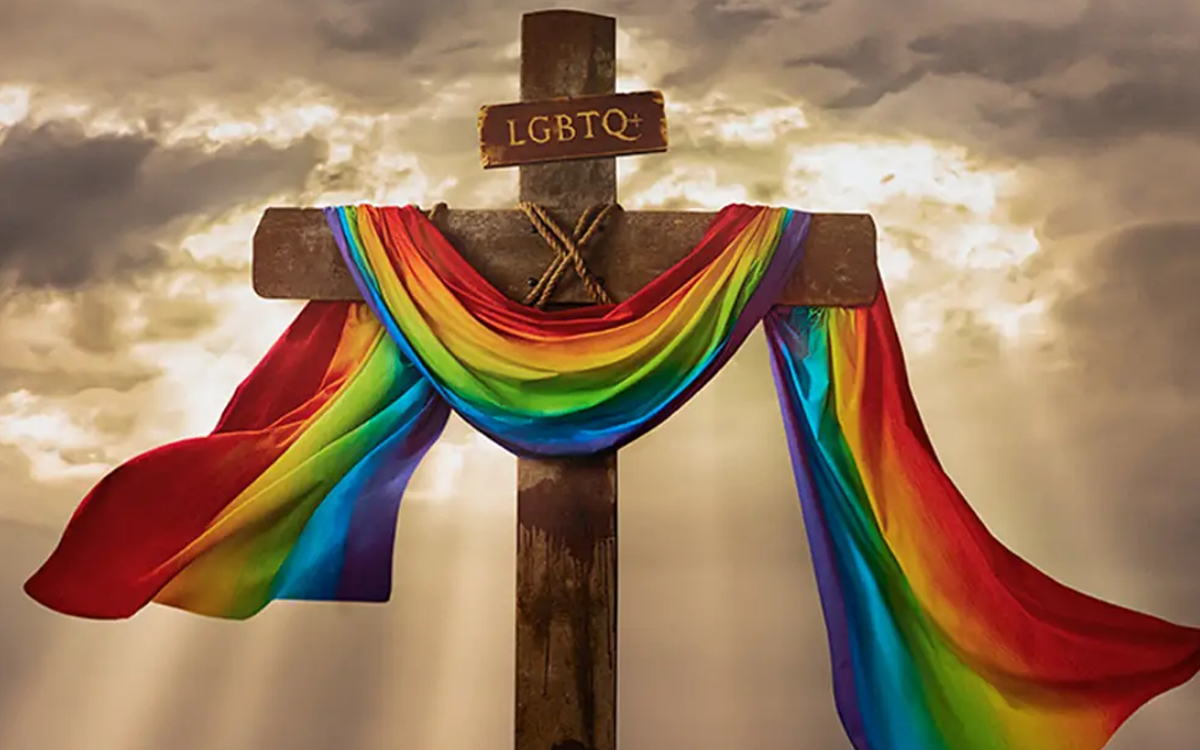
A feature-length documentary film called “Wonderfully Made LGBTQ+R(eligion),” which explores how religion has played a leading role in perpetuating anti-LGBTQ attitudes and highlights the challenges and aspirations of LGBTQ Catholics, is scheduled for a special D.C. screening on Dec. 12 at the E Street Cinema.
The film’s director is gay filmmaker, actor, and LGBTQ rights advocate Yuval David. It was jointly produced by David and his husband, attorney and LGBTQ Catholic advocate Mark McDermott. The premiere D.C. showing of the film is being hosted by Real Affirmations, D.C.’s LGBTQ film festival.
“The film focuses on the Catholic Church because it is one of the largest religious organizations in the world, and because its anti-LGBTQ+ stance is known and growing more hardline, at least in some circles,” a statement announcing the D.C. showing of the film says.
“The narrative of the film is shaped by the process of a fine art project creating unprecedented, photographic iconography depicting Jesus as a member/ally of the LGBTQ+ community, represented by multiple LGBTQ+ models,” the statement says.
David and McDermott told the Washington Blade in a Nov. 21 interview that production of the film was completed at the end of August of this year, and it has since been shown at film festivals across the U.S. and overseas. It was honored as the Best Feature Film at the LGBTQ Toronto Film Festival.
“One of the things we discuss in our film and the way this makes it contemporary, and even pertaining to this horrible shooting [at the LGBTQ nightclub in Colorado] and the various other attacks on the LGBTQ community, is the fact that the vast majority of anti-LGBTQ and homophobic beliefs, including laws and legislation, are on the basis of religion,” David said.
“Ninety something percent of homophobia and anti-LGBTQ beliefs are on the basis of religion,” David said he and McDermott saw in research findings.
David and McDermott said one of their objectives for the film, which includes interviews with leading LGBTQ Catholic activists and supportive Catholic priests, was to show how images of the church and Jesus through art and iconography going back several centuries has impacted the religious views of Catholics, including LGBTQ Catholics.
Among the LGBTQ supportive people interviewed in the film include Sister Jeannine Gramick, a Catholic nun who co-founded New Ways Ministry, the LGBTQ Catholic advocacy organization; Marianne Duddy-Burke, president of Dignity USA, the national LGBTQ Catholic group; and Father James Martin, a Jesuit priest, author, and outspoken advocate for LGBTQ supportive policies in the Catholic Church.
The film also discusses the fact that the top leader of the Catholic Church, Pope Francis, has issued statements in support of LGBTQ Catholics while at the same time some if not many Catholic cardinals and bishops have continued to promote traditional church doctrine condemning homosexuality.
David and McDermott point to their film’s groundbreaking use of a form of iconography that they and their creative team, including photographers, created as part of an art project to make the church’s imagery more welcoming to LGBTQ people.
“The idea behind this is in Christianity and Catholicism, Jesus has always been portrayed one way for the last 1,700 years,” McDermott told the Blade. “That he has been portrayed as a white man of Northern European descent with blond hair and blue eyes. And as we set up the film, we wanted to challenge that history of art, change it,” he said, to show that “the divine is in all of us,” including LGBTQ people.
McDermott and David told how they conducted a casting call for actors and models to portray Jesus as LGBTQ people who were highly diverse by way of ethnicity, gender, and gender expression. To their amazement, about 500 people responded to the casting call.
“And out of that enormous group we selected nine models,” David said. “And the people we cast are truly a diverse array of LGBTQIA+ people representing different ethnicities, different races, different genders, different body types,” he said. “We wanted to cast people who not only were models but actors and people who truly identify with this topic,” David said.
Several of the actor-models are interviewed in the film, with some describing their own experiences as a person of faith in a church that is sometimes not accepting of them.
David said several thousand still photos were taken of the nine model-actors selected to portray Jesus. He said about 160 of the photo images were selected to be shown in the film in which the actor-models portray Jesus in various stages of his life as described in the scriptures, including scenes of the crucifixion.
The still photos are shown in a dramatic presentation at the conclusion of the film, with each of the model-actors exhibiting highly emotional facial expressions, especially as they are shown tied to a cross with a crown of thorns.
McDermott said he and David came up with the film’s “Wonderfully Made” title from a biblical passage known as the Book of Psalms in which the biblical figure David says while praying to God, “I praise you because I am fearfully and wonderfully made.”
Biblical scholars have said the word “fearfully” as used in that biblical passage by David was intended to mean with great reverence, heart-felt interest and with respect.
Mark McDermott and Yuval David told the Blade that while their film shows the hardship faced by LGBTQ Catholics and people of faith, many people of faith, including the religious experts they interview in the film, believe Catholicism and religion in general can be interpreted to be supportive of all people, including LGBTQ people.
But the two say a positive perspective on how religion has and continues to impact LGBTQ people, such as the story told in their film, is needed.
“Forty percent of our homeless kids are LGBTQ – 40 percent,” McDermott said. “And we know why they ended up homeless. They got thrown out of their houses by their own family,” he said. “And it’s almost always because of their family’s religious views.”
Added McDermott, “One in three LGBTQ kids in the last year contemplate or seriously think about suicide.”
According to he and David, stress or conflict with their family’s religious beliefs is very often the root cause of stress and depression among LGBTQ people. They are hopeful, they said, that their film will be seen by many facing these problems and who may be helped by the film’s strong message that it’s ok to be a person of faith and LGBTQ.
“We created this for those who must see this, so they don’t feel that way,” said David.
Tickets for the Dec. 12, 7 p.m. screening of “Wonderfully Made LGBTQ+R(eligion),” which is open to the public, can be purchased online or at the E Street Cinema at the time of the showing if tickets are still available.
A trailer preview of the film can be viewed here: wonderfullymadefilm.com; you can follow news of the film on social media, instagram.com/WonderfullyMadeMovie. Tickets can be purchased from the Reel Affirmations website and more information can be found on the Facebook event page here.



District of Columbia
To school to homeschool to school again
‘Pandemic took more than 2 years of school. It took 2 years of my childhood’
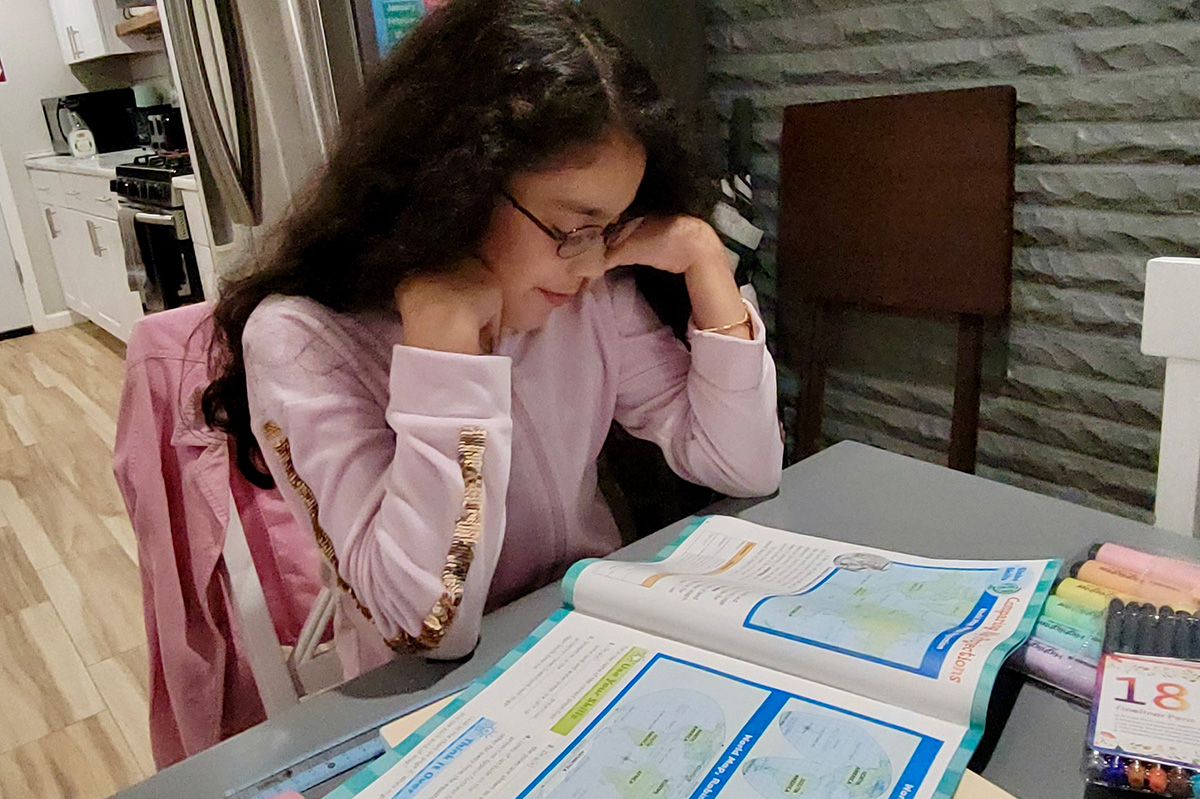
It wasn’t until I no longer had those 30 minutes of lunch and recess, when all the boys and girls would come together to trade bracelets, make up games, gossip about who we liked, play tag and sports, that I realized how much of my childhood happened during the parts of school that had nothing to do with schoolwork.
I was in the third grade when the COVID-19 pandemic began. I remember my parents explaining that I couldn’t go back to school and wondering when I would see my friends again — or whether I wanted to go back at all. But after spending two years learning from home, cut off from the friends, teachers and routines I had known, I began to understand what I had lost.
For many of my friends and classmates, going to school changed from a bus ride every morning to clicking a link and seeing their teachers and classmates through a screen. My experience was a little different. Instead of going to virtual school, I was homeschooled. My new routine was sitting at my kitchen table, with my mom teaching me how to write a paragraph or solve a math problem, surrounded by the same walls I saw every day.
My family was not alone. Many families across the country turned to homeschooling after schools shut down. Homeschooling increased sharply during the pandemic, especially among Black families, rising from 3.3 percent in the spring of 2020 to 16.1 percent that fall, according to the U.S. Census Bureau’s Household Pulse Survey.
It would be two years before I entered a classroom again.
At first, I loved homeschooling.
I didn’t have to wake up early or put on a uniform. I liked the comfort of my own room, surrounded by my stuffed animals and toys. I didn’t have to push my way through that horrible lunch line because my food was now waiting for me at the kitchen table.
It felt like a fever dream where school was canceled and all day was fun. That was my view as a 9-year-old.
But as days turned into weeks and weeks into months, that initial excitement wore off.
Every day became the same routine. There was no recess when I could play princess with all the other girls. There were no conversations in the lunch line and none of the small things that had broken up the school day before. I didn’t realize how much those moments mattered until I could no longer experience them.
With less to look forward to, I started spending more time on the internet.
I turned to platforms such as YouTube and TikTok to distract myself. Instead of seeing what the kids around me were doing every day, I could watch people online show off their clothes, makeup, dances, art and lives.
Over time, I started comparing myself with what I saw. I thought the way I dressed was childish and wanted to be like the superstars I saw online. I followed what was trendy and admired the girls and boys who looked so confident on screen.
Before the pandemic, my friends and I didn’t need the internet to tell us what was popular. But during those years at home, I became much more aware of what other people thought was cool and what someone my age was supposedly supposed to like. I felt as though I was growing up without getting to experience all the steps in between.
When I finally returned to school, I thought my classmates would be excited to see each other again after spending so much time apart.
Instead, I realized how much we all changed.
When I walked through those doors, I remembered vague memories of running down those halls and always seeing my peers with smiles on their faces. Now those same faces were tired, with eye bags. The lunchroom, which used to be full of life with happy kids eating to their hearts’ content, turned into a lunch where all the girls controlled what they ate and talked about the latest trend on TikTok.
Maybe some of that change would have happened anyway. Kids grow up. Interests change. Middle school has always been awkward.
But I didn’t get to watch my classmates gradually change or change alongside them. I left one social world and came back to another.
When I returned, I was expected to understand a social world that had changed while I was gone. I felt I missed so much that I would never get back, and without that day-to-day learning to help me adapt to these new norms, I struggled.
Those everyday interactions are an important part of how children learn to get along with others: A 2026 meta-analysis of 157 studies from 33 countries published in the academic journal Child Development found that children’s social and emotional skills declined during the pandemic, along with their overall well-being. The researchers noted that schools are not just places where children learn math and reading. They are also places where children learn how to make friends, work through disagreements, understand other people’s feelings and manage their own emotions.
Years later, many parents say some of those effects are still being felt. In a 2025 Gallup survey, 45 percent of parents with school-age children said the pandemic hurt their child’s social skills, and 22 percent said those problems were still ongoing. Forty-two percent said the pandemic negatively affected their child’s mental health. Parents were more likely to report problems with their children’s social skills and mental health than with their academics or physical health.
I saw some of those changes around me, too. Classmates who once seemed outgoing became quieter or more withdrawn. Starting conversations felt harder. Making new friends felt harder. Sometimes retreating into myself felt easier than trying to figure out where I belonged.
Now, the kids who were in elementary school when the pandemic began are moving through high school. We are older, but some of us are still figuring out what those missing years meant.
Before the pandemic, I thought lunch and recess were simply breaks from learning. Now I understand that we were learning during those 30 minutes, too. We were learning how to make friends, how to disagree and make up, how to be embarrassed and recover from it, what we liked and what we didn’t, and slowly who we wanted to become.
I can’t know exactly who I would be if I had spent those years inside a classroom instead of at home. Maybe middle school still would have been awkward. Maybe I still would have worried about fitting in.
But I know I missed something I didn’t understand was important until it was gone: the ordinary, sometimes boring, sometimes ridiculous parts of growing up alongside other kids.
You can make up schoolwork. You can return to the classroom. But there are some parts of childhood you don’t get to repeat.
Gloria Collazo Huamani is a sophomore at Benjamin Banneker Academic High School in D.C., one of Youthcast Media Group’s journalism class partners. Gloria worked with James Jarvis, a YMG mentor-editor and reporter for Inside Health Policy, on this story.
Virginia
Gay Va. couple hopeful voters will enshrine marriage equality in state constitution
Early voting has already begun in the state
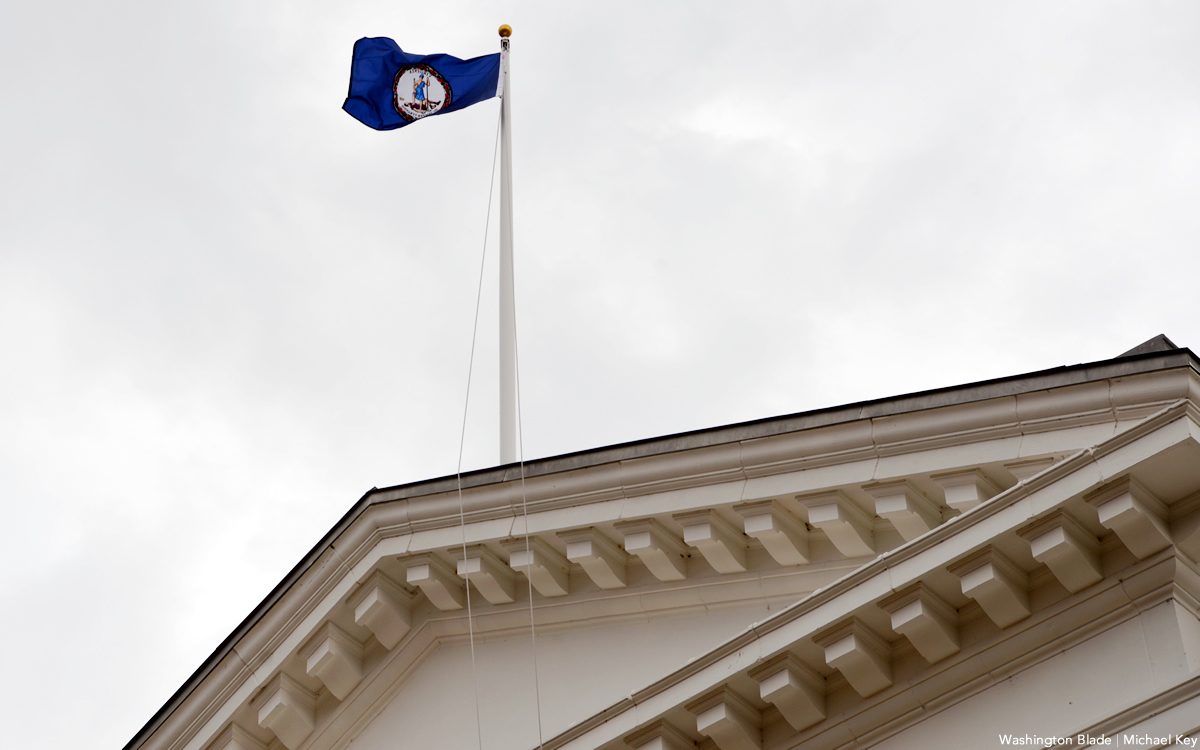
A referendum on whether to enshrine marriage equality in Virginia’s constitutional amendment is on the ballot this year.
If voters approve Question 2, it will codify the U.S. Supreme Court’s Obergefell ruling in 2015 that extended marriage rights to same-sex couples across the country — gays and lesbians have been able to legally marry in Virginia since Oct. 6, 2014.
Ron Bookbinder and James Fisher are a married couple who live in Arlington.
They have been together for 38 years — Bookbinder and Fisher married in 2014.
“We think this is a critical vote to remove this discriminatory language from the constitution and to ensure that going forward, no matter what happens, the state of Virginia will ensure marriage equality,” Fisher told the Washington Blade. “It is it is really difficult and upsetting to think that our current state constitution would prohibit same-sex marriage, even though the federal government overrides that now. There’s no saying what may happen in the future.”
Bookbinder said it was important for him and Fisher to get married “to gain social equality.”
“I was surprised how good it felt, how important it was to begin to say, ‘my husband rather than my partner,'” Bookbinder said.
Bookbinder then explained why it feels good to be married.
“Is it a legal partner, a business partner, a tennis partner, you know, or a romantic partner? But when you say my husband James, everyone knows exactly what you mean and confers an equal status with everyone else who’s married, and we were both surprised at how good it felt and how equal it felt to suddenly be married and be able to state that you were married and discuss your husband rather than your partner, and I would hate to lose that,” he said.
Bookbinder and Fisher said they are hopeful that voters will approve the amendment, noting Virginia has become more progressive over the years.
“I think people have, with the Supreme Court decision, people have seen that a same-sex marriage is just a marriage,” stated Fisher. “It’s just two people who love each other, and I think more and more people have attended a same-sex marriage, someone in their family or a friend, and the experience of what this is, firsthand experience, is so important in shaping people’s opinions, and I think the period of time that we’ve had since the Obergefell decision has given a lot of voters that experience, which I think is really important and powerful.”
The couple also said the push to enshrine marriage equality in Virginia’s constitution is in response to the Trump-Vance administration.
“And I think due to President Trump doing all the horrible things he’s done to so many groups, including LGBTQ, especially trans people, that Virginians are kind of pushed to be even more progressive to protect those who need protection, which would include the LGBTQ community in terms of marriage equality, so I’m confident it will pass,” said Bookbinder.
Narissa Rahaman, executive director of Equality Virginia, sent the Blade a statement about early voting on Question 2 that has already begun.
“With early voting now underway, our focus is making sure every Virginian knows Question 2 is on their ballot,” said Rahaman. “The outdated ban on same-sex marriage still in Virginia’s state constitution leaves a gap in protections for the thousands of same-sex couples that call this state home, but after 20 years we have the chance to fix it.”
Log onto www.mobilize.us/vaformarriage to find out more about the campaign in support of Question 2.
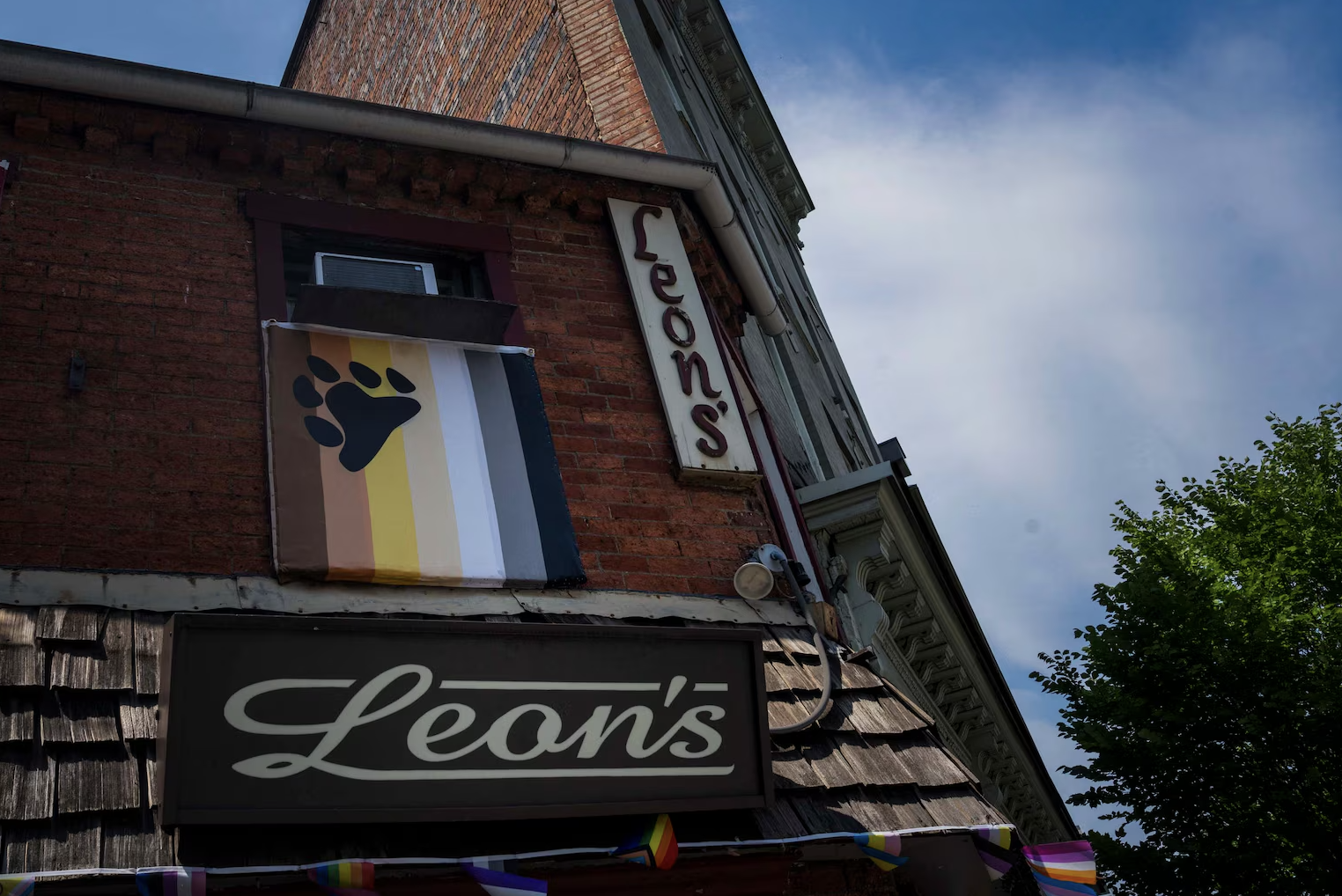
By JOHN-JOHN WILLIAMS IV | Those legendary heavy-handed pours, spirited karaoke and trivia nights, and groan-worthy wall-to-wall patrons on packed nights are back!
Leon’s will live to see another day.
Baltimore’s oldest gay bar, which opened in the 1950s, closed in July following the death of its owner, Ron Singer.
The rest of this article can be read on the Baltimore Banner’s website.

Annapolis Pride arrives this weekend

Calendar: October 2-8

Renee Good’s family files two federal lawsuits

House Democrats urge White House to confront Turkish government over anti-LGBTQ crackdown

988 restores crisis services for LGBTQ youth

HRC National Dinner 2026: A night of music, activism, LGBTQ history

Lesbian Bar Project co-founder: purity politics could destroy our remaining spaces

529 openly LGBTQ candidates running in Brazilian election

HRC report: LGBTQ students face ‘far greater challenges’ in non-supportive states

Ana Brnabić becomes world’s first openly lesbian head of state
-

 LGBTQ Non-Profit Organizations4 days ago
HRC National Dinner 2026: A night of music, activism, LGBTQ history
-
Bars & Parties4 days ago
Lesbian Bar Project co-founder: purity politics could destroy our remaining spaces
-
Brazil4 days ago
529 openly LGBTQ candidates running in Brazilian election
-
National4 days ago
HRC report: LGBTQ students face ‘far greater challenges’ in non-supportive states