Georgia
Kemp signs Ga. healthcare ban targeting transgender, nonbinary youth
Advocacy groups condemned the law
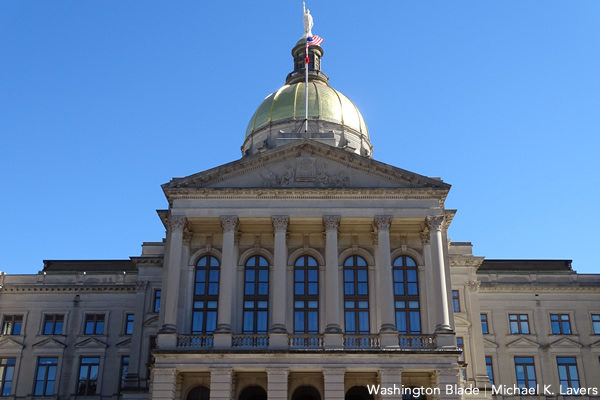
Georgia’s Republican Gov. Brian Kemp on Thursday signed a ban on guideline-directed gender-affirming healthcare for transgender and nonbinary youth that was passed earlier this week by the GOP-controlled state legislature.
The law threatens to revoke the medical licenses of physicians who administer treatments for gender dysphoria in minor patients that are overwhelmingly considered safe, effective, and medically necessary by every scientific and medical society with relevant clinical expertise.
A previous version of Senate Bill 140 applied exclusively to surgical interventions, but the version signed into law Thursday also prohibits hormone replacement therapies, although treatment with puberty blockers is still allowed.
The move by GOP legislators to expand the healthcare interventions covered by the legislation follows pressure from conservatives like far-right U.S. Rep. Marjorie Taylor Greene, who represents Georgia’s 14th Congressional District in the House and urged the state’s lawmakers last week to make the bill more restrictive.
At the time, Greene also objected to the draft bill’s “limited exceptions” carved out for cases where patients are treated for conditions other than gender dysphoria, including those diagnosed with “a medically verifiable disorder of sex development,” provided the physician can attest they are medically necessary.
These provisions were kept intact in the bill’s final iteration, which contains additional exceptions for the treatment of partial androgen insensitivity syndrome and in circumstances where the minor patient was being treated with hormone replacement therapies prior to July 1, 2023.
A chorus of objections to and condemnations of the legislation have come from LGBTQ groups, along with legal and civil rights advocacy organizations and medical societies, clinicians, and scientists, including the Georgia Psychological Association.
The Human Rights Campaign, America’s largest LGBTQ advocacy group, issued a statement shortly after Kemp signed the bill Thursday, declaring that Georgia had become “the largest state to legislatively enact such a discriminatory ban.”
“Governor Kemp should be ashamed of himself — taking life-saving care away from vulnerable youth is a disgusting and indefensible act,” Human Rights Campaign State Legislative Director and Senior Counsel Cathryn Oakley said in the statement. “This law harms transgender youth and terrorizes their families, but helps no one.”
Despite the wave of legislation across the country barring access to or criminalizing gender affirming care, in most cases for minor patients, the group noted in Thursday’s release that “polling by Patinkin Research Strategies released this month shows that only 26 percent of likely November 2024 voters in Georgia supported the legislation, while 66 percent opposed it” including 63 percent of independent and 59 percent of likely Republican voters.
According to the findings of a Human Rights Campaign study that were announced Wednesday, “more than half (50.4 percent) of trans youth (ages 13-17) have lost or are at risk of losing access to age appropriate, medically necessary gender-affirming care in their state” – care, the group stressed, that “can be lifesaving.”
Following the Georgia legislature’s passage of the SB 140 earlier this week, the ACLU warned it would “[interfere] with the rights of Georgia parents to get life-saving medical treatment for their children” and prevent “physicians from properly caring for their patients.”
The Southern Poverty Law Center released a statement by Beth Littrell, the organization’s senior supervising attorney for its LGBTQ and Special Litigation Practice Group, calling the bill a “cynical partisan attack on transgender youth, medical autonomy, and parental rights” and urging Kemp to “leave personal healthcare decisions in the capable hands of parents, children, and their doctors.”






Georgia
In Ga., 2 trans candidates believe voters are ready for them
Bentley Hudgins, Bella Bautista running for state House of Representatives
Uncloseted Media published this story on Oct. 6.
This story was reported in partnership with The 19th, a nonprofit newsroom reporting on gender, politics and policy.
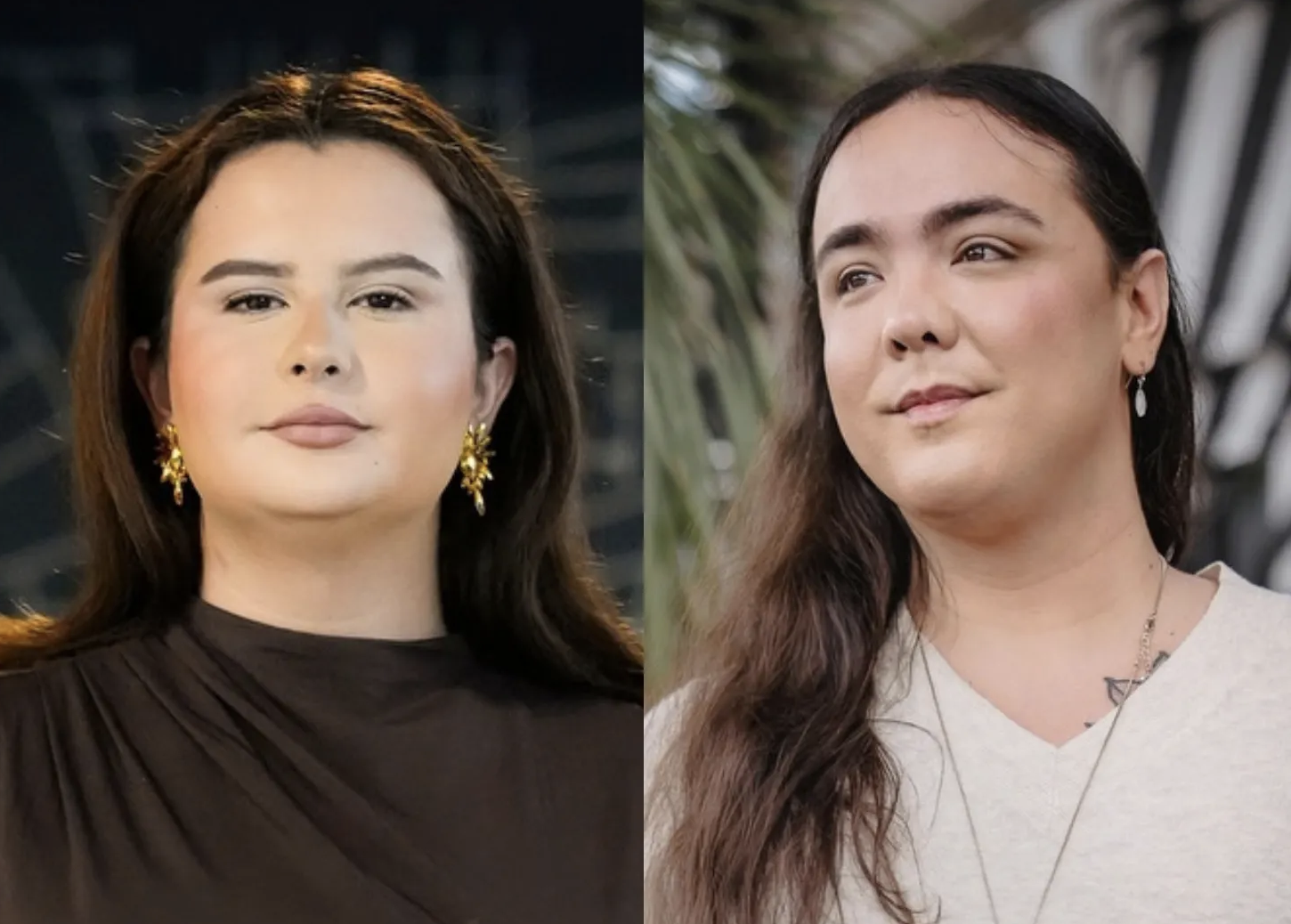
By ORION RUMMLER | Bentley Hudgins is a 33-year-old democratic socialist who spent the past three years advocating for LGBTQ rights in the Georgia statehouse.
Bella Bautista is 10 years younger, the first transgender woman to win a legislative primary in Georgia and head of a nonprofit distributing supplies to at-risk young adults.
Both are running for a spot in the Georgia House of Representatives, part of a cohort of Democrats who hope to shrink or end Republicans’ hold on the chamber. Both would make history as the first trans members of the body. Neither wants to discuss identity politics or pronouns — they want to talk about data centers, the price of groceries and healthcare.
But their districts are very different: Hudgins is running in a liberal stronghold in Atlanta with no serious Republican opposition and is all but certain to win in November. Bautista’s district is rural and deeply conservative; it hasn’t elected a Democratic state representative since 1996, and she’s the first to run for this seat since 2010. But Hudgins’s and Bautista’s bets are the same: Voters are looking for someone to fight for them. In Hudgins and Bautista’s view, something in the country is broken and no one else will fix it. So they stepped up.
“People around here just hate the government, and that’s why I’m running,” Bautista told Uncloseted Media and The 19th. “People have lost faith in the system as a whole.”
Hudgins’ mind is on the big picture: getting as many Democrats, especially progressives, in the statehouse as possible. Without that, they believe the future — especially for LGBTQ people and immigrants — isn’t certain.
“At the end of the day, we have to have the numbers,” Hudgins told Uncloseted Media and The 19th.
A deep red district in rural Ga.
In the hourlong drive from Atlanta to Cartersville, where Bautista grew up, suburbs fade away and the land expands into RV lots, farms, and houses on the edge of the woods. Bautista launched her campaign in this small town, at Noble & Main Coffee Co., across the street from a butcher shop that offers deer processing.
“It’s one of those hidden gems,” she says. “They’re friendly toward Democrats.”
It’s also not in the statehouse district she wants to represent. She’s running for office in the more rural side of the county, an area that’s about 80 percent white, mostly older and mostly conservative. And it’s been a challenge. Most people here vote Republican. Her opponent, the GOP incumbent Mitchell Scoggins, has not run against anyone since he first won a special election in 2018.
Lack of change is what spurred Bautista to run. And it’s not just Scoggins sailing unopposed to reelection every two years. Bartow County is one of a small handful of counties in Georgia with only one commissioner, who single-handedly decides the fate of everything from data center construction to new roads. The current commissioner has held the position for 14 years.
The issues facing her hometown can’t be left to one man, Bautista says. She wants to pass legislation for locals to vote on a board of commissioners, regulate Flock cameras, shield locals from data center pollution, conserve farmland and expand rural mental healthcare. She thinks these stances will appeal to voters who may otherwise vote Republican. But it’s still an uphill battle — and a lonely one.
“This is not a story about pride. It’s not a story about visibility,” she says. “It’s a story about challenges, difficulty. I don’t want to be the fucking first to do it, but I have no choice but to be the first.”
But Bautista says she’s struggling. This campaign has cost her privacy and peace, which doesn’t impact just her: She lives in her family home as the primary caretaker for her mom.
In May, during the primaries, someone came to her house twice, she says: once to put up a sign supporting President Donald Trump next to her own campaign sign in the front yard, and later to take down her sign.
“I literally live in the middle of nowhere,” she says. “That sent chills down my back, because I’m like, OK, that means someone physically went to my home, got out of their car, went up the hill, put up a Trump sign.”
Her neighbors, who she’s known her whole life and are Trump voters, assured her that they weren’t involved. But that fear hasn’t left her. Since then, more signs have gone missing: A few weeks after we met, hundreds of her campaign signs were taken down across the district. Those cost money to replace — money the campaign doesn’t have.
As a trans Latina, she belongs in Bartow County just as much as anyone else, she says. This is the only home she’s known. But campaigning in this district feels like being thrown into the ocean, she says. Online, people mock her and misgender her. It hurts. Often, they’re the same people she’s fighting for.
At one point during an interview at Noble & Main Coffee Co., Bautista started crying. Keeping her head above water means she doesn’t often take time to think about why she’s doing this.
“You’re just having to swim, swim, swim, swim and you never get any chance to look back and think, oh my gosh, why am I doing this, what does this mean to other people?”
Dramatically different districts
Hudgins launched their campaign at Joe’s Coffeehouse in East Atlanta Village, roughly 50 miles from Bautista’s district. This place, a local indie fixture, holds personal history for them: When they became homeless in 2017, it became a refuge as they couchsurfed and lived in their car. It took a year to find stable housing.
This neighborhood is where they got back on their feet after being kicked out of their apartment, something they know is common for queer people in the U.S., as well as in their own circles.
“Most of the queer electeds that I’m really close with are people who have experienced homelessness,” they say. “It just goes to show how prevalent this is for queer Southerners.”
And, years later, this same neighborhood is where they fell back in love with politics.
Being here makes Hudgins think about how the city is changing as people get priced out. Gay bars are closing and, as a former drag performer, they know of only three places still putting on shows. It’s all getting too expensive. Midtown isn’t the bustling queer neighborhood it used to be, they say, but the queers are still here: They’re just moving further into DeKalb County, East Point and southeast Atlanta, all in search of affordability.
That’s part of the problem. Hudgins sees solutions, though: raising the state minimum wage to $20 an hour or creating a state earned income tax credit to give money to lower-income families. Previous Democrat-sponsored bills to enact those policies have been blocked in the statehouse, and it’s those stalemates that are driving voters to push for something different, Hudgins says. Decades of Republican control have left people disillusioned.
“People’s political will and spirit has kind of been chipped away at,” they say. “Life can be better.”
The first time Hudgins ran for this seat in 2022, they were 28 and single, and the pandemic was still fresh. The previous year, Atlanta spa shootings targeting Asian women had taken place, and “Cop City,” the massive training ground for local police in DeKalb County, was formally proposed amid national protests against police brutality. Joe Biden was president, and from where Hudgins sat, the Democratic establishment was clamping down on progressive dissent.
They were angry — but that anger didn’t resonate with voters, they say.
“It was such a more agitated time in a lot of different ways, and this strong leftist point of view wasn’t as appreciated,” they say. “At that time, I was also angry. I was mad. And I think it came through.”
Their opener in their 2022 race was, “To be frank, I’m tired of my friends dying,” they say. They had lost friends to police violence, addiction, hunger and mental illness. One of their friends was left permanently disabled from a hate crime, they say. Hudgins had begun to get severe cluster headaches and was managing that while running their first campaign.
After losing that race, they reassessed if they wanted to do politics at all. They were broken-hearted, they say. A friend helped them get a job at a Laotian pop-up restaurant in East Atlanta Village, only a short walk from Joe’s Coffeehouse. But what they thought would be an escape from politics became a reeducation in why it mattered, they say. Surrounded by other Asian Americans, they learned about U.S. bombing campaigns in Laos and connected with their new friends’ working-class struggles.
“I really got to understand more about how my Southeast Asian neighbors and friends have experienced American identity,” they say.
If elected, Hudgins would be Georgia’s first Japanese American lawmaker. To them, it feels like that usually gets left out of their story as people instead focus on their gender identity.
They weren’t planning on running for office this year. Their wedding is in November. Until recently, they were lobbying against anti-LGBTQ bills as Georgia state director for Human Rights Campaign, a major LGBTQ advocacy group. But Saira Draper, who beat Hudgins in 2022 to represent House District 90, is running for the state Senate. That left the House seat open. And it left the door open for Hudgins to run again.
When three other Democrat contenders dropped out in the primary, Hudgins became the front-runner. Their opponent, Samantha Boston, received only about 500 votes in the Republican primary. Hudgins got over 7,000 in the Democratic contest.
Fearless advocates
On a muggy September night, Hudgins and Bautista were in full glam at the College Park Woman’s Club in Atlanta, gathered alongside activists, volunteers and political candidates at a fundraising gala for LGBTQ youth.
At her table, Bautista prepared to present a “fearless youth advocate” award to state Rep. Akbar Ali, sworn in last year at 21 as the youngest lawmaker in Georgia. Bautista won this same award last year for the work she does at her nonprofit, which primarily supports transgender and immigrant young adults. Seated with Ali and friends running for office in Bartow County, she read over her notes.
Democrats in the room buzzed with the possibility of reshaping the statehouse, and with nerves that Republicans’ now abandoned redistricting effort will resurface.
On stage, Bautista looked to a different future — one where trans visibility in politics is not a rarity in Georgia.
“To all my transsexual girls in the building, just know that I’m fighting for you, and that in two years it’s going to be one of y’all,” she said. “It’s going to be one of y’all running for governor. It’s going to be one of y’all running for state senator. It’s going to be one of y’all running for commissioner.”
But she knows that history recognizes the victors, people who make it past the finish line, regardless of how much work they put into the race.
“I stand before you in the middle of history, not on the other side of it,” she said on stage. “I keep going not because the water is calm, but because someone on the other side is waiting for proof that a person like them survived it.”
Hudgins watched from the front of the room. They sat next to Sam Park, the Georgia House minority whip, a longtime mentor.
“I’m incredibly proud of Bella’s leadership and her courage for stepping up,” Park told Uncloseted Media and The 19th in an interview a few days later. “Bella is giving her voters, her fellow neighbors, an option, a real choice to say enough is enough.”
Rural Democrats are craving someone willing to fight for them, says Courtney Bruder, chair of the Democratic committee of Cherokee County, where Bautista’s district also touches. But complacency has gotten in the way, she says.
“It’s been difficult to try to get someone to be willing to fight for a seat that’s going to be hard,” she told Uncloseted Media and The 19th. “It’s been a slow change to get Democrats in this area to run.”
Bautista hasn’t felt supported by the Georgia Democrats, she says. She has allies in the statehouse and in others running for office, but she still feels like the subliminal message from the party is that she just isn’t electable. She feels like she isn’t taken seriously because she’s not white, doesn’t have wealthy donors and isn’t running in a safe district for Democrats.
Democrats in leadership say she’s changed the game, though, and see her candidacy as a sign of a changing tide in Georgia.
A blue wave may be brewing in the Peach State. Georgia saw record-breaking engagement in the primaries, and an NBC analysis found that Democrats turned out in unusually high numbers across the state. But in Bartow County, where Bautista lives, Democrats make up just one-third of the vote in the gubernatorial primary, according to data from the Georgia Secretary of State’s elections office.
Bautista is positioning herself as an anti-establishment candidate first, and a Democrat second, to appeal to people who aren’t engaged in politics, she says.
It may not be enough to win. But for the past 16 years in this district, no one was willing to step into the ring at all. She still sees victory in that, and in the ways her campaign has gotten neighbors to care about what’s happening in their backyard.
‘I’m going to be who I am’
If elected, Hudgins would become the state’s first nonbinary lawmaker. But they don’t care if voters understand their gender or use the correct pronouns; they just want voters to understand the issues.
“I realized if I led with my identity, it would distract people from understanding what I had to say,” Hudgins says.
One moment in particular on the campaign trail, at Israel Missionary Baptist Church in April, changed their perspective on this.
“The deacon lays his hands on me. He’s like, ‘God, help her, help this person, help him, just help them be victorious.’ I wanted to laugh, but then I was really touched. This guy I’ve never met before … was just trying to be respectful,” they say.
If they win, a whole new set of challenges awaits them at the Georgia statehouse. The dress code is gendered; men must wear a coat and tie, while women are allowed a more nebulous “dignified dress.” But it’s not just the clothes; they would be joining an institution built around a gender binary they don’t adhere to.
Lawmakers are used to referring to each other as “Mr.,” “Mrs.” or “Miss,” per the rules. Although there are more formal options that could allow for a loophole, those are gendered too — members may identify each other by the district “he or she” represents or by the city of “his or her” residence. The bathroom is its own ordeal: if there is a gender-neutral bathroom, Hudgins has yet to find it. As a gender nonconforming person, if Hudgins takes office, they would be walking into a system designed to exclude them. And there are fines associated with breaking these rules.
They are still weighing how to respond to it. They want to be taken seriously as a legislator and build relationships that move bills, but if they don’t stand up for themselves, it sends a poor message, they say.
“I have a pesky knack for maintaining who I am regardless of what the rules say,” they say with a laugh. “If we have a Democratic majority, we can change the rules. If there is a Republican majority, I’m going to be who I am and I’m going to dress how I think is appropriate. And their problems, we’ll address them as well.”
Georgia
Everton Blair makes history as first openly gay congressman from Ga.
Former Gwinnett County Board of Education member to serve remainder of David Scott’s term
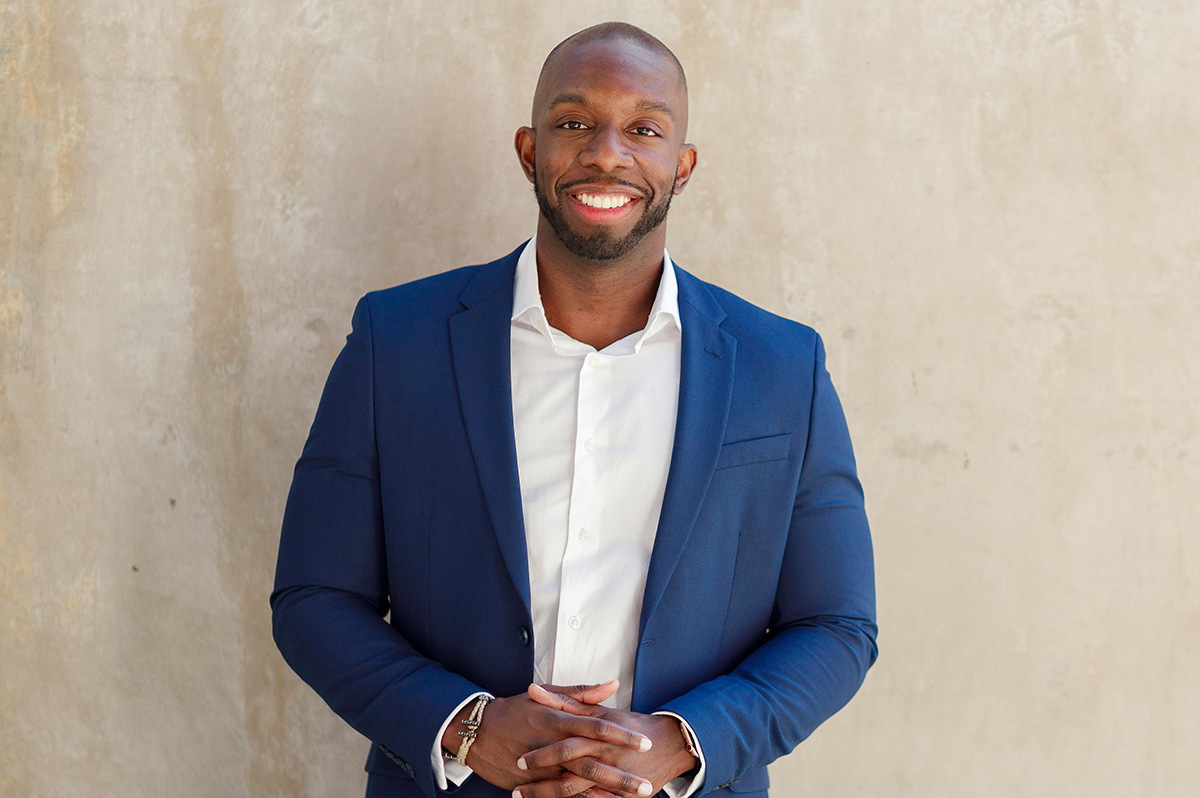
Georgia made history last week when Everton Blair, Jr., was sworn into the U.S. House of Representatives, becoming the state’s first openly LGBTQ member of Congress and the latest LGBTQ addition to the chamber.
Blair, who represents Georgia’s 13th Congressional District, was sworn in on Sept. 1 after winning a special election to fill the vacancy left by the late-Congressman David Scott. Blair defeated Marcye Scott, the late congressman’s daughter, in the Aug. 25 runoff, winning 53.2 percent of the vote to Scott’s 46.8 percent.
He will serve the remainder of Scott’s term through Jan. 3, 2027. Blair is not running in the November general election for a full term.
Blair brings a progressive platform to Congress.
The 34 year-old supports Medicare for All, a Green New Deal, raising the minimum wage, and universal gun background checks. His campaign platform also included positions on LGBTQ rights, reproductive freedom, workers’ rights, climate, and gun violence.
Since joining the House, Blair has joined the Congressional Black Caucus and Congressional Progressive Caucus. He is also a co-chair of the Congressional Equality Caucus.
Before joining the House, Blair served on the Gwinnett County Board of Education, where he became the first Black member and youngest-ever member elected to the board, as well as its first openly gay member. He was later unanimously selected as chair.
Blair also served as a fellow in President Barack Obama’s White House Initiative on Educational Excellence that focused on improving academic outcomes and expanding opportunities for minority students.
The son of Jamaican immigrants, Blair was born and raised in Georgia’s 13th Congressional District. He earned a bachelor’s degree in applied mathematics from Harvard University, a master’s degree in policy, organization, and leadership from Stanford University, and a Doctor of Education Leadership degree from Harvard.
Blair’s campaign received endorsements from a number of organizations, including the LGBTQ+ Victory Fund and progressive Democratic groups such as Future Democrats.
The Equality PAC, a political action committee dedicated to electing openly LGBTQ candidates to office, celebrated Blair’s victory and provided a statement to the Washington Blade about the historic nature of his election.
“This is a historic election for Georgia, the South, and our entire country,” Equality PAC said in an email. “Everton Blair brings a strong record of public service and a deep commitment to making government work for working families.”
The group said Blair would “fight to lower costs, expand access to quality health care, create economic opportunity, and ensure every community has a voice in Washington.”
“At the same time, Everton understands the importance of standing up for equality and defending the rights and freedoms of LGBTQ Americans and every community facing discrimination,” Equality PAC said. “His historic election as Georgia’s first openly LGBTQ Member of Congress and the first openly LGBTQ man elected from the South is a powerful reminder of how far our country has come — and how much work remains.”
Equality PAC said it was “proud to welcome Everton to the House” and looked forward to working with him.
Georgia
Suburban Atlanta gender-affirming care clinic target of arson hate crime
QMed/QueerMed set on fire last October
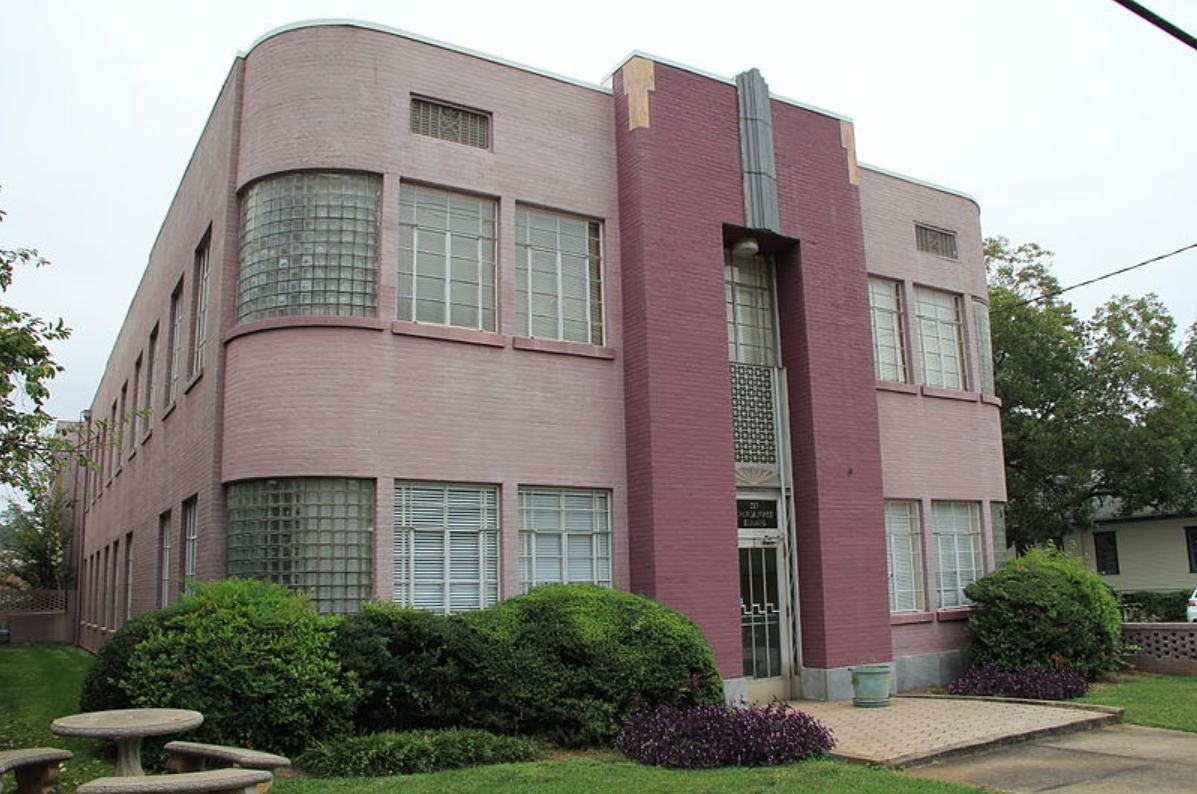
A structure fire at a commercial office building located at 215 Church St. in downtown Decatur, Ga., which housed a gender-affirming care clinic, was the target of arson, the Decatur Fire Department confirmed.
According to local media outlet Decaturish, a police report indicates QMed/QueerMed was the victim of the Oct. 30, 2023 fire. In a statement released on Jan. 26, the Decatur Fire Department wrote:
“On the morning of Oct. 30, 2023, the City of Decatur Fire Rescue Department responded to a structure fire at a commercial office building located at 215 Church St. in downtown Decatur. This historic building is commonly known as the Blair Building.
Fire crews extinguished the fire upon arrival. The fire was contained to one office and no injuries were reported.
After a full investigation, the fire incident has been determined to be incendiary in nature, indicating that the fire was intentionally set. However, the identity of the individual or parties responsible is unknown.”
“The city is collaborating with federal and state agencies to investigate this incident. The city will continue to work closely with these agencies to investigate and solve this crime,” the fire department added.
A Decatur Police report indicates QMed was the victim of the Oct. 30 fire, which is being investigated as a first-degree arson, which is a felony. The report contains several images that have been redacted.
QMed owner Dr. Izzy Lowell said the FBI is investigating the fire as a hate crime. Georgia enacted a hate crimes law in 2020, and its protections extend to LGBTQ people. People convicted of a hate crime would face stronger penalties under the new law.
Lowell said, “We won’t be intimidated. We will not stop providing life-saving care to our patients.” She said the office is “completely destroyed,” but that QMed is continuing to see patients remotely.
The Decatur Fire Department has been tight-lipped about the investigation. Decaturish only learned about the fire after receiving an anonymous tip. A reporter visited the scene and saw the damage to the building on Nov. 1. The fire department did not initially confirm the Oct. 30 fire had occurred, and only confirmed it after Decaturish published a story about it this fall.

Annie Andrews denounces trans athletes after Trump targets her

On Republican Long Island, gay Democrat Chris Gallant bets on public service over politics

Report: LGBTQ exclusion costs Japanese economy billions a year

Center for Black Equity honors leaders, activists at BE. Gala

In ‘The Lost Brontë,’ a complicated lie can lead to danger

U.S. int’l trade negotiator, consultant James Bedore dies at 82

Campaign urges Virginia High School League to reverse stance on trans athletes

Calif. GOP gubernatorial candidate ad ‘disgusting attempt to exploit lesbian intimacy’

Center Arts Gallery celebrates 10 years with reception, auction

Trump, Netanyahu, and Putin are all war criminals
-

 Obituary4 days ago
U.S. int’l trade negotiator, consultant James Bedore dies at 82
-
Virginia4 days ago
Campaign urges Virginia High School League to reverse stance on trans athletes
-
California5 days ago
Calif. GOP gubernatorial candidate ad ‘disgusting attempt to exploit lesbian intimacy’
-
Commentary4 days ago
Center Arts Gallery celebrates 10 years with reception, auction