Arts & Entertainment
Drag families support new queens, but D.C. needs more space for young performers
With steep competition, young talent turns to social media for exposure
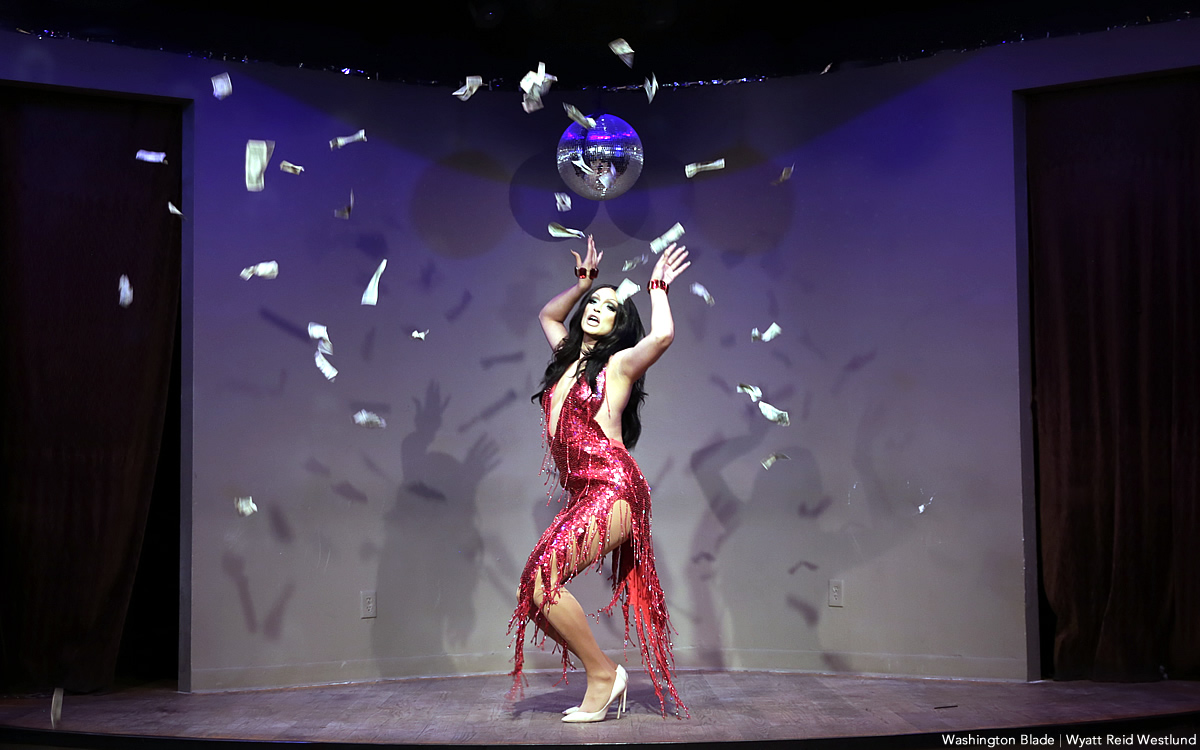
In a sparkling gold dress with a high-cut bodysuit and fringe draped over her hipline, D.C. drag queen Anamosity rang in the new year with a high-energy performance that carried her off stage and closer to the audience.
Hollers and cheers from the crowd punctuated her fierce hair flips and striking hand gestures as the rookie queen aimed to impress venue hosts, audiences, and other queens to book more gigs in an increasingly competitive D.C. drag scene.
“One of my biggest challenges in drag is just definitely booking gigs,” Anamosity said. “[When I started,] it was difficult not knowing anyone [and] trying to make a name for yourself in the city.”
After a slew of anti-drag legislation was introduced in more than a dozen states, effectively banning performances in public spaces to prohibit minors from watching, anti-drag sentiment has scared some aspiring and veteran queens from participating in the art form. However, as the District experiences its “drag renaissance,” increased competition is challenging new queens trying to book shows.
Until 2018, the popular D.C. drag venue, Town Danceboutique, was the place to get booked for queens trying to make a name for themselves in downtown, LGBTQ nightlife, according to Venus Valhalla, a host at the gay bar Pitcher’s weekly drag show. But when the club closed, queens scrambled to any bar that would let them start new shows.
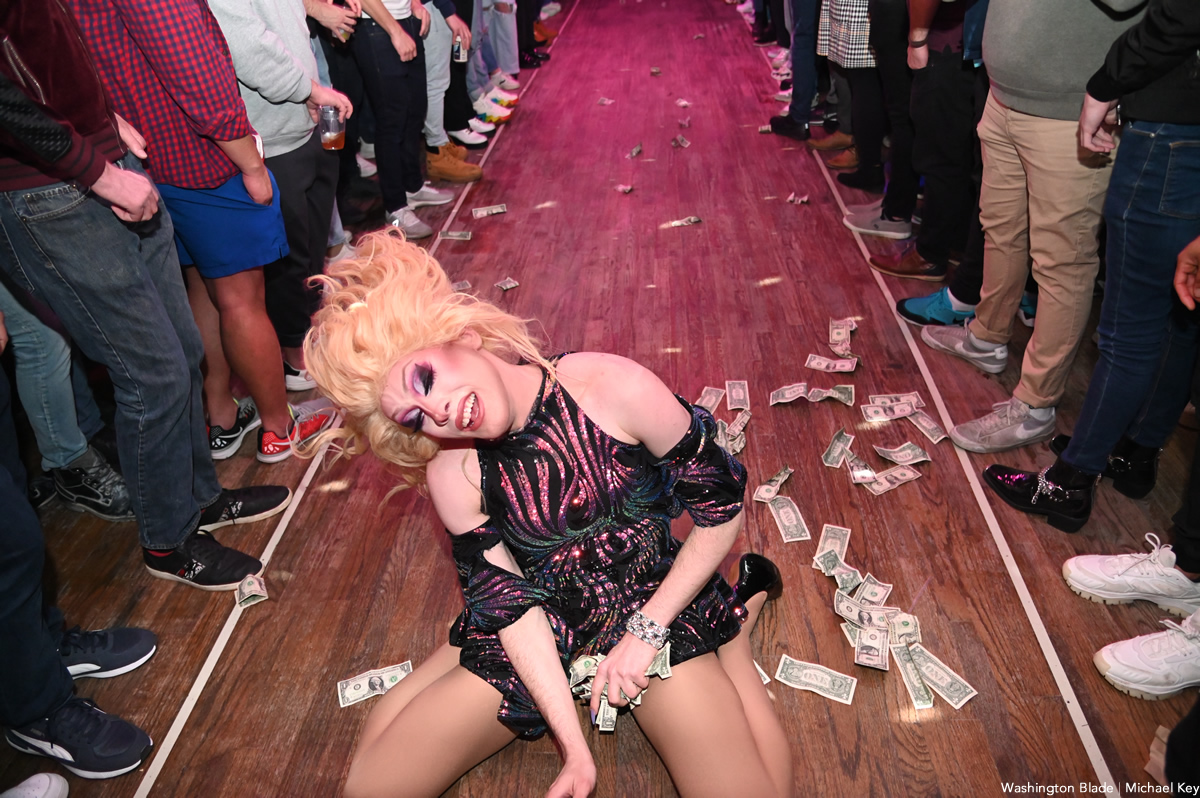
When the COVID-19 pandemic hit, entertainers held onto any shows they started and venues they secured. Then, as restaurants and bars reopened, the surge of opportunities led to heightened competition between veteran queens with networks ripe for booking and new queens vying for a chance to prove themselves, Anamosity added.
“The drag queens that want to do drag or are doing drag full time just end up getting more priority,” Animosity said. “It’s definitely a battle trying to get your name out there and develop connections in order to become part of the other [half of the entertainers] that can’t afford to do drag full time, but still want to be out and performing.”
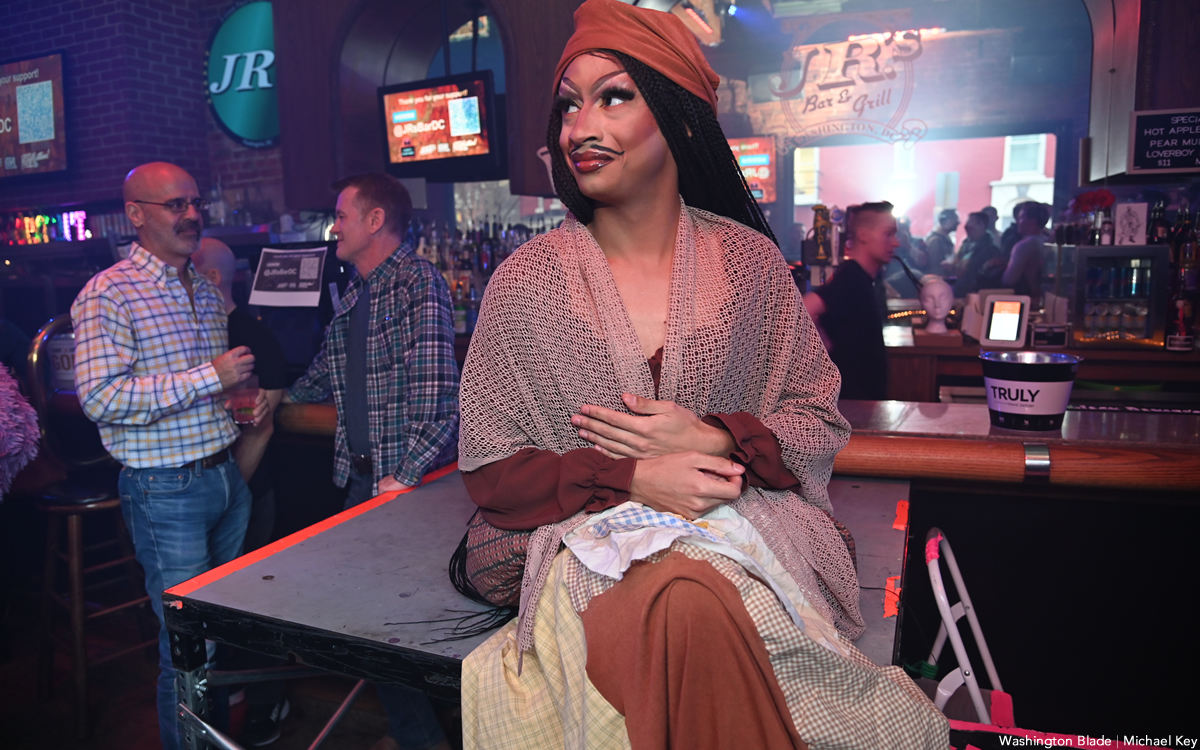
For some queens, having a drag family is the connection that gets them on stage, according to Hennessey, whose drag family consists of a drag mother, drag sisters – including Anamosity – and a drag grandmother. These connections with veteran queens help newer entertainers book shows at venues that require a certain level of professionalism and performance quality.
These beyond-blood family networks also provide emotional and financial support to queens outside of drag, Hennessey noted. Sometimes this comes in the form of housing, but oftentimes, it’s seen through sharing costumes, wigs, and heels.
But between Drag Queen Story Hours and 21-plus night shows, there’s a gap in opportunities for young adults wanting to start in drag. While some family or 18-plus drag brunches offer more chances for young aspiring queens to perform, the digital drag sphere is presenting new ways for youth to find their drag community.
“Bedroom queens” performing from home are building their brand, portfolio, and following on social media platforms like Instagram and Tik Tok. Since younger and newer queens aren’t usually booking multiple shows a week because of high competition, they’re spending time shooting and editing content that advertises their talent.
Social media also supports the exposure and representation of queens who either aren’t ready to perform in front of an audience yet or struggle to find shows.
“There are a lot of Black drag queens in the city, I think that I don’t see them getting as many bookings as queens of other races,” Anamosity said. “I’m grateful for every booking that comes my way. But with the number of people of color in D.C., I just don’t think I see them much on flyers, so their online presence is great.”
These virtual networks also mean younger queens can build digital drag families from around the world, Hennessey added. However, there are still opportunities for D.C.’s drag scene to create spaces for young entertainers.
Last summer, the LGBTQ bar As You Are turned its venue into a cafe to host a day drag show open to all ages, specifically targeted to people under 24 years old. During the show, young folks filled the audience while others took the stage for the first time.
The drag house Casa Sin Miedo is also creating a safe space for young and emerging artists to grow their network. The house supports transgender and Latinx artists through mentorship that is vital to queer youth, who often don’t find similar role models at home, school, and even in the media.
But there’s no formal process to starting or finding a drag family.
“That’s what is the most beautiful part about it,” Hennessey said. “If you want to start your own family, you can really just do it. You just need one other person, and then you suddenly have a drag family.”



Books
New book examines Trump cuts to LGBTQ healthcare
‘Aftershocks’ details impact of policy shifts on HIV response, broader public health
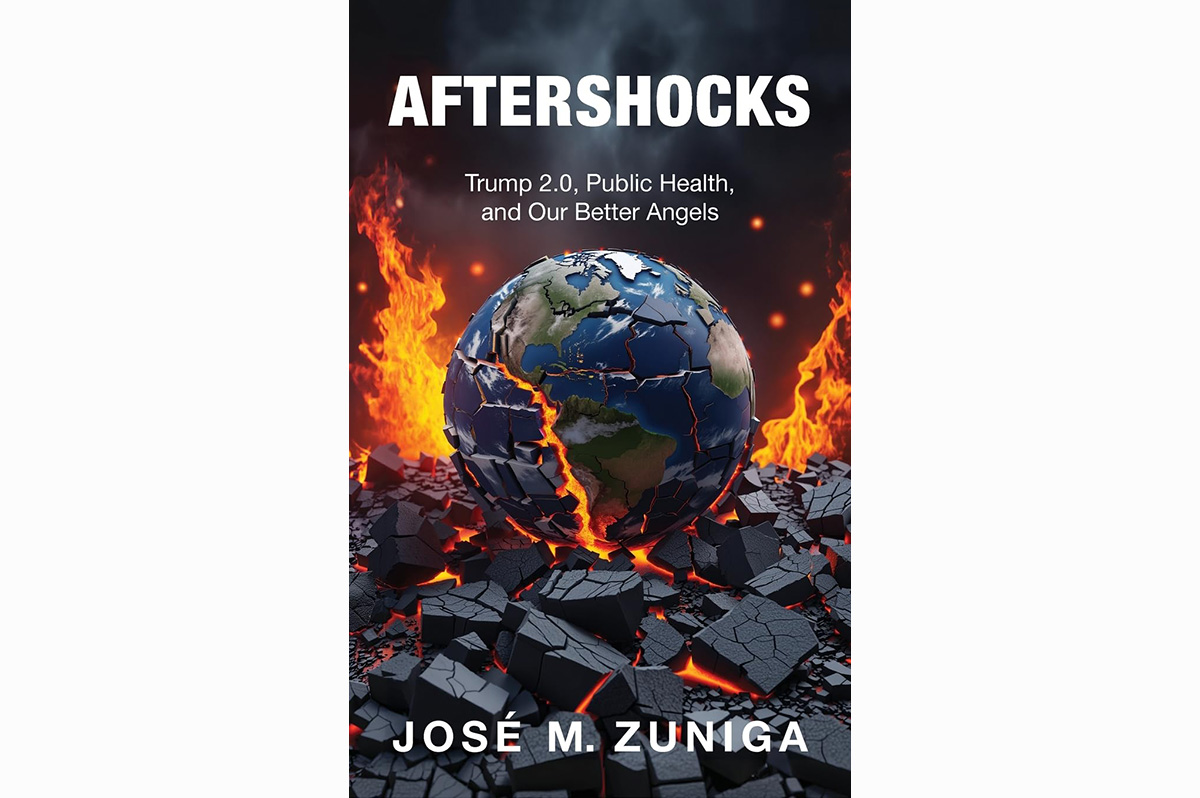
As LGBTQ and HIV advocates continue to grapple with the Trump administration’s attacks on healthcare, a new book offers a timely look at what happens when public health systems — and the democratic institutions that sustain them — are pushed to their limits.
The book, “Aftershocks: Trump 2.0, Public Health, and Our Better Angels,” was written by Dr. José M. Zuniga, president/CEO of Fast-Track Health. Zuniga is a globally recognized public health leader with more than three decades of experience advancing responses to HIV, communicable and non-communicable diseases, and the health impacts of climate change. He is also editor-in-chief of the Journal of Fast-Track Health.

The book covers the first year of the second Trump administration. It chronicles the impact of federal policy shifts and budget cuts on the HIV response and public health more broadly, including for LGBTQ communities. Drawing from policy analysis, frontline insight, and lived experience, the author reveal how decades of hard-won progress became vulnerable through Project 2025 and DOGE, but also a paralysis in the HIV and public health communities following the outcome of the 2024 elections.
“In other words, we were caught flat-footed when our opposition had a detailed plan to create chaos and disruption,” Zuniga says. “Thus, the book also offers Horizons 2028 as an antidote to Project 2025 as a starting point for a wide-ranging conversation about how we will build back better given the baseline pre-Trump 2.0 was already imperfect.”
Below is an excerpt from the book.
What Could Not Be Left Unsaid
Let me begin with a simple truth: I did not set out to write this book. Like many in the public health community, I set out daily to do the work of scaling prevention, expanding access to care, strengthening health systems, and ensuring that dignity, equity, and justice are operational realities. Writing, for me, has always been in service of action: policy briefs to shape decisions, editorials to provoke accountability, reports to document progress or failure, and books to synthesize experience into insight that can guide public health action. But Aftershocks is something different; it is not merely an analysis. Instead, it is a record of rupture, of response, and of what it means to continue when the ground beneath your work begins to shift.
This book was written because something changed, and that change came into sharp relief during the beginning days of the second Trump administration, including the erosion of norms, the weaponization of rhetoric, and the recalibration of governance itself. The change was not limited to policy reversals or budget cuts, though there were many. Moreover, it was not confined to rhetoric, though language played a central role. The change was structural and moral: a redefinition of how power understood its obligations to people, to evidence, and to truth itself. And for those of us working in public health, the effects were immediate and personal. We experienced a purposeful disruption of the public health ecosystem and a direct repudiation of the “health for all” principle that guides our work….
Writing this book was, unexpectedly, an act of catharsis. Not because it resolved anything, but because it created space to process what would otherwise have been overwhelming… Amid what many in the public health community experienced as both individual and collective trauma, documenting itself was stabilizing, allowing reflection without detachment and critique without disengagement. But catharsis alone is insufficient. This book is not an exercise in lament; it is also a response. If the period it chronicles is defined by disruption, then its purpose is to offer direction. Where Project 2025 represented a blueprint for ideological capture of institutions, language, and governance, this book offers a counterpoint: Horizons 2028…
Horizons 2028 is grounded in a simple premise: that the future of public health – and of democratic governance more broadly – depends on rebuilding systems that are resilient to political volatility. That means strengthening not only federal capacity, but subnational leadership. It means embedding community-led accountability into data systems. It means aligning health outcomes with social determinants and recognizing that equity is not an endpoint but a continuous process of adjustment and correction. It means treating global engagement not as optional, but as essential to national well-being. In other words, it is a roadmap not for returning to what was, but for building what is required…
I write as an Independent. Not in the sense of detachment, but in the sense of accountability to evidence, to outcomes, and to the people whose lives depend on both… Independence does not mean neutrality in the face of harm; it means refusing to filter reality through partisan allegiance. Importantly, it also means being guided by a consistent commitment to equity, dignity, and justice. These are not abstract values… They are tested in moments of crisis, when the gap between principle and practice becomes most apparent. They demand accountability not only for what is said, but for what is done – and for what is allowed to persist unchallenged. And they require the courage to name harm clearly, even when doing so is inconvenient or politically unwelcome.
That commitment shapes the analysis that follows, but it is also what makes the writing difficult. Because to document harm is to confront it. To trace its origins is to name decisions and their consequences. And to do so honestly is to risk being read as partisan in a landscape where truth itself has become politicized. But the alternative – silence, or false equivalence – is not acceptable. Not when the stakes are as high as they are. There is, however, a thread that runs through this book that resists cynicism, is not optimism, at least not in the conventional sense, but is something quieter and more durable: a belief that even in moments of rupture, there remains a capacity – within institutions, within communities, within individuals – to reorient toward something better.
The Blade may receive commissions from qualifying purchases made via this post.
Out & About
Archuleta to host book signing in Rehoboth Beach
Entertainer to meet with fans at Browseabout Books

David Archuleta will chat with fans and sign his book “Devout: Losing My Faith to Find Myself” on Sunday, Sept. 6 at 2 p.m. at Browseabout Books in Rehoboth Beach.
The book is an inspirational account of his transformation from a closeted Mormon teen singer to a pop star who is comfortable with his queer identity. For additional information on this event, go to browseaboutbooks.com.
Archuleta will also be in Rehoboth Beach to headline the “Night of Entertainment” on Saturday, Sept. 5 for CAMP Rehoboth’s SUNFESTIVAL weekend, which includes the Night of Dance Sept. 6.
Visit camprehoboth.org for more information.
Friday, August 28
Go Gay DC will host “LGBTQ+ Community Happy Hour” at 7 p.m. at DIK Bar.This is a chance to relax, make new friends, and enjoy happy hour specials at this classic retro venue. Attendance is free and more details are available on Eventbrite.
Trans Discussion Group will be at 7 p.m. on Zoom. This event is intended to provide an emotionally and physically safe space for trans people and those who may be questioning their gender identity/expression to join together in community and learn from one another. For more details, email [email protected].
Saturday, August 29
Go Gay DC will host “LGBTQ+ Community Brunch” at 11 a.m. at Freddie’s Beach Bar & Restaurant. This fun weekly event brings the DMV area LGBTQ+ community, including allies, together for delicious food and conversation. Attendance is free and more details are available on Eventbrite.
Sunday, August 30
“Nellie’s DC Drag Brunch” will be at 12 p.m. at Nellie’s Sports Bar. Come get served like a queen by a queen. Join Sapphire Blue, Deja Diamond and their team of amazing drag performers for the most fun you’ll have all weekend. Tickets cost $58.51 and are available on Eventbrite.
Monday, August 31
“Center Aging: Monday Coffee Klatch” will be at 10 a.m. on Zoom. This is a social hour for older LGBTQ+ adults. Guests are encouraged to bring a beverage of choice. For more information, contact Adam ([email protected]).
Tuesday, September 1
The DC LGBTQ+ Community Center will host a drop-in session to share resources, provide service navigation, connect with community, and gather feedback. For more details, visit the DC Center’s website.
Wednesday, September 2
Job Club will be at 6 p.m. on Zoom upon request. This is a weekly job support program to help job entrants and seekers, including the long-term unemployed, improve self-confidence, motivation, resilience and productivity for effective job searches and networking — allowing participants to move away from being merely “applicants” toward being “candidates.” For more information, email [email protected] or visit thedccenter.org/careers.
The DC LGBTQ+ Community Center will host “Movement for Healing” at 3 p.m. This trauma- and yoga therapy–informed class is designed to help guests gently reconnect with their body and their breath. Through mindful movement, somatic awareness, and grounding practices, guests will explore how to release tension, increase mobility, and cultivate a deeper sense of safety and ease within. For more details, visit the Center’s website.
Thursday, September 3
The DC LGBTQ+ Community Center’s Fresh Produce Program will be held all day at the Center. People will be informed on Wednesday at 5 p.m. if they are picked to receive a produce box. No proof of residency or income is required. For more information, email [email protected] or call 202-682-2245.
Virtual Yoga Class will be at 7 p.m. on Zoom. This free weekly class is a combination of yoga, breath work and meditation that allows LGBTQ+ community members to continue their healing journey with somatic and mindfulness practices. For more details, visit The DC LGBTQ+ Community Center’s website.

New book examines Trump cuts to LGBTQ healthcare

E-INFOSOL leaders encourage youth to pursue tech careers

Milo Yiannopoulos deported to UK

San Francisco, long a queer safe haven, remains competitive for homebuyers

For LGBTQ youth starting with nothing, Pride House in Florida offers help

Dolly Parton dies at 80

Music icon and dear LGBTQ friend Dolly Parton remembered

New data shows record-high LGBTQ population amid Trump attacks

Push to elect more LGBTQ ANC members yields results