Africa
Rwanda recognizes LGBTQ relationships in new youth book
‘Amahitamo Yanjye’ seeks to reduce teen pregnancies
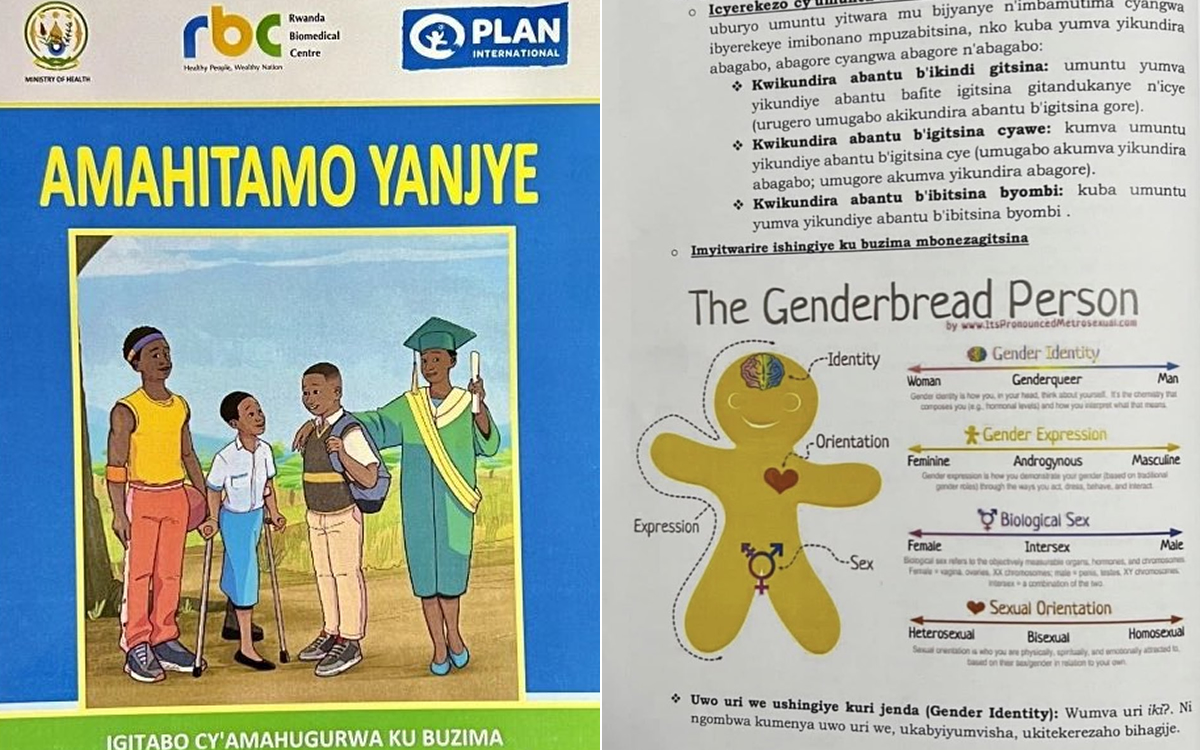
The Rwandan government has recognized same-sex relationships in a newly launched book for adolescents and young people who are under 24-years-old.
The Comprehensive Sexuality Education Toolkit titled “Amahitamo Yanjye” (“My Choice”) in the country’s Kinyarwanda language seeking to curb teenage pregnancies recognizes and promotes education about homosexuality and other sexual orientations.
The book is largely written in Kinyarwanda with limited English translations and states that there is no relationship between gender and sex in exploring gender identity, gender expression and sexual orientation, among other topics.
To recognize the existence of gay and lesbian relationships, the toolkit uses the “Genderbread Person” tool to educate young people.
The out-of-school book is a product of Plan International Rwanda, a non-governmental organization, in collaboration with Rwanda’s Ministry of Health and Rwanda Biomedical Center.
Mireille Batamuliza, Rwanda’s Permanent Secretary in the Gender and Family Promotion Ministry who presided over the launch of the sexuality toolkit on March 31, acknowledged it as a solution to address teenage pregnancy through sensitization.
“The kit provides lessons for adolescents especially those out of school, parents, teachers, and health works for additional knowledge,” Batamuliza said.
Plan International Rwanda Country Director William Mutero noted that the sexuality toolkit brings hope to increase collaboration with various stakeholders in sharing knowledge.
However, the government’s involvement in the book that also promotes homosexuality sparked criticism from the public and praise from the LGBTQ community and its rights defenders.
The Triangle Organization, an NGO that supports LGBTQ communities to access services lauded the recognition of the queer community and the explanation of the “genderbread person” in Rwanda’s local language, welcomed the book.
The public outcry prompted the Rwandan government’s spokesperson to state that the toolkit belongs to Plan International Rwanda and denied any state institution having “validated, endorsed or adopted” it. The book’s cover, however, bears the logos of the Health Ministry, the Rwanda Biomedical Center and Plan International Rwanda.
The toolkit is also forwarded by the Rwanda Biomedical Center, a state agency whose officials, led by Adolescent Health Officer Elphaze Karamage, attended the launch.
“Sexual orientation and gender identity are private matters, and the health and well-being of all Rwandans are protected without discrimination under the existing law and policy,” the government spokesperson said.
There is no restriction on the discussion or promotion of LGBTQ issues in Rwanda, despite the fact the country’s 2003 constitution does not recognize homosexuality and same-sex marriage.
Rwanda is the only East African nation that treats sexual orientation as a private matter free from government interference through legislation to restrict certain sexual practices. Homosexuality remains criminalized in neighboring Uganda, Kenya and Tanzania.
The Kenyan government, for example, this year started cracking down on foreign teenage books with LGBTQ content. MPs also passed a resolution that bans public discussion, reporting and distribution of LGBTQ-specific material.
Kenya’s Education Ministry and the church have also formed a Chaplains Committee chaired by Kenya’s Anglican Church Archbishop Jackson Ole Sapit to counter the infiltration of LGBTQ in schools. The committee’s mandates include counseling students who identify as LGBTQ.
Rwanda in 2010 voted in support of re-introducing sexual orientation as a category in a U.N. resolution on “extrajudicial, summary or arbitrary executions” after the reference had been removed in the previous year. This move led to the decriminalization of homosexuality in Rwanda.
Rwanda in 2011 joined four other African countries in signing a U.N. joint statement “Ending Acts of Violence and Related Human Rights Violations Based on Sexual Orientation and Gender Identity.”
Although Rwanda is seen as a haven for the LGBTQ community in the region and serving a refuge for gays under attack in hostile neighboring countries like Uganda, the community still faces discrimination and abuse from local authorities.
Various queer activists and civil society groups last year petitioned the government to also collect data about the LGBTQ community in the August 2022 national census for consideration in planning, but their request was ignored.
The LGBTQ community has complained about some of its members being fired from work or denied jobs and health services, kicked out of rental houses, excommunicated from churches, and shunned by family members for disclosing their sexual orientation. Activists have also called for marriage equality, a non-discrimination law, recognition of LGBTQ people as a distinct group to enjoy equal rights and other policies that protect them.
Some LGBTQ people have been accepted by the Church of God in Africa in Kigali, the Rwandan capital, where they are respected and treated equally, even though Rwandan society remains largely homophobic.



Africa
When home becomes a journey: migration, memory, and the African diaspora
People carry pieces of previous lives wherever they go
Sometimes I wonder whether home is a place or a feeling.
I have lived in places where I never imagined I would stay. I have crossed borders I never expected to cross and spent years in refugee communities where people wake up each morning wondering what the future will bring. I have known Kakuma Refugee Camp in Kenya, spent time in Zambia and South Africa, and now live in Gorom Refugee Settlement in South Sudan.
So, when I think about migration, I don’t think first about passports, borders, statistics, or immigration offices.
I think about people.
I think about the mother who leaves everything behind because she wants her children to survive. I think about the young person crossing a border with little more than a phone, a few clothes, and memories of a life that may no longer exist. I think about the refugee who has spent years waiting for a durable solution and still doesn’t know where they will eventually call home.
Migration is often described simply as movement from one place to another. But sometimes it is much more than that.
It can mean leaving behind a version of yourself.
Africa has always been moving
Africa’s migration story did not begin with modern refugee camps or today’s international borders.
People have moved across this continent for generations. They have followed trade routes, searched for pasture and water, moved for marriage, education and employment, escaped conflict, and built new communities elsewhere.
Migration has always been part of African life.
Today, people move for many different reasons. Some flee war and political instability. Others escape persecution or discrimination. Some leave because they cannot find work or see a future for themselves. Others migrate to study, find employment, start businesses, join family members or simply seek new opportunities. There is an important distinction here.
Not every African migrant is a refugee.
A refugee is someone forced to leave because returning home is unsafe. An asylum seeker is someone seeking protection and waiting for a decision on their claim. Exile can mean living away from one’s homeland, sometimes unwillingly. The diaspora is broader still: it includes people of African origin living outside their country or continent, whether they left by choice or were forced to leave.
These words matter because behind each one is a human story.
When leaving is not a choice
I know what it means when leaving is no longer a choice.
Forced displacement takes something from you that is difficult to explain. You may still have your memories, your language and perhaps a few possessions, but the ordinary things that once made life predictable can disappear.
You begin again.
Sometimes you begin again in another country. Sometimes you begin again in a refugee camp.
My experiences in Kakuma taught me that displacement does not necessarily end when you cross a border and reach somewhere safer. The uncertainty can continue for years.
Now, in Gorom Refugee Settlement, I see that uncertainty in the lives of people around me. Mothers worry about food and the health of their children. Young people wonder whether they will return to education. Others wait for resettlement or another safe pathway while trying to build a life with very limited resources. There is a strange feeling in waiting.
You are physically present somewhere, but mentally you may still be traveling towards a future you cannot see.

What happens to identity?
One of the hardest questions migration raises is: Who am I when I am no longer where I came from?
A person can cross a border in a few hours. Identity doesn’t move that quickly.
You carry your accent.
You carry your food.
You carry your mother’s stories.
You carry songs you heard as a child.
You carry the names of people who may never know where you ended up.
You carry memories.
And sometimes you carry pain.
I have met people who have lived in several countries and can no longer give a simple answer when asked where they are from. They may have been born in one country, grown up in another, lived in a refugee settlement somewhere else and now dream of resettling in a fourth.
Does that make them less African?
I don’t think so.
Perhaps it makes their identity larger.
Carrying Africa across borders
The African diaspora is sometimes discussed as though it were simply a population scattered around the world. I see it differently.
People carry pieces of home wherever they go.
An African family living in Australia, Canada, Britain, the United States, or elsewhere may still cook the food they grew up eating. They may speak their mother tongue at home, send money to relatives, listen to African music, support community projects and remain closely connected to events thousands of miles away. Migration doesn’t necessarily erase belonging.
Sometimes it creates several belongings at once.
The diaspora also contributes enormously to communities back home. Remittances help families pay school fees, buy food, build houses, access healthcare and start businesses. Migrants also carry knowledge, professional experience, ideas and connections that can benefit communities across borders.
A person may leave Africa physically and still spend much of their life contributing to Africa.
That matters.
The price of being a migrant
But migration has another side.
Not every new country means a new beginning.
For some migrants, the journey leads to racism, xenophobia, exploitation, or discrimination. People can be judged because of their nationality, accent, skin color, immigration status or refugee identity.
Others discover that qualifications earned at home are not recognized. A professional becomes a cleaner. A teacher struggles to find work. A skilled worker is told to start again.
There is nothing wrong with honest work. The problem begins when someone’s dignity is reduced because they are a migrant.
For refugees, bureaucracy can become another form of suffering. A person can become a case number, waiting months or years for interviews, decisions, relocation opportunities, or family reunification.
But life doesn’t stop while the paperwork continues.
Children grow older, parents become sick, people lose loved ones, birthdays come and go and still the waiting continues.
I sometimes wonder whether the people making decisions about migration fully understand how heavy that waiting can become for someone sitting on the other side of the process.
Women, children, and LGBTQ refugees
Migration does not affect everyone in the same way.
Women often carry enormous responsibilities after displacement. They may become the main providers for their children while dealing with their own trauma and uncertainty.
Children experience displacement differently. They may not fully understand why they had to leave home, but they understand the absence of familiar faces, schools and routines.
Young people face another difficult question: how do you plan a future when you don’t know which country you will be living in?
For LGBTQ refugees, the journey can be even more complicated. Some leave because the place where they were born no longer feels safe for them. They may have experienced rejection, threats, violence or discrimination before they ever reached a refugee settlement.
And yet, even in such circumstances, people create community.
In Gorom, LGBTQ refugees and asylum seekers come from different African countries and backgrounds. We don’t always agree on everything. But we understand something important: when the world has already made you feel unwanted, having people around you who understand your experience can mean everything.
Community can become another form of home.
Should borders decide our worth?
I understand why countries have borders. Countries have laws and responsibilities.
But I sometimes ask myself a simpler question: Should crossing a border change the value of a human life?
A child doesn’t become less deserving of food because they were born on the other side of a political boundary.
A mother doesn’t become less worthy of safety because she crossed without the right document.
A refugee doesn’t stop being a human being while waiting for an immigration decision.
From a Humanist perspective, this seems straightforward to me. Human dignity should not depend on nationality.
We can have immigration systems and still treat migrants with compassion.
We can protect borders without forgetting that the people standing behind those borders are human beings.
We can disagree about migration policy without dehumanizing migrants.
That balance isn’t easy. But perhaps that is exactly why we need more humanity in conversations about migration.
What does home mean now?
I have asked myself this question many times: Where is home?
Is it where I was born?
Where I first felt safe?
Where my memories live?
Or perhaps home isn’t always a geographical location.
Maybe home can be the people who stand beside you.
Maybe it is the language you speak when you are emotional.
Maybe it is the smell of food that takes you back to childhood.
Maybe, after so much has been taken away, home becomes something you slowly rebuild.
My birthday falls on Sept. 12. Birthdays usually invite us to think about another year of life. But for someone who has experienced displacement, another birthday can mean something deeper.
It means I made it through another year.
I am still here.
And I think about the many refugees who don’t know whether they will be safe long enough to celebrate their next birthday. I think about children growing up in camps who deserve to celebrate their birthdays in a home they can call their own.
That thought stays with me.
We are more than where we come from
Migration has taught me that people cannot be reduced to the countries printed on their passports.
We are our memories, our relationships, our struggles, our dreams, and our choices.
Africa’s diaspora is not simply a story of people leaving Africa. It is also a story of people carrying Africa with them.
And the refugee experience is not simply a story of loss. It is also a story of survival.
I don’t know where my own journey will eventually take me. Perhaps that is one of the things migration teaches us: we can make plans, but life sometimes writes a different story.
What I do know is that every person deserves the chance to live without fear, to love without persecution, to work with dignity, to raise children safely and to imagine a future.
Borders may separate countries.
They should never separate us from our humanity.
If migration has taught me anything, it is that home is not always the place we left behind. Sometimes home is the safe place we are still searching for.
And sometimes, while searching, we become one another’s home.
Egypt
Egyptian authorities refuse to allow gay cruise to dock in country
Scarlet Lady earlier this week blocked from visiting Turkey
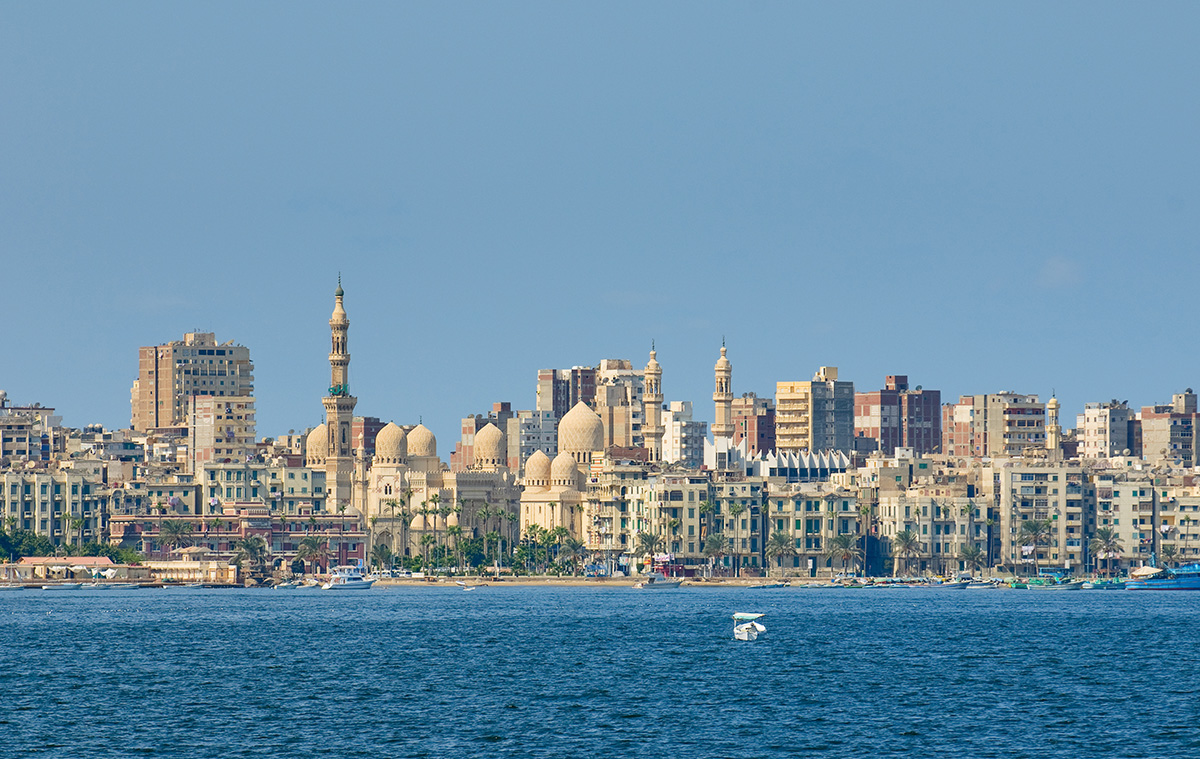
Egyptian authorities have refused to allow a gay cruise to dock in the country.
The Scarlet Lady, a Virgin Voyages ship that Atlantis Events chartered, was to have docked in Alexandria, a port city on the Mediterranean Sea. The Washington Blade obtained a letter that Atlantis Events President Rich Campbell sent to passengers on Thursday, hours before the cruise was to have arrived.
“Early this morning, we were informed that Scarlet Lady has been denied entry into Egyptian waters and, as a result, will no longer be able to call in Alexandria today,” he wrote.
“I know how much this visit meant to so many of you,” added Campbell. “We successfully sailed a similar itinerary last year, so we were surprised by this unfortunate decision.”
Campbell noted “both the Atlantis and Virgin Voyages teams worked tirelessly to make this call in Alexandria a possibility.”
“This news came as a surprise to all of us, and we’re just as disappointed as you are,” he said.
The 10-day cruise left Athens on July 5. It is scheduled to end in Trieste, Italy, on July 15.
The ship had been scheduled to dock in Kusadasi, a Turkish resort town on the Aegean Sea, and Istanbul earlier this week. Turkish authorities refused to allow it in the country.
Former Tempe, Ariz., Mayor Neil Giuliano, who is an LGBTQ+ Victory Institute board member, is among those on the cruise.
“Just a few hours before arriving in Alexandria, Egypt — a city founded by and named for one of the ancient world’s best-known homosexuals — government authorities rescinded permission for our ship of 2,000 gay men to enter Egypt,” wrote Steve May, who is also on the ship, on Thursday in a Facebook post.
Alexander the Great founded Alexandria in 331 B.C.
“As with Turkey, we have been sent away not because of what we did, but because of who we said we are,” said May. “‘I am what I am’ is too much liberty for some to bear. So it was in the United States as well not long ago, where even I ended up as a convicted homosexual after a military trial in 2001 for saying ‘I am gay.’ This is just a reminder that for all the progress we have made, our freedom is never secure — for any of us, regardless of who or how we love. Back to Europe!”
Discrimination and persecution based on sexual orientation and gender identity is commonplace in Egypt. The Egyptian Football Association, along with the Football Federation Islamic Republic of Iran, objected to playing in the World Cup’s “Pride Match” that took place in Seattle on June 26.

Iran and Egypt on Friday faced off during the World Cup’s “Pride Match” in Seattle.
Iran is among the handful of countries in which consensual same-sex sexual relations remain punishable by death. Discrimination and persecution based on sexual orientation and gender identity is commonplace in Egypt.
Friday’s match coincided with Pride weekend in Seattle. The Egyptian Football Association and the Football Federation Islamic Republic of Iran both objected to playing in the “Pride Match.”
Egypt and Iran tied 1-1.
FIFA, for its part, allowed Pride flags inside the stadium during the match.
“The FIFA World Cup 2026 is an inclusive event that welcomes people from all backgrounds,” a FIFA spokesperson told the Washington Blade in a statement. “Fans of all sexual orientations and gender identities are welcome at matches and events. General statements of human rights, including rainbow flags and other flags representing sexual orientation and gender identity, are permitted under the FIFA World Cup 2026™ Stadium Code of Conduct and may be displayed inside stadiums provided they are used in a manner consistent with the code.”
Human Rights Watch welcomed FIFA’s decision to allow Pride flags inside the stadium. Outright International, a global LGBTQ and intersex rights group, distributed Pride flags in Seattle on Friday, which was Pride Match Day.
“Visibility matters,” said Outright International Executive Director Maria Sjödin. “Pride is now being celebrated in more than 100 countries, including this weekend in Seattle. For many LGBTIQ people, seeing a Pride flag in public is a reminder that they are not alone, and that their rights and dignity are recognized.”
FIFA President Gianni Infantino earlier this year told Die Weltwoche, a Swiss magazine, that “there will be no ‘Pride Match’ at the (FIFA) World Cup.”
“There will be a FIFA World Cup match in Seattle, and on the same day, events organized by external organizations will be taking place in the city,” said Infantino. “But that has nothing to do with the match itself.”
Peter Tatchell, a long-time LGBTQ activist from the U.K. who is director of the Peter Tatchell Foundation, was among those who traveled to Seattle for Friday’s match. Tatchell accused FIFA of not vetting World Cup teams — specifically Iran, Egypt, Saudi Arabia, Ghana, Senegal, Qatar, Tunisia, Morocco, Iraq, Uzbekistan, and Algeria — over whether they would allow gay players.
“FIFA is protecting LGBT+ visibility in the stands while failing to protect LGBT+ players on the pitch,” said Tatchell.

Bowser, Office of LGBTQ Affairs announce LGBTQ+ History Month events

PHOTOS: Winchester Pride

Evan Low is not the leader the Victory Fund needs at this moment

Transgender woman elected to Brazilian Chamber of Deputies

Lula, Flávio Bolsonaro to face off in second round of Brazilian presidential election

Gay Va. couple hopeful voters will enshrine marriage equality in state constitution

Victory Fund board investigates former staffers’ allegations against CEO Evan Low

LGBTQ community must vote in big numbers

The right to be an ordinary transgender man

Calif. governor signs 6 pro-LGBTQ bills, vetoes 1
-

 Virginia4 days ago
Gay Va. couple hopeful voters will enshrine marriage equality in state constitution
-
LGBTQ Non-Profit Organizations4 days ago
Victory Fund board investigates former staffers’ allegations against CEO Evan Low
-
Opinions4 days ago
LGBTQ community must vote in big numbers
-
Opinions4 days ago
The right to be an ordinary transgender man