National
How I — a trans man — went undercover on a TERF dating site
Female-only app asserts lesbians must be ‘biologically female’
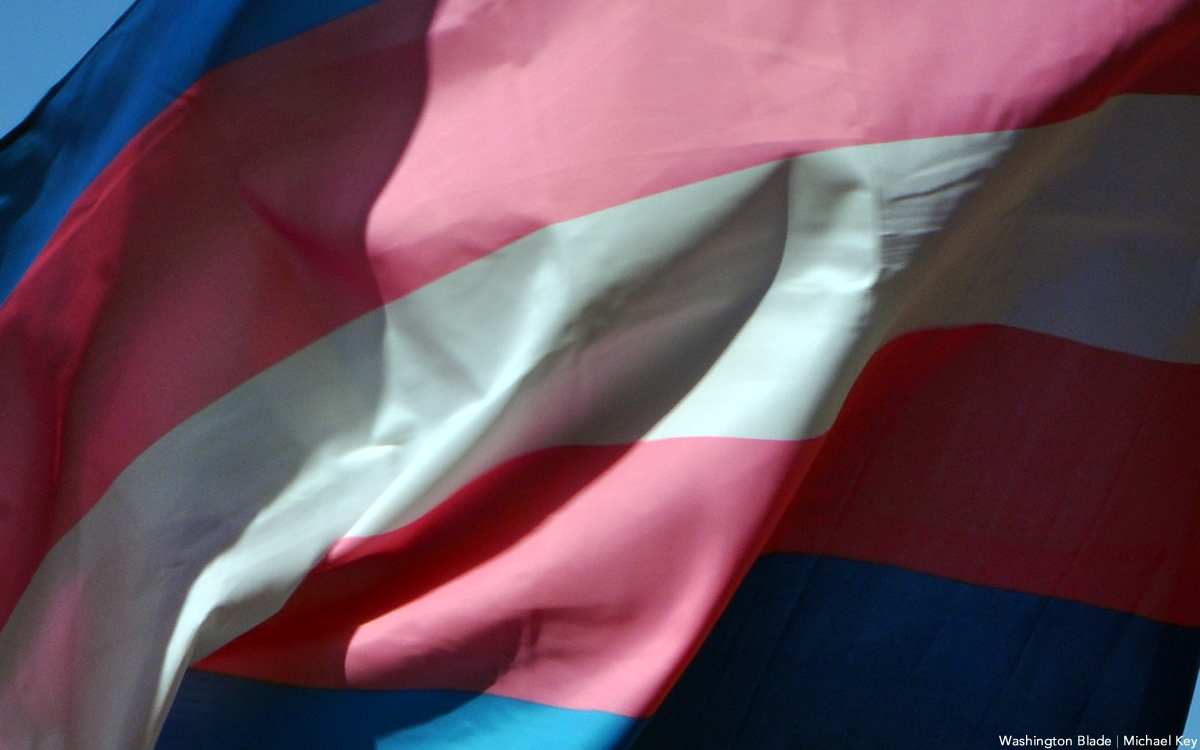
It turns out the “lesbian renaissance” only has 85 people.
No, I am not talking about the Renaissance as defined by Chappell Roan, Billie Eilish, Bottoms, and Drive-Away Dolls. That Renaissance is well populated.
It’s the Renaissance defined by Jenny Watson, a lesbian and self-described TERF (trans-exclusionary radical feminist) committed to the idea that lesbians can only be “biologically female.”
My number comes from Watson’s female-only lesbian and bisexual dating and community app, L Community, which took LGBTQ news and Twitter by storm last month when it claimed it could identify and exclude trans women to a rate of 99.89% accuracy using AI-powered “sex recognition software.”
As of Aug. 7, more than 60 days since launching, the website couldn’t even break 100 users.
After reading L Community’s definition of biological sex – “biological sex is firmly linked to distinct reproductive anatomies dedicated to producing sperm or eggs for reproduction” – I realized that I – a transmasculine person– fit the bill for “adult human female.”
So, I checked the box verifying that I was “biologically female,” snapped a picture of my face – and signed up for the dating app. I didn’t shave beforehand, so my testosterone-induced stubble remained in the picture. Chest photos were not required so my flat chest raised no alarms.
Not that any of that would have mattered, Watson is clear that her app can’t be trans-exclusive because “there are many biological women who identify as males and we would certainly welcome those women.”
I paid and was refunded the $12.75 to verify my identity. And I was ushered into the community, which was notably silent. The only content was from Watson. Posts include telling members the proper dating app portion was on its way via an invite-only basis and asking if anyone wanted to join a Zoom meet up since “our recent event had only 6 attendees.” Another user posted sporadic lesbian-themed memes.
I used my legal name to register, as the platform requested. Conveniently, I haven’t changed my name to Henry yet. At the same time, I reached out to Watson multiple times for comment under the name I publish under and use.
(To counter any claims of misrepresentation, my chosen and legal names are irrevocably tied together on the internet due to my brief time publishing with both. A cursory search of either name identifies both as associated with me).
In response to an initial email request for an interview, she wrote “To ensure our message is accurately conveyed, I would prefer to answer your questions via email,” and provided the background “L’App is designed to create a safe and respectful space exclusively for lesbians, utilising facial recognition technology to ensure that only biological females can sign up.”
Watson noted, “This innovation addresses specific concerns raised by many in our community regarding their dating experiences.”
When I followed up with specific questions, as requested, such as the number of active users or their approach to people using the singular “they” pronoun or how they plan to approach intersex individuals, Watson failed to respond in a five-day comment period. I extended that to 7 days out of courtesy, and heard nothing.
Ten days after I reached out with my questions, Watson asked for another week to respond. I provided her with a work-week deadline and never heard back.
Watson’s stances on the non-binary, intersex, and trans community are of public record, however.
Watson had previously described a queer, non-binary musician – who happens to be in a relationship with a man – as “a straight woman LARPing.” She tweeted in dismissal of the inclusion of non-binary and intersex people in lesbian bars and lesbian history.
In the same interview Watson said trans men were welcome on the app because they are actually women, Watson repeated that no trans woman could be a woman, to the surprise of the conservative interviewers who questioned if Watson’s conviction held “if they have gone through it, and they’re completely a woman now.” It, of course, being transition.
By the logic presented in the interview, trans men who pass as men, who have testosterone levels equal to that of a cisgender man, and who have received top and bottom surgery are eligible for participation in the community, but trans women who pass as women, have received top and bottom surgery, and have testosterone levels of a cisgender woman cannot.
Not that passing is something that every trans person wants, can do, or should be a necessity to gain respect or protection from discrimination.
Additionally, Watson’s app may not be open to cisgender women as well.
Watson was quick to tweet against Imane Khelif, the cisgender boxer whose gender was questioned by a coalition of far-right actors ranging from J.K. Rowling to J.D. Vance. (The only “proof” that Khelif has XY chromosomes comes from a highly discredited Russian sports organization).
The L Community website states that: “In humans, biological sex is firmly linked to distinct reproductive anatomies dedicated to producing sperm or eggs for reproduction. At birth, human reproductive anatomy is unmistakably male or female in over 99.98% of cases.” Meaning, that there are only .002% of people who are intersex.
This statistic is categorically incorrect. The Cleveland Clinic estimates that 2% of people worldwide are intersex. Other medical and advocacy organizations consistently argue that the number likely is 1.7%, drawing from the research of sex and gender biologist Anne Fausto-Sterling.
Where did Watson get that number? It is likely from Leonard Sax, a medical doctor and psychologist, who has argued that 0.018% of people are intersex. Sax has also argued that gender is biologically hardwired between females and males on numerous occasions, including on conservative talk shows and for the far-right think tank the Institute for Family Studies.
Even if Sax’s and Watson’s proposed statistic was correct, Watson and L Community offer no guidelines about the inclusion of intersex people, regardless of their gender identity. Watson’s derision of Khelif suggests intersex people may not be welcome in the community.
This is not the only case where Watson’s assertions may be faulty. Watson initially claimed that her AI-powered software only messed up 0.10% of the time. She provided no proof to verify the claim.
Recent peer-reviewed research from CU Boulder studied gender recognition accuracy in multiple softwares and found that gender recognition software accurately categorized cisgender women 98.3% of the time, meaning that it miscategorized cisgender women 0.17% of the time, or a little less than double what Watson’s app does.
Importantly, CU Boulder was examining some of the most advanced and well-supported models out there, looking at Amazon, IBM, Microsoft, and Clarifai programs. For those who don’t know Clarifai, it’s an AI-specific company that employs over 100 people. The rest need no introduction.
Not only is Watson working with a much smaller team — LinkedIn estimates 2-10 employees – Watson’s software also must account for the diversity of gendered appearances within the lesbian community, ranging from butch to femme, in addition to differentiating “biologically female” trans men from men and “biologically male” transwomen from women, meaning their software must be highly advanced.
The Boulder research team found that transgender men were categorized as women approximately 38% of the time and men the remaining 62% of the time, meaning they are incredibly hard to accurately categorize in either direction.
Dr. Morgan Klaus Scheuerman, one of the authors of the CU Boulder study, said, “A lot of people have this view that tech is somehow abstracted from human bias or human values, but it’s not in any capacity.” While Scheuerman knew the topic of my interview, we only spoke about his research, not about the app specifically.
Biometric AI and computer vision – how computers can identify objects or people – consistently shows bias against transgender individuals
Watson’s team manually verifies sex from submitted selfies using a script on the website which uses publicly available datasets and APIs (Application Programming Interfaces). Per UCLA, APIs help dictate how software works and share information. There are several publicly available gender differentiation APIs.
Scheuerman explains that, “at a broad level, most computer vision works by defining the categories which you want the system to recognize. In gender, this is often male or female.”
As Scheuerman’s research explains, large data sets of images, qualitatively labeled by people for specific characteristics like gender, can be trained to predict those qualities in future images.
Since the foundation of computer vision is human training, Scheuerman says, “these generative AI models, or these large foundation models, ideally can do anything you want them to do.”
Fundamentally, Watson’s model wants to differentiate between ciswomen and transwomen. Since existing computer models successfully read transwomen as women most (87.3% per Scheuerman) of the time, Watson likely needed to train her model specifically for its task.
The specifics of Watson’s model remain under wraps. But ostensibly to get the level of accuracy, Watson’s model must have been trained on photos of both transgender women and cisgender women, in addition to transmen. This raises questions of consent.
Where did Watson get the photos? Stock photo websites often include collections of transgender people available for republication, but some explicitly exclude their collections to be used in Machine learning or AI data, while others encourage it. Research has found that AI models often use copyrighted work as data to train models, regardless of if they have explicit permission.
That is even if Watson used stock photos. “Scraping” data from publicly available sources like social media is very common for AI training and research and has previously been used to target trans people.
For example, an investigation by Vice found that the University of North Carolina Wilmington scraped more than 1 million images of trans people from YouTube without permission to create a dataset to learn more about terrorism. An interesting research question, seeing as a highly disproportionate number of terrorists are not transgender.
Although we don’t know how Watson went about sourcing the data used to train her model, the broader question remains: What would models think about their photos being used in this way?
Shae Gardner, director of policy at LGBT Tech, who has worked in the field of tech policy and research for eight years, says, “While there has been zero transparency in how this app’s facial recognition system was trained, if it involved the non-consensual scraping and inclusion of images of transgender women, that constitutes a severe breach of privacy, trust, and consent.”
Gardner emphasizes that “developing a technology with the explicit goal of identifying members of a marginalized group raises significant ethical concerns. Openly stating an intention to use that technology to exclude said group confirms them.”
Scheuerman says that “a lot of people have this view that tech is somehow abstracted from human bias or human values, but it’s not in any capacity.”
He hopes that “the field of computer science would be more open to understanding these types of concepts [like equity and diversity] because they’re our responsibility and a moral responsibility. Plus, it’s actually valuable within the market.”
The politics of consent and AI are just beginning to be negotiated and already have led to multiple lawsuits.
The first trans-exclusionary lesbian app Giggle for Girls, started in 2019 by Sall Grover, is currently facing a lawsuit from a transwoman, Roxanne Tickle. The app shut down in August 2022 with 20,000 members. Grover’s Twitter bio says the app is under renovation and will be re-launched soon.
Grover and Watson used to be collaborators of sorts, having joined each other’s podcasts to hype up the small world of female-only dating entrepreneurs.
That collaboration seems to have soured as both are claiming to be the first trans-exclusionary dating app. Giggle started first, but Watson claims it did not begin to discuss dating – just finding community – until after L Community launched. Grover claims otherwise.
However, a dedication to in-person events is unique to Watson’s mission. She plans to open a bar in London for women — her definition — only. It will be a member’s only club, so the exclusion of transwomen is legal.
Watson recently hosted a counter event to London Pride, protesting trans and asexual inclusion at the event. Estimates Watson promotes put her event at 150 people. To put that into perspective, their event was under .005% of the size of London Pride.
These numbers are not surprising. A 2023 YouGov survey found that 84% of cisgender lesbians think of transgender people “very positively” or “fairly positively.” Another 13% don’t care (“neither positively nor negatively” and “fairly”). Only 3% felt “very negatively” about trans people.
The Her App, a trans-inclusive lesbian dating app, that has critiqued Watson and L Community, has more than 15 million users. Grover’s app before it shut down was 0.0013% the size of that. Watson’s app is .000005% the size of that.
Perhaps no comparison is more jarring to show that Watson and her followers are a stunning minority within the lesbian community.




National
Multi-billion-dollar 9/11 Victim Compensation Fund to continue until 2090
Eligibility for same-sex partner survivors remains unclear

As part of its commemoration of the 25th anniversary of the 9/11 terrorist attacks, the September 11th Victim Compensation Fund, a federally operated program, released information during the past week showing it has awarded more than $18 billion to over 77,000 9/11 victims and their families since 2011.
Officials with what’s now referred to as the VCF point out that it was created to provide compensation to individuals or to a court-approved personal representative of a deceased individual who were present at one of the three sites where the hijacked jetliners crashed.
Among those supported under the program are thousands of rescue workers, clean-up crews, and residents living near the World Trade Center Twin Towers destruction site who became ill, many of whom later died, by being exposed to the toxic fumes created by the fire and falling debris.
“Twenty-five years since that day, the September 11th Victim Compensation Fund has served tens of thousands of victims and their families, and we continue to receive over 750 new claims each month — a clear indication of the ongoing importance of our mission,” said Allison Turkel, VCF’s leader, who holds the title of Special Master.
In a Sept. 2 briefing for the news media in advance of the 9/11 anniversary commemoration, Turkel pointed out that the VCF operation was upgraded and expanded by separate laws passed by Congress in 2011 and 2019, with the 2019 law signed by President Trump providing full funding to “pay all eligible claims and extended the filing deadline to Oct. 1, 2090.”
LGBTQ advocacy organizations in New York and nationwide have reported that during the time shortly after the 9/11 attacks same-sex surviving partners of 9/11 victims learned they were ineligible for compensation benefits because their same-sex relationships were not legally recognized.
Nicole Nava, a VCF spokesperson, told the Washington Blade she would inquire into whether same-sex couple surviving partners were being supported under the VCF program in more recent years.
She said under long established VCF procedures, all applicants for benefit claims regarding a deceased person, whether same-sex or opposite sex, must be appointed as a Personal Representative of the deceased person by a state court. For D.C. residents, the probate division of the D.C. Superior Court appoints a Personal Representative.
“Claims for deceased victims (regardless of the cause of death) may be submitted only by the Personal Representative,” a statement on the VCF website says. “Each state has laws that define the process for appointment of the Personal Representative and the specific authority granted to that Personal Representative,” it says.
The Washington Blade couldn’t immediately determine the criteria for being approved as a Personal Representative by the D.C. Superior Court and various state courts, including whether a same-sex survivor partner would be eligible for such an appointment.
A spokesperson for the District of Columbia LGBTQ+ Bar Association, which includes many local attorneys who specialize in a wide range of specialized legal issues, couldn’t immediately be reached to find out if one or more of their members might be able to determine the same-sex partner eligibility for Personal Representative status.
In her news media briefing, VCF Special Master Turkel said detailed information about how best to file a claim for 9/11 victim compensation is available on the VCF website.
“Twenty-five years since the events of September 11th , 2001, we know it has become increasingly challenging for claimants to find documents needed to prove their presence at an eligible location, which is one of the key requirements to be eligible for compensation,” she said.
She was referring to the requirement that 9/11 surviving victims seeking a claim for support for injuries or illnesses related to the 9/11 attacks must prove they were present at the World Trade Center site, the Pentagon site, or the Shanksville, Pa. site where the hijacked jetliners crashed. Those requirements are separate from the less clearly defined criteria for same-sex couple victim survivor eligibility.
“Our team is committed to ensuring no claimant feels lost or overwhelmed when submitting a claim,” Turkel said at the briefing. “We have a great helpline with real live people who can answer or refer any questions that come in,” she added. “They engage in over 4,000 calls a month on average. We encourage folks to call 1-855-1555 with any questions.”
The VCF website, which has additional detailed information, can be accessed at www.vcf.gov.
National
Remembering the LGBTQ heroes of 9/11 terrorist attacks
25 years later, ‘the heartbreak remains strong’
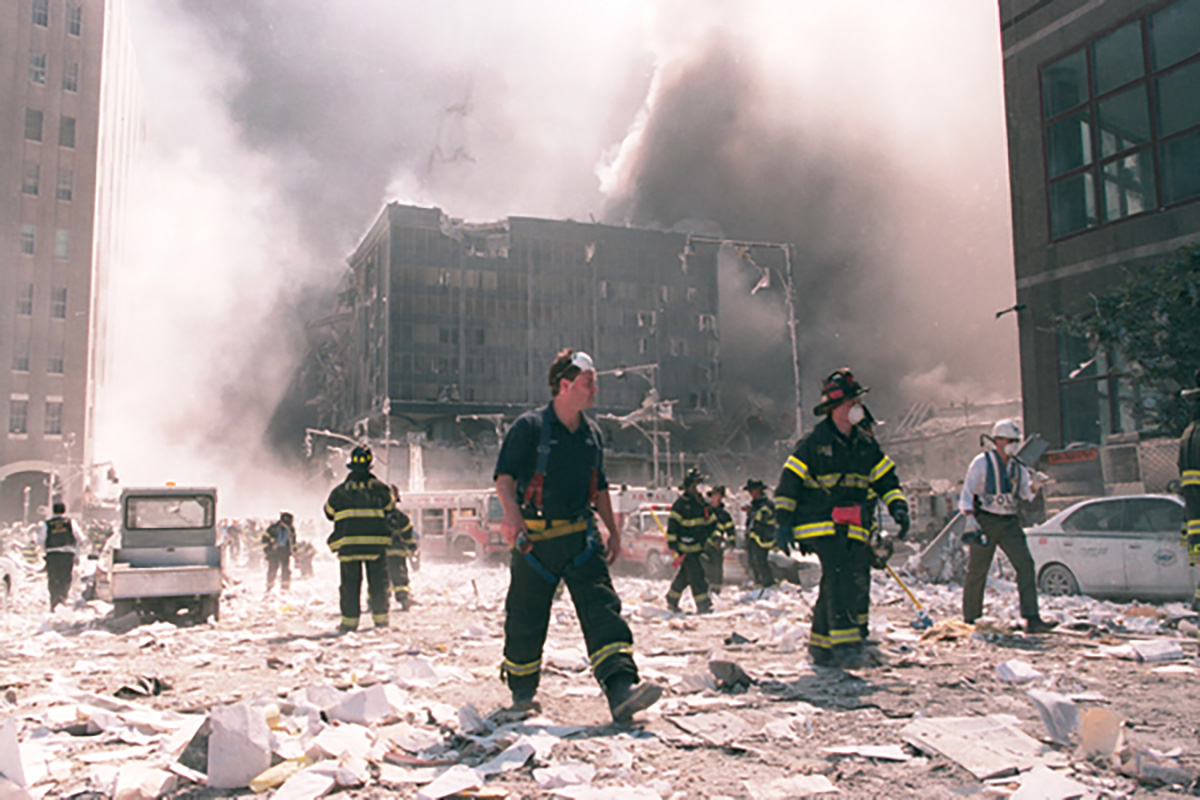
Many in the LGBTQ community in the D.C. area and throughout the country were expected to join friends, co-workers, and family members this week in commemorating the 25th anniversary of the Sept. 11, 2001, terrorist attacks on the New York World Trade Center’s Twin Towers and on the Pentagon just outside D.C. as well as the jetliner hijacking that ended in a fatal crash in an open field in Shanksville, Pa.
A total of 2,996 people died in the 9/11 attacks, including 19 terrorists who hijacked four jetliners whose passengers included Americans and citizens of many other countries.
Activists involved with local and national LGBTQ advocacy organizations recall witnessing a coming together of LGBTQ people and their co-workers, neighbors, and family members to support one another during a time of unimaginable horror and grief.
Among those who lost their lives in the 9/11 terrorist attacks was American Airlines co-pilot David Charlebois, an out gay man and member of the Gay Pilots Association, who was on American Airlines Flight 77, which the terrorists crashed into the Pentagon.

Also among the terrorist victims in the 9/11 attacks was gay public relations executive and rugby enthusiast Mark Bingham of San Francisco, who was among several passengers of the hijacked United Airlines jet who reportedly stormed the cockpit to regain control of the jetliner before one of the hijackers crashed the jet into the countryside in rural Pennsylvania.
The jet had taken off from Newark, N.J. with its destination being San Francisco. Investigators learned the hijackers turned the plane around and were heading to Washington, D.C., with plans to crash it into the White House or the U.S. Capitol.
The passengers, including Bingham, who stormed the cockpit and were among the 44 passengers and crew who lost their lives in the crash are credited by investigators and family members and friends with saving the lives of hundreds of others if the hijackers succeeded in crashing into the White House or Capitol.
Among the other LGBTQ people known to have lost their lives in the 9/11 attacks was Father Mychal Judge, 68, a gay Franciscan priest who served as a Catholic chaplain for the New York City Fire Department. According to the National Catholic Reporter, Judge rushed to the scene of the World Trade Center shortly before the Twin Towers collapsed. He was fatally struck by debris falling from the south tower while giving last rites to a fallen firefighter, the Catholic publication reported.
“He was a decent, wonderful human being,” said New York gay journalist Andy Humm, who had interviewed Judge for LGBTQ-related stories prior to the 9/11 attacks. “I saw him at many demonstrations for gay and AIDS causes, showing up in his Franciscan monk’s cassock,” Humm told the Washington Blade five years ago at the time of the 9/11 20th anniversary. “And he was equally beloved by the fire department, there at every major fire tragedy in the city, lending moral support to firefighters,” Humm said.
Francis DeBernardo, executive director of New Ways Ministries, a Maryland-based LGBTQ Catholic group that advocates for LGBTQ supportive policies within the church, reported five years ago that his group was supporting an effort to call on the Catholic Church to officially recognize Fr. Judge as a saint by canonizing him. But DeBernardo told the Blade this week that those efforts failed to obtain the needed support from various Catholic entities, including the Franciscan Order of Friars Minors, of which Judge was affiliated, ending efforts to canonize Judge as a saint.
DeBernardo has written a book about Judge’s life and legacy published in 2023 called “Mychal Judge:Take Me Where You Want Me to Go.”
Among the other widely reported LGBTQ victims of the 9/11 terrorist attacks were a gay couple from California, Daniel Brandhorst and Ronald Gamboa, and their adopted son, David, who were among those who died aboard the United Airlines flight that crashed in Pennsylvania. The Los Angeles Times reported that Brandhorst, an attorney, and Gamboa, the manager of a Santa Monica Gap store, had adopted three-year-old David when he was an infant.
For many LGBTQ residents of New York and the D.C. area, the suffering over the loss of loved ones, including same-sex partners, was heightened a short time later when they learned they were initially ineligible for local and federal programs aimed at providing financial assistance to survivors of the 9/11 attack victims because same-sex couples were not legally recognized.
At the urging of LGBTQ rights organizations, state and local officials in the New York and the D.C. area took steps to address the initial denial of financial support for surviving same-sex partners In programs under their control. Officials with a massive federal aid program for 9/11 survivors, however, said they did not have legal authority to authorize payments to same-sex partners.
The officials, in the administration of then-President George W. Bush, said the best they could do would be to leave it up to local authorities to determine whether state probate laws would recognize a same-sex partner as a family member for eligibility in the federal aid program for 9/11 survivors, many of whom lived in states outside the New York and D.C. area.
Nicole Nava, a spokesperson for the September 11th Victim Compensation Fund, a federally funded program established to compensate for physical harm or death caused by the 9/11 terrorist attacks, including support for surviving family members, said she would inquire into whether same-sex surviving partners were being supported under that program in subsequent years in response to a request from the Washington Blade.
Jenny Pizer, an attorney for the LGBTQ litigation group Lambda Legal, which supported LGBTQ partner survivors of victims of the 9/11 attacks, said the information she and her organization had showed that many if not most of the LGBTQ partner survivors were unable to obtain the federal Victim Compensation Fund payment benefits that married heterosexual spouses obtained. She said she didn’t have a definitive answer on whether some LGBTQ surviving partners were compensated.
However, at least one case where an LGBTQ partner was compensated was reported by the Washington Post in a Jan. 22, 2003, news story about Peggy Neff, the lesbian partner of 18 years of Sheila Hein, 51, a civilian employee at the Pentagon, who was killed when the terrorist hijacked jetliner crashed into the Pentagon.
The Post reported that the Sept. 11 Victim Compensation Fund, under the leadership of its director, Kenneth Feinberg, approved an award of $557,390 for Neff in compensation for the loss of her partner. The Post story quoted a spokesperson for the Human Rights Campaign as saying, “It is our sincere hope that this signals that other gay families who have suffered the loss of a loved one will be treated similarly.”
The compensation program, which is operated by the U.S. Department of Justice, remains in operation until 2090. The Blade will report on any additional similar awards for LGBTQ surviving partners if Nava provides such information.
Events commemorating the 25th anniversary of the 9/11 attacks were scheduled to take place this week at memorial sites honoring the 9/11 victims located outside the Pentagon in Arlington, Va., at the site of the World Trade Center Twin Towers in New York City, and the site of the jetliner crash in Shanksville, Pa., which is operated by the U.S. National Park Service.
The U.S. Congress in 2017 and 2021 approved separate bills signed by President Donald Trump during his first term in office and President Joe Biden creating the Global War on Terrorism Memorial and its construction, to be built on the National Mall in Washington, D.C. that’s scheduled to be completed in 2028.
The memorial, to be located near the Lincoln Memorial and Vietnam Veterans Memorial close to 23rd Street and Constitution Avenue, N.W., is intended to honor people who served and were lost in the wars and counterterrorism operations that followed the 9/11 attacks, including U.S. military operations in Iraq and Afghanistan.
Longtime LGBTQ rights advocate Jay Fisette, who at the time of the 9/11 attacks held the elected position of chair of the Arlington County Board, which serves as the county’s governing body, was among the Arlington officials that came to the Pentagon’s grounds in Arlington to oversee efforts by firefighters to rescue Pentagon workers on the day of the attack.
At an Oct. 7, 2001, 9/11 Day of Remembrance and Appreciation ceremony held in Arlington, Fisette expressed the views of many in the community in response to the 9/11 attacks.
“Tonight, our community gather as a family,” he told the gathering. “We gather in sorrow and in disbelief, in remembrance and appreciation,” he said. “But we come here, too, with resolve and pride. We come together as Arlingtonians who love our country, as Americans who love our country,” he said.
“Our enemies may hurt our bodies and destroy our buildings, but they will never defeat our determination to make this a world of peace and a community in which our children grow up safe and secure,” Fissette said.
Although some of the same-sex partners of those killed in the 9/11 attacks faced obstacles in obtaining financial support through the federal 9/11 relief program, Tom Hay, the surviving partner of 14 years of American Airlines pilot David Charlebois was treated with respect and honor by American Airlines officials and colleagues at Charlebois’s funeral mass at D.C.’s St. Matthew Cathedral.
More than a dozen uniformed company pilots and flight attendants attended the mass. And a press release issued by American Airlines mentioned Charlebois’s relationship with Hay and told how Hay stood with Charlebois when Charlebois advocated for equal rights for LGBTQ people in the airline industry through his involvement with the National Gay Pilots Association.
“David was an early member of the NGPA,” the American Airlines statement said. “His contribution helped ensure ongoing progress toward fairness and solidarity.”
Activists in New York have said the 9/11 attacks drew attention to the need for legal protections for same-sex couples, including the need for recognition of same-sex marriage, which the U.S. Supreme Court legalized nationwide in its landmark ruling in 2015.
But LGBTQ advocates in New York pointed to the difficulties LGBTQ surviving partners faced when desperately seeking to find out if a partner had survived at the site of the World Trade Center attack where the Red Cross and other emergency relief agencies set up a station near the site of the attack.
“Literally, gay people had to go there, turn around, go back home, and get some paperwork that spouses didn’t have to get to prove a relationship existed,” said Ross Levi, who at the time served as executive director of the New York LGBTQ advocacy group Empire State Pride Agenda.
“You were nervous and scared and sad and then you had to go through that,” Levi told the Blade in 2011 at the time of the 10-year anniversary of the 9/11 attacks. “And worse yet, other people turned them away, even with the paperwork, saying sorry you’re not a family according to our guidelines.”
Activists said New York City and New York State officials quickly recognized the inequities faced by same-sex partner survivors and took steps to change polices and laws to correct the situation. Among other things, New York’s then-Gov. George Pataki (R) issued an executive order in October 2001 that included surviving partners of gay and lesbian victims of the World Trade Center attacks in receiving full spousal benefits from the state’s Crime Victims Board.
In a separate development, the LGBTQ litigation group Lambda Legal, ESPA, the Human Rights Campaign, and other LGBTQ advocacy groups created the September 11 Gay & Lesbian Family Fund to provide some support to surviving same-sex partners who were ineligible for help from the federal relief fund program.
“The terrorist attack on September 11th is a tragedy that touched every American, impacting people and families from all walks of life,” Jonathan Lovitz, the Human Rights Campaign’s Senior Vice President for Campaigns and Communications told the Blade in a statement this week.
“As in all moments in American history, LGBTQ+ Americans were there, and feel the impact of this day,” he said. “As we remember the lives lost 25 years later, the heartbreak remains strong and the work to ensure that every person can live safe from violence in this country continues.”
2026 Midterm Elections
Chris Pappas wins NH Democratic Senate primary
Gay congressman running to succeed retiring U.S. Sen. Jeanne Shaheen

New Hampshire Congressman Chris Pappas on Tuesday won the Democratic primary in the race to succeed retiring U.S. Sen. Jeanne Shaheen (D-N.H.) in the U.S. Senate.
Pappas defeated Karishma Manzur, who was his primary challenger, by a 61.8-36.1 percent margin.
The gay congressman will face off against former U.S. Sen. John E. Sununu, who defeated former U.S. Sen. Scott Brown in the Republican primary.
“Tonight’s victory sends a clear message that voters are looking for leaders who will fight for their rights, their freedoms, and to be treated with dignity and respect,” said Human Rights Campaign President Kelley Robinson in a statement.
She campaigned for Pappas in Manchester, New Hampshire’s largest city, on Aug. 30.
“Chris Pappas has delivered results, stood up for equality, and showed up for the people he serves,” said Robinson in her statement. “HRC was proud to mobilize Equality Voters across New Hampshire to help power this win. We don’t have a second to waste between now and November. We look forward to continuing our work with Rep. Pappas as he drives toward victory in November so he can help return a pro-equality majority to the United States Senate.”
A poll the University of New Hampshire Survey Center released on Aug. 26 showed Sununu ahead of Pappas by a 45-43 percent margin if they were to face off in the general election. The margin of error is +/-2.1 percent.
Pappas would become the first openly gay man elected to the U.S. Senate if he were to win in November.

‘Thelma and Louise’ remains landmark of unspoken queer rebellion

Comings & Goings

LGBTQ Military Happy Hour set for Sept. 15

Calendar: September 11-17

Multi-billion-dollar 9/11 Victim Compensation Fund to continue until 2090

Iceland implements gender-neutral blood donor rules

Anti-science, anti-LGBTQ movements go hand in hand

Everton Blair makes history as first openly gay congressman from Ga.

Chris Pappas wins NH Democratic Senate primary

Mujer trans salvadoreña es encontrada sin vida
-

 Iceland4 days ago
Iceland implements gender-neutral blood donor rules
-
Commentary4 days ago
Anti-science, anti-LGBTQ movements go hand in hand
-
Georgia4 days ago
Everton Blair makes history as first openly gay congressman from Ga.
-
2026 Midterm Elections4 days ago
Chris Pappas wins NH Democratic Senate primary