District of Columbia
Welcome home: DC LGBTQ Center opens its doors to healing and hope
The 6,671 square foot DC LGBTQ Center will offer a wide range of resources for LGBTQ individuals in need – including mental health services, job readiness programs, cultural events, and community support groups, all under one roof.

On a sunny spring day in Washington’s Shaw neighborhood, the once empty Holzbeierlein Bakery warehouse now showcases energy, pride, and the sounds of chosen family coming closer together. After years in a less-than-perfect space on 14th Street, the DC LGBTQ community finally has a new home at the DC LGBTQ Center—and Executive Director Kimberley Bush says it’s more than a building. It’s a promise.
That promise, Bush explained to the Washington Blade on April 26—the day of the new LGBTQ Center’s opening—may change depending on who is being uplifted by the DC Center, but at its core remains the same goal: a thriving LGBTQ community in the nation’s capital. The commitment to the DC LGBTQ community is able to grow more connected and stronger, she explained, as more resources, space, and funding become available for the DC Center.
“This is a glorious home,” Bush said, beaming as groups of community members walked in under the giant inflatable rainbow at the Center’s doors. “It’s our new home. Today was a whole day of welcome home. This space has been an amazing endeavor for a long time, one that we’ve always known we’ve needed. This is space that we need for our LGBT siblings in need—and it’s amazing when your intentions match your efforts.”
The DC Center has long worked to “educate, empower, uplift, celebrate, elevate, and connect” the LGBTQ community from its former location at the Reeves Center. But now, in its new space at 1828 Wiltberger St., N.W., these efforts are more visible, accessible, and impactful than ever before.
“This space is a model that is new, that we are creating,” Bush said as groups of DC Center supporters chatted with Etta James’s “At Last” filling the hallways. “There is, I believe, no other LGBTQ+ community center in the country that not only has its own life and supportive services in its building, but is also co-housed with other organizations. A lot of community centers try and do it all, but that’s not what we wanted. We wanted to be able to bring everybody together under one roof, to be able to have that whole life supportive services center like one-stop shopping. We didn’t want to take over anything anyone else did. We don’t want to take away the dollars those organizations have to do what they do for the community. We want us all to be together. So that’s what we are. We’ve been able to now expand into almost 7,000 square feet of space.”

The new DC Center features a variety of functional spaces designed to meet the diverse needs of the LGBTQ community. It includes office space for up to nine additional partner organizations, creating a hub for collaboration and support. Local and integral LGBTQ organizations like SMYAL, Team DC, and HIPS are some of the groups taking advantage of the space.
“People can be spread out,” Bush said about the opportunity for these LGBTQ-specific organizations to have a dedicated office in the Center. “We are on a grander scale, so we have a grander number of individuals that we can positively and effectively take care of. We [as members of the DC LGBTQ Center] can’t provide everything someone needs, but we can be an outpost for other organizations. Because we’ve expanded, we are able to expand the love, kindness, and support we can give our siblings.”
Additional support, Bush explained, is made possible by the intentional design of the new DC Center. Specialized rooms meet critical needs—from an HIV and STI testing room to therapy spaces and a boutique offering professional attire for job interviews. While the DC Center may not provide every service directly, it offers a shared space where partner organizations can step in and support the community—all under one roof.
“Often people are not able to go here, here, and here, to get what those gaps in life are creating,” she said. “To bridge them in one space just gives that person the opportunity to have less on their heart and their mind in regards to what they need to take care of themselves.”
In addition to being able to provide a space for instrumental elements of protecting the safety and well-being of the DC LGBTQ community, the Center also has a food pantry, a boutique with a clothing closet, an ADA-accessible shower, a mailroom to assist those without a permanent address, and a spacious kitchen.
This, she explained, is why this space is so monumental to providing the DC LGBTQ community the resources they need in a succinct and approachable way.

“By bridging those gaps and having as much as we can here means you’re in one space to get your needs met,” she added. “From sexual health needs, in terms of testing, counseling, and what have you, to mental and behavioral health needs. You can get food, you can get clothing, you can shower. You can store some of your things here. That is such an ease off of your mind to where now you can breathe.”
After stepping into the Center’s director role in 2022, Bush said that she often sees her “siblings” within the community make a better life for themselves starting by walking through the front doors. Sometimes the following steps take more time and resources than for others, but regardless of what it takes, Bush emphasized the goal is to alleviate some stress and make tomorrow an approachable reality.
“I have the amazing opportunity to interact with our community members, our siblings, on a regular basis,” she said. “Often I see them when they first walk in our door. Sometimes they walk in unhappy, sometimes devastated, or they walk in not in a good space. When they come in and invite us in to hear their stories, when they want to share what’s going on with them so we can learn how to best care, love, and support them, it’s incredible. We make a POA, a plan of action, outlining how to take care of them and what that’s going to take.”
Walking through the Center, it is hard to not notice the smiles coming from everyone’s faces—from volunteers, board members, community members, and those seeking assistance. The DC Center, with its rainbow murals and shining floors, has become a beacon of hope for many LGBTQ Washingtonian residents in need. For some, Bush explained, that can be as simple as having a space for solace in a city that seems to have no shortage of stressors.
“The space is made for anyone who’s in need, and even if you’re not,” she said. “This is a place for you to come and be peaceful. A place for you to come and have a cup of tea, not to pay a thing, or have to talk to anybody. You can just sit here and have a cup of tea.”
The more she spoke about the space, it became clear that providing a space for LGBTQ people to be is just as important as providing spaces for the services to take place. The DC LGBTQ Center invites people to not only find what they need to make themselves better in a literal sense but also allows them to simply exist. It is rare for a city to provide this kind of refuge from the constant motion that life demands. And that can be life-changing, she says.
“I will say, ‘How are you today? How are you feeling today?’ ‘How are you’ and ‘how are you feeling’ are two different things, but I do want to know how you’re feeling. If you don’t answer me, that’s good. You know? That’s perfect,” Bush said. “This space is built for everyone, especially for trans and non-binary folk, and for our brown and Black folk. It’s a space for those who just need a space to be.”
In a world that often erases or overlooks LGBTQ people, especially trans, non-binary, Black, and brown community members, the simple act of being seen and cared for can be revolutionary. The DC Center aims to be a place for LGBTQ people to be themselves—not to force them to prove anything or lead them to speak, but to truly be themselves. That quiet affirmation of ‘allowing to be’ can plant the seed to a better, more authentic life.

“One thing that I love to hear, and it makes me feel so good, because they say it in a way that’s just like you and I would say it, or anyone would say it, but sometimes they may not have thought they would say it. They would say, ‘See you tomorrow. See you later.’ This is a person who may not have had tomorrow in their mind. Where you and I say that all the time, but for a lot of our people, our siblings, who come to us, that may not be a thing for them. But when they come in our doors, receive the care and the love and the support and kindness, but then they walk out and they say, ‘See you tomorrow,’ and we do see them tomorrow! I can tell you that this response not only drives me to do this work, because this is good work and I’m very fortunate and privileged to be here, but it’s hearing that out of someone’s mouth. That’s it. That’s all I need.”


District of Columbia
Over 2,000 turn out for Hands Around the Kennedy Center protest
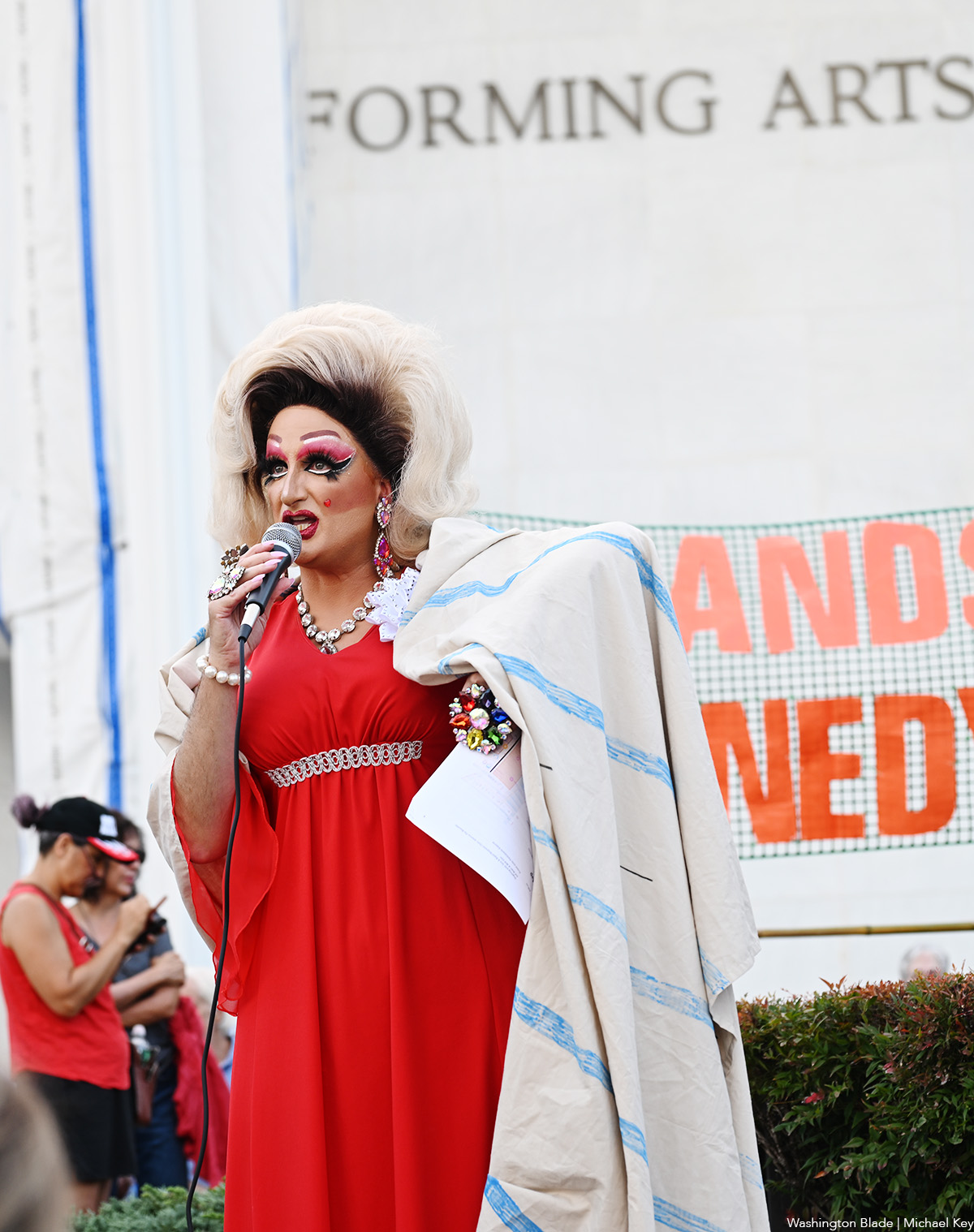
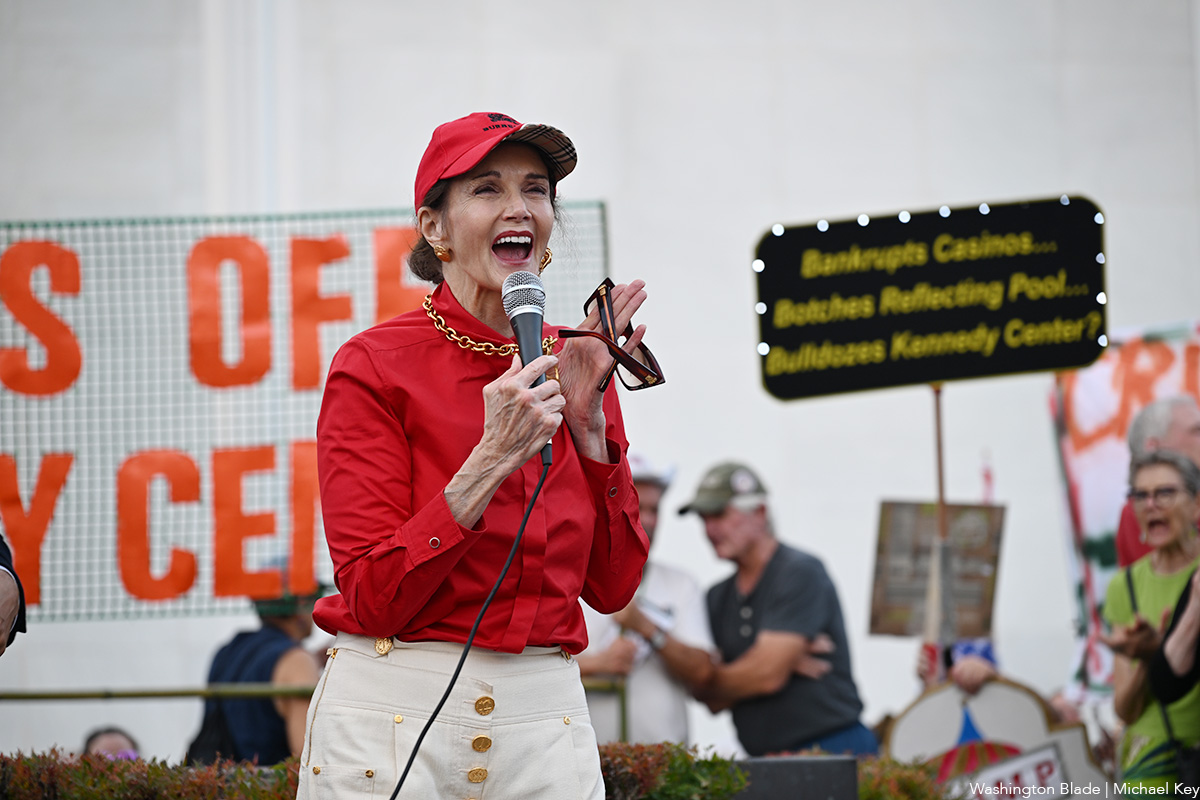
Drag performer Tara Hoot serves as MC, Gay Men’s Chorus of DC performs, attendees shout for Trump to keep ‘hands off’ Kennedy Center
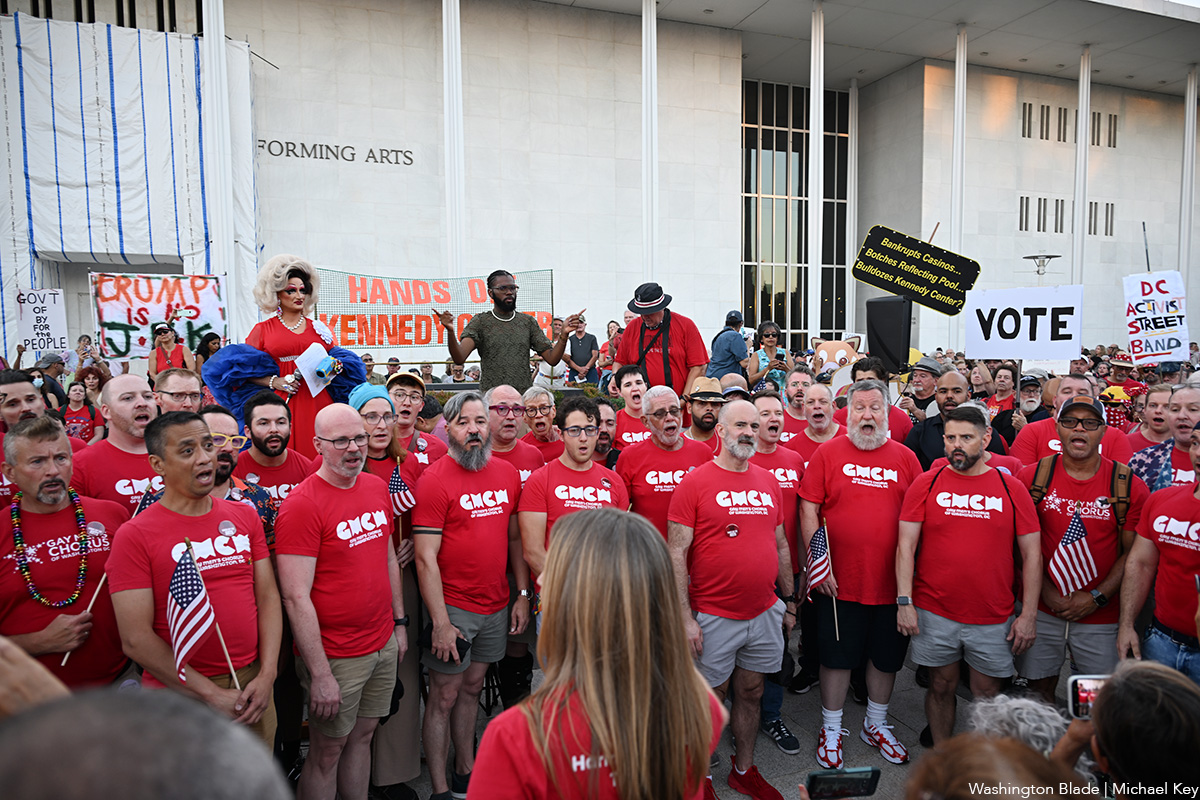
More than 2,000 supporters of the John F. Kennedy Center for the Performing Arts turned out on Sept. 18, for a rally in support of the performing arts center and a vocal protest against President Donald Trump’s threats to permanently close the center and possibly demolish it.
The event was organized by a group called Hands Off the Arts, which initially called for participants to form a “human chain” around the Kennedy Center’s main building following a rally on the plaza in front of the building.
However, due to a decision by the Trump-controlled Kennedy Center’s board of trustees to close the center earlier in the week and install fencing around part of the building, participants could only form the chain around part of the building, according to organizers.
Drag performer Tara Hoot, who co-organized the event and served as master of ceremonies for the rally preceding the “human chain,” said the large turnout could have fully surrounded the building at least twice had the fencing not prevented a full encirclement.
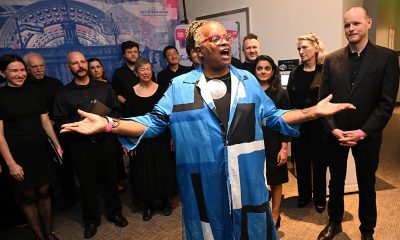
Among the musicians and singing groups that performed at the rally was the Gay Men’s Chorus of Washington, which, like other rally performers, had performed at the Kennedy Center in past years. They drew loud applause after singing one of their favorite songs from the Broadway musical show Ragtime, which includes the lyrics, “Will justice be demanded by 10 million men? Make them hear you. When they hear you, I’ll be near you again.”
View on Threads
Prior to their performance, Gay Men’s Chorus of Washington’s artistic director, Thea Kano, spoke at the rally, reminding participants that shortly after the Trump takeover of the center last year, Kennedy Center officials cancelled a concert the chorus was scheduled to perform there for World Pride 2025.
A Kennedy Center spokesperson said the cancellation was due to a scheduling conflict, but chorus members and LGBTQ activists believe it resulted from policies put in place by Trump and his leadership team at the Kennedy Center following Trump’s statements that he would end controversial “woke” performances that he claimed the majority of Americans disapprove of.
“Now this building sits empty in silence,” Kano told the crowd at the rally. “Let us raise our voices together and bring back the Kennedy Center as it was intended, a place where American culture could be celebrated and elevated, embracing the vibrancy with the spectrum of identify without censure and without politics,” she said.
Among the others who spoke at the rally were U.S. Rep. Don Beyer (D-Va.), U.S. Rep. Jonathan Jackson (D-Ill.), and D.C. Councilmember Robert White (D-At-Large).
Most speakers, along with LGBTQ participants in the hands-around-the-building event expressed strong opposition to Trump’s demand that the Kennedy Center name be changed from the John F. Kennedy Center for the Performing Arts to the Donald J. Trump and the John F. Kennedy Center for the Performing Arts.
At Trump’s request, his appointed board initially made that name change and placed Trump’s name on the front wall of the building along with the Kennedy name. But following legal action taken by opponents who pointed out that Congress must approve such a name change, a judge ordered the removal of Trump’s name from the building. Trump has said he will take steps to reverse that order and has said he will stop plans to renovate the Kennedy Center building and possibly demolish it if his name is not restored in the Kennedy’s Center’s official name.
Throughout the Sept. 18 rally, LGBTQ participants repeatedly responded to the Trump threats by shouting, “Hands Off!”
Chris Raleigh, one of the founders of Hands Off the Arts and a lead organizer of the Sept. 18 event at the Kennedy Center who spoke at the event told the Washington Blade that more similar events are being planned and he welcomes the support the event has received from the LGBTQ community.
“The LGBTQ community was here first, and we’re following them,” he said. “They’ve been the spearhead; they’ve been the vanguard. And I’m so thankful for heroes like Tara Hoot,” he said, adding, “It’s because they know what it means and how this is a safe place – the theater – for many LGBTQ people.”
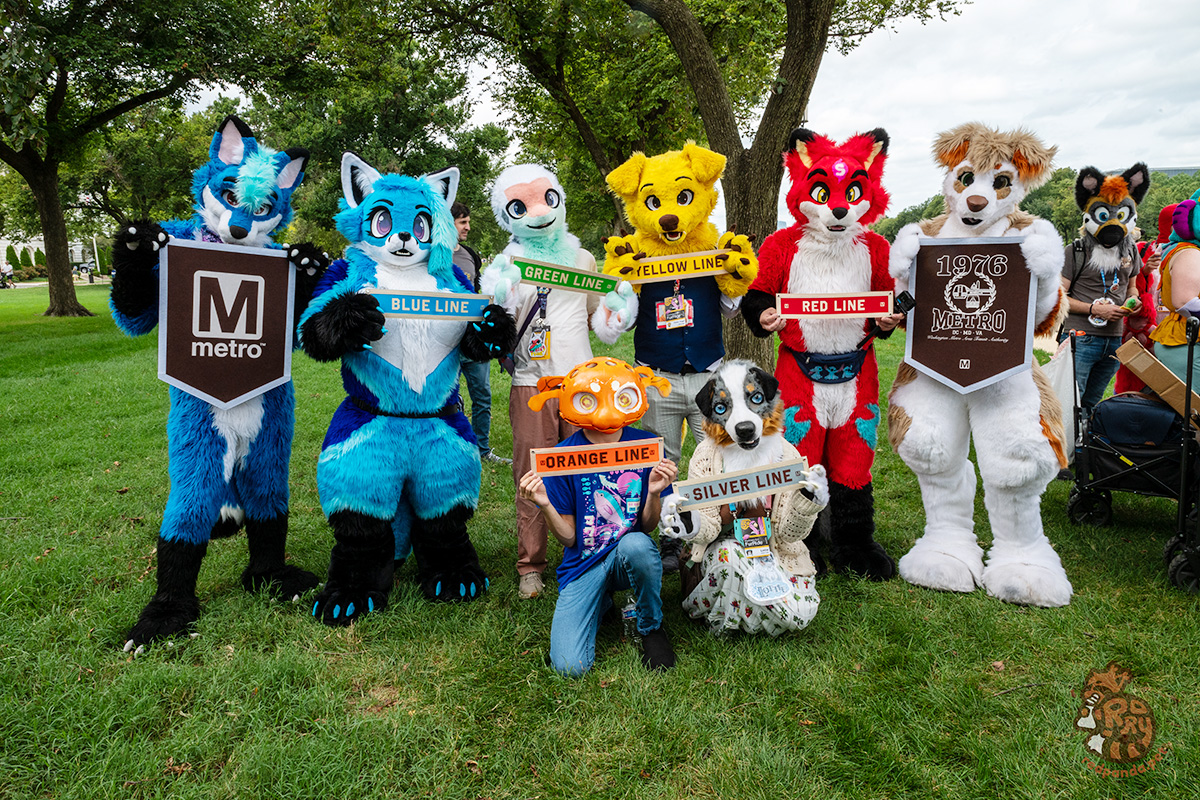
The DMV’s own furry group was on full display on the Metro on Sept. 12.
Shutterpaws is a volunteer-led 501(c)(3) non-profit organization located in Maryland.
The furry group has been doing the FurRide event since 2024 and has blown up in popularity for furries around DMV. They showcased themselves on the Silver and Blue Lines near the Smithsonian on Sept. 12.
“A lot of careful planning goes into running these events, with the goal being a seamless and enjoyable experience for everyone who attends,” says Zayre, a Shutterpaws staff member. “There’s a lot that you learn just by trial and error, and as Shutterpaws hosts more and more events, our team of event organizers continues to learn and refine our approach to keep things running smoothly and finding new ways to engage with our community.”
With a larger growth of participation in the community comes many challenges with the group, especially when it comes to the Metro rides and organizing.
“The biggest challenge that we face as organizers is keeping things fresh and finding new and engaging venues to host events,” says Zayre. “Recently we saw a lot of success hosting a meet at On Target Battlezone, an indoor NERF gun battle arena where our crew was welcome to show up and play both with and without a fur suit.”
Nevertheless, Shutterpaws receive overwhelming support from the community and partners.
“Across the DMV there are so many amazing places to host a Shutterpaws event so we can pursue our mission of helping connect fur suiters and photographers, and we’re blown away with the amount of support we’ve received from our community partners,” says Zayre.
Shutterpaws plans to do more events for anyone in the DMV who is interested.
Their next event in collaboration with DC Fur Meet will take place at Pitchers (2317 18th St., N.W.) on Saturday. Visit Shutterpaws’ website for more information.
District of Columbia
Hands Off the Arts to form ‘human chain’ around Kennedy Center
Drag performer Tara Hoot among event organizers
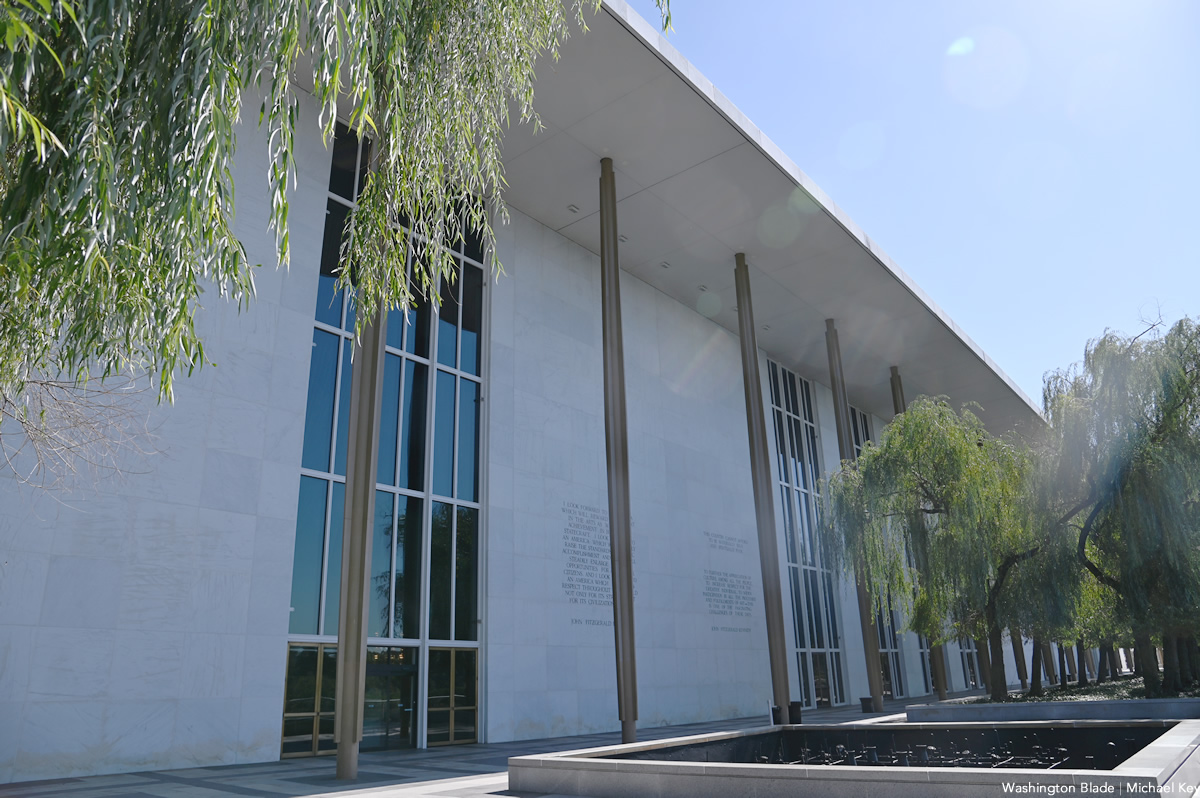
An organization called Hands Off the Arts has announced it is holding a protest on Friday, Sept. 18, in which between 400 and 800 participants are expected to create a “human chain” around the Kennedy Center to voice their strong objection to President Donald Trump’s call for possibly demolishing the Kennedy Center.
“Hands Off the Arts is organizing a rally Sept. 18 against the president’s defacing of JFK’s memorial, his removal and censorship of art, and the threat to demolish the center if he can’t remake the site in his image,” a statement released by the group says.
The statement says the event will start with a rally at 6:30 p.m. on the Kennedy Center steps and culminate with a “human chain” around the building. “There will be musical performances, testimonials from current and former employees, along with other special guest speakers,” it says
A separate announcement by the group says longtime D.C. drag performer Tara Hoot, who has performed at the Kennedy Center in past years, was among the organizers of the Sept. 18 protest.
The planned protest follows Trump’s decision last year to use his authority to replace the existing members of the Kennedy Center’s board of directors with new members loyal to him. Over the objection of longtime Kennedy Center supporters, the Trump-appointed board changed the name of the center, at Trump’s request, from the John F. Kennedy Memorial Center for the Performing Arts to the Donald J. Trump and the John F. Kennedy Center for the Performing Arts.
But following the threat of legal action by opponents who pointed out that the name change could not be legally made unless approved by Congress, the name change was cancelled, with Trump saying he would take steps to restore it later.
The Washington Post, meanwhile, reports in a Sept. 13 news story that because of negative publicity related to Trump’s actions, the Kennedy Center was facing “fiscal collapse” and possible bankruptcy and could be forced to shut down as early as this week.
According to the Post report, a 57-page document presented to the Kennedy Center’s board of trustees says the center was facing a financial and structural building crisis, with the recent collapse of part of the building’s inside ceiling, indicating the building was unsafe for employees and the public. Among other things, the document says the Kennedy Center may not be able to make payroll or pay for routine maintenance “within a matter of weeks,” the Post reports.
Some LGBTQ advocates were among those who joined others in boycotting the Kennedy Center to express their objections to Trump’s actions, including a statement by Trump that he objected to the Kennedy Center’s practice of hosting drag performances.
The Gay Men’s Chorus of Washington has been among the LGBTQ performing arts groups and artists that have performed at the Kennedy Center.
“With the future still very much uncertain, now more than ever, the Center needs you to stand up for freedom of expression and against authoritarian overreach into arts and culture institutions,” the Hands Off the Arts group says in its announcement of the Hands Around the Kennedy Center protest.
“You have the opportunity to make a difference — show up with Hands Off the Arts and show your power as part of Hands Around the Kennedy Center,” it says.
A spokesperson for the Kennedy Center couldn’t immediately be reached for comment.

White House press pool pushes back after Trump bars three outlets

PHOTOS: Shenandoah Valley Pride

Long-time DignityUSA executive director announces retirement

PHOTOS: Walk and 5K to End HIV

PHOTOS: Wanda Alston Foundation Fall Reception

Gun reform is an LGBTQ rights issue

All the queer things to watch this fall

Parties, dinners, concerts and more on tap for fall nightlife

Jeremy Moss looks to bring LGBTQ advocacy from Lansing to Capitol Hill