LGBTQ Non-Profit Organizations
HRC lawyer details how SCOTUS ruling impacts challenges to Trump’s anti-LGBTQ policies
CASA decision could narrow or reverse universal injunctions
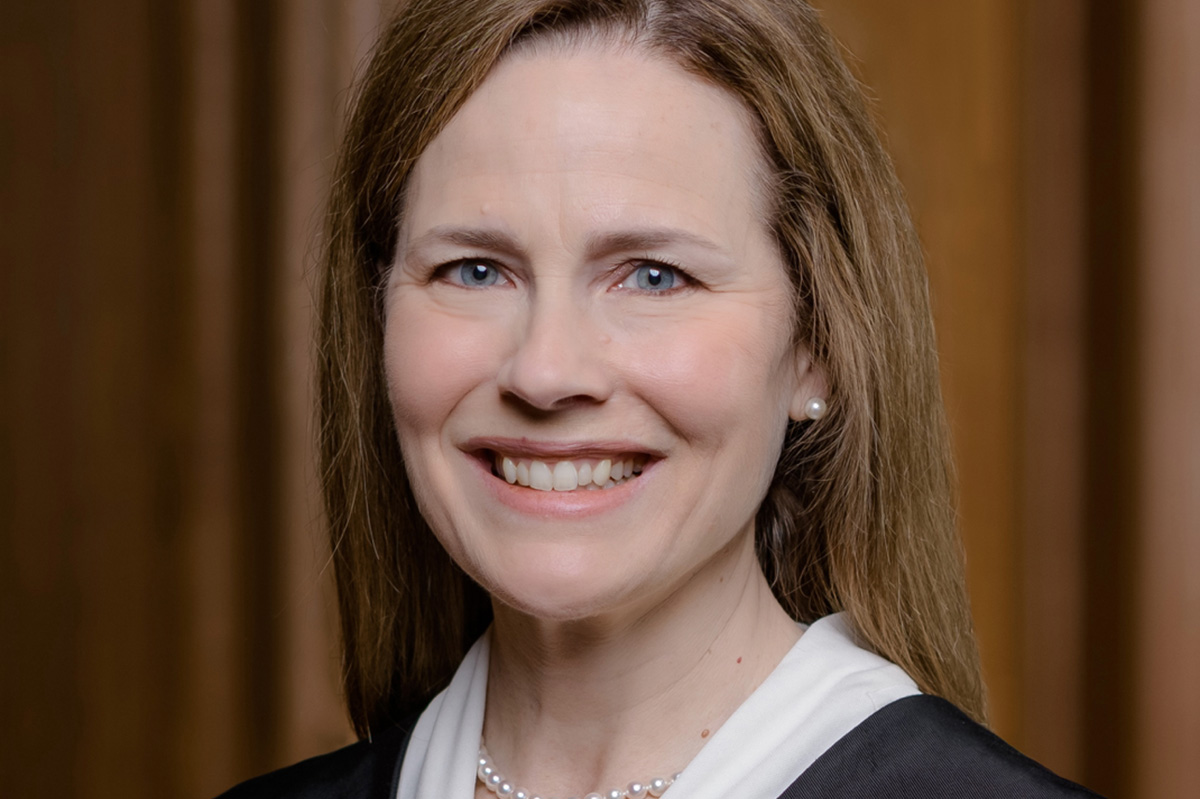
The U.S. Supreme Court’s decision last month in Trump v. CASA has broad implications for civil rights litigation, limiting the reach of a key legal tool long used to halt discriminatory policies, including in President Donald Trump’s tumultuous second term.
With a 6-3 opinion written by conservative Justice Amy Coney Barrett, the court narrowed the circumstances under which federal judges may issue nationwide, or “universal,” injunctions, which can block a government policy from being enforced against anyone, not just the parties to a lawsuit.
“Thanks to this decision, we can now probably file to proceed with these numerous policies and those that have been wrongly enjoined on a nationwide basis,” President Donald Trump declared shortly after the ruling, speaking from the White House briefing room flanked by Attorney General Pam Bondi and Deputy Attorney General Todd Blanche.
The White House and the president’s allies for months had accused courts of working to undermine the MAGA agenda, noting that Democratic administrations were hit with far fewer injunctions despite major losses like the 2022 order blocking former President Joe Biden’s student loan forgiveness plan, which would have impacted some 40 million borrowers.
Critics, on the other hand, argued the disparity is better explained by Trump’s tendency toward lawlessness, with Article III judges acting as a check against an administration that has sought to run roughshod over vulnerable communities like immigrants or transgender Americans.
Among those who have been watching the case closely is Cynthia Weaver, senior director of litigation at the Human Rights Campaign.
In an interview following the ruling, Weaver acknowledged the legal terrain has shifted in a challenging direction but rejected any suggestion that LGBTQ rights advocates are retreating. “It really means we have to continue to do what we have always been doing,” she said, “proceeding deliberately and carefully in the type of relief we’re seeking on a case-by-case basis.”
Status of nationwide injunctions that have halted anti-LGBTQ policies
In his second term, Trump has gone after LGBTQ people on a variety of fronts. Examples include the ban on trans people serving in the military, the U.S. Department of Health and Human Services rule allowing federally funded shelters to deny access based on gender identity, the rollback of nondiscrimination protections in health care, education, and housing, the executive order restricting the issuance of passports with gender markers other than “M” or “F,” and the sweeping policy denying Medicaid reimbursement for gender-affirming care for minors.
Until now, many of those policies have been blocked — or delayed — by federal courts issuing universal injunctions.
But in Trump v. CASA, the court ruled that Article III judges may only extend relief beyond the named plaintiffs when it is “necessary to ensure that the plaintiffs in the case are provided complete relief,” which means many of those nationwide blocks could now be narrowed or undone altogether.
“We are very well aware that various courts, including the Supreme Court, have been engaged in animated, spirited debate over the scope of this type of relief,” Weaver said. “It’s not a surprise to the attorneys. But certainly now this case has provided us with a bit more clarity in terms of what the court finds offensive.”
While the CASA decision didn’t ban universal injunctions outright, it makes them harder to justify. That means the Justice Department is expected to file motions in the coming weeks asking judges to narrow existing injunctions to apply only to the plaintiffs named in each case.
“Courts need to be asked to do something,” Weaver said. “So attorneys have to file motions to the courts to seek relief and offer various arguments in that regard.” In practice, this means that where a lower court previously blocked a rule from taking effect nationwide, the DOJ will now argue that the relief should be limited to the specific individuals or organizations who sued.
Weaver explained, “So, for example, if there is a case, let’s say, challenging an executive order, and there was a preliminary universal injunction that was issued by the lower court, DOJ would have to ask the court to reconsider the scope of that relief in that case, because of the CASA decision.”
She added that since CASA was decided, some courts have independently — without a request from the DOJ —narrowed the injunctive relief they had previously granted.
Still, not all injunctions will be affected. “It doesn’t mean that every universal injunction that has been granted thus far will necessarily be” undone, Weaver said. “They will have to do a case-by-case analysis, looking at the facts, the circumstances in which the plaintiffs are moving forward with the challenged action.”
Some cases already feature diverse plaintiff pools that could soften the blow of CASA. “There are individual persons as plaintiffs, but there are also organizations that are already plaintiffs in those cases as well,” Weaver said. “Because there’s a mixed combination of varying plaintiff types, the CASA decision may have less of an impact in those cases.”
In other words, cases already structured to represent a broad class of affected people, or those supported by robust membership organizations, may still be able to achieve broad relief.
The class action tradeoff
One of the alternatives suggested by the conservative justices on the court is for plaintiffs to seek class certification, which would permit judges to grant relief on behalf of everyone in a clearly defined group.
However, the approach is considered more difficult and burdensome for litigants challenging the federal government.
“Class actions are inherently cumbersome and procedure heavy,” Weaver said. “It takes time for the district court to decide whether to certify the class,” and “the ruling on the class certification can be immediately appealed. It’s subject to interlocutory appeal. That, in itself, can slow down litigation.”
Another obstacle: Only individuals — not states — can serve as class representatives. “So the burden falls on an individual to go forward,” Weaver said, “and there’s no guarantee that the court will allow the individual to proceed anonymously or with a pseudonym.”
That’s a major concern for undocumented people as well as for LGBTQ plaintiffs, who often risk harassment, employment discrimination, or violence by adding their names to a federal court filing.
“There are circumstances under which it will be very unsafe for the plaintiff to go forward,” Weaver said. “So then in those cases, like in the CASA case, it is for the plaintiffs to make the argument to the court why they are entitled to this type of relief.”
Courts must then balance that request against due process and public interest concerns, deliberations that can take time and add to the burden facing plaintiff-litigants.
Pressure on plaintiffs and their resources
The cumulative effect of all this is an added burden on plaintiffs — and the lawyers who represent them.
“Litigation takes a long time,” Weaver said. “The plaintiffs in our cases already have to weigh the risks of serving [in that role], going through the roller coaster of the case. They already know that. It takes so much resilience and commitment and courage to put yourself out there for this.”
HRC has longstanding partnerships with law firms that donate their time, and Weaver stressed that “we are very grateful for the pro bono law firms that have worked with us over the years and are continuing to do so.” She added, “It is so important to have lawyers who can make independent decisions and be competent to provide services to people who need it.”
Weaver acknowledged that litigation is expensive. “If we’re talking about resources, resources are already strained — not only from this administration, but from the prior several years amid states’ attacks on LGBTQ rights,” she said.
At the same time, she said, “The way the movement has been nimble and learned different areas of law and strategy has been very inspiring.”
Despite the added complexity CASA introduces, Weaver expressed confidence that LGBTQ advocates and others involved in impact litigation for civil rights causes will adapt. “We still have clients with individual needs and clients who have injury to them and harm to them because of specific government actions, laws, policies,” she said. “They will not stop us from being strategic and thinking creatively around cases that could be successful and bring relief for our community.”
For Weaver, the CASA decision is a reminder that civil rights litigation doesn’t happen in a vacuum.
“This case underscores the importance of how all of the issues across different movements are still entwined with each other, specifically at this moment,” she said. “We’ve been working across movements for many years, but I think this is a moment where we should really strengthen those relationships.”
HRC and other legal organizations are now in a period of recalibration. “I just want to stress that it’s a case-by-case evaluation,” Weaver said. “Because it is so crucial what the factual record looks like; facts still do matter.”
“There are so many advocates and lawyers who have been working on these issues,” she said, “and when we’re in it together, it feels a little bit more manageable.”




LGBTQ Non-Profit Organizations
Victory Fund board investigates former staffers’ allegations against CEO Evan Low
‘No legal or policy violations were substantiated’

The Washington Blade has learned the LGBTQ+ Victory Fund’s board of directors
investigated former staffers’ allegations that CEO Evan Low bullied staff and mismanaged finances and found no evidence of wrongdoing on his part.
The Blade obtained a letter the former staffers emailed to the board on Aug. 5. The subject was “concerns about Evan Low.”
The World Pride Human Rights Conference began in Amsterdam the same day. Low on Aug. 7 spoke at the beginning of a panel that featured Dutch Prime Minister Rob Jetten, who is the Netherlands’s first openly gay head of government, and other current and former European prime ministers and heads of government who are gay or lesbian.
“We, a coalition of former employees of the Victory Fund, are writing to bring urgent concerns to your attention regarding the leadership and management of our organization under the direction of President and Chief Executive Officer Evan Low,” it reads. “Over the past 18 months since his appointment in March 2025, we believe patterns of behavior have emerged that threaten the organizational integrity, financial stability, and mission of the Victory Fund.”
The Blade was unable to confirm how many former Victory Fund employees signed the anonymous letter. It does, however, state the “accounts below reflect our direct experiences and observations during our employment, as well as reports we received from colleagues, partners, and board members.”
Low was a former member of the California State Assembly who unsuccessfully ran to succeed then-U.S. Rep. Anna Eshoo (D-Calif.) in the U.S. House of Representatives after she announced her retirement in 2024. He succeeded former Houston Mayor Annise Parker as the Victory Fund’s CEO in March 2025. (The California Fair Political Practices Commission the same month fined Low $106,000 after he admitted he tried to conceal payments to actor Alec Baldwin in exchange for appearing at his campaign events.)
The Blade has learned 21 people have left the Victory Fund since Low became CEO. Board spokesperson Claire VanSusteren pointed out to the Blade there “was significant turnover during the first 18 months of the prior CEO’s tenure, including across every major department or direct-report function — the Institute, Communications, Development, Political, Finance, Operations and the executive assistant to the CEO — as well as among staff in other positions.”
“The circumstances of individual departures varied, but changes in leadership often bring changes in staffing and organizational structure, and Victory has experienced that across leadership transitions,” she said.
‘Culture of intimidation and verbal mistreatment took root under Mr. Low’s leadership’
The Aug. 5 letter notes “a culture of intimidation and verbal mistreatment took root under Mr. Low’s leadership.”
“Multiple signatories to this letter personally witnessed Mr. Low raise his voice at staff members during public events with partner organizations and during staff meetings, on repeated occasions,” it reads. “We witnessed members of the leadership team, including multiple vice presidents, visibly distressed and in tears in the office after such interactions, in view of junior staff. On multiple occasions, shouting was audible through closed office doors.”
The letter further alleges that “departing employees who experienced or witnessed this conduct were offered financial compensation in exchange for non-disclosure and non-disparagement agreements.”
“If accurate, this practice is concerning because many of those receiving compensation had voluntarily resigned rather than been terminated,” it reads. “Severance for voluntarily departing employees is unusual; we believe the board should examine whether these agreements were used to prevent staff from speaking about their treatment.”
The Blade since obtaining the letter has spoken with three former Victory Fund staffers who left the organization since Low became CEO. All of them asked the Blade not to identify them by name.
“With Evan it’s not one or two incidents,” said one of the staffers. “It was nearly every conversation and every interaction, and he really created a culture of bullying and verbal abuse that was pervasive.”
“He was very volatile and prone to flying off the handle,” they added.
Another staffer with whom the Blade spoke echoed their former colleague.
“Everything around the culture of bullying is absolutely true,” they said, adding Low frequently humiliated staff in front of their colleagues during meetings. “He made it clear that he thought because you weren’t doing this X, Y, Z outreach that only existed in his head until that moment, you were one of the stupidest people he had ever encountered in his life.”
“Expectations were never clear,” they added. “Expectations were never laid out, but nonetheless that culture of bullying and that culture of you’re never doing enough, you are never ever going to perform in the way that he wants you to … was extremely prevalent, and it’s definitely a reason that I left. I was just so tired of dealing with that attitude.”
The Aug. 5 letter alleges Low “was frequently unresponsive to staff, board members, and external partners.”
“He did not, to our knowledge, hold regular one-on-one meetings with leadership,” it reads. “He rarely attended staff meetings, and when he did attend, he was frequently not present in person and regularly off camera.”
“At the same time, we observed him send emails demanding receipts for responses he claimed to have sent, copying multiple people in a manner staff experienced as publicly embarrassing,” added the letter. “In our experience, he rarely articulated clearly what he needed, and matters routinely devolved into last-minute crises that could have been prevented with clear direction.”
The letter notes two National Labor Relations Board complaints have been filed against the Victory Fund under Low’s tenure. One of them, which the Campaign Workers Guild filed on Feb. 23, remains active. The second case that was filed in December 2025 has been closed.
“For significant portions of time, staff, his chief of staff, and his executive assistant did not know his whereabouts or availability, making it difficult or impossible to schedule meetings likely to result in donations for the organization,” reads the letter. “He changed flights with minimal notice without informing anyone, and, on occasions we observed or were informed of, missed confirmed commitments with partners and elected officials.”
The letter also urges the board to “examine whether organizational resources have been used appropriately.”
The signatories state Low “has used his official title as President and CEO of the Victory Fund in fundraising activity for non-LGBTQ candidates in California, including Fiona Ma’s campaign for lieutenant governor and Karen Bass’s campaign for Los Angeles mayor.” The letter notes people who attended a Bass event at which Low “spoke while invoking his title” contacted Victory Fund staff “expressing concern about his apparent condition while speaking.”
The letter also points out Low “requested and obtained a Chase Sapphire credit card with travel rewards benefits outside established expense controls and audit procedures, that receipts were routinely not saved, and that when asked about the business purpose for travel, he instructed staff to charge expenses to the organization without articulating a business rationale.”
“We are informed that Mr. Low’s use of organizational credit cards, in direct circumvention of established financial controls, has resulted in tens of thousands of dollars in undocumented expenses, with no retained receipts, no stated business purpose, and no identifiable benefit to the organization,” reads the letter. “This is not a minor administrative lapse. It is a serious red flag that, left unaddressed, exposes the Victory Institute to real risk to its section 501(c)(3) tax-exempt status, and it must be treated by the board as an immediate priority, not a routine bookkeeping matter.”
“We recommend that the board require Mr. Low to personally reimburse the organization in full for any expenses that cannot be substantiated with legitimate documentation of business purpose, so that the organization bears no continuing cost for personal expenses he incurred and failed to account for,” it adds.
The letter also notes “trips were frequently extended at organizational expense.”
Low’s contract requires him to be in D.C. for at least three days a week.
“In our observation, he rarely met this requirement, instead spending significant time in California,” reads the letter.
“We are informed and believe that Mr. Low has, at times, directed his fundraising efforts in California toward Victory’s existing California PAC entity, rather than toward the Victory Fund or Victory Institute, where significant financial gaps exist,” it adds. “We believe the board should examine whether this allocation of fundraising effort serves his own future political ambitions in California, potentially allowing him influence over California-based races through Victory’s own PAC, rather than addressing the core financial needs of the organizations he was hired to lead, and whether this represents a conflict of interest requiring board attention.”
The letter further notes the Victory Fund under Low’s tenure “has lost several hundred individual donors.”
“We believe this loss is especially alarming in context: election years are historically when the organization is best positioned to fundraise successfully, given the heightened public urgency around elections,” it reads. “Instead, by our understanding, the organization’s individual donor base and overall financial position are weaker now than they have been in years.”
“New development staff onboarding at the Victory Fund have reported hearing one consistent message from lapsed major donors, including former board members and a former board chair: that they have not heard from Mr. Low in 18 months — no calls, no relationship building, no courtship,” adds the letter. “We are informed that long-term donors of more than a decade report the same absence of engagement. We are further informed that in meetings he did attend with donors, he was unable or unwilling to directly ask for financial contributions, and that multiple major donors have since asked staff what the point of meeting with him was if he was not going to make an ask — representing missed fundraising opportunities directly attributable to this failure.”
The letter also reiterates “concerns regarding” Low’s “personal conduct” at official events. The signatories conclude they are “deeply concerned that if these issues are not addressed immediately, the few remaining staff will leave, and the organization will become financially insolvent — leaving it in worse condition than the already strained state in which he found it last March.”
Pavan Ishwar Koobchandani, a lawyer with Koobchandani Law in D.C. in an Aug. 12 email to the email address from which the letter was sent acknowledged the board “retained” their firm “to investigate the allegations made.”
“The board takes all allegations of wrongdoing seriously and has directed me to conduct an independent investigation,” wrote Koobchandani.
The board met in New York on Sept. 26 — Low five days earlier introduced Jetten when he visited the Stonewall Inn during the U.N. General Assembly. Equality New York, a statewide LGBTQ advocacy group, on Sept. 26 honored Low at an event that featured gay New York State Sen. Erik Bottcher and other elected officials and activists.
VanSusteren in a statement to the Blade said “all allegations were investigated, and no legal or policy violations were substantiated.”
Her full statement is below:
“The LGBTQ+ Victory Fund and Institute board members take their responsibility for strong governance and appropriate oversight seriously. When concerns were brought to their attention, the board acted swiftly to retain experienced legal counsel and authorize a thorough, independent investigation to follow the facts wherever they led. With that investigation now complete, the full board was briefed on its findings, with ample opportunity to review the facts and discuss the results of the investigation. All allegations were investigated, and no legal or policy violations were substantiated. Members unanimously voted to accept the counsel’s report, and agreed on steps forward for the organization. The board is committed to working with staff and stakeholders to strengthen the organization and ensure Victory continues to live its values while carrying out its urgent mission.
“The board continues to have confidence in Evan Low’s leadership and remains focused on ensuring Victory is strong, accountable, and positioned to train, endorse, and support LGBTQ+ candidates and build LGBTQ+ representation at every level of government.”
The Blade also received a statement from a board member who did not identify themselves.
“While the investigation has concluded, the board recognizes there is always more we can do to strengthen the organization and how we work together,” it reads. “This is a moment for the board members to strengthen support between staff at every level, and with the board as a whole, as we fortify the mission and critical work ahead. We have full confidence in the organization’s CEO, COO, and all leadership, and the team’s ability to continue to foster and build an inclusive, respectful and supportive environment at Victory where everyone thrives and continues to make a meaningful difference.”
Low in his own statement said he takes “seriously the responsibility of leading the Victory Fund and Institute, and am committed to working with the board and our team to continue strengthening our workplace and moving forward together.”
“My focus is on our staff, our candidates, supporters, and the work ahead,” he said. “I look forward to working with the board as we collectively strengthen our mission and ensure our values are reflected at every intersection of Victory Fund. With Election Day just weeks away, we have an important job to do — helping LGBTQ+ candidates win races across the country and continuing to build the political representation and power our community deserves.”
LGBTQ Non-Profit Organizations
HRC National Dinner 2026: A night of music, activism, LGBTQ history
The HRC national Dinner emphasized the wins of the LGBTQ community, and reminded the community to continue fighting for equality
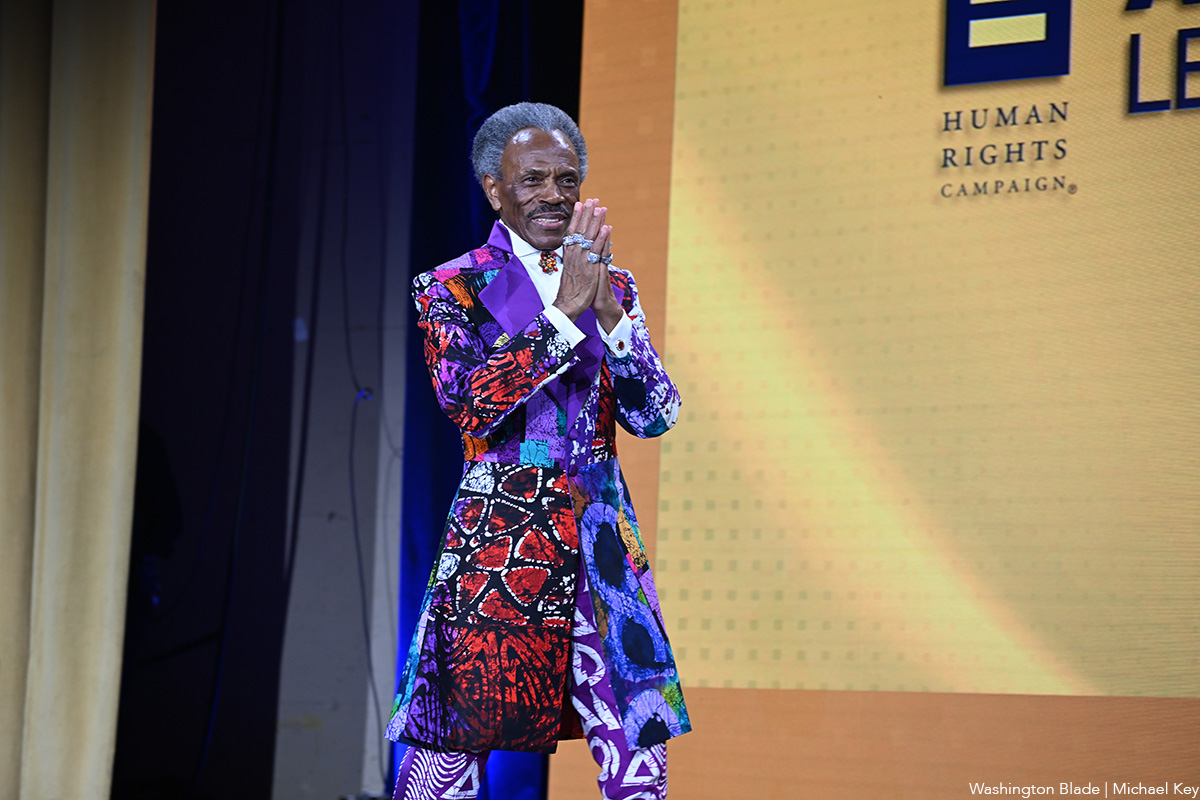
Each year, the Human Rights Campaign packs the Washington Hilton in Northwest D.C. in hopes of raising funds to continue the fight for LGBTQ rights in the United States.
This year’s blue-and-gold gala, which honored LGBTQ trailblazers and allies who have committed themselves to standing up for LGBTQ people, took place on Saturday, bringing together people from government, film, art, theater and much. This year’s theme: Let’s Get Free!
Michigan Gov. Gretchen Whitmer gave the keynote address, while other celebrities, including Marcia Gay Harden, Junior LaBeija and André De Shields, were honored for their work in LGBTQ history and activism.
The night began on the “blue carpet,” where guests arriving at the hotel in their very best black-tie attire — although with more flair and finesse than at the White House Correspondents’ Dinner, which took place in the same hotel months before (more drag queens and updos) — started with drinks and one of D.C.’s hottest DJs, Sweet Spot’s Christopher Uhl, playing some of the biggest queer — and queer co-opted — hits of the year.

As Kim Petras, the Spice Girls, and Slayyyter played during the welcome reception, guests mingled while waiting in growing lines for cocktails before being let into the International Ballroom. They took pictures on the carpet and started to vie for a chance at the silent auction, which had furniture, appliances, trips and much more donated to push forward advances in equality through electoral mobilization, policy advocacy and cultural change.
A slew of people from all spheres of life — from artists like Kehinde Wiley, up-and-coming stars on Capitol Hill like Congressman Everton Blair Jr., to local D.C. notables like Kimberley Bush of the DC LGBTQ+ Community Center and Dito Sevilla, one of the owners of LGP — made the evening feel like exactly the kind of gathering Jack McFarland from “Will & Grace” would describe as, “Every A-list gay will be there, you know, the creme de la creme of the creme de la femme.”
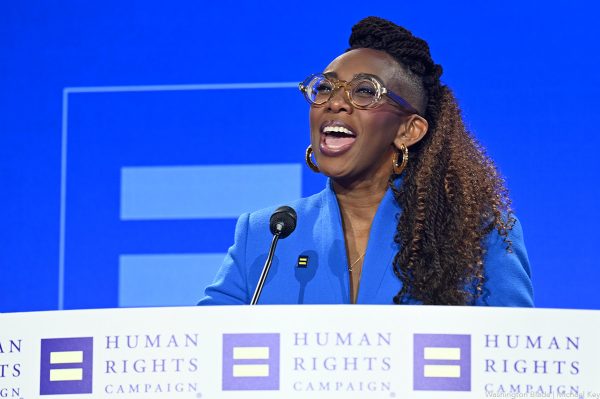
Kelley Robinson, HRC’s president, delivered a powerful speech highlighting the struggles queer ancestors of all creeds, skin colors, and histories have overcome in the country while pushing the message of the fight yet to come — particularly with the midterms less than 40 days away.
Robinson framed the moment as both historic and urgent.
“None of them really knew they were changing the world, and yet tonight, HRC, I want us to be clear: we are sitting in the history-making moment, this is our moment. This is our time. This is a time where we got to say out loud the truths that we hold to be self-evident: that immigrants belong here, that black lives still matter, that love is still done, that trans women are women, and every trans child deserves protection and joy and love and freedom.”
She also laid out the stakes of the current fight in stark terms.
“Today, people are dying of complications from AIDS. Today, they are kicking trans people out of the military. Today, there are laws in place to lock up doctors who care for trans patients who provide abortion care. The truth is that for the first time in a generation, we are fighting for our rights with the full weight and force of the United States government working against us. We have a Supreme Court that’s hell-bent on rolling back our rights. We are one decision away, one decision from the resurrection of anti-sodomy laws, from legalized discrimination at work from losing marriage equality.”
Robinson then turned to marriage equality, making clear that she viewed the fight over LGBTQ rights as personal as well as political.
“I want to be very clear about this. I do not play about my wife. I said till death do us part, not till J.D. Vance does us part, y’all. If they’re coming for my marriage, if they’re coming for your marriage– they’re gonna have to go through me and everybody else in this ballroom. We are wrapping our rights in steel, and we are doing it now, good people.”
With the midterms approaching, Robinson tied the night’s fundraising and organizing directly to the election ahead, calling for those who stand with gay rights to stand with transgender rights– as they are the same fight.
“This election is going to decide our future. We cannot– we bet not– sit this one out…If you are running for office, you cannot be anti-trans and pro-equal. You cannot be anti-trans and pro-equality. No, every fall it’s the same thing.”
She ended by calling on those in the room to give everything they could to the movement.
“This, my friends, is our do-or-die moment. So I’m asking you, not to do what you can, but to do all that you can. To give your time, give your money, give your heart. And I want to leave you with this: When they marched across that bridge in Selma, they had no reason to believe that they would ever achieve civil rights, and yet they marched. When AIDS activists were burying their own, they had no reason to believe that survival was possible, and yet they fought.”
Her speech finished with cheers, clacking fans and maroon napkins being whipped above heads in a circle.
After the LGBTQ policymakers, advocates, and supporters finished eating, keynote speaker Michigan Gov. Gretchen Whitmer took the stage.
There was a noticeably softer tone from Gov. Whitmer — a mom speech in the best possible way, one that felt like both a hug and some uplifting, encouraging words about the battle to come.

Whitmer began with a direct commitment to LGBTQ people.
“As a friend, an ally, and fellow citizen, I will always, always have your back. You deserve to love who you love, no matter what. You deserve to be who you are, no matter what. You deserve to be treated with dignity and respect, just like every other human being, no matter what. I see you. I stand with you, and I will always fight like hell for you, no matter what.”
She then pointed to her record as governor of Michigan and the work accomplished under a Democratic trifecta.
“With the first Democratic trifecta in a generation, we put our foot on the gas and delivered on those fundamental freedoms. We banned the so-called panic defense in Michigan courtrooms. We created the first statewide LGBTQ+ commission. We secured life-changing grants for LGBTQ+ entrepreneurs and businesses. And it was around this time when all this work came closer to home for me.”
Whitmer also connected that work to her experience as a mother, recounting the signing of the Elliott-Larsen Civil Rights Act.
“As a parent, there’s nothing I won’t do to protect my kids, and as a governor, there’s nothing I won’t do to protect yours. And that’s why, with my daughter standing next to me, I signed the Elliott-Larsen Civil Rights Act into law to reaffirm and expand legal protections for every Michigander. And now, no Michigander can be fired from a job or kicked out of their home because of who they are, who they love, or how they identify. It was one of the best days of my life.”
But Whitmer also acknowledged that the fight for LGBTQ rights is far from over.
“HRC, I know that progress can feel slow and painful, that the attacks are mounting, that the finish line keeps getting moved further back. But here’s the thing: you’re not in the wilderness. You know exactly what to do in moments like this, and you don’t have to look very far for inspiration. It’s here in this room. This has been one of the most successful movements, certainly in my lifetime, and in American history.”
She ended with another reminder that the fight would continue at the ballot box.
“There will always be hard fights to come, but I think and I hope the hardest part is over—the part where you had to struggle silently and alone. Because right now you are in this room, you are sitting at these tables, and you are saying together, ‘This is who we are.’ And if your voice, if your courage, your locked arms weren’t enough, you have something else this year– You have your vote.”
Following the governor’s speech, HRC began its live auction, where hotel stays and inclusive vacations that cost a truly eye-popping amount ultimately allowed the organization to raise hundreds of thousands of dollars during this fundraising portion of the night. The room eventually raised an additional half a million dollars a few minutes later, egged on by comedian and Out 100 honoree Dana Goldberg.
Then came the awards.
Marcia Gay Harden was the first to be honored. Before she stepped out, clips from her decades of film work — from “First Wives Club” to “Margot’s Got Money Troubles” — were shown at the gala.
Her speech centered on love — particularly the fact that her three children are all queer — amid the less-than-kind place the world can be for LGBTQ people. She also gave a shoutout to her first boyfriend, whom she shared eventually came out and died of AIDS. She received the Ally for Equality Award.

Harden used her speech to make clear that being an ally requires more than simply expressing support.
“But acceptance is only the beginning, because allyship is not a pose; it’s a practice. And I’ve discovered that it’s not enough to love someone privately while allowing the world to make them feel unsafe publicly. And I think I first learned that lesson a long time ago. I come from a military family where life could sometimes feel very black and white. My mother was a Dallas lady who beautified everything that she touched, and my father was a gruff, cigar-chomping man whose favorite expression was ‘goddamn son of a bitch,’” eventually sharing how her father would grow to accept her gay then-ex boyfriend.
She emphasized that LGBTQ people do not need to prove their worth to deserve protection and belonging.
“No one in this community needs to accomplish anything to enter the room of deserving. You have that right simply by being, and that to me is what allyship asks of us now: show up, speak up, vote, vote, vote, organize, give. Thank you for giving tonight, and open your door. And when freedom, safety, or humanity is under attack, we don’t get to look away simply because that attack is not aimed at us.”
And as the night shifted from celebration back toward the work ahead, Harden offered a simple message to the people carrying the movement forward.
“So to every activist, every organizer, educator, filmmaker, advocate, parent, and friend, and especially every young person who’s carried this movement forward when it was exhausting, frightening, or lonely. Thank you. I accept it with so much gratitude and so much love for you and so much love for the gay community, and I just want you to know that. So tonight we get to celebrate that, but tomorrow we show up. We show up with basic human rights.”
An incredible performance of “Memories” by acclaimed American actress, singer and ballroom icon Chasity Moore had tears welling in the eyes of gala-goers as lights twinkled on the ceiling while musical director and pianist William Waldron accompanied her on piano.

Then came one of the creators of LGBTQ culture as we know it.
Junior LaBeija stepped onto the stage, beginning with his iconic line from “Paris Is Burning”: “Opulence! You own everything.”
LaBeija received one of the night’s two HRC’s Legendary Visibility Awards, and used his speech to reflect on freedom, fear and the generations of LGBTQ people who came before him.
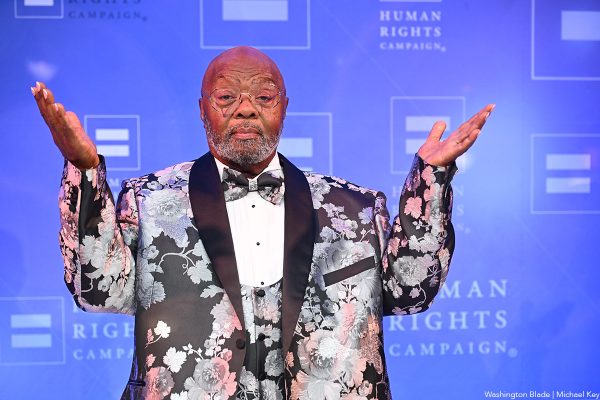
“I was just telling the wonderful artist sitting next to me that when I was young, and another male took off all his clothes and laid with me, and I felt his heart beat, the patting of his breath caught up in the rapture, the freedom that he did not have fear that anyone’s going to come through a locked door and do him harm. I want that same freedom for my trans sisters, my trans men, my trans kids.”
He also spoke about the fear that can accompany simply living openly as an LGBTQ person.
“But I’m at a point in my life now where I want to live, but I don’t want to live here. I’m gonna say for emphasis. I want to live, but I don’t want to live here because when I would get up, even coming from upstairs, from my room, there’s one thought that I never thought about, but I think about it every day. I never thought that I could lock my door to where I live, and maybe never come back that day because someone doesn’t like who I am or what I am or who I represent.”
He invoked the LGBTQ figures and tragedies that helped shape the movement he inherited, becoming, if not a tagline of why he deserved to be in the room, but also worthy of the honor he received by the organization.
“I’m gonna tell you why I’m here. Because I met Marsha P. Johnson. I met Sylvia Rivera. I went to Quentin Crisp Memorial on Union Square. I went to the memorial for Matthew Shepard. I walked the pier when it was food and maritime summer school as a student.”
Lastly, and most grippingly, André De Shields was also given HRC’s Legendary Visibility Award and gave a speech that so beautifully encouraged the community to keep fighting — and to do so because, if no one else believes, Mr. De Shields does in those fighting for LGBTQ rights.
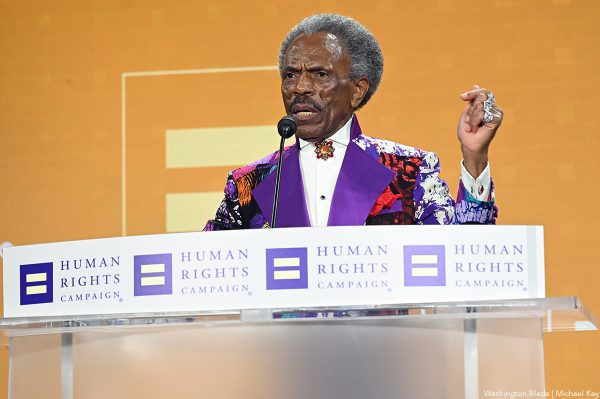
De Shields used his speech to reflect on LGBTQ visibility and the refusal to remain on the margins of society.
“As we say to the world, we are no longer to be hidden to the margins of society, because we are the generation, we are the people, we are the culture who knows exactly what to do with this miasma that’s staring us in our face.”
He then spoke about evolution, transition, and the future of gender.
“We may be born as a boy. We may be born as a girl, but we must be able to transcend. We must be able to transition. We must be able to metamorphose, depending upon what life demands of us. And now that we are concluding the first quarter of the 21st century, life is saying, ‘Save me.’ The Earth, Mother Earth, is saying, ‘Save me.’ The four elements are saying, ‘Save me,’ and they’re saying that to the only people who have experienced enough change, enough transcendence, enough transition to know exactly what to do.”
And he closed with a message about the movement’s future and the need to believe in what comes next.
“We are not who we were yesterday. We have yet to become who we’re going to be tomorrow. So we must stand ready. All the words have been said tonight. I would like to add my sentiment. Once I was raised, I was petrified. But if you believe within your heart, you. That no one can change the path that you must go. Believe what you feel and know you’re right because the time will come around when you say it’s yours.”
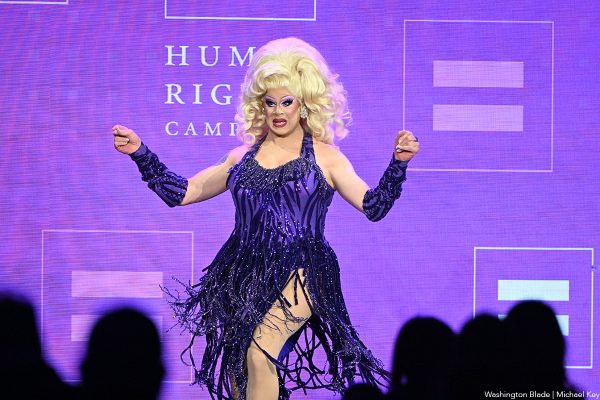
The night ended with a joyful tribute to Dolly Parton, as RuPaul Drag Race alum Nina West donned a wig that would make Parton proud as the ballroom began to dance with her to the late great country icon’s medley of hits.
LGBTQ Non-Profit Organizations
Gov. Whitmer to serve as keynote speaker for Saturday’s HRC National Dinner
This year’s dinner will include Marcia Gay Harden, André De Shields, Junior LaBeija
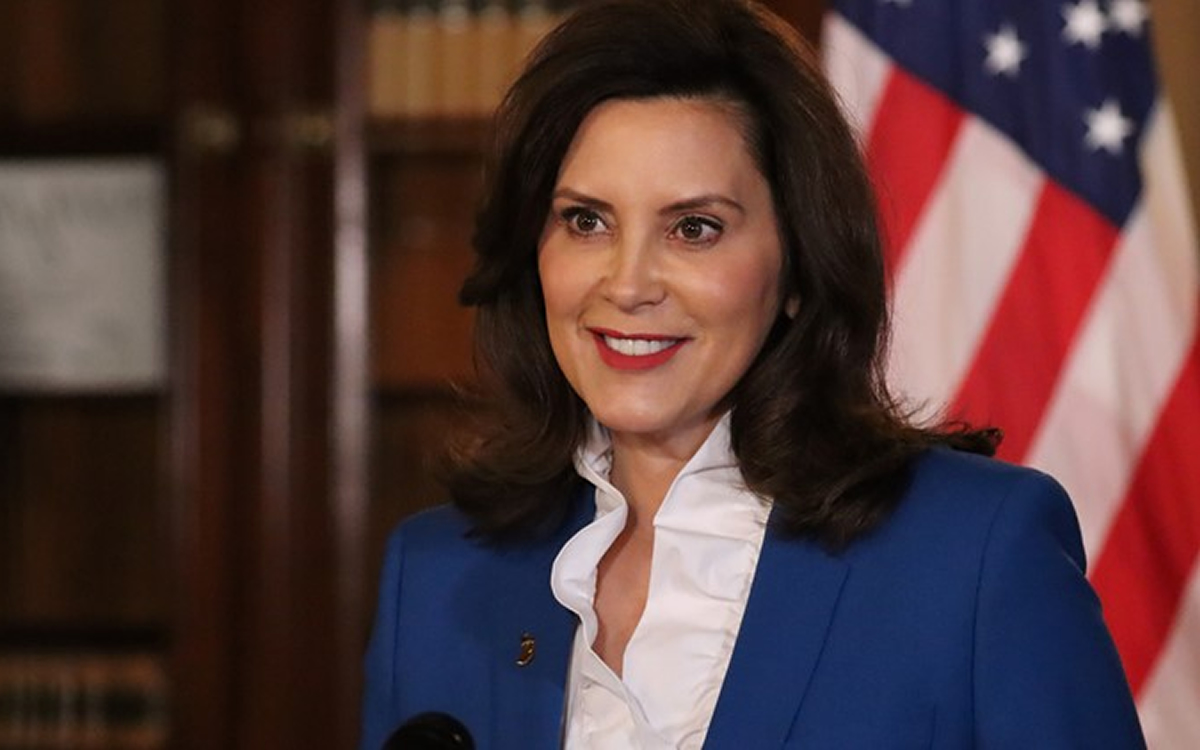
The Human Rights Campaign (HRC), the nation’s largest LGBTQ rights organization, announced on Wednesday that Michigan Gov. Gretchen Whitmer will be the keynote speaker at its annual National Dinner fundraiser in Washington, D.C.
The dinner is one of the biggest nights for the HRC — where thousands of LGBTQ civil rights advocates, elected officials, celebrities and community leaders mingle in the nation’s capital to raise money for the ongoing fight against LGBTQ discrimination.
This year’s dinner will take place at the Washington Hilton.
Alongside Whitmer, HRC will honor changemakers and LGBTQ+ allies and icons Marcia Gay Harden, André De Shields, and Junior LaBeija at the event.
Whitmer is a strong ally and proud mother of an LGBTQ+ child whose pro-equality leadership has led to critical civil rights protections for Michigan’s LGBTQ+ community.
HRC President Kelley Robinson issued a statement explaining why they chose the straight Michigander to deliver the headlining keynote address — pointing to her long track record and unwavering support in recent years, as anti-LGBTQ sentiment has not only grown but become more divisive in American politics. This is particularly important now as GOP leaders continue to attack and minimize rights for transgender people across the country.
“Gov. Gretchen Whitmer exemplifies the kind of allyship our community needs in this moment. She is a proud parent of an LGBTQ+ child and a governor whose leadership and commitment to equality have advanced crucial civil rights protections for LGBTQ+ people in Michigan,” Robinson said. “We are thrilled to have her join us at this year’s National Dinner and look forward to hearing how we can take Michigan’s lessons to create safe and welcoming spaces across the country.”
Some of those lessons Whitmer helped push include signing legislation that expanded the Elliot-Larsen Civil Rights Act to include sexual orientation, gender identity, and gender expression, signing executive directives to strengthen protections against anti-LGBTQ+ discrimination in state employment, and prohibiting the Michigan Department of Health and Human Services from using state or federal funds for harmful “conversion therapy” practices on youth.
She was also the first governor to fly the Pride flag on a Michigan state building in 2019.
“I’m a proud mom of a gay daughter, so it is personal when politicians try to tell people who they can be or who they can love,” said Whitmer. “In Michigan, we didn’t just talk about equality, we wrote it into law. We expanded Elliott-Larsen so no one can be fired or evicted for who they are. None of that happened by accident, and none of it is guaranteed. That’s why I’m proud to stand with HRC to organize, turn out, and win this November, because every right we’ve won is on the ballot.”
For tickets to the dinner, visit HRC.org.

Annie Andrews denounces trans athletes after Trump targets her

On Republican Long Island, gay Democrat Chris Gallant bets on public service over politics

Report: LGBTQ exclusion costs Japanese economy billions a year

Center for Black Equity honors leaders, activists at BE. Gala

In ‘The Lost Brontë,’ a complicated lie can lead to danger

Trump uses anti-trans slur against Democratic Senate candidate

U.S. int’l trade negotiator, consultant James Bedore dies at 82

Campaign urges Virginia High School League to reverse stance on trans athletes

Calif. GOP gubernatorial candidate ad ‘disgusting attempt to exploit lesbian intimacy’

Center Arts Gallery celebrates 10 years with reception, auction
-

 2026 Midterm Elections5 days ago
Trump uses anti-trans slur against Democratic Senate candidate
-
Obituary4 days ago
U.S. int’l trade negotiator, consultant James Bedore dies at 82
-
Virginia4 days ago
Campaign urges Virginia High School League to reverse stance on trans athletes
-
California4 days ago
Calif. GOP gubernatorial candidate ad ‘disgusting attempt to exploit lesbian intimacy’