World
Rainbow Railroad rescues LGBTQ people at risk around the world
Group founded in 2006

In a world and at a point where LGBTQ rights are under increasing threat, organizations like Rainbow Railroad are delivering life-saving action and offering hope as they do. Founded in 2006 as a grassroots response to the grave needs of LGBTQ individuals facing persecution, Rainbow Railroad has evolved into a global leader in queer humanitarian response. Their mission is clear and critical — to help LGBTQ people escape life-threatening situations and access the safety and freedom they deserve.
The Washington Blade was honored to speak with Latoya Nugent, head of engagement at Rainbow Railroad, a determined advocate and strategist who brings lived experience, passion, and vision to this work. In our conversation, Latoya sheds much-needed light on the evolution of the LGBTQ refugee crisis, the organization’s global impact, and how everyday people can get proactive in supporting LGBTQ asylum seekers and those displaced.
Can you share with us a little bit about Rainbow Railroad and how it was formed?
Rainbow Railroad is a global non-profit organization with offices in New York and Toronto. We were founded in 2006 as a volunteer-led initiative focused on helping LGBTQI+ people at risk find safety. Our primary work supports individuals living in what we call “countries of criminalization” – places where it’s illegal to be LGBTQI+.
We officially registered as a charity in Canada in 2013 and received 501(c)(3) status in the U.S. in 2015. Since then, we’ve grown to a team of about 60 staff working across direct service and advocacy. Our mission is to ensure LGBTQI+ people in danger can access safety and support, while also driving global advocacy to improve conditions on the ground.
Largely because there simply weren’t many organizations doing this work. While humanitarian protection has existed for decades, very few have focused specifically on how forced displacement affects LGBTQI+ people. The persecution faced by our community is often deeply personal and not adequately understood or addressed in global protection systems.
Rainbow Railroad was founded by a group of lawyers in Toronto who witnessed extreme anti-LGBTQI+ violence in Jamaica and the broader Caribbean. They knew a solution was needed to create safe passage for those fleeing persecution. What started as a small initiative has now become a global force, responding to crises like the fall of Kabul, the Chechnya purge in 2017, and the Anti-Homosexuality Act in Uganda.
Because we’ve worked so closely with governments, especially the Canadian government, and have deepened our involvement in global coalitions, our ability to respond at scale has expanded. In 2023, we secured a historic partnership with the Canadian government to provide comprehensive, end-to-end relocation support for LGBTQI+ people. That had never existed before within the humanitarian protection framework.
How has anti-LGBTQ and anti-transgender persecution evolved or intensified in recent years?
We’re seeing a rising, coordinated global movement against LGBTQI+ rights, heavily influenced by some religious and political groups. Alarmingly, some countries that had previously decriminalized LGBTQI+ identities are now reversing progress. Take Trinidad and Tobago, for example.
In 2023, Russia labeled the LGBTQI+ movement as “extremist.” In the U.S., under the current administration, we’ve seen federal resources for LGBTQI+ individuals and organizations stripped away. Websites have removed key information, and funding has been cut.
Globally, trans people are often the first targets, whether through state violence or community aggression. While we saw real progress for a while, a lot of that is now under threat. The movement today is focused on holding the line and preventing further erosion of rights.
What are some of the biggest misconceptions the public holds about LGBTQ refugees and asylum seekers?
A major one is the misunderstanding of how deeply personal the persecution is. Even people working in humanitarian spaces sometimes don’t grasp how intimate and life-threatening the experience is for LGBTQI+ people.
Unlike those fleeing war or natural disasters, circumstances that the world is more conditioned to understand, LGBTQI+ asylum seekers are often met with disbelief. People question their identity, their trauma, and even their right to seek protection.
And because the system isn’t designed with us in mind, many are retraumatized throughout the process. There’s also a lack of data. No one is formally tracking how many displaced people identify as LGBTQI+. So we’re forced to estimate based on global population models, but we believe there are upwards of 11 million LGBTQI+ individuals affected by displacement.
Also, the growing anti-immigrant sentiment worldwide paints refugees as threats, and LGBTQI+ asylum seekers get caught in that same narrative. Many wrongly believe that people choose to be refugees, but no one chooses this. It’s called forced displacement for a reason.
Here in the US, how does misinformation shape asylum policy?
Misinformation leads to policies that don’t reflect reality. If you start by distrusting asylum seekers, you miss their humanity. You see them as burdens or threats, not as people fleeing unimaginable violence.
As federal support gets cut, civil society organizations like Rainbow Railroad have to fill the gaps. But we’re not replacing a government system — we’re trying to patch a sinking ship.
And here’s the truth: LGBTQI+ asylum seekers will continue to arrive in the U.S. because it’s still safer than many of the countries they’re fleeing. Even with rising hostility here, they’re not being chased with machetes, like in parts of Nigeria, Jamaica, or Egypt. That’s the level of danger we’re talking about. And that needs to be understood.
In what ways does the US resettlement system fall short for LGBTQ refugees?
Before the federal program we partnered with was suspended in January 2025, we saw firsthand how the system wasn’t built with LGBTQI+ people in mind.
Most LGBTQI+ individuals relocate alone, often fleeing their own families. Yet the resettlement system assumes people arrive with built-in support networks, which they don’t. That leaves them vulnerable to social isolation and instability from day one.
Making an asylum claim also requires proving you deserve protection, which can be incredibly retraumatizing. You’re forced to provide evidence of your identity and persecution — even when you’ve had to hide both for survival. If you can’t “prove” it, your claim may be denied.
Add language barriers, lack of culturally competent translators, and complex paperwork, and you’ve got a system that’s often inaccessible to the very people it’s meant to help.
Can you tell us about the Communities of Care program? What prompted its creation?
The program launched in 2023 as part of a federal initiative to support LGBTQI+ refugee resettlement in the U.S. We mobilized small groups of volunteers, five or more LGBTQI+ individuals or allies, to support refugees as they settled into their new communities. They helped with housing, employment, education, transportation, and creating a sense of belonging.
When the program was suspended in January, we transformed it. Now, it focuses on supporting asylum seekers already in the U.S., many of whom are struggling without federal support.
We call on three or more volunteers to form a Community Support Team and work with an LGBTQI+ asylum seeker for six months. We train these teams to offer trauma-informed, competent care. It’s a way to create chosen family and rebuild community.
Can you tell us about the Community Access Fund?
That fund directly responds to the reduction in U.S. federal support for displaced LGBTQI+ individuals. We realized that many small, grassroots organizations doing vital work are severely underfunded or entirely volunteer-run.
So we created a pool of funds that these organizations can apply to. The first grantee was actually founded by someone we helped relocate to New York a few years ago. He saw that there were countless LGBTQI+ asylum seekers in NYC without access to community or services and decided to create that support himself.
We’ve supported groups in cities like New York, LA, and D.C., and the impact has been powerful. The fund is all about redistributing resources to the people who need them and who are already doing the work on the ground.
What can the average US citizen do to make a difference for LGBTQ asylum seekers and refugees?
So much! First, consider opening your home. Through our Rainbow Housing Drive, we ask people to offer a spare room or apartment at no cost, below-market, or even market rate, to someone in need.
You can also volunteer to form a Community Support Team with just two other people. Or donate to Rainbow Railroad. Honestly, even $5 helps. If everyone did that, the scale of what we could accomplish would be phenomenal.
We also encourage people to contact their elected officials at the city, state, or federal level. Let them know these issues matter to you. Support campaigns that uplift LGBTQI+ immigrants. Solidarity is powerful, and when we act together, we create real change.
This work can be heavy. As the Head of Engagement, how do you stay motivated?
Self-care is essential. Every morning, I wake up early and walk to work. It clears my mind. I take recovery seriously — emotional, physical, social, creative. Some evenings I turn my bathroom into a mini spa — candles, music, and a long bath. It grounds me.
But what really fuels me is my own journey. I’ve personally benefited from the work Rainbow Railroad does. I know how life-saving it is to be lifted from trauma and relocated somewhere you can truly live. Being part of gifting that to others drives me every day.
Our team is incredible. Resilient, dedicated, and deeply committed. And despite the challenges, we celebrate every win, no matter how small. Every life we help change matters.
Finally, what message of hope would you share with LGBTQ people who are fleeing persecution right now?
Hope is real, and it’s on the other side. There’s an entire global community, an army of people, who may not necessarily know your story, but who are bound together by our identities, understanding the persecution and discrimination that we as a community face. that knowledge makes us committed to doing everything in our power to ensure that everyone, every LGBTQI+ person, can live with not only dignity but also safety.
Trust that army to keep doing the work and to show up in solidarity. It may be difficult tomorrow or even next month, but there’s hope on the other side.
For more information, head to RainbowRailroad.org



Turkey
More than 150 people detained outside Istanbul courthouse
Protesters gathered after raids targeted Turkey’s LGBTQ community
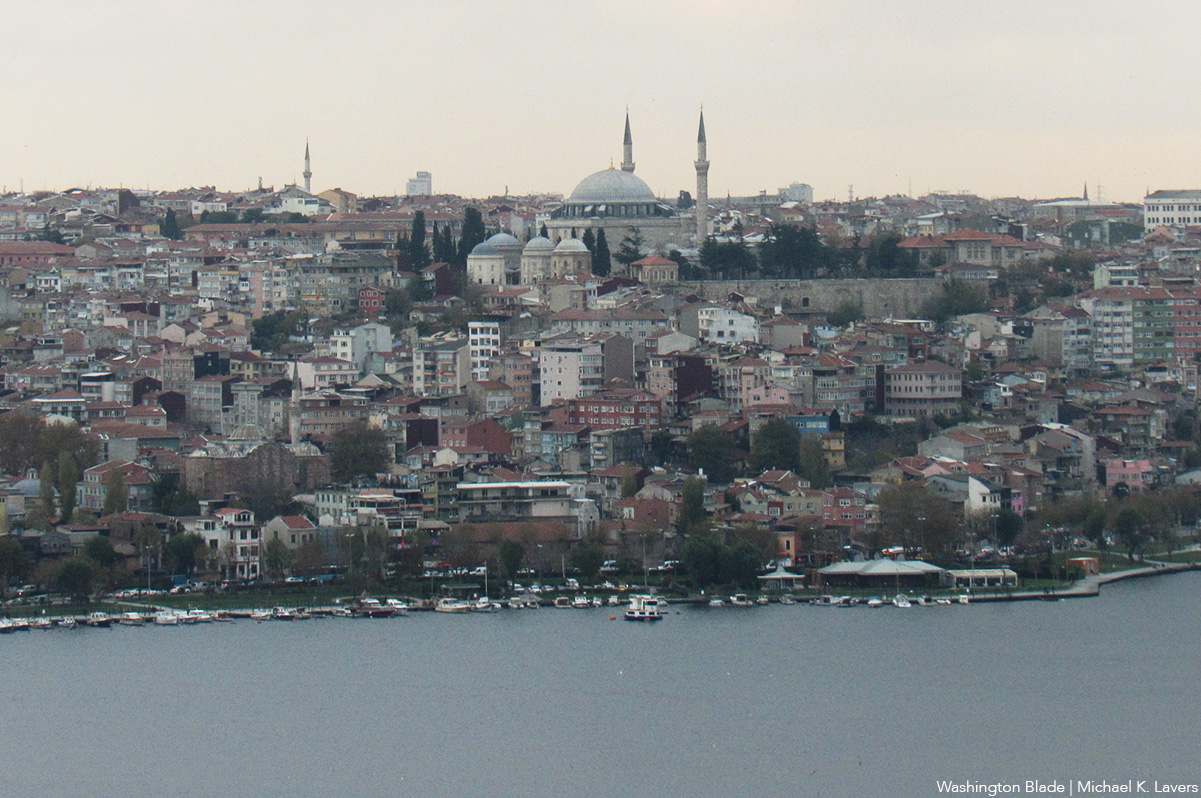
Turkish authorities on Tuesday detained more than 150 people who gathered outside an Istanbul courthouse to protest raids that targeted the country’s LGBTQ community.
CNN reported the protesters had planned to speak with reporters outside the city’s Caglayan courthouse, but authorities prevented them from doing so.
Turkish authorities over the weekend detained dozens of people in Istanbul and in other cities during raids that were part of the government’s “My Family is Safe” campaign.
A statement from a group of Turkish advocacy groups the Washington Blade received on Tuesday notes “at least 112 people have been detained in connection with the operations.” The organizations said 43 of those taken into custody are “LGBTI+ rights defenders,” and “at least” 62 of those detained “have been arrested, while judicial proceedings remain ongoing in Istanbul.”
“Among those arrested, at least 16 are LGBTI+ activists or individuals connected to LGBTI+ associations, including founders and members of association bodies,” reads the statement. “Per press statements by the prosecutor’s offices, dissolution cases will also be launched against associations.”
“The majority of those arrested are trans women who are charged with prostitution-related offences,” it adds. “While authorities have framed the operations as part of investigations into alleged crimes such as obscenity, prostitution and child exploitation, human rights defenders and civil society organizations have raised serious concerns regarding the use of criminal law mechanisms and public morality narratives to target legitimate LGBTI+ rights activities. Civil society views the ‘My Family is Safe’ narrative as a smokescreen to distract the public from deep economic crises and actual domestic violence, weaponizing moral panic to scapegoat LGBTI+ rights defenders, who have long been targeted by the government.”
The raids have sparked outrage among LGBTQ activists in Europe and elsewhere around the world.
The Congressional Equality Caucus and U.S. Rep. Carlos Giménez (R-Fla.) are among those who have publicly condemned them in the U.S. The Council for Global Equality on Friday is scheduled to hold a rally in support of Turkey’s LGBTQ community in front of the Turkish Embassy in Northwest D.C.
Indonesia
Indonesia’s top Muslim clerical body proposes criminalizing LGBTQ people, advocacy
Proposal underscores increased pressure against community
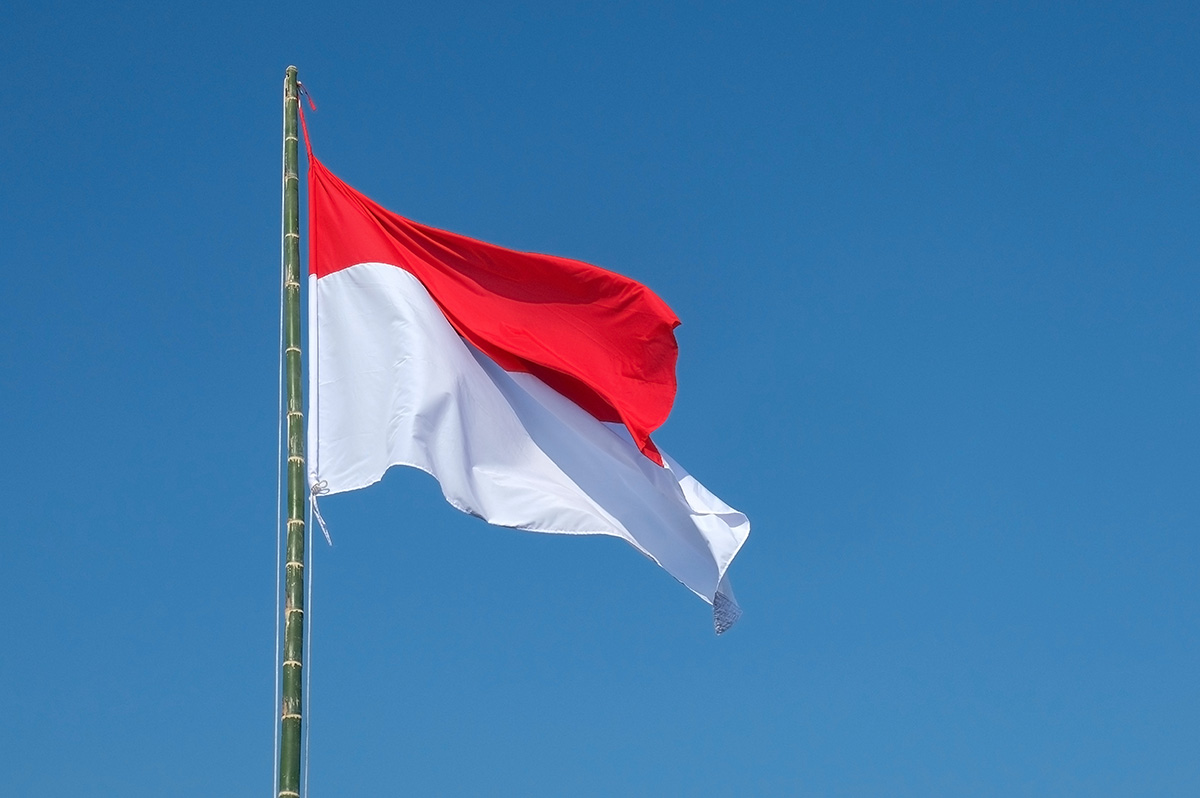
Indonesia’s top Muslim clerical body has proposed replacing the term “LGBT” with “LGSP,” grouping lesbian and gay people with sodomy and sexual abuse, as it prepares a proposed law that would criminalize conduct and advocacy it consideres prohibited.
Asrorun Niam Sholeh, head of the Indonesian Ulema Council’s Fatwa Commission, announced the proposal in Jakarta in late July, saying the council was preparing an academic paper and draft bill to submit to the government and MPs
The council in August also warned men against wearing women’s clothing during Independence Day festivities, despite a long-standing tradition in some Indonesian communities of men dressing in dresses and hijabs to play football as part of the annual celebrations. In a statement issued Aug. 7, the Fatwa Commission said such cross-dressing was “haram,” or forbidden under Islamic law, and linked the practice to what it described as a covert campaign by the “Lesbian, Gay, Sodomy and Obscenity (or LGSP) movement.
Indonesia on Aug. 17 marks its 1945 declaration of independence from the Netherlands with flag ceremonies, neighborhood gatherings, and a lively tradition of community competitions known as “lomba tujuhbelasan.” Children and adults take part in games ranging from sack races and cracker-eating contests to tug-of-war and “panjat pinang” — teams climb a greased pole to reach prizes at the top. Some communities also hold football matches in sarongs or “daster,” a loose-fitting house dress traditionally associated with women, turning the celebrations into an occasion for communal play and laughter.
The pressure extends beyond religious authorities.
In a report published in July, Human Rights Watch said attacks against LGBTQ university students had escalated during June’s Pride Month, while at least 10 public universities had recently adopted discriminatory regulations and curbed student media coverage and social media discussions about gender and sexual diversity. The rights group said the measures undermine freedom of expression and academic freedom.
Reacting to Pride Month celebrations, the Ulema Council called for “sexual deviation” to carry criminal penalties heavier than those for adultery and said it was preparing a draft law to criminalize LGBTQ conduct and campaigning.
President Prabowo Subianto in October 2025 signed Presidential Regulation No. 111 of 2025, which sets Indonesia’s General National Defense Policy for 2025–2029 and classifies the spread of LGBTQ culture as a non-military threat to the state. The provision places it among other perceived threats that include terrorism, radicalism, separatism, and the spread of prohibited ideologies.
The regulation drew public attention in July after Indonesian media reported on the provision, prompting Amnesty International Indonesia Executive Director Usman Hamid to warn that it could institutionalize discrimination against LGBTQ people.
“Amnesty International Indonesia unequivocally condemns these attacks and intimidation by both state and non-state actors based on perceived sexual orientation or gender identity,” said Amnesty International Indonesia. “We urgently call upon the Indonesian government to repeal this regulation and uphold its constitutional mandates and the international human rights treaties it has ratified.”
Indonesia on Jan. 2 began enforcing a new national criminal code, replacing the Dutch-era penal code that had governed the country for more than eight decades.
MPs had approved the 345-page code in December 2022 after years of debate and public protests over provisions concerning morality, religion, and individual rights. Among its new provisions is Article 411, which makes sexual intercourse outside marriage a criminal offense punishable by up to one year in prison.
Article 412 makes living together as husband and wife outside a legally recognized marriage punishable by up to six months in prison. The offenses can be prosecuted only after a complaint by a spouse, parent or child, but rights groups have warned that the provisions can disproportionately affect same-sex couples, whose relationships are not legally recognized in Indonesia.
Purba Widnyana, chairman of GAYa Nusantara, an Indonesian LGBTQ rights organization, told the Washington Blade that the situation for LGBTQ people in Indonesia has become increasingly worrying.
Widnyana told the Blade that the concern extends beyond increasing violence, pointing to stronger anti-LGBTQ sentiment in public spaces, on social media and within educational institutions, as well as in politics, including Presidential Regulation No. 111 of 2025.
“The impact is not always in the form of physical violence. Many LGBT+ people, especially trans women, that mostly work in entertainment or other informal jobs, beginning to lose job opportunities because they are considered to pose a ‘risk’ to the event organizers,” Widnyana said. “There are also concerns that the rising stigma and fear could deter people from accessing health services, including HIV test and STI, due to the fear that their identity or sexual orientation might be revealed.”
Widnyana said the changing environment has placed an additional burden on LGBTQ organizations; making spaces for gatherings, educational activities, and public information campaigns increasingly sensitive.
“We are constantly in alert mode,” he said, adding that since the previous wave of anti-LGBTQ sentiment in 2016, organizations have developed security and risk-mitigation plans before holding events. Previously, he said, the primary concerns were physical attacks, raids and threats that could force venues to cancel events. Now, organizations also have to account for online attacks, including WhatsApp hijacking and social media account hacking, as well as the possibility of an event or organization being targeted after going viral.
“It’s been limiting our movements,” he said.
Asked about the proposed LGSP framework and its decision to replace the term LGBTQ with a classification combining sexual orientation with sexual conduct, Widnyana said the council was conflating fundamentally different concepts.
“I really don’t know where to begin. They are definitely confused by mixing identities, in this case sexual orientation, with sexual behavior and actions that are understood as violations or offenses, that are sodomy and sexual indecencies,” he said.
Widnyana said the change should not be viewed as merely a change in terminology.
“The change shifts how Indonesians understand or perceive LGBT+ issues, moving from identities, rights and existence to behavior, morality, and criminality,” he told the Blade. “We also see it in the context of narrative that has been for so long evolving that frames LGBT+ as the ‘product of the West’ or ‘Western propaganda’,” he said. “In this framework, LGSP can be interpreted as their effort in rejecting how LGBT+ people define themselves and changing it with a category that is defined by those who oppose the existence of LGBT+ people.”
Widnyana also pointed to Indonesia’s long history of diverse gender identities and expressions, citing traditions such as the “bissu,” “calalai,” “calabai,” and “waria,” as well as artistic traditions in which men perform female characters. He cautioned against imposing modern LGBTQ categories on those traditions, but said gender and sexual diversity are not foreign to Indonesian history.
Widnyana said his main concern was the lack of clarity around terms such as “campaigning,” “promoting,” and “spreading LGBT+ culture,” which he said could be interpreted broadly enough to affect legitimate work in education, health care, human rights, and community services. He cited HIV and sexual health information, legal assistance for victims of violence, discrimination research, training on sexual orientation, gender identity and expression, and sex characteristics, and academic discussion as examples. Widnyana also questioned whether a gay man publicly saying he is gay and demanding to live safely, or a transgender woman speaking about discrimination she has experienced, could be deemed “campaigning” or “spreading LGBT+ culture.” Such legislation, he warned, could turn existing social stigma into a tool for systematically limiting the lives, expression, services and LGBTQ organizations.
“For me, the situation is becoming more difficult. And I think we need to look beyond just what the law says. Because sometimes, when we talk about Indonesia, people say, ‘Well, being LGBTQ+ is not generally criminalized under the national criminal law,’” said Arisdo, outreach representative of Pelangi Nusantara, an LGBTQ community group in Indonesia advocating for love, equality, and the right to live with dignity. “technically, that’s an important distinction. But that’s not really what people on the ground are experiencing. What we’re seeing is more pressure. More harassment. More public shaming. More people being targeted simply because they are perceived to be LGBTQ+.”
Arisdo told the Blade that transgender women are facing escalating violence, citing Pelangi Nusantara’s documentation of 10 attacks in Bogor between March and July 2026 involving 45 victim-survivors. He said the emergence of “Boti Hunter” groups was particularly alarming, reflecting a shift from anti-LGBTQ rhetoric toward actively targeting people. He added that fear of being outed or attacked prevents many victims from reporting violence, while doxxing and online harassment are increasingly forcing LGBTQ organizations to limit their visibility.
Hungary
New Hungarian government to scrap anti-LGBTQ adoption law
Prime Minister Peter Maygar ousted Viktor Orbán in April
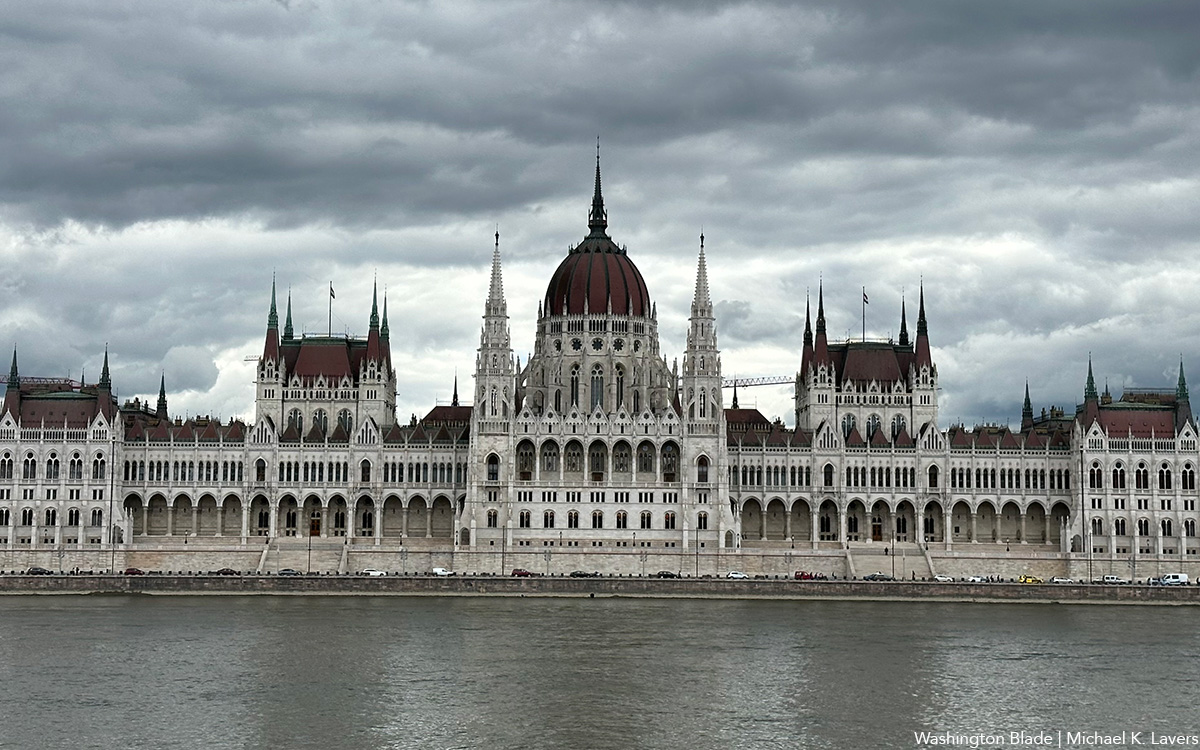
Hungarian Prime Minister Peter Maygar has said his government will amend a law that essentially bans same-sex couples from adopting children.
Lawmakers approved the effective adoption ban in 2020, when then-Prime Minister Viktor Orbán’s government was in power. Maygar announced plans to amend the law on Saturday when he was speaking to supporters in Budapest, the Hungarian capital.
Orbán and his government faced widespread criticism over its anti-LGBTQ crackdown that also included laws banning Pride events.
Maygar in April ousted Orbán in Hungary’s elections.

Jeremy Moss looks to bring LGBTQ advocacy from Lansing to Capitol Hill

Parties, dinners, concerts and more on tap for fall nightlife

All the queer things to watch this fall

Gun reform is an LGBTQ rights issue

Trump’s Cabinet: Dumb, dumber, dumbest, and evil

Dolly Parton biography puts her hardships into context

PHOTOS: SMYAL Fall Brunch

Fashion icon Bob Mackie dead at 87

Transgender woman killed in Barclay community mourned by friends, advocates