District of Columbia
Both sides propose revised orders in Capital Pride stalking case
Defendant Darren Pasha agreed to accept less restrictive directive
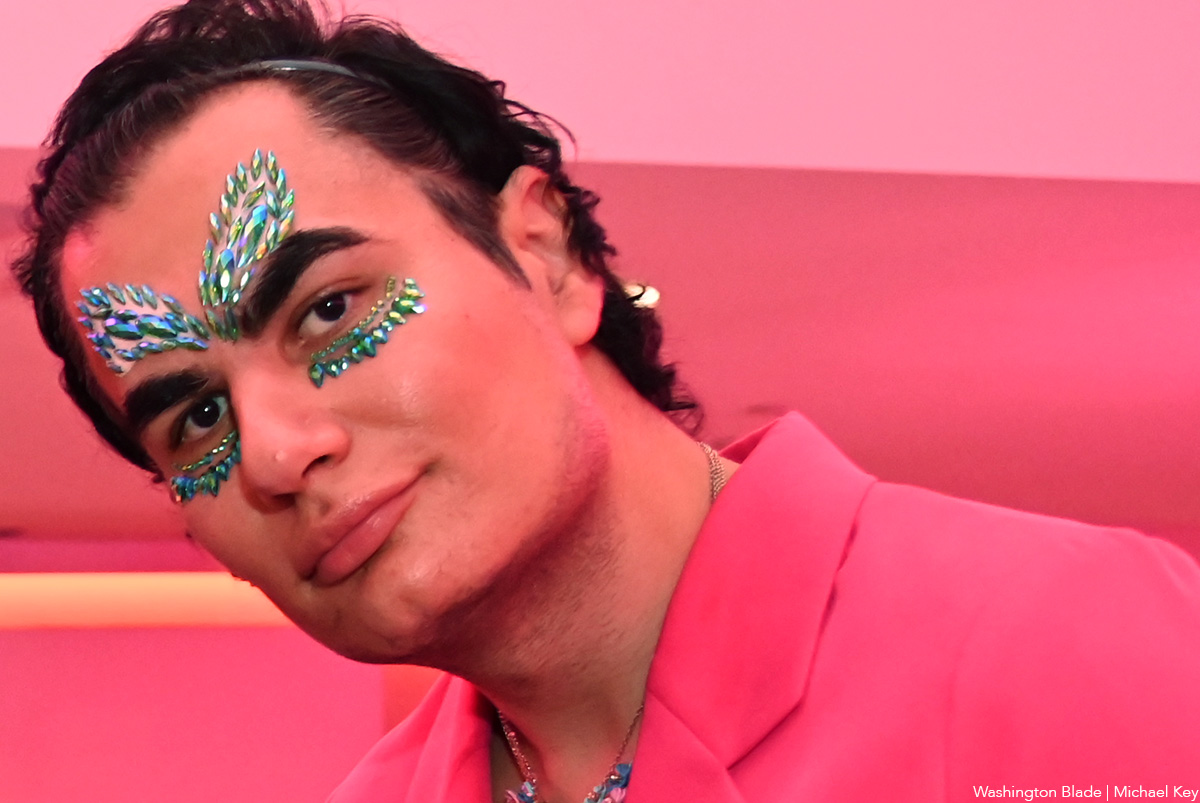
An evidentiary hearing in D.C. Superior Court on April 29 in which the Capital Pride Alliance presented three of four planned witnesses to testify in support of its civil complaint that D.C. gay activist Darren Pasha engaged in a year-long effort to harass, intimidate, and stalk its staff, board members, and volunteers ended abruptly at the direction of the judge.
Judge Robert D. Okun announced from the bench that the hearing, which was intended provide Capital Pride an opportunity to present evidence in support of its request to reinstate an anti-stalking order against Pasha that the judge temporarily rescinded on April 17, was no longer needed because Pasha stated at the hearing that he is willing to accept a revised, less restrictive temporary restraining order.
Pasha made that statement after two Capital Pride witnesses — June Crenshaw and Vincenzo Volpe — each testified in support of the stalking allegations against Pasha for over an hour under questioning from Capital Pride attorney Nick Harrison and under cross-examination from Pasha, who is representing himself without an attorney.
After Capital Pride’s third witness, Tifany Royster, testified for just a few minutes, and after the judge called a recess for lunch and to attend to an unrelated case, Pasha announced that after obtaining legal advice he determined that he was unsuited to continue cross-examining the witnesses. He said he would be willing to accept a significantly less restrictive temporary restraining order.
Okun then ruled that the evidentiary hearing was no longer needed and directed Capital Pride and Pasha to submit to him their version of a revised stay away order. He said he would use their proposed revisions to help him develop his own order, which he would issue after deliberating over the matter.
He also scheduled a mandatory remote mediation session for July 23, in which efforts would be made to resolve the case without going to trial. He then adjourned the hearing at 3:50 p.m.
The online Superior Court docket for the case stated after the hearing ended that the judge would issue “a new modified Temporary Protective Order,” but it did not say when it would be issued.
Shortly before the April 29 hearing began at 11 a.m., Harrison filed a “Draft Temporary Anti-Stalking Order” that included a list of 34 “Protected Persons” that Harrison said during the hearing were affiliated with Capital Pride Alliance as staff and board members, volunteers, and others associated with the group.
The proposed order stated, “The defendant shall not contact, attempt to contact, harass, threaten, or otherwise communicate with any protected person, directly or indirectly, including through third parties, social media, electronic communications, or any other means.”
The proposal represented a significant change from Capital Pride’s initial civil complaint against Pasha filed in February that Pasha claimed called for him to stay away at least 200 yards from all Capital pride staff, board members, and volunteers without naming them. Okun granted that stay away request in February but reduced the stay away distance to 100 feet.
Capital Pride attorney Harrison disputes Pasha’s interpretation of the order, saying the 100-foot stay-away was for events, not for individual Capital Pride staff, volunteers, or board members. He said the order prohibited Pasha from engaging in any way with the Capital Pride staffers, volunteers or board members.
But the proposed order Capital Pride at first submitted at the April 29 hearing also called for Pasha to stay away from and to not attend as many as 25 Capital Pride events scheduled to take place this year from April 30 through June 21 and for him to say away from the Capital Pride office located at 1827 Wiltberger St., N.W., which is the building in which it shares with the DC LGBTQ Community Center.
At the April 29 hearing, at Pasha’s request, Okun called on Capital Pride to consider allowing Pasha to attend at least the two largest events — the Capital Pride Parade and Festival — which draw over 500,000 participants.
Harrison said in a follow-up message to the judge following the hearing that Capital Pride would allow Pasha to attend those two events and one other as long as he stays away from “ticketed and controlled access areas.”
At an April 17 status hearing Okun rescinded the earlier stay away order at Pasha’s request, among other things, on grounds that it was too vague and didn’t provide Pasha with sufficient specific information on who to stay away from. It was at that hearing that Okun scheduled the April 29 evidentiary hearing, saying it would give Capital Pride a chance to provide sufficient evidence to justify an anti-stalking order and Pasha an opportunity to challenge the evidence.
In his own response to the initial civil complaint filed in February and in subsequent court filings, Pasha has strongly denied he engaged in stalking and has alleged that the complaint was a form of retaliation against him over a dispute he has had with Capital Pride and its former board president, Ashley Smith.
Like its initial complaint filed in February, Capital Pride filed a multipage document at the start of the April 29 hearing with written testimony from staff members and volunteers who allege that Pasha did engage in stalking, harassment, and intimidating behavior toward them and others.
Like Capital Pride, Pasha following the April 29 hearing, filed his own proposed version of the stay away order with significantly less restrictions than the Capital Pride proposal. Among other things, it calls for him to restrict his contact with Capital Pride CEO Ryan Bos and Crenshaw but says it “does not by its terms restrict the defendant’s communications with any other person, entity, governmental body, or media outlet.”
“Darren Pasha sent multiple messages to us and to the court after the proceedings asking for further modifications — which we are not accepting or responding to,” Harrison told the Blade in response to a request for further comment on Judge’s request for each side to submit proposed revisions of the stay away order.
“We appreciate the court’s time and careful attention to the evidence presented today,” Harrison told the Washington Blade in a written statement after the hearing. “This process was about bringing forward the experiences of individuals who reported a pattern of conduct that caused fear, serious alarm, and emotional distress,” he said.
“Capital Pride Alliance remains committed to ensuring that our events and community spaces are safe, welcoming, and free from harassment and we will continue to take appropriate steps to support and protect our community,” his statement says.
“I am happy with what we have accomplished so far,” Pasha told the Blade after the hearing. “I’m just waiting to see what will happen next. But I want to reiterate this goes back to when someone treats you wrong you speak up,” he said. “Even if I lose this case, I am glad that I spoke up and raised concerns.”
He added, “I will just be confident that in the next couple of months the truth will come out. But for now, I am happy with the progress that we have made regarding this.”
This story will be updated when the judge issues his revised stay away order.



District of Columbia
Man charged with anti-gay assault in D.C. accepts plea offer
Community service offered in exchange for dismissing hate crime charge

A Germantown, Md., man arrested by D.C. police on a charge of simple assault with a hate crime designation for allegedly assaulting a gay man while using “homophobic slurs” has agreed to an offer by prosecutors to plead guilty to simple assault without the hate crime designation and with the promise of having the charge dismissed if he completes, among other requirements, 48 hours of community service work.
Dean Edmundson, 26, standing beside his attorney, officially accepted the offer of a Deferred Sentencing Agreement at an Aug. 18 status hearing in D.C. Superior Court after Senior Judge Hiram Puig-Lugo explained the details of the agreement and confirmed Edmundson’s decision to waive his right to a trial.
Among other things, the judge said the agreement offered by prosecutors with the Office of the United States Attorney for D.C. includes the requirement that he successfully completes 48 hours of community service work, stays away from the victim of the assault, writes a letter of apology to the victim, and does not violate any other laws or get into trouble for the next 12 months.
Puig-Lugo then announced he scheduled a sentencing hearing for Edmundson for Aug. 18, 2027, at which time a determination will made on whether he has fulfilled all the requirements under the agreement and whether the simple assault charge will be dismissed. The judge added that if it is determined that Edmundson did not fulfil the terms of the agreement the charge would remain in place and he could be sentenced to a possible maximum penalty of 180 days in jail and a $1,000 fine.
Edmundson, who appeared in court wearing a business suit with a dress shirt and tie, was released on his own recognizance following his arrest by D.C. police on Feb. 7, 2026.
Police and court records show he was initially charged by arresting officers with simple assault with a hate crime designation. In a statement announcing the arrest, D.C. police said, “On Saturday, Feb. 7, 2026, at approximately 7:45 p.m. the victim and suspect were in the 1500 block of 14th Street, Northwest. The suspect requested a ‘high five’ from the victim. The victim declined and kept walking,” the statement says.
A follow-up arrest affidavit filed by police states that Edmundson followed the victim and called him “bald, ugly, and gay,” and then “pushed the victim with both hands, shoving them, causing the victim to feel the force of the push.” The affidavit adds, “The victim stated that they felt offended and that they were also gay.”
According to the court records, the Office of the U.S. Attorney filed its official charge of simple assault against Edmunson on Feb. 9 without the hate crime designation. The office has not responded to a request by the Washington Blade for its reason for dropping the hate crime designation. The office has also not immediately responded to a follow-up inquiry from the Blade this week asking if prosecutors consulted the victim to obtain the victim’s thoughts about the plea offer.
The Blade, which has a policy of not disclosing the identify of crime victims in cases like this without their consent, could not immediately obtain contact information to reach the victim for comment.
Court records show that Edmundson rejected an earlier plea agreement offer by prosecutors and he was scheduled for a non-jury trial on Aug. 18. The records show his attorney filed a motion earlier this month asking the judge to convert the trial into status hearing on that same day after his client accepted the Deferred Sentencing Agreement offer by the U.S. Attorney’s office. The judge approved the motion without objection from prosecutors.
The Comings & Goings column is about sharing the professional successes of our community. We want to recognize those landing new jobs, new clients for their business, joining boards of organizations and other achievements. Please share your successes with us at [email protected].
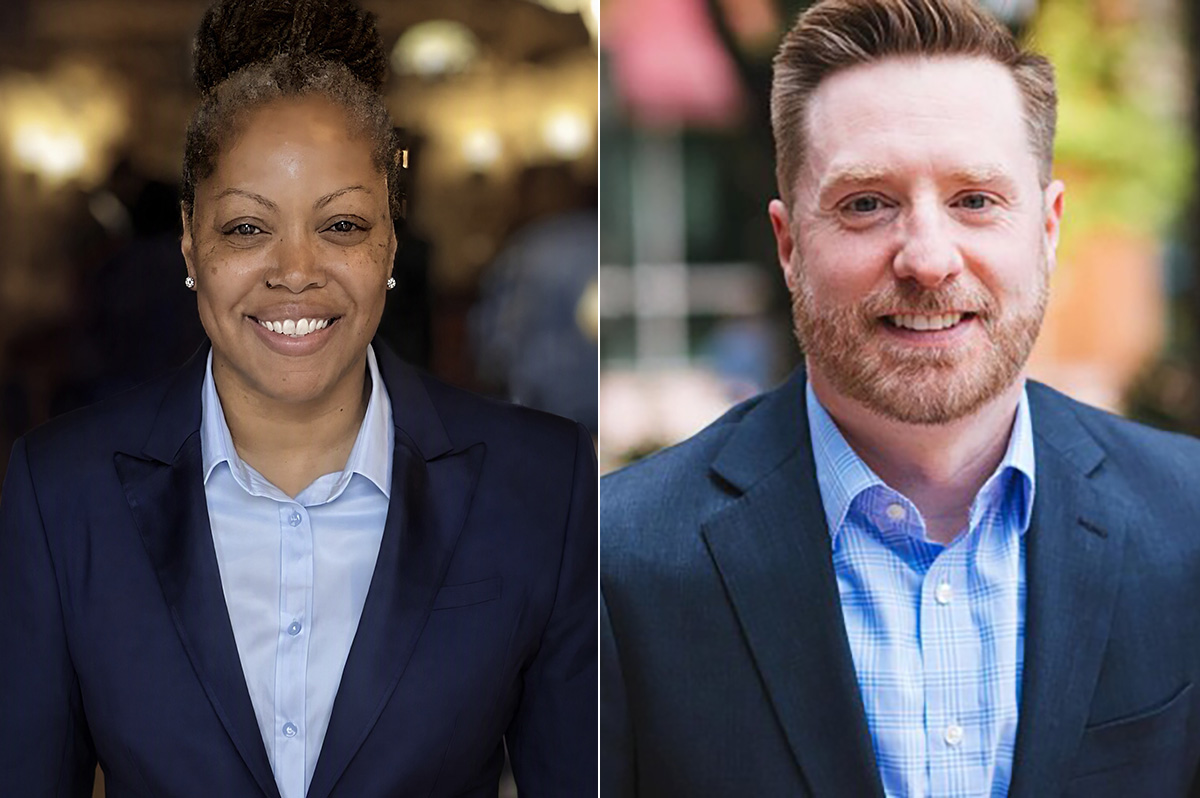
Congratulations to Carla Lester, LICSW on her new position as Chief Program Officer with SMYAL. Upon accepting the position she said, “SMYAL deeply aligns with my passion for honoring, protecting, and upholding the rights of all individuals, particularly LGBTQ+ youth and others who have been historically underserved, to belong to communities that affirm their identities, treat them with dignity and respect, and support their well-being. At this point in my career, I was ready to transition to an organization whose mission more closely reflected my values and was rooted in the community. SMYAL offered the opportunity to serve both an organization and a population whose mission not only resonates deeply with me but also intersects with my own multiple identities.”
Lester is a healthcare and human services executive with more than 20 years of experience in behavioral health, federal and state health insurance programs, housing, health care, education, and community-based services. She has held senior roles at Carelon Behavioral Health, Pathways to Housing and N Street Village, leading clinical programs, Housing First initiatives, homeless outreach, trauma-informed services, and integrated case management.
She earned master’s degrees in Social Work and Divinity, and maintains active clinical social work licenses in D.C. and Maryland.
Congratulations also to Tad Czyzewski on his new position as Chief Development Officer at SMYAL. On accepting the position, he said, “While I’ve spent much of my nonprofit career in the arts, the current social and political environments made me want to apply my skills and passion more directly toward supporting and strengthening our community. SMYAL and this role felt like the right place to do that.”
Czyzewski brings more than two decades of experience in nonprofit leadership and strategy, fundraising, and business development. Prior to joining SMYAL, he served for eight years as executive director of The Choral Arts Society of Washington, where he led fundraising, financial management, and community engagement. During his tenure, he helped raise more than $15 million in contributed revenue. He guided the organization through a major rebrand and the COVID-19 pandemic.
Prior to that Czyzewski served as Business and Development Director for Washington Revels, and held leadership and advisory roles with Chorus America, the DC Commission on the Arts and Humanities, and the National Endowment for the Arts. He began his career in the corporate sector, including at Capital One, where his work in product development and marketing contributed to new financial products and more than $2 billion in deposits.
Czyzewski is a lifelong musician, has performed professionally as a classical singer, including with the Washington National Opera and the National Symphony Orchestra.
District of Columbia
Gay ANC commissioner sues D.C. over police ‘failure’ to pay reward money
Lawsuit says information led to conviction in murder, armed robbery cases

Gay D.C. Advisory Neighborhood Commissioner Tom Donohue on Aug. 11 filed a lawsuit in D.C. Superior Court charging that D.C. police acted improperly and violated a local law by not paying him $30,000 in reward money for his role in helping police identify and arrest — and obtain the subsequent conviction — of one man charged with murder and another man charged with armed robbery in separate cases.
Although the lawsuit alleges improper action by D.C. police in carrying out the city’s Crime Solvers reward program, it names as defendants the District of Columbia and the Office of the Attorney General for D.C., which, among other things, defends the city against lawsuits.
Donohue, who is a member of the city’s ANC Rainbow Caucus consisting of LGBTQ elected ANC members, held a news conference outside the D.C. Superior Court building on Aug. 11 to talk about the lawsuit before entering the courthouse to officially file it.
The lawsuit states that Donohue “provided key video evidence that led to the arrest and conviction” of a man initially charged with first degree murder for allegedly running over a bicyclist with his car after the two got into an argument.
The lawsuit states that police had offered a $25,000 reward for information leading to the arrest and conviction of the defendant in that case, but police “arbitrarily slashed the payment to $5,000 without prior notice or policy justification.”
Court records show that D.C. resident Eric Beasley was charged with first degree murder for killing David Farewell, 45, by hitting him with his car on Sept. 4, 2020, on the 2100 block of Young Street, S.E. The records show the evidence for the case was based in large part on video camera footage of the incident obtained by police. Donohoe has said he provided that video camera evidence.
The records show that during Beasley’s October 2023 trial a jury was unable to reach the required unanimous verdict, and the judge declared a mistrial.
According to the records, Beasley later agreed to an offer by prosecutors to plead guilty to a lesser charge of involuntary manslaughter and was sentenced in September 2024 to eight years in prison, a development that angered the victim’s family members who called it a “slap on the wrist,” according to a Fox 5 News report.
Donohue’s lawsuit says the second case in which he provided police with pivotal information involved a series of armed robberies known as the Fairlawn Serial Armed Robbery Spree that occurred in the Fairlawn neighborhood in Southeast D.C. in 2023 near where Donohue lives.
The lawsuit says evidence consisting of video surveillance footage provided by Donohue to police enabled police to determine they initially wrongfully arrested an 18-year-old male for the robberies. “Using Plaintiff’s security video, MPD identified, arrested, and convicted the actual robber, David Crocker, who was sentenced to 18 years in federal prison,” the lawsuit states.
It says one of the detectives investigating the case recommended a $10,000 reward for Donohue’s help in the case based on the police Crime Solvers reward program. The detective’s recommendation was approved by then-Assistant D.C. Police Chief Kyle Ramey on Aug. 4, 2025, according to the lawsuit.
But it adds, “Nevertheless, MPD improperly withheld payment.”
When contacted by the Washington Blade for comment on Donohue’s lawsuit allegations, a D.C. police spokesperson said “MPD does not comment on pending or ongoing litigation.”
Gabriel Shoglow-Rubenstein, who serves as press secretary for the D.C. Office of the Attorney General, which will be defending the city against the Donohue lawsuit, said he would look into obtaining a possible comment but said the office has a similar longstanding policy of not commenting on pending litigation.
“This action arises from the District of Columbia Metropolitan Police Department’s arbitrary, bad-faith, and legally unsupportable failure to honor its public reward promises and administrative obligations to Plaintiff,” the lawsuit states.
It says the MPD violated the city’s Freedom of Information Act or FOIA law by not responding to Donohue’s request for information and documents related to the decision not to pay him the full reward money.
“MPD’s reduction of Plaintiff’s homicide reward from $25,000 to $5,000, and its withholding of his approved $10,00 robbery reward, were undertaken completely devoid of written standards, making such decisions inherently arbitrary, capricious, and an abuse of administrative discretion,” it says.
It calls for Donohue to be awarded $30,000 in compensatory damages consisting of the $20,000 “unpaid balance” for the homicide case reward and $10,000 for the robbery case reward. It also calls for reimbursement for “reasonable” litigation costs and attorney’s fees. Donohue told the Washington Blade that at this time he is representing himself without an attorney.
Donohue told the Blade that the refusal by D.C. police to pay him the full reward money also limited his plans to donate some of that money to the family of murder victim David Farewell to help pay for a burial stone. He said that due to the family’s limited resources Farewell is buried in an unmarked grave

NYC lawmakers seek to repeal bathhouse ban

Black Educated Lesbians: A movement rooted in community

Hegseth uses transphobic slur while campaigning for Iowa congressman

What ‘Queer Eye for the Straight Guy’ can still teach us

I respect AOC, even though I often disagree with her

PHOTOS: Nellie’s Drag Brunch

‘Maddie’s Secret’ defies campy expectations

Remembering Barbara ‘Boo’ Price, a pioneering force in women’s music

White House targets gender-affirming care funding, states fight back