Georgia
In Ga., 2 trans candidates believe voters are ready for them
Bentley Hudgins, Bella Bautista running for state House of Representatives
Uncloseted Media published this story on Oct. 6.
This story was reported in partnership with The 19th, a nonprofit newsroom reporting on gender, politics and policy.
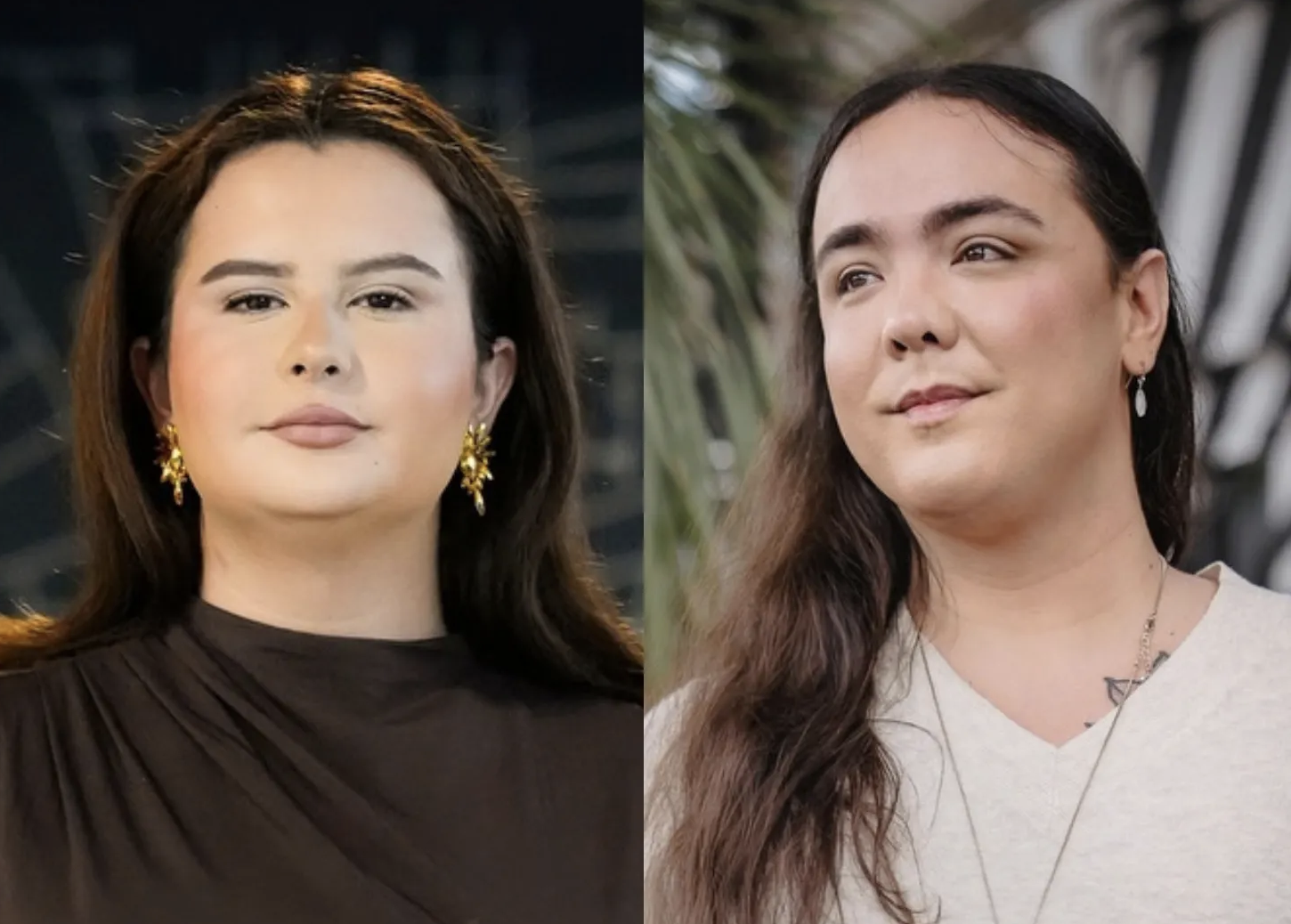
By ORION RUMMLER | Bentley Hudgins is a 33-year-old democratic socialist who spent the past three years advocating for LGBTQ rights in the Georgia statehouse.
Bella Bautista is 10 years younger, the first transgender woman to win a legislative primary in Georgia and head of a nonprofit distributing supplies to at-risk young adults.
Both are running for a spot in the Georgia House of Representatives, part of a cohort of Democrats who hope to shrink or end Republicans’ hold on the chamber. Both would make history as the first trans members of the body. Neither wants to discuss identity politics or pronouns — they want to talk about data centers, the price of groceries and healthcare.
But their districts are very different: Hudgins is running in a liberal stronghold in Atlanta with no serious Republican opposition and is all but certain to win in November. Bautista’s district is rural and deeply conservative; it hasn’t elected a Democratic state representative since 1996, and she’s the first to run for this seat since 2010. But Hudgins’s and Bautista’s bets are the same: Voters are looking for someone to fight for them. In Hudgins and Bautista’s view, something in the country is broken and no one else will fix it. So they stepped up.
“People around here just hate the government, and that’s why I’m running,” Bautista told Uncloseted Media and The 19th. “People have lost faith in the system as a whole.”
Hudgins’ mind is on the big picture: getting as many Democrats, especially progressives, in the statehouse as possible. Without that, they believe the future — especially for LGBTQ people and immigrants — isn’t certain.
“At the end of the day, we have to have the numbers,” Hudgins told Uncloseted Media and The 19th.
A deep red district in rural Ga.
In the hourlong drive from Atlanta to Cartersville, where Bautista grew up, suburbs fade away and the land expands into RV lots, farms, and houses on the edge of the woods. Bautista launched her campaign in this small town, at Noble & Main Coffee Co., across the street from a butcher shop that offers deer processing.
“It’s one of those hidden gems,” she says. “They’re friendly toward Democrats.”
It’s also not in the statehouse district she wants to represent. She’s running for office in the more rural side of the county, an area that’s about 80 percent white, mostly older and mostly conservative. And it’s been a challenge. Most people here vote Republican. Her opponent, the GOP incumbent Mitchell Scoggins, has not run against anyone since he first won a special election in 2018.
Lack of change is what spurred Bautista to run. And it’s not just Scoggins sailing unopposed to reelection every two years. Bartow County is one of a small handful of counties in Georgia with only one commissioner, who single-handedly decides the fate of everything from data center construction to new roads. The current commissioner has held the position for 14 years.
The issues facing her hometown can’t be left to one man, Bautista says. She wants to pass legislation for locals to vote on a board of commissioners, regulate Flock cameras, shield locals from data center pollution, conserve farmland and expand rural mental healthcare. She thinks these stances will appeal to voters who may otherwise vote Republican. But it’s still an uphill battle — and a lonely one.
“This is not a story about pride. It’s not a story about visibility,” she says. “It’s a story about challenges, difficulty. I don’t want to be the fucking first to do it, but I have no choice but to be the first.”
But Bautista says she’s struggling. This campaign has cost her privacy and peace, which doesn’t impact just her: She lives in her family home as the primary caretaker for her mom.
In May, during the primaries, someone came to her house twice, she says: once to put up a sign supporting President Donald Trump next to her own campaign sign in the front yard, and later to take down her sign.
“I literally live in the middle of nowhere,” she says. “That sent chills down my back, because I’m like, OK, that means someone physically went to my home, got out of their car, went up the hill, put up a Trump sign.”
Her neighbors, who she’s known her whole life and are Trump voters, assured her that they weren’t involved. But that fear hasn’t left her. Since then, more signs have gone missing: A few weeks after we met, hundreds of her campaign signs were taken down across the district. Those cost money to replace — money the campaign doesn’t have.
As a trans Latina, she belongs in Bartow County just as much as anyone else, she says. This is the only home she’s known. But campaigning in this district feels like being thrown into the ocean, she says. Online, people mock her and misgender her. It hurts. Often, they’re the same people she’s fighting for.
At one point during an interview at Noble & Main Coffee Co., Bautista started crying. Keeping her head above water means she doesn’t often take time to think about why she’s doing this.
“You’re just having to swim, swim, swim, swim and you never get any chance to look back and think, oh my gosh, why am I doing this, what does this mean to other people?”
Dramatically different districts
Hudgins launched their campaign at Joe’s Coffeehouse in East Atlanta Village, roughly 50 miles from Bautista’s district. This place, a local indie fixture, holds personal history for them: When they became homeless in 2017, it became a refuge as they couchsurfed and lived in their car. It took a year to find stable housing.
This neighborhood is where they got back on their feet after being kicked out of their apartment, something they know is common for queer people in the U.S., as well as in their own circles.
“Most of the queer electeds that I’m really close with are people who have experienced homelessness,” they say. “It just goes to show how prevalent this is for queer Southerners.”
And, years later, this same neighborhood is where they fell back in love with politics.
Being here makes Hudgins think about how the city is changing as people get priced out. Gay bars are closing and, as a former drag performer, they know of only three places still putting on shows. It’s all getting too expensive. Midtown isn’t the bustling queer neighborhood it used to be, they say, but the queers are still here: They’re just moving further into DeKalb County, East Point and southeast Atlanta, all in search of affordability.
That’s part of the problem. Hudgins sees solutions, though: raising the state minimum wage to $20 an hour or creating a state earned income tax credit to give money to lower-income families. Previous Democrat-sponsored bills to enact those policies have been blocked in the statehouse, and it’s those stalemates that are driving voters to push for something different, Hudgins says. Decades of Republican control have left people disillusioned.
“People’s political will and spirit has kind of been chipped away at,” they say. “Life can be better.”
The first time Hudgins ran for this seat in 2022, they were 28 and single, and the pandemic was still fresh. The previous year, Atlanta spa shootings targeting Asian women had taken place, and “Cop City,” the massive training ground for local police in DeKalb County, was formally proposed amid national protests against police brutality. Joe Biden was president, and from where Hudgins sat, the Democratic establishment was clamping down on progressive dissent.
They were angry — but that anger didn’t resonate with voters, they say.
“It was such a more agitated time in a lot of different ways, and this strong leftist point of view wasn’t as appreciated,” they say. “At that time, I was also angry. I was mad. And I think it came through.”
Their opener in their 2022 race was, “To be frank, I’m tired of my friends dying,” they say. They had lost friends to police violence, addiction, hunger and mental illness. One of their friends was left permanently disabled from a hate crime, they say. Hudgins had begun to get severe cluster headaches and was managing that while running their first campaign.
After losing that race, they reassessed if they wanted to do politics at all. They were broken-hearted, they say. A friend helped them get a job at a Laotian pop-up restaurant in East Atlanta Village, only a short walk from Joe’s Coffeehouse. But what they thought would be an escape from politics became a reeducation in why it mattered, they say. Surrounded by other Asian Americans, they learned about U.S. bombing campaigns in Laos and connected with their new friends’ working-class struggles.
“I really got to understand more about how my Southeast Asian neighbors and friends have experienced American identity,” they say.
If elected, Hudgins would be Georgia’s first Japanese American lawmaker. To them, it feels like that usually gets left out of their story as people instead focus on their gender identity.
They weren’t planning on running for office this year. Their wedding is in November. Until recently, they were lobbying against anti-LGBTQ bills as Georgia state director for Human Rights Campaign, a major LGBTQ advocacy group. But Saira Draper, who beat Hudgins in 2022 to represent House District 90, is running for the state Senate. That left the House seat open. And it left the door open for Hudgins to run again.
When three other Democrat contenders dropped out in the primary, Hudgins became the front-runner. Their opponent, Samantha Boston, received only about 500 votes in the Republican primary. Hudgins got over 7,000 in the Democratic contest.
Fearless advocates
On a muggy September night, Hudgins and Bautista were in full glam at the College Park Woman’s Club in Atlanta, gathered alongside activists, volunteers and political candidates at a fundraising gala for LGBTQ youth.
At her table, Bautista prepared to present a “fearless youth advocate” award to state Rep. Akbar Ali, sworn in last year at 21 as the youngest lawmaker in Georgia. Bautista won this same award last year for the work she does at her nonprofit, which primarily supports transgender and immigrant young adults. Seated with Ali and friends running for office in Bartow County, she read over her notes.
Democrats in the room buzzed with the possibility of reshaping the statehouse, and with nerves that Republicans’ now abandoned redistricting effort will resurface.
On stage, Bautista looked to a different future — one where trans visibility in politics is not a rarity in Georgia.
“To all my transsexual girls in the building, just know that I’m fighting for you, and that in two years it’s going to be one of y’all,” she said. “It’s going to be one of y’all running for governor. It’s going to be one of y’all running for state senator. It’s going to be one of y’all running for commissioner.”
But she knows that history recognizes the victors, people who make it past the finish line, regardless of how much work they put into the race.
“I stand before you in the middle of history, not on the other side of it,” she said on stage. “I keep going not because the water is calm, but because someone on the other side is waiting for proof that a person like them survived it.”
Hudgins watched from the front of the room. They sat next to Sam Park, the Georgia House minority whip, a longtime mentor.
“I’m incredibly proud of Bella’s leadership and her courage for stepping up,” Park told Uncloseted Media and The 19th in an interview a few days later. “Bella is giving her voters, her fellow neighbors, an option, a real choice to say enough is enough.”
Rural Democrats are craving someone willing to fight for them, says Courtney Bruder, chair of the Democratic committee of Cherokee County, where Bautista’s district also touches. But complacency has gotten in the way, she says.
“It’s been difficult to try to get someone to be willing to fight for a seat that’s going to be hard,” she told Uncloseted Media and The 19th. “It’s been a slow change to get Democrats in this area to run.”
Bautista hasn’t felt supported by the Georgia Democrats, she says. She has allies in the statehouse and in others running for office, but she still feels like the subliminal message from the party is that she just isn’t electable. She feels like she isn’t taken seriously because she’s not white, doesn’t have wealthy donors and isn’t running in a safe district for Democrats.
Democrats in leadership say she’s changed the game, though, and see her candidacy as a sign of a changing tide in Georgia.
A blue wave may be brewing in the Peach State. Georgia saw record-breaking engagement in the primaries, and an NBC analysis found that Democrats turned out in unusually high numbers across the state. But in Bartow County, where Bautista lives, Democrats make up just one-third of the vote in the gubernatorial primary, according to data from the Georgia Secretary of State’s elections office.
Bautista is positioning herself as an anti-establishment candidate first, and a Democrat second, to appeal to people who aren’t engaged in politics, she says.
It may not be enough to win. But for the past 16 years in this district, no one was willing to step into the ring at all. She still sees victory in that, and in the ways her campaign has gotten neighbors to care about what’s happening in their backyard.
‘I’m going to be who I am’
If elected, Hudgins would become the state’s first nonbinary lawmaker. But they don’t care if voters understand their gender or use the correct pronouns; they just want voters to understand the issues.
“I realized if I led with my identity, it would distract people from understanding what I had to say,” Hudgins says.
One moment in particular on the campaign trail, at Israel Missionary Baptist Church in April, changed their perspective on this.
“The deacon lays his hands on me. He’s like, ‘God, help her, help this person, help him, just help them be victorious.’ I wanted to laugh, but then I was really touched. This guy I’ve never met before … was just trying to be respectful,” they say.
If they win, a whole new set of challenges awaits them at the Georgia statehouse. The dress code is gendered; men must wear a coat and tie, while women are allowed a more nebulous “dignified dress.” But it’s not just the clothes; they would be joining an institution built around a gender binary they don’t adhere to.
Lawmakers are used to referring to each other as “Mr.,” “Mrs.” or “Miss,” per the rules. Although there are more formal options that could allow for a loophole, those are gendered too — members may identify each other by the district “he or she” represents or by the city of “his or her” residence. The bathroom is its own ordeal: if there is a gender-neutral bathroom, Hudgins has yet to find it. As a gender nonconforming person, if Hudgins takes office, they would be walking into a system designed to exclude them. And there are fines associated with breaking these rules.
They are still weighing how to respond to it. They want to be taken seriously as a legislator and build relationships that move bills, but if they don’t stand up for themselves, it sends a poor message, they say.
“I have a pesky knack for maintaining who I am regardless of what the rules say,” they say with a laugh. “If we have a Democratic majority, we can change the rules. If there is a Republican majority, I’m going to be who I am and I’m going to dress how I think is appropriate. And their problems, we’ll address them as well.”




Georgia
Everton Blair makes history as first openly gay congressman from Ga.
Former Gwinnett County Board of Education member to serve remainder of David Scott’s term
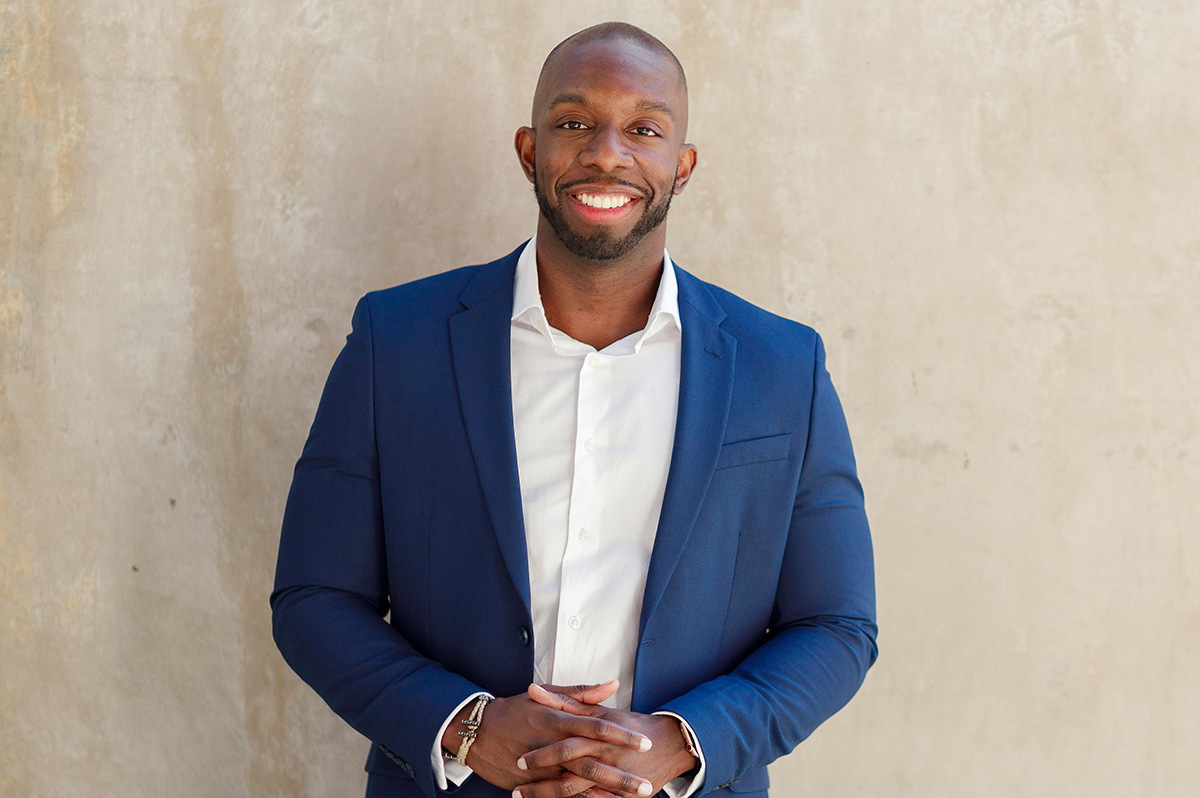
Georgia made history last week when Everton Blair, Jr., was sworn into the U.S. House of Representatives, becoming the state’s first openly LGBTQ member of Congress and the latest LGBTQ addition to the chamber.
Blair, who represents Georgia’s 13th Congressional District, was sworn in on Sept. 1 after winning a special election to fill the vacancy left by the late-Congressman David Scott. Blair defeated Marcye Scott, the late congressman’s daughter, in the Aug. 25 runoff, winning 53.2 percent of the vote to Scott’s 46.8 percent.
He will serve the remainder of Scott’s term through Jan. 3, 2027. Blair is not running in the November general election for a full term.
Blair brings a progressive platform to Congress.
The 34 year-old supports Medicare for All, a Green New Deal, raising the minimum wage, and universal gun background checks. His campaign platform also included positions on LGBTQ rights, reproductive freedom, workers’ rights, climate, and gun violence.
Since joining the House, Blair has joined the Congressional Black Caucus and Congressional Progressive Caucus. He is also a co-chair of the Congressional Equality Caucus.
Before joining the House, Blair served on the Gwinnett County Board of Education, where he became the first Black member and youngest-ever member elected to the board, as well as its first openly gay member. He was later unanimously selected as chair.
Blair also served as a fellow in President Barack Obama’s White House Initiative on Educational Excellence that focused on improving academic outcomes and expanding opportunities for minority students.
The son of Jamaican immigrants, Blair was born and raised in Georgia’s 13th Congressional District. He earned a bachelor’s degree in applied mathematics from Harvard University, a master’s degree in policy, organization, and leadership from Stanford University, and a Doctor of Education Leadership degree from Harvard.
Blair’s campaign received endorsements from a number of organizations, including the LGBTQ+ Victory Fund and progressive Democratic groups such as Future Democrats.
The Equality PAC, a political action committee dedicated to electing openly LGBTQ candidates to office, celebrated Blair’s victory and provided a statement to the Washington Blade about the historic nature of his election.
“This is a historic election for Georgia, the South, and our entire country,” Equality PAC said in an email. “Everton Blair brings a strong record of public service and a deep commitment to making government work for working families.”
The group said Blair would “fight to lower costs, expand access to quality health care, create economic opportunity, and ensure every community has a voice in Washington.”
“At the same time, Everton understands the importance of standing up for equality and defending the rights and freedoms of LGBTQ Americans and every community facing discrimination,” Equality PAC said. “His historic election as Georgia’s first openly LGBTQ Member of Congress and the first openly LGBTQ man elected from the South is a powerful reminder of how far our country has come — and how much work remains.”
Equality PAC said it was “proud to welcome Everton to the House” and looked forward to working with him.
Georgia
Suburban Atlanta gender-affirming care clinic target of arson hate crime
QMed/QueerMed set on fire last October
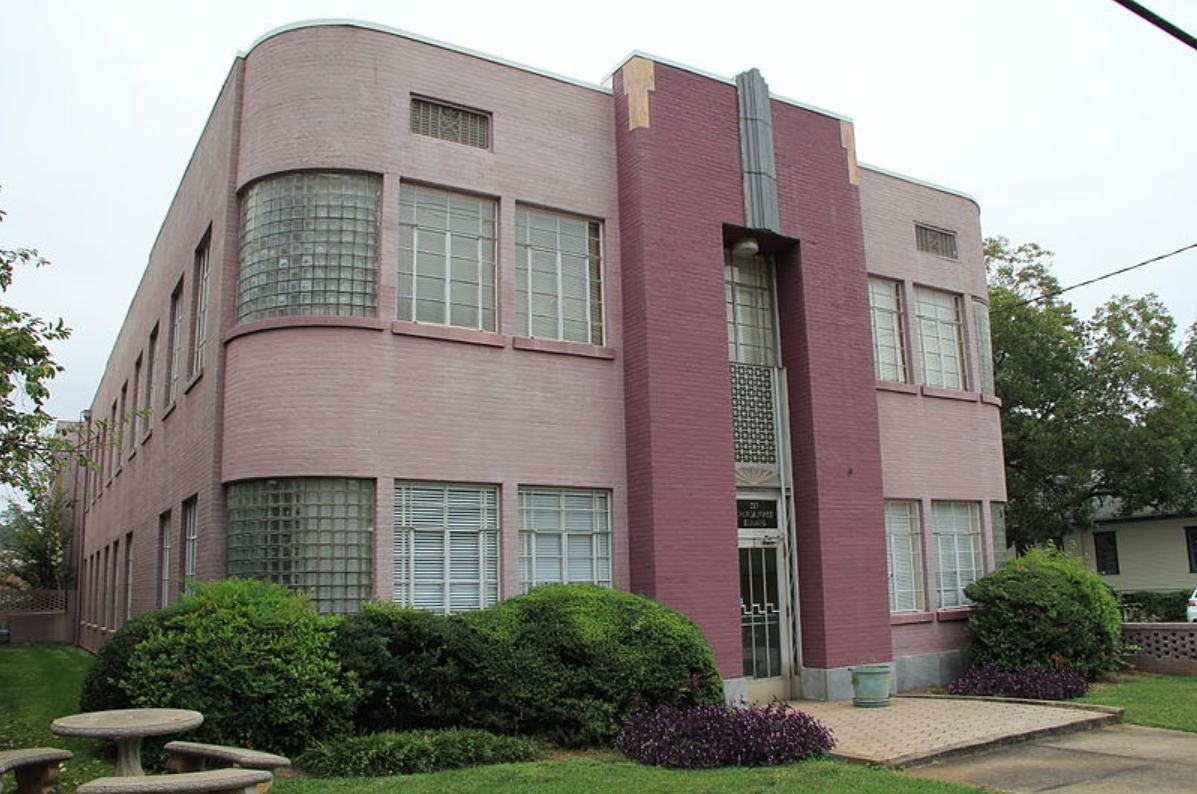
A structure fire at a commercial office building located at 215 Church St. in downtown Decatur, Ga., which housed a gender-affirming care clinic, was the target of arson, the Decatur Fire Department confirmed.
According to local media outlet Decaturish, a police report indicates QMed/QueerMed was the victim of the Oct. 30, 2023 fire. In a statement released on Jan. 26, the Decatur Fire Department wrote:
“On the morning of Oct. 30, 2023, the City of Decatur Fire Rescue Department responded to a structure fire at a commercial office building located at 215 Church St. in downtown Decatur. This historic building is commonly known as the Blair Building.
Fire crews extinguished the fire upon arrival. The fire was contained to one office and no injuries were reported.
After a full investigation, the fire incident has been determined to be incendiary in nature, indicating that the fire was intentionally set. However, the identity of the individual or parties responsible is unknown.”
“The city is collaborating with federal and state agencies to investigate this incident. The city will continue to work closely with these agencies to investigate and solve this crime,” the fire department added.
A Decatur Police report indicates QMed was the victim of the Oct. 30 fire, which is being investigated as a first-degree arson, which is a felony. The report contains several images that have been redacted.
QMed owner Dr. Izzy Lowell said the FBI is investigating the fire as a hate crime. Georgia enacted a hate crimes law in 2020, and its protections extend to LGBTQ people. People convicted of a hate crime would face stronger penalties under the new law.
Lowell said, “We won’t be intimidated. We will not stop providing life-saving care to our patients.” She said the office is “completely destroyed,” but that QMed is continuing to see patients remotely.
The Decatur Fire Department has been tight-lipped about the investigation. Decaturish only learned about the fire after receiving an anonymous tip. A reporter visited the scene and saw the damage to the building on Nov. 1. The fire department did not initially confirm the Oct. 30 fire had occurred, and only confirmed it after Decaturish published a story about it this fall.
Georgia
Former First Lady Rosalynn Carter, 96, dies at home in Georgia
Carter survived by the former president and their children, grandchildren, great-grandchildren
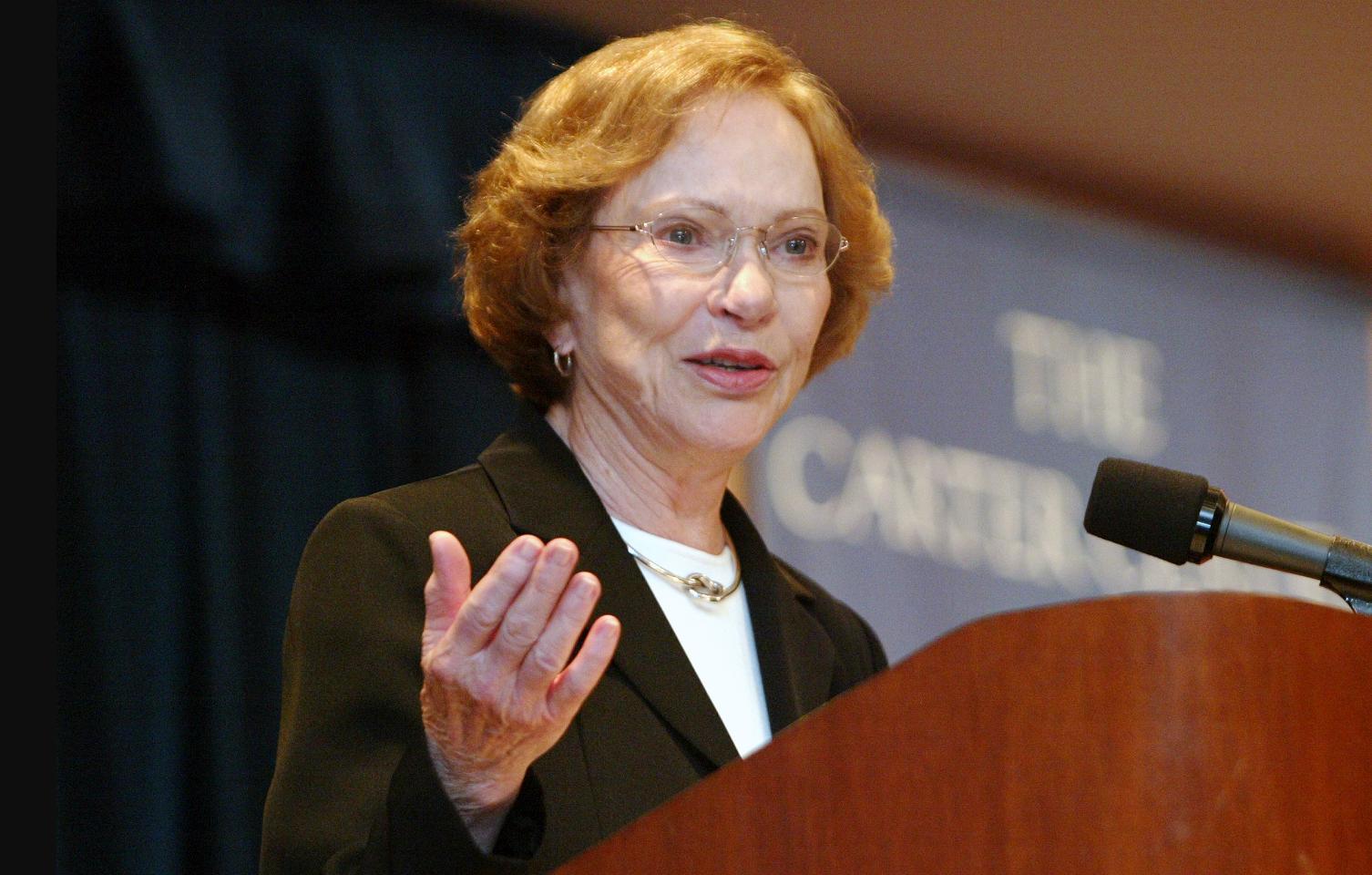
Rosalynn Carter, wife of former President Jimmy Carter, has died at the age of 96 at their home in Plains, Georgia on Sunday according to a spokesperson for the Carter Center.
In a statement the Carter Center wrote:
Former First Lady Rosalynn Carter, a passionate champion of mental health, caregiving, and women’s rights, passed away Sunday, Nov. 19, at 2:10 p.m. at her home in Plains, Georgia, at the age of 96. She died peacefully, with family by her side.
Mrs. Carter was married for 77 years to Jimmy Carter, the 39th president of the United States and the 2002 Nobel Peace Prize recipient, who is now 99 years old.
“Rosalynn was my equal partner in everything I ever accomplished,” President Carter said. “She gave me wise guidance and encouragement when I needed it. As long as Rosalynn was in the world, I always knew somebody loved and supported me.”
She is survived by her children — Jack, Chip, Jeff, and Amy — and 11 grandchildren and 14 great-grandchildren. A grandson died in 2015.
“Besides being a loving mother and extraordinary First Lady, my mother was a great humanitarian in her own right,” said Chip Carter. “Her life of service and compassion was an example for all Americans. She will be sorely missed not only by our family but by the many people who have better mental health care and access to resources for caregiving today.”
The Carter Center had announced on Thursday that on behalf of Jason Carter, grandson of President and Mrs. Carter, the former First Lady had entered hospice care at home. The center previously announced this past May that she was suffering from dementia, three months after former President Carter entered hospice care at home in February of this year.
“She and President Carter are spending time with each other and their family. The Carter family continues to ask for privacy and remains grateful for the outpouring of love and support,” Thursday’s statement read.
Carter will be buried in front of the modest ranch house in Plains that she and the former president had built in 1961 and always returned to, and never really left save for their stints in what Jimmy Carter humorously termed “government housing.” It was the first home they’d ever owned after Carter’s peripatetic military career had taken them all over the country, the Atlanta Journal-Constitution reported.
After the news of her death was made public, The Carter Center announced that in lieu of flowers, the Carter family requests that folks consider a contribution to the Carter Center’s Mental Health Program or the Rosalynn Carter Institute for Caregivers.
Our co-founder, former U.S. First Lady Rosalynn Carter, passed away this afternoon in Plains, Georgia.
— The Carter Center (@CarterCenter) November 19, 2023
For more information: https://t.co/82bHoZQvkk pic.twitter.com/2exvnQdtab
The White House released a statement from President Joe Biden and First Lady Jill Biden
on the passing of the former First Lady:
First Lady Rosalynn Carter walked her own path, inspiring a nation and the world along the way.
Throughout her incredible life as First Lady of Georgia and the First Lady of the United States, Rosalynn did so much to address many of society’s greatest needs. She was a champion for equal rights and opportunities for women and girls; an advocate for mental health and wellness for every person; and a supporter of the often unseen and uncompensated caregivers of our children, aging loved ones, and people with disabilities.
Above all, the deep love shared between Jimmy and Rosalynn Carter is the definition of partnership, and their humble leadership is the definition of patriotism. She lived her life by her faith.
Time and time again, during the more than four decades of our friendship – through rigors of campaigns, through the darkness of deep and profound loss – we always felt the hope, warmth, and optimism of Rosalynn Carter. She will always be in our hearts.
On behalf of a grateful nation, we send our love to President Carter, the entire Carter family, and the countless people across our nation and the world whose lives are better, fuller, and brighter because of the life and legacy of Rosalynn Carter.
May God bless our dear friend. May God bless a great American.
“Do what you can to show you care about others, and you will make our world a better place.” ~Rosalynn Carter
Biography of Rosalynn Carter as provided by The Carter Center:
Former First Lady Rosalynn Carter’s marriage to Jimmy Carter took her from a rural farming community to the White House. Showing the world a new vision of the First Lady, Mrs. Carter was a working partner and trusted advisor to the president, a participant in foreign and domestic affairs, and an astute political strategist. Widely recognized as the nation’s foremost advocate for mental health, she was actively devoted to building a more caring society.
The White House Years
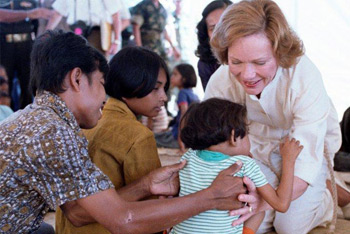
(Photo: Jimmy Carter Library)
While assuming the traditional demands of presidential wife and official White House hostess, Mrs. Carter worked tirelessly to create what she described as “a more caring society.” She was the first presidential spouse to carry a briefcase to a White House office on a daily basis. As a result of her singular tenacity and southern gentleness, she was dubbed the “steel magnolia.”
Early in 1977, barred by statute from being chair of the newly established President’s Commission on Mental Health, Mrs. Carter became its honorary chair. In this capacity she held hearings across the country, testified before Congress, and spearheaded passage of the Mental Health Systems Act of 1980. She continued her work in the field of mental health throughout her life.
She traveled extensively overseas, promoting both her own projects and the president’s policies. In a history making trip to Latin America in 1977, she represented the U.S. Government and visited with heads of state from seven Latin American countries, sharing her husband’s position on human rights and helping to enhance democracy in our hemisphere. In Geneva, Switzerland, she became the first First Lady to address the World Health Organization.
Drawing from her own experiences as a working woman, wife, and mother, she spent many hours lobbying for support of the Equal Rights Amendment; she mobilized representatives from private voluntary relief organizations, labor, and the corporate world in an appeal that raised tens of millions of dollars for Cambodian refugees; and she brought together 23 leading organizations to develop solutions for problems of the elderly at a White House Roundtable Discussion on Aging. In choosing an unprecedented array of White House entertainment for American leaders and international officials, she showcased American culture, initiating public telecasts of White House performances featuring the world’s finest artists and musicians.
Immunizing children against preventable disease was a special focus of Mrs. Carter’s throughout her entire public service career. As governors’ spouses, Mrs. Carter and Betty Bumpers of Arkansas worked together in their respective states to promote vaccinations. Once President Carter was in office and in response to a measles outbreak, Mrs. Carter and Mrs. Bumpers again joined forces to make vaccinations a routine public health practice. By 1981, 95 percent of children entering school were immunized against measles and other diseases.
Throughout Jimmy Carter’s years in politics, Rosalynn Carter campaigned widely on his behalf and was considered his most fervent and effective supporter. Often lauded for possessing unique political skills, she admitted being more concerned about popularity and winning than her husband, though she noted, “…I have to say that he had the courage to tackle the important issues…”
The Early Years
She was born Eleanor Rosalynn Smith on August 18, 1927, in Plains, Georgia, daughter of Wilburn Edgar Smith, a farmer who also owned and operated the first auto shop in the county, and Frances Allethea Murray, a college graduate and homemaker. As a child, she was shaped by strong religious and family values and an early acceptance of hard work and responsibility.
When her father died of leukemia at age 44, Rosalynn’s mother had to go to work. Thirteen-year-old Rosalynn helped her mother with the housekeeping and caring for her siblings and grandfather. She graduated as valedictorian from Plains High School in 1944 and from Georgia Southwestern College in 1946.
In 1946, she married Jimmy Carter, who had just graduated from the U.S. Naval Academy. Mrs. Carter described her years as a Navy wife as a coming of age in which she developed the self-confidence to manage a household with three babies on her own while her husband worked and was often aboard ship.
Three sons were born in different Navy ports: John William “Jack” Carter, July 3, 1947, in Norfolk, Va.; James Earl “Chip” Carter III in Honolulu, Hawaii, on April 12, 1950; and Donnel Jeffrey “Jeff” Carter on August 18, 1952, in New London, Conn. Amy Lynn Carter was born 15 years later on October 19, 1967, in Plains.
After Carter left the Navy and returned home to run the family business upon the death of his father, Rosalynn began working alongside her husband, keeping the books for the farms and the farm supply business. During Carter’s contentious 1962 race for the state Senate, which he won after exposing a stuffed ballot box, she received her first taste of politics.
Though shy and anxious about public speaking, she became fully engaged in subsequent campaigns for his re-election and his bids for governor in 1966 and 1970. She campaigned full time on a separate schedule in the 1976 and 1980 presidential races.
As Georgia’s First Lady, Mrs. Carter led a passionate fight against the stigma of mental illnesses and worked to overhaul the state’s mental health care system. Her obligations in the governor’s mansion also called for entertaining visiting officials and diplomats, serving as liaison to civic groups, and using her influence as a public figure to advance immunizations of children and other charitable causes. She later observed that these experiences prepared her for the White House years.
The Carter Center and Beyond
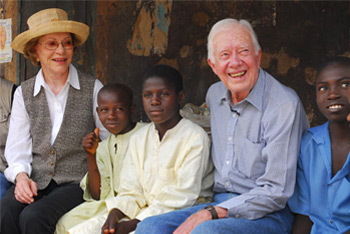
(Photo: The Carter Center)
After what she called “involuntary retirement” to Plains in 1981, her working relationship with her husband expanded. In 1982, they together founded The Carter Center in Atlanta, a nongovernmental organization dedicated to improving the quality of life for people at home and in the developing world through programs to alleviate suffering and advance human rights.
As emissaries for the Center, the Carters circled the globe many times on nonpolitical campaigns to eradicate Guinea worm disease and other neglected tropical diseases, increase agricultural production in Africa, monitor elections in nascent democracies, urge greater compliance with international human rights standards, and resolve conflicts. As a full partner providing direction and vision for the Center, Mrs. Carter accompanied the former president as an active participant, observant note-taker, and thoughtful advisor on high-profile peace missions, including in Bosnia, Cuba, Sudan, Ethiopia, and North Korea.
She established the Carter Center’s Mental Health Program to continue her work to combat stigma and discrimination against people with mental illnesses and promote improved mental health care in the United States and abroad. She chaired the Carter Center Mental Health Task Force, a group of individuals in a position to affect public policy; hosted an annual gathering of national mental health leaders to foster greater consensus on pivotal national policy issues; and established the Rosalynn Carter Fellowships for Mental Health Journalism to encourage accurate, in-depth reporting about mental health issues.
In 2000, The Carter Center and Emory University’s Rollins School of Public Health established the Rosalynn Carter Endowed Chair in Mental Health to honor Mrs. Carter’s lifelong commitment to mental health advocacy. It is the first endowed chair in mental health policy at a school of public health, and its focus is on prevention of mental disorders and promotion of mental health.
In addition, Mrs. Carter’s devotion to service extended to other complementary areas. She saw the toll that caring for a loved one with mental illness had on a family and knew firsthand the burden of caring for a critically ill or aging family member. In 1987, Mrs. Carter founded the Rosalynn Carter Institute for Caregivers at Georgia Southwestern State University to support those who selflessly cared for others and build on her belief that “there are only four kinds of people in this world: those who have been caregivers, those who are currently caregivers, those who will be caregivers and those who will need caregivers.” The Rosalynn Carter Institute began by helping caregivers in Georgia through direct service programs. Today it serves all family caregivers, which number over 40 million people in the United States. Under Mrs. Carter’s leadership, the RCI has increased public awareness of caregiver needs, advanced public and social policies to support caregivers, and become a catalyst for change.
In her unwavering dedication to others, Rosalynn Carter reunited with Betty Bumpers to form Vaccinate Your Family (founded as Every Child By Two) to campaign for timely infant immunizations. She was honorary chair of the call-to-action campaign, Last Acts: Care and Caring at the End of Life, a national coalition of individuals and organizations advocating more compassionate care for those who are dying, and distinguished fellow of the Emory University Department of Women’s Studies. And for more than 30 years during Habitat for Humanity’s annual Jimmy and Rosalynn Carter Work Project, she would be found with her husband demonstrating advanced carpentry skills as they built homes for poor families.
As a lifelong resident of Plains, Mrs. Carter was an avid supporter of her hometown and a strong advocate for maintaining its historic integrity. She served on the boards of the Plains Historic Preservation Trust and the Friends of the Jimmy Carter National Historical Park. Mrs. Carter was an active member of Maranatha Baptist Church, where she served as a deacon.
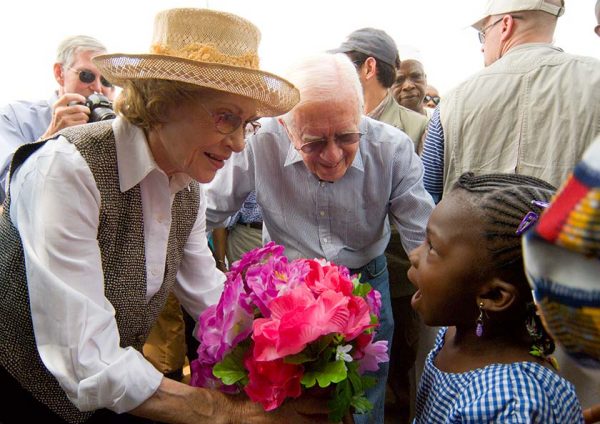
Among her many honors were the “Into the Light” Award from the National Mental Health Association; the Award of Merit for Support of the Equal Rights Amendment from the National Organization for Women; the Notre Dame Award for International Service; the Foundation for Hospice and Homecare Lifetime Achievement Award; United Seniors Health Cooperative Senior Advocate Award; the U.S. Surgeon General’s Medallion; and the Presidential Medal of Freedom, America’s highest civilian recognition. In 2001, she was inducted into the National Women’s Hall of Fame.
Rosalynn Carter was the author of five books: her autobiography First Lady from Plains; Everything To Gain: Making the Most of the Rest of Your Life, a book co-authored with President Carter and inspired by their life after the White House; Helping Yourself Help Others: A Book For Caregivers (with Susan K. Golant); Helping Someone with Mental Illness: A Compassionate Guide for Family, Friends, and Caregivers (with Susan K. Golant), which was selected as the winner of the 1999 American Society of Journalists and Authors Outstanding Book Award in the service category, and Within Our Reach: Ending the Mental Health Crisis (with Susan K. Golant and Kathryn E. Cade).
Asked once how she would like to be remembered, she said, “I would like for people to think that I took advantage of the opportunities I had and did the best I could.”

Alianza para la Inclusión fortalece la defensa de derechos LGBTQ en Centroamérica

The facts about Victory Fund’s investigation and the path forward

In Ga., 2 trans candidates believe voters are ready for them

Bowser, Office of LGBTQ Affairs announce LGBTQ+ History Month events

PHOTOS: Winchester Pride

LGBTQ community must vote in big numbers

Victory Fund board investigates former staffers’ allegations against CEO Evan Low

The right to be an ordinary transgender man

Calif. governor signs 6 pro-LGBTQ bills, vetoes 1

Ryan Murphy’s ‘Monster’ vilifies the lesbian
-

 Opinions5 days ago
LGBTQ community must vote in big numbers
-
LGBTQ Non-Profit Organizations5 days ago
Victory Fund board investigates former staffers’ allegations against CEO Evan Low
-
Opinions5 days ago
The right to be an ordinary transgender man
-
California5 days ago
Calif. governor signs 6 pro-LGBTQ bills, vetoes 1