Local
Activists call on Fenty to ‘restore’ police liaison unit
Letter to mayor cites recent anti-LGBT attacks
Several local LGBT organizations have sent Mayor Adrian Fenty an open letter asking him to overrule the city’s police chief, Cathy Lanier, by directing her to upgrade the headquarters staff at the police department’s Gay & Lesbian Liaison Unit.
Gays and Lesbians Opposing Violence, the D.C. Center for the LGBT Community, the Gay and Lesbian Activists Alliance, and the Gertrude Stein Democratic Club cited in the Aug. 26 letter a recent surge in anti-LGBT assaults in the city as demonstrating the need for strengthening the GLLU through an expanded staff.
“In light of this continuing history of violence against members of our community, we seek your immediate attention to fully restore the staffing levels of the GLLU to six full-time officers,” the groups said in the letter.
“Further, we ask that the unit be led by a full-time officer devoted to these duties with the authority to report directly to Chief Lanier. It is our hope that a restored GLLU will serve as a more effective liaison between the LGBT community and MPD,” the letter says.
The letter emerged from an Aug. 26 town hall meeting on anti-LGBT violence sponsored by the D.C. Center. Several people attending the meeting expressed support for a suggestion by gay activist Peter Rosenstein that activists stage a sit-in protest in Fenty’s office to dramatize the need for immediate action on his part to strengthen the GLLU.
Rosenstein said this week that he has no immediate plans for a mayoral protest or sit-in but said such an action would be considered sometime later.
GLOV co-chairs Kelly Pickard and Joe Montoni briefed town hall meeting attendees on some of the recent incidents of anti-LGBT violence, including about a half-dozen incidents in the Dupont Circle area near several gay bars. The two said they were especially troubled over the murder last month of gay federal worker Delando King, who was stabbed to death in his apartment near Massachusetts Avenue and 10th Street, N.W.
Police have charged a 24-year-old D.C. man with first-degree murder in connection with the case, and court documents filed by police say King appears to have invited his attacker home after meeting him in a gay bar.
GLOV co-chair Montoni said the group believes King’s murder should be listed as a hate crime, even though police have said the motive appears to have been robbery. GLOV praised police investigators for working with the GLLU to make an arrest in the case within a week of the murder.
The GLLU currently has four full-time officers, an increase from two years ago, when the unit’s staff dropped to just one or two officers due to attrition and a decision by Lanier to restructure and decentralize it.
Lanier has said budget cuts and the need for more officers on street patrol duty forced her to reduce the number of officers at the GLLU’s headquarters office in Dupont Circle from its high point in 2007 of six full-time officers and a full-time sergeant who served as its supervisor. The current GLLU supervisor, Sgt. Carlos Mejia, divides his duties between the GLLU and the department’s Latino Liaison Unit.
With the backing of Fenty, Lanier decentralized the GLLU and three other specialized police units working with the Latino, Asian American, and deaf and hard of hearing communities by establishing affiliate members of the units in each of the department’s seven police districts.
Officials with GLOV and other LGBT activists have expressed general support for the affiliate program, in which officers assigned to regular patrol duties are trained to respond to calls involving LGBT-related crimes. Lanier said there are currently about a dozen GLLU affiliate members in addition to the four full-time members.
But GLOV and other local LGBT groups have expressed concern that the affiliate members don’t have the time or expertise to handle all of the LGBT-related calls for police help, including calls related to hate crimes.
“Having affiliate officers trained to recognize and respond to LGBT crimes in every district is admirable in intent,” the groups said in their letter to Fenty. “In practice, however, not having officers dedicated to the GLLU full-time has led to, in our opinion, diminished effectiveness in recognizing and responding to bias crimes. We ask that you fully restore staffing to the GLLU and grant the officer in charge with direct reporting to Chief Lanier.”
The mayor’s office did not respond to a request for comment by press time.
In an interview with the Blade two weeks ago, Fenty said he has full confidence in Lanier’s handling of the GLLU restructuring, saying she has succeeded in reducing overall crime rates in the city during her tenure as chief.
“You want law enforcement putting together strategy for keeping people safe,” Fenty said. “You don’t want civilians and you especially don’t want politicians to be the ones who are developing those strategies. And I think Chief Lanier has done a great job doing that.”



District of Columbia
Gay ANC commissioner sues D.C. over police ‘failure’ to pay reward money
Lawsuit says information led to conviction in murder, armed robbery cases

Gay D.C. Advisory Neighborhood Commissioner Tom Donohue on Aug. 11 filed a lawsuit in D.C. Superior Court charging that D.C. police acted improperly and violated a local law by not paying him $30,000 in reward money for his role in helping police identify and arrest — and obtain the subsequent conviction — of one man charged with murder and another man charged with armed robbery in separate cases.
Although the lawsuit alleges improper action by D.C. police in carrying out the city’s Crime Solvers reward program, it names as defendants the District of Columbia and the Office of the Attorney General for D.C., which, among other things, defends the city against lawsuits.
Donohue, who is a member of the city’s ANC Rainbow Caucus consisting of LGBTQ elected ANC members, held a news conference outside the D.C. Superior Court building on Aug. 11 to talk about the lawsuit before entering the courthouse to officially file it.
The lawsuit states that Donohue “provided key video evidence that led to the arrest and conviction” of a man initially charged with first degree murder for allegedly running over a bicyclist with his car after the two got into an argument.
The lawsuit states that police had offered a $25,000 reward for information leading to the arrest and conviction of the defendant in that case, but police “arbitrarily slashed the payment to $5,000 without prior notice or policy justification.”
Court records show that D.C. resident Eric Beasley was charged with first degree murder for killing David Farewell, 45, by hitting him with his car on Sept. 4, 2020, on the 2100 block of Young Street, S.E. The records show the evidence for the case was based in large part on video camera footage of the incident obtained by police. Donohoe has said he provided that video camera evidence.
The records show that during Beasley’s October 2023 trial a jury was unable to reach the required unanimous verdict, and the judge declared a mistrial.
According to the records, Beasley later agreed to an offer by prosecutors to plead guilty to a lesser charge of involuntary manslaughter and was sentenced in September 2024 to eight years in prison, a development that angered the victim’s family members who called it a “slap on the wrist,” according to a Fox 5 News report.
Donohue’s lawsuit says the second case in which he provided police with pivotal information involved a series of armed robberies known as the Fairlawn Serial Armed Robbery Spree that occurred in the Fairlawn neighborhood in Southeast D.C. in 2023 near where Donohue lives.
The lawsuit says evidence consisting of video surveillance footage provided by Donohue to police enabled police to determine they initially wrongfully arrested an 18-year-old male for the robberies. “Using Plaintiff’s security video, MPD identified, arrested, and convicted the actual robber, David Crocker, who was sentenced to 18 years in federal prison,” the lawsuit states.
It says one of the detectives investigating the case recommended a $10,000 reward for Donohue’s help in the case based on the police Crime Solvers reward program. The detective’s recommendation was approved by then-Assistant D.C. Police Chief Kyle Ramey on Aug. 4, 2025, according to the lawsuit.
But it adds, “Nevertheless, MPD improperly withheld payment.”
When contacted by the Washington Blade for comment on Donohue’s lawsuit allegations, a D.C. police spokesperson said “MPD does not comment on pending or ongoing litigation.”
Gabriel Shoglow-Rubenstein, who serves as press secretary for the D.C. Office of the Attorney General, which will be defending the city against the Donohue lawsuit, said he would look into obtaining a possible comment but said the office has a similar longstanding policy of not commenting on pending litigation.
“This action arises from the District of Columbia Metropolitan Police Department’s arbitrary, bad-faith, and legally unsupportable failure to honor its public reward promises and administrative obligations to Plaintiff,” the lawsuit states.
It says the MPD violated the city’s Freedom of Information Act or FOIA law by not responding to Donohue’s request for information and documents related to the decision not to pay him the full reward money.
“MPD’s reduction of Plaintiff’s homicide reward from $25,000 to $5,000, and its withholding of his approved $10,00 robbery reward, were undertaken completely devoid of written standards, making such decisions inherently arbitrary, capricious, and an abuse of administrative discretion,” it says.
It calls for Donohue to be awarded $30,000 in compensatory damages consisting of the $20,000 “unpaid balance” for the homicide case reward and $10,000 for the robbery case reward. It also calls for reimbursement for “reasonable” litigation costs and attorney’s fees. Donohue told the Washington Blade that at this time he is representing himself without an attorney.
Donohue told the Blade that the refusal by D.C. police to pay him the full reward money also limited his plans to donate some of that money to the family of murder victim David Farewell to help pay for a burial stone. He said that due to the family’s limited resources Farewell is buried in an unmarked grave
Delaware
New LGBTQ visitor center slated for Wilmington, Del.
The Collective to feature gift shop, queer museum, more

During Pride month this year, the Delaware Sexuality and Gender Collective (DSGC) announced plans for The Collective, which will become Delaware’s first LGBTQIA+ visitor center and Wilmington’s first dedicated LGBTQIA+ space in nearly 40 years.
“We’ve been talking about the concept of a brick-and-mortar space for a long time,” said Noah Duckett, co-founder of DSGC.
A licensed clinical social worker, Duckett co-founded DSGC with his mother, Julissa Coriano, in 2018. DSGC is an independent nonprofit organization that provides vital clinical and educational support, social programming and direct-need support to the LGBTQIA+ community.
Some of the programs DSGC offers include a free clothing closet for the trans community, meal support for people recovering from gender-affirming surgery, connections to pro bono legal services, a biannual Pride Market featuring over 100 LGBTQIA+-owned small businesses, and more.
“Our vision for The Collective is a place where our community can come to learn, create, work and be inspired,” said Coriano.
The Collective will feature a visitor center and gift shop highlighting LGBTQIA+-owned businesses in Delaware.
“I think that this is something that’s going to benefit our community so much,” said Duckett.
Some of the LGBTQIA+-owned businesses that DSGC has already partnered with include Stress Induced Art Attack, Moonbeam Art Collaborative, Voce Coffee, Groovy Gemini Co., Scout Cafe, Macaron Social and Huxley and Hiro.
“Specifically in Wilmington, we haven’t had an LGBTQIA+-dedicated space in almost 40 years,” said Duckett.
The Griffin Community Center, which operated from 1986 to 1990, was Delaware’s first LGBTQ+ community center. The Griffin was founded by Ivo Dominguez Jr. and James C. Welch and provided a range of community services during the height of the HIV/AIDS crisis, including AIDS hotlines, organizational offices and meeting space. The center ultimately closed because of a lack of financial support.
Duckett said DSGC hopes The Collective will carry on The Griffin’s legacy while building a sustainable space for the LGBTQIA+ community.
“I think now more than ever, there’s more and more spaces closing their doors. More and more spaces are losing funding, seeing reduced funding and reduced access, especially LGBTQ+ organizations and communities,” said Duckett.
The Collective will also feature Delaware’s first LGBTQ+ history museum, curated by LGBTQ+ historian Carolanne Deal.
“We don’t have any permanent displays in the state about Delaware’s queer history, and we want people to be able to access that history any day of the year, not just during Pride Month,” said Deal.
With a master’s degree in art history for museum professionals, Deal has more than seven years of experience in curatorial work and hands-on collections care.
“It’s mainly going to be a graphic display with photographs, articles and accessible text that draws people in and creates a story for the community,” said Deal.
Although the museum will not initially have an object collection, Deal said she hopes to add physical archival pieces in the future.
“Delaware has been at the forefront of a lot of queer civil rights, and it’ll be really amazing to have that enshrined in a permanent display that’s not only up for Pride Month,” said Deal.
Duckett said DSGC is currently raising funds with the goal of beginning construction this summer and opening by the end of the year.
Duckett told the Blade that fundraising efforts have reached just under $29,000 and that the organization is awaiting several major donations from community partner organizations.
However, he said DSGC continues to be denied many grants tied to federal or state funding because of restrictions on those funds being used for LGBTQ+-serving organizations.
“Private and corporate donations are absolutely vital,” said Duckett.
Anyone interested in supporting the construction and renovation of The Collective can donate online or contact [email protected] for more information.ose funds being used for LGBTQ-serving organizations.
“Private and corporate donations are absolutely vital,” said Duckett.
Anyone interested in supporting the construction of The Collective can donate online or contact [email protected] for more information.
Rehoboth Beach
HISTORIC: Susan Stewart elected Rehoboth’s first out mayor
Thanks LGBTQ supporters and vows to protect city’s small town charm
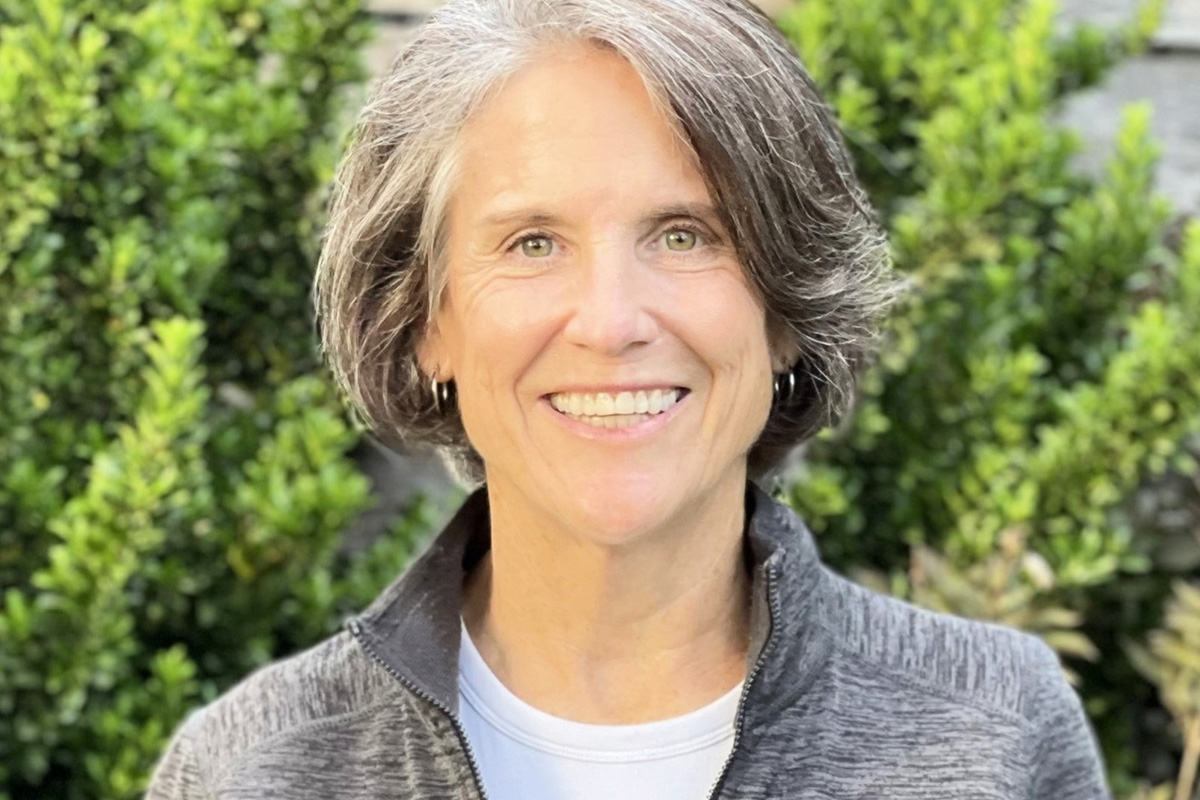
Residents of Rehoboth Beach elected City Commissioner Susan Stewart with 61% of the vote on Aug. 8, making her the city’s first openly gay mayor.
Stewart beat fellow commissioners Craig Their and Suzanne Goode in the race, as well as newcomer Jake Raak.
The final mayoral vote results were:
- Susan Stewart: 632
- Craig Their: 203
- Suzanne Goode: 177
- William “Jake” Raak: 23
“I’m very grateful because the LGBTQ+ community not only voted for me, but also supported me,” said Stewart.
Stewart said that she is particularly grateful for the support she received on social media from members of the LGBTQ+ community.
“I’ve had incredible support,” said Stewart.
Stewart said that her campaign showed her just how much residents of Rehoboth are engaged and care about the city.
“They really want to see what’s best for the community,” said Stewart.
Stewart spoke about the master planning initiative she has been working on as a commissioner, which she plans to continue as mayor.
“We’ve undertaken rewriting the commercial zoning code, and that’s foundational to the next step of the initiative,” said Stewart.
She said that she was proud of the results of charette week that was held last month where residents and business owners had the opportunity to speak with hired urban planners to give feedback for a zoning code update.
Stewart said that Rehoboth is at a tipping point as the city must find a way to balance the growth of the commercial district while improving the quality of life for residents.
“I don’t believe there needs to be tension between the business community and the residential experience,” said Stewart.
“I’m excited about a new master plan because we have a couple hotels coming, and we also have Clear Space Theatre looking for a new home, and we’re working with them,” said Stewart. “We want businesses to stay here.”
Stewart also said that she aims to embrace the concept of a ‘15-minute city,’ making the city much more accessible in terms of transportation in the downtown area for residents.
“The goal is to protect the small town charm and natural beauty of Rehoboth,” said Stewart. “I want to keep the momentum going.”
The Blade asked Stewart about any concerns she might have working with Commissioner Goode, whom she has criticized for sending inappropriate and offensive emails to city staff. Goode finished a distant third in the mayoral race and her husband fell short in his bid for a Commissioner’s seat. In that race, Jeffrey Goode received 239 votes; Patrick Gossett, who’s gay, received 813 votes and Mark Saunders 852. Saunders and Gossett will be sworn in next month.
“I’m really eager to move past this issue with Commissioner Goode,” said Stewart.
She said that she’s heard ‘loud and clear’ from the city that they want to move past this situation as best as they can while Goode remains in her seat as commissioner.
“There are no mechanisms for us to remove a sitting commissioner. Our laws don’t allow it,” said Stewart.
Stewart clarified that she has always focused on Goode’s behavior toward city staff.
“One thing I feel really passionate about is that the city employees have to know that they are heard. They are real people with real jobs, real professional reputations, and they’ve been harmed,” said Stewart.
The Blade also asked if Stewart had made a final decision on whom she plans to nominate to fill her Commissioner seat.
“I’m considering who to appoint and I have not made any final decisions,” said Stewart.
She noted that, as mayor, she only has the power to nominate a candidate and that the board of commissioners will have the final vote on whom to appoint to the board.
Stewart shared that she has received interest from a number of people and finds that to be a good sign.
“I think that’s a great sign because people want to serve. I’m eager to have someone in that seat who’s smart and has the best interests of the city,” said Stewart.
Stewart will be sworn in during the Board of Commissioners meeting on Sept. 18.

Gay ANC commissioner sues D.C. over police ‘failure’ to pay reward money

New LGBTQ visitor center slated for Wilmington, Del.

Jason DePuy on coping with homophobia in ‘Big Brother’ house

2 former NBA players launch cheap anti-trans stunt to exploit WNBA rules

Same-sex couples challenges India income tax law

HRC files class action over federal ban on gender-affirming care coverage

HRC condemns DoE removal of LGBTQ bullying data from federal survey

Dutch PM: More needs to be done to defend trans rights

New book chronicles gay man’s life in hippie commune

PHOTOS: Daddy Issues at Kiki
-

 The White House5 days ago
HRC files class action over federal ban on gender-affirming care coverage
-
National5 days ago
HRC condemns DoE removal of LGBTQ bullying data from federal survey
-
Netherlands5 days ago
Dutch PM: More needs to be done to defend trans rights
-
Books4 days ago
New book chronicles gay man’s life in hippie commune