
Sports
Joining forces
New gay football league forms; teams play on Sundays in Rock Creek Park
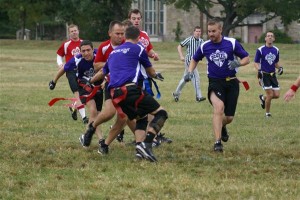
Gay football enthusiasts gather every Sunday in Rock Creek Park to play. The teams have a rigorous method for ranking players. (Photo courtesy of Kevin Majoros)
It’s mid October and the smell of football is in the air.
The Baltimore Ravens are 4-2, the Washington Redskins are 3-3 and both Gang Green and Golden Wave are 4-1. No, those are not new NFL teams; they’re the frontrunner teams in the D.C. Gay Flag Football League’s inaugural season. The league had been a dream for many players for years and has finally come to fruition.
A group of guys began playing flag football near Dupont Circle in 1994 and another group began playing on the Mall in 1997. In September 1998, the two groups merged and continued to play pickup games throughout the winter season.
In October 2003, the group was invited to compete in the National Gay Flag Football League’s (NGFFL) Super Bowl in Boston. The team was named the Washington Monuments and went on to win the tournament in their first attempt. They repeated as champions in 2004. In 2007 the League offered the Monuments a second slot in the Championships to be held in New York, so a new team was formed called the Washington Metros.
Both teams competed that year and again in 2008. In 2009, Washington was awarded Gay Bowl IX and the two teams formed the League as a 501(c)3 to host the tournament.
The Monuments and Metros also travel annually to Chicago in June to compete in the Pride Bowl. Just two weeks ago, the teams participated in Gay Bowl X in Phoenix. Their performances qualified them to compete once again in the A bracket next year in Houston at Gay Bowl XI.
After intense planning and recruitment led by Chris Cormier, the league organizers had a list of more than 100 players with which to begin selecting teams. Funding came from the $25 registration fees for the players and team sponsorship from local businesses. The new league follows the guidelines set up by the League which is seven-on-seven play for two 30 minute halves. At the end of each half, three plays are run with no timing. The season consists of six weeks of regular play with two weeks of playoffs for the league championships. The next step in setting up the league became figuring out a way to separate the players into competitive teams.
League Commissioner Brandon Waggoner devised a strategy to rank the players. Fifty of the players were veterans of the Monuments and Metros teams thus their abilities were known to the league organizers. Skills clinics were held and the players were also asked to rank their own abilities on a skills list.
Based on the findings, the players were then ranked. According to League President JJ Johnson, the number of teams in the league was determined by the number of experienced quarterbacks on the roster of players. It was decided that seven teams would be formed led by a captain, a co-captain and a quarterback. Ninety-four players were chosen for the seven teams with the rest of the players put on a waiting list. After week three of season play, eight more players were pulled from the waiting list to beef up the teams.
The League plays its games on the Carter Barron Fields in Rock Creek Park on Sundays usually at 10 and 11:30 a.m. If you head out to watch them in action, you will be treated to well-executed plays, some trash talking and the occasional diving catch. Diversity of the players is present as the league boasts a 10 percent straight and 3 percent female base.
Johnson says any growth for the future will be contingent on the number of quarterbacks who step forward. That sounds like a challenge for all you retired quarterbacks out there. The group would also like to have more stats on its website and could use a volunteer statistician.
Check out the league here.
Sports
Bisexual former umpire sues Major League Baseball for sexual harassment
Brandon Cooper claims female colleague sexually harassed him
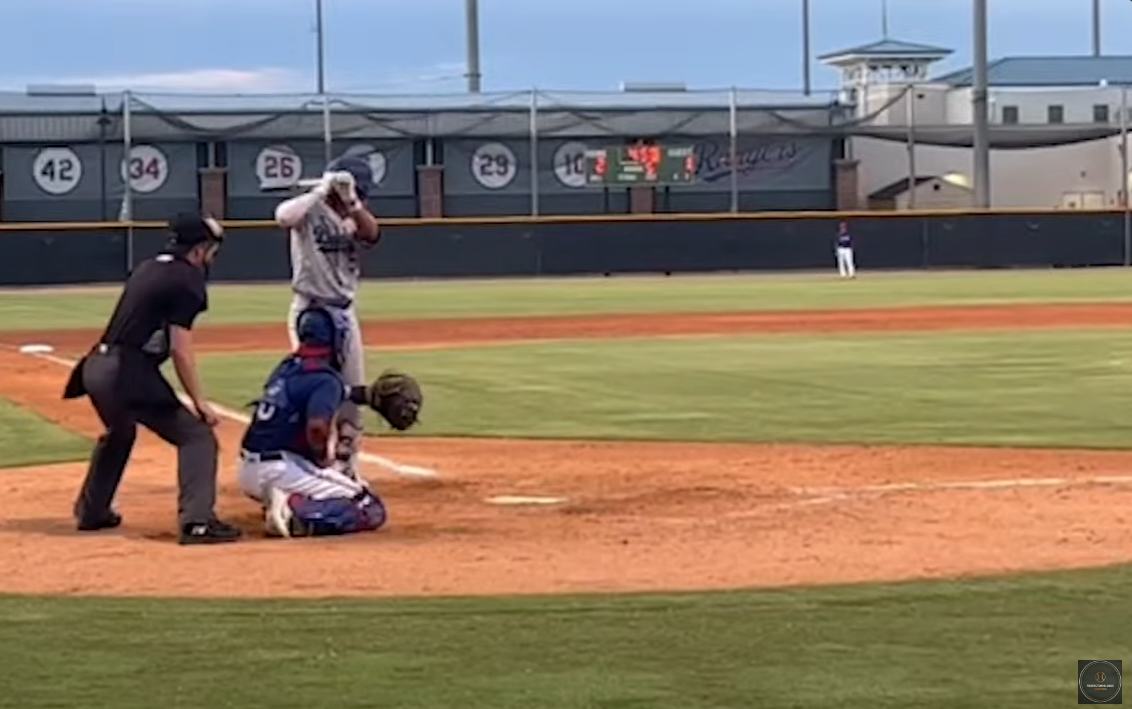
A fired former umpire is suing Major League Baseball, claiming he was sexually harassed by a female umpire and discriminated against because of his gender and his sexual orientation.
Brandon Cooper worked in the minor league Arizona Complex League last year, and according to the lawsuit he filed Wednesday in federal court in Manhattan, he identifies as bisexual.
“I wanted my umpiring and ability to speak for itself and not to be labeled as ‘Brandon Cooper the bisexual umpire,’” he told Outsports. “I didn’t want to be labeled as something. It has been a passion of mine to simply make it to the Major Leagues.”
But that didn’t happen. Instead of being promoted, he was fired. His suit names MLB and an affiliated entity, PDL Blue, Inc., and alleges he had endured a hostile work environment and wrongful termination and/or retaliation because of gender and sexual orientation under New York State and New York City law.
“Historically the MLB has had a homogenous roster of umpires working in both the minor and major leagues,” Cooper claims in his suit. “Specifically, to date there has never been a woman who has worked in a (regular) season game played in the majors, and most umpires are still Caucasian men. To try to fix its gender and racial diversity issue, defendants have implemented an illegal diversity quota requiring that women be promoted regardless of merit.”
Cooper claims former umpire Ed Rapuano, now an umpire evaluator, and Darren Spagnardi, an umpire development supervisor, told him in January 2023 that MLB had a hiring quota, requiring that at least two women be among 10 new hires.
According to the suit, Cooper was assigned to spring training last year and was notified by the senior manager of umpire administration, Dusty Dellinger, that even though he received a high rating in June from former big league umpire Jim Reynolds, now an umpire supervisor, that women and minority candidates had to be hired first.
Cooper claims that upon learning Cooper was bisexual, fellow umpire Gina Quartararo insulted him and fellow umpire Kevin Bruno by using homophobic slurs and crude remarks. At that time, Quartararo and Cooper worked on the same umpiring crew and being evaluated for possible promotion to the big leagues.
This season, Quartararo is working as an umpire in the Florida State League, one of nine women who are working as minor league umpires.
Cooper said he notified Dellinger, but instead of taking action against Quartararo, he said MLB ordered Cooper to undergo sensitivity training. According to his lawsuit, he was also accused of violating the minor league anti-discrimination and harassment policy.
Cooper’s suit says he met with MLB Senior Vice President of Diversity, Equity and Inclusion Billy Bean — who the Los Angeles Blade reported in December is battling cancer.
The lawsuit says at that meeting, Bean told the umpire that Quartararo claimed she was the victim, as the only female umpire in the ACL. Cooper said he told Bean Quartararo regularly used homophobic slurs and at one point physically shoved him. He also claims that he has video evidence, texts and emails to prove his claim.
But he said his complaints to Major League Baseball officials were ignored. His lawsuit said MLB passed him over for the playoffs and fired him in October. He said of the 26 umpires hired with Cooper, he was the only one let go.
Through a spokesperson, MLB declined to comment on pending litigation. Quartararo has also not publicly commented on the lawsuit.
Sports
Brittney Griner, wife expecting first child
WNBA star released from Russian gulag in December 2022
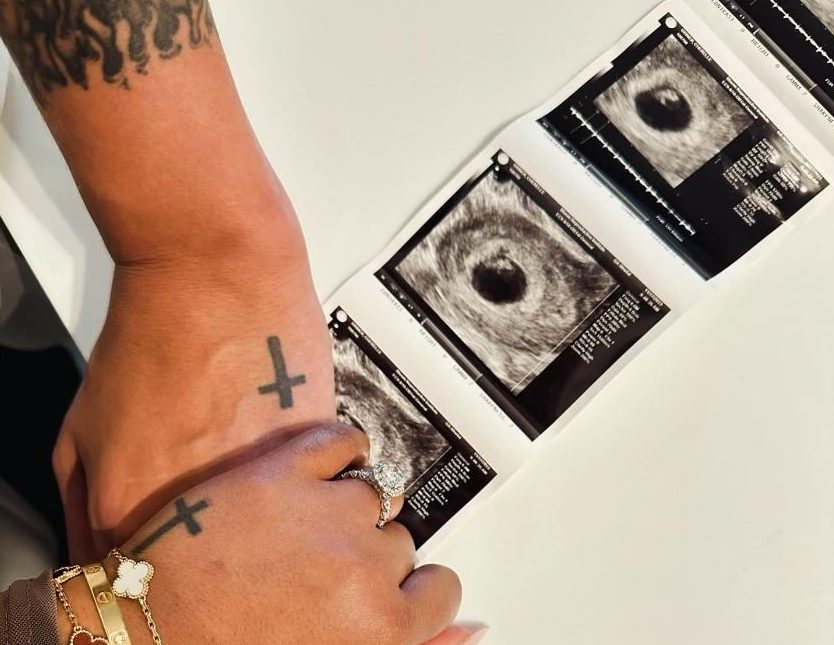
One year after returning to the WNBA after her release from a Russian gulag and declaring, “I’m never playing overseas again,” Phoenix Mercury star Brittney Griner and her wife announced they have something even bigger coming up this summer.
Cherelle, 31, and Brittney, 33, are expecting their first child in July. The couple shared the news with their 715,000 followers on Instagram.
“Can’t believe we’re less than three months away from meeting our favorite human being,” the caption read, with the hashtag, #BabyGrinerComingSoon and #July2024.
Griner returned to the U.S. in December 2022 in a prisoner swap, more than nine months after being arrested in Moscow for possession of vape cartridges containing prescription cannabis.
In April 2023, at her first news conference following her release, the two-time Olympic gold medalist made only one exception to her vow to never play overseas again: To return to the Summer Olympic Games, which will be played in Paris starting in July, the same month “Baby Griner” is due. “The only time I would want to would be to represent the USA,” she said last year.
Given that the unrestricted free agent is on the roster of both Team USA and her WNBA team, it’s not immediately clear where Griner will be when their first child arrives.
The Griners purchased their “forever home” in Phoenix just last year.
“Phoenix is home,” Griner said at the Mercury’s end-of-season media day, according to ESPN. “Me and my wife literally just got a place. This is it.”
As the Los Angeles Blade reported last December, Griner is working with Good Morning America anchor Robin Roberts — like Griner, a married lesbian — on an ESPN television documentary as well as a television series for ABC about her life story. Cherelle is executive producer of these projects.
Next month, Griner’s tell-all memoir of her Russian incarceration will be published by Penguin Random House. It’s titled “Coming Home” and the hardcover hits bookstores on May 7.
Sports
Applause and criticism for Staley’s trans-inclusive stance
South Carolina Gamecocks women’s coach made comments on Sunday
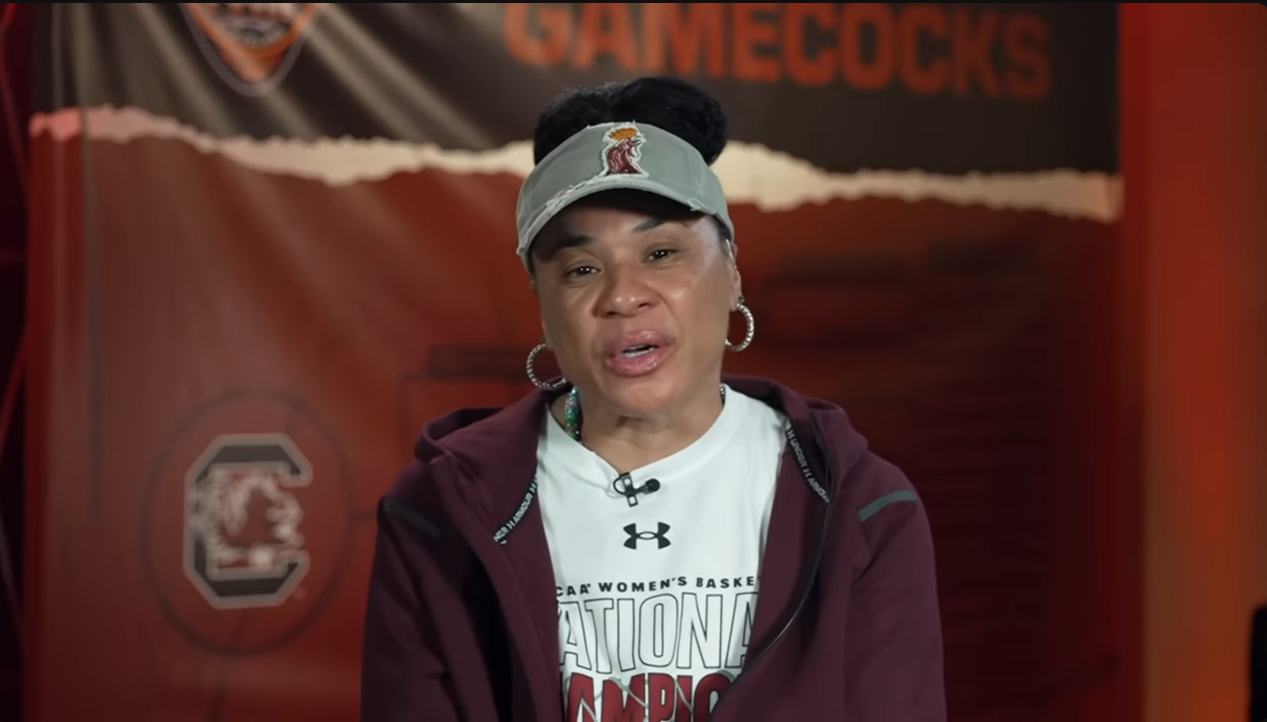
If not for a conservative transphobic blogger, this moment should be a celebration of NCAA women’s basketball coach Dawn Staley and the women of the South Carolina Gamecocks.
On Sunday, they concluded their undefeated season with a decisive win and a championship title. But when Staley faced reporters before that big game, Outkick’s Dan Zakheske asked her an irrelevant, clickbait question about transgender women in sports, referring to them as “biological males.”
Staley could have ignored the question, or stated she had no opinion, but instead the legendary coach offered a crystal clear endorsement of trans women competing in women’s sports, something outlawed in her home state of South Carolina for girls in kindergarten through college.
“I’m of the opinion,” said Staley, “If you’re a woman, you should play. If you consider yourself a woman and you want to play sports or vice versa, you should be able to play. That’s my opinion.”
Zakheske clearly wasn’t satisfied with that declaration of allyship and Staley swiftly cut him off.
“You want me to go deeper?” she asked.
“Do you think transgender women should be able to participate,” he started to say, when the coach stole the ball and took it downtown on a fastbreak. “That’s the question you want to ask? I’ll give you that. Yes. Yes. So, now the barnstormer people are going to flood my timeline and be a distraction to me on one of the biggest days of our game, and I’m okay with that. I really am.”
Staley is herself a Hall of Fame player a leading voice for diversity.
Reaction to her comments were swift, from LGBTQ rights organizations, athletes and inclusion opponents.
“Coach Staley simply spoke the truth that trans women are women and should play if they want,” said Sarah Kate Ellis, president and CEO of GLAAD, in a post on Instagram. “All of us can take a page from Coach Staley’s playbook as a sports leader and as a person of high integrity guided by faith, compassion and common sense.”
A White House pool reporter revealed President Joe Biden called Staley Sunday evening to congratulate her and the Gamecocks on their championship win. But it’s not clear if she and the president, an outspoken supporter of trans rights, discussed her remarks on trans athletes.
A number of Black leaders in the LGBTQ movement applauded Staley for taking a stand.
“Coach Staley has always been a trailblazer, but she’s also shown that true leadership is about advancing justice and equality for everyone,” said Human Rights Campaign President Kelley Robinson. “By expressing her full-throated support for transgender athletes’ inclusion in sports, she’s sending an important message — our shared humanity matters.
“Coach Staley showed courage and vulnerability, in choosing to answer the question and make a powerful statement of support for trans people on one of the biggest days and biggest stages in sports history,” said Kierra Johnson, executive director of the National LGBTQ Task Force, in a statement. “Not only does that make her a leader we can all aspire to like, it makes her a class act. She has etched her legacy in the history books with her play, her coaching, her heart and her smarts.”
In congratulating Staley on her championship title victory, Dr. David J. Johns, the CEO and executive director of the National Black Justice Coalition, also commended her for “her unwavering advocacy and support for transgender people in sports.”
“In a time when transgender athetes face unjust scrutiny, discrimination and exclusion from the National Association of Intercollegiate Athletics, her courage to speak truth to power and in support of inclusion and fairness sets a powerful example for us all, and is a testament to her integrity and compassion.”
The NBJC leader was referring to Monday’s announcement by the NAIA, the governing body of athletic programs at small colleges nationwide, voting 20-0 to essentially ban trans women from competing with other women beginning Aug. 1, as ESPN reported.
“It is a shocking and devastating development that the NAIA, an organization that has done so much to open doors, is now slamming those doors shut on transgender athletes,” said Sasha Buchert, Lambda Legal’s senior attorney and director of the organization’s nonbinary and trans rights project.
“Instead of standing up in support of transgender young people, the NAIA has simply turned its back on them — permanently depriving them of the benefits of competition. Would that they had the courage of victorious University of South Carolina women’s basketball coach Dawn Staley, who didn’t miss a beat in clarifying that transgender women should be able to play.”
However, praise for Staley’s stance was not universal.
Riley Gaines, failed former college swimmer and paid shill for the anti-inclusion organization, Independent Women’s Forum, called Staley “entirely incompetent or a sell-out” on Fox News. “Personally, I don’t think she believes what she said.”
Gaines has turned her fifth-place tie with out trans NCAA champion Lia Thomas into a career as a crusader against inclusion and a former advisor to the presidential campaign of Florida Gov. Ron DeSantis.
Val Whiting, a former Stanford University and professional women’s basketball player, tweeted her strong disagreement with Staley. “A lot of my basketball sisters feel differently but trans women do not belong in women’s sports. It’s not fair nor safe for biological women. There has to be another solution for trans women to be able to compete athletically besides having them compete against biological women.”
A lot of my basketball sisters feel differently but trans women do not belong in women’s sports. It’s not fair nor safe for biological women. There has to be another solution for trans women to be able to compete athletically besides having them compete against biological women.
— Val Whiting (@iamcoachval) April 7, 2024
Zaksheske’s Outkick colleague, anti-trans pundit David Hookstead, also went all-in with a transphobic post.
“Dawn Staley says she supports men who identify as women competing against real women in sports. Her view could literally destroy women’s basketball forever. Why won’t more people stand up for women?”
Dawn Staley says she supports men who identify as women competing against real women in sports.
— David Hookstead (@dhookstead) April 6, 2024
Her view could literally destroy women’s basketball forever.
Why won’t more people stand up for women? pic.twitter.com/2A59KTqvHb
Hookstead then boasted that Staley blocked his account.
Republican South Carolina Congresswoman Nancy Mace retweeted Zaksheske’s account of his interaction with Staley, calling her support of trans athletes “absolute lunacy.” That in turn won praise from Caitlyn Jenner, who retweeted Whiting and posted her thanks to Mace, along with this comment: “There is nothing complicated about this issue!”
What is complicated is that Jenner has never explained why she has competed with cisgender women in golf ever since her transition almost a decade ago.
You’re a hypocrite. pic.twitter.com/42DKwA9jmF
— Art Candee 🍿🥤 (@ArtCandee) April 7, 2024

Calendar: April 26-May 2

‘Housekeeping for Beginners’ embraces true meaning of family

Should I divorce my husband for the hot new guy in our building?

Mexican Senate approves bill to ban conversion therapy

Four states to ignore new Title IX rules protecting transgender students

State Department releases annual human rights report

Joe Vogel campaign holds ‘Big Gay Canvass Kickoff’

Smithsonian staff concerned about future of LGBTQ programming amid GOP scrutiny

Catching up with the asexuals and aromantics of D.C.

Argentina government dismisses transgender public sector employees
-
 State Department3 days ago
State Department releases annual human rights report
-
 Maryland5 days ago
Joe Vogel campaign holds ‘Big Gay Canvass Kickoff’
-
 Politics4 days ago
Smithsonian staff concerned about future of LGBTQ programming amid GOP scrutiny
-
 District of Columbia1 day ago
Catching up with the asexuals and aromantics of D.C.