National
Lawyers cite procreation in defending Prop 8
Judges grill marriage ban supporters in televised court case

A lawyer defending California’s voter-approved ban on same-sex marriage told a three-judge federal appeals court panel Monday that the ban must be upheld to protect the institution of marriage, which he said is essential for procreation and child rearing.
In a hearing that lasted more than two hours, the panel of judges for the San Francisco-based Ninth Circuit U.S. Court of Appeals fired sharp questions at lawyers backing and opposing Proposition 8, the 2008 ballot measure that repealed the state’s same-sex marriage law.
But two of the three judges appeared to subject the lawyers defending Proposition 8 to greater scrutiny and a stronger challenge of their arguments. That led some legal observers to predict the liberal-leaning court would likely uphold a decision in August by a U.S. District Court judge declaring Prop 8 unconstitutional.
Judge Stephen Reinhardt, an appointee of President Jimmy Carter, is considered one of the court’s strongest liberals and is expected to act favorably toward the two same-sex couples challenging Prop 8 in a case known as Perry v. Schwarzenegger.
Judge Michael Hawkins, a Clinton appointee, is also considered a liberal with a likely favorable leaning toward the gay plaintiffs in the case. The third judge on the panel, N. Randy Smith, was appointed by President George W. Bush and served as chair of the Idaho Republican Party. Legal observers expect him to vote to uphold Prop 8.
Smith is a graduate of Brigham Young University and media reports identified him as a Mormon. The Mormon Church supported the passage of Prop 8 and received criticism from gay activists for encouraging church members to contribute millions of dollars into the Prop 8 election campaign.
Both the plaintiffs in the case — two same-sex couples who are challenging the gay marriage ban — and supporters of Prop 8 have said they would appeal the case to the U.S. Supreme Court if the Ninth Circuit appeals court rules against them. That would bring the question of whether gay marriage is protected by the Constitution before the high court for the first time.
“The key reason that marriage has existed at all in any society and at any time is that sexual relationships between men and women naturally produce children,” said Charles Cooper, one of two attorneys defending Proposition 8 before the appeals court hearing Monday.
Cooper sought to use the procreation element of traditional heterosexual marriage as one of several “rational” reasons why California could ban same-sex marriage without violating the U.S. Constitution.
U.S. District Court Judge Vaughn Walker ruled in August that Proposition 8 violated the federal Constitution’s equal protection and due process clauses, in part, because there was no rational reason to deny marital rights to same-sex couples.
In his arguments, Cooper told the judges that when a relationship between a man and a woman becomes a sexual one, “society immediately has a vital interest in that.” Among other things, “society needs the creation of new life for the next generation,” he said.
Society’s vital interests are also threatened by the possibility of “unintentional and unwanted pregnancy” and single parent households in which children have “poorer outcomes,” he said.
“That sounds like a good argument for prohibiting divorce,” Judge Hawkins said, drawing laughter from the courtroom audience.
“But how does it relate to having two males or two females marry each other and raise children as they can in California and form a family unit where children have a happy, healthy home?” Hawkins asked. “I don’t understand how that argument says we ought to prohibit that.”
Cooper responded by reiterating his procreation argument. “The point and the question is whether or not the State of California has a rational reason for drawing a distinction between same-sex couples who cannot, without the intervention of a third party of the opposite sex, procreate, and opposite-sex couples who … can procreate.”
Theodore Olson, a prominent Republican attorney and constitutional law expert who surprised his GOP colleagues by joining the legal team challenging Proposition 8, strongly disputed claims that same-sex marriage would harm or inhibit procreation or the institution of marriage.
“Same-sex marriage is not going to discourage heterosexual people with heterosexual marriage,” he told the judges Monday. “It is not going to keep them from getting divorced. It is not going to have an effect at all on their choice about having children. On the other hand, the elimination of Proposition 8 cannot possibly hurt the heterosexual relationship at all,” he said.
While Olson argued the merits of why the appeals court should uphold the lower court’s finding that Proposition 8 is unconstitutional, attorney David Boies, a prominent Democrat who teamed up with Olsen in the legal challenge of Prop 8, argued that Prop 8 supporters lacked legal standing to appeal the lower court ruling.
At the time he issued his ruling in August overturning Prop 8 on constitutional grounds, Judge Walker said a decision by California Gov. Arnold Schwarzenegger and the state’s attorney general, Jerry Brown, not to appeal his ruling meant it was unlikely that another party could emerge with legal standing to challenge Walker’s decision.
Walker issued a stay on his own ruling so that the appeals court would have a chance to determine whether the same-sex marriage ban should remain in effect during the appeals process. The Ninth Circuit court extended the stay until it issues its own decision in the case.
But at Monday’s hearing, the judges appeared sympathetic to Boies’ arguments that the conservative political advocacy groups that organized the election campaign for passage of Prop 8 in 2008 did not have legal standing to appeal the lower court ruling.
Boies noted that Prop 8 was a state law in the form of a state constitutional amendment that could only be defended in court at the appeals level by the state or an agent of the state.
A second attorney defending Prop 8 before the Ninth Circuit appeals court Monday argued that a deputy clerk who processes marriage licenses in California’s conservative leaning Imperial County had joined the defense team for the proposition. The attorney, Robert Tyler, told the judges that the deputy clerk was a legitimate representative of the state and thus had legal standing to appeal the case.
But Judge Hawkins appeared to join Boies in expressing strong doubt that the deputy clerk had such standing.
Hawkins and the other appeals court judges said Monday that they would issue a decision on the legal standing matter before they consider the case on its merits. If they determine the Prop 8 supporters and their legal team don’t have standing, they will send the case back to Judge Walker, who likely would order state officials to cease enforcing Prop 8.
However, Prop 8 backers would then be expected to immediately appeal the case to the U.S. Supreme Court and ask the high court to reinstate a stay to keep Prop 8 on the books until the Supreme Court issues its own decision in the case.
“I think the arguments made even clearer to all of us that the judges are wrestling with whether this litigation even can continue with the only party seeking to appeal being those who do not appear to have legally recognizable interests in this case,” said Jennifer Pizer, an attorney with Lambda Legal.
“So I would not be at all surprised if they decide that the appeal should not proceed” based on a lack of legal standing, Pizer said.
Meanwhile, one of the leading groups supporting Prop 8 issued a statement Monday denouncing Ninth Circuit Judge Reinhardt for refusing to recuse himself from the case because his wife is a prominent attorney with the ACLU who has worked to oppose Prop 8.
“This hearing makes a mockery of the federal judiciary,” said Brian Brown, president of the National Organization for Marriage. “Citizens are entitled to a guarantee of impartiality from their judiciary,” he said. “Yet here we have the spectacle of a federal appeals court justice ruling on a case in which his wife represents a group that is a participant.”
Reinhardt issued his own statement last month saying his wife’s views on the case would not detract from his ability to be fair and impartial in his ruling on the case.



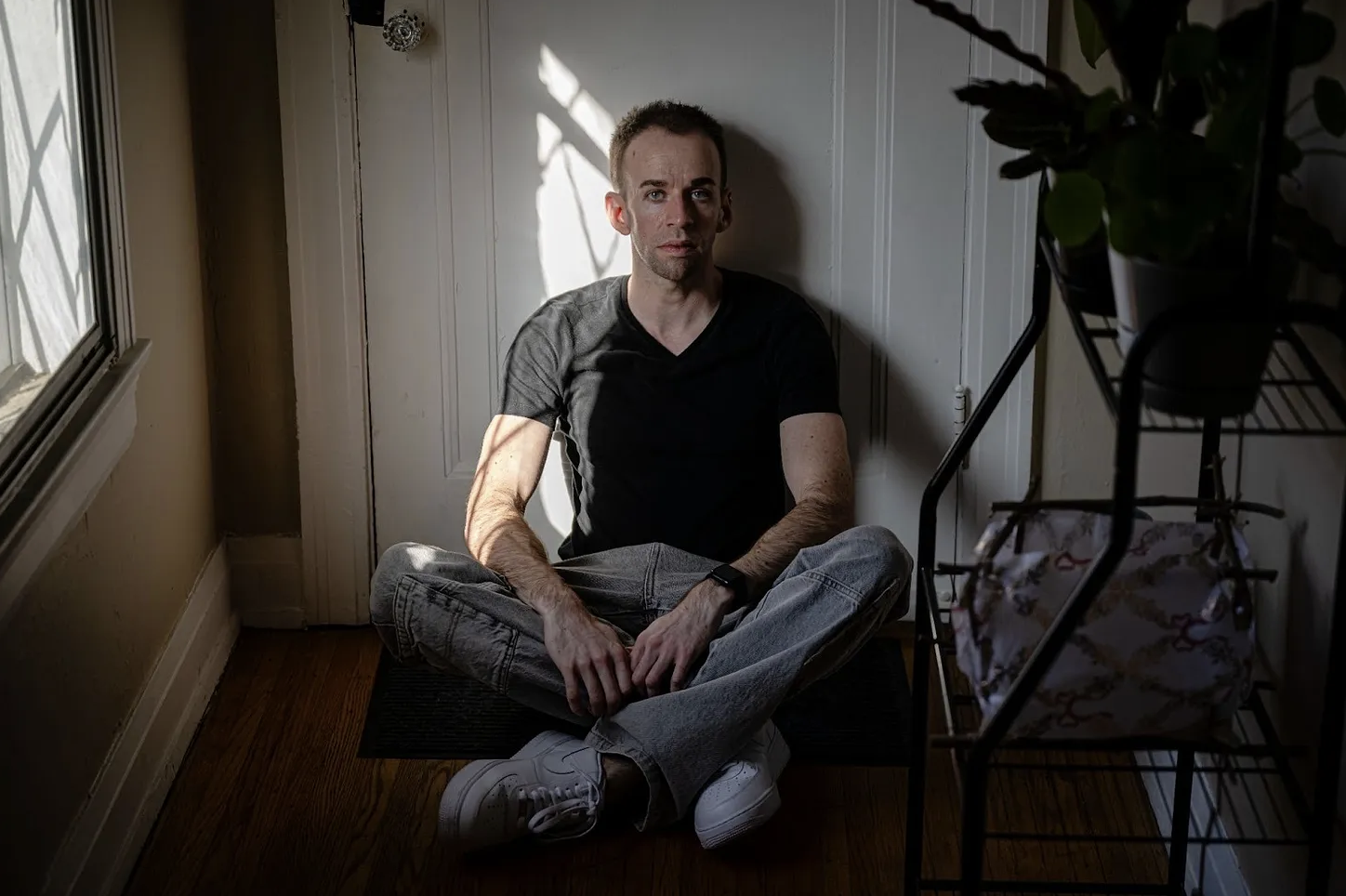
Uncloseted Media published this article on Jan. 24.
This story was produced with the support of MISTR, a telehealth platform offering free online access to PrEP, DoxyPEP, STI testing, Hepatitis C testing and treatment and long-term HIV care across the U.S. MISTR did not have any editorial input into the content of this story.
This story talks about addiction and substance use. If you or someone you know needs help, resources can be found here.
By SAM DONNDELINGER | In 2015, on the patio of Nowhere Bar, a queer nightclub in Louisville, Ky., music pulsed and bodies pressed as 23-year-old Lucas Pearson moved through the flashing lights and a blur of grinding limbs.
“I just randomly started talking to this guy,” he recalls. “He had this little spoon on a necklace, scooped out a hit of white powder, and handed it to me.”
Pearson sniffed it. Euphoria washed over him, time began to slow and the dancing bodies faded into a soft haze. For more than 10 minutes, Pearson felt “entirely present.” His social anxiety, depression, and any sadness he was feeling melted away.
While Pearson wouldn’t use ketamine again for the next five years, he says the feeling of ease the drug gave him was always “in the back of [his] mind.” So when he tried it for a second time in 2020 at a farm in upstate Kentucky, he liked the way it felt to disassociate from his childhood trauma.
“We got really messed up that night on it, and I was like, ‘I love this. I’ve missed this,’” Pearson told Uncloseted Media. “‘And I’m ready for some more.’”
Over the next three years, Pearson began using every day. Working remotely in the health care industry, no one checked in on him as long as he got his work done. He used ketamine at nightclubs, social events, game nights with friends and, eventually, at home alone.
“I was actively hooked on it,” he says. “I didn’t wanna do much of anything other than find that dissociating feeling. I just kept chasing it.”
While evidence suggests that most psychedelics have a lower risk of addiction than other drugs, ketamine is an exception, in part because it affects dopamine levels. In a 2007 bulletin from the Multidisciplinary Association for Psychedelic Studies, one researcher noted that after ketamine was invented in 1962, it developed a “reputation for insidiously trapping those who really knew better.” As a dissociative drug, ketamine induces a sense of detachment from one’s body, producing a trance-like state marked by pain relief, amnesia, euphoria, and a distortion of reality.
Despite declines in the use of other recreational drugs such as cocaine, ecstasy and nitrous oxide, ketamine use continues to rise, with one study finding that use increased by 81.8 percent from 2015 to 2019 and rose another 40 percent from 2021 to 2022. That increase is driven in part by ketamine’s growing legitimacy as a treatment for depression, anxiety, OCD, trauma, and even addiction.
As a result, ketamine clinics have proliferated across the U.S. with relatively few guardrails. At least a thousand clinics now offer off-label ketamine treatments outside of FDA-approved protections. Many commercial providers advertise same-day appointments and “almost immediate results.”
Alex Belser, a psychologist who studies psychedelic use in the queer community, says ketamine use has become pervasive among gay men. A 2025 study found that gay and lesbian adults in the U.S. are almost four times more likely to use ketamine than their heterosexual counterparts, and a 2011 study from the U.K. found that queer men were over three times more likely than queer women to use the drug.
Belser thinks ketamine use is so popular among gay men in part because of the high rates of loneliness, rejection, and trauma they experience. “Ketamine is not inherently good or bad. When used thoughtfully with integrity, with good protocols, it can be a really helpful medicine. But if left unregulated, with the amount of access and normalization we have, it can lead to addiction, harm, isolation, and bad outcomes,” he says.
Belser believes health misinformation is fueling a misunderstanding among gay men about the actual harm the drug can cause. “The medical and clinical communities have failed people by not adequately telling them that ketamine can lead to addiction and problematic outcomes,” he says. “It can serve people, but it can also damage people.”
‘Happy people don’t do ketamine’
Part of the appeal of ketamine is that dissociative feelings can relieve depressive symptoms, making it alluring to those who have trauma or mental health disorders. While properly regulated treatment works for some people, psychiatrist Owen Bowden-Jones says that he senses “the vast majority [of those addicted] are using it to self-medicate for emotional distress.”
“I always wanted to numb out my past,” says Pearson. “For the longest time, I saw ketamine as a possible way out.”
Pearson, now 33, was raised in a conservative and religious family. When he came out as gay to his mom at 16, he cried so much that he couldn’t speak and had to write it on a piece of paper and hand it to her.
“She stormed out of the house and ended up calling every member of the family and outing me. So that was really painful,” he says. “My whole childhood, I did not feel like I could be who I knew I was.”
“So when I picked up drugs, it was definitely a thought in my mind: This life that I lived as a child, I don’t want to feel it anymore,” he says. “I just want to numb it.”
One study shows that gay men are over three times as likely to develop PTSD compared to their heterosexual counterparts. Trauma can be one event or a “long string of daily hurts, such as … homophobia, bullying, and time spent in the closet,” according to Chris Tompkins, a licensed family therapist who works with gay men. Research shows that people who experience trauma are more likely to have addiction issues.
J, a 33-year-old marketing researcher based in Los Angeles, says his ketamine use began casually in his early 20s in New York’s queer nightlife scene, where the drug circulated freely. What started as an occasional escape intensified during the pandemic, when isolation, depression, and easy access turned ketamine into a daily habit.
“There’s a pretty fair connection between feelings of not being normal and my ketamine addiction,” J told Uncloseted Media. “I was bullied for being more feminine. My sexuality was a subject of speculation and that forced me to close down. So something like a dissociative drug is appealing because it either allows me to continue those blocks or to bring down the barriers.”
“There was a night when I had done K for the first time in a while, and the next couple of days, I felt so good,” he says. “I felt like my depression had lifted, and that feeling of doubt and fear I’d had throughout my life was totally gone.”
After that night, J, who asked to use a first initial to protect his identity, started using ketamine daily to chase the feeling of euphoria and relief. He got a prescription for ketamine treatment therapy, but he says it wasn’t enough.
“There were days when I would go do an infusion of ketamine and I would do more at home on my own. If I have the ability to escape feelings, to numb feelings, I will go after that.”
Many ketamine clinics in the U.S. advertise ketamine therapy as a cure-all. For example, the online clinic Better U promises that ketamine therapy will help you say goodbye to “Trauma,” “Chronic Stress,” “Depression and Anxiety,” “OCD,” “PTSD” and “Grief.”
What the clinic doesn’t note on its landing page is the possibility of addiction, which is what happened to J. While a common dose of ketamine is between 30-75 mg, J began using multiple grams a day. He spent thousands of dollars a month on ketamine and began structuring his life around the drug. “It stopped being about going out or having fun,” he says. “It just became what I did day in and day out.”
“Happy people don’t do ketamine,” Tasha, who is in recovery from a six-year-long addiction, told Uncloseted Media. She first tried the drug for fun at 17, but it became a problem after her father died when she was 26. At her peak, she was taking six to nine grams every day and up to 24 grams over the weekends.
“The wheels just fell off,” she says. “It’s an escapism drug — of course people with more trauma will do it more. You want to forget about everything so you take it and then it stops becoming fun and you don’t want to see your friends anymore. You just stay in your home behind closed doors sniffing K to get out of your head.”
The physical consequences of ketamine
Tasha didn’t know that chronic ketamine use can cause inflammation, ulceration, and damage or scarring to the bladder, liver, kidneys, and gallbladder. After using it for six years, she checked herself into the intensive care unit.
“I was just writhing in pain from K cramps, like a sharp stabbing pain under your ribs,” she says. “The trouble is, nothing works to fix them. The only thing that helps is doing more K. I had no idea it was so painful,” says Tasha, adding that she’s seen four people die from ketamine addiction in the last three years.
“There were times in my use where I would be screaming in bed in the worst agony I’ve ever felt in my life,” J says. “The only thing that made the pain better was using more drugs. It got to the point that I needed to have some amount of K in my system to function.”
“There is a massive explosion of ketamine use and addiction,” Mo Belal, a consultant urological surgeon and an expert on the severe bladder and kidney damage caused by chronic ketamine abuse, told Uncloseted Media. “The trouble is, it’s impossible to treat bladder and kidney damage when people are still using.”
Belal says that for those seeking treatment, there are no specific ketamine rehabilitation programs in the U.S. “Addiction and pain management services need to be involved in healing from ketamine abuse, because the drug’s effects often require specialized support.”
Belal says that during a one-hour rehab session, someone experiencing severe ketamine-related bladder pain might need to leave every 20 minutes, making it difficult for the patient to stay engaged.
“We need more awareness,” he says. “We need more centers for ketamine rehabilitation.”
Education and awareness
While there is some research about the effects of ketamine, Belser could not point to any studies that focus on how the drug intersects with gay men experiencing trauma. “The community of ketamine researchers and prescribers has been naive historically in understanding the habit-forming properties of ketamine,” he says. “What are the effects of ketamine use, good or bad, for gay men experiencing trauma, lifelong discrimination, and family rejection? We don’t know, because critical research hasn’t been funded.”
The Drug Enforcement Administration classifies ketamine’s abuse potential as moderate to low, a designation that may contribute to limited public education about its risks, including dependence and long-term side effects. Many people who encounter ketamine on the dance floor think it’s a healthy alternative to alcohol because they believe it’s non-addictive and it doesn’t give you a hangover.
“I did think that it was pretty safe when I was using and I didn’t think it was going to be addictive,” Pearson says.
Pearson, who has been clean for two years, says it wasn’t until he reached out to a friend who had recovered from ketamine use that he began getting clean. “I saw how happy my friend was in recovery, how normal his life felt. … And I knew that was the life I wanted.”
Similarly, for J, he felt alone in his ketamine addiction. It wasn’t until he found a queer-centered substance rehab program in LA that he felt some hope.
“It helped patch some of the missing pieces to my experiences in treatment before,” he says. “I think that relapse is a part of every addict’s story and every recovery story. But I think my relapses indicated that I still had some unresolved trauma and deep wounds that I hadn’t been aware of yet. And I think being around queer people in recovery has been helpful for me to feel a lot more comfortable with myself.”
Today, J is in therapy, continuing to break down the walls of his childhood trauma. Pearson is in a 12-step program after doing intensive therapy in his first few months of sobriety to help “clear up a lot of traumatic things that happened” in his past.
“I finally realized how far I’d drifted from everyone in my life — my friends, my family, even myself,” Pearson says. “I was chasing this feeling of disappearance, and it almost cost me everything. If I hadn’t stopped when I did, I don’t think I’d still be here. Getting sober gave me my life back, and I don’t ever want to lose that again.”
Federal Government
Trump-appointed EEOC leadership rescinds LGBTQ worker guidance
The EEOC voted to rescind its 2024 guidance, minimizing formally expanded protections for LGBTQ workers.

The U.S. Equal Employment Opportunity Commission voted 2–1 to repeal its 2024 guidance, rolling back formally expanded protections for LGBTQ workers.
The EEOC, which is composed of five commissioners, is tasked with enforcing federal laws that make workplace discrimination illegal. Since President Donald Trump appointed two Republican commissioners last year — Andrea R. Lucas as chair in January and Brittany Panuccio in October — the commission’s majority has increasingly aligned its work with conservative priorities.
The commission updated its guidance in 2024 under then-President Joe Biden to expand protections to LGBTQ workers, particularly transgender workers — the most significant change to the agency’s harassment guidance in 25 years.
The directive, which spanned nearly 200 pages, outlined how employers may not discriminate against workers based on protected characteristics, including race, sex, religion, age, and disability as defined under federal law.
One issue of particular focus for Republicans was the guidance’s new section on gender identity and sexual orientation. Citing the 2020 U.S. Supreme Court’s Bostock v. Clayton County decision and other cases, the guidance included examples of prohibited conduct, such as the repeated and intentional use of a name or pronoun an individual no longer uses, and the denial of access to bathrooms consistent with a person’s gender identity.
Last year a federal judge in Texas had blocked that portion of the guidance, saying that finding was novel and was beyond the scope of the EEOC’s powers in issuing guidance.
The dissenting vote came from the commission’s sole Democratic member, Commissioner Kalpana Kotagal.
“There’s no reason to rescind the harassment guidance in its entirety,” Kotagal said Thursday. “Instead of adopting a thoughtful and surgical approach to excise the sections the majority disagrees with or suggest an alternative, the commission is throwing out the baby with the bathwater. Worse, it is doing so without public input.”
While this now rescinded EEOC guidance is not legally binding, it is widely considered a blueprint for how the commission will enforce anti-discrimination laws and is often cited by judges deciding novel legal issues.
Multiple members of Congress released a joint statement condemning the agency’s decision to minimize worker protections, including U.S. Reps. Teresa Leger Fernández (D-N.M.), Grace Meng (D-N.Y.), Mark Takano (D-Calif.), Adriano Espaillat (D-N.Y.), and Yvette Clarke (D-N.Y.) The rescission follows the EEOC’s failure to respond to or engage with a November letter from Democratic Caucus leaders urging the agency to retain the guidance and protect women and vulnerable workers.
“The Equal Employment Opportunity Commission is supposed to protect vulnerable workers, including women, people of color, and LGBTQI+ workers, from discrimination on the job. Yet, since the start of her tenure, the EEOC chair has consistently undermined protections for women, people of color, and LGBTQI+ workers. Now, she is taking away guidance intended to protect workers from harassment on the job, including instructions on anti-harassment policies, training, and complaint processes — and doing so outside of the established rule-making process. When workers are sexually harassed, called racist slurs, or discriminated against at work, it harms our workforce and ultimately our economy. Workers can’t afford this — especially at a time of high costs, chaotic tariffs, and economic uncertainty. Women and vulnerable workers deserve so much better.”
Minnesota
Lawyer representing Renee Good’s family speaks out
Antonio Romanucci condemned White House comments over Jan. 7 shooting
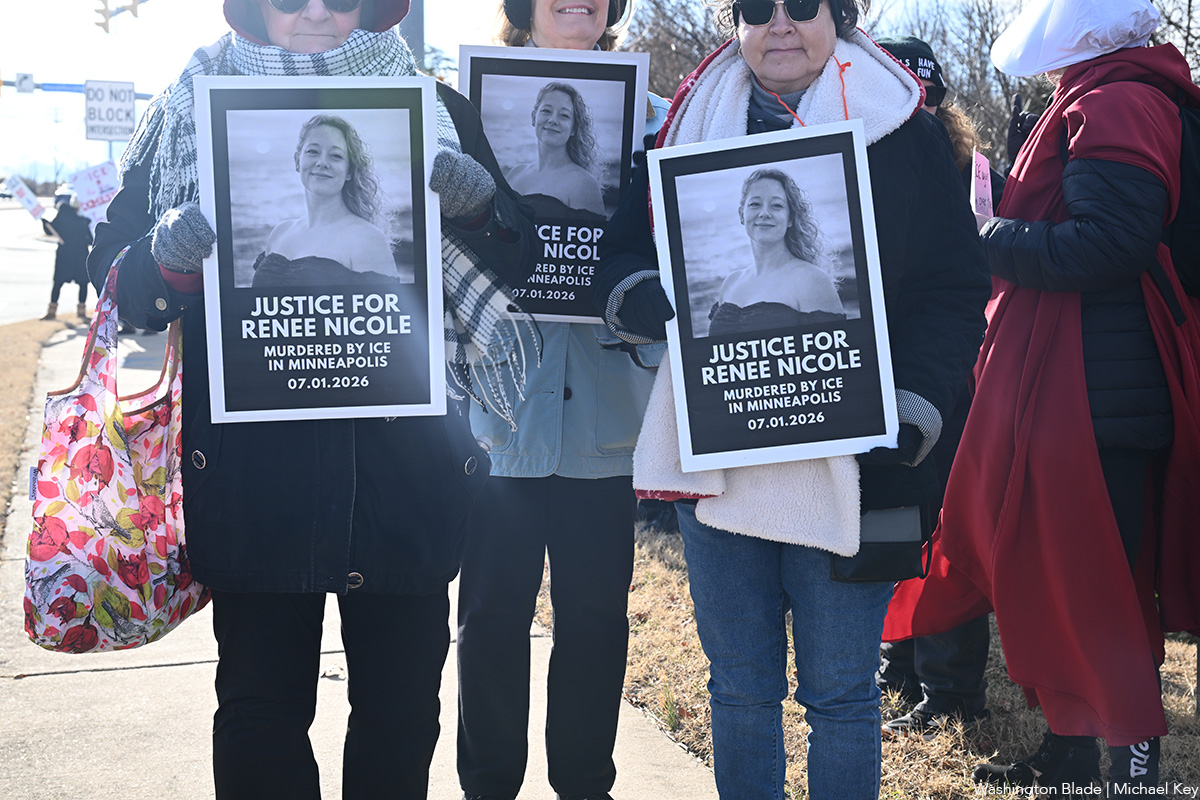
A U.S. Immigration and Customs Enforcement agent shot and killed Renee Good in Minneapolis on Jan. 7 as she attempted to drive away from law enforcement during a protest.
Since Good’s killing, ICE has faced national backlash over the excessive use of deadly force, prompting the Trump-Vance administration to double down on escalating enforcement measures in cities across the country.
The Washington Blade spoke with Antonio Romanucci, the attorney representing Good’s family following her death.
Romanucci said that Jonathan Ross — the ICE agent seen on video shooting Good — acted in an antagonizing manner, escalated the encounter in violation of ICE directives, and has not been held accountable as ICE and other federal agents continue to “ramp up” operations in Minnesota.
A day before the fatal shooting, the Department of Homeland Security began what it described as the largest immigration enforcement operation ever carried out by the agency, according to DHS’s own X post.
That escalation, Romanucci said, is critical context in understanding how Good was shot and why, so far, the agent who killed her has faced no consequences for killing a queer mother as she attempted to disengage from a confrontation.
“You have to look at this in the totality of the circumstances … One of the first things we need to look at is what was the mission here to begin with — with ICE coming into Minneapolis,” Romanucci told the Blade. “We knew the mission was to get the worst of the worst, and that was defined as finding illegal immigrants who had felony convictions. When you look at what happened on Jan. 7 with Renee and Rebecca [Good, Renee’s wife], certainly that was far from their mission, wasn’t it? What they really did was they killed a good woman — someone who was a mother, a daughter, a sister, a committed companion, an animal lover.”
Romanucci said finding and charging those responsible for Good’s death is now the focus of his work with her family.
“What our mission is now is to ensure that we achieve transparency, accountability, and justice … We aim to get it in front of, hopefully, a judge or a jury one day to make that determination.”
Those are three things Homeland Security Secretary Kristi Noem and DHS has outright rejected while smearing Good in the official record — including accusing her of being a “domestic terrorist” without evidence and standing by Ross, who Noem said acted in self-defense.
The version of events advanced by Noem and ICE has been widely contradicted by the volume of video footage of the shooting circulating online. Multiple angles show Good’s Honda Pilot parked diagonally in the street alongside other protesters attempting to block ICE agents from entering Richard E. Green Central Park Elementary School.
The videos show ICE officers approaching Good’s vehicle and ordering her to “get out of the car.” She then puts the car in reverse, backs up briefly, shifts into drive, and steers to the right — away from the officers.
The abundance of video evidence directly contradicts statements made by President Donald Trump, Noem, and other administration officials in interviews following Good’s death.
“The video shows that Renee told Jonathan Ross that ‘I’m not mad at you,’ so we know that her state of mind was one of peace,” Romanucci said. “She steered the car away from where he was standing, and we know that he was standing in front of the car. Reasonable police practices say that you do not stand in front of the car when there’s a driver behind the wheel. When you leave yourself with only the ability to use deadly force as an option to escape, that is not a reasonable police practice.”
An autopsy commissioned by Good’s family further supports that account, finding that her injuries were consistent with being shot from the direction of someone driving away.
The autopsy found three gunshot wounds: one to Good’s left forearm, one that struck her right breast without piercing major organs, and a third that entered the left side of her head near the temple and exited on the right side.
Romanucci said Ross not only placed himself directly in harm’s way, but then used deadly force after creating the conditions he claimed justified it — a move that violates DHS and ICE policy, according to former Assistant Homeland Security Secretary Juliette Kayyem.
“As a general rule, police officers and law enforcement do not shoot into moving cars, do not put themselves in front of cars, because those are things that are easily de-escalated,” Kayyem told PBS in a Jan. 8 interview.
“When he put himself in a situation of danger, the only way that he could get out of danger is by shooting her, because he felt himself in peril,” Romanucci said. “That is not a reasonable police practice when you leave yourself with only the ability to use deadly force as an option. That’s what happened here. That’s why we believe, based on what we’ve seen, that this case is unlawful and unconstitutional.”
Romanucci said he was appalled by how Trump and Noem described Good following her death.
“I will never use those words in describing our client and a loved one,” he said. “Those words, in my opinion, certainly do not apply to her, and they never should apply to her. I think the words, when they were used to describe her, were nearly slanderous … Renee Good driving her SUV at two miles per hour away from an ICE agent to move down the street is not an act of domestic terrorism at all.”
He added that his office has taken steps to preserve evidence in anticipation of potential civil litigation, even as the Justice Department has declined to open an investigation.
“We did issue a letter of preservation to the Department of Justice, Department of Homeland Security, and other agencies to ensure that any evidence that’s in their possession be not destroyed or altered or modified,” Romanucci said. “We’ve heard Todd Blanche say just in the last couple of days that they don’t believe that they need to investigate at all. So we’re going to be demanding that the car be returned to its rightful owner, because if there’s no investigation, then we want our property back.”
The lack of accountability for Ross — and the continued expansion of ICE operations — has fueled nationwide protests against federal law enforcement under the Trump-Vance administration.
“The response we’ve seen since Renee’s killing has been that ICE has ramped up its efforts even more,” Romanucci said. “There are now over 3,000 ICE agents in a city where there are only 600 police officers, which, in my opinion, is defined as an invasion of federal law enforcement officers into a city … When you see the government ramping up its efforts in the face of constitutional assembly, I think we need to be concerned.”
As of now, Romanucci said, there appears to be no meaningful accountability mechanism preventing ICE agents from continuing to patrol — and, in some cases, terrorize — the Minneapolis community.
“What we know is that none of these officers are getting disciplined for any of their wrongdoings,” he said. “The government is saying that none of their officers have acted in a wrongful manner, but that’s not what the courts are saying … Until they get disciplined for their wrongdoings, they will continue to act with impunity.”
When asked what the public should remember about Good, Romanucci emphasized that she was a real person — a mother, a wife, and a community member whose life was cut short. Her wife lost her partner, and three children lost a parent.
“I’d like the public to remember Renee about is the stories that Rebecca has to tell — how the two of them would share road trips together, how they loved to share home-cooked meals together, what a good mother she was, and what a community member she was trying to make herself into,” Romanucci said. “They were new to Minneapolis and were really trying to make themselves a home there because they thought they could have a better life. Given all of that, along with her personality of being one of peace and one of love and care, I think that’s what needs to be remembered about Renee.”

Task Force urges renewed organizing amid growing political threats

Gay men, ketamine, and trauma. A therapy or a trap?

Russia designates ILGA World an ‘undesirable’ group

‘The Director’ highlights film director who collaborated with Hitler

ICE agents murder another American citizen in Minneapolis

Few openly queer nominees land Oscar nominations

Lawyer representing Renee Good’s family speaks out

Judge denies D.C. request to dismiss gay police captain’s anti-bias lawsuit

Calendar: January 23-29