Local
‘Outrage’ as killer gets 12 years
Court records unsealed; gay victim shot 5 times at point-blank range
The United States Attorney’s office this week reversed an earlier decision to seal court records showing the outcome of its case against two young men charged with first-degree murder while armed for the January 2010 shooting death of gay Maryland resident Gordon Rivers in Southeast Washington.
At the request of the U.S. Attorney’s office, a D.C. Superior Court judge on Wednesday unsealed records showing that District resident William X. Wren, 18, had been sentenced on Jan. 26 to 12 years in prison after pleading guilty to shooting Rivers five times at point-blank range inside Rivers’ car during a botched robbery.
Wren, who was 17 at the time of the murder, was charged as an adult.
The unsealed records show that Wren agreed to plead guilty last October in exchange for a government offer to lower the charge against him from first-degree felony murder while armed to second-degree murder while armed. Wren also agreed to plead guilty to charges of conspiracy to kidnap Rivers while armed with co-defendant Anthony Hager, 23, and conspiracy to rob Rivers while armed with a firearm. Hager was 22 at the time of the murder.
Judge Herbert Dixon also sentenced Wren to seven years on the two conspiracy charges but agreed to a request by Wren’s defense lawyer to allow the two sentences to run concurrently, limiting the total time served to 12 years.
The U.S. Attorney’s office moved to have the court records unsealed following inquires by the Washington Blade, which discovered through unsealed court records that the government dropped its case against Hager, who was also charged with first-degree murder while armed in the River’s killing.
“The U.S. Attorney’s Office determined that there was probable cause to arrest Anthony Hager in the murder of Mr. Rivers,” said William Miller, a spokesperson for the office. “However, the office later concluded that there was not sufficient evidence to meet the higher legal standard that is required to obtain and sustain a conviction.”
Miller noted that at the government’s request, the court dismissed the case “without prejudice,” which allows prosecutors to reinstate charges against Hager in the future if more evidence surfaces.
“The murder case remains under investigation,” he said.
Miller declined to disclose why prosecutors chose to seal the court records in the case against Wren, saying issues surrounding the sealing of cases are considered confidential. However, knowledgeable sources familiar with criminal cases before the D.C. Superior Court said cases are often sealed when defendants agree to cooperate with the government in the prosecution of another person charged with a crime. Such cooperation could potentially place a defendant at risk for retaliation, according to the sources, and sealing a case can sometimes protect the safety of the cooperating defendant.
Victims’ rights groups have sometimes complained that the sealing of cases also prevents the public from learning whether violent criminals are being prosecuted and sentenced appropriately.
Chris Farris, former co-chair of the D.C. group Gays and Lesbians Opposing Violence, said he was “outraged” that Wren could receive just 12 years for committing a murder and that Hager could get off “completely free” in the Rivers’ murder.
“Take away the gay angle, take away the history of hate crimes against our community, take away everything else, and I just find it incredibly stunning that one person in the case of a murder of someone who was fired on at point blank range five times gets 12 years in jail,” Farris said.
Court documents filed by the government and the defense in the case show that Hager allegedly conspired with Wren to force Rivers at gunpoint to drive the two to Rivers’ house in Maryland, where they planned to rob him of his valuables and steal his two vehicles. But the documents show that that Wren shot Rivers before Hager had a chance to enter the car.
Court records also show that authorities revoked Hager’s parole from an unrelated conviction for armed robbery in 2005 after learning of his arrest in the Rivers case. Miller said the parole revocation resulted in Hager being ordered to serve two more years for the earlier conviction.
Under the D.C. criminal code, Wren faced a possible maximum sentence of 70 years in prison for second-degree murder while armed with a firearm. First-degree murder while armed carries a maximum sentence of 90 years in prison under D.C. law.
Separate sentencing memorandums submitted by the defense and the U.S. Attorney’s Office asked Judge Dixon to consider mitigating factors that would justify a sentence significantly lower than the maximum sentence provided by law. Among other things, the two pointed to Wren’s cooperation with the government in the prosecution of Hager before the U.S. Attorney’s office decided to drop its case against Hager.
Defense attorney Spencer Hecht also states in his sentencing memorandum that Wren recounted that Rivers paid him for sexual encounters at Rivers’ house in Brandywine, Md., during a one-year period prior to the murder. Hecht’s sentencing memo says the sexual encounters began when Wren was 16.
“While the defendant unequivocally accepts responsibility for his extremely serious and dangerous conduct, and is extremely remorseful for taking the life of another, he offers the nature of his relationship with the decedent in mitigation,” Hecht says in his sentencing memo.
“The decedent was someone who preyed on the defendant’s youth, immaturity, and impressionability for a substantial period of time,” the memo says. “On frequent occasions, the decedent would contact the defendant and pay him to perform sex acts upon him. This is nothing less than child sexual abuse and rape – offenses which carry significant prison sentences.”
Hecht provides no evidence or substantiation of the alleged sexual encounters between Rivers and Wren other than Wren’s claim that they occurred. The sentencing memo doesn’t say where the two met or under what circumstances, only that the two met after Wren’s mother kicked him out of her home “because her live-in girlfriend believed the defendant a troublemaker.” His estrangement with his mother resulted in his having no fixed address, the memo says.
“It was during this period of time that the defendant began using and selling drugs and committing robberies of known drug dealers to support himself,” according to Hecht’s sentencing memo. “It was also during this period of time that the defendant met the decedent Gordon Rivers (aka ‘Mr. G’), when he (‘Mr. G’) propositioned him (the defendant) for paid sex,” it says.
The memo also states that Wren moved into a row house where his girlfriend lived at 2409 S St., S.E., seven months prior to the murder, saying his girlfriend’s residence provided him with a stable home. It says he has two children with his girlfriend, Breana Smith, with whom he had been in a relationship for two years at the time of the murder.
Gay activists have long complained that defendants who target gay men for assault, robbery and murder have often claimed, after being charged with such crimes, that the victim made a sexual pass at them that prompted them to assault or kill the victim in self-defense. Gay rights attorneys, who describe such a claim as the “gay panic defense,” have said prosecutors often lack the training or understanding to adequately contest this defense tactic.
Hecht did not return calls to his office seeking comment on the case and on his client’s allegations of sexual encounters between Wren and Rivers.
Miller, the spokesperson for the U.S. Attorney’s office, said he could not comment on whether his office considered Hecht’s allegations in the sentencing memo as an attempt to invoke the gay panic defense.
In its own sentencing memorandum, the U.S. Attorney’s Office recommended that the court sentence Wren to the “middle range” of sentences available to a court for the offenses to which Wren pleaded guilty. The government sentencing memo recommends that Dixon sentence Wren to some jail time but doesn’t object to the defense recommendation that he be sentenced under the D.C. Youth Rehabilitation Act.
The act allows judges to waive a required minimum sentence of five years in jail for a conviction or guilty plea to second-degree murder while armed. The memo adds, “The government does not oppose a motion by the defendant for a downward departure under the sentencing guidelines.”
In his sentencing order, Dixon did not indicate that he approved the defense request for a Youth Rehabilitation Act sentence.
The government’s sentencing memo describes Rivers as “an accomplished, well-loved man with family and friends who dearly miss him.” It says he was born in Alabama and was a retired veteran of the U.S. Navy who, at the time of his death, worked as an executive assistant with Raytheon Corporation in Arlington, Va., in a job he held for five years.
The government sentencing memo says Wren’s effort to express remorse over his action and the prospects that he could turn around his life in the future don’t offset the consequence of his behavior toward Gordon Rivers.
“The defendant preyed upon Mr. Rivers by taking advantage of the trust they shared, however inappropriate the foundation of the relationship,” the memo says. “And it was the defendant, not Mr. Hager, who got in the car, put the gun to Mr. Rivers, and pulled the trigger five times.”
The memo notes that Wren was “no newcomer to armed robberies,” referring to his own admission that he committed armed robberies against drug dealers in the months prior to his arrest in the Rivers case.




District of Columbia
D.C.’s Mary’s House For Older Adults names new executive director
Charlene Leach to succeed Imani Woody as leader of LGBTQ-supportive seniors home
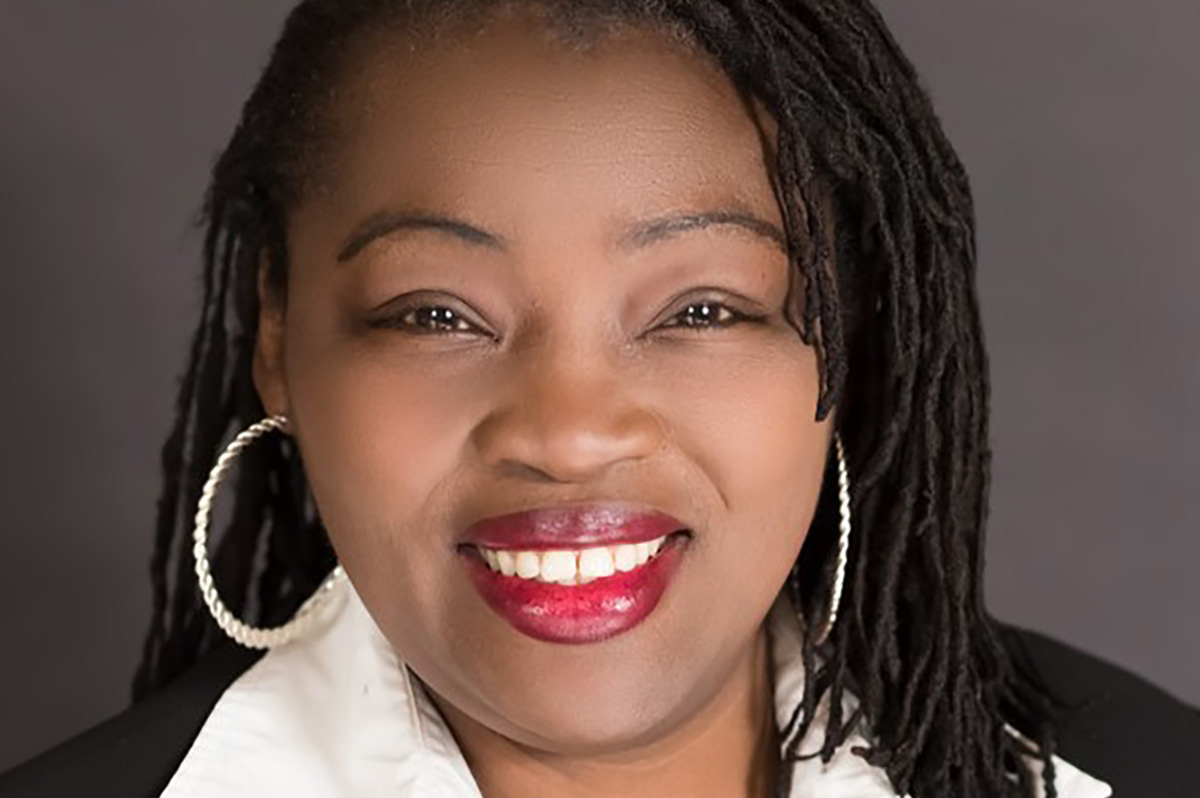
The board of directors of Mary’s House for Older Adults, the D.C.-based home dedicated to providing affordable housing for LGBTQ seniors, has announced it has named longtime nonprofit organization leader A. Charlene Leach as its new executive director.
Leach, who is now serving in the executive director’s position, is succeeding Dr. Imani Woody, the Mary’s House founding president and CEO, who announced her retirement from her official leadership role at Mary’s House on July 7.
Woody, who holds a PhD in Human Services, is credited with playing the lead role over many years in arranging both city and private funding needed to construct and operate the Mary’s House three-story building located at 401 Anacostia Road, S.E., in the city’s Fort DuPont neighborhood.
“With over three decades of nonprofit experience and 15 years serving as an executive director, Charlene brings a wealth of knowledge in organizational leadership, program development, and community engagement,” the Mary’s House board says in a statement.
“Her proven track record of building impactful programs and leading mission-driven organizations makes her uniquely suited to guide Mary’s House into its next phase of growth,” the statement continues. “Charlene is deeply aligned with the mission of Mary’s House and is committed to advancing its work to provide safe, inclusive housing and supportive services for LGBTQ+ older adults,” it says. “Under her leadership, the organization will continue to expand its impact while remaining grounded in the values that define our community.”
Leach’s LinkedIn page shows she has most recently served since 2022 as executive director of the African American AIDS Task Force in Minneapolis. Prior to that, it shows she served as executive director of the Fredericksburg Area Health and Support Services organization in Fredericksburg, Va., and before that as director of development for the D.C.-Baltimore area Women’s Collective.
Her LinkedIn page says she has been involved with Mary’s House as a volunteer and grant writer since 2016.
The newly built and enlarged Mary’s House, which opened in March 2025, with a grand opening ceremony held in May 2025 attended by D.C. Mayor Muriel Bowser, includes 15 single-occupancy residential apartments and more than 5,000 square feet of shared communal living space.
An earlier statement released by the Mary’s House board announcing Woody’s retirement said Woody would continue to be involved with the organization as a member of the board. The earlier statement and board’s more recent statement on July 29 announcing Leach’s appointment as executive director did not say whether the board plans to name someone else as president and CEO, the title that Woody held before her retirement. But the latest statement says Leach will be running Mary’s House’s day-to-day operations as Woody did.
Virginia
Doug Ollivant to face Eugene Vindman in Va. 7th Congressional District
Republican defeated challengers in Tuesday’s primary

Republican Doug Ollivant will face off against incumbent U.S. Rep. Eugene Vindman (D-Va.) in Virginia’s 7th Congressional District.
Ollivant defeated his Republican opponents in Tuesday’s primary. Vindman ran unopposed.
Vindman in 2024 ran to succeed then-Congresswoman Abigail Spanberger in the U.S. House of Representatives after she ran for governor. Spanberger succeeded Republican Gov. Glenn Youngkin in 2025.
U.S. Sen. Mark Warner (D-Va.) on Tuesday easily won his primary. All other Democratic incumbent members of Congress from Northern Virginia also won their respective primaries.
District of Columbia
LGBTQ advocates optimistic about D.C.’s expected new mayor
Janeese Lewis George cites strong record of support as Council member
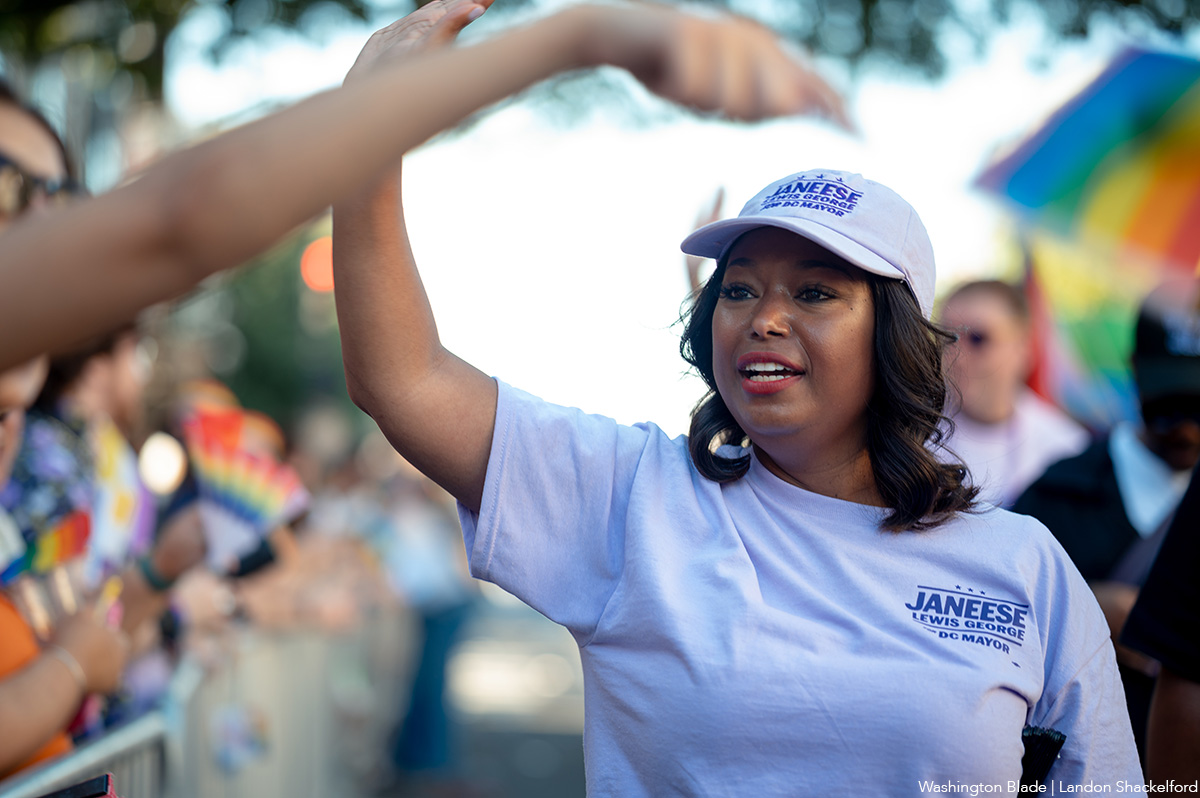
Several prominent D.C. LGBTQ community advocates said they are optimistic that Democratic mayoral nominee Janeese Lewis George, who is expected to easily win election as mayor in the city’s Nov. 3 general election, will continue her strong record of support on LGBTQ issues from her current role as a Ward 4 D.C. Council member.
But most of the seven LGBTQ advocates who responded to an informal Washington Blade survey of community leaders and activists said they would be observing Lewis George’s transition plans for her expected mayoral administration to determine if she will follow through with her campaign promises to put in place policies and funding to strongly support the LGBTQ community.
Lewis George emerged as the decisive winner in the city’s June 16 Democratic primary with 54 percent of the vote in a six-candidate race, with her lead opponent, former D.C. Council member Kenyan McDuffie (D-At-Large) receiving around 37 percent and four lesser-known candidates receiving 4 percent or less.
In a city with an overwhelmingly Democratic electorate, virtually all political observers believe Lewis George will win the November general election to become the city’s next mayor.
In the primary, she received the endorsement of the Capital Stonewall Democrats, the city’s largest local LGBTQ political organization, and received the highest possible candidate rating of +10 from GLAA DC, formerly known as the Gay and Lesbian Activists Alliance of Washington.
With Lewis George, McDuffie, and the four lesser-known candidates in the Democratic primary, including one who identified as bisexual, expressing strong support on LGBTQ issues, LGBTQ advocates acknowledged that most queer voters chose a candidate to support based on non-LGBTQ issues.
And Lewis George’s LGBTQ supporters have said they believe Lewis George received the largest share of the LGBTQ vote based on her outspoken support for social justice related issues, including policies to address the need for affordable housing, which she said impacts LGBTQ people in need, especially queer people of color and transgender residents.
“I think she understands a theory of community and economic development that is both inclusive of LGBTQ people but not exclusive about us,” said Benjamin Brooks, president of GLAA D.C. Brooks also currently serves as interim director of policy for one of the divisions of Whitman-Walker Health, D.C.’s LGBTQ supportive medical clinic and health services organization.
“I think that she represents a change in administration that will see more dollars to public programs that are more pro social,” Brooks said. “We’re going to be looking at who she appoints to the different agencies that we’re interested in and making sure that LGBTQ people are centered in that conversation,” he said.
Brooks added, “We know LGBTQ people were featured heavily in her campaign as organizers and as her staff members. So, I think we should expect to see us included, and she has put out a platform that lifts up all Washingtonians.”
Longtime D.C. gay Democratic activist John Klenert said he, too, will be watching to see if and how Lewis George follows up her campaign promises on LGBTQ issues.
“My number one concern will be with the budgets being what they are in the city, will she continue to fiscally support the Mayor’s Office of LGBTQ Affairs?” he told the Blade. “Number two, will she continue to support the HIV type places like Whitman-Walker,” he said.
Acknowledging that Lewis George has expressed support for these types of programs during the election campaign, Klenert added, “Words are cheap. Let’s see on paper her proposals.”
D.C. gay Democratic activist Peter Rosenstein is among the few LGBTQ activists who publicly raised concern over Lewis George’s status as a Democratic Socialist and member of the controversial Democratic Socialists of America (DSA) national organization.
“I congratulate Ms. George on winning the primary and hope she will do a great job as our next mayor,” Rosenstein told the Blade in a statement. “But the issues I promulgated in the primary still go unanswered,” he said, noting that he is unaware of Lewis George saying whether she disagrees with the DSA’s platform opposing the existence of the state of Israel, not talking to any pro-Israel Zionist organizations, and, among other things, defunding U.S. police departments.
Rosenstein also noted that Lewis Geroge, as far as he knows, has not publicly rebuked one of her supporters who endorsed her for mayor, Ward 8 community activist Jauhar Abraham, who has publicly referred to gay people as “sissies” and “fags” who should not be allowed to teach in the city’s public schools.
“Will she really stand up for the LGBTQ community, or does she agree with those like Jauhar Abraham,” Rosenstein said in his statement. “These are issues she owes the voters answers to.”
Ward 8 gay longtime Democratic and community activist Phillip Pannell, who just won election in the Democratic primary as the city’s Democratic National Committeeman, is among the LGBTQ activists who supports Lewis George’s candidacy for mayor. He told the Blade that Lewis George, while not saying so directly, has made it clear she does not support what he describes as Jauhar Abraham’s anti-gay slurs.
When asked if the Abraham issue as raised by Rosenstein was a concern for him, Pannell said, “No, because I know that Jauhar Abraham’s homophobic statements are in no way in alignment with Janeese Lewis George’s support for our community.”
He added, “You can’t always judge a candidate or basically indict a candidate because of the support of some individuals. There is no way Janeese supports the type of stuff Jauhar spews.”
Like some of the other LGBTQ advocates who spoke to the Blade about Lewis George’s potential impact on the LGBTQ community, Pannell said he is optimistic about her actions as mayor.
“I expect that she will at least maintain the type of support that we are getting under Mayor Bowser if not more so,” he said. “And a good indication of her level of support would be the votes that she has cast in support of our community while she has been a member of the Council,” Pannell said.
Also, like other LGBTQ supporters of Lewis George, Pannell said he is not troubled over her role as a Democratic Socialist. “There are many people who are associated with the Democratic Party who would be very much aligned with Democratic Socialist organizations,” he said. “So that doesn’t bother me at all.”
Ashley Gibbs, who serves as board co-chair of the D.C. LGBTQ+ Community Center, is among the activists who said they are uncertain about Lewis George’s expected impact on the community.
“Certainly, I expect her to win in November given the demographics of D.C.,” she said. “I have to admit I live in Maryland now, so I am less clued into D.C. politics than I used to be,” she added. “So, I think it’s a big unknown. I think we’re just going to have to wait and see what happens and how well Janeese can make things given the federal government.”
David Perruzza, owner of the D.C. LGBTQ bars Pitchers and A League of Her Own, located in the Adams Morgan neighborhood, like other LGBTQ bar owners, said he preferred not to comment on the ins and outs of the race for mayor
But similar to other nightlife related small businesses in the city, including bars and restaurants, Perruzza said he was deeply troubled over what he believed to be Lewis George’s support for ending the so-called tip wage system for bars and restaurants. He said most LGBTQ bar owners believe doing that could force them to go out of business due to excessive labor costs.
Under the tip wage system, which has been in place in D.C. and other cities and states for many years, businesses that employ servers who receive tips can pay them a significantly lower minimum wage called the tip wage compared to the regular minimum wage, which is now $18.40 per hour in D.C. At the initiative of local labor groups, D.C. voters in 2022 approved for the second time Initiative 82, which called for raising the minimum wage for tipped workers to the full minimum wage over a phase-in period of 10 years or more.
Organizations representing local restaurants and bars said most tipped workers make close to if not more than the full minimum wage in tips, and that under the current D.C. law, businesses are required to pay tipped workers the difference if they don’t make the equivalent of the full minimum wage in tips.
They argued that the initial raising of the tip wage from just over $5 per hour to several dollars more an hour created a financial hardship that was forcing many of them to go out of business. The mayor and D.C. Council responded by repealing Initiative 82 and later putting in place in 2025 a compromise law supported by the business owners that brought the tip minimum wage to $10.30 per hour as of July 1, 2026.
The new law calls for the tip minimum wage to increase to 60 percent of the full minimum wage by 2028 and increase incrementally by 5 percent until it reaches 75 percent of the full minimum wage in 2034.
D.C. Council records show that Lewis George voted against the compromise bill when the Council approved it in July of 2025 as an amendment to the city’s Fiscal Year 2026 budget.
Local nightlife advocate and small business owner Salah Czapary, who served as Mayor Bowser’s director of the D.C. Office of Nightlife and Culture from 2022 to 2024, said Lewis George told a group of nightlife business operators and owners during a meeting in May that she opposes yet another ballot measure proposed by the labor advocacy group One Fair Wage that calls for raising the city’s minimum wage for all workers to $25 per hour and for eliminating the subminimum wage for tipped workers.
“I was in the room when she explained to a room full of nightlife small business, arts, and cultural operators that she has spoken with experts in the field,” Czapary told the Blade. He said Lewis George told the gathering that she did not support the latest wage initiative that was attempting to get on the ballot, which was a concern to business owners at the time.
“And I think that’s actually quite impressive for a lawmaker to do when everyone assumes you would support a certain initiative,” he said in referring to Lewis George. “To have one view and then assess the reality that might have changed. And then say that while I agree with the idea of raising the wages — I think most people do — we also don’t live in a vacuum. We have to deal with the realities of the economy,” Czapary said.
“I think D.C., as we know, has been a safe haven for LGBTQ individuals from across the country and has been very progressive on its treatment of LGBTQ people,” he said. “I think we will not expect that to change under our new mayor,” he added. “She was endorsed by many LGBTQ individuals and organizations, and she will continue to build on that progress we’ve made as a city, and we will continue to be that safe haven for people.”
Edmund Morris, president of the D.C. Equality Chamber of Commerce, which he said represents more than 100 LGBTQ+ and allied businesses serving the D.C. Metro area, released a short statement in response to the Blade’s request for comment on the impact his group expects Lewis George to have on the LGBTQ community.
“Janeese Lewis George has emphasized inclusive policies and support for local small businesses, priorities that align with our mission,” the statement says. “We look forward to productively engaging a future administration on how best to support aspiring and active entrepreneurs to flourish in the city that they serve,” it says.
Nick Tsusaki, founder and owner of the D.C. LGBTQ bar Spark Social, said he preferred not to comment on the impact Lewis George will have on policy related to LGBTQ issues. But he said he was impressed by Lewis George’s visits to several LGBTQ bars during the primary campaign.
“I’m really excited for her” he said, “I think she made a point in her last week of campaigning to do like an LGBTQ bar crawl. She came to Spark, to Trade and Bunker,” he said referring to two other D.C. LGBTQ bars. “And really showing dedication to the community in a way that went above and beyond what I had expected –really meeting the community where we’re at.”
He added, “And so, for her to drop in on a Friday night and just talk to – get on the microphone and talk about why she’s excited to fight for our community was really cool to see in an authentic way.”
In response to requests by the Blade and Capital Stonewall Democrats seeking statements from each of the mayoral candidates during the primary campaign, Lewis George submitted these comments, which are excerpted from a longer statement.
“As mayor, I will protect our LGBTQ+ neighbors against federal attacks on their identity, including their health care. … On the Council I have been a strong supporter of pro-LGBTQ+ bills, including making D.C. a sanctuary for people seeking gender-affirming health care as well as addressing discrimination and harassment in nightlife and hospitality…And as mayor, I am prepared to move up and win those fights – a fight for D.C. statehood, a fight for our true economy, and a real opportunity to uplift our Black queer and trans youth.”

PHOTOS: World Pride March

Tens of thousands take part in World Pride March

PHOTOS: Daddy Issues at Kiki

Something’s off about Dad. When is it time to step in?

New book chronicles gay man’s life in hippie commune

Dutch prime minister opens World Pride Human Rights Conference

Progressives score victory as El-Sayed wins Mich. Senate primary

Doug Ollivant to face Eugene Vindman in Va. 7th Congressional District

LGBTQ advocates optimistic about D.C.’s expected new mayor

Continue to engage in community after Pride month
-

 Netherlands4 days ago
Dutch prime minister opens World Pride Human Rights Conference
-
Michigan4 days ago
Progressives score victory as El-Sayed wins Mich. Senate primary
-
Virginia4 days ago
Doug Ollivant to face Eugene Vindman in Va. 7th Congressional District
-
District of Columbia4 days ago
LGBTQ advocates optimistic about D.C.’s expected new mayor