Local
Maryland prepares for marriage referendum
O’Malley’s signature makes state eighth to legalize gay nuptials


Maryland Gov. Martin O’Malley was scheduled to sign the state’s marriage equality bill into law on Thursday. (Washington Blade file photo by Michael Key)
Maryland Gov. Martin O’Malley was scheduled to sign a bill to legalize same-sex marriage at a ceremony at the State Capitol building in Annapolis Thursday afternoon, highlighting what LGBT activists consider an historic advancement for marriage equality.
O’Malley’s signature on the Civil Marriage Protection Act was also considered the kick-off for what political observers predict will be an acrimonious referendum campaign in which opponents will ask Maryland voters to kill the bill before it becomes law.
Opponents were expected to gather the required number of petition signatures needed to place the referendum on the ballot for the November election.
The governor’s bill signing ceremony was set to take place one week after the Maryland Senate voted 25 to 22 to approve the marriage bill. The vote came after senators supporting the bill defeated six hostile amendments introduced by opponents.
The vote to approve the bill triggered a burst of applause and cheers in the Senate chamber by supportive lawmakers and LGBT activists, who packed the visitors gallery.
“We could not be more grateful to the senators who today voted to make all Maryland families stronger,” said Joe Solmonese, president of the Human Rights Campaign, which is a member of Marylanders for Marriage Equality, a coalition of LGBT and allied organizations that pushed for the bill.
“Today we took another giant step toward marriage equality becoming law — and we are in this position due to the unwavering leadership and resolve of Gov. O’Malley and our legislative allies,” Solmonese said.
U.S. House Minority Leader Nancy Pelosi (D-Calif.) called the Senate vote “an extraordinary victory for the people of Maryland and a critical step forward in the march for marriage equality nationwide.”
Pelosi added, “As a native Marylander, this vote is a source of personal pride; as an American this action is a symbol of our progress as a nation and as a people.”
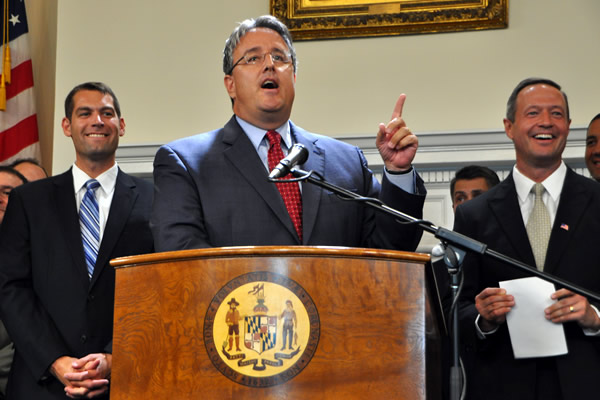
Maryland Sen. Rich Madaleno (D-Montgomery County) said he considers himself a ‘married man’ and part of the ‘family of Maryland’ without the right to legalize his and his partner’s relationship with a marriage license. (Washington Blade photo by Michael Key)
The Senate vote came six days after the Maryland House of Delegates passed the bill by a razor-thin two-vote margin. That vote followed an intense lobbying effort by O’Malley, who is credited with helping to persuade the few wavering Democratic delegates needed to put the bill over the top.
Unlike past years, O’Malley this year introduced the marriage bill as part of his legislative package and placed all of the resources of his office behind the bill.
But supportive and opposing lawmakers acknowledged in the Senate floor debate Thursday night that the Civil Marriage Protection Act now faces its most daunting hurdle — a bruising referendum campaign leading up to the November election, when voters will have the final say on whether the bill should be enacted into law.
Public opinion polls show Maryland voters are nearly evenly divided on the issue of same-sex marriage, with supporters showing a slight lead.
Most political observers believe opponents of the bill have the resources to gather the required number of petition signatures needed to place the measure on the ballot in the November election, when President Barack Obama’s name will also be on the ballot.
The referendum campaign received a boost last Friday, when the Fox TV station in Baltimore, WBFF, posted a prominent link to the website gathering signatures for the referendum on its homepage.
Scott Livingston, news director at WBFF, denied any corporate involvement in promoting the referendum campaign.
“We are not endorsing any element of this debate,” Livingston told the Blade. “We see it as a political process. Our goal is letting viewers understand they have a voice in the debate.” He added that the site has now been “modified.” The link that previously sent readers directly to the petition site now goes to a new page within the WBFF site that also includes a link to Equality Maryland’s website. The change followed what Livingston characterized as a “handful” of complaints from WBFF viewers.
The marriage bill died in the House of Delegates last year after clearing the Senate. Supporters decided to pull it from the House floor without a vote after determining they didn’t have the votes to pass it.
The Senate passed the bill last year by a vote of 25-21. Its approval of the bill on Thursday night by a 25-22 vote did not represent a change in the breakdown of supporters and opponents, according to observers at the state capital in Annapolis.
Sen. Joanne Benson (D-Prince George’s County) announced her opposition to the bill last year but was unable to reach the Senate floor to vote at that time, resulting in her being listed as not voting. Benson voted ‘no’ on the bill this time.
She was among 11 Democrats who voted against the bill last week, opposing the 24 Democrats who voted ‘yes’ in the 47-member Senate.
Eleven Republicans voted against the bill, with just one, Sen. Allan Kittleman (R-Carroll & Howard Counties), voting for it.
In the House debate, several opponents delivered highly emotional speeches condemning the bill as a threat to traditional marriage and an infringement on religious rights. The Senate debate was more measured, with opponents saying their positions were based mostly on religious beliefs while expressing respect for same-sex couples.
Sen. Jamie Raskin (D-Montgomery County), an American University law professor, served as floor leader for the marriage bill. LGBT advocates for the bill have long credited him with using a firm but diplomatic approach in refuting arguments that legalizing same-sex marriage would infringe on religious rights or create problems for traditional marriage.
Sen. Rich Madaleno (D-Montgomery County), the Senate’s only openly gay member, called on his colleagues to support the bill to provide equality and dignity to “all” families, including those headed by same-sex couples.
“We all cherish families,” he said, adding that the bill is intended for “people who find love and want a family.”
Noting that he and his partner are raising two kids, Madaleno said he considers himself a “married man” and part of the “family of Maryland” without the right to legalize his and his partner’s relationship with a marriage license.
“It is the marriage license that symbolizes the commitment,” he said. “It makes it worthwhile. I want that marriage license in the State of Maryland.”
In his closing remarks, Raskin praised his fellow senators on both sides of the political aisle for their “extraordinary civility and decency and even affection that pervaded these very tough discussions.”
He told of his personal bout with colon cancer last year, just as the Senate deliberated over the marriage bill, saying his doctors have given him a “clean bill of health” at this time.
“But I learned that there is a difference between misfortune and injustice in life,” he said, noting that a cancer diagnosis, which can happen to anyone, is a misfortune.
“But if you find someone to love in this life and to have and to hold and to dedicate your life to and you have kids together and you want to be married… and you can’t do it, that’s not a misfortune, that’s an injustice because we have the power to do something about it,” he said. “And today we have.”
Senate observers said Senate President Thomas V. Mike Miller (D-Anne Arundel County), who voted against the bill, took the unusual step of explaining why he did so. Miller, who has said all along that he opposes same-sex marriage on religious grounds, has been praised by the bill’s supporters for making sure it would reach the floor for a vote.
“Am I on the wrong side of history?” he asked. “As a historian, there is no doubt about it… I believe marriage is between a husband and a wife and that is why I voted the way I did,” he said.
Should Maryland’s marriage equality bill clear the referendum hurdle, the state joins D.C., Massachusetts, New York, Iowa, New Hampshire, Connecticut, Vermont and Washington State in allowing same-sex couples to marry.
“There remains a lot of work to do between now and November to make marriage equality a reality in Maryland,” said HRC’s Solmonese. “Along with coalition partners, we look forward to educating and engaging voters about what this bill does. It strengthens all Maryland families and protects religious liberty.”
Evan Wolfson, executive director of Freedom to Marry, the national same-sex marriage advocacy organization, startled HRC and other partners of the Marylanders for Marriage Equality coalition earlier this year when he expressed concern that supporters of the bill had not demonstrated the capability to win in a referendum fight.
“Lesbian and gay couples, their families, and non-gay friends and neighbors made a powerful case for the freedom to marry, which all should enjoy,” Wolfson told the Blade after the Maryland Senate vote Thursday night.
“The lawmakers responded to these moving stories of love and commitment,” he said. “Now, HRC, Marylanders for Marriage Equality, and those who led the passage of this bill must defend it against the attack coming in November. “
Asked if Freedom to Marry would become involved in the Maryland referendum fight, Wolfson said only, “You have my comment.”

Maryland
Anne Arundel schools updates gender identity regulation following Trump administration threats
District facing federal lawsuit, White House threats over guidelines
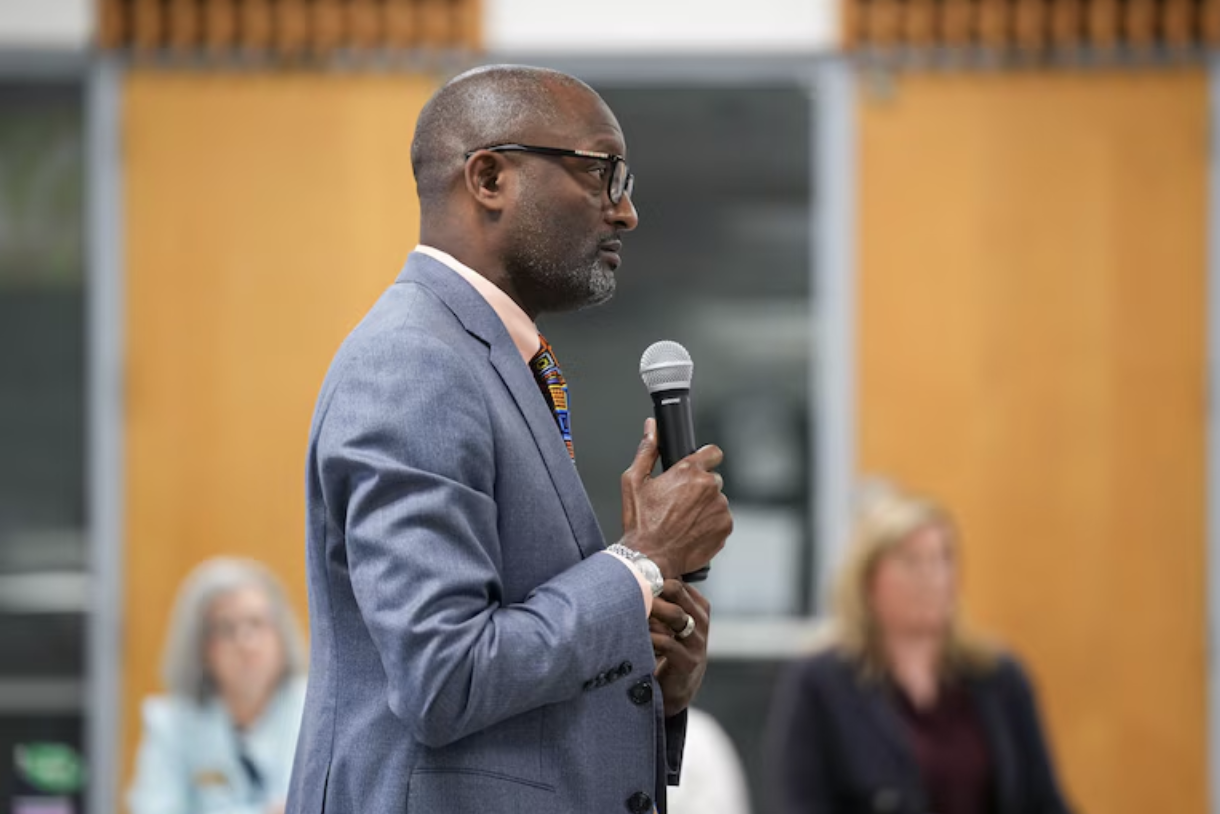
By JESSICA CALEFATI | Under pressure from the Trump-Vance administration, Anne Arundel County Public Schools Supt. Mark Bedell announced Wednesday the district had updated a regulation intended to protect transgender students’ right to be called by their chosen name.
The revised language makes clear that district rules on gender identity do not block parents’ rights under the Family Educational Rights and Privacy Act as the federal government alleged last month, and that a student’s gender identity will not be treated as confidential medical information.
“No policy, guideline, or practice may limit or otherwise interfere with parental rights under FERPA,” Bedell wrote in a Wednesday letter to the community. “This includes any information maintained in education records that relates to gender identity, transgender status, sexual orientation, preferred name, or preferred pronouns.”
The rest of this article can be read on the Baltimore Banner’s website.
District of Columbia
Man charged with anti-gay assault in D.C. accepts plea offer
Community service offered in exchange for dismissing hate crime charge
A Germantown, Md., man arrested by D.C. police on a charge of simple assault with a hate crime designation for allegedly assaulting a gay man while using “homophobic slurs” has agreed to an offer by prosecutors to plead guilty to simple assault without the hate crime designation and with the promise of having the charge dismissed if he completes, among other requirements, 48 hours of community service work.
Dean Edmundson, 26, standing beside his attorney, officially accepted the offer of a Deferred Sentencing Agreement at an Aug. 18 status hearing in D.C. Superior Court after Senior Judge Hiram Puig-Lugo explained the details of the agreement and confirmed Edmundson’s decision to waive his right to a trial.
Among other things, the judge said the agreement offered by prosecutors with the Office of the United States Attorney for D.C. includes the requirement that he successfully completes 48 hours of community service work, stays away from the victim of the assault, writes a letter of apology to the victim, and does not violate any other laws or get into trouble for the next 12 months.
Puig-Lugo then announced he scheduled a sentencing hearing for Edmundson for Aug. 18, 2027, at which time a determination will made on whether he has fulfilled all the requirements under the agreement and whether the simple assault charge will be dismissed. The judge added that if it is determined that Edmundson did not fulfil the terms of the agreement the charge would remain in place and he could be sentenced to a possible maximum penalty of 180 days in jail and a $1,000 fine.
Edmundson, who appeared in court wearing a business suit with a dress shirt and tie, was released on his own recognizance following his arrest by D.C. police on Feb. 7, 2026.
Police and court records show he was initially charged by arresting officers with simple assault with a hate crime designation. In a statement announcing the arrest, D.C. police said, “On Saturday, Feb. 7, 2026, at approximately 7:45 p.m. the victim and suspect were in the 1500 block of 14th Street, Northwest. The suspect requested a ‘high five’ from the victim. The victim declined and kept walking,” the statement says.
A follow-up arrest affidavit filed by police states that Edmundson followed the victim and called him “bald, ugly, and gay,” and then “pushed the victim with both hands, shoving them, causing the victim to feel the force of the push.” The affidavit adds, “The victim stated that they felt offended and that they were also gay.”
According to the court records, the Office of the U.S. Attorney filed its official charge of simple assault against Edmunson on Feb. 9 without the hate crime designation. The office has not responded to a request by the Washington Blade for its reason for dropping the hate crime designation. The office has also not immediately responded to a follow-up inquiry from the Blade this week asking if prosecutors consulted the victim to obtain the victim’s thoughts about the plea offer.
The Blade, which has a policy of not disclosing the identify of crime victims in cases like this without their consent, could not immediately obtain contact information to reach the victim for comment.
Court records show that Edmundson rejected an earlier plea agreement offer by prosecutors and he was scheduled for a non-jury trial on Aug. 18. The records show his attorney filed a motion earlier this month asking the judge to convert the trial into status hearing on that same day after his client accepted the Deferred Sentencing Agreement offer by the U.S. Attorney’s office. The judge approved the motion without objection from prosecutors.
Virginia
Winsome Earle-Sears ‘Life and Marriage Tour’ to include Northern Va. stops
Voters to consider marriage equality, reproductive rights referenda in November
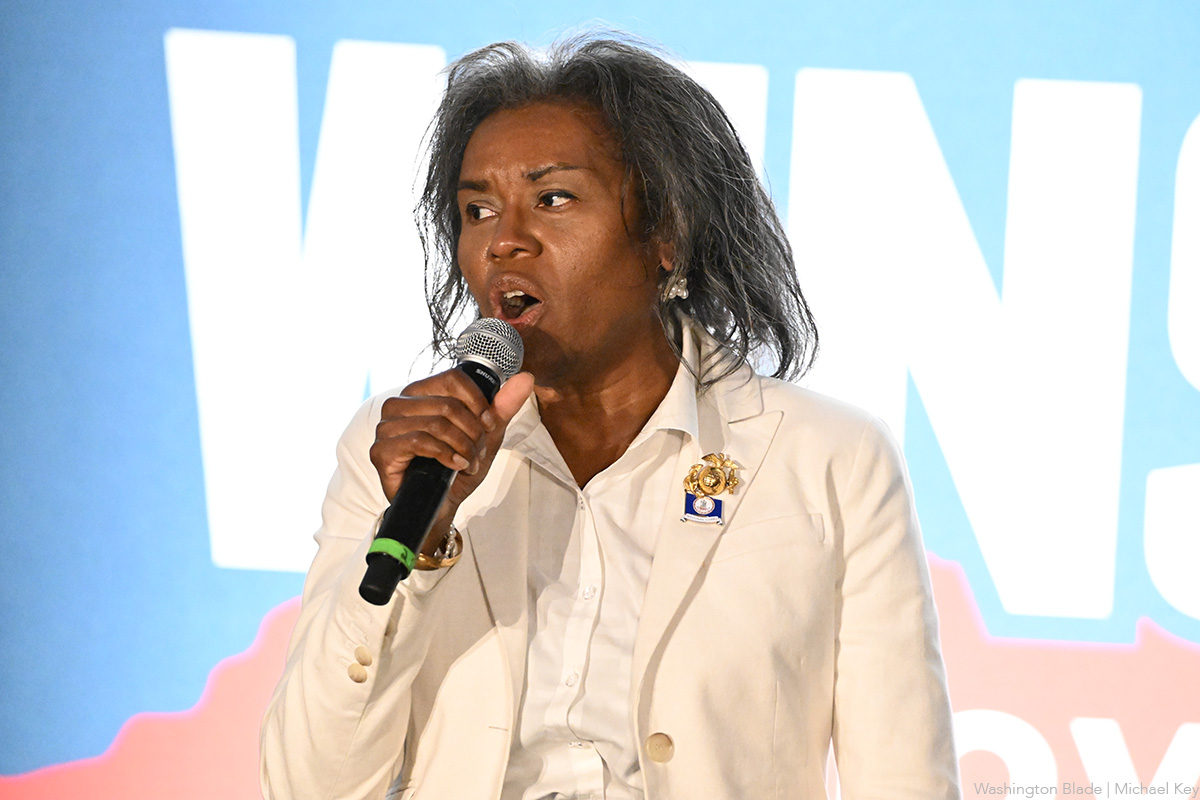
Former Virginia Lt. Gov. Winsome Earle-Sears has announced her campaign against efforts to enshrine marriage equality and reproductive rights in the state constitution will make several stops in Northern Virginia.
Her “Life and Marriage Tour” will include stops in Manassas, Winchester, and Harrisonburg. Earle-Sears said the “Life and Marriage Tour” will also travel to Virginia Beach, Lynchburg, Roanoke, Charlottesville, and other cities across Virginia “throughout September and October.”
The announcement did not include specific dates.
“Virginia, you’ve been asking where the Life and Marriage Tour is headed — here’s a look at our current tour locations,” she said on X on Tuesday. “We’ll be traveling across the commonwealth throughout September and October, and we’re still building the journey.”
Current Gov. Abigail Spanberger, a Democrat, last November defeated Earle-Sears, a Republican, in the race to succeed Republican Glenn Youngkin.
Voters in 2006 approved the Marshall-Newman Amendment, which defined marriage in Virginia as between a man and a woman.
Same-sex couples have been able to legally marry in Virginia since 2014. Youngkin a decade later signed a bill that codified marriage equality in state law.
Two successive legislatures must approve a proposed constitutional amendment before it can go to the ballot.
Spanberger signed bills that finalized the marriage equality and reproductive rights referenda’s language.
The referenda will take place on Nov. 3.

Anne Arundel schools updates gender identity regulation following Trump administration threats

Thailand’s first openly gay senator attends World Pride in Amsterdam

Philadelphia gayborhood preservation battle raises questions about displacement

Man charged with anti-gay assault in D.C. accepts plea offer

Madonna nominated for 11 MTV VMAs

Bros + romance + fantasy = ‘Bromantasy.’

National tour of ‘The Notebook’ retains its tearjerking power

‘Maddie’s Secret’ defies campy expectations

PHOTOS: Nellie’s Drag Brunch