Opinions
What can Mitt Romney do for HIV/AIDS?
So far, he’s silent on the disease — unlike President Bush

By JAMES DRISCOLL, Ph.D.
What can Mitt Romney do for AIDS? In a word — plenty. As we approach the XIX International AIDS Conference opening in Washington July 22, Mitt Romney has so far said nothing about AIDS. Perhaps his advisers are reluctant to touch the subject. They shouldn’t be. George W. Bush learned early that AIDS holds opportunities for conservative activism; he then built the best AIDS record of any president.
The Bush record provides a fine example and starting place for Mitt Romney. Bush cleared regulatory hurdles to rapid HIV testing and reformed federal AIDS care programs. He launched PEPFAR, the President’s Emergency Plan for AIDS, which has become the most successful foreign aide initiative since the Marshall Plan. Bringing AIDS drug treatment to millions in Asia and Africa, PEPFAR has saved countless lives and earned America worldwide respect and good will.
However, many more lives can now be saved by improved use of PEPFAR resources. As president, Romney could focus the program more on antiretroviral drug treatment and less on administration. Program efficiencies, boosted by falling drug costs, could allow PEPFAR to treat many more patients with current funding.
Tariffs and taxes on medical products remain serious obstacles to combating AIDS and other killers throughout the developing world. More than 30 countries, including the U.S., have abolished tariffs on medical products. Nonetheless, in too many trade negotiations, medical products still have the same priority as balloons, boom boxes and rum. Everything is a trading chip, regardless of whether it is trifling or essential to human health. This must change.
Countries like India, China and Thailand, with chronic trade surpluses and large HIV epidemics, continue to impose trade barriers on medications for AIDS and other life-threatening diseases. Elimination of all taxes worldwide on vital medical products would be a great boon to world health. At the same time it would help reduce dangerous trade imbalances between the West and Asia, an important priority for the next president.
PEPFAR gave President Bush a chance to pursue a lofty international goal. President Romney will have a unique opportunity to advance America’s domestic AIDS goals. Last year NIH’s 052 study, cited by Science as the top advance of 2011, proved that anti-retroviral treatment is 96 percent effective in preventing infection of HIV negative partners. We now know that widespread HIV testing and treatment can prevent the spread of AIDS.
However, more than 20 percent of HIV positives in America do not know their status. We must get them tested and into treatment. President Obama formulated a viable National AIDS Strategy, but he has neglected the hardest part, implementation. As a result, the AIDS virus continues to spread rapidly among many groups, especially gay men, Latinos and African-American women.
President Romney would need to re-prioritize AIDS funding in order to find savings and efficiencies to pay for more testing, linkage to care and AIDS drug treatment for many additional HIV patients. He can, thereby, reduce the rate of new infections and at last turn the tide against AIDS in America.
Keeping down AIDS regimen costs is essential to HIV treatment expansion given a troubled global economy and soaring deficits in every developed country. We must recognize that nearly all AIDS patients are poor people whose treatment hinges on some form of taxpayer funding. There is no true free market in AIDS drugs.
Presidential leadership will be crucial to negotiating agreements with pharmaceutical companies that allow us to treat many more HIV-positive Americans with current funding. The global AIDS drug market is $22 billion. A share of a market that size is a powerful incentive to continue development of new HIV drugs, though additional inducements would be helpful.
The next president needs to create effective tax, IP and regulatory avenues to speed private sector research on cures and better treatments for the big killers with the heaviest impact on healthcare budgets, like Alzheimer’s, cancer, diabetes, and HIV-AIDS. The best, the most humane, way to cut spiraling healthcare costs is to prevent, cure or effectively treat the most costly diseases.
Americans will want Romney to replace “Obamacare” with policies that deliver better healthcare at sustainable costs. However, silence and inaction by Romney on AIDS will make Obama shine by comparison. The XIX International AIDS conference offers Romney a choice opportunity to show America how and why he can do better.
Equally important, AIDS and the XIX Conference give him a chance to reach out to the constituencies who suffer most from AIDS and feel marginalized by the Republican Party — gays, Latinos and African Americans. Romney can thereby demonstrate the broad understanding and proactive leadership essential to serving as president of all Americans.
James Driscoll, Ph.D., is a longtime AIDS activist and was a member of the Presidential Advisory Council on HIV/AIDS under President George W. Bush.



Opinions
Unique financial planning challenges for trans community
Overcoming roadblocks in journey to living an authentic life
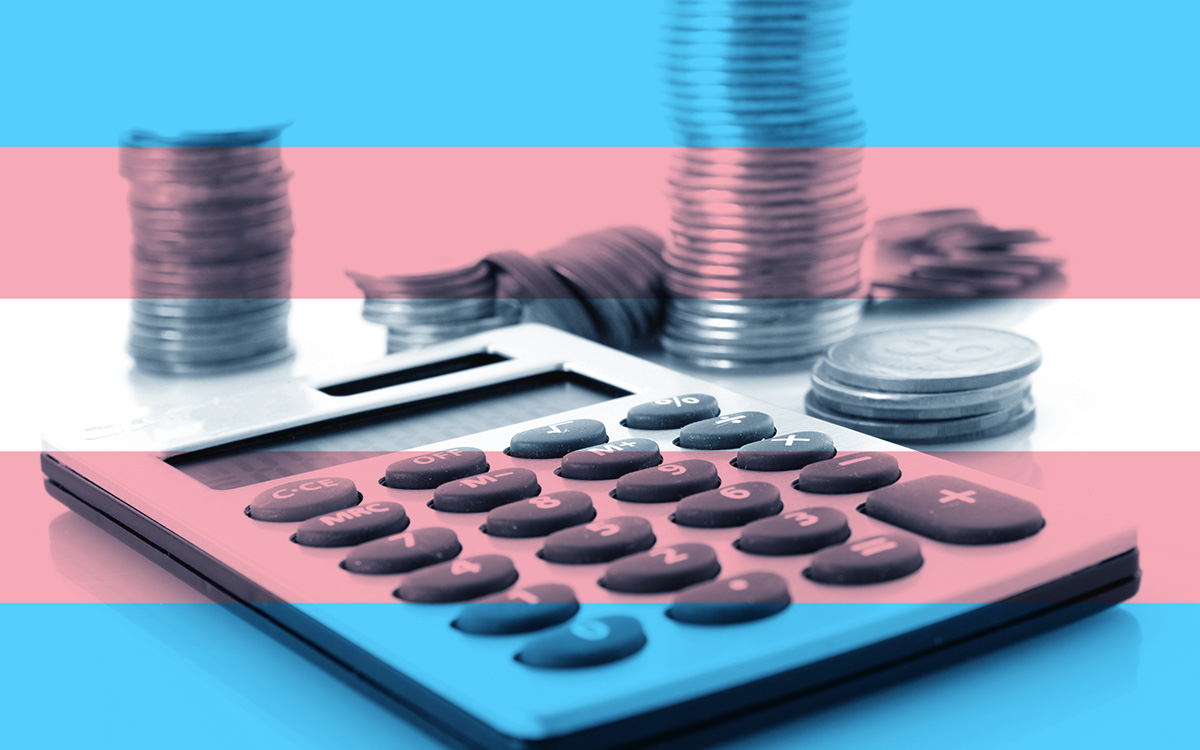
Approximately 2.6 million Americans identify as transgender, according to the U.S. Census Bureau Household Pulse Survey in 2023. This community faces many financial, legal, and estate planning challenges, resulting in higher rates of financial instability compared to the general population. However, these challenges are not generally understood or even discussed.
At JPMorgan Chase, we’re dedicated to providing awareness and education to help all communities — including members of the LGBTQ+ community — reach their financial goals. Our team at J.P. Morgan Wealth Management recently published a new white paper to offer actionable tips for transgender adults to help them overcome some of the specific obstacles they face with planning.
Here are some key takeaways:
Inaccurate identity documents create a foundational problem
Hundreds of thousands of transgender people in the U.S. do not have a single piece of identification that correctly identifies their gender or chosen name. Many people, including those in the broader LGBTQ+ population, have never thought about what their lives would be like if they lacked accurate identity documents.
Having accurate identity documents is essential for so many aspects of everyday life – applying for school or a job, finding a place to live, exercising the right to vote and boarding a plane. Presenting inaccurate identification in these situations can subject transgender individuals to unfair discrimination and harassment. But correcting name and gender markers on identity documents can be complicated, expensive, time-consuming, and in some cases, impossible.
The U.S. State Department has adopted one of the most simple and progressive policies for correcting gender markers in the world. Since June 2021, medical certification is not required to change the gender marker in one’s passport. Transgender people should consider updating their U.S. Passport book or card immediately and use that document as primary identification. Passport books and cards are valid for 10 years, even if policies change during that time.
Credit issues are common for trans community
Transgender individuals who are able to successfully obtain new identity documents still frequently face credit issues. Unlike changes to one’s last name after a marriage or divorce, informing banks or other creditors of a change to one’s first name on accounts does not automatically cause credit reporting agencies to update that person’s credit file. The credit reporting system can often be problematic for transgender people after a name change, with many reporting that credit files are never updated or that their credit scores decline.
This can create a cascading effect in numerous areas of one’s financial life, and it goes beyond borrowing. Credit files are frequently checked in employment decisions, pricing insurance, establishing utility and phone service and applying to rent a home.
Until policies change, transgender individuals should directly contact each creditor and credit reporting agency and follow each organization’s specific procedures and documentation requests. And they should carefully monitor that the changes are actually made and do not result in a credit score change.
Emergency and end-of-life documents should be carefully reviewed
Transgender people often have special health care needs and face unique forms of disparate treatment in accessing care, and cannot speak for themselves in these circumstances. End-of-life planning is often difficult to think about, but it’s especially critical that this community works with their attorneys and trusted advisors to create customized emergency and end-of-life legal documents.
The people named in these documents who could become decision-makers – typically trusted friends or supportive family members – should be empowered to direct health care providers to meet the patient’s wishes and preserve their chosen name and gender identity, as well as service providers, such as funeral home employees, to honor the deceased’s wishes about their appearance during memorial services.
The laws for these documents are complicated, and they vary depending on the state or territory. If possible, these documents should be prepared by experienced attorneys who routinely work with members of the LGBTQ+ community.
The bottom line
Transgender individuals in the United States face unique financial, legal and estate planning challenges that create roadblocks in their journey to living an authentic life. Careful planning can help mitigate some, but not all, of these obstacles.
JPMorgan Chase & Co., its affiliates, and employees do not provide tax, legal or accounting advice. You should consult your own tax, legal and accounting advisors before engaging in any financial transaction. J.P. Morgan Wealth Management is a business of JPMorgan Chase & Co., which offers investment products and services through J.P. Morgan Securities LLC (JPMS), a registered broker-dealer and investment adviser, member FINRA and SIPC.
Joseph Hahn is executive director of Wealth Planning & Advice at J.P. Morgan Wealth Management.
Opinions
University students have a right to protest
But they must not threaten Jewish students on campus

I support the right of students at Columbia University, and other colleges, to protest. They must understand they are protesting on private space. What I also find interesting is how many of them see their right to protest, and right to free speech.
The First Amendment gives us a right to free speech, but it doesn’t specify what exactly is meant by freedom of speech. Defining what types of speech should and shouldn’t be protected by law, has been left to the courts. Clearly free speech has its limits. Obscene material such as child pornography, plagiarism of copyrighted material, defamation, or threats, aren’t allowed. Also not protected under the First Amendment is speech inciting illegal actions, or soliciting others to commit crimes. Private employers, and universities, are allowed to set their own guidelines as to what speech is allowed for their employees, and on their campuses.
The debate over student protests at Columbia University is not a new one. I remember when the Student Afro Society (SAS) and the basically all-white Students for a Democratic Society (SDS), demonstrated and took over buildings at Columbia in 1968. Some were protesting the Vietnam War, others what they deemed would be a segregated gym in Morningside Heights, and Columbia’s infringement on a minority community. Both legitimate causes. Those demonstrations took a nasty turn when students took over buildings and cut off water and electricity to them. They held a sit-in, in the president’s office, and took a dean hostage. Police were called and in some cases it got violent. We are not at the 1968 stage yet in the current demonstrations, and if outside agitators don’t get involved, it may not get to that.
I agree with some of what the demonstrators are calling for, including having Israel rethink how it is conducting this war, protection for the Palestinian people, and immediately providing them with food and medicine. I don’t agree with their call to support BDS, which is the disinvestment in Israel. BDS is a Palestinian non-violent movement begun in 2005. I also see hypocrisy in what some of the protesters are saying. While they claim Israel is committing genocide in Gaza, which many disagree with, the same people are calling for genocide against Israel by supporting Hamas. It is Hamas’s stated goal to wipe Israel off the face of the earth, “from the river to the sea.”
Calling out Israel for its tactics, is not anti-Semitic. But attacking, and calling out Jewish students on campus, telling them to go back to Poland, which we have seen on video, and making them feel unsafe, is. Then there is the totally outrageous statement, “Zionists don’t deserve to live.” made by Khymani James, one of the student leaders of the Columbia, pro-Palestinian student protest encampment. He made the comments during and after a disciplinary hearing with Columbia administrators that he recorded and then posted on Instagram. I hope the president of Columbia University will be able to negotiate an agreement with the peaceful student demonstrators, including amnesty for some of those students who were arrested, if the students agree to certain parameters for continuing demonstrations. One being they cannot make other students feel unsafe on campus.
I find it abhorrent that House Speaker Mike Johnson has inserted himself at Columbia University, calling for President Shafik to quit. It is a totally inappropriate political stunt. The same goes for Rep. Elise Stefanik (R-N.Y.) who called for the Biden administration to revoke the student visas of all foreign students who are demonstrating. Those students came to the United States for an education, because we are a free country. If they agree to the guidelines of the university, and what is recognized as acceptable free speech, we should continue to welcome them, and allow them to voice their feelings. Again, as long as they don’t threaten others while they do so.
I am Jewish, and a strong supporter of the State of Israel. That support has not stopped me from calling on the Israeli people to rid themselves of Netanyahu, and his right-wing government. I oppose the settlements, and support a real two-state solution. But for that to happen not only will the Netanyahu government have to go, but the Palestinian people will have to reject Hamas. I have not heard the call for Hamas to release the hostages they took, whether those hostages are alive or dead at this time.
I strongly believe in the right to protest, and for Americans, and those here legally, to speak out. In 1969, I came to D.C. to protest the Vietnam War in front of the Justice Department and was tear-gassed. I had a right to protest in a public space. Since that time, I have participated in many demonstrations. Some around the White House supporting rights for the disabled community, LGBTQ rights, women’s rights, and in the ‘80s, demanding the government recognize, and do something about HIV/AIDS. The difference was in these demonstrations, those who disagreed were not threatened. The demonstrations I participated in, took place in public space, not the quad at Columbia University, or other university campuses, which is private space. Students who protest there must understand that.
My hope is none of the peaceful student demonstrators at Columbia, and other institutions, those who do not threaten fellow students, are thrown out, losing the chance to earn a degree. Those students chose to go to their schools because they thought they would get a good education, and believed graduating from those schools would be good for their futures.
Peter Rosenstein is a longtime LGBTQ rights and Democratic Party activist. He writes regularly for the Blade.
Opinions
Successful open relationships take effort
We have options as couples but they all require work
(Editor’s note: This is the second of a two-part feature on open relationships. Click here for last week’s installment.)
Open relationships are often ridiculed as the easy way out of commitment. After speaking with Scott and Kelsey, however, it’s clear they’re anything but easy.
Kelsey reflected on the ups and downs of being open in the past. “Younger me definitely needed it,” Kelsey said. “At the same time, drama came with it as well.”
While Scott and their partner have been together for nine years, it took four before they decided to open their relationship. “It came from the desire for the two of us to meet boys together,” said Scott. “Then we had some really terrible threesomes.”
Drama. Bad threesomes. Yikes – these aren’t exactly selling points for being open. But their experiences underscore something important: open relationships, like all relationships, are actually quite hard. Couples considering openness shouldn’t trick themselves into thinking it will make things easier. In reality, they take a lot of work.
For Scott, those really terrible threesomes led them to opening up further, but with established boundaries. “We came up with ground rules. Use protection. No spending the night at somebody’s house, etc.”
Since Scott and their partner are happy in their relationship, these rules seem to work even if they’ve shifted over time. “Being in an open relationship comes down to being really good at communicating with your partner,” they added. “It’s about communicating and checking in to see where your partner is.”
Open relationships should be for the right reasons
As open relationships began taking off, observers were skeptical for good reason. “In the past, people were just cheating,” said Kelsey. Another comment from Scott echoed this. “I’ve seen open relationships and it felt like one partner was being taken advantage of by the other.”
It turns out there is a fine line between sexual exploration and free passes. While some open relationships walk that line well, others – not so much.
In all fairness, now more than ever it’s difficult to remain monogamous, and one culprit is the rise of accessible hookup culture via social media. Apps like Tinder, Grindr, and dare I say Instagram are facilitating secret sexual connections never seen before. They ushered in a new era of cheating into relationships, alongside a bit of excessive stalking as well.
So, to avoid an atmosphere of mistrust and pain, a natural evolution for couples is to change the rules altogether. Cheating can’t be cheating if it’s allowed, right?
However, once it is allowed, I wondered why these people don’t cut the strings altogether and be single. In response, Chad made an interesting point: people aren’t just afraid of being cheated on – they’re afraid of the appearance of being single as well. We live in flashy times where our online image means everything. The dream is not necessarily having a partner, but showing the world you have a partner. Without that, you otherwise appear lonely.
So, do open relationships ease the pain of cheating and perceived loneliness? As a proud lone wolf I’m not the best person to assess, but based on my observations I can say this: being open works for some couples, but by no means is it a fast pass to being happy. Understanding why you want one is just as important as discovering how to make one work.
With all this said, the undeniable risk – and perhaps downside – of a monogamous coupling is the higher chance of cheating outright. Unfortunately, that’s something Chad knows all too well.
Preferring monogamy is still OK
Chad had dated someone for two years before they married for five. Then, just over a year into the pandemic, his husband informed him he was dating someone else. They separated a few days later.
For Chad this was painful, as it is for anyone, gay or straight, who’s gone through something similar. But when I asked him if this experience shaped his outlook on what he’s looking for, his response came as a bit of a surprise:
“It has not changed my view for or against open relationships,” he said. “I learned a lot in my marriage. It takes a lot of love, trust, and communication, which at times can feel like work. It also takes two; one can’t carry the relationship. I want to date someone who wants to be in a relationship with me.”
My heart swells hearing that, for even after experiencing the deepest kind of hurt, Chad searches for his one and only. Why? Because for him, the love he’s looking for is worth the wait. It’s a beautiful sentiment that makes so-called hopeless romanticism the raddest feeling in the world sometimes.
More importantly, Chad doesn’t let fear alter his view on love, and to me that’s the most important lesson of this article. Love always comes with risks, and lowering your standards to reduce them never really pans out, does it? The best we can do is to be ourselves.
By the way, this is a lesson I should also apply. My main hesitation toward an open relationship is that I’m a jealous bitch, and I fear that jealousy will never go away. Yet this can be hard to admit when everyone around you is propping up a culture where open is supreme and jealousy is immature.
When I brought this up to Kelsey, she pushed back with a simple question: “Do you think jealousy is a bad thing?”
This caught me off guard. “I’m not sure,” I replied. “Do you?”
“Jealousy is a natural, human emotion,” she said. “It’s what you do with it that matters.”
So, maybe my goal is not to suppress my jealousy but rather be upfront about it. If it’s part of me, I should own it, then ideally find someone who loves me regardless.
Changing your mind is OK, too
In gay man speak, I was a top for my first seven years before I embraced bottoming. For some, they’d be shocked to hear it. Yet maybe no one should be surprised, for as we all know sexuality is fluid, and this applies to more than just your orientation. Your sexual preferences can shift over time, too, and this will inevitably affect your relationships.
This was the case for Scott and their partner. “When we first started dating, we did not want to be open,” they mentioned, “but as our relationship grew, we decided to reevaluate that.” Meanwhile, Kelsey went the opposite direction – she was open back in the day but chooses to be closed now.
Even Chad remains open to being open. “I’m not opposed to an open relationship, but I feel like it would take more work. I just don’t see myself starting a relationship open. The first few years there is a lot of learning about each other.”
In a world of shifting preferences, the best we can do is reflect on what we want and be honest about it. Life is a process of discovering who we are, and damn is it messy. So, perhaps I should cut some slack to the couple trying things out. And perhaps they can cut me slack for not understanding their rules.
For the couples: remember, a solid relationship is not only about meeting the needs of your partner, because your needs matter, too. The best relationships, open or closed, strive to find that balance.
For those still searching: remember that love is more than just that thing, that connection, that spark. In fact, love is so complex that the “spark” is just one of many factors, alongside timing and how you want to be loved, that come together and form an imprint as unique and special as the person you want to be with.
In this sense, open and closed relationships aren’t diametrically opposed but rather complimentary, a sort of yin and yang where both become better because the other option exists. Today, we have options as couples, and that’s significantly better than abiding by rules because we assume that’s how it must be.
And that feels right. Because regardless of whether you’re more a Chad or a Scott, the truth is: I feel lucky to have both.
(Writer’s note: A big thank you you to Chad, Scott, and Kelsey for allowing me to share their stories.)
Jake Stewart is a D.C.-based writer and barback.

PHOTOS: Taste of Point

Miyares joins efforts to fight Title IX changes

US Census Bureau testing survey on LGBTQ households

What property should I purchase if I’m not sure how long I’ll be in D.C.?

Comings & Goings

Pride season has begun

Judy Shepard to receive Presidential Medal of Freedom

New World Bank US executive director: LGBTQ rights are human rights

MISTR announces it’s now prescribing DoxyPE