Federal Government
4th Circuit rules gender identity is a protected characteristic
Ruling a response to N.C., W.Va. legal challenges
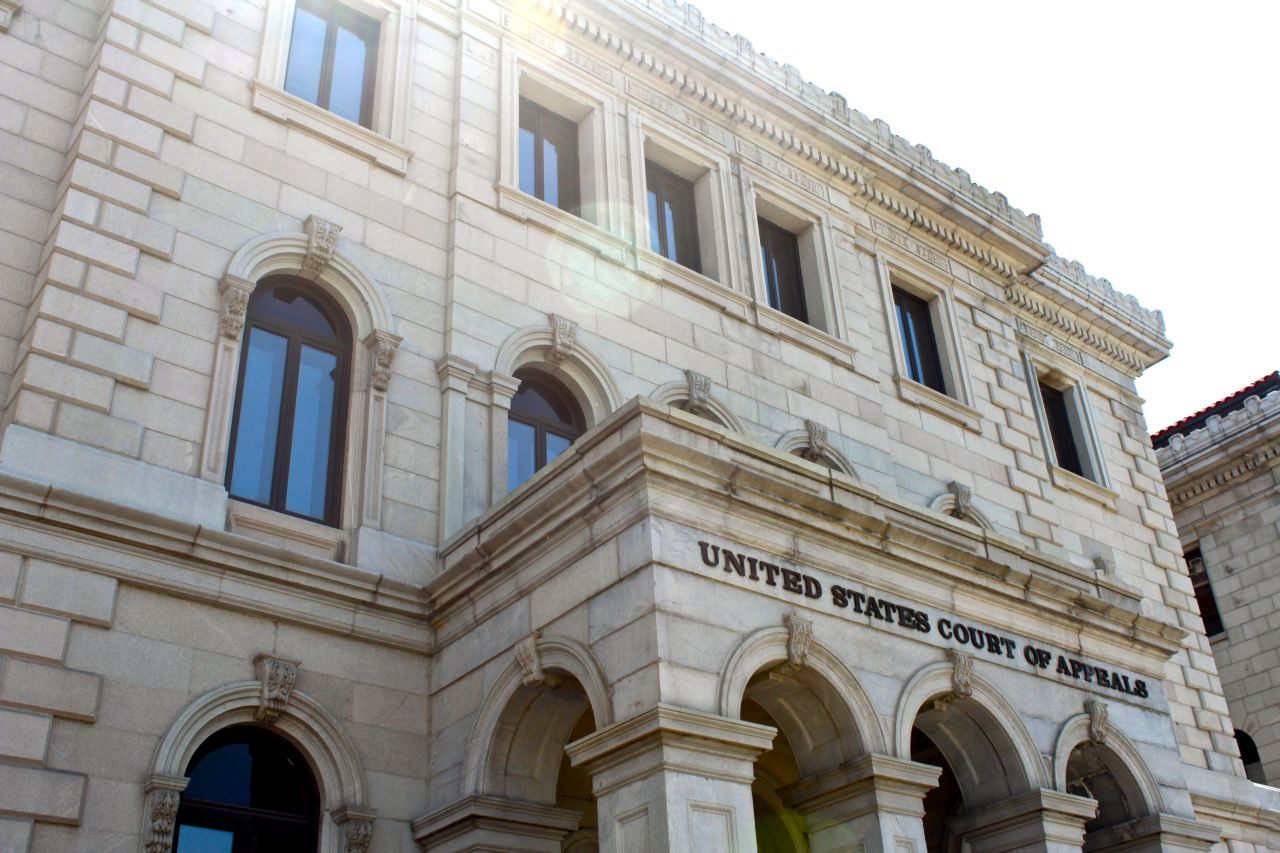
BY ERIN REED | The 4th U.S. Circuit Court of Appeals ruled Monday that transgender people are a protected class and that Medicaid bans on trans care are unconstitutional.
Furthermore, the court ruled that discriminating based on a diagnosis of gender dysphoria is discrimination based on gender identity and sex. The ruling is in response to lower court challenges against state laws and policies in North Carolina and West Virginia that prevent trans people on state plans or Medicaid from obtaining coverage for gender-affirming care; those lower courts found such exclusions unconstitutional.
In issuing the final ruling, the 4th Circuit declared that trans exclusions were “obviously discriminatory” and were “in violation of the equal protection clause” of the Constitution, upholding lower court rulings that barred the discriminatory exclusions.
The 4th Circuit ruling focused on two cases in states within its jurisdiction: North Carolina and West Virginia. In North Carolina, trans state employees who rely on the State Health Plan were unable to use it to obtain gender-affirming care for gender dysphoria diagnoses.
In West Virginia, a similar exclusion applied to those on the state’s Medicaid plan for surgeries related to a diagnosis of gender dysphoria. Both exclusions were overturned by lower courts, and both states appealed to the 4th Circuit.
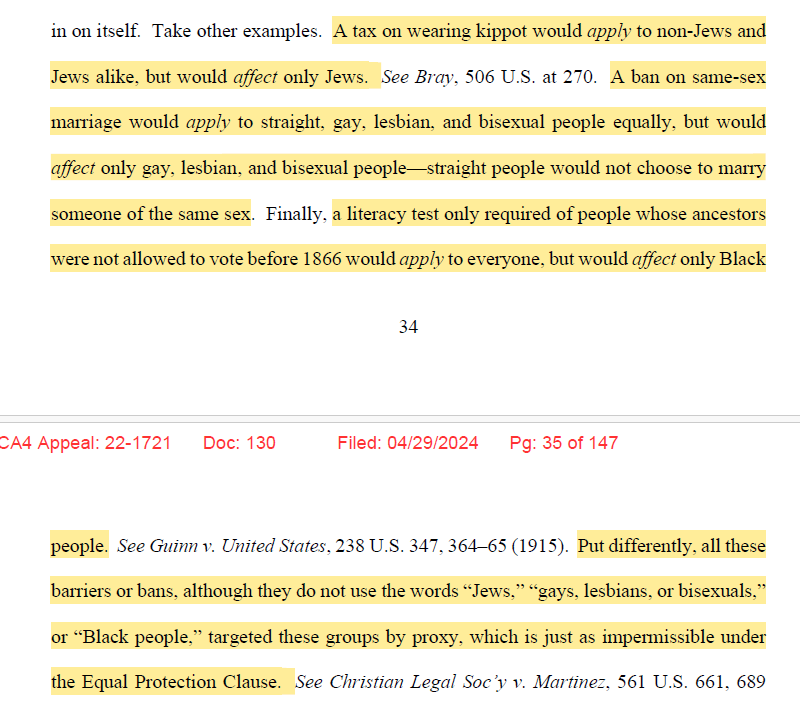
Attorneys for the states had argued that the policies were not discriminatory because the exclusions for gender affirming care “apply to everyone, not just transgender people.” The majority of the court, however, struck down such a claim, pointing to several other cases where such arguments break down, such as same-sex marriage bans “applying to straight, gay, lesbian, and bisexual people equally,” even though straight people would be entirely unaffected by such bans.
Other cases cited included literacy tests, a tax on wearing kippot for Jewish people, and interracial marriage in Loving v. Virginia.
See this portion of the court analysis here:
Of particular note in the majority opinion was a section on Geduldig v. Aiello that seemed laser-targeted toward an eventual U.S. Supreme Court decision on discriminatory policies targeting trans people. Geduldig v. Aiello, a 1974 ruling, determined that pregnancy discrimination is not inherently sex discrimination because it does not “classify on sex,” but rather, on pregnancy status.
Using similar arguments, the states claimed that gender affirming care exclusions did not classify or discriminate based on trans status or sex, but rather, on a diagnosis of gender dysphoria and treatments to alleviate that dysphoria.
The majority was unconvinced, ruling, “gender dysphoria is so intimately related to transgender status as to be virtually indistinguishable from it. The excluded treatments aim at addressing incongruity between sex assigned at birth and gender identity, the very heart of transgender status.” In doing so, the majority cited several cases, many from after Geduldig was decided.
Notably, Geduldig was cited in both the 6th and 11th Circuit decisions upholding gender affirming care bans in a handful of states.
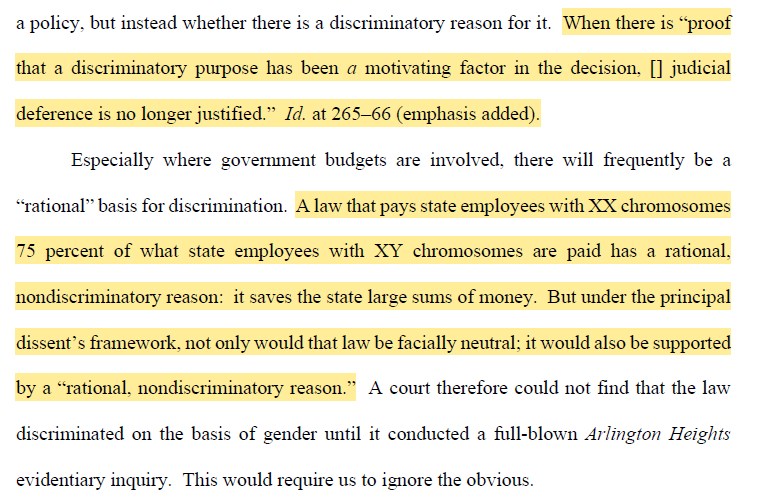
The court also pointed to the potentially ridiculous conclusions that strict readings of what counts as proxy discrimination could lead to, such as if legislators attempted to use “XX chromosomes” and “XY chromosomes” to get around sex discrimination policies:
Importantly, the court also rebutted recent arguments that Bostock applies only to “limited Title VII claims involving employers who fired” LGBTQ employees, and not to Title IX, which the Affordable Care Act’s anti-discrimination mandate references. The majority stated that this is not the case, and that there is “nothing in Bostock to suggest the holding was that narrow.”
Ultimately, the court ruled that the exclusions on trans care violate the Equal Protection Clause of the Constitution. The court also ruled that the West Virginia Medicaid Program violates the Medicaid Act and the anti-discrimination provisions of the Affordable Care Act.
Additionally, the court upheld the dismissal of anti-trans expert testimony for lacking relevant expertise. West Virginia and North Carolina must end trans care exclusions in line with earlier district court decisions.
The decision will likely have nationwide impacts on court cases in other districts. The case had become a major battleground for trans rights, with dozens of states filing amicus briefs in favor or against the protection of the equal process rights of trans people. Twenty-one Republican states filed an amicus brief in favor of denying trans people anti-discrimination protections in healthcare, and 17 Democratic states joined an amicus brief in support of the healthcare rights of trans individuals.
Many Republican states are defending anti-trans laws that discriminate against trans people by banning or limiting gender-affirming care. These laws could come under threat if the legal rationale used in this decision is adopted by other circuits. In the 4th Circuit’s jurisdiction, West Virginia and North Carolina already have gender-affirming care bans for trans youth in place, and South Carolina may consider a similar bill this week.
The decision could potentially be used as precedent to challenge all of those laws in the near future and to deter South Carolina’s bill from passing into law.
The decision is the latest in a web of legal battles concerning trans people. Earlier this month, the 4th Circuit also reversed a sports ban in West Virginia, ruling that Title IX protects trans student athletes. However, the Supreme Court recently narrowed a victory for trans healthcare from the 9th U.S. Circuit Court of Appeals and allowed Idaho to continue enforcing its ban on gender-affirming care for everyone except the two plaintiffs in the case.
Importantly, that decision was not about the constitutionality of gender-affirming care, but the limits of temporary injunctions in the early stages of a constitutional challenge to discriminatory state laws. It is likely that the Supreme Court will ultimately hear cases on this topic in the near future.
Celebrating the victory, Lambda Legal Counsel and Health Care Strategist Omar Gonzalez-Pagan said in a posted statement, “The court’s decision sends a clear message that gender-affirming care is critical medical care for transgender people and that denying it is harmful and unlawful … We hope this decision makes it clear to policy makers across the country that health care decisions belong to patients, their families, and their doctors, not to politicians.”
****************************************************************************

Erin Reed is a transgender woman (she/her pronouns) and researcher who tracks anti-LGBTQ+ legislation around the world and helps people become better advocates for their queer family, friends, colleagues, and community. Reed also is a social media consultant and public speaker.
******************************************************************************************
The preceding article was first published at Erin In The Morning and is republished with permission.






Federal Government
Todd Blanche’s record on LGBTQ issues comes under scrutiny as he takes over DOJ
Blanche was confirmed by the Republican controlled Senate 50-49.
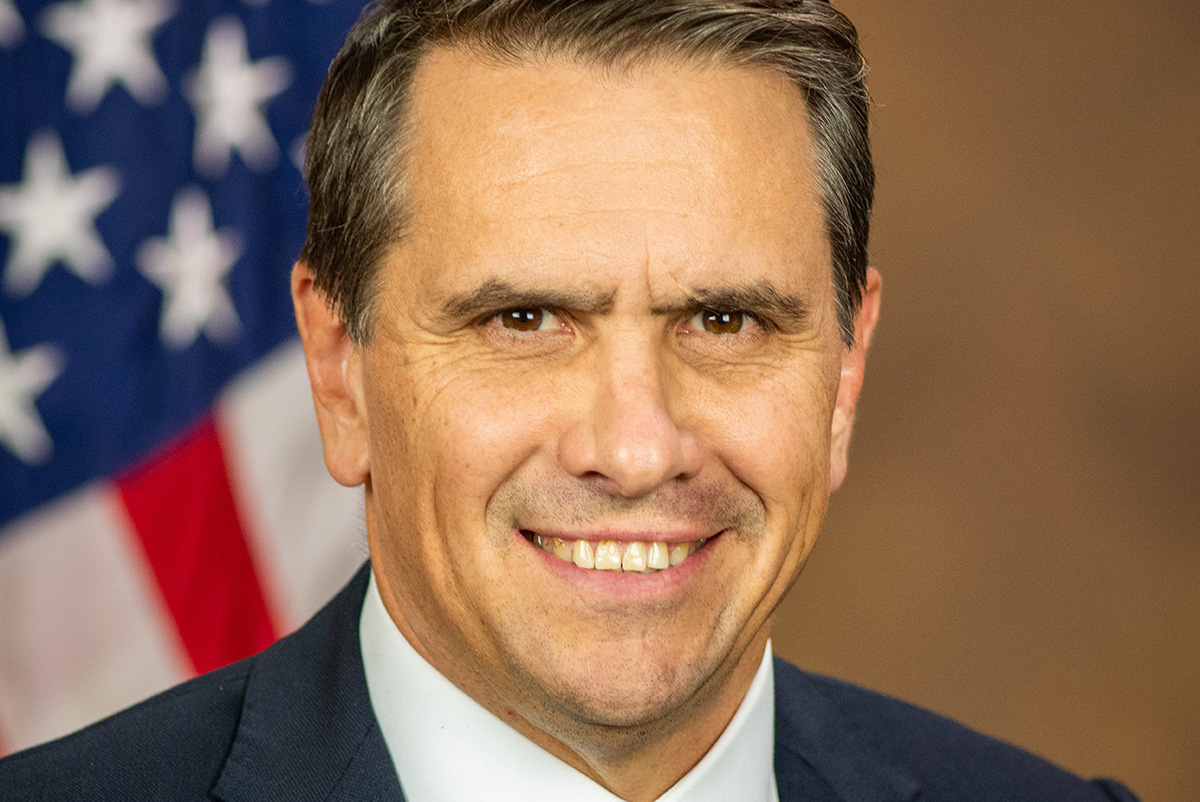
Todd Blanche, President Trump’s former personal lawyer, was sworn in as attorney general of the United States on Monday.
Blanche secured the position as the country’s 88th chief law enforcement officer on Sunday night after a contentious Senate confirmation process, ultimately ending with a 50-49 vote in his favor. All Democrats, as well as Republican Sens. Susan Collins and Lisa Murkowski, voted against him.
The confirmation hearing — and subsequent vote — brought questions surrounding Blanche’s credibility and integrity, as well as concerns about Trump’s ethical dilemmas surrounding cronyism, to the forefront.
The attorney general acts as the head of the Department of Justice, responsible for enforcing federal laws, representing the U.S. in court, and advising the president.
Blanche has a long history in Washington, beginning when he attended American University for his undergraduate education, like fellow former Trump attorney Michael Cohen. He began his legal career as an intern in the U.S. Attorney’s Office in Washington, which eventually became a full-time position.
That job eventually led him to work as a paralegal in the U.S. Attorney’s Office for the Southern District of New York while attending Brooklyn Law School at night. Blanche graduated cum laude in 2003.
Blanche left the public sector in 2014, taking a job in the Manhattan office of the law firm WilmerHale. In September 2017, he moved to Cadwalader, Wickersham & Taft LLP, where he was a partner in the White Collar Defense and Investigations practice.
There, Blanche represented several figures associated with President Donald Trump, including former New York City Mayor Rudy Giuliani and Trump’s former campaign manager Paul Manafort.
In 2024, Blanche switched from Democrat to Republican and moved from New York City to Palm Beach, Fla., where he would be closer to Trump’s primary legal residence at Mar-a-Lago.
He then served as Trump’s personal defense attorney in the New York state case that led to Trump’s 2024 conviction on 34 felony counts of falsifying business records to cover up hush-money payments to adult film star Stormy Daniels.
While serving as acting head of the Department of Justice before his official confirmation, Blanche played a central role in overseeing the department and was involved in leadership decisions tied to several controversial actions affecting LGBTQ people.
One of the first issues was transgender rights and gender-affirming care, particularly for minors — an issue the White House and Republican Party have made a key part of their broader cultural agenda and federal policy efforts.
In a letter to New York Attorney General Letitia James, Blanche declared that the Justice Department “will not sit idly by while you attempt to use your office to force harmful procedures on our most vulnerable population.”
The letter came before NYU Langone ended its gender-affirming care at the behest of the president, forcing the hospital system to stop prescribing puberty blockers and hormones to minors.
The hospital’s change in policy came after the Trump-Vance administration threatened to pull all federal funding if it continued providing the care.
Blanche wrote that “the Justice Department believes the law is clear, and anti-discrimination laws cannot be used to force NYU Langone to perform sex-rejecting procedures on children.”
“As just one example, your office’s position would require a hospital to prescribe certain medications for certain diagnoses, regardless of the hospital’s or its doctors’ independent medical determination about the propriety of such treatment,” he continued in the letter.
In addition to his anti-transgender positions, Blanche also echoed his predecessor, Pam Bondi, in taking a public stance on limiting LGBTQ-related protections at the federal level.
He aligned with Bondi’s sentiments in June 2025 regarding the U.S. Supreme Court’s 6–3 decision that restricted LGBTQ history lessons in schools and limited lower federal courts from issuing nationwide injunctions — rulings that have often blocked Trump administration policies.
Blanche called it “another great decision that came down today,” arguing the ruling “restores parents’ rights to decide their child’s education.”
“It took the Supreme Court to set the record straight, and we thank them for that,” he said. “Now that ruling allows parents to opt out of dangerous trans ideology and make the decisions for their children that they believe is correct.”
In December 2025, a Justice Department memo stated that, “effective immediately,” prisons and jails would no longer be held responsible for violations of standards meant to protect LGBTQ people from harassment, abuse and rape under the Prison Rape Elimination Act.
The law, passed unanimously by Congress in 2003, requires that incarcerated people be screened for their risk of sexual assault, including consideration of LGBTQ status, and applies to all correctional facilities.
Additionally, when the Justice Department, under Blanche’s deputy leadership and at Trump’s behest, attempted to force Children’s National Hospital in D.C. to turn over medical records related to gender-affirming care, U.S. District Judge Julie R. Rubin ruled that the effort “appears to have no purpose other than to intimidate and harass.”
Blanche also faced scrutiny over a slew of other issues surrounding his leadership during his tenure as acting AG.
The Justice Connection, a watchdog organization that works to protect current and former civil servants working in the U.S. Department of Justice, called his work so far “devastating.”
The organization said Blanche “harmed the department’s workforce, advanced the politicization of the department, undermined the rule of law, and threatened public safety.”
The group cited several issues, including what it described as Blanche minimizing the violent reality of the January 6 insurrection led by Trump supporters; investigating and attempting to prosecute President Trump’s perceived political enemies; the botched release of the Epstein Files to Congress and the public, including the release of victim and witness details and censorship surrounding the scope of Trump’s relationship with the convicted sex trafficker and pedophile; and the expansion of federal immigration enforcement in Minnesota which lead to the death of two U.S. citizens by federal officials.
Sharon McGowan, senior vice president of Policy & Litigation at the Human Rights Campaign, the largest LGBTQ advocacy group in the country, provided a statement to the Blade about Blanche’s confirmation calling it “chilling.”
“The last thing Todd Blanche deserves is a promotion,” McGowan said via email. “For months, Blanche has used his position as Acting Attorney General to advance President Trump’s personal and financial interests and to weaponize the Justice Department against the President’s enemies, whether they be transgender kids or civil rights organizations trying to help people vote. His notion of justice is warped and dangerous, and LGBTQ+ Americans deserve better.”
Federal Government
Trump holds housing bill hostage to anti-trans SAVE Act
President’s SAVE Act failed in the Senate
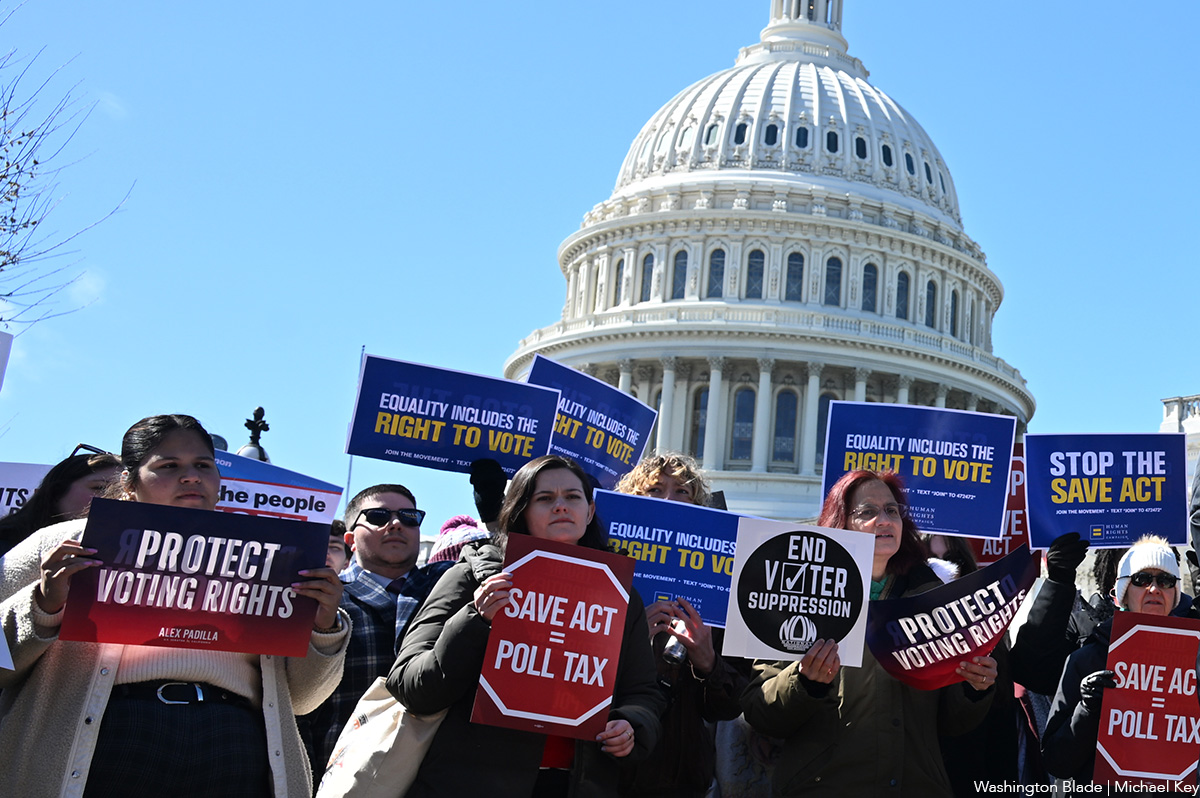
President Donald Trump is refusing to sign a new bipartisan housing bill unless his SAVE Act is approved by the legislative branch.
The bill being prevented from being enacted into law is the “21st Century ROAD to Housing Act.” The legislation is an attempt by Congress to make buying a home in the U.S. Senate more affordable in response to various factors — including housing shortages and regulatory constraints — that have made homeownership increasingly difficult. The total number of homeowners has nearly stopped growing, with high interest rates and surging home prices pushing more Americans toward renting.
The housing bill was considered highly bipartisan, something that is rare in this Congress. The House voted to pass the bill 358-32 on Tuesday after the Senate approved the measure 85-5 a day earlier. The legislation was led by U.S. Sens. Elizabeth Warren (D-Mass.) and Tim Scott (R-S.C.) in the Senate and U.S. Reps. Maxine Waters (D-Calif.) and French Hill (R-Ark.) in the U.S. House of Representatives.
Some of the highlights of the legislation are aimed at increasing the supply of affordable housing while making homeownership more accessible. The bill would streamline environmental reviews and direct the U.S. Department of Housing and Urban Development to provide guidance to communities on reforming zoning and land-use policies that can create barriers to housing development.
The legislation would also expand the definition of “manufactured housing,” making it cheaper and easier to mass-produce homes built in factories before being transported to their sites. To encourage additional development, the bill would provide grants and loans for the construction of new housing, the rehabilitation of aging properties, and the conversion of vacant buildings into residential units. It would also increase certain banks’ Public Welfare Investment cap, allowing them to direct more capital toward low-income and affordable housing projects.
In an effort to help more Americans purchase homes, the legislation would create a program to expand access to small-dollar mortgages, which are often used to finance lower-cost homes, while also seeking to improve housing opportunities for veterans. The bill would further promote homeownership by limiting the number of single-family homes that large institutional investors can own and requiring them to disclose how many such properties they control, a measure intended to prioritize American families over corporate buyers.
The bill the president wants enacted — the SAVE Act — is a restrictive and anti-transgender piece of proposed legislation.
The bill would impose a number of new limitations on voter registration across the country by amending the National Voter Registration Act of 1993 to require in-person proof of citizenship for anyone seeking to vote in U.S. elections. The bill would also limit acceptable forms of identification to documents such as a birth certificate or passport — records that the Brennan Center for Justice estimates more than 21 million Americans do not possess — effectively restricting access to the ballot. It would also ban online voter registration, DMV voter registration efforts, and mail-in voter registration.
Trump pushed for the SAVE Act to include a provision that would ban gender-affirming medical care for trans minors, even with parental consent, and prohibit trans people from participating in school or professional sports consistent with their gender identity rather than their sex assigned at birth.
Trump also pressed Senate Majority Leader John Thune (R-S.D.) to eliminate the filibuster so the Republican-controlled Congress could pass the SAVE Act, saying Republicans will never win another election without it.
It is expected that Congress will override the president’s veto and pass the 21st Century ROAD to Housing Act, as it requires a two-thirds supermajority vote in both the House of Representatives and the Senate — a threshold the legislation currently exceeds.
It is not expected that the SAVE Act will pass the Senate in its current form. It passed the House, but every Democrat and four Republicans voted against it in the Senate.
Federal Government
Advocates push back on proposed FCC warning labels
New rating system public notice seeking comments issued on April 22

The Federal Communications Commission is considering a new rating system that would require a warning label to appear before any television content that includes LGBTQ characters.
On April 22, the FCC issued a public notice asking Americans to submit comments on whether the TV Oversight Management Board should create new TV ratings to alert viewers to “transgender and gender nonbinary programming” and “the discussion or promotion of gender identity themes.”
This proposed warning would appear before content, similar to warnings that explain a program contains sexual content, drug use, or violence — categories that Congress explicitly included in the Telecommunications Act of 1996 on the grounds of obscenity and violence that some parents “believe is harmful to their children.”
The public notice says that “recently, parents have raised concerns that controversial gender identity issues are being included or promoted in children’s programs without providing any disclosure or transparency to parents.”
It goes on to say that not having a warning for trans and nonbinary people is “undermining the ability of parents to make informed choices for their families.”
LGBT Tech is an organization that works to provide LGBTQ representation in mainstream media or entertainment. The group notes 81 percent of trans respondents it surveyed said these representations had a positive impact on them discovering or learning about their identity.
“These numbers reflect a basic truth: for many people, and especially young people, seeing LGBTQ+ lives represented in ordinary media is not harmful. It is formative, affirming, and often lifesaving.”
Since the public notice’s publication, more than 40 organizations have come out against the proposed alert.
GLAAD President Sarah Kate Ellis issued a statement in May on the proposal, highlighting what she described as a concerted effort by the Trump-Vance administration to other trans and nonbinary people.
“The FCC does not set TV ratings, but under this administration the FCC has repeatedly tried to control what Americans can see on their own televisions. This government overreach is dangerous and a threat to our community and our democracy,” Ellis said.
“LGBTQ+ people and their families deserve to see their lives represented in the media they watch. And media companies must have the freedom to create programming that appeals to their viewers and subscribers without interference from a government pursuing its own anti-LGBTQ+ political agenda.”
Human Rights Campaign President Kelley Robinson pointed out that this is an act of politically motivated policy, not one based on any rhyme or reason.
“LGBTQ+ stories matter and deserve to be told, seen, and heard,” Robinson said. “The Trump administration does not get to use the FCC to try and erase us simply because they want to pretend to live in a world where we don’t exist. This is a brazen form of political interference that will hurt the ability of all people to appreciate, understand, and learn about the world and people around them.”
Brian Dittmeier, director of LGBTQI+ equality at the National Women’s Law Center Action Fund, echoed Robinson’s concerns that this is attempted censorship for the sake of political gain.
“The FCC is cloaking itself in purported concern for parents in an attempt to censor content, intimidate industry, and silence depictions of our trans siblings and neighbors,” Dittmeier wrote. “The FCC is overstepping its authority to undermine the existing ratings system, which is well understood by parents and enjoys broad public support. The FCC’s presumption that it knows better does not reflect parents’ priorities and reeks of government overreach.”
PFLAG National Vice President of Policy and Government Affairs Diego Sanchez said this is federal government overreach into censorship — something the First Amendment protects against.
“The FCC has given us yet another example of what ‘small government’ means: small enough to fit in your living room; to interrupt family movie night; small enough to make home feel unsafe,” Sanchez said. “Parents and families with transgender loved ones in particular know too well how big government actions impact their families directly, because they feel those impacts before everyone else.”
This proposed warning follows a slew of other federal actions targeting trans people in America, including Executive Order 14168, “Defending Women from Gender Ideology Extremism and Restoring Biological Truth to the Federal Government,” which mandated that only sex assigned at birth be used on federal government documents regardless of gender identity, as well as broad-based restrictions on gender-affirming care, particularly for trans minors.

Philadelphia event to launch 2026 LGBT History Month

Colombia withdraws from Equal Rights Coalition

Caso Karlina: Una sentencia histórica contra las terapias de «conversión»

Washington Blade responds to concerns over White House pool duties

Young people should know history of the fight for human rights

Over 2,000 turn out for Hands Around the Kennedy Center protest

PHOTOS: Wanda Alston Foundation Fall Reception

PHOTOS: Walk and 5K to End HIV

What LGBTQ veterans are building after ‘Don’t Ask, Don’t Tell’