World
Argentine gay activist criticizes Pope Francis
Francis led campaign against same-sex marriage in Argentina
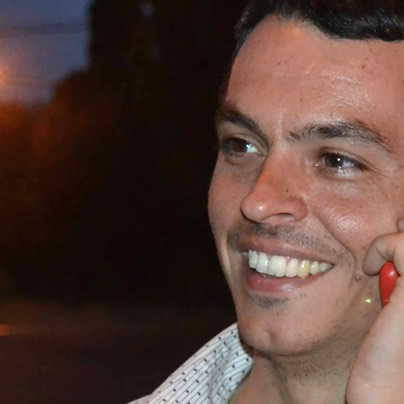
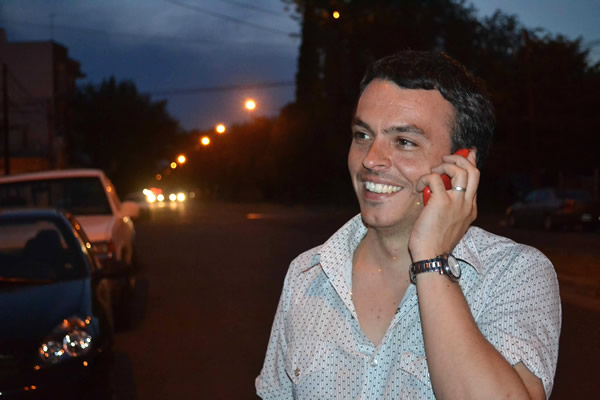
Esteban Paulón of the Lesbian, Gay, Bisexual and Trans Federation of Argentina. Photo courtesy of Esteban Paulón.
Argentina’s leading LGBT rights advocate on Wednesday criticized Pope Francis’ strong opposition to marriage rights for same-sex couples.
Esteban Paulón, president of the Lesbian, Gay, Bisexual and Trans Federation (FALGBT,) noted during an interview with the Washington Blade hours after the College of Cardinals elected Francis that he was among the most vocal critics of a same-sex marriage bill that President Cristina Fernández de Kirchner signed in 2010. The new pontiff, who was the-then archbishop of Buenos Aires, described the measure in a letter he wrote to four Argentine monasteries before the country’s Senate approved it as a “machination of the Father of Lies that seeks to confuse and deceive the children of God.”
Francis further categorized the bill as “the work of the devil” that would “spark God’s war.”
“He organized people who mobilized themselves en masse against the equality law and the rights of the collective diversity in moments during which the enormous social and parliamentary consensus that the equality law had in our country was clear,” Paulón said.
Fernández strongly rebuked Francis’ comments.
“It’s worrisome to listen to expressions such as ‘God’s war,’ ‘The work of the Devil;’ things which actually bring us back to the times of the Inquisition, to Medieval Times,” she said while on an official trip to China during the same-sex marriage debate.
The Argentine president further referenced the Crusades as she criticized Francis’ remarks.
“It establishes, as a society, a place which I don’t think any of us wants to have,” Kirchner said. “We are all willing to debate, to discuss, to dissent, but do it within a rational frame without stigmatizing others because they think differently and fundamentally.”
Paulón noted to the Blade that Francis lived in a country in which same-sex marriage has been legal for more than two years.
“This law did not cause any catastrophe, it did not damage the family, it did not cause the destruction of anything,” he said. “It has strengthened families; it has granted rights that have made many people happy.”
Francis, a Jesuit who was previously known as Jorge Mario Bergoglio, was born in Buenos Aires to Italian immigrant parents in 1936.
He became archbishop of the Argentine capital in 1998. Pope John Paul II in 2001 appointed him cardinal.
Francis was also reportedly the runner-up in 2005 when the College of Cardinals elected Benedict XVI to succeed the previous pontiff.
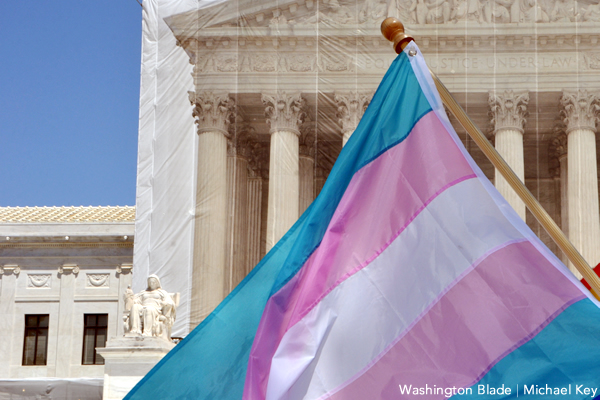
In addition to his opposition to marriage rights for same-sex couples, Paulón noted the new pope also spoke out against Argentina’s law that allows trans people to legally change their gender without sex-reassignment surgery. Francis has also claimed that adoption rights for gays and lesbians in the country constitutes discrimination against children.
The new pontiff has also been outspoken against efforts to allow abortion and in-vitro fertilization in Argentina.
A journalist in 2005 accused Francis of conspiring with the military junta that governed the country from 1976 to 1983 to kidnap two Jesuit priests. Up to an estimated 30,000 Argentines died or disappeared during the so-called dirty war, but Francis in 2010 told a court he actually tried to help the priests and others whom the regime had targeted.
In spite of the controversies, he has reached out to people with HIV/AIDS.
The National Catholic Reporter reported he kissed and washed the feet of 12 AIDS patients at a hospice he visited in 2001. Francis has also defended the poor and the public sector.
“On some issues the church has a discourse of mercy, of piety, of compassion,” Paulón said.
Francis faces criticism from other Latin America activists
Other LGBT rights advocates throughout the region have also criticized Francis, who is the first non-European pope.
“The Vatican and the entire hierarchy of the Catholic church have once again shown indifference at the very least to the human rights of people, electing as their highest representative someone who has stigmatized and offended the love between same-sex couples, calling it a danger to the family, for children and as a move towards the devil,” a spokesperson from the Movement for Homosexual Integration and Liberation, a Chilean LGBT rights group, said in a statement.
Ricardo Montenegro Vásquez, director of Orgullo LGBT Colombia, also spoke out against Francis’ election.
“With his election, the Vatican conclave insists on sowing prejudice and hate against some people who more than simply repudiating, deserve understanding and social inclusion,” he said.
Rev. Victor Bracuto of the Metropolitan Community Church in Buenos Aires, pointed out Francis’ advocacy for the poor and speaking out against corruption. He also highlighted the pontiff’s opposition to Argentina’s same-sex marriage and gender identity laws and his reputed ties to the military junta.
Bracuto described the conclave’s decision to elect Francis as a “strategic political decision” in a statement he e-mailed to the Blade.
“He will be a pope of friendly discourse with the poor, austere and pious, but a cloud will continue to hang over his head over the dictatorship, excluding the GLBTI collective,” he wrote. “He will seek to ensure that the ‘politics of right’ do not spread.”
In spite of her previous statements against the new pope, Fernández congratulated Francis in a statement she issued shortly after the College of Cardinals elected him. She will also attend his installation Mass in Rome on March 19.
“It is our desire that you have, assuming the helm and guidance of the church … successfully carry out your extremely important pastoral charge in pursuit of justice, equality, fraternity and peace for mankind,” Kirchner said.
Paulón acknowledged many of his countrymen feel a sense of pride over Francis’ election.
More than 75 percent of Argentines are Catholic, but Paulón concedes he does not feel the church’s opposition to same-sex marriage and other issues will change under Francis’ pontificate.
“We would like to be optimistic but we do not have much reason to be so,” he said.




Iran
Man stuck in Lebanon as Iran war escalates
Mario was traveling to India when conflict began on Feb. 28
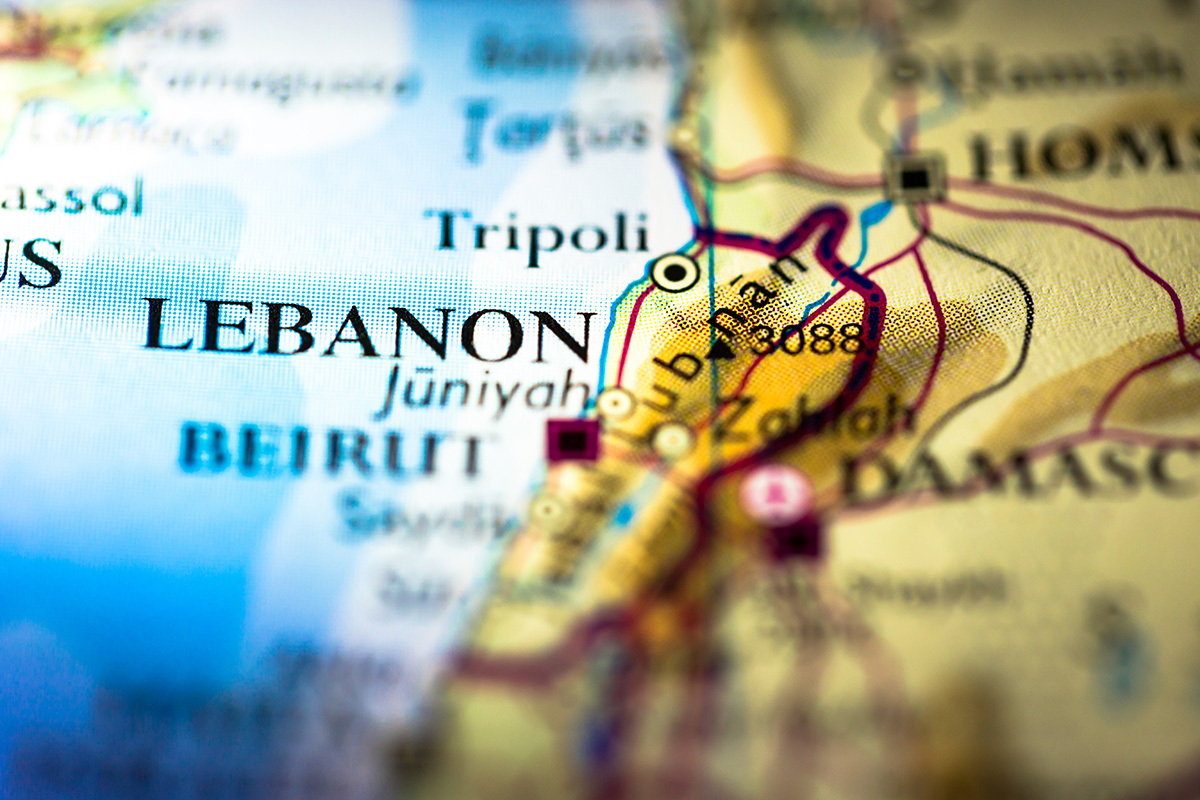
The Washington Blade on March 6 spoke with a man who remains stuck in Lebanon because of the escalating Iran war.
Mario, who asked the Blade not to publish his last name, lives in the U.S., but was born in Lebanon. He decided to stop in the country to see his doctor before traveling to India for work.
Mario was about to board a flight at Rafic Hariri International Airport in Beirut, the Lebanese capital, on Feb. 28 when airline personnel announced “we cannot fly anymore” because authorities had closed the country’s airspace.
The U.S. and Israel earlier that day launched airstrikes against Iran.
One of them killed Supreme Leader Ayatollah Ali Khamenei. Iran in response launched missiles and drones against Israel and Kuwait, Bahrain, Qatar, the United Arab Emirates, Jordan, Azerbaijan, Cyprus, and other countries.
An Iranian drone that hit a command center in Kuwait on March 1 killed six U.S. soldiers: Sgt. Declan Coady, Sgt. 1st Class Nicole Amor, Capt. Cody Khork, Sgt. 1st Class Noah Tietjens, Chief Warrant Officer 3 Robert Marzan, and Maj. Jeffrey O’Brien. Another American servicemember, Sgt. Benjamin Pennington, died on Sunday, a week after Iranian drones and missiles targeted the Prince Sultan Air Base in Saudi Arabia.
Iranian drones and missiles have also damaged civilian infrastructure, including hotels and airports in Dubai in the United Arab Emirates and Kuwait. An Iranian missile on March 1 killed nine people and injured 27 others in Beit Shemesh, Israel.
The war has left Mario and hundreds of thousands of others stranded in the Middle East.
“I had to come back home,” Mario told the Blade.
“Luckily, I’m with family,” he added.
‘War is between Israel and Hezbollah’
Hezbollah, an Iran-backed Shia militant group the U.S. and Israel have designated a terrorist organization, after Khamenei’s death launched rockets at Israel. The Jewish State in response has carried out airstrikes against Hezbollah targets across Lebanon.
Hamas militants on Oct. 7, 2023, killed upwards of 1,200 people when they launched a surprise attack against Israel from the Gaza Strip. Hezbollah the following day began to launch rockets into Israel.
An Israeli airstrike in Beirut on Sept. 27, 2024, killed Hassan Nasrallah, Hezbollah’s long-time leader. Iran four days later launched upwards of 200 ballistic missiles at Israel.
The U.S. helped broker a ceasefire between Israel and Lebanon that took effect on Nov. 27, 2024. Israel nevertheless continued to carry out airstrikes in Lebanon.
Israel on June 13, 2025, launched airstrikes against Iran that targeted the country’s nuclear and military facilities. The subsequent war, which lasted 12 days, prompted the cancellation of the annual Tel Aviv Pride parade.
Mario noted the Israeli airstrikes have targeted Hezbollah infrastructure in Dahiyah, a Beirut suburb that is predominantly Shia, and in southern Lebanon.
His family’s home is about five miles from downtown Beirut. Mario said there is a mountain “that separates me from the area that is being bombed, so I don’t even hear the sounds.”
“Lebanon is such an interesting juxtaposition, because depending on which area you are in, your quality of life can be different during these times,” he said. “Right now, the war is not between Israel and Lebanon as a government. The war is between Israel and Hezbollah.”
“If you are in the areas where Hezbollah is concentrated, then you are severely impacted,” added Mario. “If you are in other areas, even if they are Shia or … Muslims that usually align themselves with Hezbollah, you’re still relatively in a safe place, in a safe location.”
Israeli evacuation orders have prompted hundreds of thousands of people to flee their homes in Dahiyah and in southern Lebanon.
Mario said many of the evacuees are sleeping in their cars, or on the street. He also noted a video that showed a shepherd with his sheep and goats on a highway in downtown Beirut.
“He took his animals with him because he had to vacate where he was living,” said Mario. “That’s the first time you see in downtown Beirut maybe 100 goats walking the streets with two people sitting on jackasses and herding them.”
“It is very absurd,” he added.
The Lebanese government has opened schools and public shelters for people who have been displaced, but Mario said many of them do not have enough food. He also said gas prices have increased, and people are afraid to drive.
“It really saddens me seeing the kids affected by it,” said Mario. “Hezbollah made this decision, and it was a unilateral decision.”
“I doubt that the Shia people support them,” he added, referring to Hezbollah. “They cannot say it out loud that they do not support them, but I doubt people are happy within less than two years, for the second time in a row, to have to leave their homes and try to find a place to stay.”
Lebanese government urged to develop LGBTQ-inclusive plan for displaced people
Article 534 of Lebanon’s Penal Code states “any sexual intercourse contrary to the order of nature is punishable” by up to a year in prison. Several judges in recent years have opted not to use the statute to prosecute LGBTQ people who have been charged under it.
Helem, a Lebanese LGBTQ and intersex rights group, on March 4 called upon the Lebanese government and international NGOs to develop a response to the Israeli airstrikes that is “comprehensive, fair, and inclusive of all groups, without exception or discrimination.
“The experience of the previous war demonstrated that state response plans were not sufficiently inclusive of displaced LGBTQ+ individuals,” said Helem. “Many faced compounded challenges, including the inability to access state collective shelters, exposure to harassment or violence, difficulty accessing health and psychosocial services, and fear of disclosing their gender identity or sexual orientation due to stigma and discrimination.”
“Any emergency plan that fails to take the most vulnerable groups into account exposes their lives and dignity to additional risks,” added the group.
Helem also made the following requests:
• Integrating a rights-based and nondiscrimination approach in all stages of planning and implementation, ensuring safe and equal access to assistance and services.
• Training staff working in shelters and emergency response on principles of protection from gender-based violence and discrimination, including issues related to gender identity and sexual orientation.
• Reassessment of the currently adopted shelter model, which relies exclusively on the concept of the “traditional family” aligned with a specific social structure. In practice, this leads to the systematic exclusion of non-traditional families and individuals who do not belong to conventional family units, including LGBTQ+ individuals, survivors of domestic violence, migrant workers, and people without supportive family networks.
• Involving civil society organizations specialized in gender issues and LGBTQ+ rights in the design, implementation, and monitoring of the emergency response plan.
• Establishing clear monitoring and accountability standards to ensure that violations or discriminatory practices do not occur during the implementation of the emergency plan.
“Disasters and conflicts do not justify the suspension of rights or the neglect of marginalized groups. On the contrary, the need for a humanitarian approach grounded in dignity and equality becomes even more urgent in times of crisis.”
“Helem places its expertise and experience at the disposal of relevant authorities and affirms its readiness to cooperate to ensure that the emergency plan is more just, effective, and inclusive,” said Helem. “Dignity is indivisible, and protection must include everyone without exception.”
Colombia
Claudia López wins primary in Colombian presidential race
Former Bogotá mayor’s wife lost reelection bid on Sunday
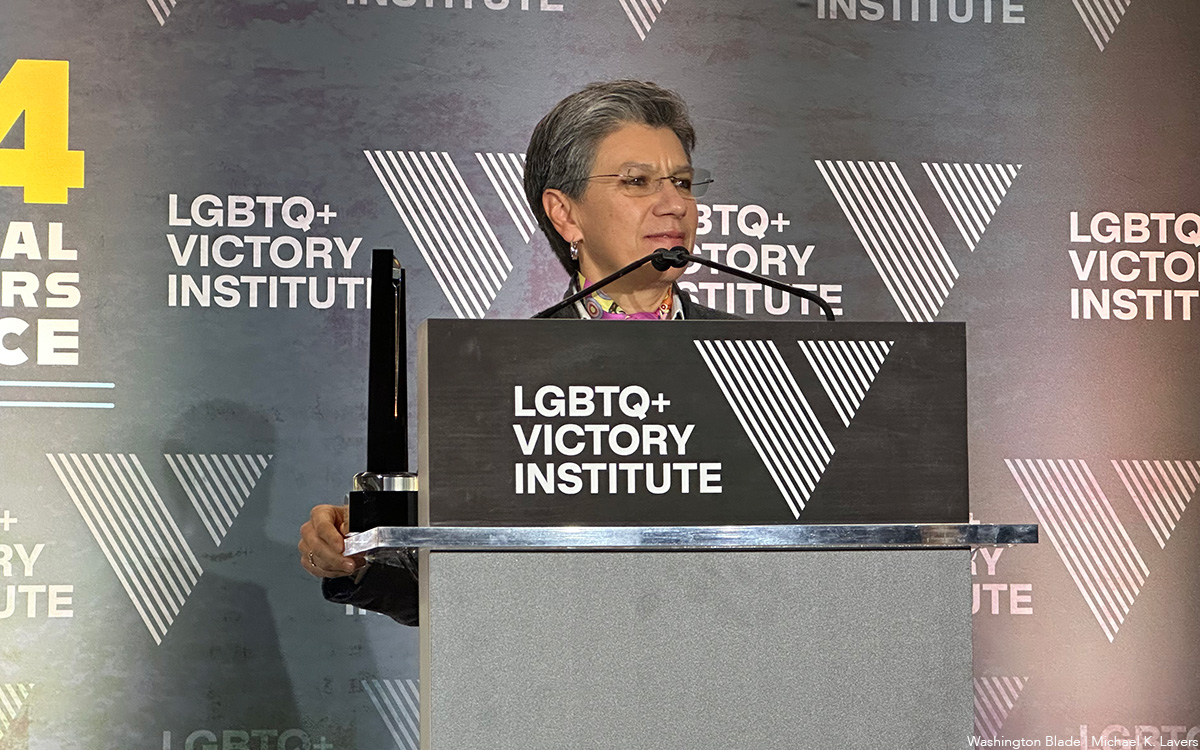
Former Bogotá Mayor Claudia López on Sunday won her primary in the race to succeed Colombian President Gustavo Petro.
López, a centrist who is running as an independent, defeated Leonardo Huerta in the “Consulta de las Soluciones” primary.
López was the Colombian capital’s mayor from 2020-2023. She was a member of the Colombian Senate from 2014-2018.
López is running to succeed Petro, the country’s first leftist president who cannot seek a second consecutive term under Colombia’s constitution. Other presidential candidates who won their respective parties’ primaries on Sunday include Sen. Iván Cepeda, a member of Petro’s Historic Pact party, and Sen. Paloma Valencia of the conservative Democratic Center, the country’s main opposition party that former President Álvaro Uribe leads.
Juan Daniel Oviedo, who finished second in the Democratic Center’s primary, is openly gay.
The first-round of Colombia’s presidential election will take place on May 31.
Polls indicate López is trailing Cepeda and Valencia, who are considered the two frontrunners.
A second round will take place is no candidate receives at least 50 percent of the vote on May 31. López would become Colombia’s first female and first lesbian president if she wins the election.
López’s wife loses Senate seat
Colombia’s congressional elections also took place on Sunday.
Former Congressman Mauricio Toro, a member of the center-left Green Alliance party, in 2018 became the first openly gay man elected to Colombian Congress when he won a seat in the House of Representatives.
He lost his reelection bid in 2022. Voters on Sunday elected Toro for a second term.
Congresswoman María del Mar Pizarro, a bisexual Historic Pact member, won re-election.
Caribe Afirmativo, a Colombian LGBTQ and intersex rights group, notes only two of the 33 openly LGBTQ congressional candidates won their respective races. Among those who lost is Sen. Angélica Lozano, a bisexual woman who in 2018 became the first openly LGBTQ person elected to the Colombian Senate.
Lozano is married to López.
Lozano in a message posted to her Instagram page expressed “heartfelt gratitude to everyone for their support and love.”
“I will end my work in Congress on a high note by ensuring (the) child support and service contractor protection bills will become a reality in June,” she said.
Uganda
Ugandan activist named Charles F. Kettering Foundation fellow
Clare Byarugaba founded PFLAG-Uganda
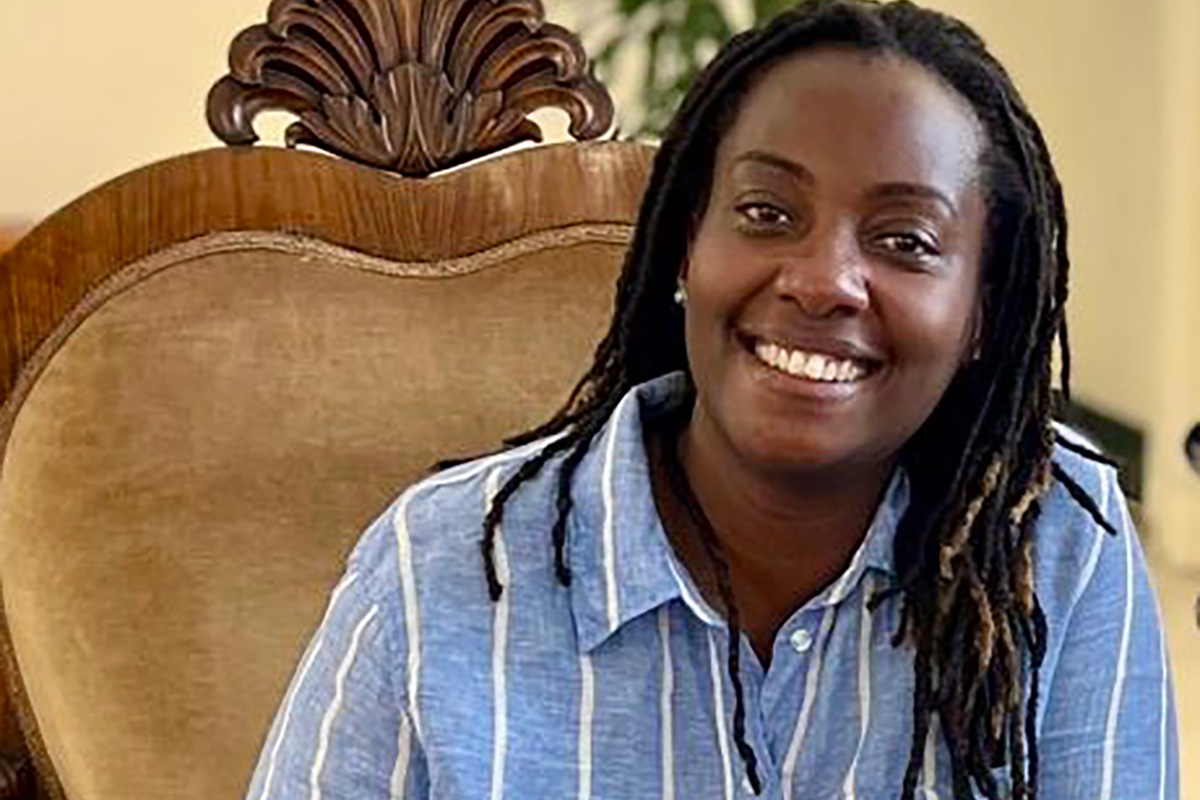
The Charles F. Kettering Foundation has named a prominent Ugandan LGBTQ activist as one of its 2026 fellows.
Clare Byarugaba, founder of PFLAG-Uganda, is one of the foundation’s five 2026 Global Fellows.
Byarugaba, among other things, has been a vocal critic of Uganda’s Anti-Homosexuality Act. Byarugaba in 2024 met with Pope Francis — who criticized criminalization laws during his papacy — at the Vatican.
The foundation on its website says it “is dedicated to bringing research and people together to make the promise of democracy real for everyone, everywhere.”
“Clare is the kind of hero who rushes toward the emergency to help,” said PFLAG CEO Brian K. Bond in a Feb. 27 statement to the Washington Blade. “She founded PFLAG-Uganda as the country pushed to criminalize homosexuality and those who support LGBTQ+ people. Yet, she never hesitated in her courage, telling us that families wanted to organize to keep their LGBTQ+ loved ones safe, and PFLAG was the way to do it. Clare Byarugaba not only deserves this honor, but she will use her compassion and experience to teach the world about LGBTQ+ advocacy as a Kettering Global Fellow.”

Man stuck in Lebanon as Iran war escalates

CAMP Rehoboth hires new executive director

Claudia López wins primary in Colombian presidential race

Too afraid to leave home: ICE’s toll on Latino HIV care

Intense doc offers transcendent treatment of queer fetish pioneer

13 HIV/AIDS activists arrested on Capitol Hill

PHOTOS: Sydney Gay and Lesbian Mardi Gras Parade

Fla. Senate passes ‘Anti-Diversity’ bill that could repeal local LGBTQ protections

Ugandan activist named Charles F. Kettering Foundation fellow

Liza Minnelli makes surprise appearance at GLAAD Media Awards
-

 National5 days ago
13 HIV/AIDS activists arrested on Capitol Hill
-
Photos5 days ago
PHOTOS: Sydney Gay and Lesbian Mardi Gras Parade
-
Florida3 days ago
Fla. Senate passes ‘Anti-Diversity’ bill that could repeal local LGBTQ protections
-
Uganda4 days ago
Ugandan activist named Charles F. Kettering Foundation fellow