Living
Queery: Joshua Vogelsong
The GAY/BASH! DJ answers 20 gay questions
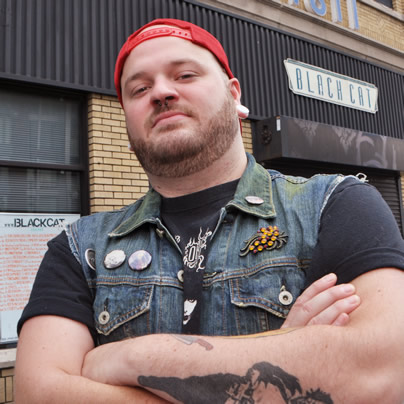
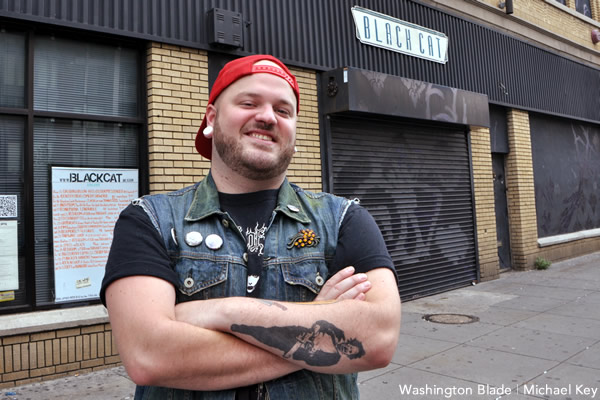
Joshua Vogelsong (Washington Blade photo by Michael Key)
GAY/BASH!, a monthly gay rock/dance party at the Black Cat (1811 14th St., N.W.) started almost as a fluke.
Joshua Vogelsong, who co-DJs the event with his roommate Dean Sullivan, got into a conversation with the cashier at Smash Records in Georgetown about his love for vintage hair metal. Off the cuff, he mentioned wishing there was a gay rock party such as those he enjoyed during the two years (’04-’06) he lived in New York. Phone numbers were exchanged and passed on and before long, the Black Cat had the party penciled in for a trial night. It’s been rolling there monthly since February 2011.
It starts at 9:30 p.m. but around 11:30, revelers gather around the stage for performances by “D.C.’s most experimental and avant garde queens, giving them a platform to express themselves in the most unconventional ways.”
GAY/BASH! is the Black Cat’s first monthly drag show. Vogelsong, who works by day at gay-owned Comet Ping Pong and spins other events at Black Cat, says the Cat has “a good mix of gay and straight” patrons.
The next GAY/BASH! is Saturday at 9:30 and is open to all ages (though D.C.’s curfew law is in effect). Cover is $5. Find the party on Facebook for more information. Rumor Millz and Heidi Glum host this weekend’s installment.
“It’s kind of a genre fuck but with a harder rock edge,” he says. “And there’s a sense of humor about it. We do a lot of stuff people will know. They just get kind of discombobulated and thrash around. It’s cute.”
Vogelson, a 29-year-old Houston native, has been in D.C. off and on for about 10 years. He lives in a group home near Columbia Heights, has been dating boyfriend Kevin for about a year and enjoys music, movies, restaurants and live shows in his free time.
How long have you been out and who was the hardest person to tell?
I’ve always been a total ‘mo. When I told my parents at age 14, they were basically like, “We were just waiting for you to figure it out and we love you.” I’m very fortunate and I love my family very much.
Who’s your LGBT hero?
Divine, forever and ever.
What’s Washington’s best nightspot, past or present?
I really miss Asylum.
Describe your dream wedding.
Marry in a courthouse, then throw a huge party.
What non-LGBT issue are you most passionate about?
Women’s health care and women’s issues in general. I’ve always looked up to my mother and watched her struggle in the military and other male-dominated workplaces. She’s a strong, smart woman and has always been my hero.
What historical outcome would you change?
I don’t feel comfortable discussing things like that.
What’s been the most memorable pop culture moment of your lifetime?
The 1997 VMAs, for Fiona Apple’s amazing “this-world-is-bullshit” speech and Marilyn Manson’s butt-cheek-baring “Beautiful People” performance. I was forever changed.
On what do you insist?
Punctuality
What was your last Facebook post or Tweet?
It was about how I’m sad that summer is ending. This has been a really good one!
If your life were a book, what would the title be?
“Oh My God, Whatever.” It would be a best seller!
If science discovered a way to change sexual orientation, what would you do?
Inform the self-hating closeted gays so they’ll shut the hell up and leave the rest of us alone.
What do you believe in beyond the physical world?
Nothing, really. I’m not exactly spiritual.
What’s your advice for LGBT movement leaders?
Be more angry and militant. Start scaring people.
What would you walk across hot coals for?
A lot of things, probably. I get passionate.
What LGBT stereotype annoys you most?
For gay men: That we’re somehow weak or not masculine.
For gay women: That they haven’t found the right man yet.
For trans people: That they’re confused and/or impulsive.
What’s your favorite LGBT movie?
“Poison” by Todd Haynes.
What’s the most overrated social custom?
So much emphasis on first impressions.
What trophy or prize do you most covet?
My trophy for first place at the third grade spelling bee.
What do you wish you’d known at 18?
It gets harder, so apply yourself.
Why Washington?
It’s clean and people are well-educated.






As the days grow longer and buyers re-emerge from winter hibernation, the spring market consistently proves to be one of the strongest times of year to sell a home. Increased inventory, motivated buyers, and picture-perfect curb appeal make it a prime window for homeowners ready to list.
The good news? Preparing your home for spring doesn’t require a full renovation or a contractor on speed dial. A few thoughtful, cost-effective updates can dramatically elevate your home’s appeal and market value.
Here are smart, inexpensive ways to get your property market-ready:
Fresh Paint: The Highest Return on a Small Investment
Few improvements transform a home as quickly and affordably as paint. Neutral tones remain the gold standard, but today’s buyers are gravitating toward warmer tan hues that create an inviting, elevated feel without overwhelming a space. Soft sandy beiges and warm greige-leaning tans provide a clean backdrop that photographs beautifully and allows buyers to envision their own furnishings in the home.
Freshly painted walls signal care and maintenance — two qualities buyers subconsciously look for when touring properties.
Removable Wallpaper: Style Without Commitment
For homeowners wanting to introduce personality without permanence, removable wallpaper offers a stylish solution. A subtle textured pattern in a powder room, a soft botanical print in a bedroom, or a modern geometric accent wall can add depth and character. Because it’s easily removed, it appeals to both sellers and buyers — creating visual interest without long-term risk.
Upgrade Light Fixtures for Instant Modernization
Outdated lighting can age a home instantly. Swapping builder-grade fixtures for modern, streamlined options is one of the simplest ways to refresh a space. Consider warm metallic finishes or matte black accents to create a cohesive, updated look. Proper lighting not only enhances aesthetics but also ensures your home feels bright and welcoming during showings.
Elevate Curb Appeal: First Impressions Matter Most
Spring buyers often decide how they feel about a home before they ever step inside. Refreshing curb appeal doesn’t require major landscaping. Simple updates such as fresh mulch, trimmed shrubs, seasonal flowers, a newly painted front door, and updated house numbers can dramatically improve first impressions. Power washing the driveway and walkways also delivers a clean, well-maintained appearance for minimal cost. Even if you don’t have a curb to appeal- think potted plants on your patio, balcony and change out your door mat.
Deep Clean & Declutter (Seriously, It Matters)
A deep, top-to-bottom cleaning is basically free and one of the most impactful things you can do. Scrub floors, windows, grout, baseboards, appliances, bathrooms, and everything in between. Don’t forget to clean windows inside and out — natural light is a huge selling point. Declutter by packing up excess stuff, clearing off countertops, and minimizing personal items so buyers can see the space, not your life.
Let the Light Shine
Make your home feel bright and inviting by cleaning windows, opening blinds, and replacing dark or dated light fixtures with contemporary, budget-friendly options. Swapping in LED bulbs offers brighter light and lower utility costs — a small change that buyers appreciate. Pro tip: I always recommend removing widow screens to allow as much light in as possible
Neutralize Scents
Make sure the home smells fresh. Neutralizing odors — whether from pets, cooking, or moisture — creates a clean, welcoming atmosphere. Light natural scents like citrus or subtle florals can be inviting during showings. Think of how your favorite hotel smells and go for that.
Spring market rewards preparation. By focusing on high-impact, low-cost improvements, sellers can position their homes to stand out in a competitive environment. With thoughtful updates and strategic presentation, homeowners can maximize both buyer interest and potential sale price — all without overextending their renovation budget.
As activity increases and inventory begins to rise, now is the time to prepare. A little polish today can translate into significant results tomorrow.
Justin Noble is a Real Estate professional with Sotheby’s International Realty Servicing Washington D.C., Maryland, and the beaches of Delaware.
Advice
Dry January has isolated me from my friends
Is it possible to have social life without alcohol?

Dear Michael,
Some of my friends and I decided to do Dry January.
The six of us are a posse, we’ve been friends for years. Many boyfriends and even a husband or two have come and gone but we get together all the time and travel together.
I think we all agreed that drinking is too big a part of our social lives and thought we’d give Dry January a shot.
So … I am feeling better and it’s only been three weeks.
I’ve actually lost a little weight, and it’s nice not to wake up with a hangover four mornings a week. I’m pushing 40 and no surprise, my body feels relieved.
But, I’m also the only one of us who is still doing it.
Which means they are all going out and I am not. So I am feeling lonely.
I could join them in going out but first of all, I don’t really want to hang out with them when they’re drunk and I’m trying to be alcohol free; and also, there’s a part of me that is afraid I will give in to temptation and have a drink. And then it will be back to business as usual.
But, I spent this past weekend, and every night this week, alone.
All of this has me thinking: what do I do in February? I really don’t want to start drinking again.
But, if I don’t, how do I stay part of my friend group? If they’re buzzed (or drunk) and I’m not, am I still going to fit in?
I’m disappointed in my friends. We were all in this together, I thought, but one thing after another came up for them.
Some special event where “everyone was drinking,” a work dinner where “I didn’t want to deal with everyone’s questions about why I wasn’t drinking,” “too much work stress not to have a martini,” etc. In the end they were all laughing about it and now they’re basically poking fun at me and essentially betting how long I will last. That doesn’t feel good. It’s like the whole thing was a whim or a joke to them.
Also, heavy alcohol use is pretty typical of our community. If I’m not drinking then how do I have a social life?
Appreciate your thoughts.
Michael replies:
It can be hard to be different. For example, to be gay in a straight world, or not to drink in a world where alcohol plays such a big part.
I’m a believer in living in a way that respects whom you actually are. This means doing what you think is important to do, even when there are consequences you don’t like. Only you can decide the boundary where the consequences of your living with integrity become intolerable.
Yes, many gay men drink a lot. So if you decide you don’t want to hang out where alcohol is involved, you will be reducing your options for socializing.
Some possibilities:
- Discuss this situation with your friends. Ask them if they’re willing to spend some time with you and without alcohol. (Not all the time — that would be way too much to ask, given that they clearly enjoy drinking.) Perhaps if you explain why your request is important to you, they’ll be willing to lean in your direction at least some of the time. That they’re now mocking you for not drinking suggests I am a bit too optimistic about this possibility. But who knows? And, what have you to lose by asking?
- See if you can tolerate hanging out with people who are drinking without picking up a drink yourself, and if you can actually enjoy such interactions.
- Start looking for some new friends. There are, in fact, lots of gay men in this world whose social lives don’t revolve around alcohol (or other substances.)
On a separate but related note: given your fear that you will start drinking again, and your concerns about navigating life without alcohol, might you consider Alcoholics Anonymous to get some support?
I’ve seen AA and other 12-step groups help many friends and clients, and I think they work in two main ways.
First, attending meetings gives you support and a feeling of community. You’ll meet others who are working to be sober, hear their stories and share your own struggles with them. You’re likely to feel less alone in your effort to stop drinking, learn tools for staying sober, and make friends you can reach out to when you’re feeling vulnerable. You’ll also have a sponsor, your guide and advocate in the program, whom you talk with regularly.
Second, the program lays out “12 steps” of recovery that are a path to greater self-awareness and personal growth. Like good psychotherapy, the steps give you a framework for looking at your behavior patterns and taking responsibility for yourself.
If you are intrigued, the best way to learn more is to attend several 12-step meetings. There are many in our area, including gay groups (for example, the Triangle Club.) As I mentioned, if you do get involved in AA, a side benefit is that you’re likely to make some new friends who share your desire to build a life without alcohol.
Of course, making new friends does not have to mean cutting off your posse. But if you’re changing in ways that make them less of a great fit, it would be great to find some new folks who might be more on your wavelength to connect with.
Michael Radkowsky, Psy.D. is a licensed psychologist who works with couples and individuals in D.C., Maryland, Virginia, and New York. He can be found online at michaelradkowsky.com. All identifying information has been changed for reasons of confidentiality. Have a question? Send it to [email protected]
Real Estate
2026: prices, pace, and winter weather
Lingering snow cover, sub-freezing temperatures have impacted area housing market

The D.C. metropolitan area’s housing market remains both pricey and complex. Buyers and sellers are navigating not only high costs and shifting buyer preferences, but also seasonal weather conditions that influence construction, inventory, showings, and marketing time.
Seasonality has long affected the housing market across the U.S. Activity typically peaks in spring and summer and dips in winter; however, January and February 2026 brought unusually cold spells to our area, with extended freezing conditions.
Persistent snow and ice-covered roads and sidewalks have gone for days, and in some cases weeks, before melting. While snow accumulation normally averages only a few inches this time of year, this winter saw below-normal temperatures and lingering snow cover that has significantly disrupted normal activity.
Rather than relying on neighborhood teenagers to shovel snow to make some extra money, the “snowcrete” has required ice picks, Bobcats, and snow removal professionals to clear streets and alleys, free our cars from their parking spaces, and restore availability of mass transit.
These winter conditions have had an adverse impact on the regional housing market in several ways.
- Construction slowdown: New builds and exterior improvements often pause during extended cold, resulting in delayed housing starts when we need affordable housing in the worst way.
- Listing preparation: Cleaning crews, sign installers, photographers, and stagers with trucks full of furniture may be unable to navigate roads and need to postpone service.
- Showings and open houses: Simply put, buyers are less inclined to schedule visits in hazardous conditions. Sellers must ensure walkways and parking areas are clear and de-iced and be able to vacate the property while viewings are taking place.
- Inspection and appraisal delays: Like buyers and sellers, ancillary professionals may be delayed by unfavorable weather, slowing timelines from contract to close.
- Maintenance and repairs: Properties with winter damage (e.g., ice dams or frozen pipes) may experience repair delays due to contractor availability and supply chain schedules. Snow and cold can also affect properties with older and more delicate systems adversely, leading some sellers to delay listing until better conditions arrive.
- Availability of labor: Increasingly, construction, landscaping, and domestic workers are reluctant to come into the District, not because of ice, but because of ICE.
Overall, the District has shown a notable increase in days on the market compared with past years. Homes that once sold in a week or less are now often listed for 30+ days before obtaining an offer, especially in the condominium and mid-range house segments. While part of this shift can be attributed to weather and climate, interest rates, uncertain employment, temporary furloughs, and general economic conditions play key roles.
Nonetheless, we continue to host some of the region’s most expensive residences. Historic estates, including a Georgetown mansion that sold for around $28 million, anchor the luxury segment and reflect ongoing demand for premium urban property.
But even in this high-end housing sector, marketing strategies are evolving based on seasonal realities. Price reductions on unique or niche properties, such as undersized or unconventional homes, reflect a broader market adjustment where competitive pricing can shorten selling time.
For example, a beautifully renovated, 4-story brick home with garage parking and multiple decks that overlook the Georgetown waterfront sold in early February for 90 percent of the list price after 50 days on the market.
At the other end of the spectrum, a 2-bedroom investor-special rowhouse in Anacostia only took eight days to sell for under $200,000, down 14 percent from its original list price. In addition, four D.C. homes took more than 250 days to sell, including an 8-bedroom rooming house that was on the market for 688 days and closed after a 23 percent downward price adjustment.
Some frustrated sellers are simply taking their homes off the market rather than dropping prices below their mortgage balances, although we are beginning to see the resurgence of short sales for those who must sell.
Condominiums and cooperatives offer many opportunities for buyers and investors, with 1,100 of them currently on the market in D.C. alone. List prices run the gamut from $55,000 for a studio along the Southwest Waterfront to nearly $5 million for five bedrooms, four full baths, and 4,400 square feet at the Watergate.
So, while Washington metro area prices remain high, the pace of sales now reflects both seasonal and economic realities. Homes taking longer to sell, in part caused by elements of winter, signal a shifting market where buyers can take more time to decide which home to choose and have a better negotiating posture than in recent years.
Accordingly, sellers must continue to price strategically, primp and polish their homes, and prepare for additional adverse circumstances by reviewing fluctuating market conditions with their REALTOR® of choice.
Valerie M. Blake is a licensed Associate Broker in DC, MD & VA with RLAH @properties. Call or text her at (202) 246-8602, email her at [email protected] or follow her on Facebook at TheRealst8ofAffairs.

ACLU sues Kansas over law invalidating trans residents’ IDs

After layoffs at Advocate, parent company acquires ‘Them’ from Conde Nast

Spring into sold

Plan your wedding the LGBTQ way

Calendar: February 27-March 5

Rob Jetten becomes first gay Dutch prime minister

More than a dozen LGBTQ athletes medal at Olympics

New book profiles LGBTQ Ukrainians, documents war experiences

PHOTOS: Queen of Hearts