News
State Dept. mum on next steps after India ruling
Spokesperson reiterates support for LGBT rights overseas
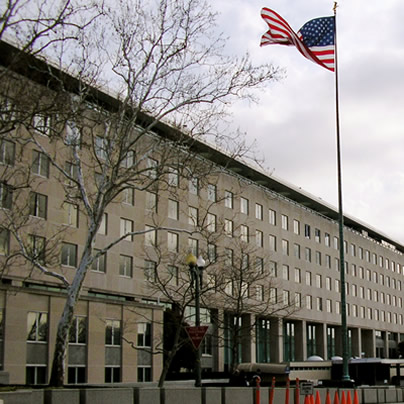

Supreme Court of India (Photo by Legaleagle86; courtesy Wikimedia Commons)
State Department spokesperson Jen Psaki wouldn’t speculate Wednesday about how the U.S. might encourage India to repeal its law criminalizing homosexual acts when asked about the recent court ruling upholding the colonial-era law.
Under questioning from the Washington Blade, Psaki declined to speculate about the potential options to encourage additional steps in India after she reiterated the Obama administration’s commitment to LGBT rights overseas.
“That’s a decision that the Indian government would make,” Psaki said. “We, obviously, don’t make decisions on behalf of other governments and their legislation. So, I expressed our deep concern about any efforts around the world to not recognize that LGBT rights are human rights and that’s a message we’ll continue to make.”
Earlier in the day, the India Supreme Court overturned a lower court ruling from 2009 that decriminalized the same-sex relations between two men, which was previously illegal under a colonial-era law known as section 377. With the law back in place, individuals found guilty of “unnatural offenses” in the world’s second most populous country could face 10 years in prison.
Psaki said the State Department is “aware of” the decision in response to a first question about the ruling from a reporter during her daily news briefing,
But Psaki responded to the decision initially only by speaking broadly about the Obama administration’s support for LGBT rights, referencing a statement from Secretary of State John Kerry on Human Rights Day.
“We oppose any action that criminalizes consensual same-sex conduct between adults,” Psaki said. “LGBT rights are human rights. That’s something you heard Secretary Kerry say and Secretary Clinton say before him. And we call on all governments to advance equality for LGBT individuals around the world.”
It took questioning from another reporter for Psaki to clarify that U.S. concern with anti-sodomy laws “whether it’s India, or any other country” applies to the recent ruling.
“Any action that criminalizes consensual same-sex conduct between adults, that doesn’t recognize that fundamental freedoms include their right to sexual orientation, those are issues that we certainly would be concerned about as we are here,” Psaki said.
Asked whether the State Department was planning to reach out to the Indian government about the issue, Psaki wouldn’t make any specific predictions, but said human rights issues come up in conversations.
“Well, we consistently bring up human rights issues with most countries we meet with,” Psaki said. “I don’t have any specific recent call or meeting to read out for all of you, but certainly that’s something we’re happy to express publicly and privately.”
Top U.S. officials just recently had the opportunity to speak with Indian officials.
As part of her initial response speaking generally about news related to India, Psaki said Secretary of State John Kerry and other high-ranking State Department officials met on Tuesday with Indian Foreign Secretary Sujatha Singh and agreed to an expansion of strategic partnerships.
“The United States and India agreed … to strengthen new U.S.-India cooperation on training U.S. peacekeepers to develop support for the department’s own peace operations initiative,” she said. “The United States also accepted India’s invitation to serve as a partner country for India’s technology summit and expo in New Delhi in the fall of 2014, further intensifying our broad scientific cooperation.”
Asked whether the Supreme Court decision came up during this discussion, Psaki said she believes it happened before the ruling was handed down. When another reporter mentioned other related meetings were taking place today, Psaki said she’d have to check to verify that and whether any discussions about the ruling took place.
“I don’t have any other comment for you on the Supreme Court case than what I just offered or any other expectations of steps,” Psaki said. “That’s obviously steps the Indian government would take.”
After a reporter pointed out that the State Department would make threats aimed at Ukraine after it used violence to stop peaceful protests, but that it won’t take similar action in the India case, Psaki said the situations were different.
“Obviously, the events in Ukraine, we expressed our deep concern and the reasons why,” Psaki said. “And, as you know, we don’t group every country and everything that happens into the same category. Every circumstance is different.”
A transcript of the exchange follows:
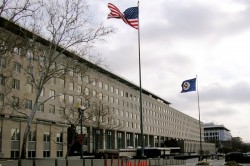
U.S. Department of State (Photo public domain)
QUESTION: Thank you. You must have seen the Indian Supreme Court decision criminalizing homosexuality, which has sent shockwaves in the global LGBT community. And it’s more important, because only yesterday, Secretary Kerry issued a statement on Human Rights Day, and in which he mentioned LGBT. So what is the reaction that – and especially because the Indian foreign secretary is in town?
MS. PSAKI: Mm-hmm. Well, we, of course, are aware of the Supreme Court decision. The United States places great importance on the protection of human rights and fundamental freedoms of all people. And as you saw and as you referenced in the Secretary’s statement yesterday, that includes lesbian, gay, bisexual, and transgender persons around the world. We oppose any action that criminalizes consensual same-sex conduct between adults. LGBT rights are human rights. That’s something you’ve heard Secretary Kerry say, I believe Secretary Clinton say before him, and we call on all governments to advance equality for LGBT individuals around the world.
I know you asked me about the visit of the foreign secretary. I’m happy to give a readout of that, if that’s helpful as well. Secretary Kerry and Deputy Secretary Burns met yesterday with Indian Foreign Secretary Singh to discuss ways to deepen the U.S.-India Strategic Partnership and consult on regional issues. Foreign Secretary Singh also met with Acting Under Secretary Rose Gottemoeller, Assistant Secretary for South and Central Asia Nisha Biswal, and other senior officials.
The United States and India agree to joint principles to strengthen India-U.S. cooperation on training UN peacekeepers, developed with support from the Department’s Global Peace Operations Initiative. The United States also accepted India’s invitation to serve as a partner country for India’s technology summit and expo in New Delhi in the fall of 2014, further intensifying our broad scientific cooperation.
QUESTION: Thank you. Are you planning to reach out to the Indian Government to express your – directly about what needs to be done? Because if you see the atmosphere there, the political parties, the pressure, and – it is not just a vague Supreme Court decision.
MS. PSAKI: Well, we have – we consistently bring up human rights issues with most countries we meet with, and I don’t have any specific recent call or meeting to read out for all of you, but certainly, that’s something we’re happy to express publicly and privately as needed.
QUESTION: Back on India —
QUESTION: Well, in that meeting between the top diplomat for the Administration and his Deputy and the Indian foreign secretary, this didn’t come up?
MS. PSAKI: That happened yesterday. I don’t – I’m not aware of when – I believe this decision may have been today, the Supreme Court decision.
QUESTION: But she still has a meeting today too in the building.
MS. PSAKI: Hmm?
QUESTION: She had a meeting today also. Was this issue brought up with her?
MS. PSAKI: Today? With – who was the meeting with today?
QUESTION: I don’t know, but I think she had —
QUESTION: But she’s in town.
QUESTION: — some meetings here today also.
MS. PSAKI: I have to check on that. I was under the impression that most of the meetings were yesterday, but I’m happy to check, and if there were meetings today, we can check if this issue came up.
QUESTION: All right. And then —
QUESTION: Yeah, but the question —
QUESTION: — in the initial – in your initial response, I didn’t hear you actually give any reaction to what the decision actually was. I’m presuming that you think it’s a bad ruling by the Supreme Court, but I didn’t hear you say that.
MS. PSAKI: Well, we —
QUESTION: Can you go ahead – can you say that?
MS. PSAKI: I believe by saying we oppose any action that criminalizes consensual same-sex conduct between adults in general around the world, I think I was pretty clear about what our view is.
QUESTION: So what do you think about the – specifically about the Indian Supreme Court decision?
MS. PSAKI: I think —
QUESTION: I’m looking for something that’s got the word “India” in the answer, other than just —
MS. PSAKI: Matt, I’m not sure I have much more to add other than to convey that any legislation around the world, whether it’s India or any other country that criminalizes —
QUESTION: But this isn’t legislation.
MS. PSAKI: — I’m sorry – any action that criminalizes consensual same-sex conduct between adults that doesn’t recognize that fundamental freedoms of people include their right to sexual orientation – those are issues that we certainly would be concerned about, as we are here.
QUESTION: So you are expressing concern about the Supreme Court decision in India on this case?
MS. PSAKI: Correct.
QUESTION: Okay.
MS. PSAKI: Does the supreme —
QUESTION: Clarify it one more time.
MS. PSAKI: Sure.
QUESTION: You are opposed to the Supreme Court decision and you are going to raise this issue with the Indian Government, right?
MS. PSAKI: I think I expressed our concern about any cases along these lines. We are in regular touch about these issues and others with India. I don’t have anything specific to read out for you in terms of future meetings or conversations about this.
…
QUESTION: Yeah. Does the United States expect India to – the parliament – with respect to the parliament, does it expect the Indian parliament to repeal that law?
MS. PSAKI: I don’t have any other comment for you on the Supreme Court case than what I’ve just offered or any other expectation of steps. That’s obviously steps the Indian Government would take.
QUESTION: Is there any actions at all the Supreme Court – is there any options at all the State Department is examining to encourage India to repeal that law?
MS. PSAKI: That’s a decision that the Indian Government would make. We obviously don’t make decisions on behalf of other governments and their legislation. So I expressed our deep concern about any efforts around the world to not recognize that LGBT rights are human rights, and that’s a message we’ll continue to convey.
QUESTION: Well, the only problem with that is that you’re threatening sanctions on Ukraine, or saying that they’re a possibility because they’re violating people’s human rights and not listening to the – not listening to the people. And yet here with India, it’s not even clear whether this has – has come up, will come up, or will ever come up with the Indian Government. And in fact, the meeting – the readout that you gave of the meetings yesterday said that everything with India is full speed ahead, and we’re intensifying our relationship, and —
…
MS. PSAKI: Those meetings were yesterday. I think I expressed pretty clearly our opposition to this. In terms of what steps would be taken by a government on a Supreme Court case, that’s not something I would have a comment on. Obviously, the events in Ukraine we’ve expressed our deep concern about, and the reasons why. And as you know, we don’t group every country and everything that happens into the same category. Every circumstance is different.


Ukraine
Ukrainian Supreme Court recognizes same-sex couple as a family
Zoryan Kis and Tymur Levchuk married in US in 2021
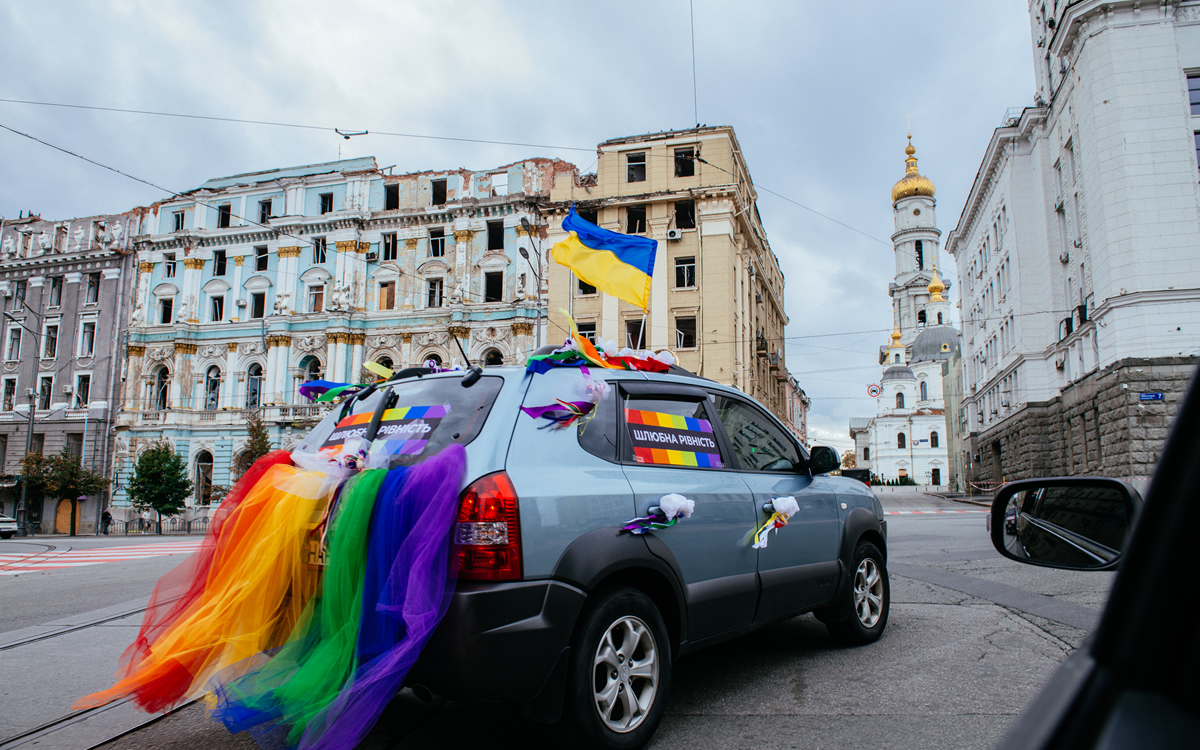
The Ukrainian Supreme Court has recognized a same-sex couple as a family.
The couple — Zoryan Kis and Tymur Levchuk — have lived together since 2013. They legally married in the U.S. in 2021.
The Kyiv Independent notes the couple challenged the Ukrainian Foreign Ministry’s refusal to acknowledge Levchuk as Kis’s family member, therefore denying him spousal rights while Kis was posted at the Ukrainian Embassy in Israel. Kis and Levchuk challenged the decision in court in 2024.
Kyiv’s Desniansky District Court last year in a landmark ruling recognized Kis and Levchuk as a family. Vsi Razom, an anti-LGBTQ organization, appealed the decision.
Insight, the Ukrainian LGBTQ rights group that represented Kis and Levchuk, said the Supreme Court upheld the lower court’s ruling on Feb. 25.
“The Supreme Court of Ukraine has upheld the legality of recognizing a same-sex couple as a family based on their factual relationship, despite the absence of legal recognition of same-sex partnerships in Ukrainian legislation,” Insight Chair Olena Shevchenko noted to the Washington Blade on Tuesday. “The court confirmed the decision, establishing the fact that (the) two men had lived together as a family, affirming that such recognition can be based on proven circumstances of their shared life rather than on political decisions or the existence of formal partnership laws.”
Insight in a Facebook post added the Supreme Court ruling sets “a tremendous precedent.”
“No homophobic or conservative organization will be able to use the courts as a tool to persecute or overturn decisions in favor of LGBT+ people under the guise of ‘social morality,’” said Insight. “The state has protected the boundaries of private life.”
The Supreme Court issued its ruling a day after Ukraine marked four years since Russia began its war against the country.
The Ukrainian constitution defines marriage as between a man and a woman.
President Volodymyr Zelenskyy in 2022 publicly backed civil partnerships for same-sex couples. Shevchenko pointed out Ukrainian law “currently does not provide a mechanism for registering same-sex marriages or partnerships.”
Maryland
Md. Legislative LGBTQ+ Caucus outlines 2026 priorities
Expanded PrEP access among objectives
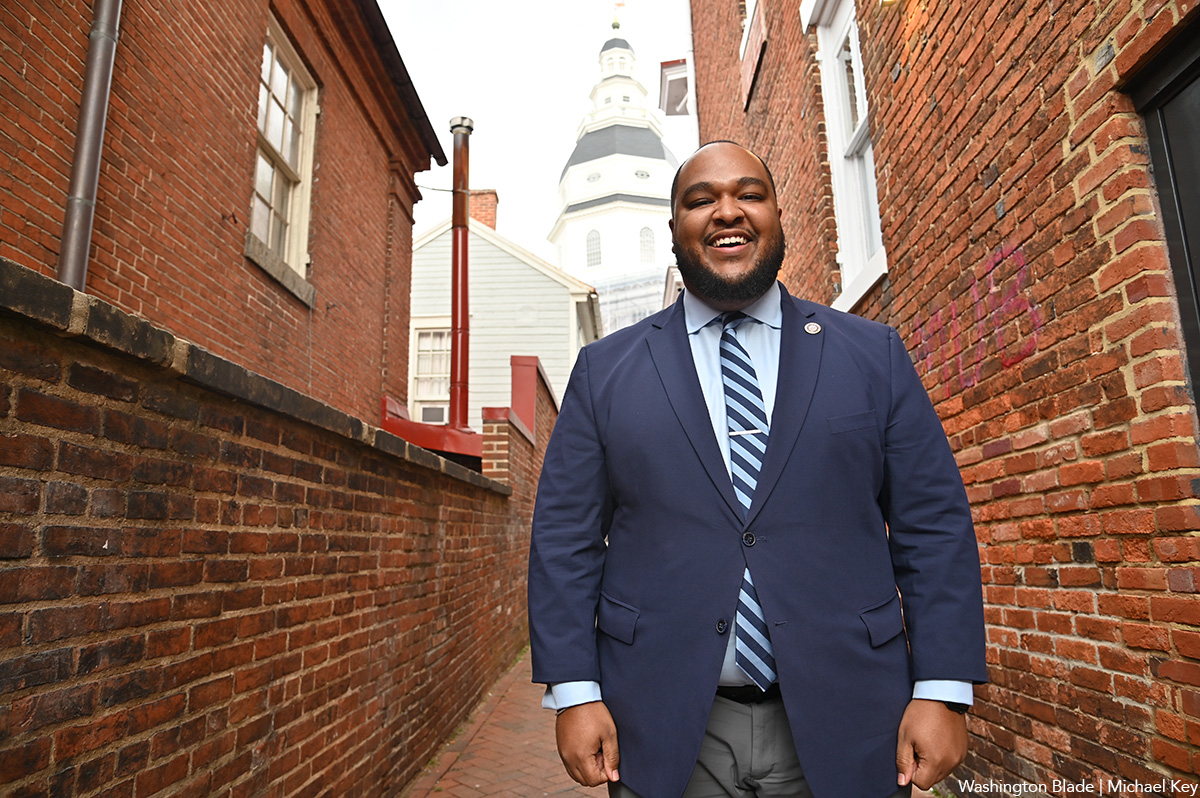
Maryland’s Legislative LGBTQ+ Caucus outlined legislative priorities for the remainder of the General Assembly’s 2026 term during a press conference on March 5.
State Del. Kris Fair (D-Fredrick County) led the press conference. State Del. Ashanti Martinez (D-Prince George’s County) and other caucus members also spoke.
Caucus members are sponsoring 12 bills and supporting four others.
Martinez is sponsoring House Bill 1114, which would expand PrEP access in Maryland.
“PrEP is 99 percent effective in preventing HIV transmission,” he explained, noting PrEP’s cost often turns away potential users.
The bill aims to extend insurance coverage and expand pharmacists’ ability to prescribe PrEP along with other HIV treatments and testing. Martinez is working with state Sen. Clarence Lam (D-Anne Arundel and Howard Counties) and FreeState Justice on the bill.
The House Health Committee had a hearing last week that included HB1114.
“Ending the HIV epidemic is about expanding access and providing these life-saving tools to all persons in Maryland,” Martinez said.
Several other pieces of legislation were highlighted during the press conferences. They included measures focused on youth and education, birth certificate markers, so-called conversion therapy, and hormone medications.
State Sen. Cheryl Kagan (D-Montgomery County) is cosponsoring Senate Bill 950, which would update and strengthen conversion therapy laws. State Del. Bonnie Cullison (D-Montgomery County) has introduced an identical bill that would extend the statute of limitations on individuals who facilitate conversion therapy.
Kagan explained the bill would allow conversion therapy victims to come to terms with their experience undergoing the widely discredited practice that “creates shame and it silences survivors.”
When questioned, Fair explained the press conference happened late into the legislative session because “we [the caucus] are constantly having to respond in real time to what’s happening in Washington” while drafting and considering pieces of legislation.
The Frederick County Democrat described this session’s bills as the “most ambitious list of priorities to date.” Fair also described the caucus’s goals.
“It’s decency, it’s dignity, and its humanity,” he said.
The White House
Trump will refuse to sign voting bill without anti-trans provisions
Measure described as ‘Jim Crow 2.0’
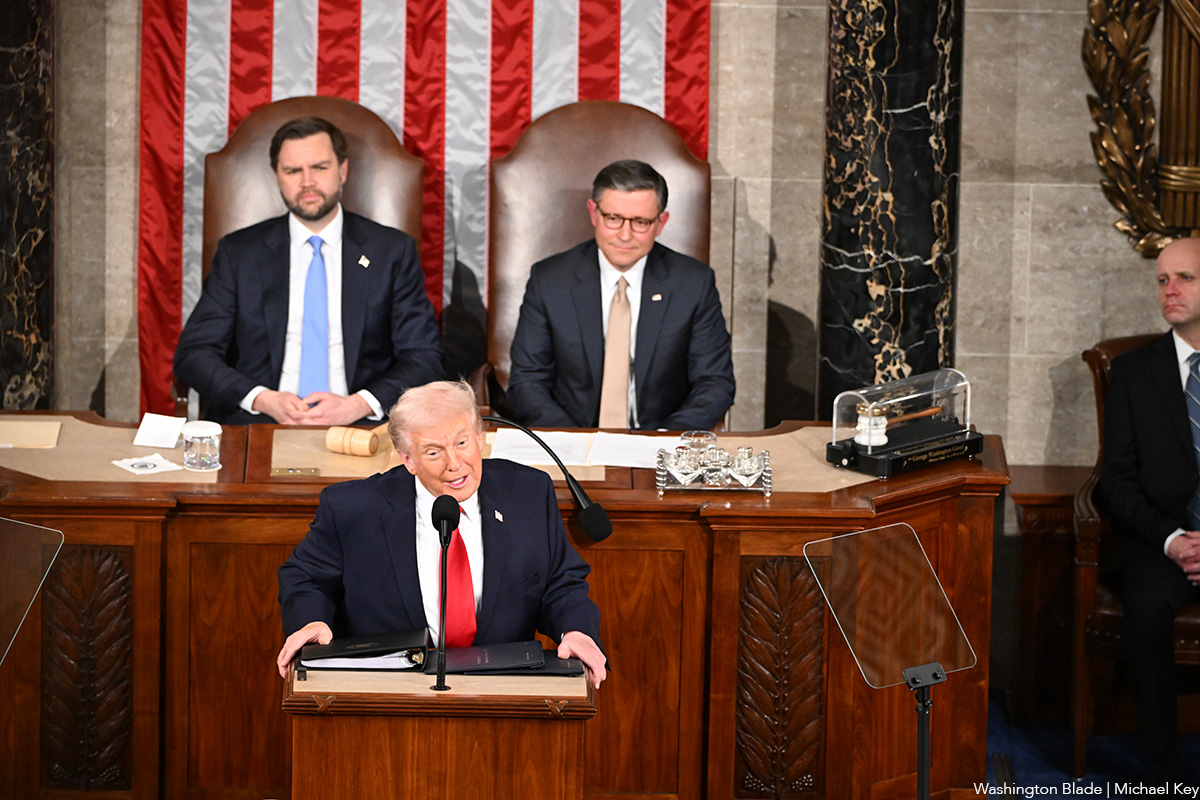
President Donald Trump said he will refuse to sign any legislation into law unless Congress passes the “SAVE Act,” pressuring lawmakers to move forward with the controversial voting bill.
In posts on Truth Social and other social media platforms, the 47th president emphasized the importance of Republican lawmakers pushing the legislation through while also using the opportunity to denounce gender-affirming care.
“I, as President, will not sign other Bills until this is passed, AND NOT THE WATERED DOWN VERSION — GO FOR THE GOLD,” Trump posted. “MUST SHOW VOTER I.D. & PROOF OF CITIZENSHIP: NO MAIL-IN BALLOTS EXCEPT FOR MILITARY — ILLNESS, DISABILITY, TRAVEL: NO MEN IN WOMEN’S SPORTS: NO TRANSGENDER MUTILIZATION FOR CHILDREN! DO NOT FAIL!!!”
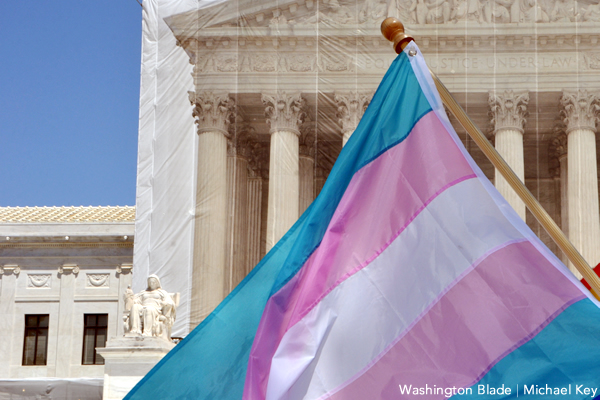
The proposed Safeguard American Voter Eligibility (SAVE) Act would amend the National Voter Registration Act of 1993 to require in-person proof of citizenship for anyone seeking to vote in U.S. elections. Trump has also called for the legislation to include a ban on gender-affirming medical care for transgender minors, even with parental consent.
“This is a huge priority for the president. He added on some priorities to the SAVE America Act in recent days, namely, no transgender transition surgeries for minors. We are not gonna tolerate the mutilation of young children in this country. No men in women’s sports,” White House Press Secretary Karoline Leavitt said. “The president putting all of these priorities together speaks to how common sense they are.”
The comments mark the first time the White House has publicly confirmed that Trump is pushing to attach anti-trans policies to the SAVE Act.
The bill would also require the removal of undocumented immigrants from existing voter rolls and allow election officials who fail to enforce the proof-of-citizenship requirement to be sued.
It is already illegal for noncitizens to vote in federal elections. Current safeguards include requirements such as providing a Social Security number when registering to vote, cross-checking voter rolls with federal data and, in some states, requiring identification at the polls.
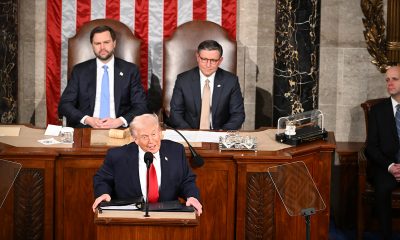
Trump began pushing for the legislation during his State of the Union address last month, where he singled out Senate Majority Leader John Thune (R-S.D.) by name while criticizing the lack of movement on the bill.
Senate Minority Leader Chuck Schumer (D-N.Y.) has denounced the legislation as “Jim Crow 2.0” and said it has little chance of advancing through the Senate, calling it “dead on arrival.”
In remarks on the Senate floor, Schumer said “the SAVE Act includes such extreme voter registration requirements that, if enacted, could disenfranchise 21 million American citizens.”
Trump has repeatedly used political messaging around trans youth and gender-affirming care as part of broader cultural and policy debates during his presidency — most recently during his State of the Union address, where he cited the case of Sage Blair, a Virginia teenager whose school allegedly encouraged her to transition without her parents’ consent.
LGBTQ advocates — including those familiar with Blair’s story — say the situation was far more complex than described and argue that using a single anecdote to justify sweeping federal restrictions could place trans people, particularly youth, at greater risk.

Ukrainian Supreme Court recognizes same-sex couple as a family

Md. Legislative LGBTQ+ Caucus outlines 2026 priorities

PHOTOS: ‘Defrosted’

Trump will refuse to sign voting bill without anti-trans provisions

Owner of D.C. gay bar Green Lantern John Colameco dies at 79

Fla. Senate passes ‘Anti-Diversity’ bill that could repeal local LGBTQ protections

Ugandan activist named Charles F. Kettering Foundation fellow

Liza Minnelli makes surprise appearance at GLAAD Media Awards

Capital Pride must be transparent about sexual misconduct investigation

In D.C. comedy, be sure to shop local
-

 Florida4 days ago
Fla. Senate passes ‘Anti-Diversity’ bill that could repeal local LGBTQ protections
-
Uganda5 days ago
Ugandan activist named Charles F. Kettering Foundation fellow
-
Celebrity News4 days ago
Liza Minnelli makes surprise appearance at GLAAD Media Awards
-
Opinions4 days ago
Capital Pride must be transparent about sexual misconduct investigation