News
British gay group to expand int’l advocacy efforts
Four Stonewall U.K. staffers work on global LGBT issues; more planned
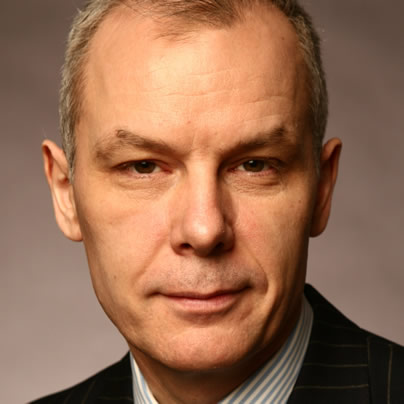
Stonewall Chief Executive Ben Summerskill (Photo courtesy of Stonewall)
CONWAY, N.H.—The head of the U.K.’s largest gay advocacy group told the Washington Blade last month his organization has begun to devote more resources to the global LGBT rights movement now that marriage rights for same-sex couples have been secured in England and Wales.
Stonewall U.K. Chief Executive Ben Summerskill said during an extensive interview in New Hampshire’s Mount Washington Valley on Dec. 20 where he was spending the holidays that his organization hopes to hire additional staff to continue its work on LGBT-specific issues in Uganda, Russia, Eastern Europe and other areas.
Four of Stonewall’s 70 staffers currently work directly on these issues. The organization also works with the British Foreign Office and the U.K. Department of International Development to raise them at the United Nations.
“I was very anxious historically about us getting engaged in that sort of territory while we didn’t have complete legal equality in Britain,” said Summerskill. “It just opened you up to the people who turn up in Uganda to say what are you doing? Why have you come to lecture us?”
Summerskill spoke with the Blade hours after the Ugandan Parliament approved a bill that would impose a life sentence upon anyone found guilty of repeated same-sex sexual acts. The Indian Supreme Court’s Dec. 11 ruling that recriminalized homosexuality sparked global outrage.
Summerskill said he feels it is more effective to work through the U.K. commonwealth — as opposed to “standing outside [the Ugandan embassy in London] in the rain with placards” — to address anti-LGBT laws in former British colonies. He also applauded British Prime Minister David Cameron’s decision to begin channeling foreign aid directly to non-governmental organizations in Uganda and other countries as opposed to giving it directly to governments whose records on LGBT rights and other issues have sparked criticism.
“I don’t think any LGBT campaigner, however strongly they feel about Uganda, would think that it was a good thing that people should starve just so we feel we’re making some progress around human rights for gay people,” said Summerskill.
Another Stonewall strategy is to work with U.K.-based businesses to urge countries in which they do business to improve their LGBT rights records.
Summerskill told the Blade many of the corporations that are part of Stonewall’s Diversity Champions program that promotes gay and lesbian equality in the workplace are “becoming increasingly uneasy in investing in countries of that sort.” Richard Branson, founder of the Virgin Group, which is not a member of Stonewall’s workplace advisory group, on Dec. 23 announced he would not do business in Uganda because of the passage of the Anti-Homosexuality Bill.
“That is another way in which we can put pressure on Uganda and other governments,” said Summerskill. “And we’ll continue to do so.”
Organization opposes Olympic boycott
Stonewall remains opposed to a boycott of the 2014 Winter Olympics that will take place next month in Sochi, Russia, over the Kremlin’s LGBT rights record.
Summerskill said this position “has been informed from day one” by Russian LGBT rights advocates with whom his organization works.
“They were crystal clear again from day one that that’s not what they thought was the best way of moving the needle in terms of the reality of everyday life for gay people in Russia,” he said.
Summerskill said Elton John was “right” to perform in Russia last month — the gay British singer specifically criticized a law that bans gay propaganda to minors during a Dec. 6 concert in Moscow. Summerskill added he feels the BBC’s decision to send lesbian reporter Clare Balding to Sochi to host its coverage of the games sends a strong message to Russian President Vladimir Putin.
“She will be there making a very powerful point,” said Summerskill. “The coverage will be anchored by someone who billions of people by then will know is a lesbian.”
The Independent on Dec. 20 reported Cameron would not attend the Sochi games. The newspaper cited sources within the U.K. government who said the decision is not a boycott the Olympics over Russia’s LGBT rights record.
“[Cameron] has been crystal clear about what he thinks,” said Summerskill, noting British prime ministers have never attended the Winter Olympics. “He’s raised the issue face-to-face with Mr. Putin, which again would have been unthinkable when Mrs. Thatcher was prime minister, and he’s been prepared to do that very publicly. And that actually is something we should all have been quite encouraging about.”
A group of gay and lesbian advocates that campaigned against a bill that would have banned the “promotion” of homosexuality in public schools in the U.K. founded Stonewall in 1989. Stonewall Scotland and Stonewall Cymru (Wales) operate within their respective regions of the country.
Stonewall’s annual income in 2014 will be £4.5 million ($7.37 million.)
Gays and lesbians in England and Wales can begin to legally marry on March 29. A final vote on a measure that would extend marriage rights to same-sex couples in Scotland is expected to take place in the coming weeks.
The government of Northern Ireland in November announced it had lifted the ban on gay couples adopting children.
IBM, Barclays and Goldman Sachs are among the nearly 650 companies that are members of Stonewall’s Diversity Champions program. They pay the organization an annual fee of £2,500 ($4,090) to receive advice and other materials on how to become a welcoming workplace for gays and lesbians.
“We’re very conscious that we just don’t have a situation where they do what we call signing the poster, which is all a bit too easy,” said Summerskill. “They actually pay us.”
Stonewall has also worked with the Gay, Lesbian and Straight Education Network (GLSEN) to develop a campaign to tackle anti-gay bullying in U.K. schools.
The U.K.’s anti-discrimination law protects trans people in employment and public accommodation, but Summerskill said some of the statutes need “tidying up.” Trans people in the U.K. have been able to legally change their gender on birth certificates and other documents without sex-reassignment surgery since 2004, but the country’s hate crimes law does not include gender identity and expression.
Stonewall Scotland advocates for transgender rights, and Stonewall does so on the international level.
Stonewall and Stonewall Cymru do not specifically advocate for trans rights because Summerskill said English and Welsh trans advocates have specifically asked them not to do so. This stance has sparked division among some British LGBT rights advocates.
“While that’s a lively debate, we’ve kind of finessed that by trying to be as supportive as we possibly can of trans people but not claiming to speak on their behalf if a material number have said we don’t want you to,” Summerskill told the Blade. “Happily there is an infrastructure, although it’s fragile, of seven or eight quite good trans organizations in Britain.”
Summerskill also discussed British Olympic diver Tom Daley’s acknowledgement last month that he is in a relationship with a man widely reported to be “Milk” screenwriter Dustin Lance Black.
He categorized the Olympian who won a bronze medal during the 2012 Summer Olympics in London as a “national treasure” alongside Balding, John and comedian Stephen Frye. Summerskill added most of the reaction to Daley’s announcement from within the U.K. was along the lines of “Oh, he’s a nice young man.”
“We want him to do well in the Olympics in 2016,” said Summerskill. “If being able to be who he is makes that easier, which it almost certainly does, then he will probably perform better.”
Summerskill also discussed those who were quick to label Daley as bisexual or gay, even though the British Olympian has not used either term to identify himself.
“He’s kind of said he’s in a relationship with another guy,” Summerskill told the Blade. “It’s pretty clear what that means unless you’re a queer theorist looking to be upset by someone whose not using the language you like to use to describe what’s going on in your life.”




Health
Too afraid to leave home: ICE’s toll on Latino HIV care
Heightened immigration enforcement in Minneapolis is disrupting treatment
Uncloseted Media published this article on March 3.
This story was produced in collaboration with Rewire News Group, a nonprofit publication reporting on reproductive and sexual health, rights and justice.
This story was produced with the support of MISTR, a telehealth platform offering free online access to PrEP, DoxyPEP, STI testing, Hepatitis C testing and treatment and long-term HIV care across the U.S. MISTR did not have any editorial input into the content of this story.
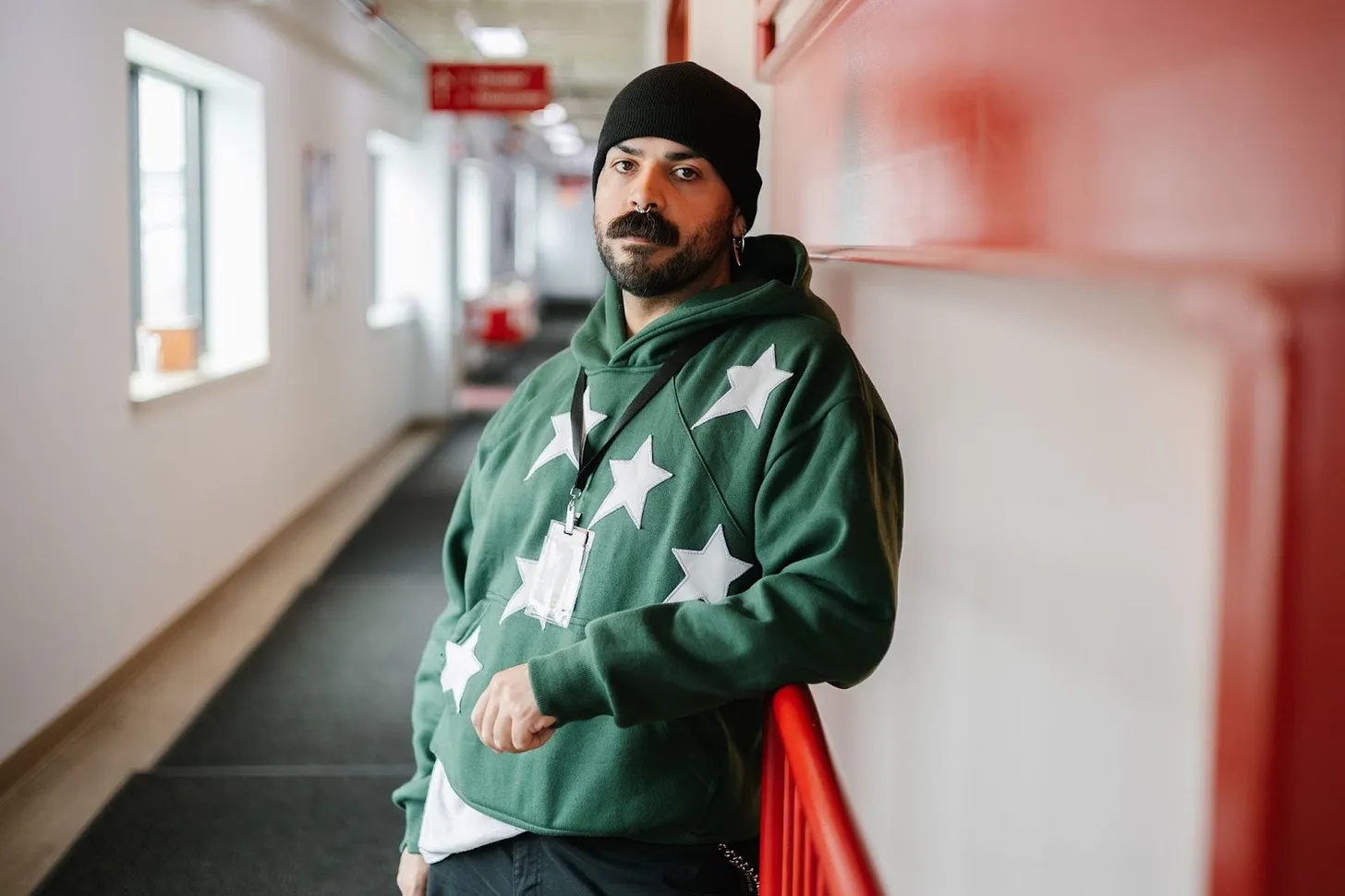
By SAM DONNDELINGER and CAMERON OAKES | For two weeks, Albé Sanchez didn’t leave their house in South Minneapolis.
“[I was] forced into survival mode,” Sanchez told Uncloseted Media and Rewire News Group (RNG). “I felt like there was an invisible wall [to the outside world] that I couldn’t cross unless I really wanted to put myself in a place where there was a chance that I might not be able to come back.”
Queer and Mexican American, Sanchez was afraid of being targeted by the Immigration and Customs Enforcement presence in their neighborhood, even though they are a U.S. citizen.
“Every day is a risk,” they say, adding that even if they have paperwork, if they fit the profile, they are a target, making it scary to go even to work or the grocery store.
Sanchez, a 30-year-old sexual health care educator, has been taking oral PrEP, the daily preventive medication for HIV, for over a decade. But the mounting stress of ICE raids has made it harder to keep up with dosing.
“A missed dose here and there pushed me to make the appointment [for something more sustainable],” they say.
Sanchez says they felt like somebody would have their back at their local clinic. It was only a 10-minute drive from where they worked, they knew its staff from previous visits and community outreach, and they could count on finding Spanish-speaking staff and providers of Latino heritage. But not everybody has had that same experience accessing care.
Since ICE’s Operation Metro Surge began in early December, an increasing number of Latino patients in Minnesota are delaying or canceling what can be lifesaving care for the prevention and treatment of HIV.
These findings are particularly alarming for Latino communities, who, as of 2023, are 72 percent more likely than the general U.S. population to be diagnosed with HIV. And while overall infections have decreased, cases among Latinos increased by 24 percent between 2010 and 2022.
“I’m very concerned that there is going to be a sharp uptick in transmission,” says Alex Palacios, a community health specialist in the Minneapolis area.
In a January 2026 declaration as part of a lawsuit seeking to end Operation Metro Surge in the days following Renee Nicole Good’s killing, the commissioner of the Minnesota Department of Health said HIV testing among Latino populations has “dropped dramatically” and that “although grantee staff continue to go into the community to promote and provide testing, people are not showing up.”
Local clinics are reporting the same thing. The Aliveness Project, a community wellness center in Minneapolis specializing in HIV care, told Uncloseted Media and RNG they have seen more than a 50 percent decrease in new clients. The clinic serves a large number of Latino and undocumented clients, and while it usually sees 750 people walk through their door each week, according to providers, it reported seeing 100 fewer people each week since December.
Red Door, Minnesota’s largest STI and HIV clinic, has had a “modest uptick” in no-shows and missed appointments since December.
What happens when treatment stops
Today, there are multiple medications available that work to prevent HIV and dozens that treat it once a person tests positive. Many people who consistently take their medication have such low levels of the virus that they can’t transmit it through sex. But becoming undetectable requires patients to stay on their medication; otherwise, the virus replicates and mutates, weakening the immune system and increasing the risk of life-threatening infections.
“If patients aren’t on their medicines consistently, HIV can learn about the medication and become resistant to them. When this happens, the medicine will not work for the patient, and the new resistant virus could potentially be passed on to others,” says George Froehle, a physician assistant and provider at Aliveness Project. “Medication adherence is one of the most important aspects of HIV care.”
To maintain care and prevent dangerous, untreatable strains from spreading in Minnesota, providers at Aliveness Project have begun delivering medication to patients when possible, offering telehealth when they can, and pausing routine lab work to limit in-person appointments.
“The most important thing we can do from a public health perspective is to keep people undetectable so they don’t transmit HIV,” Froehle says, adding that providers in other cities targeted by ICE will need to make plans for missed injection visits, pivot to telehealth and prepare their teams for the “trauma that can occur.”
Sanchez understands the risks of inconsistent treatment, which is why they opted for the injectable preventative medication.
“I have a lot of risk [to HIV in my community],” Sanchez says. “With so much uncertainty about the future and whether HIV care will remain stable, I realized I couldn’t let this opportunity pass.”
But injectable HIV treatments are commonly dosed at two weeks to six months apart, and the medication must be administered in a clinic — a setting many patients are avoiding, according to providers.
“They have a two-week window” to get their shots, according to Froehle, who added that because patients are afraid to come in person, they have had to transition people off of their injectable HIV treatments. This has caused patients to return to oral HIV treatments without the testing they would normally receive had ICE not been in Minneapolis. “[Oral treatments] weren’t super successful [for these patients] to begin with and that’s why they were on injectables.”
Oral HIV medications, too, must be taken consistently to work. In response, providers have urged patients to have their pills with them at all times in case they get deported or detained.
The caution is not unfounded. Federal immigration facilities have a history of denying adequate medical care to people living with HIV, despite internal standards that require them to comply. Since 2025, at least two men living with HIV have been denied access to their medication in a Brooklyn jail, according to lawsuits obtained by THE CITY. One man said he was only given his medication after his lips broke open and he developed an open pustule on his leg. And in January 2025, another man died of HIV complications while in ICE custody in Arizona.
Beyond being detained without proper medication, patients are at risk of being deported to countries with limited access to HIV care, like Honduras and Venezuela, experts say.
“A lot of men [from Venezuela] told me they left because it wasn’t safe to be gay there and because they struggled to access HIV care,” says Froehle. “It’s a little heartbreaking to see new folks not only face the threat of deportation, but to places where they didn’t feel safe medically or identity-wise.”
“Some of these patients will die in their home country,” says Anna Person, the chair of the HIV Medicine Association. “It’s a death sentence.”
A ‘cascading disaster’
While ICE’s presence is threatening the infrastructure of HIV care that Minneapolis has built over decades, experts say there has always been a blind spot in HIV care for the city’s Latino community.
Vincent Guilamo-Ramos, executive director of the Institute for Policy Solutions at the Johns Hopkins University of Nursing, describes HIV in Latino communities as a “cascading disaster,” the result of years of compounding inequities.
“There’s been an invisible crisis among Latinos that hasn’t gotten traction,” he says. “The numbers have consistently gone up in terms of new infections, while nationally they’ve gone down. … That should be a big alarm.”
Numbers are rising because structural barriers and stigma are preventing Latinos from receiving care. A 2022 report from the Centers for Disease Control and Prevention found that between 2018 and 2020, nearly 1 in 4 Hispanic people living with HIV reported experiencing discrimination in health care settings. Lack of representation among providers, language barriers and deep-rooted medical mistrust further complicate access to care, according to Guilamo-Ramos.
Beyond the medical system, stigma within Latino communities can be equally damaging. According to Human Rights Campaign data, more than 78 percent of Latino LGBTQ youth reported experiencing homophobia or transphobia within the Latino community in 2024.
Sanchez agrees that stigma and bias are already massive barriers to care, citing the strict gender norms and Catholic beliefs many Latino communities hold. They say ICE’s presence is threatening already delicate access to HIV care.
“This has caused so much damage to people,” Sanchez says. “Not being able to access your health care appointments is such a stab in the side. … Being able to navigate any of these things in normal circumstances already has so much difficulty to it.”
Palacios, who is Afro-Latine and living with HIV, says the heightened ICE presence is worsening barriers that have long undermined the Latino community’s access to HIV care.
“The horizon has always been stark and dim,” they say. “And this just feels like one more thing to address and to fight back against.”
Sliding backwards
Navigating HIV care is becoming more difficult across the board, as the federal government has decimated HIV funding, compromising decades of progress made in the fight against the virus since Donald Trump retook office just over a year ago.
In February 2026, three months into Operation Metro Surge, the Trump-Vance administration proposed slashing $600 million in HIV-related grants, targeting four blue states, including $42 million for Minnesota programs. A federal judge has temporarily blocked the cuts.
“This would completely decimate and gut all of our HIV prevention,” says Dylan Boyer, director of development at Aliveness Project. “That’s the reality that we live in.”
“We have all the tools, and yet we are staring down this rollback of infrastructure and research dollars, prevention efforts, treatment efforts, that are going to put us squarely back in the 1980s,” says Person, a national HIV expert who grew up in Minnesota. “[There] seems to be no other rationale for that besides cruelty, to be quite frank, since there’s no scientific reason for it.”
Repair and representation
Jenny Harding, director of advancement at a Minneapolis-area supportive housing program for people living with HIV, says that while ICE’s presence is lessening in the Twin Cities, the “damage is done.”
Person says that this mending will take time, especially between the medical community and patients, since HIV providers can have a “very fragile” relationship with their clients.
“It takes, sometimes, years to build that level of trust. And I do worry that folks are just going to say, ‘I don’t feel safe here anymore. The system does not have my best interest at heart, and I’m not coming back,’” she says. “This is not something that you can flip a switch and everything will go back to normal.”
“We need to hold our federal government accountable, particularly HHS, [and] we need to ensure that HIV funding remains intact,” Guilamo-Ramos says, adding that in order to lower rates of HIV in the Latino community, there should be more specialized efforts: such as bilingual and culturally aligned health care providers, community-based outreach programs co-located where risk is highest, trust-building initiatives to address medical mistrust, mobile clinics, and targeted programs to re-engage patients who have fallen out of care.
Aliveness Project’s patient numbers have increased in the last few weeks as the ICE operation has waned, but the clinic staff is keeping “a watchful eye” and is having “difficulty reaching folks who are understandably scared.”
“Our biggest focus right now is reconnecting with people through our outreach so no one has a lapse in their HIV medications or prevention care,” Boyer, of Aliveness Project, says.
For Sanchez, seeing providers who speak Spanish and are of Latin heritage at Aliveness Project built enough trust for them to reach out and make an appointment despite the risks. Sanchez feels optimistic about their new injectable prevention strategy with the support of their clinic.
“There’s many places where you can receive care here in the Twin Cities where you might not see your skin tone. … There’s still a lot of health care professionals that unfortunately carry bias. … Aliveness is the opposite of that,” they say. “Seeing that representation and knowing someone has that cultural context of how to meet you in moments of sensitivity, it’s crucial.”
The Comings & Goings column is about sharing the professional successes of our community. We want to recognize those landing new jobs, new clients for their business, joining boards of organizations and other achievements. Please share your successes with us at [email protected].
The Comings & Goings column also invites LGBTQ+ college students to share their successes with us. If you have been elected to a student government position, gotten an exciting internship, or are graduating and beginning your career with a great job, let us know so we can share your success.
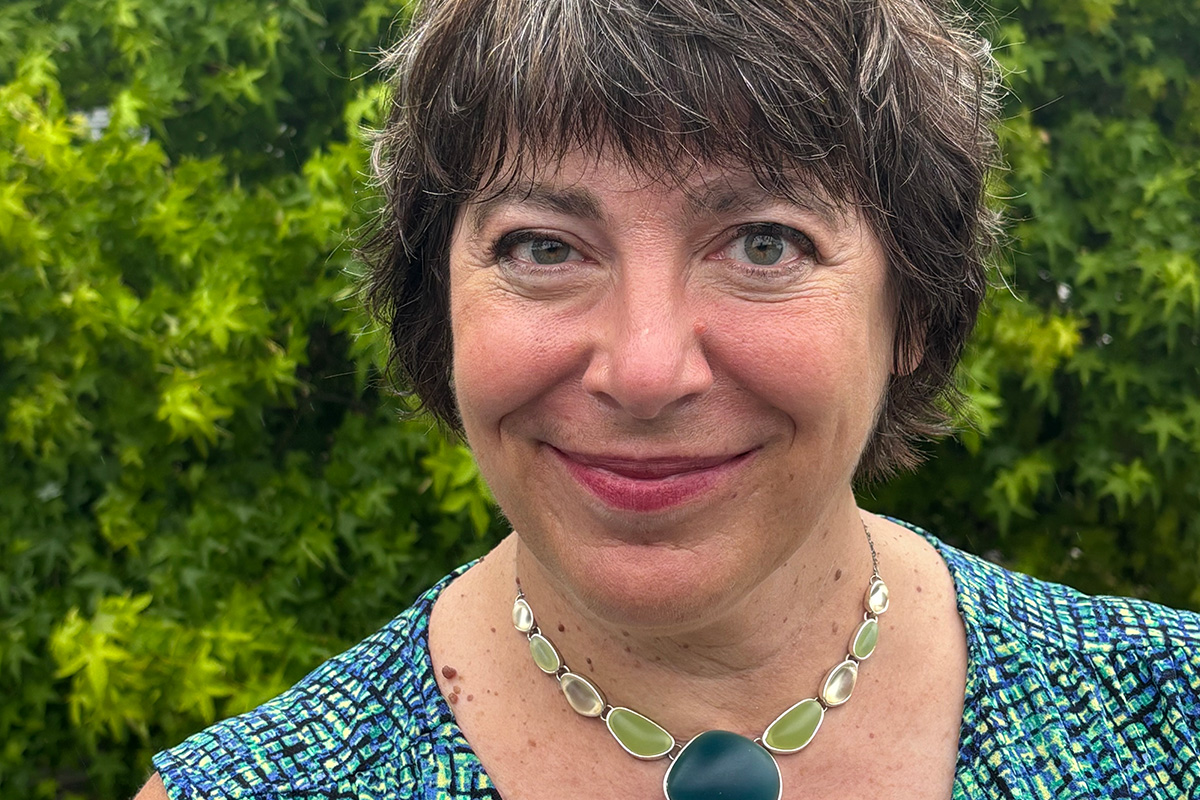
Congratulations to Susan Ferentinos, Ph.D., on her appointment to the Advisory Board of the Smithsonian’s National Museum of American History. On her appointment she said, “This is a moment when historians must stand up for accuracy, complexity, and the full breadth of the American story. I look forward to working with my fellow board members to ensure the National Museum of American History continues to fulfill its mission of serving all Americans with the highest standards of scholarship and integrity.”
Ferentinos operates her own national consulting business based in Port Townsend, Wash., with satellite operations based in Delaware County, Pa. Her business helps museums, historic sites, and government agencies expand and diversify the stories they tell about the American past. Her work focuses on interpreting LGBTQ history and women’s history, bringing overlooked narratives into mainstream historical interpretation. Her clients have included the National Park Service, the American Association for State and Local History, Baltimore Heritage, and numerous museums and historic sites across the country. Among her many accomplishments, Susan was part of the teams responsible for getting three LGBTQ sites designated as National Historic Landmarks. Two of those landmarks are in Washington, D.C. She authored the NHL nominations for the Furies Collective, in Capitol Hill, building on research performed by local historian Mark Meinke, and she authored the NHL nomination for the home of African-American educators Lucy Diggs Slowe and Mary Burrill, in Brookland, building on research by Eric Griffitts and Katherine Wallace, of EHT Traceries.
Ferentinos earned her bachelor’s degree from College of William and Mary in International Development and Philosophy; a master’s from Indiana University in United States History; and a Ph.D. from Indiana University in United States History.
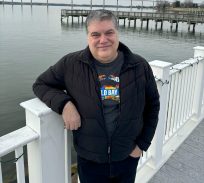
Congratulations also to Shawn Gaylord on joining a team at Berkshire Hathaway PenFed Reality in Solomons, Md. His focus will be Southern Maryland – Calvert, St. Mary’s, Charles, and Anne Arundel. Gaylord still leads the LGBTQ+ Strategies Team at The Raben Group and works part-time on federal policy for GLSEN.
Florida
Fla. Senate passes ‘Anti-Diversity’ bill that could repeal local LGBTQ protections
Bipartisan coalition urges Florida House to reject ‘extremism’ measure

The Florida Senate on March 4 voted 25-11 to approve an “Anti-Diversity in Local Government” bill that critics have called a sweeping and extreme measure that, among other things, could repeal local LGBTQ rights protections.
According to Equality Florida, a statewide LGBTQ advocacy organization, if approved by the Florida House of Representatives and signed by Republican Gov. Ron DeSantis, the bill “would ban, repeal, and defund any local government programming, policy, or activity that provides ‘preferential treatment or special benefits’ or is designed or implemented’ with respect to race, color, sex, ethnicity, sexual orientation, or gender identity.”
In a March 4 statement, Equality Florda added that the bill would also threaten city and county officials with removal from office “for activities vaguely labeled as DEI,” with only limited exceptions.
The Florida House was scheduled to vote on the bill on Monday, March 9, with opponents hopeful that a broad coalition of both Democratic and Republican lawmakers would secure enough votes to defeat the bill.
“Once again, Gov. DeSantis and Florida lawmakers are advancing one of the most sweeping and extreme bills in the country — this time threatening decades of local progress supporting diverse communities, including the LGBTQ community,” said Equality Florida Senior Political Director Joe Saunders. “This legislation is a sledgehammer aimed at cities and counties that recognize and address the diversity of the people they serve,” he said.
Among the LGBTQ organizations that could be adversely impacted by the bill is the highly acclaimed Stonewall National Museum, Archives and Library located in Fort Lauderdale.
Robert Kesten, the Stonewall organization’s president and CEO, told the Washington Blade the organization receives some funding from Broward County, in which Fort Lauderdale is located, and the city of Fort Lauderdale has provided support by purchasing tables at some of the museum’s fundraising events.
“Based on this legislation, hose things would be gone,” he said. “We also are based in a government building. So, we don’t know what potential side effects that could have.” He noted that the building in question is owned by Broward County and leased by Fort Lauderdale, with the bill’s vaguely worded provision making it unclear whether Stonewall would be forced to leave its building.
“It’s unknown, and we’re really in unchartered waters,” he said.

Too afraid to leave home: ICE’s toll on Latino HIV care

Intense doc offers transcendent treatment of queer fetish pioneer

In D.C. comedy, be sure to shop local

Comings & Goings

Liza Minnelli makes surprise appearance at GLAAD Media Awards

13 HIV/AIDS activists arrested on Capitol Hill

Md. Commission on LGBTQIA+ Affairs released updated student recommendations

35 years after ‘Truth or Dare,’ Slam is still dancing

Talarico beats Crockett in Texas primary