Arts & Entertainment
Queen of everything
Boy George chats up his new album, tour and how he got his mojo back
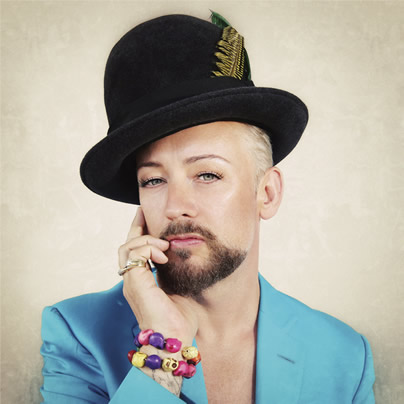
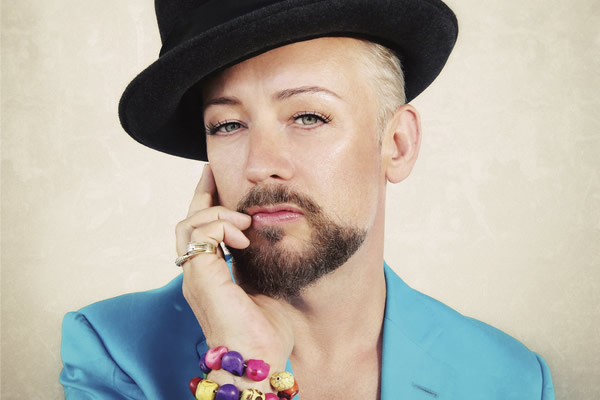
Boy George says in some ways straight acts can experiment with gender more than gay artists. (Photo courtesy High Rise PR)
Boy George
Monday, April 21
9:30 Club
815 V St. N.W.
930.com
$35
Doors open at 7 p.m.
Boy George is the first to acknowledge a cliché.
Getting sober in 2008 and turning 50 two years ago are big “take stock” moments for many and no less so for him.
“It was a huge turning point for me,” he says of his milestone birthday. “I thought, ‘I’ve got to get my shit together, I’ve got to focus, this is important.’ I just felt I’d wasted a lot of time. I looked at myself and thought, ‘God, I’ve done nothing.’ I know I’ve done a lot, I’ve always worked. I’ve grafted and always made money, but a lot of it was pointless because no one knew what I was doing.”
This year, the world is seeing the fruit of those epiphanies. His new album “This Is What I Do” was out in the UK last fall and officially drops in the U.S. with three bonus cuts on March 25. The last several years have seen him release a spate of side projects of various scope, but this is his first full-fledged solo album since 1995’s “Cheapness and Beauty.” He starts a U.S. leg of his tour on April 18 in Philadelphia and plays D.C.’s 9:30 Club on April 21.
During a Saturday afternoon phone chat from his London home last weekend, George — in his ever-delightful, clipped British accent — was chatty, self deprecating, quick to laugh and balked or sidestepped no questions. His comments have been slightly edited for length.
WASHINGTON BLADE: I know you’ve been DJing a lot and working on various things, but how did it work out that you released a new album at this time? Why now?
BOY GEORGE: Well, you know, as you said, I’ve been DJing very happily for the last 25 years and I haven’t really had a record deal for a long time. I suppose I have thought about making records but, you know, I wasn’t sure how I was going to do it. You know, whether I was going to sign with a major label or do something more independent. I also changed management a couple of years ago and wanted to kind of start fresh with a bunch of people that perhaps could kind of see beyond what I was. I think when you’ve had a very, very successful career like I had in the ‘80s, people tend to kind of hope you’re going to try and repeat that. They’re always waiting for you to write the next “Karma Chameleon,” but it’s never going to happen (laughs). Everything I’ve ever done has been kind of instinctual and impulsive and spontaneous and I’ve never really been the kind of artist that can kind of just pull it out of a hat. I have to feel it. … I just felt it was the right time. We discussed the different ways I could go about making a record and I decided to be brave and pay for it myself and own it myself which is a new thing for me, kind of a grown up move. And so far, you know, it’s been the right choice.
BLADE: When was it recorded and how long did it take?
GEORGE: We started about March last year and we did it within about four months. Not solidly. We recorded and then somebody else mixed it. I would say about four to five months last year.
BLADE: How was the reception in the UK last fall?
GEORGE: We’ve had amazing reviews. Comeback of the year, Boy George has finally got his mojo back, you know, blah, blah, blah. Lots of compliments. I mean, much to my surprise really, because I wasn’t really sure what kind of reaction I would get. I wasn’t sure what to expect. So yeah, everything in the UK has been kind of another surprise. England tends to get much more excited about Beyonce than anything that comes from here. It’s like all America, America, hip-hop, Beyonce, Lady Gaga. Nobody cares about Boy George anymore (laughs). That’s why I’m relying on you guys in America.
BLADE: The first single “King of Everything” says “What is the word on the street? Have I lost my crown?” Have you?
GEORGE: Well, the song isn’t just about me, it’s about everyone. It’s about human frailty, people messing up, which is a very human thing, yet it is also about me but it’s about you, it’s about everyone. It’s not literal. The crown is a metaphor. If it was about me, I’d call it “Queen of Everything.”
BLADE: How did the UK tour go last fall?
GEORGE: It was amazing. Very small, very affectionate and the audiences were adorable. They were mostly the kind of hardcore fans, so they were really affectionate.
BLADE: About how long do you usually play?
GEORGE: It depends on the curfew. We do about an hour and a half, maybe two hours. Not quite Bruce Springsteen-length. But we play for as long as we can. When you’re doing a show, sometimes if the mood is right, you can keep it going, depending on the audience reaction, really. But obviously some venues have a curfew so you can’t play longer than a certain time.
BLADE: About how much of the new album do you work into the set list?
GEORGE: We kind of try and balance it with things people know, some things people haven’t heard, some new stuff, some old stuff. You know, I’ve been doing this a while and one thing I’ve continued to do is to play live. At the end, you have to figure out a way to reach the audience.
BLADE: How does the new stuff sit with the Culture Club hits? Is it hard to build a set list that flows?
GEORGE: No, I don’t think it’s difficult. With the things people know, you’re always in a very safe area. If you sing a song that’s been a hit, that’s very safe so no, I wouldn’t say it’s difficult. There are certain songs that I don’t do. Obviously with that kind of a back catalogue, there are some songs you grow into and some that you say, “OK, this doesn’t really speak to who I am anymore.” So you kind of try to mix it up and keep it interesting, not just for the audience but also for yourself. You don’t want it to be a kind of robotic show that’s the same every night. Myself and John, who plays guitar in my band, we have sections where we do acoustic stuff and we can do all sorts of things there and change things around and do new things. That helps keep the show exciting.
BLADE: Do you still have the goatee?
GEORGE: I do.
BLADE: Your look at present seems more kind of genderfuck than androgynous. Just a whim or do you feel more comfortable with mixing in masculine elements than you have in previous years?
GEORGE: I just had some time off and didn’t shave for a few days and kind of looked at myself and thought, “Oh, I quite like this look.” It’s not something I really sat down and thought about. I just kind of grew my beard when I was on break and other people seemed to like it and other people didn’t like it, which made me want to keep it more. I might get bored with it at some point but I’m loving it at the moment.
BLADE: Lots of pop stars have played around with androgynous looks — I’m thinking of David Bowie and Prince — and the public seems to accept them as straight. You were always pretty much out for the most part. Do you feel the public overall has pretty good gaydar?
GEORGE: I don’t know really. I think there are some audiences that don’t really want to know, depending on the artist. Sometimes people have this kind of spare-me-the-details kind of attitude. I think it’s more about what kind of artist you are and in what ways you want to affect the audience. That’s the starting point for me. It’s about what’s going to make you happy, do you know what I mean? How much of yourself you reveal. I think it’s much easier for somebody straight to play around with these boundaries because they’re not being defined by their sexuality. If you’re gay, then you’re gay and you have to strike a sort of balance so people don’t feel you’re flaunting it in their face or preaching, you know. I think as a gay artist, you have to walk a much finer line than, say, somebody who’s just having a flirtation with this. I mean, it’s much easier for someone straight like Macklemore to sing a song with the word gay in it. A few years ago I made an album called “Cheapness and Beauty” and there was a song called “Same Thing in Reverse” and I was told categorically this will never, ever get played on the radio because I used the phrase “kamikaze queer” in it. You can get away with more when you’re straight.
BLADE: You’ve talked about making a new album with Culture Club this year. Is that still in the cards?
GEORGE: Yes, we are looking at the possibility of recording some stuff this year but at the moment, we’re kind of still in the writing stages. We’ve had some great sessions and we really did enjoy ourselves and it was a really nice experience. Everybody came away feeling really good about it and, you know, we’re going to see what we can do next.
BLADE: It’s so great to see you looking so good, sounding so good and apparently really thriving. A few of your contemporaries who were also huge in the ‘80s haven’t fared as well. What did you think and feel when you heard Michael Jackson and Whitney Houston had died?
GEORGE: Oh my God, you know, I mean Michael Jackson. And I loved Whitney Houston like so much. I was just a massive, massive fan. I loved her voice. And Michael Jackson, you know, I was at home when it happened and I just remember thinking, “Oh my God, this is so sad.” You know, he was such an incredible artist. For the last few years of his life, I felt like there was so much pressure on him and he looked world-weary every time I saw him. I felt such sadness for him. I was just so sad when he died and Whitney, what a shame for both of them. They were great, great artists. I was a huge Michael Jackson fan and a huge Whitney Houston fan and I’m not ashamed to say I did cry. I thought it was really sad.
BLADE: Conversely does it make you happy when you see some of those artists still doing well today. Like Cyndi Lauper, for instance, just won a Tony.
GEORGE: I’m always happy when anyone does well. That’s a measure of maturity, I think. Cyndi’s a friend. I haven’t seen her for a while, but she’s a great girl and, you know, yeah, I think when you see your contemporaries doing well, it gives you hope. You think, “OK, anything’s possible.”
BLADE: You recognized early on that fame was fickle and I remember you telling Johnny Carson you knew staying at that level at the height of Culture Club was not sustainable and that you envisioned yourself eventually writing songs for other artists and doing other things. How has that played out differently than you thought it might have when you were 22?
GEORGE: Oh, I think when you’re 22 you really think you know it all, don’t you? (laughs) You listen back to the things you say and you think, “Oh my God, you really thought you knew it all.” And I think at that age, you’re still learning so much. I feel very fortunate to still be doing what I love.
BLADE: Yes, but it struck me as rather insightful that you realized even then that pop careers always ebb and flow.
GEORGE: It may be one of the reasons I’ve done other things. I’ve never wanted to just rest on my laurels. I don’t have the idea of trying to kind of repeat something. So in a way, DJing has been an incredible second career for me. When I first started it, my manager at the time thought it was a really bad idea and told me I shouldn’t do it. But again, I just followed my instincts and it was the right thing to do because it allowed me to avoid nostalgia. I’ve been able to be involved in a quite progressive industry and not have to worry about what I used to be or, you know, the ‘80s, and all that stuff. So I’m really happy that I made that decision. I like to work. I’m a worker and I’m always up for a new challenge.
BLADE: Back in the early ‘90s, the theme from “Crying Game” was this huge out-of-nowhere smash radio hit in the U.S. Do you still sing it live?
GEORGE: From time to time. Actually, maybe that’s a good one to put into the set in America. I’ll write that down.
BLADE: Is it harder to break a song in the U.S. now than it was years ago? Not even with yourself, necessarily, but just in general?
GEORGE: I don’t know what it’s like now because I’m not involved in that kind of trying to have hits, you know. I think past a certain age, you’re just kind of marginalized in the world anyway.
BLADE: Does that bring with it artistic freedom?
GEORGE: I think it does. Once you kind of get over the shock and the horror that certain radio stations won’t play your new stuff no matter how good you are, I mean that’s really the bonkers thing. I’m not sure it’s as bad in America as it is here, but certainly here, it’s just ridiculous. But it kind of remains to be seen. It’s a very different landscape now. Making records is very different and the way we promote ourselves is very different. In a way I’m kind of starting again, so I’ll let you know.
BLADE: How many of the players from the album do you tour with?
GEORGE: All of them.
BLADE: The album has such a lush sound — is that easy to duplicate on stage?
GEORGE: Well, we have a nine-piece band that we’re touring with at great expense so we probably won’t be making any money. But I think it’s really important to have a great band and we had a great time in the UK last year. We do England and Europe then we go to America. We’ll be steaming by the time we get to the states.
BLADE: How long have you been a vegan?
GEORGE: I’m not strictly a vegan but I’m very conscious about what I eat and I don’t eat a lot of dairy, though I do eat some cheeses. I’ve been on a very particular metabolic plan diet for two years that’s all about your hormonal reaction to certain foods so some of the stuff I don’t eat is very random — like pumpkin, kale, onion or lemon. It’s very individual and different for each person. It’s been sort of life changing for me but I don’t really call myself anything because then you eat a piece of cheese and everybody freaks out.
BLADE: And you run too?
GEORGE: Well, I exercise.
BLADE: Is the U.S. version of the album the same?
GEORGE: No, it’s got more songs. I wrote a song called “Turn On a Little Light For Me,” which I wrote especially for the American album and which I love. We were asked by the label to provide some more stuff and I had a couple covers — “Video Games” by Lana Del Rey and the Bob Dylan song “Make You Feel My Love,” but I didn’t just want covers as the bonus content so I wrote a new song too. It’s about hope. A lovely kind of little Dylan-esque kind of song.
BLADE: Thanks for your time.
GEORGE: Thank you.



Out & About
CAMP Rehoboth Block Party returns Oct. 18
Expect performances, vendors and more at annual celebration

CAMP Rehoboth will host its annual Block Party celebration on Sunday, Oct.18 at 11 a.m. on the second block of Baltimore Avenue in downtown Rehoboth Beach.
CAMP Rehoboth invites all community members to join in the festivities and to expect magnificent performances and dozens of vendors, including artists, craftspeople, non-profits, businesses, and more.
The event started in 2015 in celebration of CAMP Rehoboth’s 25th anniversary. This year, attendees can expect to shop sea glass art, pottery, jewelry, Pride merch, body care, clothing, and learn more about local non-profit causes and businesses.
Attendance is free. For more details, visit CAMP Rehoboth’s website.
Movies
Essential queer horror classics for Halloween
‘Bride of Frankenstein,’ Bowie in ‘The Hunger,’ and more
Sure, this spooky season has blessed us with a lot of new horror on TV and at the movies, but when it comes to Halloween, you can never have too much horror to watch. With that in mind, we’ve put together a list of celebrated queer chillers that queer horror fans may know about but might not have seen, especially if you’re part of a younger generation of movie buffs looking to expand your experience with the genre beyond the contemporary crop that has turned the early 2000s into a renaissance of horror cinema.
Bride of Frankenstein (1935)
Yes, we know subtextualized queerness in horror feels like a cop-out in this day and age, but in the early days of Hollywood, it was the only way to sneak it past the censors – and that’s exactly what English expat director James Whale did as a defining force behind the success of Universal Studios’s classic horror “franchise” of the 1930s. More-or-less openly gay with a background in theater, he put those sensibilities to good use on film, and reached his queer pinnacle with “Bride of Frankenstein,” a sequel that expanded on the original with a wicked sense of humor and a “lavender” touch that was obvious to anyone who was in the know.
Skewering “monster movie” tropes and satirizing the conventional mentality of all those angry villagers, Whale also delivered a story of two men – Doctors Frankenstein and Pretorius (Colin Clive and Ernest Thesiger, respectively) – whose clandestine efforts to create a mate for Boris Karloff’s lonely monster read like a gay couple drawn together by “unnatural” obsessions. Thesiger’s unapologetically queer persona would likely dominate the entire film if not for Elsa Lanchester’s turn as the hissing, electrified title character, but the film’s true greatness lies in transforming Karloff’s “monster” into a full-fledged tragic hero, a primal avatar for “otherness” that emerges as the most sympathetic figure on the screen; and while it might not be that “scary” by modern standards, as one of the most boldly transgressive films of the Hollywood “golden era” it still packs a wickedly savage punch.
The Haunting (1963)
Based on Shirley Jackson’s novel of the same name and helmed by veteran director Robert Wise in the wake of his Oscar-winning screen adaptation of “West Side Story,” “The Haunting” is a film that looms large in the history of queer representation in American cinema, simply for the fact that it included an openly lesbian character during a time when anything beyond a subtle implication of non-heterosexual alignment was still very much considered taboo.
The character in question is a psychic named Theodora (Claire Bloom), one of a group of individuals invited by a paranormal researcher (Richard Johnson) to investigate an old New England house, which is reputed to be haunted in the wake of a long string of tragedies that have befallen the family that owns it. Although she’s something of a thorny personality, she’s framed as neither villain not victim, but her presence provides queer overtones that impact the rest of the story, particularly through the growing psychological agitation of its painfully repressed central character (Julie Harris) and the history of the house itself.
A classic “old, dark house” ghost story that deliberately avoids depicting anything definitively supernatural, it focuses instead on psychological tension and the power of suggestion to ramp up scares, which it does quite effectively, utilizing innovative camera and sound techniques to suggest, but never reveal, the dark forces that drive the story. Audiences of the time wanted more concrete thrills, so it was not a major hit; nevertheless, it has been consistently ranked as one of the best horror films of all time – and while it might not offer the blood-curdling terror modern viewers expect, its moody sense of dread and doom is enough to keep you on edge for the duration.
The Hunger (1983)
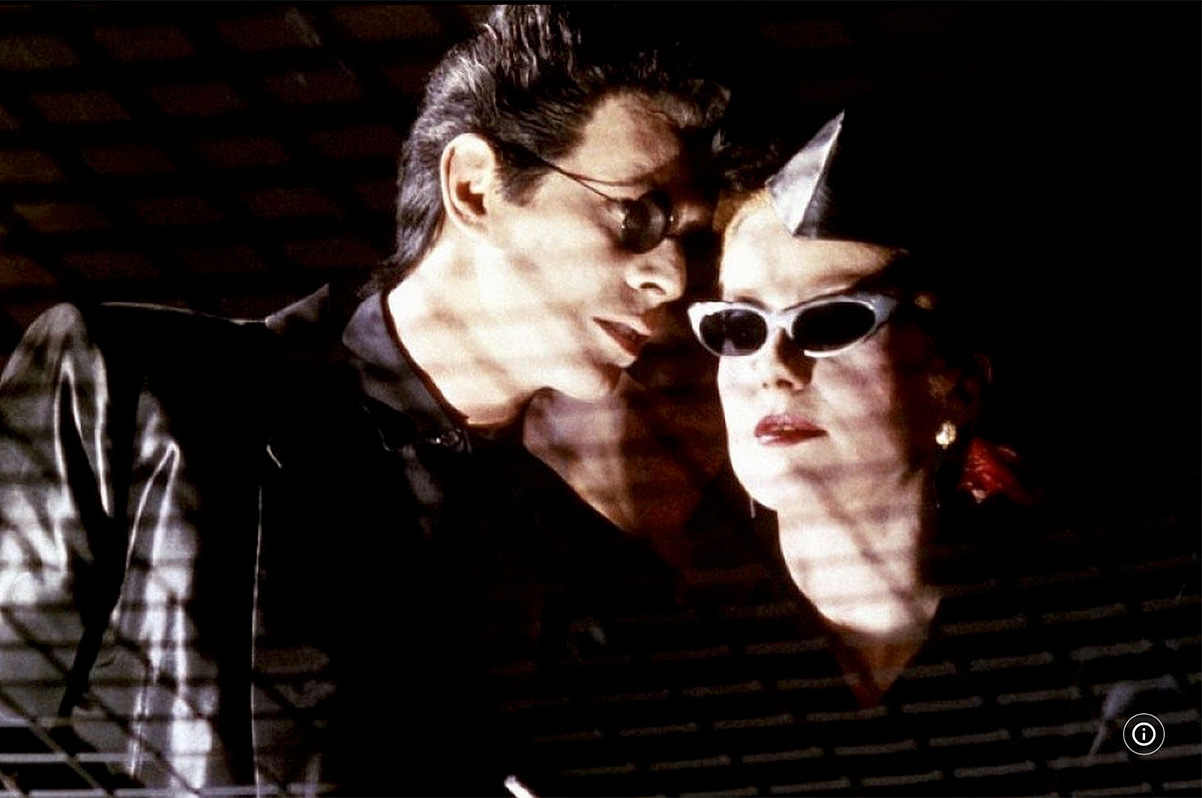
It’s hard to think of a horror film as openly sexy as this classic from director Tony Scott, which turns Whitley Streiber’s book about an ancient vampire (Catherine Deneuve) in modern New York, who grooms a scientist (Susan Sarandon) to be her new sexual companion for the ages as the old one (David Bowie) begins to rapidly age and decline. Dripping with 1980s cool (it opens with Bauhaus singing “Bela Lugosi’s Dead” in a nightclub) and leaning hard into the open eroticism of a more sexually permissive era, it doesn’t hide its sapphic supernatural love story in the subtext; instead, it gives us one of the steamiest love scenes between two women ever put on film. Critics of the time praised it for its style and its mood, but lamented what they perceived as an ultimately shallow story – but in retrospect, its pervading air of melancholy doom despite the glamorous elegance of its presentation serves as a fitting reminder that an eternal life of meaningless beauty and pleasure might not be as great an idea as we think it is.
Stranger by the Lake (2013)
French filmmaker Alan Giraudie delivers one of the sexiest – and scariest – gay thrillers – of all time – in this tale of a young man (Pierre Deladonchamps) who frequents a lakeside nude beach, which is a popular hook-up spot despite a recent series of unsolved killings in the area. He becomes infatuated with an attractive man (Christophe Paou) he meets there and they connect; later, he witnesses an incident that makes him suspect his new flame might be the murderer – but that doesn’t stop him from continuing to pursue their relationship, despite an increasing likelihood that he might end up as the next victim. It’s an obvious essay on the power of lust to pull us into danger, but it doesn’t moralize; instead it entices us deeper with scenes of graphic un-simulated sex and sparks nostalgic fantasies of a pre-Grindr era when the threat of encountering a serial killer was never enough to keep us away from our favorite cruising spot. Transgressive? Yes, and also terrifying.
We’re All Going to the World’s Fair (2021)
If you’re a horror fan in 2026, it’s likely you’ve already seen trans filmmaker Jane Schoenbrun’s critically lauded “I Saw the TV Glow,” as well as “Teenage Sex and Death and Camp Miasma,” which has emerged as one of the year’s most acclaimed movies so far. You might not, however, be familiar with their first feature film, in which a teenage girl (Anna Cobb), living an isolated life with an abusive single father, finds escape and connection on the internet; she participates in a “viral challenge” that requires her to post a video of herself performing a ritual chant, and then follow up with updates documenting the transformation she goes through as a result. Inspired by Schoenbrun’s own experience navigating the online world while struggling with gender dysphoria and other issues around their identity, it’s an unsettling and disorienting ride that keeps us wondering what will happen next – but the real horror comes from its observations about the way living our lives online can transform us all.
Friday, October 9
Go Gay DC will host “Out in DC LGBTQ+ Community Social” at 7 p.m. at Hotel Zena. This is a chance to relax, new friends, and enjoy happy hour specials at this classic retro venue. Attendance is free and more details are available on Eventbrite.
Saturday, October 10
Go Gay DC will host “LGBTQ+ Community Brunch” at 11 a.m. at Freddie’s Beach Bar & Restaurant. This fun weekly event brings the DMV area LGBTQ+ community, including allies, together for delicious food and conversation. Attendance is free and more details are available on Eventbrite.
“Nellie’s DC Drag Brunch” will be at 12 p.m. at Nellie’s Sports Bar. Come get served like a queen by a queen. Join Sapphire Blue, Deja Diamond and their team of amazing drag performers for the most fun you’ll have all weekend. Tickets cost $58.51 and are available on Eventbrite.
Sunday, October 11
Spark Coffee Club will be at 12 p.m. at Spark Social. This is a laid-back daytime hangout built entirely around making new connections. Whether you’re new to the city, new to the community, or just looking to expand your social circle, this is an easy, low-pressure way to spark up a conversation with the person next to you. Come solo or with a friend — you never know who you might meet. For more details, visit Eventbrite.
Tuesday, October 13
Trans Discussion Group will be at 7 p.m. on Zoom. This event is intended to provide an emotionally and physically safe space for trans people and those who may be questioning their gender identity/expression to join together in community and learn from one another. For more details, email [email protected].
Coming Out Discussion Group will be at 7 p.m. on Zoom. This is a safe space to share experiences about coming out and discuss topics as it relates to doing so — by sharing struggles and victories the group allows those newly coming out and who have been out for a while to learn from others. For more details, visit the group’s Facebook.
Wednesday, October 14
Job Club will be at 6 p.m. on Zoom upon request. This is a weekly job support program to help job entrants and seekers, including the long-term unemployed, improve self-confidence, motivation, resilience and productivity for effective job searches and networking — allowing participants to move away from being merely “applicants” toward being “candidates.” For more information, email [email protected] or visit www.thedccenter.org/careers.
The DC LGBTQ+ Community Center will host “Movement for Healing” at 3 p.m. This trauma- and yoga therapy–informed class is designed to help guests gently reconnect with their body and their breath. Through mindful movement, somatic awareness, and grounding practices, guests will explore how to release tension, increase mobility, and cultivate a deeper sense of safety and ease within. For more details, visit the DC Center’s website.
Thursday, October 15
The DC LGBTQ+ Community Center’s Fresh Produce Program will be held all day at the Center. People will be informed on Wednesday at 5 p.m. if they are picked to receive a produce box. No proof of residency or income is required. For more information, email [email protected] or call 202-682-2245.

CAMP Rehoboth Block Party returns Oct. 18

Essential queer horror classics for Halloween

Solidarity beyond the parade: the actual cost of Pride

Physician: addiction doesn’t always look the way you think it does

Calendar: October 9-15

Bessent says Trump chose him for his qualifications, not his sexuality

10 years later, we still can’t shake Barry Jenkins’s ‘Moonlight’

‘Some Like It Hot’ a wild ride at renovated Bernard Family Theatre

D.C.’s LGBTQ homeless facilities face possible hit from Trump funding cuts

Trump uses anti-trans slur against Democratic Senate candidate
-

 Federal Government5 days ago
Bessent says Trump chose him for his qualifications, not his sexuality
-
Movies4 days ago
10 years later, we still can’t shake Barry Jenkins’s ‘Moonlight’
-
Theater4 days ago
‘Some Like It Hot’ a wild ride at renovated Bernard Family Theatre
-
District of Columbia4 days ago
D.C.’s LGBTQ homeless facilities face possible hit from Trump funding cuts