News
Chilean Senate committee approves civil unions bill
LGBT advocates describe vote as ‘step forward’
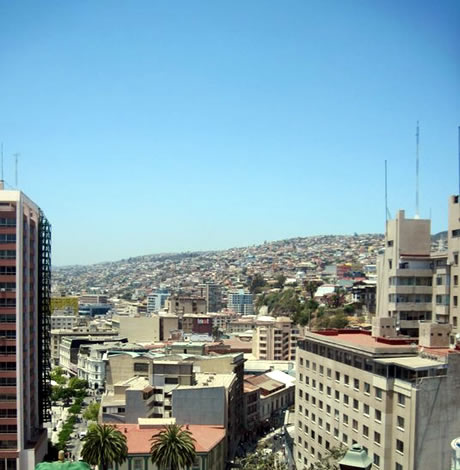

A Chilean Senate committee on Tuesday unanimously approved a civil unions bill. (Photo by the Photographic Collection of the Library of the National Congress of Chile; courtesy Wikimedia Commons)
The vote sets the stage for a potential vote on the measure in the full Senate.
“Today we have taken a step forward in this fight for civil unions that we began a decade ago,” said the Movement for Homosexual Integration and Liberation, a Chilean LGBT advocacy group, in a statement. “The step that was once a dream is becoming real.”
Luis Larraín, president of Fundación Iguales, another Chilean LGBT advocacy group, also applauded the vote.
“We are one step closer to the state of Chile recognizing that there are distinct types of family and that all of them deserve protection,” he said.
Former President Sebastián Piñera first introduced the civil unions bill in the Chilean Congress in 2011.
Senators in January voted 28-6 to move the proposal out of committee.
President Michelle Bachelet, who took office in March, publicly backed marriage rights for same-sex couples in the South American country during last year’s presidential campaign.
Chile’s highest court in 2011 ruled the country’s ban on nuptials for gays and lesbians is constitutional in a case the Movement for Homosexual Integration and Liberation filed on behalf of three same-sex couples who are seeking marriage rights.
The Piñera administration argued in a brief it filed with the Inter-American Court of Human Rights last November in response to the same-sex marriage lawsuit that the plaintiffs have “not exhausted domestic remedies to obtain the nullification of the administrative act for [the] alleged violation of fundamental rights.” Lawyers representing the three couples have repeatedly urged Bachelet to reject her predecessor’s position in the case.
Anti-LGBT violence casts shadow over advances
LGBT rights advocates have seen a number of legal and political advances in the conservative South American country in recent years.
Piñera in 2012 signed an LGBT-inclusive hate crimes and anti-discrimination bill that had languished in the Chilean Congress for seven years. It is named in honor of Daniel Zamudio, a 24-year-old man whom a group of self-described neo-Nazis beat to death inside a park in Santiago, the country’s capital, earlier that year.
The country’s Senate in January advanced a bill that would allow trans Chileans to legally change their name and sex without sex reassignment surgery.
The Inter-American Court of Human Rights in 2012 ruled in favor of Karen Atala, a lesbian judge who lost custody of her three daughters to her ex-husband seven years earlier because of her sexual orientation.
Claudio Arriagada last November became the first openly gay person elected to the Chilean Congress.
Jaime Parada Hoyl, a former spokesperson for the Movement of Homosexual Integration and Liberation, in 2012 won a seat on the municipal council in Providencia, a wealthy Santiago enclave.
Voters in the Santiago suburb of Lampa re-elected transgender Councilwoman Alejandra González during the same municipal elections. Trans activist Zuliana Araya also won a seat on the Municipal Council in the coastal city of Valparaíso.
Anti-LGBT violence remains a serious concern in spite of these political and legal advances.
The Movement for Homosexual Integration and Liberation said in a press release on Tuesday that Zaconi Orellana Acevedo, a 22-year-old trans woman, was killed earlier this week in a town outside of Santiago.
“We cannot forget that the female transsexual population is particularly vulnerable, because from an early age all doors are closed for them and a great many of them are forced to engage in commercial sex work to survive,” said the advocacy group. “The lack of a gender identity law that would allow trans people to change their name with a simple process in the Civil Registry and not in the judiciary as occurs right now, would bring more development possibilities to this social group.”
A rash of other anti-LGBT attacks over the past year have sparked outrage among Chilean advocates. These include the death of Esteban Parada Armijo in January after two men stabbed him in Santiago’s Bellavista neighborhood where several gay bars and clubs are located.
Guillermo Aguilera Guerrero allegedly stabbed Alejandro Alfredo Bustamante Godoy to death inside his Valparaíso home a few weeks before Parada’s murder.
Bachelet has said she supports efforts to strengthen Chile’s hate crimes and anti-discrimination law.

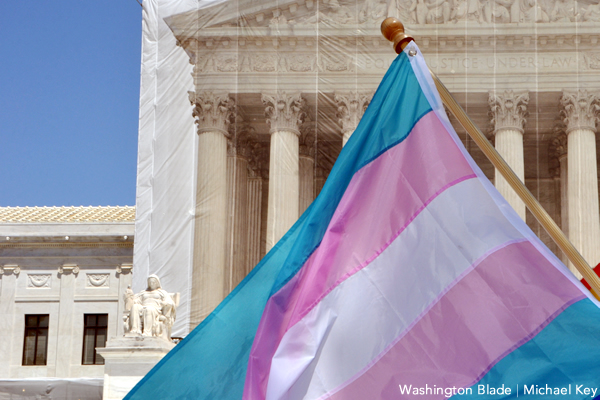
Florida
Fla. Senate passes ‘Anti-Diversity’ bill that could repeal local LGBTQ protections
Bipartisan coalition urges Florida House to reject ‘extremism’ measure
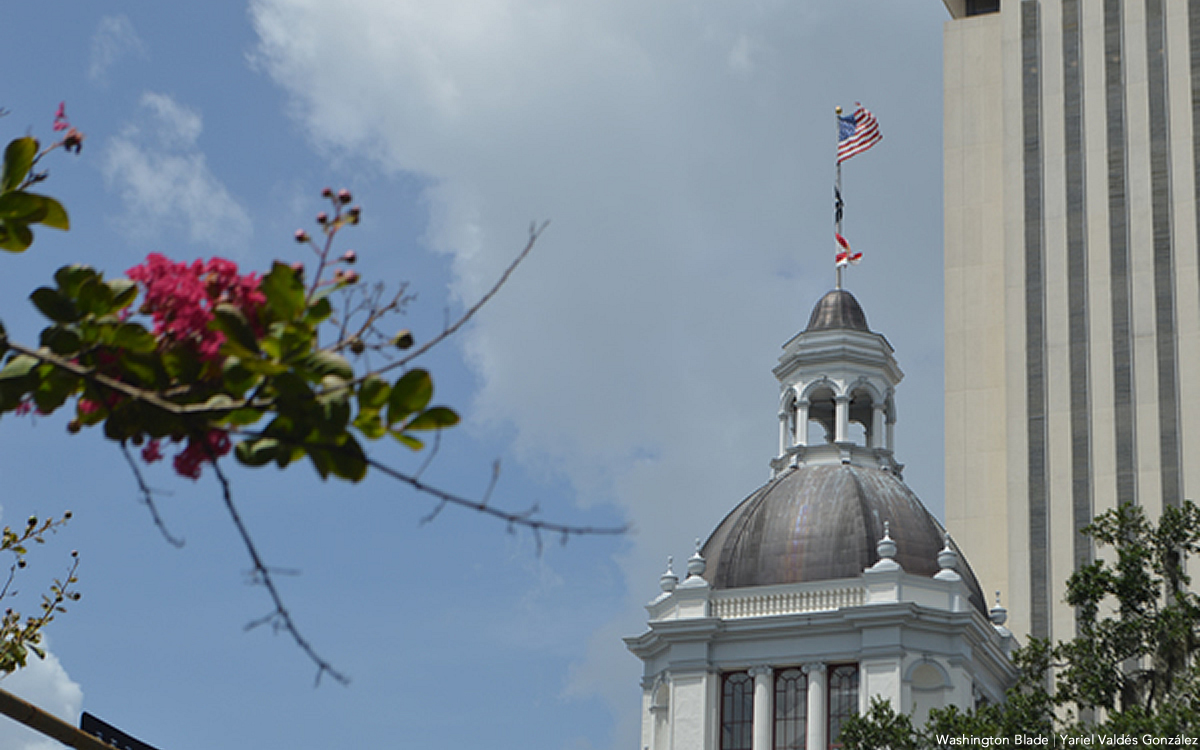
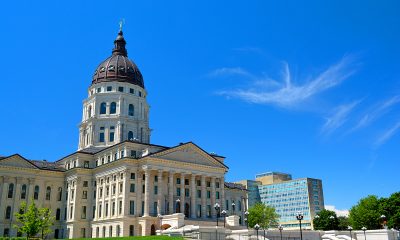
The Florida Senate on March 4 voted 25-11 to approve an “Anti-Diversity in Local Government” bill that critics have called a sweeping and extreme measure that, among other things, could repeal local LGBTQ rights protections.
According to Equality Florida, a statewide LGBTQ advocacy organization, if approved by the Florida House of Representatives and signed by Republican Gov. Ron DeSantis, the bill “would ban, repeal, and defund any local government programming, policy, or activity that provides ‘preferential treatment or special benefits’ or is designed or implemented’ with respect to race, color, sex, ethnicity, sexual orientation, or gender identity.”
In a March 4 statement, Equality Florda added that the bill would also threaten city and county officials with removal from office “for activities vaguely labeled as DEI,” with only limited exceptions.
The Florida House was scheduled to vote on the bill on Monday, March 9, with opponents hopeful that a broad coalition of both Democratic and Republican lawmakers would secure enough votes to defeat the bill.
“Once again, Gov. DeSantis and Florida lawmakers are advancing one of the most sweeping and extreme bills in the country — this time threatening decades of local progress supporting diverse communities, including the LGBTQ community,” said Equality Florida Senior Political Director Joe Saunders. “This legislation is a sledgehammer aimed at cities and counties that recognize and address the diversity of the people they serve,” he said.
Among the LGBTQ organizations that could be adversely impacted by the bill is the highly acclaimed Stonewall National Museum, Archives and Library located in Fort Lauderdale.
Robert Kesten, the Stonewall organization’s president and CEO, told the Washington Blade the organization receives some funding from Broward County, in which Fort Lauderdale is located, and the city of Fort Lauderdale has provided support by purchasing tables at some of the museum’s fundraising events.
“Based on this legislation, hose things would be gone,” he said. “We also are based in a government building. So, we don’t know what potential side effects that could have.” He noted that the building in question is owned by Broward County and leased by Fort Lauderdale, with the bill’s vaguely worded provision making it unclear whether Stonewall would be forced to leave its building.
“It’s unknown, and we’re really in unchartered waters,” he said.
Uganda
Ugandan activist named Charles F. Kettering Foundation fellow
Clare Byarugaba founded PFLAG-Uganda
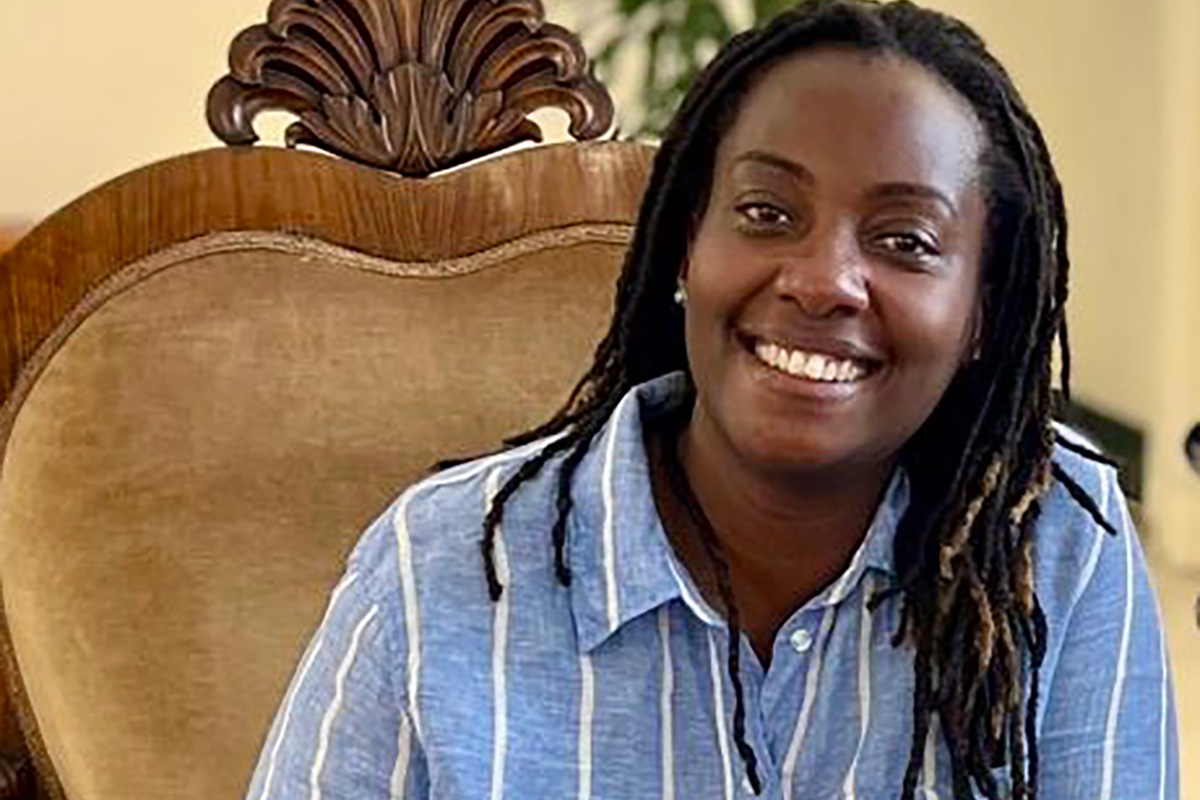
The Charles F. Kettering Foundation has named a prominent Ugandan LGBTQ activist as one of its 2026 fellows.
Clare Byarugaba, founder of PFLAG-Uganda, is one of the foundation’s five 2026 Global Fellows.
Byarugaba, among other things, has been a vocal critic of Uganda’s Anti-Homosexuality Act. Byarugaba in 2024 met with Pope Francis — who criticized criminalization laws during his papacy — at the Vatican.
The foundation on its website says it “is dedicated to bringing research and people together to make the promise of democracy real for everyone, everywhere.”
“Clare is the kind of hero who rushes toward the emergency to help,” said PFLAG CEO Brian K. Bond in a Feb. 27 statement to the Washington Blade. “She founded PFLAG-Uganda as the country pushed to criminalize homosexuality and those who support LGBTQ+ people. Yet, she never hesitated in her courage, telling us that families wanted to organize to keep their LGBTQ+ loved ones safe, and PFLAG was the way to do it. Clare Byarugaba not only deserves this honor, but she will use her compassion and experience to teach the world about LGBTQ+ advocacy as a Kettering Global Fellow.”
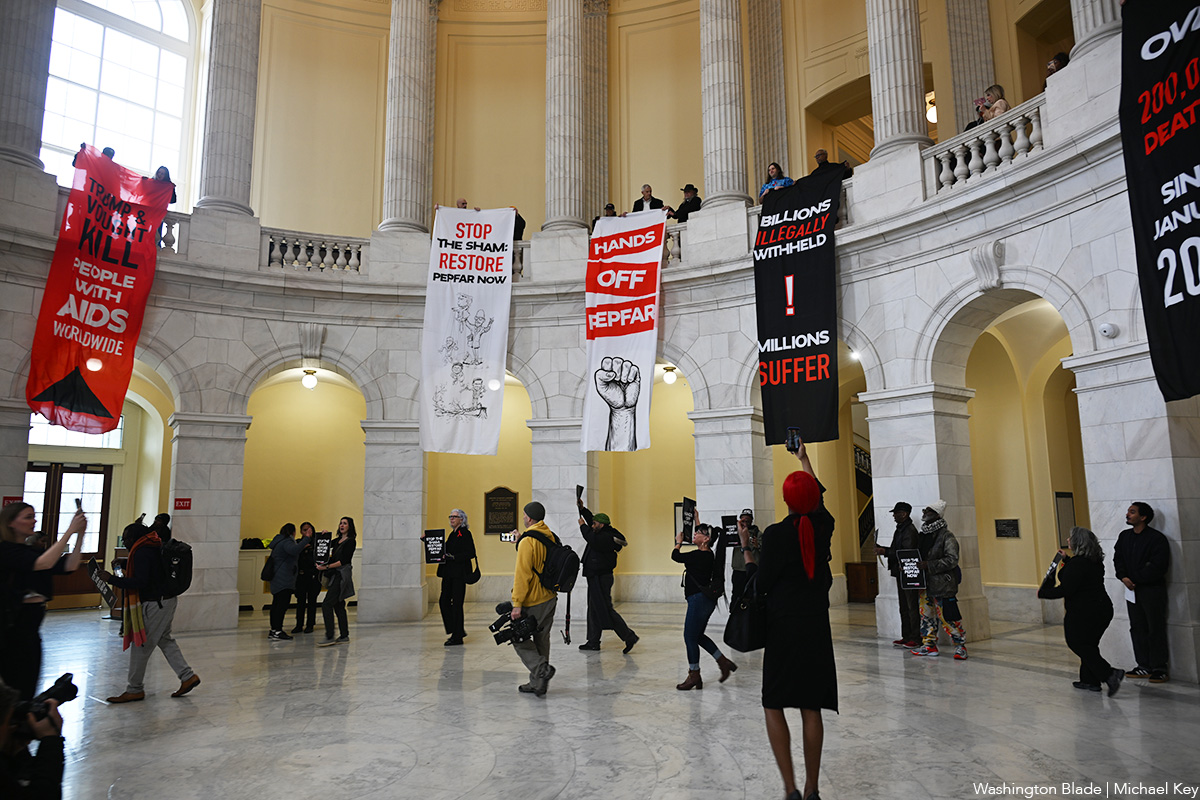
U.S. Capitol Police on Thursday arrested 13 HIV/AIDS activists in the Cannon House Office Building Rotunda.
The activists — members of Housing Works, Health GAP, and the Treatment Action Group — joined former PEPFAR staffers in demanding full funding of the program that President George W. Bush created in 2003. They chanted “AIDS cuts kill, PEPFAR now!” and unfurled banners from the Rotunda’s second floor that read “Trump and (Office of Management and Budget Director Russell) Vought kill people with AIDS worldwide,” “Over 200,000 deaths since January 2025,” and “Hands off PEPFAR” before their arrest.
(Washington Blade video by Michael K. Lavers)
This protest is the latest against the Trump-Vance administration’s HIV/AIDS policies since it took office.
Secretary of State Marco Rubio on Jan. 28, 2025, issued a waiver that allowed PEPFAR and other “life-saving humanitarian assistance” programs to continue to operate during a freeze on nearly all U.S. foreign aid spending. HIV/AIDS service providers around the world with whom the Washington Blade has spoken say PEPFAR cuts and the loss of funding from the U.S. Agency for International Development, which officially closed on July 1, 2025, has severely impacted their work.
The State Department last September announced PEPFAR will distribute lenacapavir in countries with high prevalence rates. Zambia is among the nations in which the breakthrough HIV prevention drug has arrived.
The New York Times last summer reported Vought “apportioned” only $2.9 billion of $6 billion that Congress set aside for PEPFAR for fiscal year 2025. (PEPFAR in the coming fiscal year will use funds allocated in fiscal year 2024.)
Bipartisan opposition in the U.S. Senate prompted the Trump-Vance administration last July withdraw a proposal to cut $400 million from PEPFAR’s budget. Vought on Aug. 29, 2025, said he would use a “pocket rescission” to cancel $4.9 billion for HIV/AIDS prevention and global health programs and other foreign aid assistance initiatives that Congress had already approved.
The White House in January announced an expansion of the global gag rule to ban U.S. foreign aid for groups that promote “gender ideology.” President Ronald Reagan in 1985 implemented the original regulation, also known as the “Mexico City” policy, which bans U.S. foreign aid for groups that support abortion and/or offer abortion-related services. The Council for Global Equality and other groups say the expanded rule will adversely impact HIV prevention efforts around the world.
A press release that Housing Works and Health GAP issued on Thursday notes more than $977 million “in appropriated PEPFAR funding for HIV prevention and treatment was unspent by the end of fiscal year (FY) 2025 — triple amount unspent at the end of FY 2024.”
“Activists predict this backlog will worsen rapidly in FY 2026 unless Congress immediately reasserts its Constitutionally-mandated oversight authority,” notes the press release.
The press release also indicates funding for the Centers for Disease Control and Prevention’s PEPFAR programs “will run out” by April 1 because “only 45 percent of their FY26 funding has been transferred from the State Department.
“Unless funding is transferred immediately, CDC’s global HIV programs across sub-Saharan Africa, Asia and the Caribbean will grind to a halt,” notes the press release.
The activists demanded Trump, Vought, Rubio, and Congress do the following:
- Activists are calling for full obligation of appropriated PEPFAR funds and rejection of growing political interference in global and domestic HIV programs
- Immediately release already-appropriated, unobligated PEPFAR funds
- Break the blackout on PEPFAR data, so Congress and people with HIV know how funding is being spent and can program based on data
- Activists are calling for full obligation of appropriated PEPFAR funds and rejection of growing political interference in global and domestic HIV programs.
“PEPFAR has saved more than 26 million lives and changed the trajectory of an epidemic,” said Housing Works CEO Charles King. “However, the Trump administration’s decision, over the objection of Republicans in Congress, to freeze PEPFAR funding has caused decades of progress to come undone and has been a death sentence for people with HIV relying on life-saving treatment. The U.S. must immediately restore PEPFAR funding and regain our standing in the global fight against HIV.”
King is among the activists who were arrested.
(Washington Blade video by Michael K. Lavers)

Liza Minnelli makes surprise appearance at GLAAD Media Awards

Fla. Senate passes ‘Anti-Diversity’ bill that could repeal local LGBTQ protections

Capital Pride must be transparent about sexual misconduct investigation

Ugandan activist named Charles F. Kettering Foundation fellow

13 HIV/AIDS activists arrested on Capitol Hill

Arlington LGBTQ bar Freddie’s celebrates 25th anniversary

Supreme Court deals blow to trans student privacy protections

D.C. Black Pride theme, performers announced at ‘Speakeasy’

Why innovation matters for Black health

Peter Thiel’s expanding power — and his overlap with Jeffrey Epstein
-

 Virginia4 days ago
Arlington LGBTQ bar Freddie’s celebrates 25th anniversary
-
National3 days ago
Supreme Court deals blow to trans student privacy protections
-
District of Columbia3 days ago
D.C. Black Pride theme, performers announced at ‘Speakeasy’
-
Opinions3 days ago
Why innovation matters for Black health